Nvidia launches open AI weather models that beat Google DeepMind on 70+ forecast variables


7 Sources
7 Sources
[1]
Nvidia's new AI weather models probably saw this storm coming weeks ago
In the run-up to the winter storm currently pummeling much of the U.S., weather forecasts for some regions were all over the map, with snowfall predictions varying wildly. Nvidia couldn't have timed the release of its new Earth-2 weather forecasting models any better. Or, given how accurate the company claims the new models are, maybe it knew something we didn't? The new AI models promise to make weather forecasting faster and more accurate. Nvidia claims that one model in particular, Earth-2 Medium Range, beats Google DeepMind's AI weather model, GenCast, on more than 70 variables. GenCast, which Google released in December 2024, was itself significantly more accurate than existing weather models that were capable of generating forecasts up to 15 days out. Nvidia announced the new tools Monday at the American Meteorological Society meeting in Houston. "Philosophically, scientifically, it's a return to simplicity," Mike Pritchard, director of climate simulation at Nvidia, told reporters on a call before the meeting. "We're moving away from hand-tailored niche AI architectures and leaning into the future of simple, scalable, transformer architectures." Traditionally, most weather forecasts rely on simulations of physics as observed in the real world. AI models are a relatively recent addition. The Earth-2 Medium Range model is based on a new Nvidia architecture called Atlas, about which the company said it would release more details on Monday. Alongside Medium Range, Nvidia's Earth-2 suite includes a Nowcasting model and Global Data Assimilation model. Nowcasting produces short-term predictions from zero to six hours into the future, and it's aimed at helping meteorologists forecast the impacts of storms and other hazardous weather. "Because this model is trained directly on globally available geostationary satellite observations, rather than region-specific physics model outputs, Nowcasting's approach can be adapted anywhere on the planet with good satellite coverage," Pritchard said. That should help governments of states and smaller countries understand how severe weather systems might affect their territories. The Global Data Assimilation model uses data from sources like weather stations and balloons to produce continuous snapshots of weather conditions at thousands of locations around the world. Those snapshots are then used as launching points for weather models to make their predictions. Traditionally, those snapshots have required tremendous amounts of computing power before the forecasting work could begin. "It consumes roughly 50% of the total supercomputing loads of traditional weather [forecasting]," Pritchard said. "This model can do that in minutes on GPUs instead of hours on supercomputers." The three new models join two existing ones: CorrDiff, which uses coarse-grained forecasts to generate speedy, high-resolution predictions, and FourCastNet3, which models individual weather variables like temperature, wind, and humidity. Pritchard said that the new models should give more users access to powerful weather forecasting tools, which have historically been the domain of wealthier countries and large corporations, which have the funds to pay for costly supercomputer time. "This provides the fundamental building blocks used by everyone in the ecosystem -- national meteorological services, financial service firms, energy companies -- anyone who wants to build and refine weather forecasting models," Pritchard said. Some of the tools are already in use. Meteorologists in Israel and Taiwan have been using Earth-2 CorrDiff, for example, while The Weather Company and Total Energies are evaluating Nowcasting, Nvidia said. "For some users, it makes sense to subscribe to an enterprise centralized weather forecasting system. But for others like countries, sovereignty matters," Pritchard said. "Weather is a national security issue, and sovereignty and weather are inseparable."
[2]
NVIDIA Launches Earth-2 Family of Open Models -- the World's First Fully Open, Accelerated Set of Models and Tools for AI Weather
NVIDIA Earth-2 Global Data Assimilation shows the complex patterns of Earth observation data from satellites, weather balloons and weather stations, which the AI model transforms into smooth, continuous estimates of the atmospheric state from which forecasts can be launched. Accurate weather forecasting helps save lives and protect environments -- and is a cornerstone of decision-making in agriculture, energy, public health and other industries. Researchers, weather agencies, climate-tech innovators and enterprises are already running, fine-tuning and building on these state-of-the-art models to unlock scientific breakthroughs using their own local AI infrastructure. Weather Forecasting AI weather tool provider Brightband -- a member of the NVIDIA Inception program's Sustainable Futures initiative -- is running Earth-2 Medium Range to issue real-world global forecasts daily. "The revolution of new AI weather tools for forecasting is very exciting and continues to gather speed with new models like NVIDIA Earth-2 Medium Range," said Julian Green, cofounder and CEO of Brightband. "Brightband is among the first to run Earth-2 Medium Range operationally, and the model being open source speeds up innovation, allowing easier comparison and improvements by other members of the weather enterprise." The Israel Meteorological Service is using Earth-2 CorrDiff in operation -- and plans to use Earth-2 Nowcasting -- to generate high-resolution forecasts up to eight times daily, enabling decision-makers to respond more effectively to extreme weather while reducing computational costs. "NVIDIA Earth-2 models give us a 90% reduction in compute time at 2.5-kilometer resolution compared with running a classic numerical weather prediction model without AI on a CPU cluster," said Amir Givati, director of the Israel Meteorological Service. "After a recent rainstorm, our AI model trained with CorrDiff was the best of all our operational models for a six-hour verification of accumulated precipitation." The Weather Company is evaluating Earth-2 Nowcasting for localized severe-weather applications, and NWS is evaluating the new models to enhance its operational workflows. Energy Forecasting and Grid Operations TotalEnergies is evaluating Earth-2 Nowcasting to improve short-term risk awareness and decision-making. "NVIDIA Earth-2 represents a major step forward in how advanced weather intelligence can be operationalized at scale," said Emmanuel Le Borgne, climate and weather forecast product manager at TotalEnergies. "Models like Earth-2 Nowcasting are groundbreaking for our business because they improve short-term risk awareness and decision-making in energy systems where minutes and local impacts matter." Eni is intensively testing Earth-2 models, including FourCastNet and CorrDiff, for semi-operational downscaling of predictions to produce probabilistic, high-resolution forecasts of weather and gas demand weeks ahead. GCL, one of China's largest solar material producers and a global integrated energy operator, is running NVIDIA Earth-2 models in operation for its photovoltaic prediction system. Compared with traditional numerical weather prediction, Earth-2 provides more accurate prediction data at a lower cost, significantly improving the accuracy of GCL's photovoltaic power generation prediction. Southwest Power Pool, in collaboration with Hitachi, is using Earth-2 Nowcasting and FourCastNet3 to improve intraday and day-ahead wind forecasting. This effort supports Southwest Power Pool's commitment to enhancing grid reliability and enabling more informed operational decisions across the SPP footprint. Financial Impact Assessment S&P Global Energy is harnessing NVIDIA Earth-2 CorrDiff to turn climate data into local insights for risk assessment. Global insurance group AXA is using FourCastNet to generate thousands of hypothetical hurricane scenarios as part of its R&D program in model evaluation, methodological development and benchmarking on existing techniques.
[3]
Nvidia launches Earth-2 open AI weather forecast models and tools
Nvidia launches Earth-2 open AI weather forecast models and tools Nvidia Corp. today unveiled Earth-2, its artificial intelligence models and tools for scientists, startups, developers, enterprises and governments worldwide to make weather prediction more accessible than ever. Access to weather prediction matters because it shapes the map of human decisions, from the mundane to the profound. If a logistics leader knows a rainstorm will hit within the next day, disrupting dockworkers, that forecast changes staffing and routing before the first drop falls. If a government official oversees critical infrastructure and sees a polar vortex on the horizon, six feet of snow in four days, then planning isn't optional: it's triage, staging and continuity. The Earth-2 open technologies include pretrained models, frameworks, customization recipes and inference libraries. They allow users to accelerate all forecasting stages from observation data to generating 15-day global or local storm forecasts. Historically, production-ready weather has been the mainstay of supercomputer-based models. Generative AI has broken free of these computation- and cost-intensive modelling simulation needs, making it accessible to startups and nations alike. Included in the toolset is Earth-2 Medium Range, a 15-day high-accuracy predictive model powered by a new model architecture called Atlas for medium-range forecast across more than 70 weather variables, including temperature, pressure, wind and humidity. Earth-2 Nowcasting, powered by a new model called StormScope, which uses generative AI to make country-scale forecasts into kilometer-resolution, zero- to six-hour predictions of local storms and hazardous weather in just minutes. Earth-2 Global Data Assimilation, powered by HealDA, produces initial conditions for weather prediction. These are snapshots of current atmospheric conditions at thousands of locations around the globe. Assimilation can generate initial conditions in seconds using graphics processing units instead of hours on supercomputers. When coupled with Earth-2 models, Nvidia said, this results in accurate forecasting predictions. Earth-2 CorrDiff can downscale continental predictions into high-resolution, regional weather for fine-grain local forecasting. FourCastNet3 can deliver high-accuracy forecasting for various weather variables such as wind, temperature and humidity, surpassing leading conventional models, producing answers at 60 times faster speeds. Weather forecasting partners Numerous partners joined Nvidia to build using Earth-2, including Brightband, an AI weather tool provider, running Medium Range to issue global forecasts daily. "Brightband is among the first to run Earth-2 Medium Range operationally, and the model being open-source speeds up innovation, allowing easier comparison and improvements by other members of the weather enterprise," said Julian Green, co-founder and chief executive. Power companies including Eni S.p.A., GCL Technology Holdings Ltd. and S&P Global Energy, are using Earth-2 tools for predictive weather analysis to operationalize. "Nvidia Earth-2 represents a major step forward in how advanced weather intelligence can be operationalized at scale," said Emmanuel Le Borgne, climate and weather forecast product manager at TotalEnergies SE. Nvidia said the full-featured open-model family and tools for training capabilities for diagnostics will be licensed for commercial and noncommercial use. They will also be available on GitHub and Hugging Face upon release.
[4]
Nvidia Is Democratizing Weather Forecasting -- and Its New Tools Are Built for Businesses
"This provides the fundamental building blocks used by everyone in the ecosystem -- national meteorological services, financial service firms, energy companies -- [to] anyone who wants to build and refine weather forecasting models," Nvidia's director of climate simulation, Mike Pritchard, said, according to TechCrunch. One of the new models, called Earth-2 Medium Range, is meant for forecasting up to 15 days in advance. Another uses generative AI to deliver country-level forecasts with resolution down to the kilometer level. Called Nowcasting, it is meant to offer short-term storm and hazardous weather forecasting and predict conditions up to six hours ahead of time. The third model produces what Nvidia describes as "snapshots of the current atmosphere" from thousands of global locations -- and that includes factors like temperature, pressure, wind, and humidity. It can reportedly accomplish in seconds what it would take a supercomputer to do in hours. The three new models join two other open weather models that were previously released for various applications.
[5]

Nvidia releases open-source AI models for faster weather forecasting By Investing.com
Investing.com -- Nvidia released three open-source artificial intelligence models on Monday designed to create better and faster weather forecasts. The AI chip firm announced the models at the American Meteorological Society's annual meeting in Houston. These models are part of Nvidia's broader initiative to provide open-source software powered by its chips for various applications including chatbots and self-driving vehicles. Nvidia aims to replace conventional weather simulations, which are expensive and time-consuming, with AI-driven versions. The company claims these new models can match or exceed the accuracy of traditional methods while being faster and less costly to operate once trained. Mike Pritchard, director of climate simulation research for Nvidia and professor of earth system sciences at the University of California, Irvine, highlighted the insurance industry as a key beneficiary of these new weather models. Insurance companies often need to understand extreme weather events like major floods or hurricanes. Traditionally, predicting such events in detail has been expensive because weather forecasting uses "ensembles" - groups of individual predictions about how weather might develop from a starting point. Finding possible outlier events requires many ensemble members, but calculating each one in detail is slow. "The tension is gone, because once trained, AI is 1,000 times faster," Pritchard said. "So you're free to run massive ensembles. And insurance companies are running like 10,000-member ensembles." The "Earth-2" models introduced Monday include one for 15-day weather forecasts, another specializing in forecasts up to six hours for severe storms over the U.S., and a third that can integrate various data streams from weather sensors to create better starting points for other forecasting technology. This article was generated with the support of AI and reviewed by an editor. For more information see our T&C.
[6]
Nvidia unveils Earth-2 open models for AI weather forecasting By Investing.com
Investing.com -- Nvidia launched a new family of open models and tools for AI weather forecasting at the American Meteorological Society's Annual Meeting on Monday. The Earth-2 family offers the world's first fully open, accelerated weather AI software stack, making weather and climate prediction more accessible to scientists, startups, developers, enterprises and government agencies globally. The new technology accelerates all forecasting stages, from processing initial observation data to generating 15-day global forecasts or local storm predictions. This AI-powered approach saves significant computational time and costs compared to traditional physics-based models run on supercomputers. The newly announced models include Earth-2 Medium Range (powered by Atlas architecture), Earth-2 Nowcasting (powered by StormScope), and Earth-2 Global Data Assimilation (powered by HealDA). These join existing models in the Earth-2 stack such as Earth-2 CorrDiff and Earth-2 FourCastNet3. Several organizations are already implementing these technologies. AI weather tool provider Brightband is running Earth-2 Medium Range to issue daily global forecasts. The Israel Meteorological Service uses Earth-2 CorrDiff operationally, reporting a 90% reduction in compute time compared to traditional methods. Energy companies including TotalEnergies, Eni, GCL, and Southwest Power Pool are evaluating or implementing Earth-2 models to improve forecasting for their operations. Financial firms like S&P Global Energy and AXA are using the technology for risk assessment and scenario generation. Earth-2 Medium Range and Nowcasting are now available via NVIDIA Earth2Studio, Hugging Face, and GitHub, with Earth-2 Global Data Assimilation expected later this year. This article was generated with the support of AI and reviewed by an editor. For more information see our T&C.
[7]

Nvidia launches AI models to revolutionize weather forecasting
On Monday Nvidia unveiled three open-source artificial intelligence models designed to improve weather forecasting by making it faster, more accurate and more cost-effective. Presented at the American Meteorological Society's annual meeting in Houston, the models aim to replace traditional, time-consuming and costly simulation methods with AI-driven systems. Once trained, the models can perform calculations 1,000 times faster than conventional approaches, Nvidia said, without compromising accuracy. Dubbed "Earth-2," the suite includes a 15-day forecasting model, a model focused on severe thunderstorms in the US with a 6-hour horizon, and a tool capable of integrating data from multiple sensors. The innovations are of particular interest to the insurance sector, which relies on complex simulations to assess risks linked to extreme events. Mike Pritchard, Nvidia's director of climate simulation research, said the tools now allow insurers to run massive datasets - up to 10,000 simulations - that were previously impossible to process at scale. With the initiative, Nvidia is continuing its strategic push into industrial and scientific applications of AI. Beyond its dominant role in the GPU market, the company is seeking to demonstrate the broad reach of its technologies, capable of accelerating fields such as climate forecasting, autonomous vehicles and medical research. By opening access to the models, Nvidia also aims to encourage adoption of its AI tools across a wide range of critical sectors.
Share
Share
Copy Link
Nvidia unveiled its Earth-2 suite of open-source AI weather models at the American Meteorological Society meeting in Houston. The flagship Earth-2 Medium Range model outperforms Google DeepMind's GenCast on more than 70 weather variables, delivering 15-day forecasts in minutes instead of hours. The release aims to democratize weather forecasting for governments, startups, and enterprises worldwide.
Nvidia Releases Open-Source AI Weather Models That Outperform Google DeepMind
Nvidia announced a comprehensive suite of open-source AI models designed to transform weather forecasting from an expensive, supercomputer-dependent process into an accessible technology for governments, startups, and enterprises worldwide
1
. The company revealed the Earth-2 family of models at the American Meteorological Society meeting in Houston, timing the release amid a major winter storm that exposed inconsistencies in traditional forecasting methods1
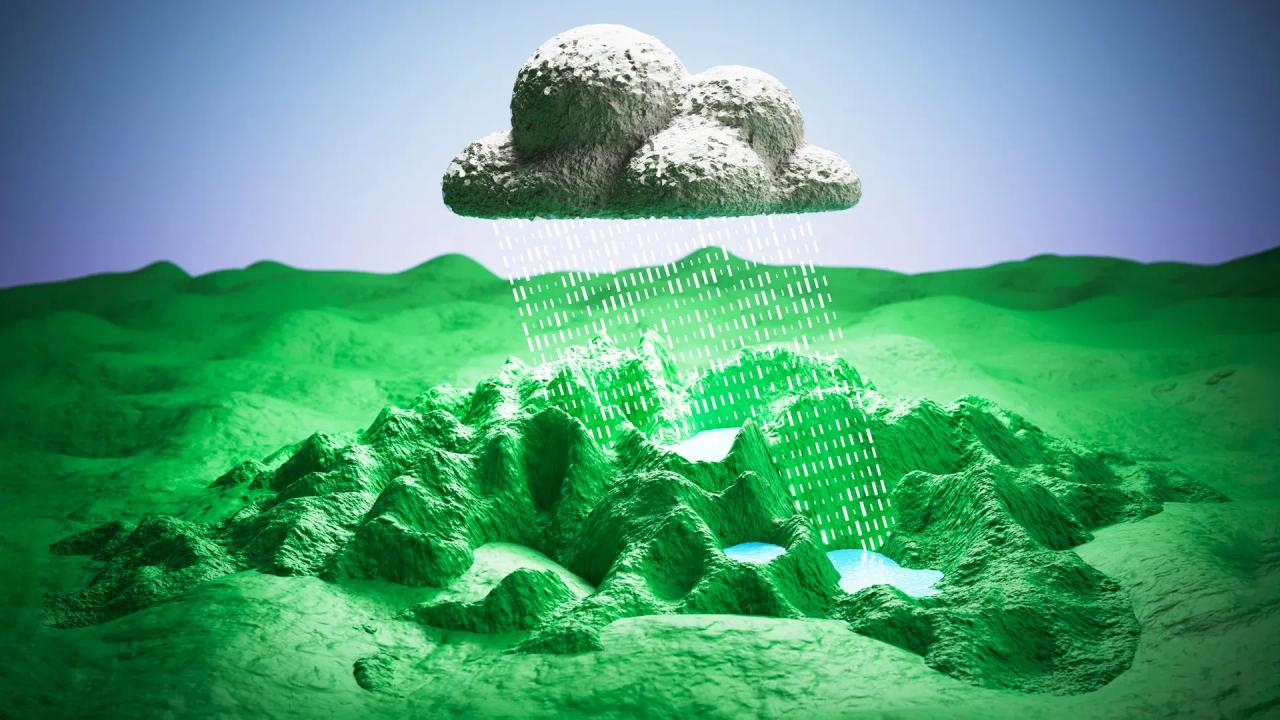
.
Source: Inc.
The flagship Earth-2 Medium Range model beats Google DeepMind's GenCast AI system on more than 70 weather variables, including temperature, pressure, wind, and humidity
1
3
. GenCast, released by Google in December 2024, was already significantly more accurate than existing models capable of generating forecasts up to 15 days out1
. Mike Pritchard, director of climate simulation at Nvidia, described the approach as "a return to simplicity," moving away from hand-tailored architectures toward scalable transformer architectures1
.AI-Powered Weather Forecasting Slashes Computation Time and Costs
The Earth-2 suite includes three new models alongside two existing ones, creating what Nvidia calls the world's first fully open, accelerated set of models and tools for AI weather prediction
2
. Medium Range delivers 15-day high-accuracy forecasts powered by a new architecture called Atlas3
. The Nowcasting model, powered by StormScope, uses generative AI to transform country-scale forecasts into kilometer-resolution predictions for zero to six hours, targeting severe storm predictions and hazardous weather1
3
.The Global Data Assimilation model, powered by HealDA, produces initial atmospheric condition snapshots from weather stations, balloons, and satellites at thousands of locations worldwide
3
. Traditionally, this data assimilation process consumed roughly 50% of total supercomputing loads for traditional weather forecasting, requiring hours on supercomputers1
. The new model completes this work in minutes on GPUs instead1
. The Israel Meteorological Service reported a 90% reduction in compute time at 2.5-kilometer resolution compared with running classic numerical weather prediction models on CPU clusters2
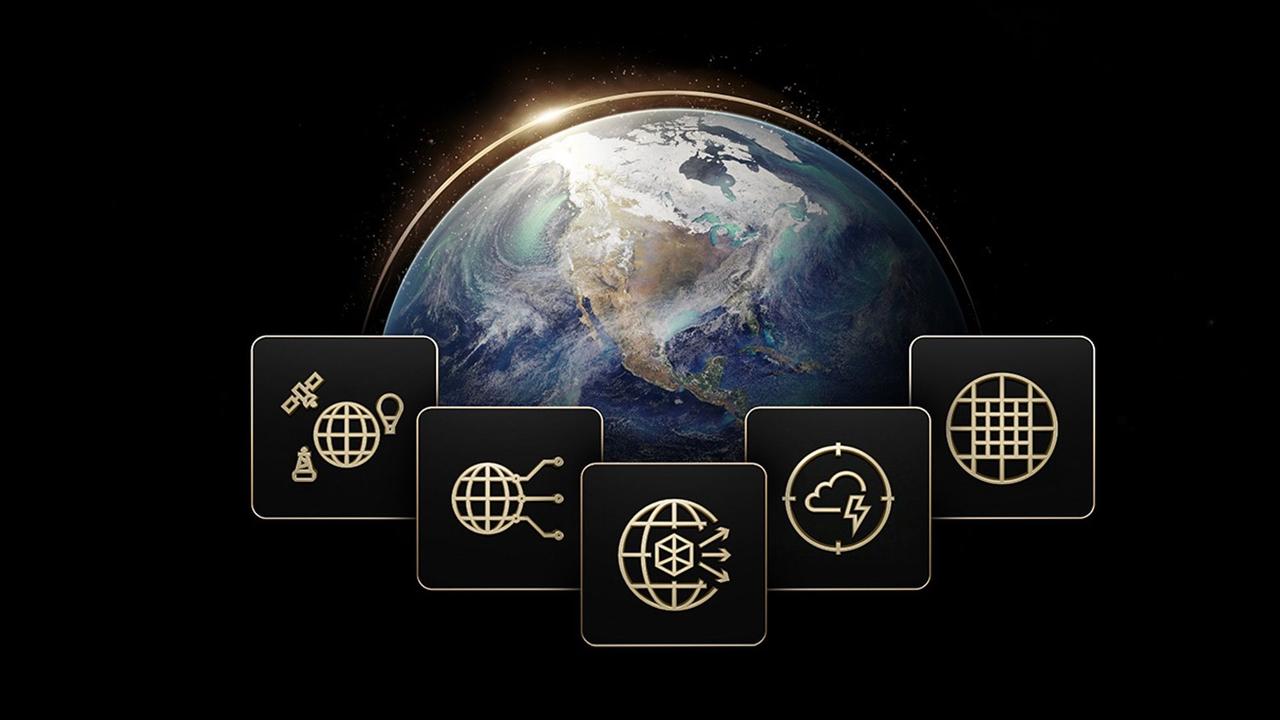
.
Source: NVIDIA
Energy Companies and Financial Firms Deploy Earth-2 for Operational Decisions
Energy companies are among the earliest adopters of accelerated weather forecasting technology. TotalEnergies is evaluating Earth-2 Nowcasting to improve short-term risk awareness, with Emmanuel Le Borgne, climate and weather forecast product manager, calling it "a major step forward in how advanced weather intelligence can be operationalized at scale"
2
3
. GCL, one of China's largest solar material producers, is running Nvidia Earth-2 models operationally for its photovoltaic prediction system, achieving more accurate predictions at lower cost2
.The Weather Company is evaluating Nowcasting for localized severe-weather applications, while Southwest Power Pool, collaborating with Hitachi, is using Nowcasting and FourCastNet3 to improve wind forecasting for grid reliability
2
. The insurance industry stands to benefit significantly from the technology's speed advantage. Once trained, AI is 1,000 times faster than traditional methods, allowing insurance companies to run 10,000-member ensembles to understand extreme weather events like major floods or hurricanes5
. S&P Global Energy is using CorrDiff to turn climate data into local insights for risk assessment, while global insurance group AXA is using FourCastNet to generate thousands of hypothetical hurricane scenarios2
.Related Stories

Open Models Aim to Democratize Weather Forecasting for Smaller Nations
Pritchard emphasized that the open-source AI models provide "fundamental building blocks used by everyone in the ecosystem -- national meteorological services, financial service firms, energy companies -- anyone who wants to build and refine weather forecasting models"
1
4
. The initiative seeks to democratize weather forecasting, which has historically been the domain of wealthier countries and large corporations with funds to pay for costly supercomputer time1
.Because Nowcasting is trained directly on globally available geostationary satellite observations rather than region-specific physics model outputs, its approach can be adapted anywhere on the planet with good satellite coverage
1
. This capability matters particularly for smaller countries where weather prediction is a national security issue. "For some users, it makes sense to subscribe to an enterprise centralized weather forecasting system. But for others like countries, sovereignty matters," Pritchard said. "Weather is a national security issue, and sovereignty and weather are inseparable"1
.Brightband, an AI weather tool provider and member of the Nvidia Inception program's Sustainable Futures initiative, is among the first to run Earth-2 Medium Range operationally, issuing real-world global forecasts daily
2
. Julian Green, cofounder and CEO of Brightband, noted that "the model being open source speeds up innovation, allowing easier comparison and improvements by other members of the weather enterprise"2
3
. The full-featured open-model family will be licensed for commercial and noncommercial use and made available on GitHub and Hugging Face3
.References
Summarized by

Navi
Related Stories
Nvidia Unveils Omniverse Blueprint for Earth-2: Revolutionizing Weather Forecasting with AI
19 Mar 2025•Technology

Nvidia's CorrDiff: Revolutionizing Local Weather Forecasting with AI
25 Feb 2025•Technology

Aardvark AI: Revolutionizing Weather Forecasting with Desktop-Powered Predictions
21 Mar 2025•Technology

Recent Highlights
1
Apple Plans Major Siri AI Overhaul in iOS 27 With Third-Party Chatbot Integration
Technology

2
OpenAI shuts down Sora after six months, ending Disney's $1 billion licensing partnership
Technology

3
AI chatbots validate you too much, making you less kind to others, Stanford study reveals
Science and Research

Recent Highlights
Today's Top Stories






Your Daily Dose of Curated AI News
Don’t drown in AI news. We cut through the noise - filtering, ranking and summarizing the most important AI news, breakthroughs and research daily. Spend less time searching for the latest in AI and get straight to action.

