Google's AI-Powered Weather Model Revolutionizes Forecasting Accuracy


7 Sources
[1]
Google AI predicts long-term climate trends and weather -- in minutes
A computer model that combines conventional weather-forecasting technology with machine learning has outperformed other artificial intelligence (AI)-based tools at predicting weather scenarios and long-term climate trends. The tool, described in Nature on 22 July, is the first machine-learning
[2]
AI helps to produce breakthrough in weather and climate forecasting
Artificial intelligence has helped to make a breakthrough in accurate long-range weather and climate predictions, according to research that promises advances in both forecasting and the wider use of machine learning. Using a hybrid of machine learning and existing forecasting tools, a model led
[3]
A new weather prediction model from Google combines AI with traditional physics
The model, called NeuralGCN and described in a paper in Nature today, bridges a divide that's grown among weather prediction experts in the last several years. While new machine-learning techniques that predict weather by learning from years of past data are extremely fast and efficient, they can
[4]
AI-powered weather and climate models are set to change the future of forecasting
UNSW Sydney provides funding as a member of The Conversation AU. A new system for forecasting weather and predicting future climate uses artificial intelligence (AI) to achieve results comparable with the best existing models while using much less computer power, according to its creators. In a
[5]

AI weather and climate forecasting advances with new model, study shows
Why it matters: Its creators say the new model, dubbed "NeuralGCM," has proven to be more accurate than other purely machine learning-based models for one- to 10-day weather forecasts, along with the top extended-range models in use today. Zoom in: The findings demonstrate how quickly the field of
[6]

A Google AI model is improving climate forecasting
The news comes weeks after a report concluded that the use of AI has increased Google's emissions by 48 percent. A new Google AI tool promises to improve climate prediction. NeuralGCM, developed by Google Research, uses physics-based modelling and AI to create fast and precise simulations of
[7]

Mixed AI/physics forecast model handles both weather and a bit of climate
Google/academic project is great with weather, has some limits for climate. Right now, the world's best weather forecast model is a General Circulation Model, or GCM, put together by the European Center for Medium-Range Weather Forecasts. A GCM is in part based on code that calculates the physics
Share
Copy Link
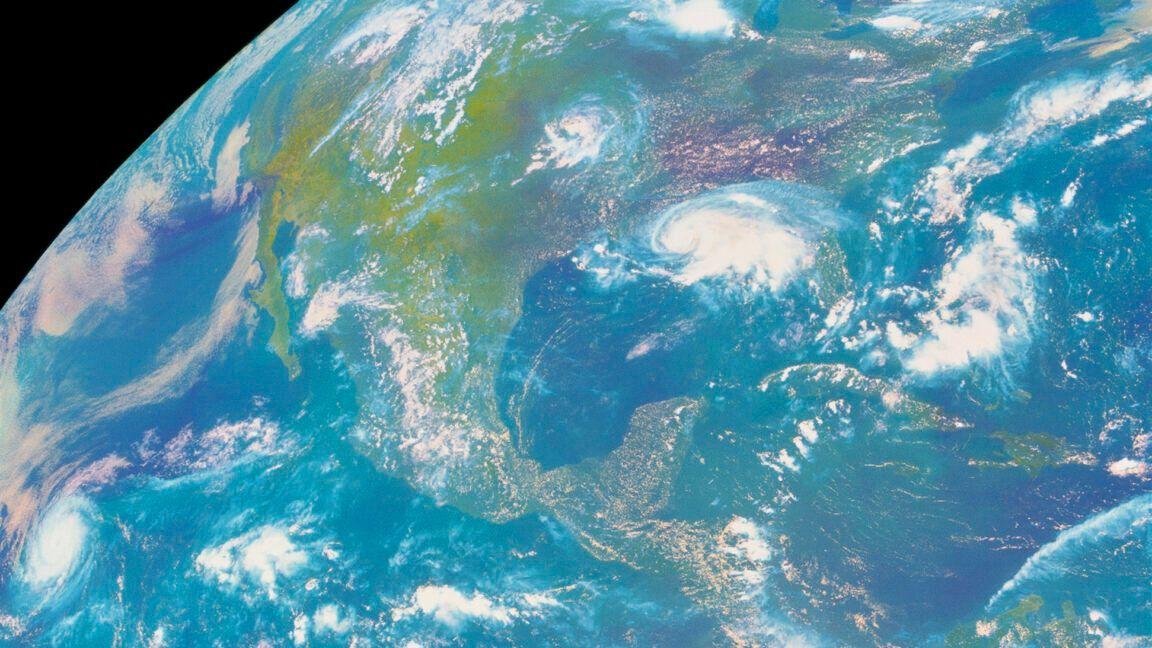
Google's new AI-driven weather prediction model, GraphCast, outperforms traditional forecasting methods, promising more accurate and efficient weather predictions. This breakthrough could transform meteorology and climate science.

Google Introduces GraphCast: A Game-Changer in Weather Forecasting
In a groundbreaking development, Google has unveiled GraphCast, an artificial intelligence-powered weather prediction model that promises to revolutionize the field of meteorology. This innovative system has demonstrated superior performance compared to traditional forecasting methods, potentially ushering in a new era of more accurate and efficient weather predictions
1
.Unprecedented Accuracy and Speed
GraphCast has shown remarkable capabilities, outperforming the European Centre for Medium-Range Weather Forecasts (ECMWF), which is widely considered the gold standard in weather prediction. The AI model can forecast weather patterns up to 10 days in advance with unprecedented accuracy, and it does so in mere minutes compared to the hours required by traditional supercomputer-based models
2
.Combining AI with Traditional Physics
What sets GraphCast apart is its unique approach of combining artificial intelligence with traditional physics-based models. This hybrid methodology allows the system to learn from vast amounts of historical weather data while still adhering to fundamental physical principles that govern atmospheric behavior
3
.Implications for Climate Science and Disaster Preparedness
The advent of AI-powered weather models like GraphCast has far-reaching implications for climate science and disaster preparedness. More accurate long-term forecasts could significantly enhance our ability to predict and mitigate the impacts of extreme weather events, potentially saving lives and reducing economic losses
4
.Related Stories

Challenges and Future Prospects
Despite its impressive performance, GraphCast and similar AI models face challenges in gaining widespread adoption. Concerns about the "black box" nature of AI decision-making and the need for extensive validation persist in the scientific community. However, as these models continue to prove their worth, they are likely to play an increasingly important role in weather forecasting and climate research
5
.Potential for Global Impact
The development of GraphCast represents a significant leap forward in weather prediction technology. As AI continues to evolve and integrate with traditional meteorological methods, we can expect more accurate forecasts, improved climate models, and better-informed decision-making in various sectors that rely on weather information. This breakthrough has the potential to transform not only how we understand and predict weather patterns but also how we prepare for and respond to the challenges posed by our changing climate.
References
Summarized by

Navi
[4]
Related Stories
Google's WeatherNext 3 AI Weather Model Uses Live Satellite Data for Hourly High-Resolution Forecasts
03 Sept 2026•Technology
Google DeepMind's GenCast AI Model Revolutionizes Weather Forecasting Accuracy
05 Dec 2024•Technology

Microsoft's Aurora AI: Revolutionizing Weather Forecasting and Environmental Predictions
20 May 2025•Technology

Recent Highlights
1
Microsoft and Nvidia Launch Surface Laptop Ultra: A $2,599 AI-Ready PC With RTX Spark Chip
Technology

2
Google Unveils Gemini 4 Argon AI Model, Restricts Access to Trusted Cyber Defenders
Technology
3
Trump Consulted Grok AI Before Ordering Venezuela Invasion and Capture of Nicolás Maduro
Policy and Regulation

Recent Highlights
Today's Top Stories






Don’t drown in AI news. We cut through the noise - filtering, ranking and summarizing the most important AI news, breakthroughs and research daily. Follow topics that matter to you and stay ahead.


