Nvidia restarts H200 chip production for China as regulatory approvals finally clear the path


22 Sources
22 Sources
[1]
With H200s set to flow into China, Groq is reportedly set to follow -- Nvidia is allegedly preparing a custom version of inferencing chip to penetrate region
Even Nvidia is looking to older products amid the AI-induced shortages. The silicon silk road to China is open once again: Beijing has given full approval for Nvidia to sell its H200 last-generation GPUs in the region. This follows months of back-and-forth talks between the U.S. government, Nvidia, and China, and though the Trump administration approved Nvidia sales, the Chinese government still needed to give the final nod. Now that it has it, Nvidia is gearing up for a big sales pitch to Chinese companies, Reuters reports, and not just for its H200 GPU. CEO Jensen Huang has said it has already received orders for the H200 chips, but it's arguably the Groq custom AI inferencing hardware that Nvidia is more keen to sell. After making a $14 billion deal with Groq, which develops custom AI ASICs -- known as Language Processing Units (LPUs) -- Nvidia wants to make a return on its investment. Can the company inject itself into the burgeoning market for Chinese inferencing chips? An oldie but a goodie On the enterprise front, Nvidia had to restart the production line for its H200 chips, having spent much of the past 12 months pushing its successor, the B300, based on their newer Blackwell architecture, the same one inside RTX 50-series GPUs. The company ultimately wound down H200 production because of the regulatory hurdles it was forced to jump through, both at home and in China. With China prioritizing its domestic industry and hesitant to let Nvidia hardware build a monopoly, it didn't seem like H200 could make its way to the region in any significant quantities. H200 may be last-generation, but that doesn't mean it's incapable. It's much more powerful than the H20 AI GPUs Nvidia previously sold to China to curb its access to high-end hardware -- around six times as much. Now that H200 is back on the menu, Nvidia has reportedly received a lot of interest from Chinese companies for it. CEO Jensen Huang said earlier this week that Nvidia had received licenses to supply "many customers in China" and had received orders from a number of companies. To cater to them, Nvidia was restarting the H200 production line, with Huang himself saying that the "supply chain is getting fired up." This will be exciting news for Nvidia investors, as Nvidia reportedly didn't include the potential revenue from selling H200 to China in its suggested $1 trillion revenue plan for the company in 2027. But Nvidia won't make the largest returns on these sales. Although the Trump administration has approved some sales of H200 chips to China, it comes with a 25% revenue share with the U.S. government. Nvidia will have to pay the fee when the chips arrive in the U.S. from their fabrication facilities for approval, before being re-exported. But H200 isn't the only new(ish) hardware that Nvidia will use to improve its market position in China. The company is also adapting its Groq custom inferencing chips for the market, too. Groq to take on China Groq is the name of the AI inferencing hardware company Nvidia acquired in late-2025 -- not to be confused with Elon Musk and xAI's Grok. Technically, Nvidia just acquired a license to use the Groq technology and hired on all its top staff, but that's an acquisition in every way but name, and it conveniently gets around any anti-trust investigations or regulatory approval. These LPUs are very efficient and capable at handling inferencing, day-to-day AI workloads. Although Nvidia's GPUs are likely to remain the gold standard for training large language models for some time to come, the inferencing market is much more competitive, and especially so in China. Hence why even the mighty Nvidia needed to look outside its own organization to find the competitive edge it needed. Developed by company founder and ex-Google TPU designer Jonathan Ross, Groq's LPUs are being built into Nvidia's Vera Rubin server stacks to deliver a comprehensive AI platform that keeps Nvidia at the core, even when it's the licensed technology that's doing the work. As with its GPUs, Nvidia looks set to adapt its Groq LPUs for China. It doesn't have to downgrade their performance, according to Reuters' sources, but it can't sell Vera Rubin to China, so it may need to find a way to sell the LPUs separately, or bundle them with older GPU technology. Using Groq would keep CUDA relevant in the region, deepening its foothold on developers. Whatever configuration Nvidia ends up with, the company will need to convince Chinese companies to adopt it. Where they don't have homegrown training hardware, Chinese tech giants like Baidu and Huawei are developing their own inferencing chips and have received substantial backing from the Chinese ruling party to accelerate their development. And it's pushing to develop advanced chipmaking tools domestically, too. There's also stiff competition from the likes of Meta, which might be working on the pipe-dream-potential of superintelligent AI, but it's also building its own MTIA inferencing chips, with a long road ahead for future releases. And Amazon and Google have their own custom TPUs, which are very competitive within the field. With that in mind, it's no wonder Nvidia is rushing ahead to take advantage of its latest acqui-hire with Groq. The LPUs designed for the Chinese market are reportedly targeting a May release. With H200s also set to flow into China, Nvidia's market share within the region will undoubtedly rise from its nadir of "0%", a figure Huang touted last fall. Tom's Hardware has reached out to Nvidia for additional comment.
[2]
Nvidia CEO Says Company Is Firing Up H200 Production for China
Nvidia Corp. Chief Executive Officer Jensen Huang said the company is firing up manufacturing of H200 AI accelerators for customers in China, a sign of progress in the chipmaker's effort to reenter the vital market. At a press conference on Tuesday, Huang said Nvidia had been licensed for "many customers in China" for H200 sales and is in the process of "restarting our manufacturing." That outlook is different than it was a couple of weeks ago, he said. Nvidia has been working to reestablish sales of its AI processors in China, a market that was virtually closed to such products by US export restrictions. The Trump administration has begun allowing Nvidia and rival Advanced Micro Devices Inc. to sell less-powerful versions of their chips in the country, but licenses from the US government are required. During a conference call last month, the company said it had only secured one license from the US to ship a small number of its H200 accelerators to China. Though the H200 is less advanced than Nvidia's current AI accelerators -- used to train and run artificial intelligence models -- it's still more powerful than what's available locally in the country.
[3]
Chinese authorities approve Nvidia's H200 AI chip sales, source says
NEW YORK, March 17 (Reuters) - Chinese authorities have granted approval for multiple Chinese companies to purchase H200 AI chips from Nvidia, according to a person familiar with the situation. Earlier on Tuesday, Nvidia CEO Jensen Huang said at a press conference in San Jose, California that the semiconductor company had been licensed for "many customers in China" for the H200, and had received purchase orders from several companies. Nvidia had been waiting for licenses from both the U.S. and China for months. The semiconductor company has received some U.S. approvals and the source said the chipmaker had now also received licenses for many customers in China from Beijing. A spokesperson for the Chinese embassy in Washington said they were "not aware of the specifics," and directed questions to "the competent authorities." Huang added that Nvidia was in the process of restarting manufacturing of the H200. The company halted production amid regulatory hurdles in the U.S. and China, to an FT report last month. CNBC also reported on Tuesday that Huang told them the company now has clearance from both the U.S. and China. Reporting by Karen Freifeld; Editing by Chris Sanders and Kevin Buckland Our Standards: The Thomson Reuters Trust Principles., opens new tab
[4]
Nvidia nears AI chip exports to China after US approval delays
Nvidia is making fresh preparations to start selling its AI chips in China after receiving "many" US government approvals and product orders from Chinese customers within the past two weeks. Chief executive Jensen Huang on Tuesday said Nvidia had restarted manufacturing H200 AI chips to sell to China after telling partners to pause production earlier this year due to uncertainty around regulatory approval. "We've been licensed for many customers in China for the H200. We have received purchase orders from many customers. And we are in the process of restarting our manufacturing," Huang told reporters at the company's annual GTC conference in San Jose. The situation was "different than it was two weeks ago . . . our supply chain is getting fired up", Huang added. Nvidia has been battling to regain access to the Chinese market for its advanced AI chips for almost a year, as it navigates US President Donald Trump's volatile trade policy towards Beijing. Under its latest deal with the White House, announced in December, Nvidia is permitted to sell Chinese customers the H200 chips -- which are a generation behind its current products -- while giving the US a 25 per cent cut of income from these sales. Nvidia restarted production of the H200 following the deal. But it ran up against longer-than-expected US national security reviews of the licences as well as hesitancy from Beijing to authorise imports on a large scale. Nvidia then paused production. Huang's latest comments suggest Chinese tech giants such as Alibaba and ByteDance could soon have access to Nvidia's AI technology. Chinese regulators must still approve the import of the chips. Trump's break with historically tight US export controls on advanced semiconductors used to develop cutting-edge AI models has prompted pushback from national security hawks in Washington. "President Trump's intention is that US should have a leadership position and access to Nvidia's best technology," Huang said on Tuesday. "However, he would also like us to compete worldwide and not concede those markets unnecessarily." Huang has said China's AI chip market could be worth up to $50bn, offering a major revenue stream for the $4.5tn chip company. This week, Trump asked to postpone a long-awaited summit with China's President Xi Jinping, where AI technology exports were expected to be discussed, as he grapples with the war with Iran.
[5]

Jensen Huang says Nvidia has received orders from China and is 'restarting our manufacturing'
NVIDIA CEO Jensen Huang speaks at the NVIDIA GTC global AI conference in San Jose, California, U.S. March 16, 2026. After an extended delay in selling into the world's second-largest economy, chipmaker Nvidia is gearing up to provide some customers in China with its H200 processors, CEO Jensen Huang said on Tuesday. "We have received purchase orders, and we're in the process of restarting our manufacturing," Huang told reporters at the company's GTC conference in San Jose, California. "That's new news for all of you, and it's different than it was two weeks ago or three weeks ago, but that's our condition today, and and our supply chain is getting fired up." Huang told CNBC that the company now has clearance from both sides. China once accounted for at least one-fifth of Nvidia's data center revenue, but the company has been shut out of the country since being told by the Trump administration in April that it would require a license to export chips there and to a handful of other countries. The company said it would take a $5.5 billion charge due to the export restriction. Prior export controls forced Nvidia to develop a lower-capability chip for the Chinese markets called the H20. After President Donald Trump initially halted those sales, he changed course in December and allowed Nvidia to ship the more advanced H200 chip to China, provided the U.S. got a 25% cut of sales. But as of last month, there had still been virtually no movement on that front. Following the company's quarterly earnings report on Feb. 25, CFO Colette Kress told analysts that a "small number of H200 products" had been approved for sale to China by the U.S. government, but "we have yet to generate any revenue." The delay was tied to reports of security scrutiny in both countries, despite Huang's lobbying in Washington, D.C. and a trip to China earlier this year. Even without sales into China, Nvidia reported revenue growth of 73% in the latest quarter, marking an 11th straight period of growth in excess of 55%. For the current quarter, Nvidia forecast growth of about 77%, and said it was assuming no data center revenue from China in its guidance. U.S. license requirements remain burdensome, with caps on shipments, mandatory third-party testing and the cut of sales that goes to the government.
[6]
Exclusive: Nvidia preparing Groq chips that can be sold in Chinese market, sources say
SAN JOSE, California, March 17 (Reuters) - Nvidia is preparing a version of its Groq artificial-intelligence chips that can be sold to the Chinese market, two sources familiar with the matter told Reuters on Tuesday. Nvidia acquired Groq, an AI chip startup, late last year in a $17 billion deal and showed a new lineup of products based around its chips at its annual developer conference in San Jose, California, this week. The move to develop a version of the chips for the Chinese market comes as Nvidia CEO Jensen Huang said that the company has restarted production of its H200 chips, the predecessor to its current flagship chip, after obtaining export licenses from U.S. President Donald Trump's administration and purchase orders from Chinese customers. Nvidia plans to tap Groq's chips for what is known as inference, where AI systems answer questions, write code or carry out tasks for users. In the products Nvidia showed this week, the company plans to use its forthcoming Vera Rubin chips, which cannot be sold in China, in combination with the Groq chips. While Nvidia dominates the market for training AI systems, it faces much more competition in the inference market. Several major Chinese firms, including AI heavyweights such as Baidu (9888.HK), opens new tab, already produce their own inference chips. The chips being readied for China are not downgraded versions or made specifically for the Chinese market, one of the sources told Reuters. But the new variant can be adapted to work with other systems, the source said, adding that the Groq chip is expected to be available in May. Nvidia did not immediately respond to a request for comment. Reporting by Stephen Nellis and Max A. Cherney in San Jose, California; Additional reporting by Yelin Mo in Beijing; Editing by Peter Henderson and Matthew Lewis Our Standards: The Thomson Reuters Trust Principles., opens new tab * Suggested Topics: * Artificial Intelligence Max A. Cherney Thomson Reuters Max A. Cherney is a correspondent for Reuters based in San Francisco, where he reports on the semiconductor industry and artificial intelligence. He joined Reuters in 2023 and has previously worked for Barron's magazine and its sister publication, MarketWatch. Cherney graduated from Trent University with a degree in history.
[7]

Nvidia restarting production for H200 chips for sales in China
Why it matters: Nvidia is eager to re-enter the crucial Chinese market, but its efforts have been hampered by U.S. export restrictions and Beijing's push to build a domestic chip industry. Driving the news: "We've been licensed for many customers in China for H200," Huang said, speaking to reporters at the company's GTC event in San Jose, California. "We have received purchase orders from many customers, and we're in the process of restarting our manufacturing." Catch up quick: Nvidia in late February said that small amounts of H200 products for China-based customers had been approved by the U.S. government, but that it did not know whether any imports will be allowed into China. * Beijing has to approve any sales into the country, and has been pressing domestic companies to use Chinese-made chip -- part of an effort to boost the domestic industry led by Huawei Technologies. * The H200, though from Nvidia's previous generation of products, is a more powerful chip than anything offered in the country. Scaring with 'science fiction' Huang also cautioned that some in the tech world are "scaring everybody about a science fiction version of AI," something he said strikes him as arrogant. * His comment comes after Anthropic drew red lines around U.S. government use of AI, specifically around fully autonomous warfare and for mass surveillance of Americans. Zoom in: Asked by Axios if there are places that AI shouldn't go, Huang responded that there are a lot more places that the technology needs to go, including protecting against cyber attacks. * "We have to just continuously learn and be a little bit more humble about what we know and don't know," Huang said. "Scaring everybody about a science fiction version of AI is a little bit too arrogant." * "Warning people is one thing," he said. "Scaring people is a completely different thing." The big picture: Huang has used the event to tout not just Nvidia's range of new chips and technologies, but also the giant potential for the market. On Monday, Huang forecast that Nvidia will generate more than $1 trillion in revenue by 2027 from its mainstay AI chips.
[8]

Nvidia is going back to China
Nvidia $NVDA has received purchase orders from Chinese customers for its H200 processors and is restarting production, CEO Jensen Huang said this week -- marking the first concrete movement toward resuming chip sales to China after months of regulatory maneuvering in both the U.S. and China. "We have received purchase orders, and we're in the process of restarting our manufacturing," Huang told reporters at the company's GTC conference in San Jose, according to CNBC. "Our supply chain is getting fired up." Huang said Nvidia now has regulatory clearance from both the U.S. and China. The sticking point had been China's side of the approval process, according to Reuters. U.S. export licenses were in place, but Beijing had held back from clearing imports. An SEC filing from Nvidia last month disclosed that the U.S. had issued a license in February covering limited H200 shipments to specific Chinese buyers. A source familiar with the matter told Reuters that China has now issued licenses for many customers. A spokesperson for the Chinese embassy in Washington said they were "not aware of the specifics." The H200 is Nvidia's second-most powerful AI chip. It sits below the company's current-generation Blackwell line, which remains off-limits for export to China under the terms of the arrangement. Export licenses come with conditions: The U.S. takes 25% of chip sale proceeds, shipments are capped, and sales must go through third-party verification, according to CNBC. Before export controls took hold, China was responsible for roughly 13% of Nvidia's total revenue and generated at least a fifth of its data center business. In its most recent earnings guidance, Nvidia assumed zero data center revenue from China -- meaning any resumed sales would represent additional upside, according to CNBC. Huang had previously said the company was "100% out of China" and had been lobbying Washington to find a path back. The H200 export framework emerged earlier this year as a compromise between a full ban and unrestricted access to Nvidia's most advanced hardware. In January, Reuters reported that China had granted preliminary approval to ByteDance, Tencent, Alibaba, and AI startup DeepSeek to import the chips. A separate prior attempt to revive Nvidia's China business -- through a lower-capability H20 chip -- stalled after Beijing signaled that state-linked firms should favor domestic alternatives.
[9]

China reportedly approves imports of Nvidia's H200 GPU, but the US government may cap exports to individual Chinese companies
We reported recently that the US government may cap exports of Nvidia's H200 chip to China. But for that cap to be meaningful, China would need to approve imports of H200 in the first place. According to multiple sources, that has now happened. Both Reuters and the Wall Street Journal report that Chinese authorities have now approved the importation of H200 AI GPUs. H200 is the full-fat version of Nvidia's Hopper generation of AI GPUs. In other words, it's not the cut-down H20 GPU that Nvidia created to slip in under earlier export restrictions that limited the maximum capability of AI GPUs that could be sent to China. However, H200 is not actually Nvidia's most powerful AI GPU. It's a full generation behind Nvidia's Blackwell AI GPUs, such as the B200. What's more, Nvidia is very much tooling up for Rubin, its next-gen architecture to follow Blackwell, and says the chips -- the AI versions, not any Rubin-class GPUs for gaming, sadly -- will begin shipping in the second half of this year. While H200 might be older technology, the Chinese approval remains important for Nvidia. China represented 13% of Nvidia's total revenue, according to Reuters. That has been dramatically curtailed following restrictions from both the US and Chinese governments. Indeed, Nvidia actually stopped production of H200 in response to the effective China ban. But the company is now spooling up the massive processors once again. "Our supply chain is getting fired up," Nvidia CEO Jensen Huang said in reference to the restart of H200 sales to China at a press conference at the GTC 2026 event. Huang says that Nvidia has now received H200 orders from "many customers in China." Of course, ongoing exports of H200 GPUs to China will also require approval from the US government. Earlier this month, we reported that the US government may cap those exports to 75,000 GPUs for each individual Chinese customer. Notably, that 75,000 cap also includes any AI chips supplied by Nvidia's main competitor, AMD. What that actually means in practice, should the cap even be implemented, remains to be seen. Cynics might assume that the cap might be easily circumvented should Chinese authorities aid in obscuring the true identity of various entities ordering GPUs from Nvidia and AMD. If you are wondering why China might want to limit GPU imports in the first place, that's an intriguing question of its own. Presumably, the Chinese authorities are playing off two competing goals. Firstly, China wants to develop its own AI models and, right now, the best hardware with which to achieve that involves American-designed GPUs. On the other hand, China likely also wants to encourage the design and manufacture of its own AI hardware, freeing itself from any dependence on US hardware. Limiting GPU imports could have that effect. Balancing those two not entirely complementary aims is probably at the crux of current Chinese decision-making. The US, meanwhile, wants to leverage its commercial advantage in AI while also trying to limit China's ability to compete at the very cutting edge of AI model development. All of which means this whole GPU-export thing is set to run and run as the US and China engage in a delicate dance of competing interests and aims.
[10]

Nvidia says restarting production of China-bound chips
San José (United States) (AFP) - Nvidia chief Jensen Huang on Tuesday said the AI technology powerhouse is restarting production of its high-performance chips for clients in China. "We have received purchase orders from many customers, and we're in the process of restarting our manufacturing," Huang told journalists at Nvidia's annual developers conference in San Jose, California. "Our supply chain is getting fired up." The situation has changed from two weeks ago, according to Huang. A US commerce official in late February said a high-end Nvidia chip that can train and run artificial intelligence systems has not yet been sold to Chinese companies despite softened export restrictions. The H200 chip had until recently been barred from sale in China by Washington over national security concerns. President Donald Trump said in December he had reached an agreement with his Chinese counterpart Xi Jinping to ease the restrictions, a move some lawmakers have warned could help China's military. When asked by the US House Foreign Affairs Committee how many H200 chips had been sold to Chinese end-users, Commerce Department export enforcement official David Peters said: "My understanding is that so far none have been sold." The H200 deal -- under which the US government gets a 25 percent cut of sales -- was confirmed by the Commerce Department in January. But conditions imposed on their sale have reportedly made it difficult for shipments to be approved. "I think President Trump would like us to compete worldwide and not concede those markets unnecessarily," Huang said. Beijing is ramping up domestic chip development and production in a bid to rival the industry-leading designs of California-based Nvidia, the world's most valuable company. Nvidia's top-of-the-range chips, the Blackwell and forthcoming Rubin series, remain banned for sale in China and were not included in the H200 agreement. When asked about Nvidia's dependence on Taiwan-based chip producer TSMC and the potential for China to "act on" that country, Huang said "my only hope is that we can all work together, stay at peace and look at the big picture." Huang said a goal of the US commerce secretary to have 40 percent of US chips made domestically will be "very challenging" to achieve given how fast demand is growing.
[11]

Nvidia CEO Jensen Huang reveals chip sales in China are about to restart - SiliconANGLE
Nvidia CEO Jensen Huang reveals chip sales in China are about to restart After surprising the tech world on Monday with a prediction that his company would see at least $1 trillion in chip orders through 2027, Nvidia Chief Executive Jensen Huang spent today discussing the global dynamics and market forces that could make this a reality. Huang met with the media for nearly two hours today during the GTC gathering in San Jose, answering a wide range of questions about Nvidia's announcements this week and the company's vision for AI. He took several questions about China, an area of particular interest given the potentially lucrative nature of the country's future business for the chip giant. Previous U.S. restrictions on the sale of Nvidia's H200 processor in China have limited the firm's ability to sell to customers there. When asked about China in a similar session with the media during CES in January, Huang said that he was waiting to see the purchase orders. That situation has apparently changed. "We have received purchase orders from many customers and we're in the process of restarting our manufacturing," Huang said on Tuesday. "Our supply chain is getting fired up." While the restart of its business in China was good news for the company, there remain questions about Taiwan and the prospect of China invading the territory and cutting off chip exports. Nvidia is expected to become the largest customer for the Taiwan Semiconductor Manufacturing Co. later this year, and any disruption in the supply chain for its AI chips could have a significant impact on the company's growth. "My only hope is that we can all work together, stay in peace, look at the big picture, and stay calm," Huang said. "I am 100% certain that the world will depend on Taiwan for a very long time." A disruption in its supply chain from Asia could affect another key part of Nvidia's future. This week's announcements included the debut of the Groq 3 language processing unit or LPU, technology that will play a central role in the firm's AI inferencing strategy. Made by the foundry division of Samsung Electronics in South Korea, Groq is an integral piece of Nvidia's focus on AI inferencing for multi-agent workloads. Pairing of the Groq 3 LPX with the new Vera Rubin NVL72 rack is designed to maximize efficiency across power, memory and compute. It could also maximize the revenue picture for Nvidia, according to Huang, who described how Groq's 25% role in its processing and storage solutions could add a similar percentage to its forecast for chip revenues. "Theoretically, that $1 trillion could become $1.25 trillion," Huang told the media. "The entire storage industry is going to follow us." Nvidia's role as a central player in autonomous technology is also expected ultimately to contribute to its revenues. Nvidia's latest releases included blueprints for AI training data generation to enable massive-scale processing for the AI models needed to drive the next generation of robots. Although Nvidia's automotive segment contributed only 1% to the firm's total revenues in the past year, Huang expressed confidence that this picture will ultimately change. "Most trillion-dollar businesses started at zero at one point," Huang said, bringing up the example of its CUDA computing platform and programming model. "CUDA was zero percent of our business and 90% of our cost. It turned out that everything we did in the beginning cost us a lot of money and generated nothing." Nvidia's announcements included an Open Physical AI Data Factory Blueprint to accelerate robotics, vision and autonomous vehicle deployment. The company's bet on physical AI is grounded in a belief that customers will ultimately need the full spectrum of Nvidia's compute architecture to achieve success. "Nvidia's autonomous vehicle business includes three computers," Huang noted. "The total business is much larger than people think. Customers are buying one of these computers or all three computers from us." Missing from this week's GTC gathering has been much information about Feynman, Nvidia's next-generation GPU microarchitecture that is planned for release in 2028. Although he briefly referenced Feynman during his keynote on Monday, Huang was asked to elaborate on the technology during his media briefing, and he had nothing further to add. Huang was more forthcoming in response to questions about the ethics surrounding AI. The issue has been in the news recently over controversy surrounding Anthropic PBC's refusal to allow U.S. government use of its technology for mass surveillance or to build autonomous weapons. OpenAI Group PBC subsequently signed a $200 million deal with the Pentagon after Anthropic was removed from a contract. "AI shouldn't break the law, AI should not promise functionality it does not have," Huang said. "We need AI to do a lot of great things for us. We need AI agentic systems to be inside of security. I need superfast AI agents to go protect me." As SiliconANGLE's analysts have noted, the AI industry is rapidly shifting from training models to inference, the process of running them to generate results, and competitive advantage will be gained by those that can control and optimize the data path. Nvidia has made the case this week that it intends to define that path, which is keeping Huang, the man at the center of this key transformation, a very busy man indeed. "My experience with Nvidia today is it's making me busier today that I was six months ago," Huang said Huang, who waxed wistful about people a century ago having time drink lemonade on their porch. "My philosophy is, 'Don't get fired, don't get bored and don't die.' But each one of those three are very high-risk."
[12]

Nvidia preparing Groq chips that can be sold in Chinese market, sources say
Nvidia licensed technology from Groq, an AI chip startup, late last year in a $17 billion deal and showed a new lineup of products based around its chips at its annual developer conference in San Jose, California, this week. Nvidia is preparing a version of its Groq artificial-intelligence chips that can be sold to the Chinese market, two sources familiar with the matter told Reuters on Tuesday. Nvidia licensed technology from Groq, an AI chip startup, late last year in a $17 billion deal and showed a new lineup of products based around its chips at its annual developer conference in San Jose, California, this week. The move to develop a version of the chips for the Chinese market comes as Nvidia CEO Jensen Huang said that the company has restarted production of its H200 chips, the predecessor to its current flagship chip, after obtaining export licenses from U.S. President Donald Trump's administration and purchase orders from Chinese customers. Nvidia plans to tap Groq's chips for what is known as inference, where AI systems answer questions, write code or carry out tasks for users. In the products Nvidia showed this week, the company plans to use its forthcoming Vera Rubin chips, which cannot be sold in China, in combination with the Groq chips. While Nvidia dominates the market for training AI systems, it faces much more competition in the inference market. Several major Chinese firms, including AI heavyweights such as Baidu , already produce their own inference chips. Huang underscored the change in his speech at the developer conference on Monday. "The inference inflection has arrived," he said. "And demand just keeps on going up," he added, saying the revenue opportunity for Nvidia AI chips may reach at least $1 trillion through 2027. The chips being readied for China are not downgraded versions or made specifically for the Chinese market, one of the sources told Reuters. But the new variant can be adapted to work with other systems, the source said, adding that the Groq chip is expected to be available in May. Nvidia did not immediately respond to a request for comment. (Reporting by Stephen Nellis and Max A. Cherney in San Jose, California; Additional reporting by Yelin Mo in Beijing; Editing by Peter Henderson, Matthew Lewis and Shri Navaratnam)
[13]

Jensen Huang Says 'Supply Chain Is Getting Fired Up' For China: What Does It Mean For NVDA? - NVIDIA (NASDAQ:NVDA)
Chinese AI stocks surged, but prediction market traders aren't fully buying it. H200 Is Back Huang told reporters Tuesday that Nvidia has H200 purchase orders from Chinese customers and is restarting manufacturing. "Our supply chain is getting fired up," he said. The reversal has been swift. As recently as Feb. 25, CFO Colette Kress told analysts Nvidia had "yet to generate any revenue" from China. But the deal comes with strings; U.S. inspections, a 25% duty, and a possible cap of 75,000 chips per customer. OpenClaw Sends Chinese AI Stocks To Record Highs Huang told CNBC's Jim Cramer that OpenClaw is "the most successful open-sourced project in the history of humanity." MiniMax surged 22% and Zhipu jumped 14% in Hong Kong on Wednesday. Nvidia launched NemoClaw, an enterprise version of the platform, at GTC. The same Chinese customers buying H200 hardware are the ones building on OpenClaw, a feedback loop where software adoption drives chip demand, but also a single point of political risk. The Groq Wildcard China isn't the only revenue stream the market may be underpricing. In the same Cramer interview, Huang confirmed Groq Version 3 is already in production and will handle roughly 25% of Nvidia's workloads. Cramer noted the December acquisition will soon generate a "huge amount of money." None of that is included in the $1 trillion Blackwell and Vera Rubin projection through 2027. For all of Huang's trillion-dollar projections and expanding hardware empire, prediction markets aren't convinced the music will play forever. What Bettors Think Polymarket's "AI bubble burst" contract prices a 21% chance of an industry downturn by Dec. 31, 2026, on more than $2 million in volume. The contract defines a burst partly as NVDA falling 50% from its all-time high. Polymarket thinks there is a 69% Nvidia retains its status as largest company by market cap, at the end of this year. One in five bettors with real money on the line think the AI trade could unwind this year, even as Huang projects $1 trillion-plus through 2027. While the stock remains flat today at $182, the gap between Huang's trillion-dollar roadmap and the skepticism of the prediction markets is widening. For now, the supply chain is 'fired up'; but one in five bettors is already looking for the exit. Image: Shutterstock Market News and Data brought to you by Benzinga APIs To add Benzinga News as your preferred source on Google, click here.
[14]

NVIDIA's China Exile Might Finally Be Over, as H200 Comes Back Into Production and a Groq-Based Solution Heads to Market
NVIDIA's CEO recently revealed that the company has witnessed a breakthrough in its business in China, and following that, the firm has begun preparing for a new Groq solution as well. The NVIDIA-China fiasco has been one to watch, especially since it has been one inconsistent venture for Jensen and his team. Regulatory hurdles and the evolving demands of domestic hyperscalers have forced NVIDIA to revise its plans several times; however, this time, it appears Jensen might finally have the breakthrough he needs. A CNBC report reveals that NVIDIA's CEO has confirmed the H200 chip is back in production and that the company has received purchase orders from China. We have received purchase orders, and we're in the process of restarting our manufacturing. That's new news for all of you, and it's different than it was two weeks ago or three weeks ago, but that's our condition today ... and our supply chain is getting fired up. - CNBC The problem with the H200 AI chips that NVIDIA recently faced is that the company has to navigate the bureaucratic overhead involved in getting its shipments approved, not just on the US side but also in China. In a report, we discussed how hurdles from Chinese regulators are 'convincing' NVIDIA to divert H200 AI chip production to Vera Rubin, but it appears NVIDIA isn't leaving China anytime soon. With Jensen disclosing that H200 production has been restarted, we could expect shipments to begin within weeks, provided another hurdle doesn't emerge. Interestingly, NVIDIA's Groq partnership will also influence Chinese hyperscalers, as a Reuters report indicates that new chips are being prepared for the region. As Vera Rubin isn't available in China, Groq's LPUs will likely be paired with the Hopper generation, which would be a surprising move by NVIDIA. At the same time, the idea is to target the inference demand in the region as well. Since AI has reached an 'inflection' point with inference, China sees tremendous compute requirements as well, which is why the urgent Groq + Hopper pair has been made. Groq chips are expected to be available to Chinese customers by May, and NVIDIA isn't expected to offer a downgraded version, so likely the 3rd-generation LPUs. It would be interesting to see whether the inference throughput of Groq with Hopper is something China considers, but given the region's limited options, it is likely to be a popular choice.
[15]
Chinese authorities approve Nvidia's H200 AI chip sales, source says - The Economic Times
Chinese authorities have granted approval for multiple Chinese companies to purchase H200 AI chips from Nvidia, according to a person familiar with the situation. Earlier on Tuesday, Nvidia CEO Jensen Huang said at a press conference in San Jose, California that the semiconductor company had been licensed for "many customers in China" for the H200, and had received purchase orders from several companies. Nvidia had been waiting for licenses from both the US and China for months. The semiconductor company has received some US approvals and the source said the chipmaker had now also received licenses for many customers in China from Beijing. A spokesperson for the Chinese embassy in Washington said they were "not aware of the specifics," and directed questions to "the competent authorities." Huang added that Nvidia was in the process of restarting manufacturing of the H200. The company halted production amid regulatory hurdles in the US and China, according to an FT report last month. CNBC also reported on Tuesday that Huang told them the company now has clearance from both the US and China.
[16]
Nvidia Developing New AI Chips for China Using Groq Technology; Availability Could Come As Early As May: Report - Baidu (NASDAQ:BIDU), NVIDIA (NASDAQ:NVDA)
Nvidia Eyes China With New AI Chip Strategy Unlike prior export-compliant chips, the Groq-based processors are not downgraded versions specifically designed for China, Reuters reported on Tuesday, citing sources. Instead, they are adaptable for use across different systems. The Groq-based chips are expected to become available as early as May, the report added. Nvidia did not immediately respond to Benzinga's request for comments. The company earlier this week showcased products built around this architecture at its annual developer conference in San Jose, California. Navigating Export Restrictions The new chips are part of Nvidia's broader strategy to continue serving China despite U.S. export controls. While speaking with reporters at the GTC conference, Nvidia CEO Jensen Huang also revealed that the company has resumed production of its H200 chips. Focus Shifts To AI Inference Nvidia plans to deploy these chips for AI "inference," the stage where systems generate responses, write code, or perform tasks. While Nvidia dominates AI training hardware, the inference segment is becoming increasingly competitive. Chinese firms, including Baidu Inc. (NASDAQ:BIDU), have already developed their own inference chips, intensifying pressure on Nvidia in the region. $1 Trillion Opportunity Ahead During his keynote, Huang highlighted the growing importance of inference, calling it a major inflection point for the industry. He also said demand continues to accelerate and projected Nvidia's AI-related revenue opportunity could reach $1 trillion by 2027. Price Action: On Tuesday, Nvidia shares settled at $181.93, slipping 0.69%. It rose 0.22% to $182.33 in after-hours trading, according to Benzinga Pro. Benzinga Edge Stock Rankings show the stock remains weak over the short and medium term but is trending higher in the long run, with a Growth score in the 97th percentile. Disclaimer: This content was partially produced with the help of AI tools and was reviewed and published by Benzinga editors. Photo Courtesy: Mijansk786 on Shutterstock.com Market News and Data brought to you by Benzinga APIs To add Benzinga News as your preferred source on Google, click here.
[17]
Nvidia restarting manufacturing of China AI chip variant, CEO says
The company had halted production last year of its H200 chip, which is based on its aging Hopper technology, because of increasing regulatory hurdles in the U.S. and China, according to a report at the time. Nvidia is restarting manufacturing of one of the company's chips that is designed to comply with US export restrictions on China, CEO Jensen Huang said at a press conference on Tuesday. The company had halted production last year of its H200 chip, which is based on its aging Hopper technology, because of increasing regulatory hurdles in the US and China, according to a report at the time. Since then, Nvidia has received licenses to export the H200 from the US government and has taken orders, Huang said. This led Nvidia to begin restarting its manufacturing several weeks ago. "Our supply chain is getting fired up," Huang said. The China chip sales are not included in the forecast for more than $1 trillion in revenue that Huang made for the company's Blackwell and Rubin AI chips by the end of 2027. Blackwell and Rubin are Nvidia's flagship AI chips and are capable of building the large language models that underpin chatbots such as OpenAI's ChatGPT. Blackwell chips are available for purchase, while Rubin chips are Nvidia's next-generation processors and are in full production. The $1 trillion estimate Huang issued does not include a swath of the company's other products such as its central processing units, its range of networking chips or the forthcoming chips based on the technology it licensed from Groq. The estimate also does not include a Rubin variant known as Rubin Ultra. In December, Nvidia signed a deal to license Groq's tech and hired many of the startup's executives.
[18]
Jensen Huang Says Supply Chain 'Getting Fired Up' As Nvidia Restarts Chip Production For China After Months Of Delays - NVIDIA (NASDAQ:NVDA)
Nvidia Says H200 Orders From China Are Picking Up "That's new news... our supply chain is getting fired up," the Nvidia CEO added. Separately, Huang told the publication that the company now has the necessary clearances from both U.S. and Chinese authorities. Export Curbs And Policy Shifts Delayed Sales Nvidia's China business has faced significant disruption since the U.S. government, under Donald Trump, imposed restrictions requiring licenses for exporting advanced AI chips. At one point, China contributed roughly one-fifth of Nvidia's data center revenue. The curbs forced Nvidia to warn of a $5.5 billion charge and develop lower-capability alternatives like the H20 chip. While Washington later allowed shipments of the more advanced H200 processors, the approval came with conditions, including revenue-sharing requirements and strict compliance measures. Despite those approvals, shipments had remained largely stalled until recently due to ongoing security reviews in both countries. China Revenue Still Uncertain Despite Strong Growth Even without meaningful China sales, Nvidia has continued to post strong results, reporting 73% revenue growth in its latest quarter. For the current quarter, the company expects growth of about 77% but is not factoring in any data center revenue from China due to ongoing uncertainty. Price Action: Nvidia closed at $181.93, down 0.69% on Tuesday and edged up 0.22% to $182.33 in after-hours trading, according to Benzinga Pro. Benzinga Edge Stock Rankings indicate that Nvidia remains weak in the short and medium term but shows an upward trend over the long term, with its Growth score placing in the 97th percentile. Disclaimer: This content was partially produced with the help of AI tools and was reviewed and published by Benzinga editors. Photo Courtesy: FotoField on Shutterstock.com Market News and Data brought to you by Benzinga APIs To add Benzinga News as your preferred source on Google, click here.
[19]

Jensen Huang Confirms NVIDIA Will Build Groq AI Chips for Chinese Market After $17B Deal
NVIDIA is a leading technology company that continually enhances its AI infrastructure and applies these advancements in business. Jensen Huang's company is currently developing a new version of Groq artificial intelligence chips. The company aims to sell these newly created chips in the Chinese market. Last year, licensed the technology from Groq, an AI chip startup. This collaboration was established in a $17 billion deal. In line with this deal, Jensen Huang showed a new lineup of products based on the Groq AI chips. The announcement about the product launch took place in NVIDIA's annual developer conference in San Jose, California. The new initiative to develop a version of the Groq AI chips for the Chinese market comes after Jensen Huang, CEO of NVIDIA, made the latest announcement. During the conference, he said that the tech company has restarted . This set of chips was the predecessor to NVIDIA's current flagship chip. This was before getting export licenses from Trump's administration in the US and purchase orders from Chinese customers.
[20]

Nvidia gets Beijing's nod for H200 chip sales: sources
STORY: Nvidia's won Beijing's approval to sell its second-most powerful H200 AI chips to China. It's also preparing a version of the Groq AI chip that can be sold to the Chinese market. This long-awaited regulatory approval paves the way for the U.S. chipmaker to resume H200 chip sales in China... A market that once generated 13% of Nvidia's total revenue. The sale of the powerful chip has emerged as a major flashpoint in U.S.-China relations. Despite U.S. approval, and strong chip demand from Chinese firms, Beijing's hesitation to allow imports has been the main barrier. Nvidia CEO Jensen Huang said on Tuesday that it had been licensed for "many customers in China" for the H200... And had received purchase orders from "many" companies, allowing it to resume production of the chip. The company had halted production last year of the chip because of increasing regulatory hurdles in the U.S. and China, according to a report at the time. Meanwhile, sources told Reuters Nvidia plans to tap China Groq chips for what is known as inference... Where AI systems answer questions, write code or carry out tasks for users. :: Nvidia A source said Nvidia's chips being readied for China are not downgraded versions or made specifically for the Chinese market.
[21]
Chinese authorities approve Nvidia's H200 AI chip sales, source says
NEW YORK, March 17 (Reuters) - Chinese authorities have granted approval for multiple Chinese companies to purchase H200 AI chips from Nvidia, according to a person familiar with the situation. Earlier on Tuesday, Nvidia CEO Jensen Huang said at a press conference in San Jose, California that the semiconductor company had been licensed for "many customers in China" for the H200, and had received purchase orders from several companies. Nvidia had been waiting for licenses from both the U.S. and China for months. The semiconductor company has received some U.S. approvals and the source said the chipmaker had now also received licenses for many customers in China from Beijing. A spokesperson for the Chinese embassy in Washington said they were "not aware of the specifics," and directed questions to "the competent authorities." Huang added that Nvidia was in the process of restarting manufacturing of the H200. The company halted production amid regulatory hurdles in the U.S. and China, according to an FT report last month. CNBC also reported on Tuesday that Huang told them the company now has clearance from both the U.S. and China. (Reporting by Karen Freifeld; Editing by Chris Sanders and Kevin Buckland)
[22]
Nvidia preparing Groq chips that can be sold in Chinese market, sources say
SAN JOSE, California, March 17 (Reuters) - Nvidia is preparing a version of its Groq artificial-intelligence chips that can be sold to the Chinese market, two sources familiar with the matter told Reuters on Tuesday. Nvidia acquired Groq, an AI chip startup, late last year in a $17 billion deal and showed a new lineup of products based around its chips at its annual developer conference in San Jose, California, this week. The move to develop a version of the chips for the Chinese market comes as Nvidia CEO Jensen Huang said that the company has restarted production of its H200 chips, the predecessor to its current flagship chip, after obtaining export licenses from U.S. President Donald Trump's administration and purchase orders from Chinese customers. Nvidia plans to tap Groq's chips for what is known as inference, where AI systems answer questions, write code or carry out tasks for users. In the products Nvidia showed this week, the company plans to use its forthcoming Vera Rubin chips, which cannot be sold in China, in combination with the Groq chips. While Nvidia dominates the market for training AI systems, it faces much more competition in the inference market. Several major Chinese firms, including AI heavyweights such as Baidu, already produce their own inference chips. The chips being readied for China are not downgraded versions or made specifically for the Chinese market, one of the sources told Reuters. But the new variant can be adapted to work with other systems, the source said, adding that the Groq chip is expected to be available in May. Nvidia did not immediately respond to a request for comment. (Reporting by Stephen Nellis and Max A. Cherney in San Jose, California; Additional reporting by Yelin Mo in Beijing; Editing by Peter Henderson and Matthew Lewis)
Share
Share
Copy Link
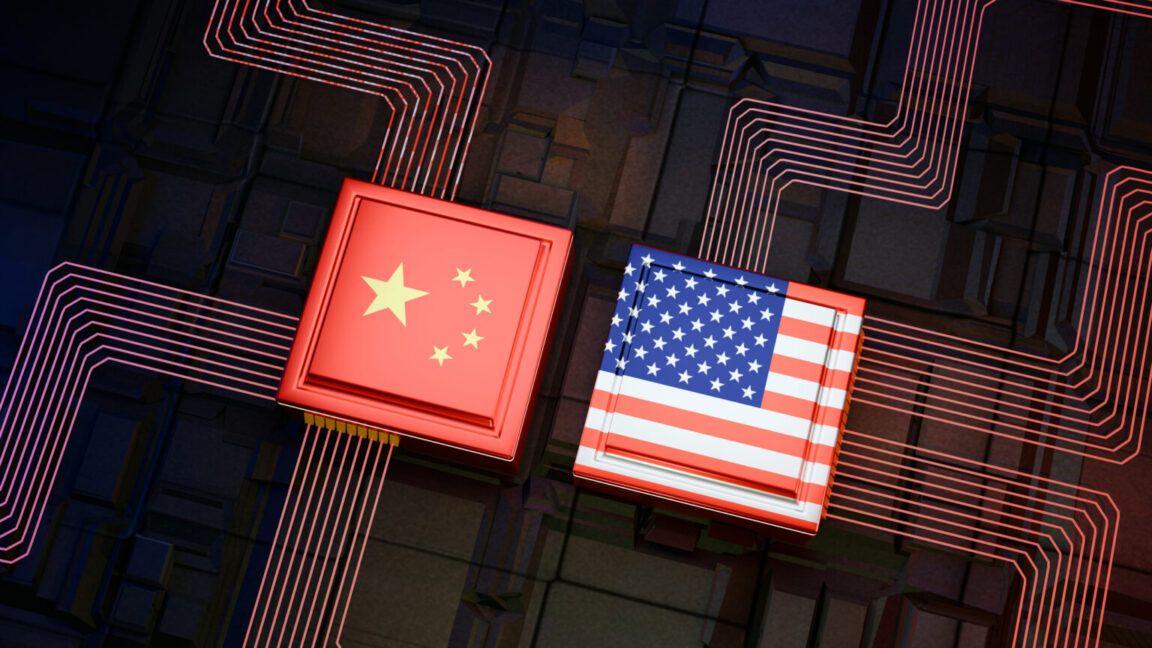
After months of regulatory standoff, Nvidia has received approvals from both US and Chinese authorities to sell H200 AI chips to China. CEO Jensen Huang announced the company is restarting manufacturing and has already received purchase orders from multiple Chinese customers. The move reopens a market potentially worth $50 billion, though Nvidia must share 25% of revenue with the US government.
Nvidia Secures Dual Approvals to Resume H200 Chip Sales
Nvidia has cleared a critical regulatory hurdle, securing approvals from both US and Chinese authorities to sell H200 chips to China after nearly a year of export restrictions
2
. Nvidia CEO Jensen Huang announced at the company's annual GTC conference in San Jose that the chipmaker had been licensed for "many customers in China" and had already received purchase orders from several companies3
. The development marks a significant shift for Nvidia, which has been battling to regain access to the Chinese AI chip market while navigating volatile trade policy between Washington and Beijing.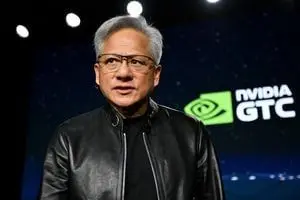
Source: Quartz
Chinese authorities have granted approval for multiple Chinese companies to purchase H200 AI accelerators from Nvidia, according to sources familiar with the situation
3
. This Chinese authorization came after Nvidia had been waiting for licenses from both governments for months, creating uncertainty that forced the company to halt production earlier this year.Restarting Manufacturing After Production Pause
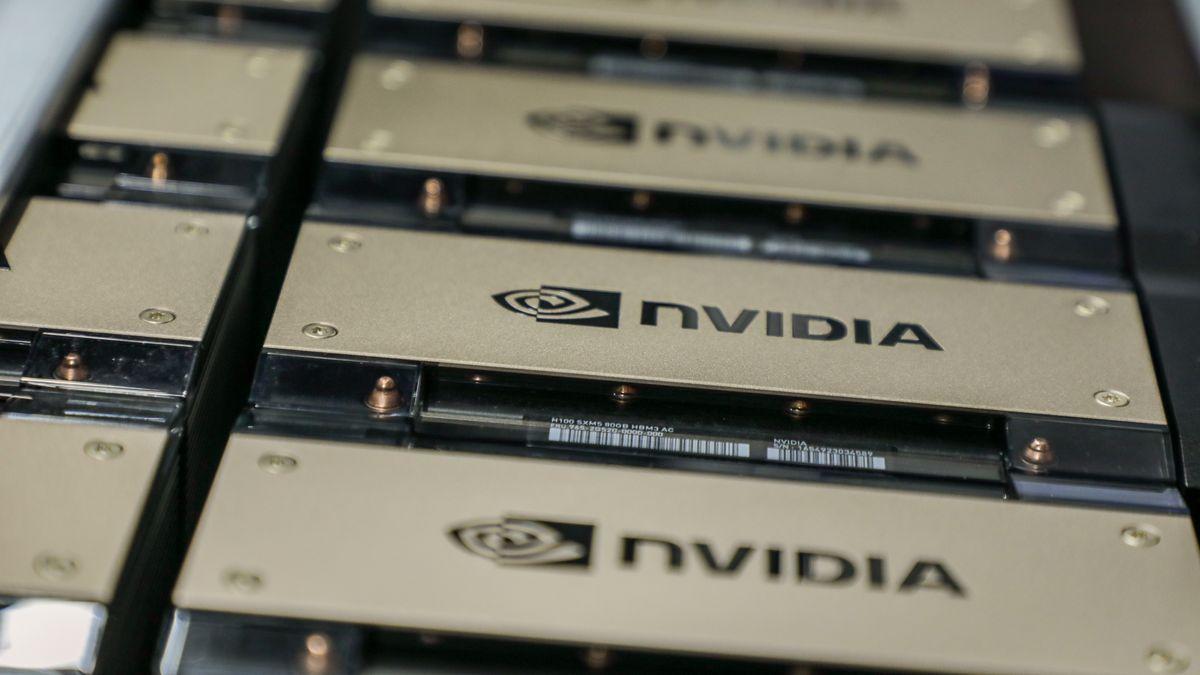
Nvidia is now restarting manufacturing of the H200 to meet demand from Chinese customers, reversing course after telling partners to pause production due to regulatory uncertainty
4
. "We are in the process of restarting our manufacturing," Huang told reporters, adding that the situation was "different than it was two weeks ago" and that the company's supply chain "is getting fired up"5
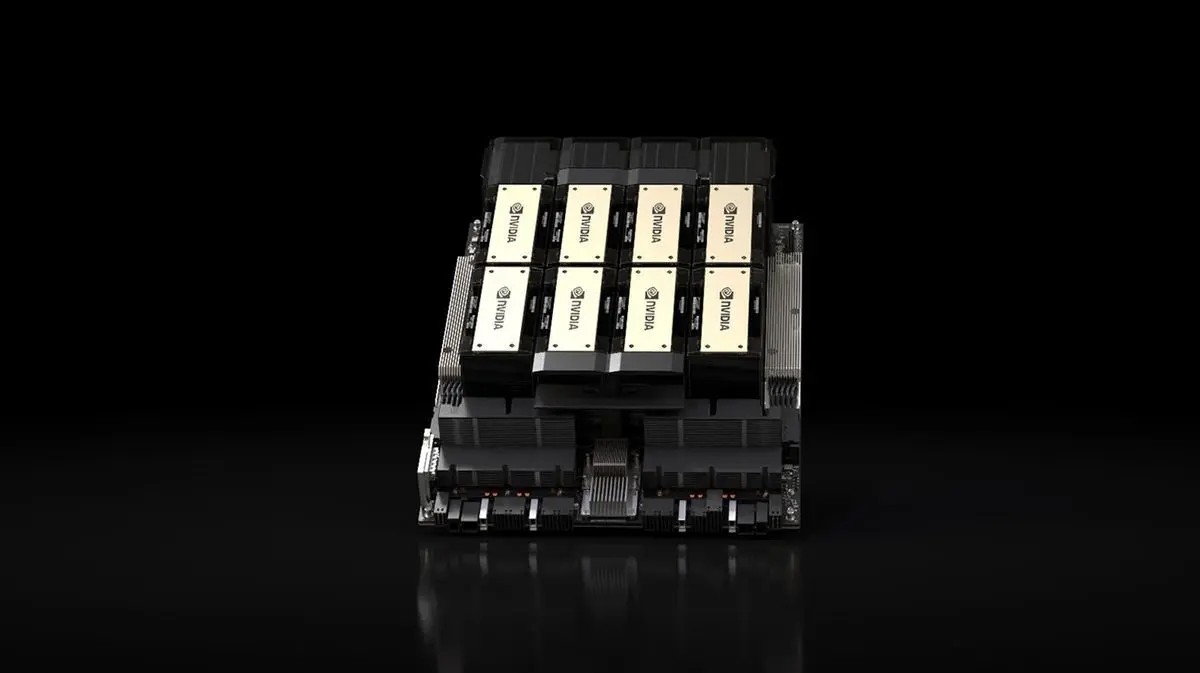
.The H200, while a generation behind Nvidia's current Blackwell-based products like the B300, represents a substantial upgrade over what Chinese companies previously had access to. The chip is approximately six times more powerful than the H20 AI accelerators Nvidia previously sold to China under earlier export controls
1
. Chinese tech giants such as Alibaba and ByteDance could soon have access to this technology, though final import approvals from Chinese regulators are still pending4
.
Source: PC Gamer
Revenue Sharing Deal and Market Potential
Under the arrangement announced in December by the Trump administration, Nvidia is permitted to sell H200 chips to Chinese customers while giving the US government a 25% cut of income from these sales
4
. Nvidia must pay this fee when the chips arrive in the US from fabrication facilities for approval before being re-exported [1](https://www.tomshardware.com/tech-industry/with-h200s-set-to-flow-into-china-groq-is- reportedly-set-to-follow-nvidia-is-allegedly-preparing-a-custom-version-of-inferencing-chip-to-penetrate-region).Despite the revenue-sharing requirement, the Chinese AI chip market represents a substantial opportunity. Huang has indicated China's AI chip market could be worth up to $50 billion, offering a major revenue stream for the $4.5 trillion chip company
4
. Notably, Nvidia reportedly didn't include potential revenue from Nvidia H200 sales to China in its suggested $1 trillion revenue plan for 20271
.Related Stories
Groq Technology and AI Inferencing Push
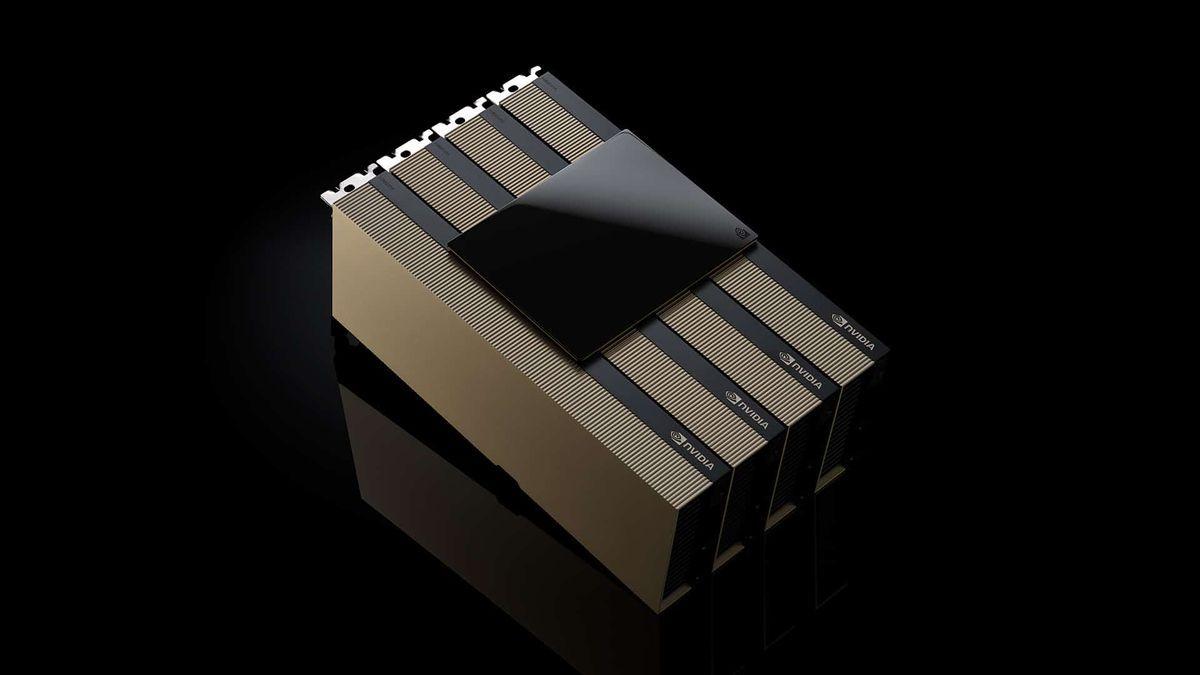
Beyond H200 chips, Nvidia is reportedly preparing to adapt its Groq custom AI inferencing hardware for the Chinese market
1
. After making a $14 billion deal with Groq, which develops custom AI ASICs known as Language Processing Units (LPUs), Nvidia aims to strengthen its position in the competitive AI inferencing market. While Nvidia's GPUs remain the standard for training large language models, the inferencing market faces intense competition, particularly in China where tech giants like Baidu and Huawei are developing their own chips with substantial government backing.Impact on Data Center Revenue
China once accounted for at least one-fifth of Nvidia's data center revenue before US export restrictions took effect in April
5
. The company took a $5.5 billion charge due to the export restriction. As of last month, CFO Colette Kress told analysts that only a "small number of H200 products" had been approved for sale to China by US government approvals, with no revenue generated yet5
. For the current quarter, Nvidia forecast growth of about 77% while assuming no data center revenue from China in its guidance, suggesting any Chinese sales would provide upside to expectations.The resumption of AI chip exports to China comes as Nvidia navigates US export restrictions while President Trump's administration breaks with historically tight export controls on advanced semiconductors. "President Trump's intention is that US should have a leadership position and access to Nvidia's best technology," Huang said. "However, he would also like us to compete worldwide and not concede those markets unnecessarily"
4
.
Source: Wccftech
References
Summarized by

Navi
[1]
Related Stories
Nvidia scrambles to meet surging China demand for H200 chips as orders hit 2 million units
31 Dec 2025•Technology
Nvidia Set to Resume AI Chip Sales to China Amid Regulatory Shifts
10 Jul 2025•Technology
Nvidia CEO Urges AI Export Rule Revision Amid Global Competition and China's AI Advancements
01 May 2025•Technology
Recent Highlights


Recent Highlights
Today's Top Stories






Your Daily Dose of Curated AI News
Don’t drown in AI news. We cut through the noise - filtering, ranking and summarizing the most important AI news, breakthroughs and research daily. Spend less time searching for the latest in AI and get straight to action.

