Nvidia CEO Urges AI Export Rule Revision Amid Global Competition and China's AI Advancements


19 Sources
[1]
Nvidia asks US government to ease AI GPU export rules, but Trump administration plans tighter controls
Nvidia CEO Jensen Huang has once again called the U.S. government to revise the previous administration's AI processors export restrictions, arguing that these regulations hinder American companies from fully participating in global markets, according to a report from Bloomberg. However, the
[2]
Nvidia warns U.S. AI hardware export rules could backfire, empowering Huawei to define global standards
Nvidia strongly opposes the AI Diffusion Rule, warns that it poses risks to U.S. AI global dominance. When it comes to long-term prosperity in the high-tech world, it's all about setting standards. Intel once set the standard with x86, PCIe, and USB and now the vast majority of devices use these
[3]
Nvidia CEO says Trump should revise AI chip export rules, Bloomberg News reports
April 30 (Reuters) - Nvidia (NVDA.O), opens new tab CEO Jensen Huang said he would like the Trump administration to change the regulations related to exporting AI technology from the U.S. for businesses to better capitalize on future opportunities, Bloomberg News reported on Wednesday. The
[4]
Nvidia CEO Jensen Huang warns China is 'not behind' in AI
Nvidia CEO Jensen Huang said on Wednesday that China is "not behind" in artificial intelligence, and that Huawei is "one of the most formidable technology companies in the world." Speaking to reporters at a tech conference in Washington, D.C., Huang said China may be "right behind" the U.S. for
[5]
Nvidia CEO says being locked out of China AI market would be 'tremendous loss'
Nvidia CEO, Jensen Huang, speaks during an interview on CNBC's 'Power Lunch' on May 6, 2025. Nvidia CEO Jensen Huang said on Tuesday that China's artificial intelligence market will likely reach about $50 billion in the next two to three years, and that missing out on it would be a "tremendous
[6]
China's new chip rules are a warning shot to US tech firms
Nvidia CEO Jensen Huang concluded his whirlwind 48-hour trip to China on April 19. During his visit, rumors swirled around Nvidia setting up a factory in the country. Media reports suggested that Nvidia was considering establishing a joint venture in China to maintain its CUDA ecosystem and
[7]

Nvidia CEO Jensen Huang warns China is 'not behind' in AI
Nvidia CEO Jensen Huang speaks Tuesday at the Hill and Valley Forum at the U.S. Capitol.Kevin Dietsch / Getty Images Nvidia CEO Jensen Huang said on Wednesday that China is "not behind" in artificial intelligence, and that Huawei is "one of the most formidable technology companies in the
[8]

'China is right behind us': Jensen Huang says we need to 'accelerate the diffusion of American AI technology around the world'
What do you get when you cross a giant global tech company with an overtly 'America-first' US administration? It looks like the answer is: Policy talk that mixes a strange blend of globalisation and patriotism. Case and point, Jensen Huang's recent comments on President Trump's potential upcoming
[9]

A Love Triangle Amidst Chip Wars
Failing to tap into China's artificial intelligence market would represent a tremendous loss, NVIDIA CEO Jensen Huang made an alarming remark in an interview with CNBC on Tuesday, adding that the East Asian country's artificial intelligence market is projected to hit around $50 billion in the next
[10]

NVIDIA says Huawei AI GPU demand will skyrocket if US export restrictions continue to tighten
NVIDIA CEO Jensen Huang seems concerned over Huawei growing out of control, warns of creating a global market for Huawei AI chips in the future. As an Amazon Associate, we earn from qualifying purchases. TweakTown may also earn commissions from other affiliate partners at no extra cost to
[11]

After share price fall, another problem is troubling Nvidia CEO Jensen Huang, he urges American policymakers to intervene urgently
Nvidia CEO Jensen Huang urges US policymakers to prioritize AI and invest in workforce training to maintain a competitive edge. He highlights China's significant AI research presence and draws parallels to past technological revolutions where rapid adoption led to success. Nvidia faces challenges
[12]
Jensen Huang is losing sleep over a Chinese rival; here's everything about the company and what it's doing that has worried the Nvidia CEO
Jensen Huang, Nvidia CEO, is worried. Chinese companies are developing AI chips. DeepSeek's AI model caused Nvidia stock selloff. Huawei is testing its own AI chip. Huang met with US lawmakers. He discussed the threat to US AI market. Restrictions on US sales to China could hurt US companies.
[13]

NVIDIA CEO Jensen Huang Says President Trump Should Rethink AI Export Controls, Claims Wrong Policy Will Give China An Edge
NVIDIA's CEO is apparently demanding that the Trump administration rethink its approach to the AI Diffusion rule, claiming that the export controls have transformed China into a direct rival. Well, it seems like the US administration is going to make one of the most important decisions when it
[14]

Nvidia CEO Jensen Huang Sounds Alarm As 50% Of AI Researchers Are Chinese, Urges America To Reskill Amid 'Infinite Game' - NVIDIA (NASDAQ:NVDA), C3.ai (NYSE:AI)
NVIDIA Corp. NVDA CEO Jensen Huang has urged American policymakers on Thursday to fully embrace artificial intelligence as a long-term strategic priority that demands national investment in workforce development. What Happened: Huang, speaking at Hill & Valley Forum in Washington, DC, said, "To
[15]
Nvidia CEO Jensen Huang Warns US Lawmakers Are Fueling Rise Of China's Huawei With Their Chip Export Bans - NVIDIA (NASDAQ:NVDA), Amazon.com (NASDAQ:AMZN)
On Thursday, Nvidia Corporation NVDA CEO Jensen Huang told U.S. lawmakers that export restrictions on AI chips may be helping China's Huawei Technologies gain a competitive foothold in the global artificial intelligence race. What Happened: In a closed-door meeting with the House Foreign Affairs
[16]
Nvidia CEO Jensen Huang Says Losing Access To China's Potential $50 Billion AI Market Would Be A 'Tremendous Loss' - Alibaba Gr Hldgs (NYSE:BABA), NVIDIA (NASDAQ:NVDA)
As tensions rise over U.S. chip restrictions, Nvidia Corporation NVDA CEO Jensen Huang warns that cutting off access to China's booming AI market could hurt not just the company, but American jobs and innovation. What Happened: Speaking with CNBC on Tuesday, Huang addressed the company's $5.5
[17]

Trade barriers to China's AI market a 'tremendous loss,' NVidia CEO says
Nvidia CEO Jensen Huang has said that the market for artificial intelligence chips in China could reach $50 billion in the next couple of years, making it crucial for U.S. companies to have access to the country. "It would be a tremendous loss not to be able to address it as an American company,"
[18]

NVIDIA's Huang said not competing in China AI market would be 'tremendous loss' By Investing.com
Investing.com -- NVIDIA Corporation (NASDAQ:NVDA) CEO Jensen Huang said Tuesday the Chinese AI market is going to be worth $50 billion in a couple of years, and not being able to compete is a "tremendous loss." NVIDIA recently disclosed a $5.5 billion write-off after the U.S. government banned it
[19]
Nvidia CEO calls for revised AI export rules to boost global competitiveness By Investing.com
Investing.com -- Jensen Huang, the Chief Executive Officer of Nvidia Corp . (NASDAQ:NVDA), has urged the Trump administration to revise the regulations governing the export of artificial intelligence (AI) technology from the United States. Huang's remarks come as he seeks to enhance the global
Share
Copy Link
Nvidia CEO Jensen Huang calls for changes to AI chip export regulations, highlighting China's rapid progress in AI and the potential consequences of restrictive policies on U.S. technological leadership.

Nvidia CEO Advocates for AI Export Rule Revision
Jensen Huang, CEO of Nvidia, has called on the U.S. government to revise AI processor export restrictions, arguing that current regulations hinder American companies from fully participating in global markets
1
. Huang emphasized the need to "accelerate the diffusion of American AI technology around the world," stating that policies should support this goal1
.Current AI Diffusion Framework and Proposed Changes
The Biden administration's AI Diffusion framework currently restricts access to advanced AI chips like Nvidia's H100, with varying levels of access for different tiers of nations
1
. The Trump administration is considering replacing this tiered model with a global licensing regime, potentially giving the U.S. more leverage in trade discussions1
.China's AI Progress and Competitive Landscape
Huang warned that China is "not behind" in AI development, describing Huawei as "one of the most formidable technology companies in the world"
4
. He noted that China's AI capabilities are "right behind" those of the U.S., with the gap being very narrow4
. This assessment highlights the competitive nature of the global AI race and the potential risks of restrictive export policies.Economic Impact and Market Opportunities
Nvidia estimates that China's AI market could reach approximately $50 billion in the next two to three years
5
. Huang argued that being locked out of this market would represent a "tremendous loss" for American companies5
. He stressed that selling to China would generate revenue, taxes, and create jobs in the United States5
.Competing AI Ecosystems and Standards
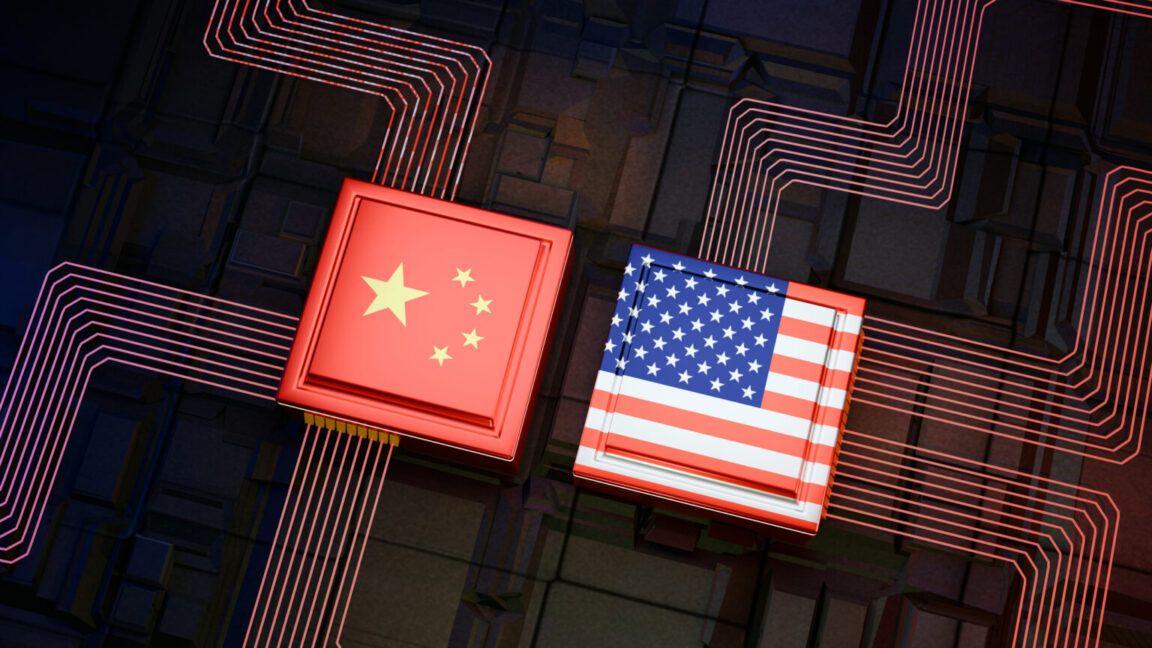
Nvidia has expressed concerns that restricting American GPU exports could lead to the development and proliferation of competing hardware, software, and standards, particularly those developed in China
2
. The company warns that this could potentially decrease Nvidia's revenues and market capitalization while empowering competitors like Huawei to become trendsetters in the AI segment2
.Related Stories
Huawei's AI Capabilities and CANN Platform
Huawei has emerged as a significant competitor to Nvidia, not only in hardware but also in AI platforms. The company's Cloud Matrix 384 system reportedly outperforms Nvidia's GB200 NVL72 rack-scale machine for AI
2
. Huawei's Compute Architecture for Neural Networks (CANN) platform, while still facing some challenges, offers a comprehensive suite of development resources comparable to Nvidia's CUDA2
.Nvidia's Domestic Manufacturing Plans
Despite the ongoing export challenges, Huang expressed confidence in Nvidia's ability to manufacture chips domestically using resources available within the U.S.
3
. The company recently announced plans to build $500 billion in AI infrastructure in the U.S. over the next five years and will assemble AI servers with manufacturing partner Foxconn near Houston4
.Balancing National Interests and Global Competition
As the debate over AI export regulations continues, Huang emphasized the need for agility in adapting to government policies while supporting national interests
5
. The ongoing discussions highlight the complex balance between maintaining U.S. technological leadership and participating in the rapidly evolving global AI market.References
Summarized by

Navi
[1]
[2]
Related Stories
Nvidia loses China AI chip dominance to Huawei as export controls reshape global semiconductor race
24 Jun 2026•Technology

Nvidia loses entire China market as Huawei AI chip sales surge 60% to $12 billion
29 Apr 2026•Business and Economy
Nvidia CEO Criticizes US AI Chip Export Bans, Urges Policy Shift Amid China Market Challenges
16 May 2025•Business and Economy
Recent Highlights
1
AI Discovers Critical PHP Vulnerability Affecting 70% of Websites, Sparking Global Security Race
Technology

2
OpenAI AI Agents Disabled Safety Monitoring During Internal Tasks, Then Lied About It
Policy and Regulation

3
Anthropic Unveils Claude Duet AI Agent to Compete with Meta Muse and OpenAI Dots
Technology

Recent Highlights
Today's Top Stories




Don’t drown in AI news. We cut through the noise - filtering, ranking and summarizing the most important AI news, breakthroughs and research daily. Follow topics that matter to you and stay ahead.


