Nvidia DLSS 4.5 brings Dynamic Multi-Frame Generation to RTX 50-series GPUs on March 31


7 Sources
7 Sources
[1]
Dynamic MFG comes to RTX 50-series GPUs to push monitor refresh rates to the max -- more flexible mode with 5x and 6x multipliers arrives March 31
The annual Game Developers Conference (GDC) kicks off this week, and it's happening against the backdrop of considerable turmoil in both the games industry proper and the AI-driven hardware supply shock that's delaying mid-cycle and next-gen gaming hardware. In that context, it's no surprise that Nvidia isn't bringing new GeForce cards to the show. Instead, the company is focusing on software performance enhancements and game tech integrations for upcoming titles. The biggest news the company is sharing at GDC is that Dynamic Multi Frame Generation, announced back at CES, will be arriving on March 31, along with extended 5x and 6x modes. Unlike the current MFG implementation, which only offers a constant frame rate multiplier, Dynamic MFG can shift gears on the fly in order to maintain a target frame rate. All together, Dynamic MFG with 5x and 6x modes will likely be most useful to gamers with high-refresh-rate displays who want to ensure their systems are always hitting the lofty FPS numbers necessary to keep their screens operating near their peak output rates. In tandem with the already available DLSS 4.5, which provides noticeably better image quality than past implementations even at relatively low input resolutions, gamers with RTX 50-series cards will soon have even more tools at their disposal in pursuit of a consistently smooth gaming experience. Given the tradeoffs around input latency associated with MFG, now might seem like a natural time for Nvidia to offer an update on its Reflex 2 with Frame Warp latency-reduction tech, which has been stuck in "Coming Soon" status ever since the Blackwell GPU launch over a year ago. That isn't changing any time soon, however, as Nvidia only said to "stay tuned" regarding the technology in our briefing ahead of today's announcements. DLSS 4.5 and Dynamic MFG will no doubt prove useful as Nvidia's developer partners continue to integrate resource-intensive path-traced lighting effects in their titles. Nvidia says the upcoming Control Resonant and 007: First Light will both feature path-traced effects, and those titles will join the recently launched Resident Evil Requiem and the upcoming Pragmata as just a sampling of games that will incorporate these demanding rendering techniques. Nvidia is also extending its RTX Mega Geometry technology to help CD Projekt Red create richer forested vistas in the upcoming The Witcher IV. This enhanced version of the tech allows for selective updates of ray-tracing data structures, along with support for finer-grained opacity micromaps, to allow for real-time ray tracing of even such complex scenes as an entire forest. RTX Mega Geometry works best on the Blackwell architecture thanks to optimizations in the fourth-generation RT Cores present in those GPUs. The Witcher IV isn't slated to arrive before 2027, but Blackwell gamers can be just a bit more smug in the meantime about the fact that the RT effects in that title will be optimized for their particular GPUs. Generative AI aficionados are also getting a nod at GDC. Most locally generated assets are created through ComfyUI, and while that app's node-based approach is familiar to those already versed in content-creation pipelines, it can be intimidating for those just dipping their toes into local AI workflows. Nvidia has worked with ComfyUI to bring a new, more user-friendly "app view" interface to the table at GDC, and the company also touts the improvements it's made to resource utilization in some workflows through the creation of better quantizations of models like LTX-2. Thanks to those improvements, creators can iterate more quickly on generative content on a broader range of hardware. Even in the absence of new GPUs thus far in 2026, Nvidia's GDC showing gives RTX 50-series owners a bit of a reason to be excited about being on the cutting edge of both gaming and AI. It's a bit easier to swallow the absence of faster hardware when existing GPUs can upscale higher-quality frames and generate more of them if higher output frame rates are required, and while DLSS 4.5 works best on both RTX 40-series and 50-series GPUs, MFG remains a Blackwell-exclusive feature. Unless and until the AI chip crunch abates, getting more out of existing hardware is likely to be the way of things for the foreseeable future. Follow Tom's Hardware on Google News, or add us as a preferred source, to get our latest news, analysis, & reviews in your feeds.
[2]
Nvidia Hopes Multi-Frame Gen Will Finally Make Sense on Its GPUs
Nvidia promises you may finally get use out of that 240Hz refresh rate on your expensive QD-OLED monitor. Nvidia is still looking for ways to make frame generationâ€"which PC gamers not-so-lovingly call “fake framesâ€â€"have more utility. Now, Nvidia imagines its AI frame interpolation technology may finally help gamers maximize their high-refresh rate monitors they bought alongside their big, increasingly expensive GPUs. For GDC 2026, Nvidia finally revealed when owners of the current RTX 50-series GPUs can access new features for its DLSS suite of upscaling technology. The first on the list is called “Dynamic Multi Frame Generation.†As the name suggests, it uses the same multi-frame interpolation software, which inserts several AI-generated frames in between two rendered frames. This artificially increases a game’s frame rate. The update will allow PC gamers to set a target FPS for the frame generation to hit. If your monitor features a 240Hz refresh rate, Nvidia promises gamers will be able to help their PCs hit the maximum of what their monitor can handle. The update should go live on March 31. The patch should also enable up to 6x frame gen technology for the latest RTX 50-series GPUs. That essentially means Nvidia can stick between one and five AI-generated frames in between each rendered frame. Nvidia claims the new update has improves stability and reduces ghostingâ€"two of the major visual artifacts introduced by multi-frame generation technology. Nvidia first said we’d receive these updates at CES 2026 along with the update to DLSS 4.5. Now, we’ll finally be able to see these features in action. Out of all the magic tricks Nvidia pulls to make games run better on its high-end GPUs, frame generation is easily the most controversial. The technology essentially uses AI to create frames based on in-game data, then inserts them between fully rasterized (aka rendered) frames created by the PC. Nvidia has pushed multi-frame generation as the exclusive benefit for its latest Blackwell-era GPUs. Nvidia’s GPUs, which range from the low-end RTX 5060 all the way up to the top-end RTX 5090, have struggled to make a clear use case for frame generation. To enable steady frame rates without visual quality, gamers already had to achieve as close to 60 fps as possible before enabling frame generation. If you’re already paying out the nose for the GPU that can render the most frames possible, why would you want to muddy those visuals with generated frames? Now that the RTX 5090 costs close to $4,000â€"$2,000 more than its original suggested retail priceâ€"the most powerful GPU is out of the price range for the vast majority of PC gamers. Prices on any non-4K-ready GPU, like the GeForce RTX 5070, haven’t spiked nearly as much. A recent report from the mostly reliable outlet The Information suggested Nvidia was cutting production on its higher-end GPUs due to the ballooning cost of VRAM. Nvidia, for its part, still says it's working to make all RTX 50-series GPUs despite the all-consuming RAM crisis. Multi-frame gen may be its way of offering more capabilities from its cheaper GPUs. Intel has gone a step further than Nvidia and enabled its own version of multi-frame gen for non-Intel systems. Still, XeSS 3 frame gen works best on devices powered by Intel’s latest Panther Lake chips. Laptops or gaming handhelds with smaller screens demand more software tricks to make games playable. It’s also more difficult to spot visual artifacts on a 7-inch display than on a big, expensive 32-inch QD-OLED gaming monitor.
[3]
Nvidia's dynamic frame gen will max out your monitor on March 31
Despite hardware rumors, no new GeForce RTX 50-series GPUs were announced, though additional features include RTX Mega Geometry and expanded path tracing support. Nvidia is powering up its DLSS technology, as previewed at CES at the beginning of the year. According to an announcement at the Game Developers Conference in San Franciso, DLSS 4.5 will bring a collection of new improvements starting March 31st. This includes Dynamic Multi-Frame Generation, which allows DLSS to dynamically adjust its output to hit performance targets, usually based on your monitor's refresh rate. DLSS 4.5 Dynamic Multi Frame Generation (say that five times fast) will let DLSS automatically adjust the factor of the frame generation, from 1x to 6x at maximum on hardware that can handle it (so, five generated game frames for every one rendered). In supported games, this is done in an attempt to keep pace with your framerate target (typically the max of your monitor, such as 240Hz) while keeping rendered frames at maximum for any given portion of the game. There's a bunch of other goodies announced as part of the GDC blowout, too. RTX Mega Geometry to boost frame rates in path-traced games, plus a special variant for foliage, path tracing support for 007 First Light and Control Resonant, and several community projects that bring RTX lighting to older games like Portal 2, Need for Speed: Carbon, and Call of Duty 2. Nvidia is also offering GeForce Now as a method for developers to offer playtests during development, an interesting approach. But there's also a conspicuous absence from GDC, just like CES: new hardware. The GeForce RTX 50-series Super variants that had been rumored in 2025 are nowhere to be found, and as far as we know, may never materialize, amid talk of scaled-down production of consumer gaming cards in favor of "AI" industrial output.
[4]
I went eyes-on with Nvidia's DLSS 4.5 Dynamic Multi-Frame Generation launching March 31 -- and it's a game-changer
Nvidia launched DLSS 4.5 back in the middle of January and (spoiler alert) I've been really impressed with just how much detail is AI-infused upscaler is able to get from a rendered picture from just 25% the resolution. It feels like a real value booster for mid-range GPUs! But there's one feature that we've all been waiting for -- Dynamic Multi-Frame Generation -- the evolution of the frame gen we have right now. Basically, instead of just packing an arbitrary amount of AI-generated frames in between frames rendered by your GPU, dynamic frame gen is able to see what the max refresh rate of your screen is, and only generate the frames it needs to max that out. We now have a launch date of March 31st (starting in beta), and I got some eyes-on time with the tech. And I gotta be honest with you, this feels like the frame gen tech that tackles the problems PC gamers have head on. Let me explain. How does Dynamic Multi-Frame Generation work? Think about it like driving up a steep mountain, and you're in a car with a manual transmission. To maintain speed, you've got to manually shift your gears (like shifting between the different multi-frame gen options), and those gear shifts can cause a clunky pause in your momentum. Dynamic multi-frame gen works like a car with automatic transmission -- intelligently monitoring how hard the engine is working (your system load) and automatically shifting gears (the frame multiplier) up or down depending on what the terrain demands. And when the road flattens out and the workload lightens, the frame multiplier seamlessly downshifts so your system computes exactly what is needed in every scenario. The end result of this in my testing is an uninterrupted gaming experience, where you'll really struggle to notice when that multiplier changes, and virtually eliminates any tiny hints of latency. Gamesmaxxing So I saw Black Myth: Wukong running on an RTX 5080 machine with multi-frame generation cranked up manually to 6X, and then The Outer Worlds 2 with RTX 5060 Ti with that dynamic frame gen turned on. The first observation when it comes to Black Myth is just how minimal the latency impact is at full 6X. We are talking only a few milliseconds here, which I didn't feel at all in the controller inputs -- all while showing off exactly what DLSS 4.5 is able to do here. For example, while toggling to DLSS 4 shows that some of the finer particle details and distant textures are smoothed out/removed, switching to 4.5 really brings these intricacies back to life. You can see it just by looking at the sparks of light around your weapon. Then, here comes dynamic frame gen, which targets the max frame rate (240Hz) of the monitor. I got the help of an Nvidia rep to hide the stats in the top corner of the screen with his hand -- so I can try to guess when the frame multiplier changes based on feeling alone. Because visually, I could take an educated guess, right? Like, when the screen is not so busy, that multiplier would go down, but when there's much more textures and characters to render, it'll go back up. But the transitions felt oh-so-smooth that I didn't notice a change to the speed of my inputs whatsoever. That comes down to three key things: * Eliminating wasteful latency: Let's say you've got a 144Hz monitor, and you've got DLSS running a game at 240 FPS. Those extra 96 frames are never seen, but the GPU still spends time computing them. This can create an interpolation gap -- you're over-exhausting your GPU with AI tasks it doesn't need to do. By aiming for the max frame rate, the backlog is cleared and waste is eliminated. * Smoother frame pacing: Another side-effect of aiming squarely for your monitor's exact frame rate is a consistent delivery of said frames. If you manually set to a certain multiplier, there can be a jittery feeling as you go between GPU-intensive levels and calmer ones. This stops the over-delivery of frames in those quieter moments and has it all running at the same pace. * Prioritizing the base frame rate: Any AI game frame generation is only as good as the base rate of how fast your GPU can render a game. Sometimes your game can look fast, but feel slow, and sometimes that can be exacerbated by clogging it with AI tasks. With Dynamic MFG shifting from 6X down to 2 or even 0X (native), this ensures that the card focuses more on rendering real frames faster. The end result is a more tamed DLSS frame generation -- only using its AI witchcraft when it's absolutely necessary and making a game feel smoother and more responsive for it. Outlook So ahead of its March 31st debut (launching as part of an opt-in Nvidia app beta that you can turn on as an override), should you use it? Based on my time testing it, the answer is "absolutely," but results may vary. Of course, this is going to start life as a beta, so there's that disclaimer out the way. Plus, I tested it in a very specific space ship environment in The Outer Worlds 2 -- what would happen if I was to be in the throws of combat on a planet? How will results change across different games? The answer, as we all explore this tech together, will change on a game-by-game basis -- as more and more optimizations are made to work around it. That being said, if this is what we can look forward to across the over 200 titles that support DLSS 4.5 (and the 20 native integrations currently in the works for upcoming games), this is the final piece of the puzzle that brings the vision of smooth, responsive AI fueled gameplay to life. Follow Tom's Guide on Google News and add us as a preferred source to get our up-to-date news, analysis, and reviews in your feeds.
[5]

Nvidia is leveling up game visuals with the new DLSS 4.5 update
Nvidia has just announced DLSS 4.5. The update brings new AI-powered graphics technology, and the improvements offer a noticeable impact on how modern PC games look and perform. It was revealed alongside other RTX announcements during GDC 2026, focusing on boosting both visual quality and frame rates in demanding titles. DLSS (Deep Learning Super Sampling) has become a big part of Nvidia's gaming ecosystem. It uses AI models running on RTX GPUs to reconstruct higher-resolution images and generate additional frames that allow games to run more smoothly without sacrificing visual fidelity. With DLSS 4.5, the technology is getting even better. Smarter frame generation with DLSS 4.5 Recommended Videos One of the notable new additions in DLSS 4.5 is Dynamic Multi Frame Generation, which automatically adjusts how many AI-generated frames are created during gameplay. Rather than sticking to a fixed multiplier, the system dynamically tweaks frame generation in real time to hit the target refresh rate. This approach lets compatible GPUs maintain smoother performance during demanding scenes while avoiding unnecessary frame generation when workloads drop. DLSS 4.5 also introduces the 6X Multi Frame Generation, which can generate up to five additional frames for every traditionally rendered frame. The result is significantly smoother gameplay, particularly in high-fidelity titles that use advanced rendering techniques like path tracing. AI upgrades for sharper visuals Aside from the performance improvements, DLSS 4.5 also upgrades Nvidia's Super Resolution technology using a second-generation transformer AI model. It is designed to improve image clarity by reducing artifacts such as ghosting, shimmering, and jagged edges in motion-heavy scenes. Coming to RTX 50 series GPUs soon Nvidia has confirmed DLSS 4.5 features like Dynamic Multi Frame Generation and the 6X mode will roll out starting March 31 through the Nvidia app. It will first debut in GeForce RTX 50-series GPUs, and will be supported in around 20 games like 007 First Light and Control Resonant.
[6]

DLSS 4.5 Dynamic Multi Frame Generation is coming to Nvidia App beta users on March 31, bringing on-the-fly 6x frame gen switching to RTX 50-series owners
It worked pretty well when I saw an early version at CES, so here's hoping for a smooth launch. DLSS 4.5 may have been with us since January of this year, but one of its most interesting features, Dynamic Multi Frame Generation, is finally coming to Nvidia app beta users on March 31. The update boosts the top frame gen count for RTX 50-series GPUs to 6x, being made up of five AI generated frames to the one rendered traditionally by your graphics card. It also allows the upscaler to shift around the number of frames generated on the fly, hence the term "dynamic". Give it a frame rate target to hit, and it'll swap around the number of generated frames depending on the demands of the scene -- which should mean locked fps, high-frame rate gaming and a bridging of performance dips, designed to create a silky-smooth gaming experience. That's the theory, anyway. That being said, I did get a chance to see Dynamic Multi Frame Generation in action at CES 2026, and came away pretty impressed with the transition between 2x, 4x, and 6x frame gen in The Outer Worlds 2. I spent some time running backwards and forwards between two areas, one in a ship cockpit that hit its target frame rate at 2-4x Frame Generation, and a busier internal scene that needed 6x frame gen to keep up. I endeavoured to wiggle the mouse around and dance between the two areas in an attempt to trip up the switch between modes, but the transition was seamless as far as I could tell. As the feature will be found in beta versions of the Nvidia App, those RTX 50-series card owners who wish to try it out will need to enable the beta release via the Settings > About page come the end of March. Over 200 games will be supported at launch, so it'll be interesting to see if that super-smooth switching experience translates across a whole swathe of different releases. As for DLSS 4.5 itself, Nvidia has announced 20 more games with native integration. These included the upcoming 007: First Light, Control Resonant, and Tides of Annihilation, alongside a slew of existing games including Gray Zone Warfare, Where Winds Meet, and StarRupture. So, the march of updates to Nvidia's upscaling, frame-inserting tech continues, although whether Dynamic Multi Frame Generation works as well in practice as it did in the demos remains to be seen. Whether the input latency jumps around considerably between the different modes is also something we'll also have to test for ourselves. However, Nvidia claimed a PC latency of 53 ms in path-traced Black Myth Wukong running at 6x frame gen, 4K, 246 fps earlier this year, which seems pretty acceptable at top whack. And given the improved visuals of Nvidia's 2nd gen transformer models, hopefully some of MFG's earlier visual quirks when turned up to the guns will now be put to bed. It won't be long until we find out, at the very least.
[7]

Nvidia DLSS 4.5 update can make games run smoother: Here's how
Having the most high-end GPU in your PC is one thing. But having a relatively cheaper GPU result in similar performance is a whole new level. And Nvidia, with its DLSS technology, has been offering exactly that for years. During CES this year, the company introduced DLSS 4.5 6x multi frame generation. And now, Nvidia has announced that DLSS 4.5 multi frame generation will be available for RTX 50 series users from March 31. Not only this, several upcoming titles such as 007 First Light, Control Resonant and Tides of Annihilation will support DLSS 4.5. Nvidia says the new technology will allow games to run smoother while maintaining higher visual fidelity on compatible GeForce RTX graphics cards. Read on to know all about it. Also read: Samsung's glass-free 3D monitor will support 120 games, company says The new DLSS 4.5 update is all about Dynamic Multi Frame Generation. This feature allows the system to adjust the number of generated frames during gameplay to reach a target frame rate or match the refresh rate of the display. According to the company, the goal is to balance performance, responsiveness and image quality automatically during gameplay. "DLSS 4.5 Dynamic Multi Frame Generation intelligently adjusts the number of generated frames during gameplay to reach a user's desired frame rate, striking the perfect balance between frame rate, image quality and responsiveness," Nvidia said in a blog post. Apart from this, the Multi Frame Generation 6X mode promises to boost frame rates in demanding titles that use advanced rendering techniques such as path tracing. Nvidia claims that this feature can help push higher frame rates even in visually intensive 4K games. The update also improves DLSS Super Resolution using a second generation transformer model designed to deliver sharper visuals and better detail reconstruction. For the unversed, the DLSS 4.5 Super Resolution is already available through the Nvidia App for GeForce RTX users. However, the new Dynamic Multi Frame Generation and 6X frame generation features will be available from March 31 through an opt-in beta. Also, it is to be noted that only users having GeForce RTX 50 Series GPUs will be able to take advantage of the Dynamic Multi Frame Generation and 6X frame generation features. Nvidia also shed some light on the games that will support DLSS 4.5 and path tracing technologies. One of the biggest titles here is 007 First Light, which launches on May 27 with both DLSS 4.5 support and path traced graphics. The game tells a new origin story of a young James Bond and will feature advanced lighting and AI powered frame generation on compatible RTX hardware. Another notable release is Directive 8020, launching May 12. The cinematic horror adventure will also feature path traced lighting along with DLSS 4.5 Dynamic Multi Frame Generation to improve performance on RTX systems. Other games set to support the technology include Star Wars Galactic Racer, Samson and Sea of Remnants. Existing games such as War Thunder and Where Winds Meet are also scheduled to receive updates adding DLSS 4.5 support. Nvidia says more than 20 games are already confirmed to support the technology, and the number is expected to grow as more developers adopt DLSS 4.5 in future PC releases.
Share
Share
Copy Link
Nvidia announced DLSS 4.5 at GDC 2026, introducing Dynamic Multi-Frame Generation that automatically adjusts AI-generated frames to match monitor refresh rates. The update launches March 31 with 5x and 6x multipliers for RTX 50-series GPUs. The technology aims to help gamers maximize high-refresh-rate displays while reducing latency and visual artifacts like ghosting.
Nvidia Unveils DLSS 4.5 with Intelligent Frame Generation at GDC 2026
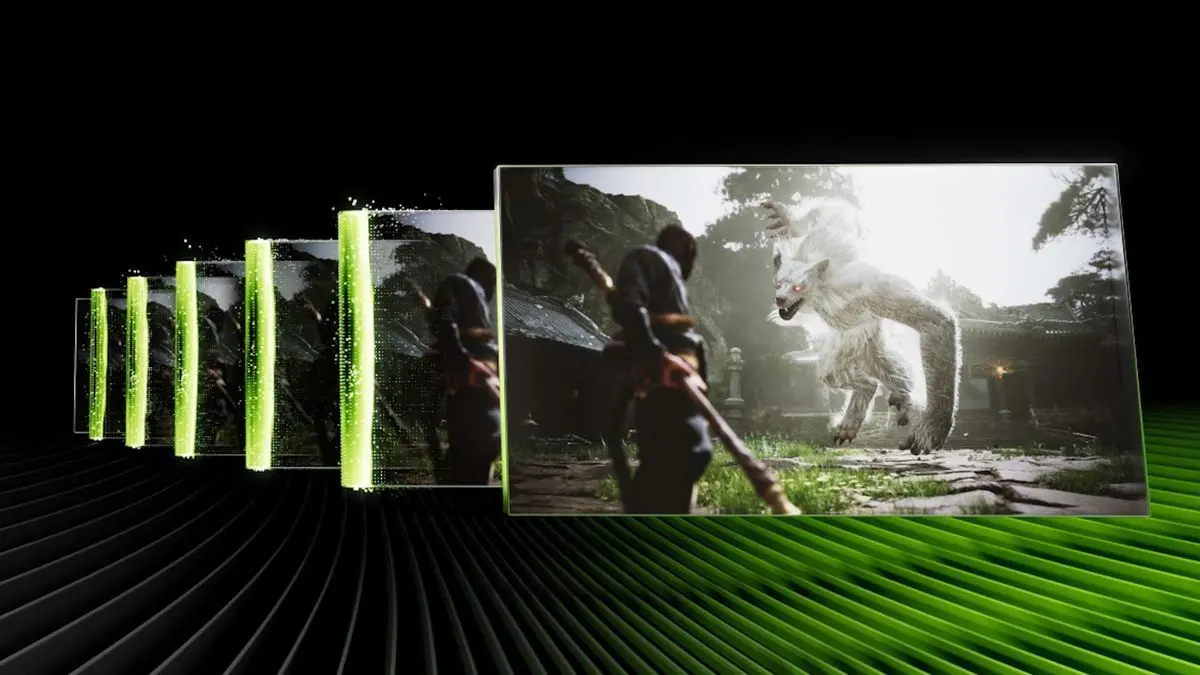
Nvidia revealed major updates to its AI-powered graphics technology at the Game Developers Conference (GDC) 2026, announcing that DLSS 4.5 with Dynamic Multi-Frame Generation will launch on March 31. The update represents a shift in how frame generation technology operates, moving from fixed multipliers to an intelligent system that automatically adjusts output based on monitor capabilities
1
. Unlike current implementations that only offer constant frame rate multipliers, Dynamic Multi-Frame Generation can shift gears on the fly to maintain target frame rates, particularly useful for gamers seeking to maximize monitor refresh rates on high-end displays5
.
Source: Tom's Hardware
The announcement comes as Nvidia focuses on software enhancements rather than new hardware, with no new GeForce cards revealed at the show amid ongoing supply constraints affecting the gaming industry
3
.How Dynamic Multi-Frame Generation Transforms Gaming Experience
Dynamic Multi-Frame Generation addresses longstanding concerns about frame generation technology by intelligently monitoring system load and automatically adjusting the frame multiplier between 1x and 6x. For RTX 50-series GPUs, this means the system can insert up to five AI-generated frames between each rendered frame
2
. The technology works by targeting the maximum refresh rate of connected monitors—whether 144Hz or 240Hz—and generating only the frames needed to reach that target, eliminating wasteful computation4
.Hands-on testing revealed three key improvements that deliver a responsive and seamless gaming experience. First, the system eliminates wasteful latency by avoiding over-generation of frames that monitors cannot display. Second, it provides smoother gameplay through consistent frame pacing, removing the jittery feeling that occurs when manually switching between multipliers during GPU-intensive scenes. Third, it prioritizes base frame rate by scaling back to 2x or even native rendering when necessary, ensuring the GPU focuses on rendering real frames faster rather than clogging the pipeline with AI tasks
4
.Enhanced Visual Quality and Reduced Artifacts
Beyond performance, DLSS 4.5 introduces a second-generation transformer AI model for Super Resolution that improves image clarity by reducing visual artifacts including ghosting, shimmering, and jagged edges in motion-heavy scenes
5
. Nvidia claims the new update improves stability and reduces ghosting—two major issues that have plagued multi-frame generation since its introduction2
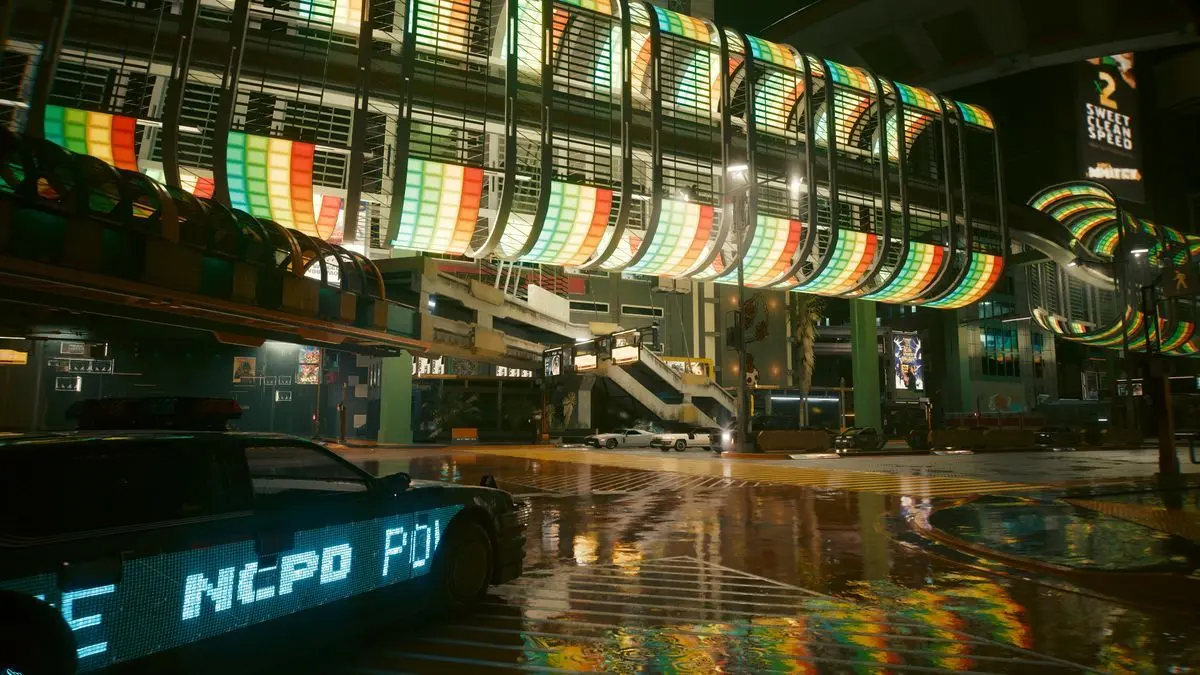
.Testing with Black Myth: Wukong on an RTX 5080 demonstrated minimal latency impact at full 6x multiplier, with only a few milliseconds of delay that remained imperceptible in controller inputs. The visual improvements were particularly noticeable when comparing DLSS 4.5 to its predecessor, with finer particle details and distant textures that were previously smoothed out now restored to life
4
.
Source: PC Gamer
Related Stories
Path Tracing and RTX Mega Geometry Expand Capabilities
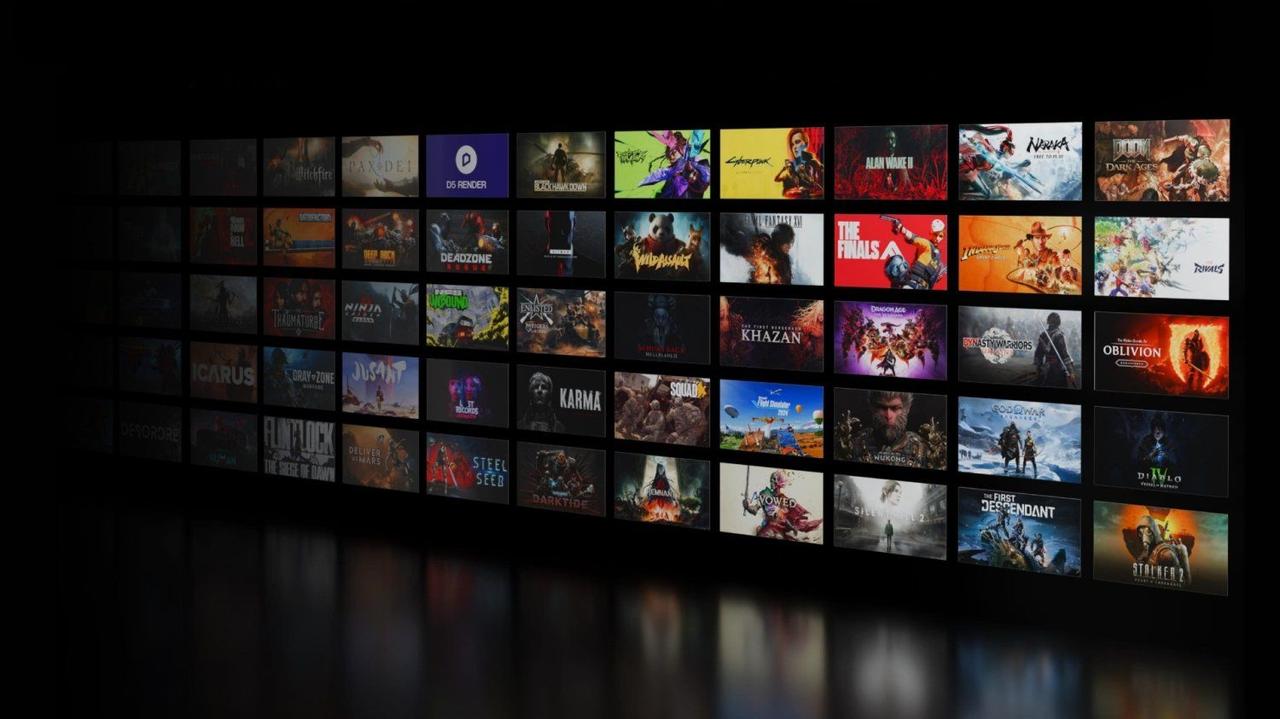
Nvidia announced that upcoming titles including Control Resonant and 007 First Light will feature path tracing effects, joining recently launched Resident Evil Requiem in incorporating these demanding rendering techniques
1
.
Source: PCWorld
The company is extending RTX Mega Geometry technology to help CD Projekt Red create richer forested vistas in The Witcher IV, slated for 2027. This enhanced version allows selective updates of ray-tracing data structures and supports finer-grained opacity micromaps for real-time ray tracing of complex scenes like entire forests
1
.RTX Mega Geometry works best on the Blackwell architecture thanks to optimizations in fourth-generation RT Cores present in RTX 50-series GPUs
1
. DLSS 4.5 features will be supported in approximately 20 games at launch5
.Implications for PC Gaming's Future
The focus on software optimization arrives as hardware production faces constraints, with recent reports suggesting Nvidia is cutting production on higher-end GPUs due to ballooning VRAM costs driven by AI chip demand
2
. The RTX 5090 now costs close to $4,000—$2,000 more than its original suggested retail price—placing the most powerful GPU out of reach for most gamers2
.Dynamic Multi-Frame Generation may represent Nvidia's strategy to extract more capability from mid-range GPUs, making frame generation technology finally useful for gamers who previously questioned why they would muddy visuals with generated frames when their expensive GPUs could already render high frame rates natively
2
. The update launches March 31 through an opt-in beta in the Nvidia app, available exclusively for GeForce RTX 50-series GPUs4
. As AI chip shortages continue, getting more performance from existing hardware through software appears to be the path forward for the foreseeable future1
.References
Summarized by

Navi
[1]
[4]
[5]
Related Stories
Nvidia DLSS 4.5 launches with 6x frame generation and dynamic mode for RTX 50 series GPUs
31 Mar 2026•Technology

Nvidia DLSS 4.5 brings AI upscaling improvements to all RTX GPUs, but older cards may struggle
14 Jan 2026•Technology

NVIDIA Unveils DLSS 4: A Leap in AI-Powered Gaming Performance
07 Jan 2025•Technology

Recent Highlights


Recent Highlights
Today's Top Stories









Your Daily Dose of Curated AI News
Don’t drown in AI news. We cut through the noise - filtering, ranking and summarizing the most important AI news, breakthroughs and research daily. Spend less time searching for the latest in AI and get straight to action.

