Qualcomm's Snapdragon Wear Elite chip targets AI watches, pendants, and smart glasses


19 Sources
19 Sources
[1]
Qualcomm's Latest Chip Could Lead a New Wave of Camera-Equipped AI Watches and Wearables
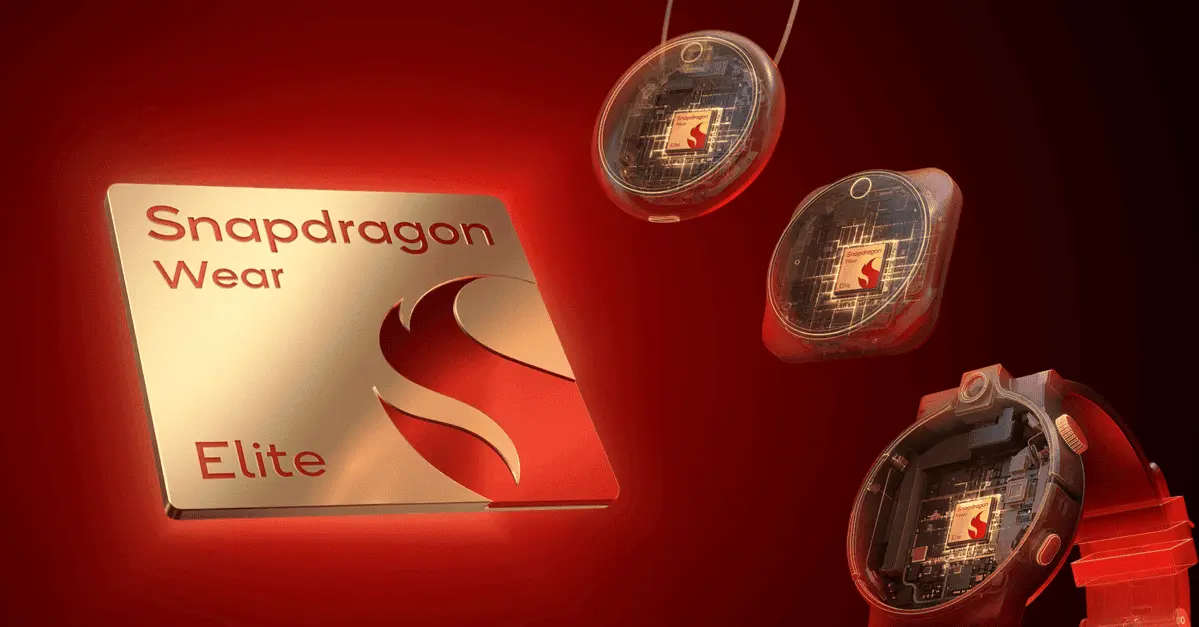
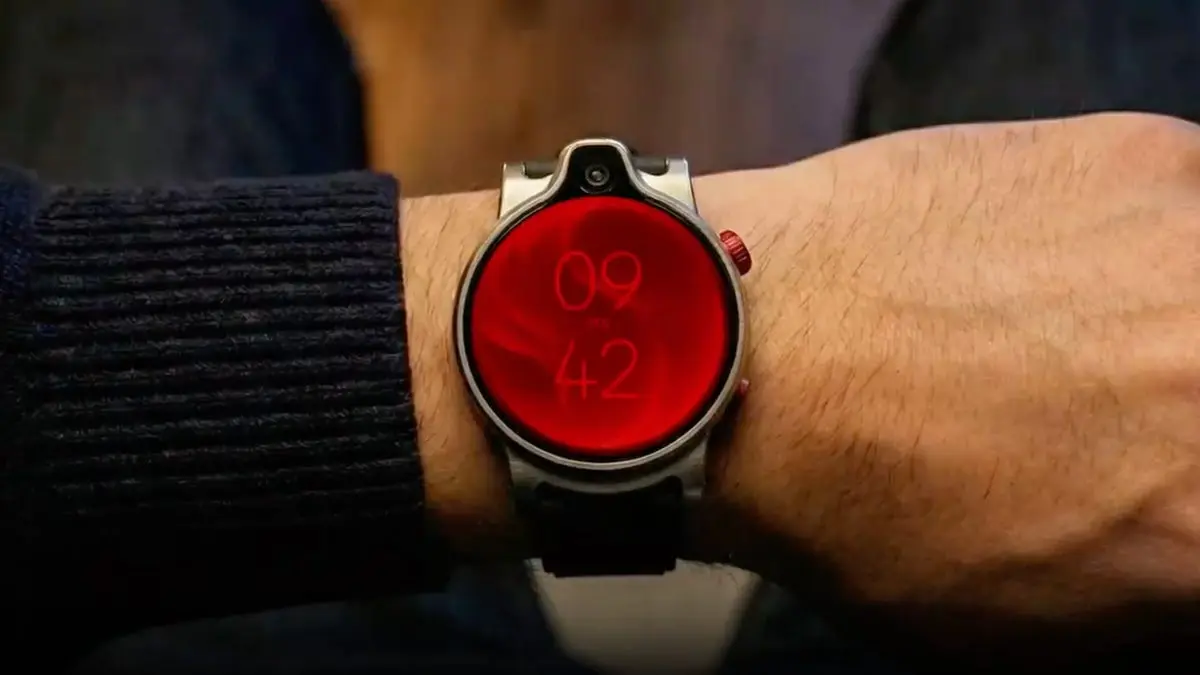
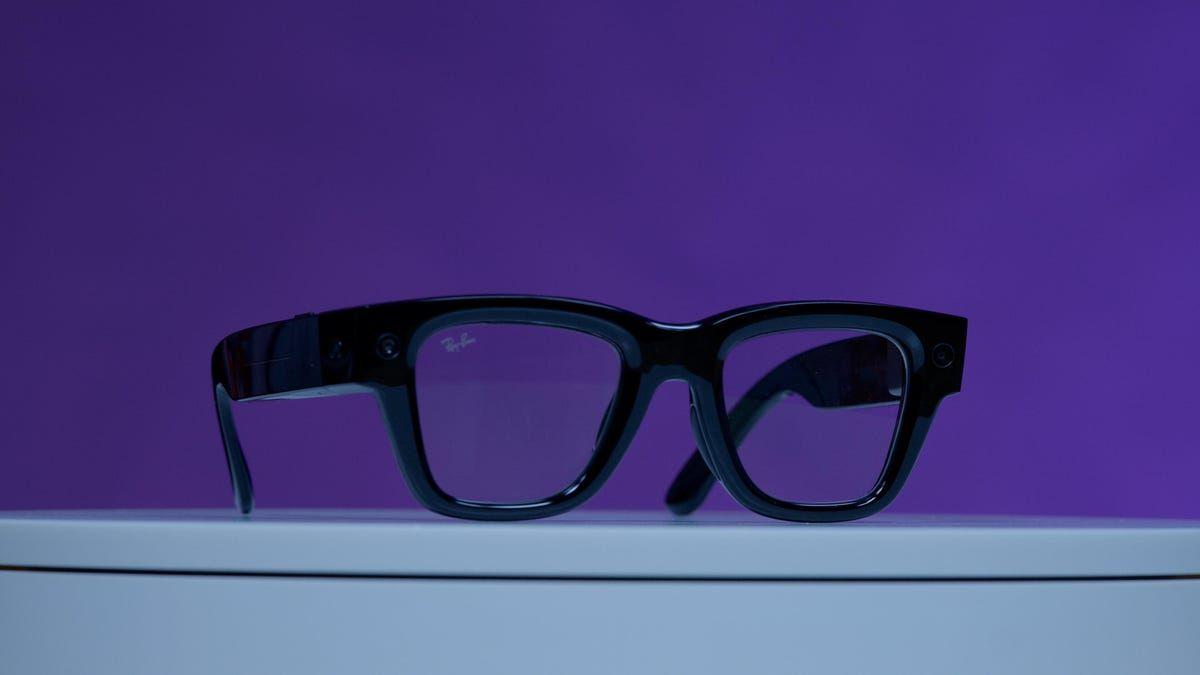
Nearly 20 years writing about tech, and over a decade reviewing wearable tech, VR, and AR products and apps I've been steeling myself for a coming wave of AI-infused wearables that could be worn all over the place, based on reports on gadget plans at Meta, Google and Apple -- a halo of connected tech with cameras onboard, streaming to AI services. Qualcomm's latest chip, announced Monday at Mobile World Congress in Barcelona, is built for it, and the first devices using it are coming this summer. Samsung, Google and Motorola are already building hardware with it. I sat down with John Kehrli, senior director of product management for Qualcomm, to discuss the newest wearable chip push, and it caught my attention on several levels. The reason you should care is that this is a clear preview of tech products to come: Qualcomm's chips power almost all of the non-Apple watches, VR headsets and smart glasses out there. While Qualcomm has had separate chip lines for smartwatches and for smart glasses and VR headsets, the new Snapdragon Wear Elite chip aims to bridge across categories. It's a higher-powered watch chip filled with different wireless connection capabilities, but it is also made to support video input and streaming for AI, even 1080p video output to displays. That could include AI-infused smart glasses. "It's not just the watch: for sure that's a focus for us, but the portfolio [of devices] has expanded dramatically," Kehrli says. Here's the news about Snapdragon Wear Elite that stood out for me. A big part of Qualcomm's push on these chips is to do more generative AI and LLM work on device, a trend I expect to grow. The Snapdragon Wear Elite looks a lot more powerful than previous Qualcomm watch chips. Some of the offline, on-device functions could be voice-based AI, for fitness or, according to Qualcomm, for "life logging." I'm not sure I need life logging, but I'd be interested in having more AI-based controls for wearables. The extra power looks to also drive video on displays and run onboard cameras, including video streaming. The whole idea behind next-wave multimodal AI is to have AI services be aware of what you're doing -- that'll mostly happen via camera access. Kehrli says the processing cores for the neural processing unit on the Snapdragon Wear Elite could support AI models of up to 2 billion parameters on device, at about 10 tokens per second to process. He sees that being good enough for a lot of offline needs, with cloud-connected AI kicking in when needed otherwise. Kehrli sees a lot of local AI needs for the extra sensors, including cameras, that are going to be on these wearables. "There's so many exciting inputs coming in [to the devices]. Location, sound, voice, text, all the sensors -- we're really seeing a lot of medical-grade sensors come into the retail space. What do I do with that data?" In Qualcomm's sizzle video for the new chip, we can see a glimpse of a watch with a camera on its top edge. Most smartwatches don't have cameras right now, but that could be changing soon. While it's not necessarily a great way to take photos, the onboard cameras are likely more an additional way to tap into AI, like for face recognition biometrics for tap-to-pay, using a watch like a smart key for cars or other connected things, or maybe to use for other AI-based controls. Another concept shot of a pendant, which looks basically like a neck-worn smartwatch, has its camera facing out. All the AI pins and pendants that have been trickling in these last few months are showing similar ideas. Like smart glasses, the outer-facing cameras could be another way to see things without putting something on your face. But you'd have to wear some pin or pendant. It also sounds like devices with these new chips will last longer on a charge. Qualcomm's promising 30% better battery life than with its previous watch chip -- potentially "days" of use. I'd still expect more or less a full day, considering these chips might also be supercharging more camera-based and AI features. The faster charging sounds promising, though. The chips could charge devices up to 50% on 10 minutes of charging. That's key because a lot of these wearables are being designed to be worn all the time, and some while you're sleeping. It's like companies are trying to find ways to do a quick recharge pit stop without spending too much time off your body. The most interesting part could be the boosted wireless features. Qualcomm's got six different protocols on-chip: support for Redcap 5G (a protocol to support high-speed and low-power connected tech), Bluetooth 6.0, ultra wideband, GPS, satellite-connected NB-NTN for messaging, and micropower Wi-Fi 802.11ax. The micropower Wi-Fi support could allow these new wearables to stay Wi-Fi connected continuously, says Kehrli, letting them work in the background longer. On Meta's Ray-Ban glasses, for instance, right now, they're mainly Bluetooth-connected and don't stream video by default; switching to that mode kills battery life fast. Streaming always-on AI modes could last longer on Elite-powered devices. Qualcomm's aiming to put its new chip across a wide range of wearables, from camera-enabled headphones and earbuds like Razer's Motoko concept (which I tried at CES in January) to next-gen smartwatches and AI pendants, to smart glasses, and even sensor-connected bands. Devices like Meta's neural band, which uses EMG (electromyography, using skin contact sensors) for hand gestures that control its smart glasses, could see upgrades with this chip. Maybe that's exactly the sort of territory Meta could be exploring with its reported smartwatch debut this year. It's also clear that everyone, Qualcomm included, isn't entirely sure where people prefer to wear these future AI gadgets. Is it glasses? Pendant? Watch? Headphones? All of the above? Kehrli feels people will have different preferences and will choose what works. Will that sort of redundancy make sense or settle itself down into clearer categories in another year or two? Glasses, Kehrli adds, could be a landing spot for this chip because of the cellular-connecting possibilities, saying he expects adoption of wearables with their own data connections will keep rising, especially with AI services. "We're seeing, on-wrist, up to 50% of customers taking connected [wearables] with a service plan. We're seeing that dramatically increase, especially with this AI on device/off device type of experience in the cloud." It's clear that halos of wearables are on deck from several big companies. How it all shakes out and works, though, is still unclear. And while these new wearables should be a lot more powerful, the focus right now isn't on improving how they could stay connected and communicate with each other, something I got a glimpse of in a demo of a personal mesh network made by startup Ixana at CES. Maybe that's next on deck. For now, wearables are trying to be better extensions of your phone, first, and act better as standalone devices too.
[2]
Qualcomm's new chip is geared toward wearable AI gadgets
Like it or not, more AI wearables may be on the horizon - or at least Qualcomm seems to think so. Today the company announced its new Snapdragon Wear Elite chip. At a press briefing, Qualcomm said it considers the Elite to be a "wrist plus" chip. Meaning, it won't replace the previous W5 Plus, but exist alongside it. The company said it expects the Elite will appeal to gadget makers looking to create AI wearables such as pendants, pins, and potentially display-free smart glasses. (More powerful smart glasses will likely use its AR chip.) On top of being upgraded to the 3nm process, the Elite chip will have an eNPU and a Hexagon NPU for AI processing. The former handles low-power AI functions like keyword recognition and activity detection, while the latter can handle more compute-heavy tasks. Qualcomm says the Hexagon NPU can handle two billion parameters on-device, and as many as 10 tokens per second. While the Wear Elite has a similar co-processor architecture to the W5 Plus, Qualcomm says it's improved power efficiency so that more functions can be handled by the main chip. For example, GPS tracking requires 40 percent less power. As far as battery, the Elite will support 9V quick charging, which means you should get an estimated 50 percent charge in about 10 minutes. Qualcomm also estimates 30 percent more "days of use" in overall battery life. That's a nebulous metric as far as real-life use, but it roughly equates to "longer time between charges." The Elite also adds support for satellite connectivity, 5G, ultra-wide band, and Bluetooth 6.0. The CPU performance has increased by about five times, while the GPU now supports 1080p resolution at 60fps for animations. In addition to Android and Wear OS, the Elite will also support Linux to better support startups who may want to make AI pins or pendants on proprietary software. All this suggests that device makers aren't done with AI wearables, even though there hasn't been a breakout hit in the pin or pendant categories. A major component maker like Qualcomm actively creating chips that cater to that device category is a sign that there's some kind of demand. Google has spoken out about how it's building toward an ecosystem of AI hardware, including wearables. Meanwhile, Apple is rumored to be mulling over an AI wearable, and, famously, Jony Ive and Sam Altman have teased that may be in the cards for Open AI as well.
[3]
How Qualcomm's new wearables chipset could spell the end of smartphone dominance
Advancements include longer battery, faster processing, and low-power connectivity. Right now, mobile phones are the main hub of our personal device ecosystem. But as AI integrates into glasses, rings, headphones, and portable form factors, we could see our very own handsets step off center stage, and these wearable devices take their place. This requires lots more on-device AI and interconnectivity than what is currently available. Also: Best of MWC 2026: Live updates on phones, concepts, and innovations we're seeing Qualcomm is betting on its latest chipset, unveiled at Mobile World Congress 2026, to power this new era of personal AI. Snapdragon chips already power some of the most common mobile devices, and its new Snapdragon Wear Elite chipset is included in the next generation of wearables from Samsung, Google, Motorola, and more. Here's what the chip can do, and how it will change the next smart wearable you purchase. The chip integrates Qualcomm's Hexagon NPU, supporting billion-parameter models at the edge. It makes high-performance AI processing on a device a reality. And it's bolstered by "ultra-low power" Wi-Fi connectivity, thanks to Micro-Power Wi-Fi, which enables continuous AI syncing and data exchange at significantly lower power levels. Compared to its W5+ Gen 2 Wearable Platform, the Snapdragon Wear Elite boasts significant power efficiency and speed, according to Qualcomm. Its single-core CPU performance is five times stronger, and seven times faster for launching apps, multitasking, and rendering visuals smoothly, Qualcomm claims. Also: Samsung Galaxy S26 vs. S26 Plus vs. S26 Ultra: I compared every model to help you decide "Spanning a broad range of form factors, these devices are no longer simply extensions of the smartphone, but active participants in a distributed AI network across mobile, compute, XR, wearables, and more," said Alex Katouzian, EVP and Group General Manager, Mobile, Compute, & XR (MCX), Qualcomm Technologies, Inc, in a press release. This new chip will help extend the battery life of the next generation of wearables, so people can use their AI pendants, glasses, watches, and more for longer. Qualcomm says the new chip elongates daily use by 30%. Plus, fast charging improves the chip. According to Qualcomm, it charges devices to 50% in about 10 minutes, so you can quickly top off your device in a pinch. Snapdragon Wear Elite makes your wearable devices - your smartwatches, headphones, pendants, and smart glasses - more contextually aware of your environments and the recommendations they provide. This sort of feature could be a boon for those wearable AI pendants and smart glasses that use environmental context to provide tips and sort through information. It also enables more natural language communication, so interactions between a user and a device can feel more conversational. The chip lays the foundation for agentic AI tasks to take place. We got a hint of one of the first agentic features to drop on Samsung's newest lineup of phones it unveiled last week, and since Snapdragon powers Samsung's smartwatches, it's reasonable to assume that these agentic capabilities could be coming to its Galaxy Watch 9 later this year. Maybe we'll be able to order meals on Grubhub simply by speaking into our smartwatch very soon. "By integrating the new Snapdragon Wear Elite platform, the next generation Galaxy Watch will be an even more holistic wellness companion," said InKang Song, EVP and Head of Technology Strategy Team, MX Business at Samsung Electronics, in a Qualcomm press release. Also: Qualcomm's new chipset makes budget shopping for laptops a whole lot easier in 2026 While Qualcomm stresses that the benefits of the chip don't only apply to smartwatches, it's easy to imagine all the ways the Snapdragon Wear Elite platform could boost the next lineup of Pixel Watches, Galaxy Watches, smart rings, and other health-tracking devices. The chip opens up new opportunities for health tracking and life logging, the Qualcomm team explained during a briefing. That aforementioned life-logging feature will also power the next generation of AI pendants or glasses. The chip simplifies and speeds up information recall, such as "Where did I put my keys?" or "What cafe did I visit last week in Paris?" We'll get a glimpse of this next era when the first few devices from these major tech brands arrive later this year. They will likely power Samsung and Google's next smartwatches, smart glasses (Samsung is rumored to launch a pair this year), smart rings, or pins.
[4]
Samsung, Google and Motorola to Make AI Watches, Pins, Pendants With New Qualcomm Chip
Katie is a UK-based news reporter and features writer. Officially, she is CNET's European correspondent, covering tech policy and Big Tech in the EU and UK. Unofficially, she serves as CNET's Taylor Swift correspondent. You can also find her writing about tech for good, ethics and human rights, the climate crisis, robots, travel and digital culture. She was once described a "living synth" by London's Evening Standard for having a microchip injected into her hand. When you think wearables from the likes of Google, Motorola and Samsung, you probably think earbuds and maybe watches. But in the age of AI, a whole new world of wearable tech is coming to life, and we could see these companies soon branch out to make AI-powered pins, pendants and other unexpected gadgets too. This new generation of wearable tech will be made possible by Qualcomm, which on Monday announced the latest version of its wearables chip, the Snapdragon Wear Elite, at Mobile World Congress in Barcelona. This new platform will be used by a range of partners, including Google, Motorola and Samsung to design a constellation of new devices. Qualcomm's philosophy toward wearables is very much "build it, and they will come." It makes the underlying technology that will power devices and will then encourage companies to build on top of it how they see fit. When I attended the company's Snapdragon Summit in Hawaii last year, Qualcomm Chief Marketing Officer Don McGuire painted me a picture of how he imagines the convergence of AI and wearables playing out. "AI is going to be ambient in a lot of ways," he told me. It might not even be called a "device" if it's something woven into your clothing or worn on your person. "There's lots of ideas out there floating around," he said. At the same event, Dino Bekis, who runs Qualcomm's wearables business, introduced me to the Looki L1 -- a life-logging camera created with the company's W5 Gen 2 chip. This is the wearables platform Qualcomm introduced last year, which was designed to work with Google's Wear OS and launched with the Pixel Watch. Unlike its predecessor, the new Wear Elite chip will work across Google's Wear OS, Android and Linux, with a neural processing unit that enables on-device AI with low power consumption. This is key for wearable devices, which you don't necessarily want to charge every day. Qualcomm says the Wear Elite's advanced power management enables 30% longer battery use, compared to the previous version, with rapid charging bringing devices to 50% in around ten minutes. "The Snapdragon Wear Elite platform opens new possibilities, delivering the performance, battery life and connectivity essential for the next generation of Wear OS," said Bjørn Kilburn, general manager of Wear OS by Google, in a statement. The first devices powered by the Wear Elite chip should be available in the coming months, with Motorola saying it will use the platform to build more AI wearable devices like AI concept Project Maxwell, which it showed at CES in January, and Samsung saying it will integrate Wear Elite into the next Galaxy Watch. This will make the watch into "an even more holistic wellness companion," said InKang Song, EVP and head of tech strategy at Samsung. Samsung and Google might be focused on watches, but Snapdragon Wear Elite points to a future halo of personal wearables, which CNET Editor at Large Scott Stein has explored in more detail. The possibilities stretch beyond what we've seen so far as this latest platform is embraced by companies big and small. I'll be looking for demos making use of the new chip this week at MWC, so stay tuned for more.
[5]
Qualcomm's Snapdragon Wear Elite chip is made for smartwatches and AI devices
Qualcomm's Snapdragon Elite chips are reserved for the best Android phones and laptops, and now the company has introduced the first in the Elite series for wearables. The Snapdragon Wear Elite processor is designed for smartwatches and AI devices like pendants and promises up to a fivefold increase in single-thread CPU performance, Qualcomm announced. The new processor is built on a 3nm process to improve speed and efficiency over previous models, while boosting the number of cores to five (one big core at 2.1GHz and 4 little cores at 1.9GHz). With those changes, the company is promising up to five times faster single-threaded performance, with GPU speeds boosted up to seven times. The Snapdragon Wear Elite is also equipped with a new NPU that allows low-power AI use cases like keyword recognition along with noise cancellation. It's also the first Snapdragon wearable processor with a dedicated Hexagon NPU supporting AI models with two billion parameters. That will allow new "personal AI experiences," the company said, like context-aware recommendations, natural voice interactions, life logging and AI agents that can orchestrate tasks on your behalf. Wear OS devices with the chip should see up to 30 percent improved battery life and charging speeds of up to 50 percent in ten minutes. It also allows for more types of connectivity, including 5G reduced capability, micro-power Wi-Fi, NB-NTN for satellites, Bluetooth 6.0, GNSS and UWB. However, manufacturers will be able to source versions of the chip without some of those wireless features. Whether the Snapdragon Wear Elite will give Wear OS watch manufacturers a better chance to chip into the 50-plus percent market share of Apple's Watch remains to be seen. The first devices using the chip will start to ship in the "next few months," Qualcomm said. "Leading global partners are supporting the platform including Google, Motorola and Samsung."
[6]

Samsung confirms the next Galaxy Watch will jump to Qualcomm's Snapdragon Wear Elite
At MWC 2026, Qualcomm just announced the Snapdragon Wear Elite chip for smartwatches and other AI-centric wearables. This chip marks a major step up from previous Snapdragon Wear chips like the already pretty good Snapdragon W5 Plus Gen 1. There's more big news flowing in from Qualcomm's press conference, though, as Samsung took to the stage to confirm that the next Galaxy Watch will feature this new Snapdragon Wear Elite SoC. Mr. InKang Song, Executive Vice President and Head of the Technology Strategy Team at MX Business, Samsung Electronics, confirmed on stage at Qualcomm's press conference that the next-generation Galaxy Watch will integrate the new Snapdragon Wear Elite SoC. The next Galaxy Watch will be an "even more holistic wellness companion." Qualcomm notes in its press release that the first commercial devices powered by Snapdragon Wear Elite are expected to be available in the next few months. However, it's not clear whether this refers to the Galaxy Watch 9, the Galaxy Watch Ultra 2, or another wearable. The Snapdragon Wear Elite is manufactured on a 3nm process, compared to the 4nm Snapdragon W5 Plus Gen 1, but similar to the 3nm Exynos W1000 that is already on the Galaxy Watch 7, Galaxy Watch 8, and Galaxy Watch Ultra. The Wear Elite's core configuration is somewhat similar to the W1000, with 1x performance core and 4x efficiency cores, though we still don't know the exact core configuration for the Wear Elite for a proper comparison. What makes the Wear Elite interesting is that it brings improved AI hardware, starting with the embedded NPU. This supports low-power use cases like keyword/activity recognition and noise cancelation or suppression. This is also the first Snapdragon wearable chipset with a dedicated Hexagon NPU, enabling on-device AI models and potential use cases such as smart replies, text creation, text summaries, and fitness coaches. Given Samsung's recent push into AI, swapping out from the company's Exynos W1000 SoC to the Snapdragon Wear Elite makes sense for the next-generation Galaxy Watch. It remains to be seen just how much performance or battery life improvement we can see from this switch, though our expectations are more aligned with enhancements in AI-based use cases. This is a developing story. Please visit again for more details.
[7]

Where Humane Failed, Qualcomm Imagines the Future Is Filled With AI Pins
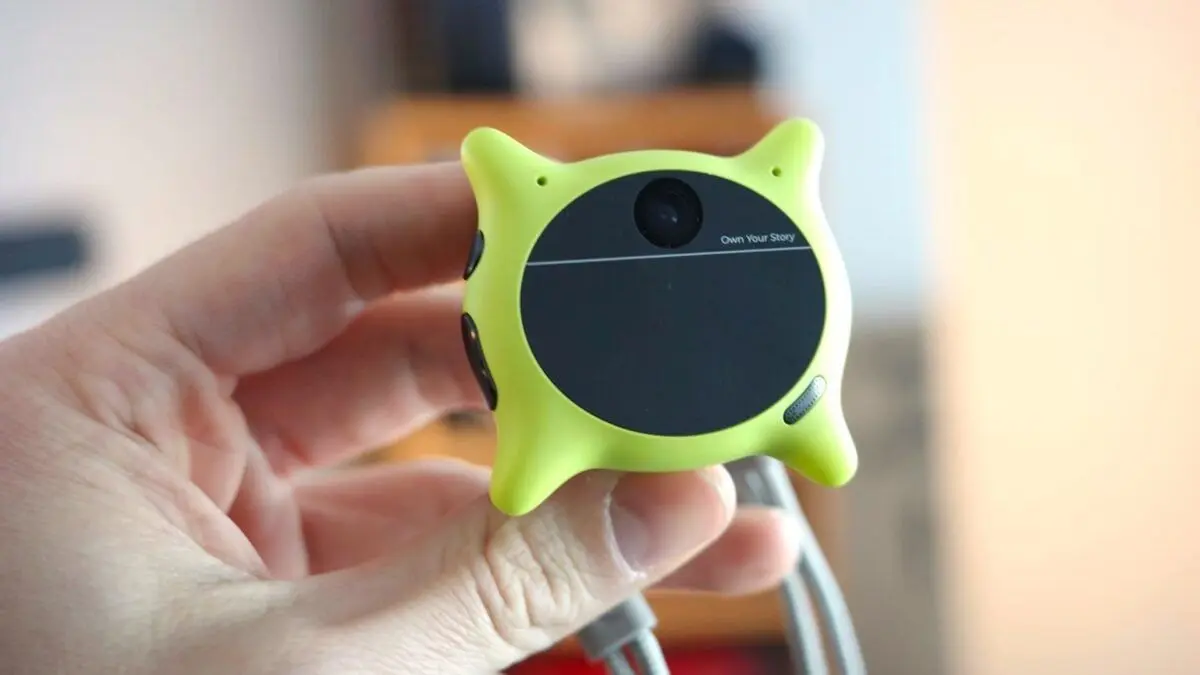
Qualcomm imagines a future packed with AI wearables. We still have to find a gadget that makes AI worth the hassle. “Wearables†may already be too broad a term in tech. It encompasses more than smartwatches. Is an exoskeleton a "wearable"? What about the oft-derided AI pin? Qualcomm seems to think it counts, so much so that its latest chipset is built not just for smartwatches but for whatever future AI-centric doohickey big tech plans to stick on our lapels or around our necks. Previous Qualcomm Snapdragon Wear chips were mostly geared toward smartwatches. The new Snapdragon Wear Elite, first announced in time for MWC 2026 in Barcelona, is supposed to offer more platforms than that. The chip is built on a 3nm process node and encompasses Qualcomm’s Hexagon NPU. That neural processing unit is built for handling low-end AI tasks, though Qualcomm also included an extra eNPU AI accelerator for low-power AI use cases. The chipmaker further claims it has boosted the CPU by five times in single-thread performance compared to the previous W5 Gen 2 chip. The chipmaker also improved the max frame rate you can get from the Wear Elite’s GPU. These upgrades could make next-gen smartwatches a little more snappy when loading apps. However, Qualcomm's main goal is to introduce new use cases for its platform, whether through pins, pendants, or AI-centric hubs. This new chip promises to be able to handle a 2 billion parameter AI model on device. To put that into perspective, Google’s smallest AI model, Gemma, is a 270 million parameter model. That means the chip is technically capable of handling a very small conversational model. How that shakes out in reality is still to be determined. In addition, Qualcomm claims it enhanced image stabilization for tiny cameras. It supports cameras capturing images and video at 1080p and 60 fps. These could be useful for AI vision models. At the same time, any kind of AI vision model will likely need to run on the cloud, requiring an ever-present internet connection. The need for constant 5G or Wi-Fi connection is what has held back previous attempts at AI wearablesâ€"even if you ignore the AI's tendency to offer inconsistent answers or outright lie about what it sees. Qualcomm’s senior director of project management, John Kehrli, told Gizmodo that the chipmaker is already in talks with multiple companies, all of whom are trying to craft some variety of AI wearable that finally makes sense. Kehrli mentioned how there are a variety of form factors being worked on beyond AI glasses, such as Meta’s Ray-Ban smartglasses and AR glasses. There’s also Razer, which is proposing players will want a Project Motoko gaming headset with two camera lenses to let AI see what you’re playing and offer (often inconsistent) commentary. Then there’s a device like the Looki L1, a self-described “personal AI wearable." It may look like a Nickelodeon splat logo, though it’s made to hang around your neck and provide commentary or simply record your life with the help of the built-in camera that can capture 1080p video or photos. That device is currently running on Qualcomm’s W5 Gen 2 chip. So far, the highest-profile examples we’ve had of AI wearables have been travesties and utter failures. Humane famously raised $240 million in investments to produce an AI-centric pin that required a constant internet connection and overheated doing the most basic tasks. Humane eventually dissolved and sold most of its assets to HP. Other devices, like the Plaud AI Pin, are merely recording devices that depend on an app and cloud-based AI for transcription. Then there was Friend, another VC-backed startup that wanted to throw an AI companion around your neck. Its million-dollar New York City ad campaign ran up against skeptical graffiti artists, so the company eventually pivoted away from AI hardware to yet another chatbot website interface. Kehrli said that Qualcomm isn’t envisioning one singular use case for this AI-ready wearables chip. The next device may come in a form factor nobody had in mind. “What might make sense for you may not make sense for me,†he said. In the end, we may find ourselves inundated with devices with very specific use cases. Some companies are not getting that memo. We still don’t know what the hell OpenAI and famed designer Jony Ive are cooking up. However, recent leaks from The Information suggest it may be more akin to a smart speaker with built-in cameras to help it process information. Similarly, Bloomberg claims Apple is working on its own AI pendant that's equivalent to the Humane Ai Pin, just with an AI-enhanced Siri built in. It’s hard to judge tech merely by a description. These devices aren't the kind to immediately spark joy, whether in a Marie Kondo sense or as a gadget nerd. Not having a clear use case from the start makes it much less likely regular users are going to be willing to stick a camera around their necks.
[8]

Samsung abandons Exynos for its next Galaxy Watch
Rajesh started following the latest happenings in the world of Android around the release of the Nexus One and Samsung Galaxy S. After flashing custom ROMs and kernels on his beloved Galaxy S, he started writing about Android for a living. He uses the latest Samsung or Pixel flagship as his daily driver. And yes, he carries an iPhone as a secondary device. Rajesh has been writing for Android Police since 2021, covering news, how-tos, and features. Based in India, he has previously written for Neowin, AndroidBeat, Times of India, iPhoneHacks, MySmartPrice, and MakeUseOf. When not working, you will find him mindlessly scrolling through X, playing with new AI models, or going on long road trips. You can reach out to him on Twitter or drop a mail at [email protected]. Samsung has always used its in-house Exynos chips in its Galaxy Watches. That has also been a key reason behind their success, especially when Qualcomm essentially gave up on its wearable chip lineup. Yet, Samsung will use Qualcomm's next-gen Snapdragon Wear Elite platform for its 2026 Galaxy Watch lineup. At MWC 2026, Qualcomm unveiled its newest Wear OS platform: the Snapdragon Wear Elite. It is a big step up from the company's previous Wear OS chips, featuring modern CPU cores, a dedicated NPU for AI tasks, and a faster GPU. It's seemingly so good that Samsung will use it in its next Galaxy Watch. InKang Song, Executive Vice President and Head of the Technology Strategy Team for Samsung's MX Business, announced the move at MWC. Qualcomm's press release on the Snapdragon Wear Elite contains the following quote from him: "Samsung and Qualcomm Technologies share a long history of advancing what's possible in mobile computing, and we are thrilled to extend this partnership into the wearable category. By integrating the new Snapdragon Wear Elite platform, the next-generation Galaxy Watch will be an even more holistic wellness companion. This marks an important step in our ongoing efforts to deliver more efficient and personalized experiences, right from your wrist." What makes the Snapdragon Wear Elite special? Compared to previous Snapdragon Wear chips, the Wear Elite brings a massive leap in performance and efficiency. Qualcomm claims a 5x single-core CPU performance improvement and a 7x faster GPU, made possible by a big.LITTLE architecture that features one high-performance CPU core and four power-efficient cores. Samsung's current flagship Exynos chip for wearables -- the Exynos W1000 -- also uses a similar CPU configuration. It launched in 2024 though, so it's certainly showing its age, especially from a connectivity viewpoint. Other notable specs include support for 5G RedCap, a low-power cellular connectivity standard for always-connected devices, Micro-Power Wi-Fi, Bluetooth 6.0, UWB, and NB-NTN. The integrated Hexagon NPU can run AI models with up to 2 billion parameters entirely on-device. Qualcomm says Snapdragon Wear Elite-equipped watches can charge a smartwatch to 50% in just 10 minutes. The chip is built on a 3nm process and, combined with improved power management, is said to deliver up to 30% better battery life compared to the Snapdragon W5+ Gen 1. Samsung could be using a dual-chip stragegy here, using the Snapdragon Wear Elite on its Ultra smartwatch and sticking to Exynos on the regular Galaxy Watch 9 variants.
[9]

Qualcomm announces Snapdragon Wear Elite for next gen of Wear OS, Galaxy Watch
At MWC 2026, Qualcomm announced the premium Snapdragon Wear Elite for Wear OS and other AI form factors. This chip and product line are a level above the Snapdragon W5+ Gen 2 that is now considered part of the "high" tier. The premium "Elite" branding is meant to indicate a significant increase in performance and capabilities. However, it's important to note that this chip is not using Oryon cores, while there might be more W-class chips in the future. Physically, this chip has a thinner package than what came before. The Snapdragon Wear Elite is built on a 3nm process node with a big.LITTLE architecture for the first time. There's a 2.1 GHz big core that will help speed up app launches, multitasking, and device boot times. This is paired with four 1.95 GHz small cores. Compared to the W5+ Gen 2, the CPU offers a 5x increase in single-core performance. The Adreno GPU offers an up to 7x improvement in max FPS performance with 1080p at 60 FPS support for smoother rendering. This chip is built for on-device AI with a Hexagon NPU that can run up to 2 billion parameters on-device and up to 10 tokens per second. This makes possible computer vision, text-to-speech, and AI agent use cases. That can translate to applications like personal assistants, life logging, health, fitness, and on-device transcription or translation. Additionally, there's also an eNPU or dedicated AI accelerator for low-power, always-on use cases like keyword detection, activity recognition, and noise suppression. Notably, this replaces the previous co-processor architecture. The eNPU is one of the low-power islands, which Qualcomm views as SoCs within the main SoC. Other islands cover audio, sensors, and display. On the connectivity front, Qualcomm touts hex-connectivity with Wi-Fi (802.11ax), Bluetooth 6.0, UWB, GNSS (location), 5G RedCap, and NB-NTN (satellite). Micro-power Wi-Fi that has an 80% lower power threshold can translate to keeping the radio always on, while this is the first time UWB is being integrated for unlock use cases. Qualcomm notes a 50% charge in 10 minutes for the 300 to 600 mAh batteries typical in these devices. Specifically, this Quick Charging comes in at 9V. Overall, you can expect 30% longer use compared to the previous chip. The Snapdragon Wear Elite supports Android and Wear OS, as well as Linux for lighter operating systems. Google today said Wear OS is "reimagining the smartwatch experience and moving from an operating system to an always with you intelligent system that understands and works for you," which is in line with its remarks at the Galaxy S26 launch for Android. "The Snapdragon Wear Elite platform opens new possibilities, delivering the performance, battery life and connectivity essential for the next generation of Wear OS." Meanwhile, Samsung said the next-generation Galaxy Watch will use Snapdragon Wear Elite to become an "even more holistic wellness companion." Beyond smartwatches, Snapdragon Wear Elite can be used for other AI form factors, including smart glasses and pins that have cameras. Depending on the camera and display being used, Wear Elite can be used for glasses instead of the Snapdragon AR1/2 family. Qualcomm says the "first commercial devices powered by Snapdragon Wear Elite are expected to be available in the next few months."
[10]

I just saw the future of smartwatches -- Here's how AI will supercharge your next Galaxy and Pixel Watch
Qualcomm's new Snapdragon Wear Elite processor is designed for heady AI tasks I'm at Mobile World Congress in Barcelona, Spain, where Qualcomm Technologies just announced the brand's latest Snapdragon Wear Elite processor for smartwatches, and it's all about handling complex AI tasks. Here's what it could mean for your next wearables. Snapdragon Wear Elite: Now even more AI on your wrist According to Qualcomm, the latest wearables processor is all about enabling "high-power AI processing directly on the device." While today's smartwatches offer impressive AI capabilities, not all of the high-tech processing actually happens on your watch. For example, the new AI-powered, personalized 'Workout Buddy' feature for Apple Watch requires a paired Apple Intelligence-powered smartphone to work. Coming to your Pixel or Galaxy Watch soon Of course, Apple doesn't use Qualcomm processors in the Apple Watch, but Google and Samsung both do. In fact, Qualcomm makes it clear that the latest Snapdragon Wear Elite processor will likely be supported by Pixel Watch and Galaxy Watch devices. In 2026, Samsung and Google will be a full step ahead of Apple when it comes to on-wrist AI capabilities. While even those with the best Apple Watch models are stuck with a limitedly useful non-AI-powered Siri experience, both the latest and prior-gen Samsung and Google watches support the latter's outstanding Gemini-powered AI voice assistant. Another area where Google and Samsung have Apple beat is smartwatch battery life. And the gap is about to get even bigger, potentially. The new Wear Elite processor also promises faster charging times, up to 50% power-ups in ten minutes, and more notably, even better overall power management. The takeaway Get ready for the next-generation of Wear OS smartwatches to be supercharged with on-device AI powers that could result in an even better Gemini AI assistant experience, improved health, fitness, stress, and sleep insights, data analysis, and power management. Furthermore, the new Snapdragon Wear Elite tech could also show up in the next generation of AI pins, which may or may not see the light of day, like those from OpenAI and Apple. Follow Tom's Guide on Google News and add us as a preferred source to get our up-to-date news, analysis, and reviews in your feeds.
[11]

Qualcomm's Snapdragon Wear Elite aims to power the next wave of AI wearables -- not just smartwatches
* Qualcomm unveils Snapdragon Wear Elite wearable platform * It will likely be inside smartwatches and new AI form factors * First devices expected later this year Qualcomm's Snapdragon chips already power many wearable devices, from the W5 Gen 2 inside the Pixel Watch 4 to the AR1 Gen 2 chip in the ever-popular Ray-Ban Meta glasses. However, at MWC 2026 - Mobile World Congress - Qualcomm is looking further ahead, both to the near term and the years beyond. That future centers on AI running directly on your devices. Qualcomm's new Snapdragon Wear Elite platform is designed to deliver advanced on-device intelligence inside gadgets with limited space and battery, allowing features to run smoothly without relying heavily on the cloud. Samsung, Motorola, and Google are already backing the platform, with the first devices expected to arrive in the "next few months." To underscore the shift, Qualcomm is bringing its 'Elite' branding - previously reserved for premium smartphone chips, including those powering the Samsung Galaxy S26 lineup - to wearables for the first time. The platform is intended for a wide range of devices, from smartwatches and smart glasses to emerging categories like AI pins, pendants, and other next-generation form factors. Wear Elite has been in development for more than three years and is built around four core priorities: on-device AI, battery life, connectivity, and performance. A redesigned architecture includes a dedicated NPU capable of running large language models directly on the device, enabling always-on features without a constant internet connection. That could power everything from next-generation smartwatches - potentially the Pixel Watch 5 - to pendant-style devices that automatically transcribe meetings. When connectivity is needed, Wear Elite supports a broad range of standards, including low-power Wi-Fi, Bluetooth, L1 + L5 GPS, ultra-wideband, 5G, and GNSS. These options allow devices to sync data or communicate with other hardware while minimizing battery drain. Efficiency is critical for compact wearables, and Qualcomm says the platform delivers significant power improvements along with charging speeds up to twice as fast as the previous generation. Wear Elite is designed to enable always-on, context-aware features across devices like smartwatches, smart glasses, pins, and pendants by processing inputs such as voice, location, movement, and even camera data. The goal is to support more personal AI assistants that understand what you're doing and where you are throughout the day, offering timely help without constant input. Naturally, the big question is when these devices will arrive - and what they'll actually deliver. Bjørn Kilburn, GM of Wear OS by Google, said the platform opens the door for smarter experiences on future Wear OS devices, emphasizing gains in performance, battery life, and connectivity. Samsung confirmed that its next-generation Galaxy Watch - likely the Galaxy Watch 9 expected this summer alongside new Fold and Flip models - will use the Snapdragon Wear Elite chip. Motorola, meanwhile, highlighted its interest in more personalized AI wearables, including the "Maxwell" pendant concept shown at CES 2026, saying the platform lets the company push those ideas further. While Samsung and Google see Wear Elite as the future of smartwatches, it's clear Qualcomm is aiming far beyond the wrist. Motorola is exploring AI pendants, and new hardware from companies like OpenAI - reportedly involving Sam Altman and Jony Ive - could introduce entirely new categories. Whether Wear Elite becomes the silicon powering those devices remains to be seen, but Qualcomm is clearly betting that the next wave of personal computing will be AI-driven, wearable, and far more diverse than today's watches and glasses. It's also worth noting that Qualcomm's Snapdragon Wear Elite will live alongside Snapdragon W5, AR1, AR2, and S chips, likely being the one that companies call upon for watches, these new form factors, and even glasses. Follow TechRadar on Google News and add us as a preferred source to get our expert news, reviews, and opinion in your feeds. Make sure to click the Follow button! And of course, you can also follow TechRadar on YouTube and TikTok for news, reviews, unboxings in video form, and get regular updates from us on WhatsApp too.
[12]

Qualcomm's Snapdragon Wear Elite paves the way for a new wave of AI wearables
The new 3nm chip brings major CPU, GPU, and on-device AI upgrades for future smartwatches and AI wearables. Mobile World Congress Read our complete coverage of Mobile World Congress Updated less than 0 just now ago Qualcomm today lifted the covers off the Snapdragon Wear Elite, a new premium platform built for next-generation Wear OS smartwatches and other AI wearables. Announced at MWC 2026, the chip is positioned above the Snapdragon W5+ Gen 2 in Qualcomm's lineup and packs a dedicated NPU to enable faster, more capable on-device AI processing. The Snapdragon Wear Elite is built on a 3nm process and adopts a big.LITTLE CPU architecture, pairing one high-performance core clocked at 2.1GHz with four efficiency cores clocked at 1.95GHz. Qualcomm says this setup delivers a 5x jump in single-core performance compared to the Snapdragon W5+ Gen 2. An upgraded Adreno GPU is also part of the package, offering up to 7x higher graphics performance. Big performance gains meet smarter on-device AI AI performance is a core focus for the Snapdragon Wear Elite, with the dedicated Hexagon NPU reportedly capable of handling more advanced on-device workloads, including generative AI tasks, voice assistants, and contextual processing without relying heavily on the cloud. The company says the platform can run larger language models directly on the device, enabling faster responses, improved privacy, and more reliable performance even when connectivity is limited. Beyond raw performance and AI upgrades, the Snapdragon Wear Elite also brings a broad set of connectivity improvements. The platform supports Bluetooth 6, 802.11ax Wi-Fi, UWB, GNSS, 5G RedCap, and NB-BTB satellite connectivity. Qualcomm is also promising improved power efficiency thanks to the 3nm process, along with faster charging support that delivers a 50% charge in 10 minutes for 300 to 600mAh batteries. Recommended Videos The platform supports both Android and Wear OS, and the first Snapdragon Wear Elite devices are scheduled to debut in the coming months. The chip is expected to power a new wave of premium Wear OS smartwatches from Motorola and Samsung, alongside AI-powered wearables like smart glasses and pins.
[13]

MWC 2026: Snapdragon Wear Elite brings big.LITTLE power to wearables
Qualcomm launched the premium Snapdragon Wear Elite chip at MWC 2026. The new "Elite" branding positions the chip a tier above the Snapdragon W5+ Gen 2. It is built on a 3nm process node and uses a big.LITTLE architecture for the first time. The platform targets a significant performance uplift for next-generation wearables. This tier signifies a major increase in capabilities over the previous "high" tier. The chip supports Android, Wear OS, and Linux operating systems. The central processing unit features a 2.1 GHz big core and four 1.95 GHz small cores. Qualcomm stated this configuration offers a 5x increase in single-core performance compared to the previous generation. The Adreno GPU provides up to a 7x improvement in max FPS performance, supporting 1080p at 60 FPS. A Hexagon neural processing unit can run up to 2 billion parameters on-device. This enables AI use cases like personal assistants and health tracking. A dedicated eNPU handles low-power, always-on tasks, replacing the previous co-processor architecture. Connectivity includes Wi-Fi, Bluetooth 6.0, UWB, 5G RedCap, and satellite support. The chip supports Quick Charging to 50% in 10 minutes and offers 30% longer battery life. Google stated the chip is essential for moving Wear OS to an "intelligent system." Samsung confirmed the next-generation Galaxy Watch will use the Snapdragon Wear Elite. The chip can also be used for other AI form factors, such as smart glasses. First commercial devices are expected in the next few months. Qualcomm Inc. is a global semiconductor company. The company designs and markets wireless telecommunications products. The stock ticker is QCOM.
[14]

This is the tech that will power your next smartwatch
Qualcomm's Snapdragon Wear Elite is designed for wearable devices including next-gen AI-powered pins, glasses and watches Qualcomm may be synonymous with the tech inside smartphones, but it continues to push forward with wearables, too. Most smartwatches have the company's tech inside and the latest Snapdragon Wear Elite platform is designed to bring AI interactions to your wrist and beyond. The company was on stage at Mobile World Congress 2026 to announce that Wear Elite will be in products from Google, Motorola and Samsung incliuding the next-gen Galaxy Watch. Products featuring the new tech will be "available in the next few months", says Qualcomm and I'd expect a next-gen Galaxy Watch Ultra and Galaxy Watch 9 to debut in July or August. The tech can be used in all kinds of wearables of course - it's not all about watches and we'll see more AI assistant pins, smart glasses and more appear over the coming years. The new platform promises a bunch of performance improvements and support for the latest standards, including 5G, Micro-Power Wi-Fi and Bluetooth 6.0, but perhaps the most interesting is in terms of battery life, which is 30% improved with rapid charging that can juice up a watch to 50% in around 10 minutes. More personal devices Qualcomm is keen to pitch these next-gen wearable devices as part of a new 'era of personal AI' as the company's Ziad Asghar explained during an event I attended at Mobile World Congress. Yeah, so I think one thing is very clear. AI is the new UI. We've seen this before where the mouse and keyboard enabled the PC. Touch enabled the smartphone. AI is enabling all of these new devices. That means you basically need a very different kind of device. We've already seen great traction with smart glasses and the number of people who are using [them]. "I always like to say that these devices should give you a superpower. [They] should allow you to speak a language you don't speak. It should allow a student to be able to get an answer to their homework. "Your watch, it might be telling you your heart rate, it's telling you your activity level, it's telling you whether you're sitting or you're walking or running. Can you imagine if you can bring in all of this context into generative AI?" "That's where you get full, personalized AI. And that's why I'm so excited about [new wearable devices], because this is how you get generative AI to be personal to each and every person. And these new emerging [device designe] are so natural". Asghar continues. "Your body is like prime real estate to have these types of devices [and] you can comfortably wear them. You have connectivity on parts of your body that are natural [places to have them] like the wrist or the chest." We also heard from Google and Motorola at the event, where they talked about the upcoming generation of wearables. "With Wear OS, we are reimagining the smartwatch experience and moving from an operating system to an always with you intelligent system that understands and works for you," explained Bjørn Kilburn, head of Google's Wear OS. "The Snapdragon Wear Elite platform opens new possibilities, delivering the performance, battery life and connectivity essential for the next generation of Wear OS." Francois LaFlamme from Motorola added: "The shift toward Personal AI depends on a foundation that can balance on‑device intelligence, sensing, connectivity, and more efficient compute, so these devices can move with you, learn from you, and support more intuitive interactions throughout the day."
[15]

Samsung Galaxy Watch 9: Why the 'Snapdragon Wear Elite' is a Game Changer for Wear OS
Samsung is poised to elevate the smartwatch landscape with the Galaxy Watch 9, a device that signifies a pivotal shift in its technological approach. Moving away from its traditional Exynos chips, Samsung has embraced Qualcomm's Snapdragon Wear Elite processor. This transition introduces a new era of performance, efficiency, and AI integration, setting a higher standard for wearable technology. By combining innovative hardware with practical functionality, the Galaxy Watch 9 aims to deliver a seamless and intelligent user experience. Samsung's decision to adopt Qualcomm's Snapdragon Wear Elite processor is a calculated step toward redefining the Galaxy Watch series. This advanced chipset is engineered to provide significant improvements in several key areas: For users, this upgrade translates to a more reliable and efficient smartwatch that seamlessly integrates into various aspects of life, whether managing work, tracking fitness, or enjoying leisure activities. The Snapdragon Wear Elite chip ensures that the Galaxy Watch 9 is not just a device but a dependable companion. The inclusion of a dedicated AI engine within the Snapdragon Wear Elite processor unlocks a host of intelligent features for the Galaxy Watch 9. This integration enhances the watch's ability to deliver personalized and actionable insights. Key AI-driven functionalities include: These capabilities transform the Galaxy Watch 9 into a proactive health and fitness partner. By using AI, the watch goes beyond basic tracking to provide meaningful guidance that helps you achieve your wellness goals. Whether you're an athlete or someone looking to improve daily habits, the Galaxy Watch 9 adapts to your unique needs. Battery life is a critical factor for any smartwatch and the Galaxy Watch 9 addresses this with the Snapdragon Wear Elite's energy-efficient design. The processor's advanced architecture ensures that the watch delivers long-lasting performance without compromising functionality. Key benefits include: Whether you're tracking a marathon workout, navigating a packed schedule, or simply enjoying the watch's features, the Galaxy Watch 9 is designed to keep up with your demands. Its energy-efficient design ensures that you can rely on it throughout the day and beyond. The Galaxy Watch 9 introduces a comprehensive connectivity suite, ensuring seamless interaction with your devices and surroundings. These advancements enhance the watch's ability to support your daily activities with minimal interruptions. Key connectivity features include: These connectivity enhancements ensure that the Galaxy Watch 9 remains a reliable and versatile companion, capable of adapting to your lifestyle and keeping you connected wherever you go. Samsung's collaboration with Google brings optimized Wear OS functionality to the Galaxy Watch 9, creating a cohesive and user-friendly experience. This partnership enhances the watch's software capabilities, offering several key advantages: The synergy between Samsung's hardware and Google's software ensures that the Galaxy Watch 9 delivers a smooth and intuitive user experience. Whether you're accessing apps, managing notifications, or customizing settings, the watch's interface is designed to simplify your interactions. The Galaxy Watch 9 represents a significant leap forward in smartwatch technology. By combining Samsung's design expertise, Qualcomm's advanced chip technology and Google's software enhancements, this device sets a new benchmark for wearables. For users, this means access to a smartwatch that not only meets their current needs but also anticipates future demands. With its AI-driven features, robust connectivity options and energy-efficient design, the Galaxy Watch 9 delivers a truly intelligent and connected experience. This smartwatch is more than just a tool; it's a comprehensive companion designed to enhance your daily life. Whether you're focused on health, productivity, or staying connected, the Galaxy Watch 9 is built to support and empower you every step of the way. Here are additional guides from our expansive article library that you may find useful on the Galaxy Watch. Disclosure: Some of our articles include affiliate links. If you buy something through one of these links, Geeky Gadgets may earn an affiliate commission. Learn about our Disclosure Policy.
[16]

Meet Qualcomm's Snapdragon Elite Wear Chip That Transforms Your Wearables Into Personal AI Devices
Qualcomm has just taken a significant step towards cornering edge AI use cases, especially when it comes to smart watches and other wearable devices like AI pins and AI pendants, by unveiling the all-new Snapdragon Elite Wear chip that offers "best-in-class AI performance and power efficiency." Qualcomm's Snapdragon 8 Elite Wear leverages TSMC's 3nm chip fabrication process, and sports the following CPU architecture: Qualcomm did clarify that these are not its custom Oryon cores, leaving the door open for generic ARM CPU cores. The chip also integrates Qualcomm's Hexagon NPU to "support up to billion‑parameter models at the edge." Elsewhere, Qualcomm claims that the chip delivers up to 5x improvement in single-core performance (relative to the Snapdragon W5+ Gen 2 Wearable Platform), and up to 7x improvement in the GPU's FPS-related performance. The Snapdragon Elite Wear also sports six different connectivity-related technologies: Finally, the new chipset features a silicon-carbon battery that delivers up to 30 percent longer battery life compared to the previous-gen silicon, as well as a 50 percent charge in just 10 minutes.
[17]
Samsung Galaxy Watch 9 & Ultra 2 to Feature Snapdragon Wear Elite for 30% Better Battery
Samsung is poised to reshape the wearable technology landscape with the upcoming Galaxy Watch 9 and Galaxy Watch Ultra 2. For the first time, the company is integrating Qualcomm's Snapdragon Elite platform into its smartwatch lineup, moving away from its traditional reliance on in-house Exynos processors. This strategic collaboration between Samsung, Qualcomm, Google, and Motorola is expected to deliver enhanced performance, smarter AI capabilities, and improved battery efficiency. These advancements promise to elevate the user experience and set new benchmarks in wearable technology. Snapdragon Elite Platform: Redefining Performance The Snapdragon Elite platform introduces a new standard for wearable performance. Built on an advanced 3nm process, it uses a "big-little" architecture that combines one high-performance core with four efficiency cores. This design delivers up to five times faster single-core performance and a sevenfold increase in GPU power compared to earlier Snapdragon wearable processors. Key features of the platform include support for Full HD displays at 60 frames per second, allowing smoother animations and more complex applications. For users, this translates to a seamless and visually engaging experience, whether navigating apps, tracking fitness metrics, or simply checking notifications. The enhanced processing power ensures that wearables can handle demanding tasks with ease, making them more versatile and capable than ever before. Smarter Wearables with Advanced AI AI integration is a cornerstone of the Snapdragon Elite platform, bringing unprecedented intelligence to wearables. The Hexagon Neural Processing Unit (NPU) can process AI models with up to two billion parameters, allowing features such as real-time fitness tracking, voice transcription and live language translation. These tasks are processed directly on the device, making sure faster response times and enhanced privacy by minimizing reliance on cloud-based processing. Additionally, the platform incorporates an Energy-Efficient Neural Processing Unit (ENPU) for low-power, always-on tasks. This allows the watch to perform functions like activity recognition and noise suppression without significantly impacting battery life. For users, this means a wearable that is not only smarter but also more intuitive and reliable throughout the day, adapting seamlessly to individual needs. Battery Life and Fast Charging: A Step Forward Battery life remains a critical factor for wearables and the Snapdragon Elite platform delivers significant advancements in this area. Thanks to its efficient 3nm architecture, the platform promises up to 30% longer battery life compared to previous models. This improvement ensures that your device can keep up with your daily activities without frequent recharging, making it a dependable companion for both work and leisure. When recharging is necessary, fast charging technology offers a convenient solution. The platform supports rapid charging, allowing a 300-600mAh battery to reach 50% capacity in just 10 minutes. This feature is particularly beneficial for users who rely on their wearables for continuous health monitoring, fitness tracking and connectivity. The combination of extended battery life and quick charging ensures that the device is always ready when you need it. Enhanced Connectivity: Always Stay Connected The Snapdragon Elite platform brings a suite of advanced connectivity features designed to keep users connected in any environment. These include support for GNSS, which provides precise location tracking ideal for outdoor activities like running, cycling, or hiking. The platform also supports 5G RedCap, Wi-Fi 6, Bluetooth 6.0, and ultra-wideband technologies, making sure fast and reliable connections across various networks and devices. For those venturing into remote or off-grid areas, the platform includes satellite communication capabilities. This ensures connectivity even when traditional networks are unavailable, offering peace of mind whether navigating urban environments or exploring the wilderness. These connectivity advancements make the Galaxy Watch 9 and Ultra 2 versatile tools for both everyday use and specialized activities. Samsung's Dual-Sourcing Strategy: More Options for Users Samsung appears to be adopting a dual-sourcing strategy for its wearables, similar to its approach with smartphones. The Galaxy Watch Ultra 2 is expected to feature the Snapdragon Elite platform, offering top-tier performance and advanced capabilities. Meanwhile, the standard Galaxy Watch 9 may continue to use Samsung's Exynos W10 processor, providing a more cost-effective alternative for users who prioritize affordability. This strategy allows Samsung to cater to a broader audience by offering options that balance performance and price. Whether you're seeking innovative features or a reliable, budget-friendly device, this dual approach ensures that there's a Galaxy Watch tailored to your specific needs and preferences. Launch Timeline and Market Impact The Galaxy Watch 9 and Galaxy Watch Ultra 2 are scheduled for release in July 2026, alongside the Galaxy Z Flip 8 and Galaxy Z Fold 8. This launch represents a pivotal moment for Samsung, signaling a shift in its wearable strategy toward enhanced performance, flexibility, and user-centric innovation. If Qualcomm's claims about the Snapdragon Elite platform hold true, this development could ignite a new wave of competition in the wearable market. For users, this means access to devices that are not only faster and smarter but also more reliable and efficient. The integration of innovative technology into Samsung's wearable lineup has the potential to redefine expectations and set a new standard for the industry. Explore further guides and articles from our vast library that you may find relevant to your interests in the Samsung Galaxy Watch. Source & Image Credit: Demon's Tech Disclosure: Some of our articles include affiliate links. If you buy something through one of these links, Geeky Gadgets may earn an affiliate commission. Learn about our Disclosure Policy.
[18]

Qualcomm Snapdragon Wear Elite Platform for AI-Driven Wearables announced
At the MWC 2026, Qualcomm introduced the Snapdragon Wear Elite Platform, a new computing platform aimed at integrating artificial intelligence (AI) directly into wearable devices. Designed to operate across WearOS by Google, Android, and Linux, the platform incorporates a Neural Processing Unit (NPU) and a suite of low-power connectivity options to support on-device AI operations. According to Qualcomm, the platform is built around the concept of an interconnected ecosystem where multimodal AI agents can operate across a user's devices to anticipate needs and understand context. The Snapdragon Wear Elite integrates the Qualcomm Hexagon NPU, which the company states can support up to billion-parameter AI models at the edge. This hardware enables localized AI processing for features such as: In terms of traditional computing metrics, Qualcomm reports significant performance increases compared to its previous generation of wearable platforms. The Snapdragon Wear Elite is designed to deliver a 5x improvement in single-core CPU performance and up to a 7x increase in GPU speed, which is intended to improve app launch times, multitasking, and graphical rendering. Addressing the power constraints typical of wearable devices, the platform includes advanced power management systems. Qualcomm states the new architecture provides a 30% increase in daily use time compared to its predecessor, supporting multi-day battery life. Additionally, the platform supports rapid charging, allowing a device to reach a 50% charge in approximately 10 minutes. The platform features an integrated connectivity architecture that combines six different technologies designed for low power consumption and continuous syncing: The Snapdragon Wear Elite Platform is launching with support from major hardware and software partners, including Google, Motorola, and Samsung. Qualcomm expects the first commercial wearables utilizing the new chip to be available within the next few months. Regarding this, Alex Katouzian, Executive Vice President and Group General Manager, Mobile, Compute, & XR (MCX), Qualcomm Technologies, Inc, said:
[19]

Qualcomm unveils Snapdragon Wear Elite with AI and 5G support for next-gen smart wearables at MWC 2026
It is fabricated on 3nm architecture and claims up to 30 percent better battery life. Qualcomm has announced the Snapdragon Wear Elite platform at MWC Barcelona, positioning it as the world's first personal AI wearable platform with an integrated NPU for on-device AI. The new chipset is designed to power the next generation of smartwatches and emerging wearable form factors, including AI pins and pendants. The company says the platform will support Wear OS by Google, Android and Linux-based systems. Commercial devices powered by Snapdragon Wear Elite are expected to launch in the coming months. With wearables increasingly moving beyond fitness tracking towards AI-led contextual assistance, Qualcomm's latest platform signals a shift from companion devices to standalone intelligent systems. Compared to previous Snapdragon Wear generations, this chip brings a dedicated NPU, a 3nm process node, faster CPU and GPU performance, and expanded connectivity, including 5G RedCap and satellite messaging. At the core of the platform is the Qualcomm Hexagon NPU, enabling up to 12 TOPS of AI performance and support for models with up to one billion parameters directly on-device. This means AI tasks such as voice assistants, contextual recommendations, sensor analysis and life logging can run locally, reducing latency and improving privacy. CPU and GPU performance also see significant gains. Qualcomm claims up to 5x improvement in single-core CPU performance and up to 7x faster GPU rendering compared to the previous generation. The CPU can clock up to 2.1GHz, paired with a Qualcomm Adreno GPU supporting OpenGL ES 3.2, Vulkan 1.2 and OpenCL 2.0. Also Read: I trusted the V-Guard Crystal TT 100 Plus stabiliser to protect my TV: Here's how it held up The platform is built on a 3nm architecture, delivering up to 30% longer day-of-use battery life. Qualcomm also claims multi-day battery support depending on usage. It supports fast charging and is said to power a device up to 50% in under 10 minutes. Snapdragon Wear Elite introduces a six-mode architecture combining: This combination enables always-connected wearables that can function independently of smartphones. Other specifications include LPDDR5 memory at 6400MHz, up to 32GB eMMC storage, Qualcomm Spectra ISP for camera-enabled wearables, support for over 50 sensors, and security features such as Qualcomm Trusted Execution Environment. The platform supports Android, Wear OS, Linux and FreeRTOS. The Snapdragon Wear Elite platform is supported by partners including Google, Motorola and Samsung. Google says the chip will help advance Wear OS into a more intelligent, always-with-you system. Motorola has linked the platform to its AI companion concept showcased at CES. Samsung confirmed that future Galaxy Watch models will integrate the new chipset to deliver more personalised wellness experiences. For buyers, the key benefit will be smarter, faster AI interactions directly on the wrist without constant cloud dependency. If you value on-device voice processing, contextual suggestions, or advanced health analytics, this platform could enable more responsive and private from a security standpoint. However, real-world performance and power efficiency will depend on how device makers implement the chip and optimise their software. We will know when the first commercial products start arriving later this year.
Share
Share
Copy Link
Qualcomm announced the Snapdragon Wear Elite chip at Mobile World Congress in Barcelona, designed to power a new wave of AI wearables including smartwatches, AI pins, pendants, and camera-equipped devices. Samsung, Google, and Motorola are already building hardware with the chip, which promises enhanced on-device AI capabilities, 30% improved battery life, and support for up to 2 billion parameter models.
Qualcomm Unveils Snapdragon Wear Elite at Mobile World Congress
Qualcomm announced its Snapdragon Wear Elite chip at Mobile World Congress in Barcelona, marking a shift in how AI wearables will function across multiple device categories
1
. The new processor bridges the gap between smartwatches and emerging AI-powered devices like pins, pendants, and smart glasses, positioning itself as what Qualcomm calls a "wrist plus" chip2
. Built on a 3nm process, the chip features both an eNPU for low-power AI functions and a Hexagon NPU capable of handling 2 billion parameters on-device at approximately 10 tokens per second1
5
. Major partners including Samsung, Google, and Motorola have committed to building the next generation of wearables with this platform, with devices expected to ship in the coming months4
.
Source: The Verge
Enhanced On-Device AI Capabilities Transform Wearable Functionality
The Snapdragon Wear Elite represents a substantial leap in processing power for wearable devices. According to Qualcomm, single-core CPU performance has increased by five times compared to previous generations, while GPU speeds have jumped up to seven times faster, now supporting 1080p resolution at 60fps
3
5
. This processing boost enables on-device AI functions like voice-based controls, life logging, and contextual awareness without constant cloud connectivity1
. John Kehrli, senior director of product management for Qualcomm, emphasized the importance of local AI processing for the multiple sensors these devices will carry: "There's so many exciting inputs coming in. Location, sound, voice, text, all the sensors -- we're really seeing a lot of medical-grade sensors come into the retail space"1
. The chip's neural processing unit handles context-aware recommendations, natural language interactions, and agentic AI tasks that can orchestrate actions on behalf of users5
.Camera Integration and Expanded Connectivity Options
Qualcomm's promotional materials showcase AI watches with cameras positioned on the top edge, signaling a departure from current smartwatch designs
1
. These cameras serve multiple purposes beyond photography, including face recognition for biometric authentication in tap-to-pay scenarios, smart key functionality for connected devices, and visual input for multimodal AI services1
. The chip supports video input and streaming for AI, including 1080p video output to displays1
. Connectivity represents another major advancement, with six wireless protocols integrated on-chip: Redcap 5G for high-speed, low-power connections, Bluetooth 6.0, ultra wideband, GPS, satellite-connected NB-NTN for messaging, and micropower Wi-Fi 802.11ax1
. The micropower Wi-Fi feature allows AI wearables to maintain continuous background connectivity, enabling persistent AI syncing and data exchange at significantly lower power levels3
.
Source: CNET
Related Stories


Improved Battery Life and Fast Charging Address Always-On Needs
Power efficiency remains critical for wearables designed to be worn continuously, including during sleep. The Snapdragon Wear Elite delivers 30% improved battery life compared to Qualcomm's previous W5 Plus chip, potentially extending use to "days" between charges
1
4
. Power efficiency gains extend to specific functions as well—GPS tracking now requires 40% less power2
. Fast charging capabilities support 9V quick charging, enabling devices to reach 50% charge in approximately 10 minutes2
3
. This rapid charging addresses a key challenge for always-on wearables, allowing users to quickly top up their devices during brief breaks without extended time away from their body1
.Major Tech Partners Signal Shift Beyond Smartphone Dominance
Samsung plans to integrate the Snapdragon Wear Elite into its next Galaxy Watch, with InKang Song, EVP and Head of Technology Strategy Team at Samsung Electronics, stating the chip will make the device "an even more holistic wellness companion"
3
. Google's Bjørn Kilburn, general manager of Wear OS, noted the platform "opens new possibilities, delivering the performance, battery life and connectivity essential for the next generation of Wear OS"4
. Motorola indicated it will use the platform for AI wearable devices similar to its Project Maxwell concept shown at CES4
. The chip supports Wear OS, Android, and Linux, enabling both established manufacturers and startups to build AI pins and pendants on proprietary software2
. Alex Katouzian, EVP and Group General Manager at Qualcomm, described these devices as "no longer simply extensions of the smartphone, but active participants in a distributed AI network across mobile, compute, XR, wearables, and more"3
. This vision suggests a future where wearables could challenge current smartphone dominance as the central hub of personal device ecosystems3
. Whether these advances will help Wear OS manufacturers compete with Apple's Watch, which holds over 50% market share, remains uncertain5
.
Source: Gizmodo
References
Summarized by

Navi
Related Stories
Recent Highlights


Recent Highlights
Today's Top Stories








Your Daily Dose of Curated AI News
Don’t drown in AI news. We cut through the noise - filtering, ranking and summarizing the most important AI news, breakthroughs and research daily. Spend less time searching for the latest in AI and get straight to action.

