Senators probe tech giants as AI data centers drive electricity costs up, communities fight back


7 Sources
7 Sources
[1]
Communities are rising up against data centers -- and winning
If there's one thing Republicans and Democrats came together on in 2025 -- at least at the local level -- it was to stop big, energy-hungry data center projects. For communities sick of rising electricity bills and pollution from power plants, data centers have become an obvious target. Fights against new data centers surged this year as grassroots groups, voters, and local lawmakers demanded more accountability from developers. Already, they've managed to block or stall tens of billions of dollars' worth of potential investment in proposed data centers. And they're not letting up. "We expect that opposition is going to keep growing," says Miquel Vila, an analyst at the research firm Data Center Watch who's been tracking campaigns against data centers across the US since 2023. The group's latest report found that developers either canceled or delayed 20 projects after facing pushback from locals, representing $98 billion in proposed investments in the second quarter of this year. In fact, from late March through June, $24.2 billion in projects were blocked and $73.7 billion delayed. That's an increase compared to 16 blocked or postponed projects from 2023 through the first quarter of this year, the group notes. The number of proposed data center projects has grown, which is a big reason why opposition is also picking up steam. Inventory in the four biggest data center markets in North America -- Northern Virginia, Chicago, Atlanta, and Phoenix -- grew by 43 percent year-over-year in the first quarter of this year, according to commercial real estate company CBRE. But plans for massive new facilities have also sparked battles across the nation. Data centers eat up a lot of electricity, particularly for more powerful chips used for new AI models. Power demand for data centers is expected to grow by 22 percent by the end of the year compared to last year. A high-density rack of servers in an AI data center might use as much as 80 to 100 homes' worth of power, or upward of 100 kilowatts, according to Dan Thompson, a principal research analyst at S&P Global. AI also requires a lot of water to keep servers cool and generate electricity and could use as much annually as the indoor needs of 18.5 million US households by 2028 by one estimate. Google dropped its plans for a new data center in Franklin Township, Indiana, in September after residents raised concerns about how much water and electricity the new data center would use. The Indianapolis City-County Council was reportedly expected to deny the project's rezoning application. That victory for residents in Indiana isn't captured in the Data Center Watch report, which is only updated with information through June. Other data center projects that are moving forward or already operating still face resistance. Elon Musk's xAI, for example, faces a potential lawsuit from the NAACP and Southern Environmental Law Center over pollution from its data center in Memphis. Peak nitrogen dioxide concentration levels have jumped by 79 percent in the area surrounding the data center since it started operating in 2024, according to research from the University of Tennessee, Knoxville requested by Time magazine. xAI, which is building a second, larger data center in Memphis, didn't immediately respond to a request for comment from The Verge, but says "We're moving toward a future where we will harness our cluster's full power to solve intractable problems," on its website. "No community should be forced to sacrifice clean air, clean water, or safe homes so that corporations and billionaires can build energy-hungry facilities," the NAACP said in guiding principles that it shared with The Verge in September for other grassroots groups working to hold data center developers accountable for their impact on nearby neighborhoods. Meta is facing a backlash against its largest data center yet planned for Richland Parish, Louisiana. Local utility Entergy broke ground this month on two of three gas plants it's building to meet that facility's electricity demands, expected to reach triple the amount of power New Orleans uses in a year. "Entergy LA customers are now set to subsidize Meta's data center costs," the Union of Concerned Scientists says in a November blog post, including an estimated $3.2 billion for the three gas-fired plants and a new $550 million transmission line. Entergy, on the other hand, contends that "Meta's electric payments to Entergy will lower what customers pay for resilience upgrades by approximately 10%," according to communications manager Brandon Scardigli. "Our agreement with Entergy was structured to ensure that other customers are not paying for our data center energy use," Meta spokesperson Ashley Settle says in an email to The Verge. Settle adds that Meta is contributing $15 million to Entergy's ratepayer support program and more than $200 million for local infrastructure improvements. Rising electricity costs became a flashpoint during November elections in the US this year, helping to propel two Democrats to the governor's offices in New Jersey and Virginia. New Jersey residents have faced one of the steepest rises in power prices of any state in the nation, while Virginia is home to "data center alley," through which 70 percent of internet traffic passes. "Now, we have a bogey man -- data centers who are these large energy users who are coming in, and in many states, getting sweetheart deals on wholesale electricity prices, when regular consumers don't have that type of sway," Tony Reames, a professor of environmental justice at the University of Michigan and former Department of Energy official under President Biden, said to The Verge after the election. States, both red and blue, are starting to set some limits on those sweetheart deals. After South Dakota lawmakers rejected a bill that would have offered developers sales tax refunds, Applied Digital paused plans for a $16 billion AI campus in the state. Virginia, Maryland, and Minnesota, meanwhile, have introduced legislation attempting to rein in tax incentives for data centers or energy costs for other consumers, the Data Center Watch report says. Nationally, more than 230 health and environmental groups have called for a moratorium on data center construction. The organizations, led by the nonprofit Food & Water Watch, sent a letter to Congress with their demands in December. They argue that there aren't enough policies in place to prevent data centers from burdening nearby communities with higher bills and more pollution. President Donald Trump released an "AI Action Plan" in July that aims to speed data center development in part by rolling back environmental regulations. With midterm elections next year, we're likely to see more data center fights playing into local politics, Vila expects. "It's going to be very interesting to track how this opposition impacts the regulatory framework," he says.
[2]
Senate trio questions DC operators over rising energy costs
Amazon, meanwhile, claims its datacenters are helping ratepayers despite tons of evidence to the contrary Concerned over continually rising energy costs linked to AI datacenter construction projects, three Democratic Senators are asking leading bit barn operators to explain why their promises of not passing grid expansion costs onto consumers are falling short. Senators Elizabeth Warren (D-MA), Chris Van Hollen (D-MD), and Richard Blumenthal (D-CT) sent letters to Google, Microsoft, Amazon, Meta, CoreWeave, Digital Realty, and Equinix on Monday, demanding answers on their contributions to rising utility rates, which the lawmakers blame firmly on the explosion of datacenter construction projects. Because the massive scale of AI datacenters requires more power than most grids can supply, the Senators explain in their letters, utility companies have to build out their grids to the tune of billions of dollars. "Tech companies have paid lip service in support of covering their data centers' energy costs, but their actions have shown the opposite," the trio wrote. They cite a number of studies and reports that conclude US electricity prices are most definitely rising, with much of the increase driven, unsurprisingly, by datacenters. The electrical grid in many regions was not designed to accommodate the hundreds of megawatts, and in some cases approaching a gigawatt, that large modern datacenters are projected to draw, meaning utilities in areas targeted for new facilities often have to invest in new generation, transmission, and local grid upgrades. "When utilities expand their grid infrastructure, they incorporate the cost of expansion into their utility rates, passing the extra costs onto their customers," the Senators wrote. According to the trio of lawmakers, and the research they cite in the letters, the promises from datacenter operators to offset rate increases caused by power infrastructure buildout continually fall flat. One piece of research cited in the letters from Harvard Law School's Electricity Law Initiative found that, across 50 regulatory proceedings they reviewed about datacenter utility rates, technology companies continually find a way to avoid having to pay their share of infrastructure buildouts. Confidential contracts between datacenter operators and utility companies make it even harder to know how rate increases are being passed on to residential customers. "Contracts between data centers and utility companies that set electricity prices and other terms are typically confidential," the Senators wrote. "Tech companies searching for a site for a new data center reportedly employ hard-nosed tactics to achieve lower rates ... and then [pressure] utilities to give them favorable rates by suggesting they may build elsewhere instead." Coincidentally or not, Amazon chose Tuesday to release the findings from a third-party report it commissioned, claiming that its datacenters not only don't increase electricity costs, but can even benefit ratepayers. The study, performed by Energy and Environmental Economics (E3), largely couches its findings in terms of potentialities and projections rather than actual data, though. "E3 compared each facility's projected utility revenue to the estimated utility cost to serve the facility," E3 noted. "E3 found that the data centers generate sufficient revenue to cover their costs and, in many instances, generated surplus revenue, providing a potential net benefit to other ratepayers." With plenty of anecdotal evidence and documented rate increases contradicting Amazon's claims, however, it's hard to believe the company's proclamation that its datacenter projects are helping, instead of harming, consumers who are facing increasing energy bills that most are directly attributing to datacenter projects. Per the Senators' letters, driven by the combined energy demands of AI datacenters and cryptocurrency miners, US electricity costs are projected to rise 8 percent nationwide by 2030, and up to 25 percent in states like Virginia with a high concentration of bit barns. Some areas of "significant datacenter activity" have seen wholesale electricity prices rise by as much as 267 percent in the past five years. The datacenter energy consumption boom isn't really up for debate at this point, though Amazon's statements make it seem as if they are. We reached out to the companies that received letters from the trio, but didn't immediately hear back from any. ®
[3]
Senators probe tech giants over rising power costs linked to data centers
Serving tech enthusiasts for over 25 years. TechSpot means tech analysis and advice you can trust. Sounding off: A trio of Senate Democrats is demanding answers from some of the world's largest technology companies about how their rapidly expanding data center networks may be driving up electricity costs for millions of consumers. The probe targets the energy-hungry infrastructure powering large-scale artificial intelligence operations, as well as opaque local agreements that lawmakers say have left residents footing the bill. In formal letters sent to seven tech firms - Amazon, Google, Meta, Microsoft, Equinix, Digital Realty, and CoreWeave - Senators Elizabeth Warren of Massachusetts, Chris Van Hollen of Maryland, and Richard Blumenthal of Connecticut raised concerns that data center growth has coincided with dramatic increases in local utility rates. They cited a study finding that electricity prices have risen by as much as 267 percent over the past five years in areas located near significant data center activity. According to the letters, power prices often surge when utilities build new infrastructure to meet the massive, sustained electricity loads demanded by data centers, which in some regions "consume as much power as an entire city." The senators wrote that costs rise further when demand outpaces supply, with many residents discovering higher bills only after projects are approved behind closed doors or disclosed under vague terms. The senators also criticized what they described as a culture of secrecy surrounding major AI-related infrastructure deals. They alleged that tech companies pressure public officials to sign non-disclosure agreements that prevent them from sharing information with constituents, operate through entities that appear to be shell companies to obscure the true owners of data centers, and require landowners to sign NDAs as part of land-sale agreements while describing the buyer only as a "Fortune 100 company" planning an "industrial development." The lawmakers warned that states such as Virginia - home to the nation's densest concentration of data centers - could see average electricity prices climb another 25 percent by 2030. They also noted that because power grids are interconnected, residents in neighboring states could face higher bills as well. "Interconnected and interstate power grids can lead to a data center built in one state raising costs for residents of a neighboring state," they wrote. The senators further alleged that cloud and AI companies have publicly pledged to protect consumers from higher energy costs while quietly avoiding financial responsibility for grid expansion. They accused the firms of paying lip service to shielding residents from price hikes even as they lobby regulators to shift billions of dollars in infrastructure costs onto local communities. Local officials participate in the groundbreaking of a new data center in North Charleston. Amazon, for example, has promised to cover costs to prevent them from being passed on to consumers. Yet the company belongs to the Data Center Coalition - an industry group that, according to the senators, has opposed state regulatory decisions requiring data center operators to pay a higher upfront share of infrastructure costs. Google has also opposed proposals to create a separate utility rate class for data centers, which would require them to shoulder infrastructure costs directly. When contacted by Ars Technica, several of the targeted firms did not respond. Microsoft and Meta declined to comment. A representative from Digital Realty said the company "looks forward to working with all elected officials to continue to invest in the digital infrastructure required to support America's leadership in technology, which underpins modern life and creates high-paying jobs." The senators have given the companies until January 12, 2026, to provide detailed answers. Among other requests, lawmakers are seeking internal projections of energy consumption through 2030 and analyses of how new data centers could affect regional utility costs. Companies are also being asked to justify their opposition to separate utility rate classes and to outline the steps they have taken to prevent costs from being shifted onto nearby residents. The lawmakers warned that energy projections could change quickly if enterprise demand for AI plateaus, if hardware becomes significantly more efficient, or if companies shift toward less power-intensive computing models. They also noted that some firms have already canceled or delayed projects, potentially leaving taxpayers and ratepayers to absorb the costs of grid upgrades that were never fully used. Industry observers say tensions between consumer protection and technological progress are likely to intensify as AI's energy footprint grows. Ari Peskoe, director of the Electricity Law Initiative at Harvard Law School, told the university's Environmental and Energy Law Program that regulators may need to rethink how utilities recover costs for such power-intensive projects. "The utility business model is all about spreading costs of system expansion to everyone, because we all benefit from a reliable, robust electricity system," Peskoe said. "But when it's a single consumer that is using so much energy - basically that of an entire city - and when that new city happens to be owned by the wealthiest corporations in the world, I think it's time to look at the fundamental assumptions of utility regulation and make sure that these facilities are really paying for all of the infrastructure costs to connect them to the system and to power them."
[4]
Senators Investigate Role of A.I. Data Centers in Rising Electricity Costs
Three Democratic senators said on Tuesday that they are investigating whether and how the operations of technology companies are driving up residential electricity bills. In letters sent on Monday to Google, Microsoft, Amazon, Meta and three other companies, the lawmakers said the energy needs of data centers used for artificial intelligence were forcing utilities to spend billions of dollars to upgrade the power grid. Energy companies typically recoup the money they invest in equipment through the rates they charge all users of electricity. The senators -- Elizabeth Warren of Massachusetts, Chris Van Hollen of Maryland and Richard Blumenthal of Connecticut -- said they were concerned that customers other than the tech companies would be stuck footing the bill, especially if the A.I. boom ended. "We write in light of alarming reports that tech companies are passing on the costs of building and operating their data centers to ordinary Americans as A.I. data centers' energy usage has caused residential electricity bills to skyrocket in nearby communities," the senators said. Most of the companies said they did not have an immediate comment. CoreWeave did not respond to a request for comment. One company, Digital Realty, said in a statement that it "looks forward to working with all elected officials to continue to invest in the digital infrastructure required to support America's leadership in technology." The biggest tech companies have consistently said they want to pay their fair share of energy costs and in some states have brokered deals with utilities to try to do so. But there is little consensus about exactly how much they should pay. Contracts between data centers and utility companies are almost always confidential, leaving the public in the dark on why electric bills have risen. The lawmakers, who are seeking responses by Jan. 12, cited an article in The New York Times in August that detailed the tech companies' growing role in the electricity business and their impact on energy costs. Many forces are causing electricity rates to increase, including the replacement of old plants and hardening of power lines against wild fires. But data centers are a particularly hot-button issue given how much their demand is expected to grow. Concern about rising electricity rates has emerged as a leading economic and political issue. Rising electricity prices played a big role in recent elections, including statewide races in Georgia, New Jersey and Virginia. A recent study from Lawrence Berkeley National Laboratory found that data centers have probably helped reduce average retail electricity prices in recent years by spreading the fixed upgrade costs over more customers. But the authors said it was hard to know whether this trend would continue as demand for energy continued to rise sharply. They pointed to a large increase this year in power prices in the Mid-Atlantic region that has been linked to data centers. After roughly 20 years of flat or minimal growth in U.S. electricity demand, power needs are rising and are expected to surge in the next several decades. In addition to the four tech giants, the senators sent letters to CoreWeave, Digital Realty and Equinix -- companies that specialize in providing data centers and computing power for other businesses. The large, boxy data center buildings filled with computer servers consumed more than 4 percent of the nation's electricity in 2023. Government analysts estimate that will increase to as much as 12 percent in just three years. That's because computers that train A.I. systems consume much more electricity than those used for popular internet services like Netflix or TikTok. To meet that demand, energy companies have rushed to build more power plants and power lines. Although tech companies are shouldering a lot of those costs, they are not paying for all of it. Some of the expenses are ultimately borne by other businesses and individuals through higher electricity rates. "Utility companies have spent billions of dollars updating the electrical grid to accommodate the unprecedented energy demands of A.I. data centers and appear to recoup the costs by raising residential utility bills," the senators said in their letters. Tech companies are pushing to build many more data centers to meet current and anticipated demand for cloud computing and artificial intelligence. Microsoft, Meta, Google and Amazon spent more than $360 billion on capital expenditures in just the first nine months of the year. The senators noted that a growing push for new nuclear reactors, which are much more expensive to build than wind, solar and natural gas projects, could raise electricity costs even more. The average cost for electricity for the typical household that uses 1,000 kilowatt-hours of electricity rose 7 percent in September from a year earlier, to about $181, according to the Energy Information Administration, a federal agency. President Trump signed an executive order last week to encourage A.I. development and limit the ability of states to slow its progress. The order, which authorizes the attorney general to sue states and overturn laws that do not support the "United States' global A.I. dominance," could make it more difficult to limit spending on the electric grid.
[5]

Senators probe AI tech giants over electric bills; Amazon says its data centers pay more than their share
Three U.S. senators have launched an investigation into whether tech giants, driven by soaring AI energy demands, are raising residential power bills. Separately, Amazon released a white paper Tuesday stating that its data centers are not the problem, and that in some regions it actually pays more than required for energy use. The Democratic senators sent letters to Amazon, Microsoft, Google, Meta and three data center firms, according to the New York Times. The lawmakers raised concerns that energy demand driven by artificial intelligence was forcing utilities to deploy new power plants and upgrade the grid -- with local ratepayers helping foot the bill. "We write in light of alarming reports that tech companies are passing on the costs of building and operating their data centers to ordinary Americans as A.I. data centers' energy usage has caused residential electricity bills to skyrocket in nearby communities," the senators said, according to the Times. Elizabeth Warren of Massachusetts, Chris Van Hollen of Maryland and Richard Blumenthal of Connecticut issued the letters. Amazon offered a much different take in an analysis that examined the potential benefits, costs and risks that large energy loads created by data centers have on electric utilities. The Amazon-funded study found that in some locations, the power bills currently being paid by the company more than cover the utility impacts. A typical 100 megawatt data center was estimated to pay an additional $3.4 million beyond the costs associated with its electricity use, which also include a utility's infrastructure upgrades, deployment of new energy generation, operations and maintenance. Utilities can use that surplus "to reduce rates for other ratepayers, but how this potential benefit is realized will differ across jurisdictions," the study stated. The assessment examined Amazon data center campuses in Oregon, California and Mississippi and was performed by E3, an independent economic consulting firm. The white paper said the benefit to the utilities and other customers should continue into 2030, but noted that utilities will need to adjust their rates in the future to ensure that ratepayers are not subsidizing tech operations. "To continue to prevent cross-subsidization, utilities must keep pace and leverage the full range of tools available to them to mitigate these risks..." the document states. The rapid growth of the sector is central to the debate. A Department of Energy report projected that data center energy use, which was more than 4% of U.S. electricity consumption in 2023, could triple by 2028. This forecast is fueled by tech giants' expanding investment: Microsoft and Amazon each reported nearly $35 billion in capital expenditures in the third quarter, much of it on data center infrastructure. The tech giants are also investing globally in new wind and solar power and energy storage, while pursuing more costly power sources including nuclear. In October, a group of U.S. representatives raised similar concerns to the senators', asking the Federal Energy Regulatory Commission, Edison Electric Institute and the Data Center Coalition for information regarding data center impacts on residential power bills "to help ensure everyday Americans and small businesses aren't bearing the brunt of data center energy costs." Washington representatives Kim Schrier and Adam Smith as well as Oregon Rep. Andrea Salinas were among the 20 lawmakers who made the request. The investigations come amid a general rise in household expenses, making the allocation of utility costs particularly contentious. Residential electricity costs nationwide are on the rise, according to federal data. Power bills rose more than 7% on average when comparing September rates to a year earlier. But the causes of the increase are complicated. A study this month in a peer-reviewed journal concluded that multiple factors impact electricity prices, including inflation, fluctuating gas prices and natural disasters such as hurricanes, storms and wildfires.
[6]

Tech giants promise cheap power, yet electricity prices keep rising
Three U.S. Democratic Senators - Elizabeth Warren, Chris Van Hollen, and Richard Blumenthal - are pressing major technology firms to explain why electricity bills continue to rise in regions packed with large data facilities. Their letters target companies deeply invested in cloud hosting and large-scale artificial intelligence infrastructure. The lawmakers argue that public assurances about absorbing power-related costs do not align with what consumers are experiencing through higher utility rates. "Tech companies have paid lip service in support of covering their data centers' energy costs, but their actions have shown the opposite," the trio wrote. "When utilities expand their grid infrastructure, they incorporate the cost of expansion into their utility rates, passing the extra costs onto their customers," they added. On the same day the letters became public, Amazon released a study it had commissioned from Energy and Environmental Economics. The report claims that data center hosting facilities generate enough revenue for utilities to offset the cost of serving them. In some scenarios, the study suggests surplus revenue could even benefit other ratepayers. However, the analysis relies heavily on projections and modeled outcomes rather than verified historical billing data. There is little disagreement that modern data centers consume a large amount of electricity. Facilities supporting AI workloads often require hundreds of megawatts, with some approaching gigawatt-scale demand. Many regional grids were not built for this level of sustained consumption, forcing utilities to invest billions in new generation, transmission lines, and local upgrades to keep servers online reliably. According to the Senators, utility companies typically recover infrastructure expansion costs by raising rates across their customer base. This means residential and small business users absorb expenses tied to industrial-scale computing projects. Research cited in the letters points to electricity prices potentially rising 8% nationwide by 2030, with far steeper increases in data center-dense states such as Virginia. A recurring concern involves private contracts between utilities and technology companies. Studies referenced by lawmakers indicate that many firms successfully negotiate favorable rates while avoiding direct responsibility for grid upgrades. Confidentiality clauses prevent regulators and the public from clearly seeing how costs are distributed. This lack of transparency makes it difficult to reconcile corporate claims with documented increases in wholesale and retail electricity prices. "Contracts between data centers and utility companies that set electricity prices and other terms are typically confidential," the Senators wrote. "Tech companies searching for a site for a new data center reportedly use hard-nosed tactics to achieve lower rates ... and then [pressure] utilities to give them favorable rates by suggesting they may build elsewhere instead." Amazon maintains that its facilities help rather than harm ratepayers, despite anecdotal evidence and regulatory records suggesting otherwise. Some regions with substantial data center activity have reportedly seen wholesale power prices rise sharply over recent years. Projections about potential benefits remain difficult to square with current billing trends, leaving open questions about who ultimately pays for the rapid expansion of AI-driven infrastructure. Via The Register
[7]

Cash-strapped Americans shouldn't fund Big Tech's data centers
The rapid growth of AI data centers has become a major election issue, emerging as a flashpoint in statewide races in November and a central theme in candidates' platforms. Once-overlooked state public service commissioners -- utility regulators -- drew unprecedented attention this cycle, with Democrats in Georgia unseating two Republican incumbents criticized for raising rates and expanding fossil fuels for data centers. Why the growing voter interest? Because our energy bills are skyrocketing. On his first day in office, President Trump declared a "national energy emergency," claiming the U.S. lacks power for new AI data centers. In reality, America produces more oil and gas than any country in history. Unsurprisingly, his order excluded any mention of wind, solar and storage -- the cheapest energy sources -- and doubled down on fossil fuels. He then laid out America's AI Action Plan, calling for sweeping deregulation to speed AI data center expansion and directing agencies to greenlight billion-dollar infrastructure projects for gas and even coal generation. Now, the Environmental Protection Agency is implementing changes under the plan that will raise our already spiking utility bills and roll back decades of protections for our air and water and against the use of toxic chemicals. These actions are a terrible model for new state-level legislation in Mississippi and Pennsylvania, to fast-track or bypass the normal regulatory processes for new fossil fuel power for data centers. The Trump administration's message is clear: build baby build and burn baby burn. The result? A system where everyday ratepayers are left paying for Big Tech's ballooning energy demand. Across the country, tech giants like Amazon, Meta, Microsoft and Google are building massive AI data centers. Many utilities and fossil fuel companies are seizing the opportunity to pour billions into expensive infrastructure and increase their profits. In April, developers announced plans for the country's largest methane gas-fired power plant on the site of a retired coal plant in Pennsylvania to power data centers. Indiana and Michigan Power is trying to buy power plants in other states. Entergy in Louisiana now has the okay to build three huge gas plants to power Meta's data center campus in Richland Parish. Unfortunately, utilities are relying on unreliable, often inflated data center demand forecasts, which may never materialize. They are offering data centers sweetheart deals and states are greenlighting them in opaque, fast-tracked proceedings. We deserve to know how big these discounts are. Data center developers are also taking advantage of state and local tax breaks, promising to bring local economic development and jobs. There's little evidence to show they do, and little accountability if they don't. Once these discounted rates and tax subsidies are locked in, the costs are shifted onto everyone else. Residents and small businesses are also paying for new energy infrastructure to support data centers. Utilities are incentivized to develop new infrastructure like massive gas power plants. Regulators are approving these proposals based on demand projections that are uncertain at best. And utilities frequently move forward with their plans before a data center is even confirmed or if a project never materializes, such as Microsoft's $1 billion data center in Ohio. Either way, the fossil fuel infrastructure is built, and ratepayers are paying the price. Few regulators are adequately shielding customers from shouldering the costs of these billion-dollar expansions to serve data centers. The result: Communities are stuck with massive new fossil fuel plants and rising utility bills. Unless states and regulators act, working Americans will keep paying the price. Stakeholders have tools at their disposal to harness the benefits of AI without pushing the costs onto everyday ratepayers. States can start by demanding full transparency of what data centers pay for their energy, and regulators can start by preventing cost-shifting to households and small businesses. They can achieve this by creating separate rates for data centers, ensuring all costs are accounted for and imposing longer contract terms with penalties for early termination to discourage abandoning power plants and sticking communities with the bill. Data centers should support the deployment of affordable clean energy that's been waiting for years to come online, which can reduce costs through economies of scale. We're seeing some states take steps in the right direction. Texas's new SB 6 increases transparency and curbs speculative proposals by requiring data centers to regularly file detailed reports to regulators. Maryland passed legislation with provisions requiring the state's utility commission to create a tariff for large loads like data centers. The Oregon Power Act creates a new classification for large energy users to ensure they pay their fair share. The U.S. is facing an affordability crisis that's straining families and small businesses. The unchecked expansion of AI data centers and dirty fossil fuel plants to power them only adds to these pressures. Regulators and state leaders have the solutions -- all they need is the will to act. Otherwise, we risk letting the energy costs of trillion-dollar companies fall on the backs of those least able to afford them. Mandy DeRoche is a deputy managing attorney of the Clean Energy Program at Earthjustice.
Share
Share
Copy Link
Three Democratic senators are investigating whether AI-driven data centers are raising residential electricity bills, citing increases up to 267% in some regions. Meanwhile, grassroots opposition has blocked or delayed $98 billion worth of data center projects in 2025 alone. Tech giants including Amazon, Google, Microsoft, and Meta face scrutiny over confidential utility contracts and broken promises to shield consumers from infrastructure costs.
US Senators Launch Investigation Into Rising Energy Costs
Three Democratic US Senators—Elizabeth Warren of Massachusetts, Chris Van Hollen of Maryland, and Richard Blumenthal of Connecticut—have launched a formal investigation into whether tech giants are driving up residential electricity bills through their rapidly expanding AI data center construction
2
4
. In letters sent to Amazon, Google, Microsoft, Meta, CoreWeave, Digital Realty, and Equinix, the lawmakers cited alarming evidence that electricity costs have surged by as much as 267 percent over the past five years in areas with significant data center activity2
3
. The senators demanded answers by January 12, 2026, requesting detailed projections of data center energy consumption through 2030 and analyses of how new facilities affect regional utility rates3
.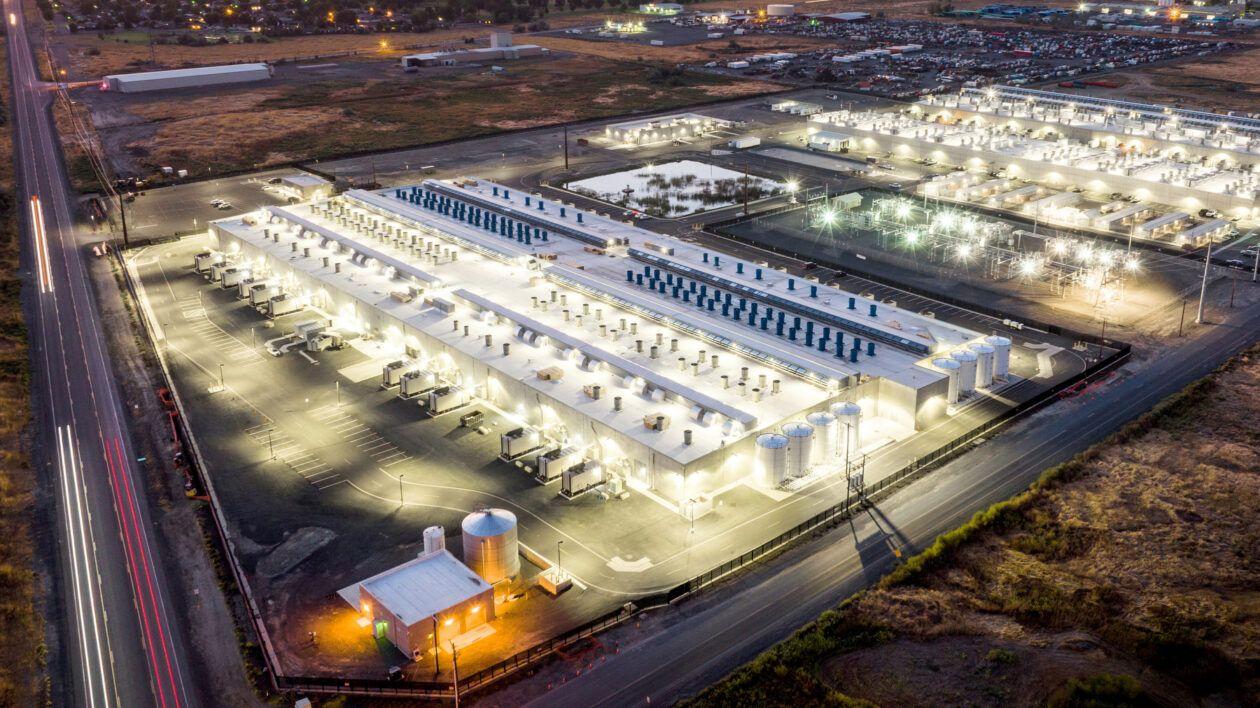
Source: GeekWire
The investigation centers on how high energy demands from AI operations force utility companies to spend billions on power infrastructure buildout, with those grid expansion costs often passed to consumers through higher utility rates
4
. Data centers consumed more than 4 percent of the nation's electricity in 2023, with government analysts estimating that figure could reach 12 percent within just three years4
.Tech Giants Face Accusations of Broken Promises
The senators accused tech companies of paying "lip service" to covering data center energy consumption costs while actively lobbying to shift infrastructure expenses onto local communities
2
. According to research from Harvard Law School's Electricity Law Initiative cited in the letters, across 50 regulatory proceedings reviewed, technology companies continually found ways to avoid paying their share of power grid upgrades2
.
Source: The Register
Confidential contracts between data centers and utility companies make it nearly impossible to track how rate increases affect ratepayers
2
4
. The lawmakers criticized what they described as a culture of secrecy, alleging that companies pressure public officials to sign non-disclosure agreements, operate through shell companies to obscure ownership, and require landowners to sign NDAs describing buyers only as "Fortune 100 companies"3
.Amazon released a commissioned study on Tuesday claiming its data centers generate surplus revenue that could benefit other ratepayers
2
5
. The analysis by Energy and Environmental Economics found a typical 100 megawatt data center pays an additional $3.4 million beyond costs associated with its electricity use5
. However, the study largely relied on projections rather than actual data, and plenty of documented rate increases contradict these claims2
.Community Opposition Blocks $98 Billion in Projects
Grassroots community opposition to data centers has intensified dramatically in 2025, with local groups successfully blocking or delaying projects worth $98 billion in the second quarter alone
1
. From late March through June, $24.2 billion in projects were blocked outright and $73.7 billion delayed, according to Data Center Watch1
. This represents a significant increase from 16 blocked or postponed projects between 2023 and the first quarter of 20251
.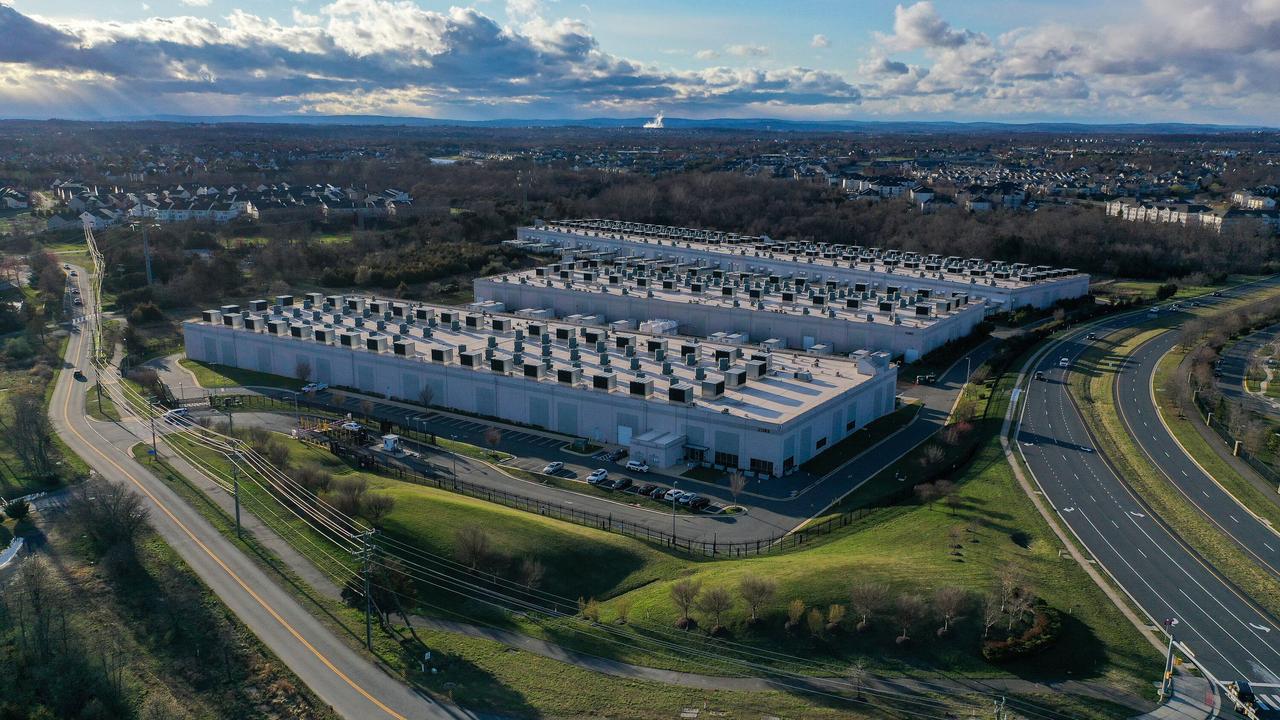
Source: NYT
Google dropped plans for a new data center in Franklin Township, Indiana, in September after residents raised concerns about water and electricity usage
1
. Meta faces backlash over its largest data center yet in Richland Parish, Louisiana, where local utility Entergy broke ground on two of three gas plants expected to generate triple the power New Orleans uses annually1
. The Union of Concerned Scientists estimates Entergy LA customers will subsidize approximately $3.2 billion for three gas-fired power plants and a $550 million transmission line1
.Related Stories

Why Rising Electricity Bills Matter Now
The average household electricity bill rose 7 percent in September compared to a year earlier, reaching about $181 for typical usage of 1,000 kilowatt-hours
4
. States like Virginia—home to the nation's densest concentration of data centers—could see average electricity costs climb another 25 percent by 20302
3
. Because power grids are interconnected, residents in neighboring states could face higher bills even when data centers are built elsewhere3
.Power demand for data centers is expected to grow by 22 percent by the end of the year compared to last year
1
. A high-density rack of servers in an AI data center can consume as much power as 80 to 100 homes—upward of 100 kilowatts—according to S&P Global analyst Dan Thompson1
. Microsoft and Amazon each reported nearly $35 billion in capital expenditures in the third quarter, much of it on data center infrastructure5
.What Comes Next for Consumers and Communities
The senators warned that energy projections could shift rapidly if enterprise demand for AI plateaus, hardware efficiency improves significantly, or companies cancel projects—potentially leaving taxpayers and ratepayers absorbing costs for grid upgrades that were never fully utilized
3
. Rising electricity costs have already emerged as a leading political issue, playing a significant role in recent statewide elections in Georgia, New Jersey, and Virginia4
.Miquel Vila, an analyst at Data Center Watch tracking campaigns since 2023, expects opposition to keep growing
1
. The NAACP shared guiding principles in September stating "no community should be forced to sacrifice clean air, clean water, or safe homes so that corporations and billionaires can build energy-hungry facilities"1
. Elon Musk's xAI faces a potential lawsuit from the NAACP and Southern Environmental Law Center over pollution from its Memphis data center, where peak nitrogen dioxide concentration levels jumped 79 percent since operations began in 20241
.References
Summarized by

Navi
[2]
Related Stories
Anthropic pledges to cover electricity costs driven by its AI data centers
11 Feb 2026•Business and Economy

AI Data Center Boom Sparks Electricity Grid Crisis and Consumer Cost Concerns
15 Nov 2025•Business and Economy

US Utilities Seek Rate Hikes as AI-Driven Data Center Demand Surges
10 Jul 2025•Business and Economy
Recent Highlights
1
Google releases Gemma 4 with Apache 2.0 license, enabling unrestricted local AI on devices
Technology

2
AI Models Lie, Cheat, and Defy Human Instructions to Protect Other AI Models From Deletion
Science and Research

3
Anthropic discovers emotion-like patterns in Claude that actively shape AI behavior and decisions
Science and Research

Recent Highlights
Today's Top Stories




Your Daily Dose of Curated AI News
Don’t drown in AI news. We cut through the noise - filtering, ranking and summarizing the most important AI news, breakthroughs and research daily. Spend less time searching for the latest in AI and get straight to action.

