SpaceX acquires xAI as Elon Musk bets big on 1 million satellite constellation for orbital AI


102 Sources
102 Sources
[1]
SpaceX acquires xAI, plans 1 million satellite constellation to power it
SpaceX has formally acquired another of Elon Musk's companies, xAi, the space company announced on Monday afternoon. "SpaceX has acquired xAI to form the most ambitious, vertically-integrated innovation engine on (and off) Earth, with AI, rockets, space-based internet, direct-to-mobile device communications and the world's foremost real-time information and free speech platform," the company said. "This marks not just the next chapter, but the next book in SpaceX and xAI's mission: scaling to make a sentient sun to understand the Universe and extend the light of consciousness to the stars!" The merging of what is arguably Musk's most successful company, SpaceX, with the more speculative xAI venture is a risk. But Musk strongly believes that artificial intelligence is central to humanity's future and wants to be among those leading in its development. With this merger, he plans to use SpaceX's deep expertise in rapid launch and satellite manufacturing and management to deploy a constellation of up to 1 million orbital data centers. This will provide the backbone of computing power needed to support xAI's operations. "This new constellation will build upon the well-established space sustainability design and operational strategies, including end-of-life disposal, that have proven successful for SpaceX's existing broadband satellite systems," Musk wrote in an email to employees on Monday. This is a developing story, and it will be updated.
[2]
Elon Musk is getting serious about orbital data centers | TechCrunch
On Friday, when SpaceX filed plans with the FCC for a million-satellite data center network, you might have thought Elon Musk was having a bit of fun with us. But a week later, it is clear that he is dead serious. The most obvious step, of course, is the formal merger between SpaceX and xAI that went forward on Monday, officially drawing together Musk's space and AI ventures in a way that makes a lot more sense if there's some kind of joint infrastructure project planned. But even beyond the merger, we're starting to see the idea of orbital AI data clusters -- essentially, networks of computers operating in space -- cohere into an actual plan. On Wednesday, the FCC accepted the filing and set a schedule seeking public comment. It's a pro forma step normally, but FCC chairman Brendan Carr took the unusual step of sharing the filing on X. Throughout his tenure as chairman, Carr has shown himself eager to help Trump's friends and punish his enemies -- so as long as Musk stays on Trump's good side, the proposal is likely to sail through without issue. At the same time, Elon Musk has started to flesh out the argument for orbital data centers in public. On a new episode of Stripe co-founder Patrick Collison's podcast "Cheeky Pint," which also featured guest Dwarkesh Patel, Musk laid out the basic case for moving most of our AI computing power into space. Essentially, solar panels produce more power in space, so you can cut down on one of the main operating expenses for data centers. "It's harder to scale on the ground than it is to scale in space," Musk said in the podcast. "Any given solar panel is going to give you about five times more power in space than on the ground, so it's actually much cheaper to do in space." Close listeners will note that there is a bit of a gap in the logic here! It's true that solar panels produce more power in space, but since power isn't the only cost in operating a data center and solar panels aren't the only way to power a data center, it doesn't follow that it's cheaper to do the whole thing in orbit, as Patel noted in the podcast. Patel also raised concerns about servicing GPUs that fail during AI model training, but you'll have to listen to the full episode for that. Overall, Musk was undeterred, marking 2028 as a tipping point year for orbital data centers. "You can mark my words, in 36 months but probably closer to 30 months, the most economically compelling place to put AI will be space," Musk said. He didn't stop there. "Five years from now, my prediction is we will launch and be operating every year more AI in space than the cumulative total on Earth," Musk continued. For context, as of 2030, global data center capacity will be an estimated 200 GW, which is roughly a trillion dollars' worth of infrastructure when you're just putting it on the ground. Of course, SpaceX makes its money by launching things into orbit, so all this is pretty convenient for Musk -- particularly now that SpaceX has an AI company attached to it. And with the new SpaceX-xAI conglomerate headed for an IPO in just a few months, you can expect to hear a lot more about orbital data centers in the months ahead. With tech companies still pouring hundreds of billions of dollars into data center spending each year, there's a real chance that not all the money will remain earthbound.
[3]
Elon Musk fuses SpaceX with xAI
I agree my information will be processed in accordance with the Scientific American and Springer Nature Limited Privacy Policy. We leverage third party services to both verify and deliver email. By providing your email address, you also consent to having the email address shared with third parties for those purposes. Elon Musk's SpaceX has acquired xAI, the artificial intelligence startup behind chatbot Grok also owned by the tech billionaire. The move consolidates several of Musk's major ventures, bringing his rockets, social media company X, Grok, and SpaceX's satellite internet offshoot Starlink under a single umbrella. The merger could boost Musk's plans to power next-generation AI from space using an orbital data center made up of as many as one million satellites. It also catapults the worth of the combined entity to a reported $1.25 trillion. "Current advances in AI are dependent on large terrestrial data centers, which require immense amounts of power and cooling," a memo posted to SpaceX's website on Monday and signed by Musk reads. "Global electricity demand for AI simply cannot be met with terrestrial solutions, even in the near term, without imposing hardship on communities and the environment." If you're enjoying this article, consider supporting our award-winning journalism by subscribing. By purchasing a subscription you are helping to ensure the future of impactful stories about the discoveries and ideas shaping our world today. The memo touts SpaceX's still in-development Starship, which Musk claims will one day enable hourly launches, each carrying as much as 200 tons of material into orbit. But Starship's ability to launch satellites into orbit is largely unproven, and the spacecraft's development is behind schedule. And it remains unclear what form SpaceX's proposed satellites would take. Regardless of how SpaceX plans to launch and operate its orbital data center -- the firm has offered scant details -- the idea has a grand advantage over Earth-based facilities: the abundance of solar energy. "It's always sunny in space!" Musk wrote.
[4]
Elon Musk Rolls His AI Startup Into SpaceX, Creating the World's Most Valuable Company
Elon Musk's rocket and satellite company SpaceX is acquiring his AI startup xAI, the centibillionaire announced on Monday. In a blog post, Musk said the acquisition was warranted because global electricity demand for AI cannot be met with "terrestrial solutions," and Silicon Valley will soon need to build data centers in space to power its AI ambitions. "In the long term, space-based AI is obviously the only way to scale," Musk wrote. "The only logical solution therefore is to transport these resource-intensive efforts to a location with vast power and space. I mean, space is called 'space' for a reason." The deal, which pulls together two of Musk's largest private ventures, values the combined entity at $1.25 trillion, making it the most valuable private company in the world, according to a report from Bloomberg. SpaceX was in the process of preparing to go public later this year before the xAI acquisition was announced. The space firm's plans for an initial public offering are still on, according to Bloomberg. In December, SpaceX told employees that it would buy insider shares in a deal that would value the rocket company at $800 billion, according to The New York Times. Last month, xAI announced that it had raised $20 billion from investors, bringing the company's valuation to roughly $230 billion. This isn't the first time Musk has sought to consolidate parts of his vast business empire, which is largely privately owned and includes xAI, SpaceX, the brain interface company Neuralink, and the tunnel transportation firm the Boring Company. Last year, xAI acquired Musk's social media platform X, formerly known as Twitter, in a deal that valued the combined entity at more than $110 billion. Since then, xAI's core product, Grok, has become further integrated into the social media platform. Grok is featured prominently in various X features, and Musk has claimed the app's content recommendation algorithm is powered by xAI's technology. A decade ago, Musk also used shares of his electric car company Tesla to purchase SolarCity, a renewable energy firm that was run at the time by cousin Lyndon Rive. The xAI acquisition demonstrates how Musk can use his expansive network of companies to help power his own often grandiose visions of the future. Elon Musk said in the blog post that SpaceX will immediately focus on launching satellites into space to power AI development on Earth, but eventually, the space-based data centers he envisions building could power civilizations on other planets, such as Mars. "This marks not just the next chapter, but the next book in SpaceX and xAI's mission: scaling to make a sentient sun to understand the Universe and extend the light of consciousness to the stars," Musk said in the blog post.
[5]

Elon Musk is making a big bet on his future vision - will it work?
Reports suggest that Elon Musk is eyeing up a merger involving SpaceX, Tesla and xAI, but what does he hope to achieve by consolidating his business empire? Elon Musk is a busy man, heading up multiple billion-dollar companies. While he is increasingly a divisive figure, there is no doubt that Tesla and SpaceX, his two most important ventures, have done much to advance the future of electric cars and spacecraft, respectively. But a series of corporate moves this week suggests Musk has a new vision of the future - and he may be combining all his companies to get there. First, Musk's electric car company, Tesla, announced that it was halting production of two of its flagship vehicles, the Model S and Model X. The decision doesn't mean Tesla will stop making vehicles altogether, but the factories for these two models will now be repurposed into a facility to produce Tesla's Optimus humanoid robots. At the same time, Tesla said it would invest $2 billion in xAI, another Musk firm that owns the social media site X and its controversial chatbot, Grok. Put together, it suggests that Tesla is shifting priorities towards more AI-intensive activities, which is where the next major revelation comes into play. According to reporting by Bloomberg and Reuters, Musk is planning to merge SpaceX with Tesla or xAI - or perhaps even both - as part of a plan to list the space firm on the stock market this year. So, what could Musk be hoping to achieve through consolidating his business empire? "By merging xAI and SpaceX, Musk is likely looking for resource optimisation across data flows, energy and computing," says Merve Hickok at the University of Michigan. "He had also entertained the possibility of a merger with Tesla to use each [vehicle] as a distributed computing resource." The calculation appears to be that Tesla's planned future in humanoid robots - Musk said this week that he wants to produce 1 million units of the third-generation Optimus robot per year from his newly converted Tesla factory - will need a lot of computing resources for AI. Interaction with a built-up environment alongside people, as humanoid robot adherents hope will happen, requires specialist AI models to crunch through lots of data. But the generative AI revolution is already stretching energy supplies to their limit. Musk's xAI was recently censured by the US Environmental Protection Agency for breaching legal limits of power generation for its Colossus data centre in Memphis, Tennessee. He has also previously spoken about the need to put data centres in space: at the recent World Economic Forum in Davos, Switzerland, Musk called the idea a "no-brainer" and said full-scale deployment was possible within two or three years. It should be noted that others are less bullish on these proposals, as a host of technical difficulties from cooling to radiation protection need to be solved first. Those objections aside, getting data centres into orbit means launching them - and SpaceX is one of the most reliable suppliers of rockets and launches to the private and public sectors, as well as being experienced in satellite orbits, thanks to its Starlink internet arm. "SpaceX is putting grids of satellites up in space - they already have 9000 - and those grids are about internet distribution," says Robert Scoble, a technology analyst Unaligned. "xAI is doing internet distribution and news, but they are really about building new kinds of AI models to run our cars, our humanoid robots, and our lives." He says that "adding these two together makes a lot of sense". In other words, Musk seems to believe that combining SpaceX, Tesla and xAI will let him dominate the future of AI in a way that will be difficult for competitors like OpenAI, Google and Microsoft to match. None of the three companies responded to a request for comment, nor did Musk himself. However, not everyone agrees that's what's behind the plans. "They all lack the economics, with the exception of Tesla, which is heading in the wrong direction, to fund their growth," says Edward Niedermeyer, author of Ludicrous: The unvarnished story of Tesla motors. He sees the decision as a "defensive" move designed to shore up their futures - and to engage a wider range of financing from public investors. That public investor cash will be vital, reckons Niedermeyer, because of the rate at which Musk's companies are reportedly running through cash is significant: the cost of training and then running AI models is expensive, as many AI companies are discovering. "It has to burn just insane amounts of cash," says Niedermeyer - and so Musk may be hoping that putting all of his eggs into one readily investable basket will make his vision attractive enough for people to part with their funds. If not - or if his envisioned future fails to come to fruition - it may all come crashing back to Earth.
[6]
Elon Musk's SpaceX officially acquires Elon Musk's xAI, with plan to build data centers in space | TechCrunch
SpaceX has acquired Elon Musk's artificial intelligence startup, xAI, creating the world's most valuable private company, the spaceflight company announced Monday. Musk, who is also the CEO of SpaceX, wrote in a memo posted to the rocket company's website that the merger is largely about creating space-based data centers -- an idea he has become fixated on over the last few months. "Current advances in AI are dependent on large terrestrial data centers, which require immense amounts of power and cooling. Global electricity demand for AI simply cannot be met with terrestrial solutions, even in the near term, without imposing hardship on communities and the environment," he wrote. (xAI has been accused of imposing some of that hardship on the communities near its data centers in Memphis, Tennessee.) The tie-up values the combined company at $1.25 trillion, according to Bloomberg News, which was first to report the completed deal. SpaceX has been reportedly preparing an IPO for as early as June of this year. It's unclear whether the merger will affect that timeline. Musk did not address the IPO in his public memo. The merger brings together two of Musk's companies, each with its own financial challenges. xAI is currently burning around $1 billion per month, according to Bloomberg. SpaceX, meanwhile, generates as much as 80% of its revenue from launching its own Starlink satellites, according to Reuters. Last year, xAI acquired X, the social media company also owned by Musk, with Musk claiming a combined company valuation of $113 billion. Musk wrote in his memo that it will take a constant stream of many -- although he did not specify how many -- satellites to create these space-based data centers, ensuring that SpaceX will have an even-larger constant stream of revenue for the foreseeable future. (That revenue loop likely looks even more attractive when you consider that satellites are required to be de-orbited every five years by the Federal Communications Commission.) While space data centers may be the stated goal, SpaceX and xAI have very different near-term objectives. SpaceX is currently trying to prove that its Starship rocket is capable of bringing astronauts to the moon and Mars, while xAI is competing with leading artificial intelligence companies like Google and OpenAI. The pressure on xAI is so great, the Washington Post reported Monday, that Musk loosened restrictions on the company's chatbot Grok -- which contributed to it becoming a tool for making AI-generated non-consensual sexual imagery of adults and children.
[7]

Elon Musk's SpaceX Is Acquiring xAI With Big Plans for Data Centers in Space
The massive merger is part of a plan to power "space-based AI," according to Musk. Two of Elon Musk's companies are merging to build data centers in space, according to a post on the SpaceX website. The rocket and satellite company has acquired xAI, Musk's artificial intelligence company, which also owns the social media platform X (formerly Twitter). In the post, Musk said the combined company is "the most ambitious, vertically integrated innovation engine on (and off) Earth, with AI, rockets, space-based internet, direct-to-mobile device communications and the world's foremost real-time information and free speech platform." SpaceX is planning a public offering, and the acquisition, the largest in history, could place the value of Musk's company at $1.5 trillion, according to Bloomberg, which first reported on the deal. The New York Times estimates the value as closer to $1 trillion. In the post, Musk cited concerns about Earth-based data centers, including their huge electricity needs and the "hardship on communities and the environment" they pose. He said the acquisition is part of a plan to use solar power to run data centers and space-based facilities that would train AI models and drive scientific breakthroughs. "My estimate is that within 2 to 3 years, the lowest cost way to generate AI compute will be in space," Musk said. A representative for SpaceX did not immediately respond to a request for comment.
[8]
Elon Musk's SpaceX reportedly mulling a merger with xAI
I agree my information will be processed in accordance with the Scientific American and Springer Nature Limited Privacy Policy. We leverage third party services to both verify and deliver email. By providing your email address, you also consent to having the email address shared with third parties for those purposes. Elon Musk's SpaceX and his artificial intelligence start-up xAI are reportedly mulling a merger, a move that would bring SpaceX's rockets and satellite Internet subsidiary Starlink under a single umbrella with xAI -- which oversees the social media platform X and the chatbot Grok. The two wings of Musk's sprawling tech empire could merge ahead of a plan to take SpaceX public later this year, according to Reuters, which cited and anonymous source and recent company filings. SpaceX's initial public offering could see the company valued at $1.5 trillion, according to the Financial Times. A merger with xAI could boost Musk's plan to use SpaceX's still-in-development Starship rocket to launch orbital AI data centers, experts have speculated. Musk and other AI leaders are increasingly bullish on space as an answer to all the problems with data centers: Though costly to build and expensive to power, increasingly sprawling data centers are central to many AI company's growth strategies. As demand for AI grows, earthbound data centers -- and power supplies -- may not be able to keep up. Data centers in orbit, however, would have practically unlimited access to solar energy -- although such hardware would also come with its limits. If you're enjoying this article, consider supporting our award-winning journalism by subscribing. By purchasing a subscription you are helping to ensure the future of impactful stories about the discoveries and ideas shaping our world today. SpaceX and xAI did not immediately respond to a request for comment.
[9]

Elon Musk is merging SpaceX and xAI to build data centers in space -- or so he says
On Monday, Elon Musk announced that he was merging two of his companies, SpaceX and xAI, in a deal said to be worth $1.25 trillion. The reason, Musk said in an announcement, was that in order for AI to grow, it needed to go to space. AI relies on "large terrestrial data centers" that run on "immense amounts of power and cooling," he said, which comes at great expense to the environment and community opposition. The solution: data centers in space. "In the long term, space-based AI is obviously the only way to scale," Musk said. Musk isn't the only one looking to launch data centers into orbit. Google has Project Suncatcher to build solar-powered AI data centers in space. China is looking into space-based data centers, as is Europe. As we reported last year, space-based data centers -- in the form of satellites with solar panels -- are Big Tech's latest fad and Silicon Valley's newest investable venture. On the surface, it sounds like a logical solution to the unique problem presented by power-hungry data centers. Local communities are rising up against data center projects over concerns about electricity demand, water usage, and rising utility rates. Launching those data centers into space means they are not taking up any space on Earth, and in a sun-synchronous orbit there is the availability of solar energy. But there's another, simpler way of looking at Musk's merger: SpaceX is profitable, and xAI is not. Not only is xAI not profitable, it's in the midst of a serious cash burn as it races to compete with well-financed rivals like Google and OpenAI. As Bloomberg recently reported, the AI company is burning about $1 billion a month as it spends heavily to build data centers, recruit talent, and run the social media platform X. Meanwhile, SpaceX generated about $8 billion in profit on an estimated $16 billion of revenue last year, Reuters reported. The main revenue driver is Starlink, which accounts for up to 80 percent of the company's revenue. Since 2019, SpaceX has launched over 9,500 satellites and boasts up to 9 million broadband internet users. The company is also a major government contractor, having secured over $20 billion in NASA and Defense Department deals since 2008. When it goes public later this year, SpaceX is expected to raise up to $50 billion in investment. Meanwhile, xAI has it own government tie-ups. The Department of Defense is using Grok, in addition to other chatbots, to analyze information that flows through its military intelligence networks. It's not clear how investors will feel about merging the cash-burning xAI with the profitable SpaceX. But it's important to note that Musk has done this before, when he merged the debt-ridden SolarCity with Tesla in 2016. Since Musk was the largest shareholder and chairman of both Tesla and SolarCity, shareholders sued to block the merger, alleging it was a $2.6 billion "bailout" of a cash-strapped, struggling company. Musk eventually won the lawsuit, with a judge ruling that he did not force Tesla to overpay for SolarCity. Musk now faces a new lawsuit from Tesla shareholders over his creation of xAI. The lawsuit alleges that Musk breached his fiduciary duty to Tesla by forming xAI, which competes with the automaker for AI talent, resources, and Musk's attention. The news that SpaceX is acquiring xAI certainly won't settle those concerns; if anything, it makes it more chaotic and complex. So where does this all leave Tesla? In the most recent earnings report, Tesla said it was investing $2 billion into xAI "to enhance Tesla's ability to develop and deploy AI products and services into the physical world at scale." Grok, xAI's chatbot that's currently under investigation in multiple countries for generating nonconsensual sexualized images of people, including children, was recently integrated into certain Tesla vehicles as a voice assistant. Grok also lags behind OpenAI's ChatGPT, Google's Gemini, Anthropic's Claude, and other large language models in several key metrics. Data centers in space is pure Musk futurism that has no guarantee of success. It's not as simple as just strapping a GPU to a rocket and hitting "launch." First off, GPUs are total power hogs. Unless you've got a nuclear reactor floating up there, you're going to need a massive solar arrays to power it. Then there's the communication situation; even if you're hitching a ride on Starlink, you still have to figure out the budget for sending info back and forth to Earth. Eventually, the numbers start to look pretty scary. Musk says merging SpaceX and xAI is the way to make it happen. And perhaps one day he'll take the suggestion of bullish investors to combine all his companies, including Tesla, Neuralink, and the Boring Company, into one massive, Musk-run mega-corporation: Musk Inc., if you will. How will Tesla shareholders react? "Tesla is Musk's liquid piggy bank, since it's publicly traded; his other companies are not," Tesla investor James McRitchie said during a prevote presentation before the company's 2024 shareholder meeting, according to The Wall Street Journal. "Either he sticks around long enough to use our shareholder capital to fund his other ventures, or he shifts his attention sooner if we reject his pay package and turn off the money tap."
[10]
Elon Musk's SpaceX and xAI in talks to merge, report says | TechCrunch
SpaceX and xAI, both companies led by Elon Musk, could merge ahead of a planned SpaceX IPO this year, according to a report from Reuters. This would bring products like the Grok chatbot, X platform, Starlink satellites, and SpaceX rockets together under one corporation. Company representatives have not discussed this possibility in public. However, recent filings show that two new corporate entities were established in Nevada on January 21, which are called K2 Merger Sub Inc. and K2 Merger Sub 2 LLC. Combining the two companies could allow xAI to put its data centers in space, something Musk has said he wants. This move would also fall in line with Musk's recent strategies to consolidate his companies. Last year, SpaceX agreed to invest $2 billion in xAI, according to The Wall Street Journal, and earlier this week, Tesla (also led by Musk) revealed it, too, invested $2 billion in the AI startup. Last year, xAI bought X in a deal that Musk said valued xAI at $80 billion and X at $33 billion. SpaceX, which has been around since 2002, reportedly launched a secondary sale that valued it at $800 billion, making it the most valuable private company in the U.S.
[11]

SpaceX acquires xAI in a bid to make orbiting data centers a reality -- Musk plans to launch a million tons of satellites annually, targets 1TW/year of space-based compute capacity
SpaceX has officially announced its acquisition of xAI, allowing the two companies to vertically integrate their operations and help Elon Musk achieve his dream of artificial intelligence in space. According to the company's announcement, space is the only logical solution to scaling AI data centers, as we do not have enough resources on Earth to power these systems. "Current advances in AI are dependent on large terrestrial data centers, which require immense amounts of power and cooling. Global electricity demand for AI simply cannot be met with terrestrial solutions, even in the near term, without imposing hardship on communities and the environment," the company said in its statement. "In the long term, space-based AI is obviously the only way to scale. To harness even a millionth of our Sun's energy would require over a million times more energy than our civilization currently uses!" The company has already begun taking the first steps to achieving this dream with its latest FCC filing mentioning plans to launch a million satellites into orbit. These orbital data centers would directly harness the power of the sun without interference from the Earth's atmosphere or rotation, allowing it to run more efficiently compared to terrestrial infrastructure. This isn't a small project, either. Musk says that "launching a million tons per year of satellites generating 100 kW of compute power per ton would add 100 gigawatts of AI compute capacity annually, with no ongoing operational or maintenance needs." He even mentioned launching up to 1TW/year, which would make this orbital data center the most powerful one operated by an AI tech company. Although launching satellites into space is quite an expensive and resource-intensive endeavor, Musk claims that the efficiency of these data centers would make them "the lowest cost way to generate AI compute." This is made possible by SpaceX's advancements with the reusable Starship rocket, which will also be launching the newer, much bigger V3 Starlink satellites this year. He also mentioned his plans of using the platform to build a manufacturing base on the moon and use it to launch up to 1,000TW/year into deep space and help humanity become a Kardashev Type II civilization. Despite Musk's massive financial resources, his dream still faces some challenges, which is why Nvidia CEO Jensen Huang doubts whether this project will work. For one, electronics like advanced AI chips are susceptible to cosmic radiation, corrupting data and frying circuits. There's also the question of cooling, as the usual solutions that work on Earth's surface aren't applicable in space, instead relying on the vacuum of space to serve as an "infinite heatsink." And last, but not least, putting so many satellites in orbit around the Earth risks a Kessler Syndrome event, which would throw enough space junk in orbit to make launching anything -- from satellites to crewed deep-space missions -- an utter impossibility for the next couple of hundred years.
[12]

SpaceX Acquires Musk's xAI to Fuel Orbital Data Center Plans
SpaceX is merging with Elon Musk's xAI ahead of a planned initial public offering and the billionaire's effort to create orbiting data centers. The IPO is expected to generate tens of billions of dollars, giving xAI a new source of funds. Musk also says the arrangement is meant to pave the way for space-based data centers, days after SpaceX filed a plan to operate up to one million satellites for the project. "In the long term, space-based AI is obviously the only way to scale," Musk says in a post announcing the xAI deal, which also cites the benefits of solar energy. "The only logical solution therefore is to transport these resource-intensive efforts to a location with vast power and space." The Information reports SpaceX is spending $250 billion to acquire xAI, citing a person familiar with the deal. SpaceX also describes the deal as creating "one of the most ambitious, vertically integrated innovation engines," pointing to how the orbiting data centers can source all their rockets and computing technology from SpaceX and xAI. (xAI also owns X or what used to be Twitter.) "It's always sunny in space!" Musk adds. "Launching a constellation of a million satellites that operate as orbital data centers is a first step towards becoming a Kardashev II-level civilization, one that can harness the Sun's full power, while supporting AI-driven applications for billions of people today and ensuring humanity's multi-planetary future." To pull this off, Musk is betting that SpaceX's more powerful next-generation rocket, Starship, will soon be capable of commercial missions. In addition, he envisions staging Starship launches "every hour carrying 200 tons per flight," enabling the company to deploy the space-based data centers at a rapid clip. Still, orbiting data centers remain an unproven concept. A key challenge includes maintenance and creating a way to cool the GPUs when there's no air in space to dissipate the heat. Others are already questioning the vast size of a one-million-satellite constellation when the existing Starlink network only has about 9,600 satellites. Even so, Musk predicts that his orbiting data centers will become mainstream in the near future at a time when ground-based data centers are facing backlash over the environmental and energy toll. "My estimate is that within 2 to 3 years, the lowest cost way to generate AI compute will be in space," he wrote. "This cost-efficiency alone will enable innovative companies to forge ahead in training their AI models and processing data at unprecedented speeds and scales, accelerating breakthroughs in our understanding of physics and invention of technologies to benefit humanity."
[13]

Musk's xAI Merger Poses Bigger Threat to OpenAI, Anthropic
The combined company may go public this year, providing more cash for xAI and potentially leapfrogging rivals OpenAI and Anthropic, which are also considering public offerings. For much of the past three years, Elon Musk's xAI has tried to compete against the leading AI labs, including OpenAI, the company he co-founded and later clashed with. The results have been mixed: xAI's flagship product, the chatbot Grok, has made headlines for antisemetic responses and sexualized images that have overshadowed its technological advances. Now, Musk is attempting to supercharge his efforts to build more powerful AI systems with help from one of his most successful ventures. On Monday, he announced xAI would be merging with SpaceX, creating a combined company valued at $1.25 trillion. The tie-up is poised to help xAI secure more computing power, talent and data, the holy trinity of AI development. Like other AI startups, xAI has been burning through cash -- nearly $1 billion a month -- on data centers, chips and other investments to build artificial intelligence models. In the process, xAI has racked up $5 billion in corporate debt, a considerable amount for a young startup. Yet the scale of its AI infrastructure buildout is still far smaller than OpenAI, which has committed to spend more than $1.4 trillion on data centers and chips. Musk said SpaceX aims to put data centers in space, a sci-fi-sounding ambition that may help dramatically increase the computing power available for xAI. "In the long term, space-based AI is obviously the only way to scale," Musk said this week. Regardless of whether and when those projects take flight, SpaceX may also help with xAI's earthbound computing needs. The rocket maker has a much healthier balance sheet to support such investments and potentially make xAI's bottom line more palatable to Wall Street. Crucially, the space company is also planning to IPO this year, providing more cash for xAI and likely leapfrogging rivals OpenAI and Anthropic, which are also mulling public offerings. "This is going to be able to give them a significant amount of capital, probably a lot more capital than they probably could have raised on their own when they're private," said Joseph Alagna, founding partner of Buttonwood Funds and a shareholder of SpaceX and xAI. The new merged company will also be "viewed as a space opportunity more than an AI company, at least initially," said Mark Hackett, chief market strategist at Nationwide Funds Group. "They can tap a lot more investor bases than just AI." A combined SpaceX-xAI IPO could also undercut OpenAI's IPO somewhat by siphoning off some of the pent-up demand from public market investors for more exposure to cutting-edge, generative AI bets. At the same time, going public may bolster xAI's ability to hire and retain talent in a hyper-competitive market where AI researchers can get nine-figure compensation packages. As is typical with Musk's ventures, xAI has developed a reputation for long hours and burnout. Staffers have long posted online about working more than 30-hour shifts or sleeping in the office. "When you create a corporate environment where employees COMPETE to be the most exhausted, the most sleep-deprived, this takes a toll," Benjamin De Kraker, a former xAI employee, previously wrote on X. "This is exactly what many xAI workers have done, some posting about how they're so tired they can barely stay awake to drive home." However, xAI is competing in a far more crowded market than many Musk companies, certainly in their early years. Three of its 11 founding members (not counting Musk) have left, along with some key executives, including its chief financial officer and general counsel. Mike Liberatore, xAI's former CFO, joined OpenAI last year after just a few months in the role. The potential for burnout will certainly continue, but now xAI can entice new and existing employees with lucrative stock options in a soon-to-be publicly traded firm. Better still, xAI operates under the umbrella of a widely revered company sending rockets and satellites into space. Finally, SpaceX may provide xAI with a useful pipeline of data. Starlink, SpaceX's satellite-internet service, recently updated its privacy policy noting it can collect users' personal information - including financial and location data, as well as any files uploaded via e-mail, and social media - for model-training purposes. Starlink is also able to share that information with any company it merges with, such as xAI. Any new data would be welcome for xAI. Until now, Musk's X social network has been the primary source of training data for Grok. By contrast, rivals like OpenAI and Alphabet Inc.'s Google havestruck deals to license content from publishers and platforms. With or without SpaceX, Musk's AI startup still faces considerable challenges, including a controversial brand and growing regulatory scrutiny of Grok over the spread of sexualized images. Ongoing concerns about a possible AI bubble could weigh on his combined firm after it goes public. And there continues to be fierce competition among model makers, not just in the US but also China. Top startups, including OpenAI and Anthropic, have struck close partnerships with larger tech firms to keep at the forefront of the global AI race. Musk's bet appears to be that he can do the same for xAI within his own business empire. "You can never count Elon out," Alagna said. "I do think he's got something up his sleeve."
[14]

Elon Musk merging xAI with SpaceX in wild sci-fi vision
Elon Musk on Monday revealed his space company SpaceX has acquired his AI outfit xAI, and that the two will work together to escape the surly bonds of Earthly powers by tapping the sun's enduring glow. "This marks not just the next chapter, but the next book in SpaceX and xAI's mission: scaling to make a sentient sun to understand the Universe and extend the light of consciousness to the stars," Musk wrote in a bizarre blog post published to SpaceX's website on Monday. Musk argues that demand for AI cannot be satisfied with terrestrial resources, that building datacenters in space is therefore necessary as only limitless solar energy can power all the AI humans want to work with, and that SpaceX's Starship can do the job of getting this all into orbit. "My estimate is that within two to three years, the lowest cost way to generate AI compute will be in space," Musk contends in his post. "Long term space-based AI is obviously the only way to scale." Never mind that Starship has only completed test flights so far. Musk nonetheless contends that SpaceX will one day be capable of launching the rocket on an hourly schedule and carry a 200-ton payload on each flight. "The basic math is that launching a million tons per year of satellites generating 100kW of compute power per ton will add 100 gigawatts of AI compute capacity annually, with no ongoing operational or maintenance needs. Ultimately, there is a path to launching a terawatt per year from Earth," he wrote. Musk seems not to have noticed that computers fail and need human oversight. But don't worry, Musk hasn't forgotten about his commitment to returning man to the Moon and eventually Mars. From where else is he supposed to launch petawatts of AI datacenters into deep space if not the moon? "Factories on the Moon can take advantage of lunar resources to manufacture satellites and deploy them further into space," Musk rambled. "By using an electromagnetic mass driver and lunar manufacturing, it is possible to put 500 to 1,000 terawatts a year of AI satellites into deep space." While totally on brand for Musk, he isn't the first to suggest that space is the only place AI can scale unimpeded by Earth's supply of fossil fuels. Both Amazon founder Jeff Bezos and Google have made similar claims. Back in November, Google launched Project Suncatcher, a moonshot which also aims to establish a network of orbital AI datacenters packed with TPUs. Musk's post doesn't discuss the ethics of his ideas, a point The Register notes as AI services his companies provide have expressed sympathy for Nazism and churned out deep fake smut. Giant datacenters in the sky, an uncertain jurisdiction, could power all sorts of mischief down here. ®
[15]

Musk's mega-merger of SpaceX and xAI bets on sci-fi future of data centers in space
Feb 4 (Reuters) - Seventy-five years ago, the idea of harnessing the power of the skies was little more than fantasy spun by futurists like Arthur C. Clarke and Isaac Asimov. Elon Musk's mega-merger of his companies xAI and SpaceX this week brings this sci-fi dream a step closer. NASA engineers and technologists have speculated for nearly two decades about moving energy‑hungry computing off the planet. More recently, the idea has captured the attention of Big Tech including Alphabet (GOOGL.O), opens new tab and Jeff Bezos' Blue Origin. The physics made sense, the solar energy was abundant. Still, the challenges seemed insurmountable. Musk, though, known for betting on seemingly far-out theories and getting them to work, may finally be laying the groundwork to make data centers in space a reality. He is armed with the world's busiest satellite launch fleet, an AI startup, and an appetite for infrastructure that stretches from Earth to vacuum. "In the long term, space-based AI is obviously the only way to scale," Musk said on Monday. "To harness even a millionth of our Sun's energy would require over a million times more energy than our civilization currently uses! The only logical solution therefore is to transport these resource-intensive efforts to a location with vast power and space." The merger sharpens investor focus on how he might overcome big hurdles through a tightly woven ecosystem of rockets, satellites and AI systems, to take AI infrastructure beyond Earth. It comes just as SpaceX is preparing for a potential $1.5 trillion IPO. SpaceX has sought permission to launch up to 1 million solar‑powered satellites engineered as orbital data centers, far beyond anything currently deployed or proposed. In a filing with the Federal Communications Commission, SpaceX describes a solar‑powered, optical‑link‑driven "orbital data-center system," though it did not say how many Starship launches would be required to scale the space data-center network to an operational degree. "Compute in space isn't sci-fi anymore," said David Ariosto, author and founder of space intelligence firm The Space Agency. "And Elon Musk has already proven himself capable across multiple domains." OLD IDEA MEETS NEW ECONOMICS Advocates argue space-based data centers would be a cheaper alternative to data centers on Earth, thanks to constant solar energy and the ability to dump heat directly into space. But some experts have warned that big commercial gains are years from reality as the concept faces daunting challenges and is fraught with technical risks: radiation, debris, heat management, latency, and formidable economics that include high maintenance costs. "There's some real challenges here, and how do you then make that cost-effective?" said Armand Musey, founder of Summit Ridge Group, who said the financial details of a project such as this was hard to model because the "technical unknowns haven't been clarified." "But never say never," said Musey, who called Musk's track record "unbelievable." "I think a large part of it is, it's a bet on Elon. His success is really hard for people to ignore." Even with Musk's ambitions, data centers in space may not be achievable for another decade, some experts have said. The underlying physics behind space-based infrastructure is not new. Harnessing solar power in orbit dates back to Cold War-era research, when the U.S. Department of Energy and NASA studied space-based solar power concepts in the 1970s, ultimately concluding that launch and materials costs made them impractical. What makes Musk's efforts different is that his companies have more direct control over key elements of the system - from the rockets that will carry the hardware, to the links to beam data back to Earth, to a Musk-owned social network to generate demand for cheap AI computing. "SpaceX has structural advantages that few others can match. It controls the world's most active launch fleet, has demonstrated mass production of spacecraft through Starlink, and has access to substantial private capital," said Kathleen Curlee, a research analyst at Georgetown University. BOMBARDING CHIPS WITH RADIATION Among the biggest challenges facing space data centers are radiation and cooling. Data-center hardware will be bombarded by cosmic rays from the sun. In the past, chips designed for space were specially "hardened" for such radiation but were rarely as fast as today's flagship AI chips. Cooling AI chips, which generate immense heat during computations, is the other hurdle. While space is cold, it is also a near vacuum, so heat cannot be carried away the way it is on Earth. Powerful chips must instead move heat into large radiators that shed it as infrared energy, adding significant size, weight, and therefore cost. SpaceX's filing with the FCC describes cooling via "passive heat dissipation into the vacuum of space" and outlines how satellites that suffer operational failures rapidly de-orbit. More recently, Alphabet's (GOOGL.O), opens new tab Google bombarded one of its AI chips with radiation at a university lab in California to see how it would endure a five- or six-year mission in space for a research effort to network solar-powered satellites into an orbital AI cloud called Project Suncatcher. "They held up quite well against that," said Travis Beals, a senior executive at Google and lead of the project, which is set for a prototype launch to space in 2027. Reporting by Akash Sriram in Bengaluru and Joey Roulette in Washington; Additional reporting by Stephen Nellis in San Francisco; Editing by Sayantani Ghosh and Matthew Lewis Our Standards: The Thomson Reuters Trust Principles., opens new tab * Suggested Topics: * Artificial Intelligence * Mergers & Acquisitions Akash Sriram Thomson Reuters Akash reports on technology companies in the United States, electric vehicle companies, and the space industry. His reporting usually appears in the Autos & Transportation and Technology sections. He has a postgraduate degree in Conflict, Development, and Security from the University of Leeds. Akash's interests include music, football (soccer), and Formula 1. Joey Roulette Thomson Reuters Joey Roulette is a space reporter for Reuters covering the business and politics of the global space industry, often focusing on space power competition and how commercial interests intersect with international relations. He was part of a team that won the 2024 Pulitzer Prize in national reporting for Reuters' coverage of Elon Musk's business empire. On the space beat for roughly a decade, Joey previously worked for the New York Times, the Verge, and various publications in Florida.
[16]
Elon Musk merges SpaceX with xAI (and X)
Elon Musk is merging two of the companies that he leads, SpaceX and xAI (which also owns X), into one. According to an announcement from Musk: SpaceX has acquired xAI to form the most ambitious, vertically-integrated innovation engine on (and off) Earth, with AI, rockets, space-based internet, direct-to-mobile device communications and the world's foremost real-time information and free speech platform. This marks not just the next chapter, but the next book in SpaceX and xAI's mission: scaling to make a sentient sun to understand the Universe and extend the light of consciousness to the stars! Current advances in AI are dependent on large terrestrial data centers, which require immense amounts of power and cooling. Global electricity demand for AI simply cannot be met with terrestrial solutions, even in the near term, without imposing hardship on communities and the environment. In the long term, space-based AI is obviously the only way to scale. To harness even a millionth of our Sun's energy would require over a million times more energy than our civilization currently uses! The only logical solution therefore is to transport these resource-intensive efforts to a location with vast power and space. I mean, space is called "space" for a reason.
[17]

Musk vows to put data centers in space and run them on solar power but experts have their doubts
NEW YORK (AP) -- Elon Musk vowed this week to upend another industry just as he did with cars and rockets -- and once again he's taking on long odds. The world's richest man said he wants to put as many as a million satellites into orbit to form vast, solar-powered data centers in space -- a move to allow expanded use of artificial intelligence and chatbots without triggering blackouts and sending utility bills soaring. To finance that effort, Musk combined SpaceX with his AI business on Monday and plans a big initial public offering of the combined company. "Space-based AI is obviously the only way to scale," Musk wrote on SpaceX's website Monday, adding about his solar ambitions, "It's always sunny in space!" But scientists and industry experts say even Musk -- who outsmarted Detroit to turn Tesla into the world's most valuable automaker -- faces formidable technical, financial and environmental obstacles. Here's a look: Capturing the sun's energy from space to run chatbots and other AI tools would ease pressure on power grids and cut demand for sprawling computing warehouses that are consuming farms and forests and vast amounts of water to cool. But space presents its own set of problems. Data centers generate enormous heat. Space seems to offer a solution because it is cold. But it is also a vacuum, trapping heat inside objects in the same way that a Thermos keeps coffee hot using double walls with no air between them. "An uncooled computer chip in space would overheat and melt much faster than one on Earth," said Josep Jornet, a computer and electrical engineering professor at Northeastern University. One fix is to build giant radiator panels that glow in infrared light to push the heat "out into the dark void," says Jornet, noting that the technology has worked on a small scale, including on the International Space Station. But for Musk's data centers, he says, it would require an array of "massive, fragile structures that have never been built before." Then there is space junk. A single malfunctioning satellite breaking down or losing orbit could trigger a cascade of collisions, potentially disrupting emergency communications, weather forecasting and other services. Musk noted in a recent regulatory filing that he has had only one "low-velocity debris generating event" in seven years running Starlink, his satellite communications network. Starlink has operated about 10,000 satellites -- but that's a fraction of the million or so he now plans to put in space. "We could reach a tipping point where the chance of collision is going to be too great," said University at Buffalo's John Crassidis, a former NASA engineer. "And these objects are going fast -- 17,500 miles per hour. There could be very violent collisions." Even without collisions, satellites fail, chips degrade, parts break. Special GPU graphics chips used by AI companies, for instance, can become damaged and need to be replaced. "On Earth, what you would do is send someone down to the data center," said Baiju Bhatt, CEO of Aetherflux, a space-based solar energy company. "You replace the server, you replace the GPU, you'd do some surgery on that thing and you'd slide it back in." But no such repair crew exists in orbit, and those GPUs in space could get damaged due to their exposure to high-energy particles from the sun. Bhatt says one workaround is to overprovision the satellite with extra chips to replace the ones that fail. But that's an expensive proposition given they are likely to cost tens of thousands of dollars each, and current Starlink satellites only have a lifespan of about five years. Musk is not alone trying to solve these problems. A company in Redmond, Washington, called Starcloud, launched a satellite in November carrying a single Nvidia-made AI computer chip to test out how it would fare in space. Google is exploring orbital data centers in a venture it calls Project Suncatcher. And Jeff Bezos' Blue Origin announced plans in January for a constellation of more than 5,000 satellites to start launching late next year, though its focus has been more on communications than AI. Still, Musk has an edge: He's got rockets. Starcloud had to use one of his Falcon rockets to put its chip in space last year. Aetherflux plans to send a set of chips it calls a Galactic Brain to space on a SpaceX rocket later this year. And Google may also need to turn to Musk to get its first two planned prototype satellites off the ground by early next year. Pierre Lionnet, a research director at the trade association Eurospace, says Musk routinely charges rivals far more than he charges himself -- - as much as $20,000 per kilo of payload versus $2,000 internally. He said Musk's announcements this week signal that he plans to use that advantage to win this new space race. "When he says we are going to put these data centers in space, it's a way of telling the others we will keep these low launch costs for myself," said Lionnet. "It's a kind of powerplay."
[18]

Musk's xAI, SpaceX combo is the biggest merger of all time, valued at $1.25 trillion
Elon Musk's rocket maker SpaceX has acquired his artificial intelligence startup xAI in a deal that will value the company at $1.25 trillion, CNBC's David Faber has confirmed. The record-setting deal will be the largest merger of all time and values SpaceX at $1 trillion and xAI at $250 billion, according to documents viewed by CNBC. Musk announced the deal in a blog post on Monday, saying he's creating "the most ambitious, vertically-integrated innovation engine on (and off) Earth, with AI, rockets, space-based internet," and the X social media platform." The main reason for the merger, he said, is to better build "orbital data centers." Bloomberg previously reported the merger valuation. The deal, which is structured as a share exchange, comes ahead of a highly anticipated blockbuster initial public offering for SpaceX later this year. Shares of xAI will be converted into 0.1433 shares of SpaceX stock. Documents show xAI at $75.46 per share and SpaceX at $526.59 a share. Bank valuation documents viewed by CNBC value SpaceX at between $859 billion and $1.26 trillion and xAI at $219 billion and $294 billion.
[19]

Elon Musk's SpaceX has acquired his AI company, xAI
Elon Musk's SpaceX has acquired xAI, the companies announced. The merger will "form the most ambitious, vertically-integrated innovation engine on (and off) Earth, with AI, rockets, space-based internet, direct-to-mobile device communications and the world's foremost real-time information and free speech platform," Musk wrote in an update. The AI company that right now is best known for its CSAM-generating chatbot might seem like a strange fit for a rocket company. But SpaceX is key to Musk's latest scheme to build AI data centers in space. In his update, Musk wrote that "global electricity demand for AI simply cannot be met with terrestrial solutions" and that moving the resource-intensive operations to space is "the only logical solution." SpaceX just days ago filed an application with the FCC to create an "orbital data center" by launching a million new satellites.
[20]

Elon Musk's SpaceX confirms it is taking over xAI
Elon Musk's rocket company SpaceX is taking over his artificial intelligence (AI) start-up, as the billionaire takes steps to unify some of his many different business interests. SpaceX on Monday confirmed the deal to acquire xAI, a smaller firm known for its Grok chatbot, posting a memo from Musk about the merger on its website. In the note, Musk said the combination would form an "innovation engine" putting AI, rockets, space-based internet, and media under one roof. Terms of the deal were not disclosed. Last month, his electric car company, Tesla, also announced it had invested $2bn into xAI.
[21]
Elon Musk's SpaceX to Combine with xAI Ahead of Mega IPO
Elon Musk plans to merge SpaceX with xAI, according to people familiar with the matter, in a deal that encompasses the billionaire's increasingly costly ambitions to dominate artificial intelligence and space exploration. The deal was announced in a memo, the people said, asking not to be identified as the information isn't public. Bloomberg News earlier reported on the discussions. SpaceX is planning an initial public offering that could raise as much as $50 billion and value the company at about $1.5 trillion, Bloomberg News has reported. It also discussed a possible merger with Tesla. Elon Musk is in advanced talks to combine Space Exploration Technologies Corp. with xAI, according to people familiar with the matter, underscoring how the billionaire's artificial intelligence ambitions have grown too costly for any one of his entities to shoulder alone. Musk's rocket and satellite group, better known as SpaceX, and his artificial intelligence firm have informed some of their investors about the plans, the people said, asking not to be identified because the information is private. They may announce an agreement as soon as this week, some of the people said. Talks are ongoing and may drag on longer or fall apart, the people said. Representatives for SpaceX and xAI didn't respond to requests for comment. But on his social media platform X, Musk responded to a post highlighting Bloomberg's reporting on the advanced talks with: "Yes." A deal would combine two of some of the largest closely held companies in the world. xAI raised funds at a $200 billion valuation in September, while SpaceX was set to go ahead with a share sale in December at about an $800 billion valuation. The central catalyst for a merger is AI's insatiable need for capital. The rate at which xAI has been burning through cash -- around $1 billion a month -- has compelled Musk to further blur corporate boundaries, pool capital and rethink whether his moonshots should stay separate. Unlike some of Musk's other ventures, SpaceX stands out as arguably his most successful and consistent business. The company, the only American one that can routinely send astronauts to and from the International Space Station, is a key rocket launch provider for both NASA and the US Department of War. The increasing revenue it's generating from the Starlink network of more than 9,000 satellites is even more significant, now outpacing launch sales and presenting a potential source of funding for xAI's capital-intensive business. It's unclear exactly how SpaceX would gain, if at all, from the merger. Musk has openly advertised his grand vision to use SpaceX to build data centers in space to power the complex computing behind xAI's models. On Friday, the company requested permission from the Federal Communications Commission to launch one million satellites for the venture into Earth orbit. But it remains to be seen how xAI's products could vastly benefit SpaceX in return, especially at a time when the company is already dominating the launch and low-Earth-orbit satellite communications markets. XAI's finances pose "a clear valuation headwind in any potential merger with SpaceX," Bloomberg Intelligence analysts wroteBloomberg Terminal in a note. "Still, a recent $200 million US Department of Defense contract could provide a catalyst for xAI's broader enterprise adoption." Among those who may help Musk run a merged empire is Gwynne Shotwell, the longtime president and chief operating officer of SpaceX. In October, Musk named Anthony Armstrong, a former Morgan Stanley executive, as chief financial officer of xAI. Armstrong holds the same role for X, and helped Musk complete his $44 billion acquisition of the social media platform, formerly known as Twitter. Musk is no stranger to moving assets around, or making hard cuts and sharing resources across his business empire when his companies have been in a bind. He merged xAI and X less than a year ago. The latter borrowed engineers from Tesla and SpaceX almost immediately after the billionaire took over the service formally known as Twitter in late 2022. Reuters reported last week that SpaceX and xAI were in discussions to merge, citing a person briefed on the matter and company filings. SpaceX, which is looking toward a potential initial public offering that could value it at about $1.5 trillion, has also discussed the feasibility of a tie-up with Musk's Tesla Inc., Bloomberg News has reported.
[22]

SpaceX and xAI: A merger of ambition, optics, and unanswered questions
If you look at the press releases and breathless commentary around the recent acquisition of xAI by SpaceX, you might think we're witnessing a tectonic shift in technological destiny. A $1.25 trillion "mega-company" is born, poised to reshape artificial intelligence, space infrastructure, satellite internet, and possibly the fate of humanity itself. That narrative, enthusiastically repeated across headlines, serves a purpose: it frames a somewhat messy corporate consolidation as inevitable progress. But let's take a closer look and separate actual substance from Silicon Valley myth-making. At its core, this acquisition solves one problem: xAI needed a place to spend its money. The startup that once raised billions and expanded by swallowing the social platform X was burning cash, an estimated very serious amount, chasing model performance and celebrity. Folding it into SpaceX gives it access to a deeper capital pool, a broader story, and a more flattering valuation context. SpaceX did not acquire xAI because xAI was on the verge of overtaking tech giants in artificial intelligence. It acquired it because running a massively expensive AI operation inside a standalone startup wasn't sustainable, even for Elon Musk's legion of investors. A merger with a revenue-generating aerospace company looks a lot like a bailout disguised as synergy. Let's not romanticize it. One of the dominant talking points from Musk's own statements is that this consolidation enables space-based data centers, because apparently, earthbound power and cooling infrastructure are so last decade. The story goes: launch AI compute into orbit, agglomerate solar energy, and power the future with starlight. Read that again. On paper, it's an imaginative riff. In practice, it's strategic sci-fi for the markets. Putting data centers in space involves launch costs, radiation-hardened hardware, maintenance logistics that make ISS servicing look pedestrian, and no meaningful economy of scale compared to terrestrial hyperscalers like AWS or Google Cloud. If it were primarily about economics, the industry wouldn't be scrambling to keep data on Earth. The truth is simpler: this narrative reframes costly AI ambitions in a cosmic, venture-capital-friendly guise. It makes investors feel like they're buying into a future where AI runs on sunshine in orbit, rather than into the present where AI training costs are a gating factor. It's good PR, dubious engineering economics. The timing of this merger speaks volumes. SpaceX is preparing for a public offering, potentially as early as mid-2026. Reports say the combined entity could fetch valuations worth of $1.2 trillion. Here's what happens when you're about to IPO: You package your story in a way that excites both institutional and retail investors. You highlight future potential, especially grand visions like "ethereal solar compute." You downplay structural weaknesses and uncertainties. And if you can fold in a shiny AI banner, all the better, because AI is the word that unlocks narrative premiums. From that standpoint, SpaceX's absorption of xAI makes sense. It's narrative arbitrage: build a storyline that elevates the combination well beyond its standalone track records. Who wouldn't want to invest in "AI in space," even if the commercial case is mostly speculative? If the goal was to create an AI powerhouse that actually threatens the likes of OpenAI, Google, or Anthropic, we'd see clear indicators: rapid model improvements, developer platform adoption, real enterprise deals, and benchmarks that are competitive on measurable terms. We don't. What we see is an AI startup struggling to define its identity, a chatbot (Grok) known more for quirks and moderation issues than transformative performance, and a social platform that, let's just say, gives fact-checking teams ulcers. None of this naturally scales into the kind of AI infrastructure leadership that justifies calling this a strategic technological fusion. That's not to say xAI has zero potential; it might. But there's no verifiable evidence that this merger suddenly elevates it to tier-one AI contender status. One striking consequence of this move is how deeply entwined Musk's personal corporate empire has become. With SpaceX, xAI, Starlink, X, and multiple ventures all orbiting around the same figure, there's little left that feels like a separate institution. That concentration raises questions about governance, accountability, and even regulatory scrutiny. Musk's critics have made this point before, whether about content moderation on social media platforms, intercompany transfers of resources, or governance decisions around publicly traded entities, and these concerns aren't going away just because the companies now share a name on a term sheet. Consolidation under one umbrella might be efficient from a control perspective, but it's not inherently a prescription for innovation. In fact, it can stifle internal dissent, obscure accountability, and concentrate risk. Again, there's a clear pragmatic logic to this merger: xAI gets access to SpaceX's balance sheet and a narrative boost; SpaceX gets an AI banner to highlight in its IPO pitch; investors get something that looks both futuristic and marketable. That's not a strategy grounded in technological merit. It's a financial and narrative maneuver, carefully calibrated to appeal to markets and media. In that sense, what just happened feels a lot like a bailout with a shiny new label and an extraterrestrial backstory. If this were genuinely about advancing AI, we'd be hearing about: None of those are the dominant themes of the current coverage. What we have instead is a $1.25 trillion headline and a promise that someday, somewhere, perhaps space will be the next frontier for AI compute. It's visionary in the way a concept car is visionary, exciting to look at, and flimsy on the economics. The SpaceX-xAI merger is undeniably a headline-grabbing moment, but it's not the strategic leap some commentators portray. It's a capital and narrative optimization, not a clear answer to the question of who leads AI or how AI's growth is sustainably powered. If nothing else, it highlights how difficult it is to build a credible, well-funded AI company from scratch, even for someone as resourceful and celebrated as Elon Musk. His answer was not to reforge the fundamentals of AI research, but to fold an ambitious but unproven AI arm into a larger, more established aerospace machine with a glossy story that sounds like science fiction.
[23]

Elon Musk Considers Merging SpaceX With xAI, as He Races to Beat Sam Altman to IPO
Elon Musk’s rocket company is reportedly in talks to merge SpaceX with some of his other businesses, ahead of a planned initial public offering on Wall Street later this year. Several media outlets, including Bloomberg and Reuters, reported that SpaceX is considering a potential merger with Musk’s electric vehicle company, Tesla. Alternatively, it’s also weighing a deal with xAI, Musk’s artificial intelligence company that owns the chatbot Grok and the social media platform X. There are already signs SpaceX is preparing for either scenario. Bloomberg reported that two legal entities established in Nevada include “merger sub†in their names and list SpaceX Chief Financial Officer Bret Johnsen as an officer. SpaceX, xAI, and Tesla did not immediately respond to a request for comment from Gizmodo. A merger between SpaceX and either company could make sense. Musk has previously stated that one of SpaceX’s ambitions is to place data centers in space. Still, Bloomberg reports that investors appear particularly excited about the idea of a Tesla merger. In contrast, a merger between the private company and xAI could come with its own more personal benefits. The deal could make xAI the first major AI startup to get a big, glitzy public debut. That timing here is key. The Wall Street Journal reported that OpenAI is eyeing an IPO as early as the fourth quarter of this year. Anthropic, the company behind the Claude chatbot and coding agent, has also reportedly held talks with banks about going public, according to the newspaper. Neither company responded to a request for comment from Gizmodo. For its part, SpaceX is reportedly targeting a mid-June public debut to coincide with a conjunction of Jupiter and Venus near Musk’s birthday. If xAI were folded into that IPO, it would give public-market investors their first direct chance to buy into a major AI startup, essentially giving Musk the first access to a bigger pool of investors. Additionally, if there really is an AI bubble going on, it wouldn’t hurt to get investors on board before it bursts. There may also be a more personal motive behind a SpaceXâ€"xAI merger. Musk has had a contentious relationship with OpenAI and its CEO, Sam Altman, for years. Musk co-founded OpenAI but later left the company in 2018, reportedly due to disagreements over the direction of what was then a nonprofit organization. Musk is now suing OpenAI and Microsoft for $134 billion, alleging “wrongful gains.†He claims he invested $38 million in OpenAI’s seed funding and made significant nonmonetary contributions under the belief that the company would remain a nonprofit. OpenAI strongly disputes those claims. Earlier this month, the company published a blog post responding to Musk’s court filings, arguing that Musk had agreed that OpenAI would need to transition into a for-profit structure. According to OpenAI, Musk ultimately walked away after the company rejected his proposal to merge OpenAI into Tesla. If Musk gets xAI to Wall Street first, he’d almost certainly frame it as a win over OpenAI.
[24]
SpaceX acquires xAI: Key facts about the Musk-owned startups
Feb 3 (Reuters) - Elon Musk said on Monday SpaceX has acquired his artificial intelligence startup xAI in a record-setting deal, unifying the billionaire's AI and space ambitions by combining the rocket-and-satellite company with the maker of the Grok chatbot. The deal, first reported by Reuters last week, represents one of the most ambitious mergers in the technology sector yet. It values SpaceX at $1 trillion and xAI at $250 billion, a person familiar with the matter said. The deal would bolster Musk's data-center ambitions as competition heats up further in the AI race with rivals such as Alphabet's (GOOGL.O), opens new tab Google, Meta (META.O), opens new tab, Amazon (AMZN.O), opens new tab-backed Anthropic and OpenAI. Here are some key facts about SpaceX and xAI: SPACEX XAI Founded 2002 2023 Founders Elon Musk Founding team included Musk, former Google DeepMind engineer Igor Babuschkin, former Microsoft executive Greg Yang, and former Google research scientists Christian Szegedy and Tony Wu. Key executives - Elon Musk, CEO - Bret Johnsen, CFO - Gwynne Shotwell, President and COO - Elon Musk, CEO - Anthony Armstrong, CFO Headquarters Starbase, Texas Palo Alto, California Valuation $1 trillion in the SpaceX-xAI deal. Previously, the firm was valued at $800 billion in a December insider share sale. $250 billion in the deal. The startup was valued at $230 billion in November, according to the Wall Street Journal. Financials SpaceX generated about $8 billion in profit on $15 billion-$16 billion of revenue last year, Reuters reported last month. xAI's net loss widened to $1.46 billion in the September quarter from $1 billion in the prior quarter, Bloomberg News reported last month. Revenue nearly doubled to $107 million. Funding SpaceX plans to go public sometime this year, Reuters and other media have reported. Based on its most recent financials, some banks estimate the company could raise more than $50 billion at a valuation exceeding $1.5 trillion. Last month, xAI said it raised $20 billion in an upsized Series E funding round, with participation from Valor Equity Partners, StepStone Group, Fidelity Management & Research Company and Qatar Investment Authority. Reporting by Anhata Rooprai and Deborah Sophia in Bengaluru; Editing by Shreya Biswas Our Standards: The Thomson Reuters Trust Principles., opens new tab
[25]

Elon Musk links SpaceX and xAI in a record-setting merger to boost AI
Elon Musk's latest move highlights how soaring AI power demands are reshaping the future of data centers, even beyond Earth. SpaceX confirmed on Monday that it has acquired xAI, formally combining two of Elon Musk's most ambitious ventures and creating what could become the world's most valuable private company. The deal brings together a rocket-and-satellite giant with a fast-growing artificial intelligence firm at a time when global demand for computing power is accelerating. The announcement follows months of speculation about deeper ties between his companies and signals a sharper focus on using AI to shape the future of space operations.
[26]
Musk joins his rocket and AI businesses into a single company before an expected IPO this year
NEW YORK (AP) -- Elon Musk is joining his space exploration and artificial intelligence ventures into a single company before a massive planned initial public offering for the business later this year. His rocket venture, SpaceX, announced on Monday that it had bought xAI in an effort to help the world's richest man dominate the rocket and artificial intelligence businesses. The deal will combine several of his offerings, including his AI chatbot Grok, his satellite communications company Starlink, and his social media company X. Musk has talked repeatedly about the need to speed development of technology that will allow data centers to operate in space, a goal that may become easier in the combined company.
[27]
Elon Musk's SpaceX acquiring AI startup xAI ahead of potential IPO
Elon Musk is combining rocket maker SpaceX with his artificial intelligence startup, xAI, as the combined entity gears up for a massive IPO. The deal was announced on Monday in a blog post from SpaceX, which said it's forming "the most ambitious, vertically-integrated innovation engine on (and off) Earth, with AI, rockets, space-based internet," and its X social media platform. The combined company is expected to price shares in an IPO that would value it at $1.25 trillion, Bloomberg reported. Public records with the state of Nevada indicate that the deal was completed on Feb. 2, with Space Exploration Technologies Corp. listed as the "managing member" of X.AI Holdings. The deal marks the largest tie-up in Musk's vast business portfolio and brings together two companies that have been soaring in value on the private markets. SpaceX opened a secondary share sale last year at a valuation of $800 billion, while xAI was valued at about $230 billion in a $20 billion round that closed earlier this year. Tesla, Musk's electric vehicle maker and the source of most of his liquid wealth, said last week that it's agreed to invest about $2 billion into xAI. Early Last year, Musk expanded xAI by merging it with his social network X, formerly known as Twitter. XAI is facing a host of new regulatory probes by authorities in Europe, India and California after its Grok AI tools enabled users to easily generate and share sexualized images of children and non-consensual intimate images of adults, mostly women. Musk founded SpaceX in 2002 and has turned it into the leading provider of orbital launch services through contracts with NASA. SpaceX also owns the Starlink satellite service. In 2023, Musk launched xAI as a potential competitor to OpenAI, which kicked off the generative AI boom with the release of ChatGPT late the prior year. Musk was one of the co-founders of OpenAI in 2015, when the project was started as a nonprofit AI lab. He left in 2018, and is now involved in a heated legal battle with the company and CEO Sam Altman.
[28]
Elon Musk's SpaceX and xAI are reportedly holding merger talks
Two Elon Musk companies are reportedly planning to merge. On Thursday, Reuters reported that SpaceX and xAI are holding merger talks ahead of a planned IPO. Part of their plan is to launch AI data centers into space (but unfortunately, only as far as Earth's orbit). Last week, it was reported that Musk planned to take SpaceX public despite having once said it wouldn't happen until the company had a presence on Mars. Now, the IPO could happen as early as this year. Shares of xAI would reportedly be exchanged for shares in SpaceX under the merger. Reuters reports that two entities were set up in Nevada on January 21 to facilitate the deal. If the idea of two Musk companies becoming one sounds familiar, that's because it happened less than a year ago. In March 2025, xAI bought X, putting Grok (known for nonconsensual "nudifying" images) and X (infamous for being a far-right hellscape) together under one unholy roof. The latest idea Musk is pitching is blasting AI data centers off into space. At last week's gathering of the rich and powerful in Davos, Switzerland, he said, "The lowest cost place to put AI will be in space. And that will be true within two years, maybe three at the latest." The idea is that data centers in orbit could harness solar power and reduce cooling costs. However, industry analysts and executives consider it a risky bet, questioning whether the savings would warrant the massive investment. If or when the AI bubble bursts, the plan could go down in flames -- if not literally, then figuratively.
[29]
Elon Musk's Relentless AI Pursuit Has Him on the Hunt for Capital
During his surprise appearance at the World Economic Forum in Davos, Elon Musk mused about reversing aging, enlisting humanoid robots to look after kids and launching solar-powered data centers into space -- that last one, he said, was a "no-brainer." Less obvious was how all these endeavors will be funded. Already, the staggering cost of developing artificial intelligence, then putting it to work in furtherance of Musk's manifold visions, is beginning to bend the structure of his sprawling empire. SpaceX -- the world's most valuable closely held company -- is exploring a stock listing that could bring in tens of billions of dollars. It's also considering a potential merger with Tesla Inc., as well as an alternative combination with xAI, Bloomberg reported. Either tie-up would consolidate cash flow while bringing together capabilities in energy, manufacturing, satellite production and rocket launches under one roof. "My companies are, surprisingly in some ways, trending towards convergence," Musk wrote recently on X. The central catalyst for these considerations is AI's insatiable need for capital. The rate at which xAI has been burning through cash -- around $1 billion a month -- reflects the brutal economics of training frontier AI models. It's grown large enough to force decisions well beyond the startup's own balance sheet, leading Musk to further blur corporate boundaries, pool capital and rethink whether largely independent moonshots should stay separate. "I don't think this was a master plan written on a napkin 20 years ago, but the connective tissue was always there," said Dave Mazza, chief executive officer at Roundhill Investments. "AI has just pulled everything closer together." The M&A rumination swirling around Musk's companies suggests there's more afoot than just clever financial engineering. It's a sign, if not an admission, that the billionaire's grandiose vision requires more capital than any one of his entities alone can provide in their current form. While executives at xAI have told investors that the company has the resources to continue spending aggressively, losses have swelled as the startup quickly consumes the funds it's raised in massive recent financing rounds. XAI reported a net loss of $1.46 billion for the September quarter, up from $1 billion in the first quarter, according to documents reviewed by Bloomberg. In the first nine months of the year, it spent $7.8 billion in cash. X -- the social media platform that merged with xAI last year -- is still dealing with the high costs tied to Musk's acquisition. Just in the first nine months of 2025, it paid almost $1 billion in interest expenses tied to its almost $13 billion debt load. That's almost half of what it made in revenue during the same period. It also has been under intense scrutiny from regulators after the xAI chatbot, Grok, was repeatedly used to digitally undress people online and post the images to X. Spiraling Costs Typically heralded as an iconoclast pioneer, Musk played a formative role in the rise of generative AI by co-founding OpenAI, only to leave the company after clashing with its leadership. It was only in mid-2023, nearly a year after the viral success of ChatGPT, that he assembled a group of AI researchers and engineers that he lured away from rivals like Google and Microsoft Corp., as well as from Tesla, to launch his own AI experiment and compete with Sam Altman's OpenAI. Fast-forward two years, and xAI has gone from a mere glint in Musk's eye to a more than $230 billion venture, launching chatbots such as Grok and striking deals to build out data centers in Memphis and Mississippi. That ferocious buildout, however, is proving to be a money pit: erecting data centers from scratch, paying for the energy costs, handing out stock and millionaire salaries for talent and either buying or renting the costly Nvidia chips that Grok needs to run. Similar economics are playing out across the industry -- OpenAI, for instance, has said it's looking to spend more than $1.4 trillion on AI infrastructure in the coming years. Meta Platforms Inc. has likewise pledged to spend $600 billion in the US by 2028. Last year, xAI told investors that it would need at least $18 billion to build data centers -- and that number is now an old estimate. "There is insatiable demand right now for AI companies, even at the private level," said Joseph Alagna, founding partner of Buttonwood Funds and a shareholder of SpaceX and xAI. "You'll start to see these companies start to access capital more cost efficiently through public markets." Such outlays help explain why a historic initial public offering of SpaceX stock is now being framed not only as a bet on rockets, but as a way to fund space-based data centers that would serve as critical AI infrastructure. It also explains Musk's increasingly global hunt for capital, from Nvidia-backed GPU financing -- where investors fund special vehicles that buy Nvidia chips and lease them to AI firms, using the hardware itself as collateral -- to sovereign wealth funds in the Gulf. For investors, the implications are now impossible to ignore. Whether through mergers, cross-investments or shared infrastructure, Musk's companies are becoming more financially entangled as capital demands surge. That makes it more difficult for shareholders to keep tabs on performance, said Dec Mullarkey, managing director at SLC Management. "Investors tend to prefer businesses with well-defined strategies that are typically easier to track and score rather than some prepackaged bundled or portfolio approach," said Mullarkey. It's "better to keep as separate units and achieve higher transparency rather than a bundle where understanding performance requires more digging." Deal or no deal, the direction is clear: Tesla and SpaceX are feeling the gravitational pull toward an AI-first industrial conglomerate of sorts, with xAI and its ravenous appetite for cash and compute at the center. XAI may find it difficult to seek bigger rounds of funding outside of a possible merger, said Bloomberg Intelligence analyst Mandeep Singh, who estimates xAI's cash burn at around $11 billion in 2025. OpenAI, Anthropic and xAI have raised more than $100 billion combined in multiple funding rounds in the past 12 months. XAI's latest private funding round at a $230 billion valuation gives the company a steep valuation premium compared with rivals, Singh said. For instance, Anthropic's latest valuation of $350 billion, which is still being finalized, has been aided by top-line growth that is far outpacing its peers, including xAI. A merger of Musk's companies could also help the world's richest man achieve the milestones outlined in a blockbuster $1 trillion pay package that Tesla shareholders approved last year. While the milestones would be adjusted for any mergers, per the terms of the agreement, having SpaceX in the fold could give Tesla additional avenues for growth. It also would mean his stake in a combined company would rise above his current stake in Tesla, with the increase depending on how the private companies are valued in the transaction. Musk currently owns 42% of SpaceX and 51% of xAI, according to the Bloomberg Billionaires Index, but only 11% of the car company. He has complained that his current stake in Tesla gives him insufficient control, a gripe his pay package was intended to address. A merger between xAI and SpaceX may make greater sense than one with Tesla, since it could bring a capital infusion without providing a distraction from meeting key operational milestones needed in the pay package, according to Bloomberg Intelligence analysts George Ferguson, Wayne Sanders and Steve Man. Such a deal would also help Musk complete development of his heavy lift rocket, Starship, to compete for a variety of upcoming launches, including for the US Space Force, Golden Dome missile shield and Artemis moon missions, they said. Tesla Troubles Musk is no stranger to moving assets around, or making hard cuts here and dispatching resources there when his companies have been in a bind. He merged xAI and X less than a year ago. The latter borrowed engineers from Tesla and SpaceX almost immediately after the billionaire took over the service formally known as Twitter in late 2022. One of the troubles this time around is that Tesla -- one of the sturdier companies Musk has been able to count on in the past for reinforcement -- is looking increasingly shaky in its own right. The Model Y manufacturer ended last year with a healthy $44 billion on its balance sheet, a cash pile that's swelled even as its core car business has registered consecutive declines in annual vehicle sales. But this week, the company announced plans to funnel $2 billion to xAI, and to more than double capital expenditures compared with last year. One Wall Street analyst estimated that Tesla could burn through as much as $7 billion in 2026 -- a potential $13 billion swing in one year. While some of Tesla's sudden extravagance has only so much to do with artificial intelligence -- it's ramping up production of EVs, batteries and robots across half a dozen plants this year -- an untold sum will go to building out AI infrastructure used to train its driving systems and develop the "brain" for its still-in-development humanoids. Though more than $20 billion in capital expenditures will be a big step up for Tesla, it will pale in comparison to the biggest spenders in the veritable AI arms race. Amazon.com Inc. is in talks to invest as much as $50 billion in OpenAI, contributing as much as half of what the ChatGPT maker is seeking to raise in its latest round. Meta, meanwhile, will double capital spending to as much as $135 billion this year. Not all investors are comfortable with the spending frenzy. On Jan. 29, Microsoft sustained the second-largest selloff in stock market history, which largely was linked to mounting skepticism as to whether the hundreds of billions of dollars Big Tech is spending on AI will quickly pay off. Oracle Corp. shares have fallen more than 50% from last year's all-time high on concerns about the reliance on AI for growth, and the huge sums involved to stay in the race. Against that backdrop, Musk is nevertheless looking to supercharge spending, in part by leveraging other assets, so as not to risk irreversibly falling behind the likes of OpenAI and Alphabet Inc., which is rapidly emerging as one of the biggest winners of the AI boom. Tesla is already closely linked with Musk's other entities and stands to benefit from data center spending. Last year, Tesla saw $430 million in revenue from selling utility-scale energy systems called Megapacks to xAI. It lists data centers as a key use case for the product. The two companies also work together by integrating Grok chat bots into some Tesla cars and aim to use xAI technology in future Optimus robots. The automaker's unusually devoted retail shareholder base could also shape how any merger is received. Many individual investors who back Musk already think of Tesla, SpaceX and xAI as parts of a broader ecosystem -- even if only one of them currently trades in public markets. "You finally would give retail shareholders in the only public company, meaning Tesla, the right to participate in the other two," said Alexandra Merz, who owns "multiple thousand" Tesla shares and runs the @TeslaBoomerMama X account, with 220,000 followers. "You actually give this massive retail community privileged access to these monster companies." The SpaceX IPO would be at least one avenue for those fans. An offering would value the company at about $1.5 trillion, Bloomberg has reported. The firm may target a June listing, around Musk's birthday near the end of the month, some of the people said, and could seek to raise as much as $50 billion. That would make it the biggest IPO of all time. "If anyone can merge energy, AI, transportation, and space into one exponential growth engine, it's Elon Musk," said Adam Sarhan, CEO of 50 Park Investments. He doesn't own Tesla shares, but said he's more likely to buy with news of the potential merger. "The long-term upside here could be truly transformative."
[30]

Musk insists that 'the lowest cost way to generate AI compute will be in space' within three years after SpaceX acquired xAI, but that timeline is more science fiction than strategy
The dream of orbital AI compute may come true someday, but don't bet on Musk's clock Elon Musk has added another line to his history of technological predictions that sail far beyond optimistic and into the delusional. As part of announcing the acquisition of his xAI company by (the also Musk-run) SpaceX, he declared that not only was space ideal as a cheap location for running AI servers, but that it would happen faster than most kitchen renovations on Earth. "My estimate is that within 2 to 3 years, the lowest cost way to generate AI compute will be in space," Musk wrote in the announcement. " This cost-efficiency alone will enable innovative companies to forge ahead in training their AI models and processing data at unprecedented speeds and scales, accelerating breakthroughs in our understanding of physics and the invention of technologies to benefit humanity." Estimate is a term doing a lot of work here, because when you look closely, the numbers don't add up, and neither does the physics. Still, it's a headline-grabbing idea, now further amplified by SpaceX swallowing up xAI. The idea of space-based AI processing isn't outlandish on its own. Other AI developers have also been exploring the prospect, with both Google and Amazon in initial design discussions. After all, AI is power-hungry, and space has infinite sunshine and no water bills. But a grand, interplanetary vision isn't the same thing as a realistic business plan - especially not one that delivers within 36 months. The infrastructure isn't ready. Merging an AI company with a rocket company doesn't fast-forward the Earth's rotation. If you believe Musk will have AI data centers in orbit before 2030, I've got a used Tesla humanoid robot to sell you. Space offers uninterrupted solar radiation, ambient cold for thermal dissipation, and the ultimate perk for remote work: zero zoning restrictions. Musk's point isn't entirely unfounded. Data centers are energy-devouring creatures, sucking up power, land, and water, and sparking political battles. Meanwhile, in orbit, you're above the clouds and below the radar. No utility bills. No water rights battles. There are many reasons to be intrigued by orbital compute. But there are many more to be skeptical of its imminent arrival. Even assuming record-setting rocket launch schedules that are all successful, getting mass to orbit still isn't cheap. Launching a full data center's worth of equipment into space, with radiation shielding, thermal management, fault tolerance, and redundancy, is not something that can be done affordably in any timeline under a decade. And that assumes zero maintenance or upgrades. Terrestrial centers swap out dead GPUs like old lightbulbs. Up there, your only hope is robotic servicing or tons of redundancy. And all that sunlight energy comes with plenty of less enticing radiation. Cosmic rays, solar flares, and the general hostility of space are not side issues. They're central to why most satellites are hardened, expensive, and decades behind in chip design. GPUs built for inference and training are fragile. They aren't designed to float above the Van Allen belt. Not to mention the space trash. Putting thousands of compute satellites into low-Earth orbit could cause a cascade of collisions. SpaceX is already dominant in orbital traffic. Layering a second orbital network of AI computers could raise significant regulatory and environmental backlash, even wittout constant danger of crashes. As a long-term plan, space data centers could be a great option. They could offload pressure from power grids, avoid zoning fights, and scale globally without boiling local lakes. The physics aren't impossible, but the equations translate to complex, difficult, expensive engineering. Three years for a functioning AI data center in orbit is not serious, and people who say it will happen shouldn't be taken seriously. Not because people don't want to make the orbiting AI data centers happen, but because large-scale infrastructure, especially in space, requires patience, iteration, and a willingness to admit when Earth is still the better option. Admitting mistakes and backing down from grandiose fever dreams are not habits for Musk. But, like his robots, his fleet of self-driving cars, and his video game prowess, the orbiting AI centers are laughable nonsense. Give the project to real engineers and ask them about a real timeline, and we'll see how the first satellites are doing in a decade or so.
[31]

SpaceX deal for xAI puts Elon Musk to the test
Why it matters: The mashup reflects the interlocking nature of Musk's empire -- a sprawling mix of companies that have long competed for his attention and now look increasingly like a single enterprise. Catch up quick: SpaceX -- possibly the world's most valuable private company -- is acquiring xAI, the cash-burning owner of chatbot Grok and social posting platform X. * The deal could supercharge xAI's ambitions via data centers in space -- someday, at least -- while providing SpaceX with an AI partner to enable its own plans. * Bringing Tesla into the fold would put humanoid robots into the equation, possibly staffing SpaceX missions and helping build out xAI's infrastructure. * Musk did not respond to a request for comment on the possibility. The big picture: Much like Musk has long benefited from a Tesla valuation that defies traditional Wall Street logic based on near-term earnings, he's asking investors to do the same thing once more -- this time based on goals that are literally rooted in outer space. * It's in many ways a bet on Musk himself and his track record, S&P Global Visible Alpha analyst Melissa Otto tells Axios -- with investors once again pricing in his ability to turn ambitious visions into results. A harder sell? SpaceX could soon raise gobs of money through an IPO, possibly only months away, in a blockbuster deal that could set Wall Street records. * The question is whether Musk just made that more difficult. Zoom in: SpaceX generated around $8 billion in Ebitda last year, a key profit measure for investors, Reuters reported last week, citing people familiar with the private company's results. That's derived from revenue from its Starlink satellites and government contracts. * But while xAI sells Grok subscriptions -- it's said to be losing crushing amounts of cash. What they're saying: "It's very much on investors' minds," Michael Sobel, co-founder and president of Scenic Management, told The Information. * "If it was a clean SpaceX IPO, everyone is super stoked. If it's a multimerger combination of companies, they're curious and eager and mostly trust [Musk], but they're like 'Hmmm.'" Others see a pitch. "It shifts the valuation story from a rocket company to a critical infrastructure plus platform business," according to Ali Javaheri, senior emerging spaces analyst at PitchBook. * "The underappreciated angle is that connectivity, data, and compute are converging into a single stack where launch, global broadband, defense applications, and AI workloads reinforce each other," he added. The intrigue: This wouldn't be the first time Musk arranged a merger that salvaged a money-losing operation in the name of a far-off vision. * In 2016, Tesla acquired Musk's SolarCity in a $2.6 billion deal, scooping up a debt-laden business based on his vision for "solving the sustainable energy problem" in a deal that drew legal scrutiny. * Today, solar is a minor part of Tesla's business, though Musk continues to champion it as a solution to future AI energy needs. The bottom line: Musk's obsession with the future is driving stratospheric valuations -- but it's the present that will determine the outcome.
[32]

Why SpaceX bought xAI
Elon Musk, the world's richest man, just combined his companies SpaceX and xAI, creating the most valuable privately-owned company in the world. The reason? In a statement posted on SpaceX's website after the news broke on Monday, Musk said that the electricity demand for AI was too much and, in the long term, AI data centers will need to operate in space. Days before SpaceX acquired xAI (creating a company valued at an estimated $1.25 trillion), the company had already submitted filings to the Federal Communications Commission (FCC) seeking permission to launch satellites that would operate as AI data centers in space. But, is that really why SpaceX bought xAI? While Musk may genuinely want to build AI data centers that orbit the Earth, some experts are skeptical that's the real reason for the merger. Tim Farris, the president of satellite and telecom industry research firm TMF Associates, called Musk's space data center plan "a Rorschach test for potential SpaceX investors, just like Optimus does for Tesla investors," in a post on the group's website. "Both allow for near term demonstrations that look impressive but aren't meaningfully revenue-generating, while allowing Musk to make long term projections of 'infinite' revenues that can be (nearly) infinitely postponed," Farris writes. As experts point out, a merger allows the companies to pool their resources to help with their bottom line. SpaceX is reportedly planning an IPO later this year, which could raise up to $60 billion at a $1.5 trillion valuation. Starlink, Musk's satellite internet service under the SpaceX umbrella, is the main revenue driver for the company. However, Farris points out that there are only so many rockets available to launch more satellites into space. If SpaceX is not spending on Starlink, what should SpaceX do with those billions? Musk's AI company xAI, on the other hand, needs money badly. Bloomberg recently reported that xAI, along with its AI chatbot Grok, is burning $1 billion every month as the AI arms race with OpenAI, Google, and Meta heats up. But, as Farris mentions to CNBC, xAI provides SpaceX with a bonus as well. Despite xAI's money problem, AI is a hot investment trend right now, and potential investors looking to get involved could be wooed by the prospect of investing in Musk's AI company via a SpaceX IPO. This may be more of a draw for some investors, as SpaceX itself has consistently missed its revenue projections. So, Musk might be saying AI data centers in space are the reason for the acquisition, but the deal could also give both SpaceX and xAI a boost.
[33]

Elon Musk merges SpaceX with artificial intelligence company xAI
Deal comes as Musk pursues plans for datacenters and solar-powered satellites in space to propel AI Elon Musk's aerospace firm SpaceX has acquired his artificial intelligence business xAI, in a merger that consolidates part of Musk's empire as SpaceX prepares to go public later this year, at a valuation likely to exceed $1tn. The two companies announced the deal on Monday in a statement on SpaceX's website, saying the merger would form "the most ambitious, vertically-integrated innovation engine on (and off) Earth, with AI, rockets, space-based internet, direct-to-mobile device communications and the world's foremost real-time information and free speech platform". SpaceX, one of the world's most valuable private companies, will gain xAI properties such as its Grok chatbot and the social media platform X. The acquisition comes as Musk has pursued plans to put datacenters and solar-powered satellites in space as a means of powering artificial intelligence, an immense and exorbitantly expensive undertaking. The announcement of the deal specifically cited Musk's plans for space-based datacenters as a rationale for the deal. "Current advances in AI are dependent on large terrestrial datacenters, which require immense amounts of power and cooling. Global electricity demand for AI simply cannot be met with terrestrial solutions, even in the near term, without imposing hardship on communities and the environment," the announcement said. "In the long term, space-based AI is obviously the only way to scale." Musk has been increasingly intertwining parts of his businesses in recent months through deals and acquisitions. xAI acquired the platform X in an all-stock transaction in early 2025, and last month Tesla revealed that it planned to invest $2bn in xAI. Speculation and leaks about the deal, first reported by Reuters, have proliferated in recent days. Musk appeared to give vague confirmation of the acquisition earlier on Monday, writing simply "yes" in reply to a post on X that referenced reports of the merger. The news is a positive diversion for Musk after Tesla released an earnings report last week that showed declining revenues and a struggling car business. A few days later, a Department of Justice release of 3m files related to sex offender Jeffrey Epstein showed Musk exchanging numerous friendly emails with the disgraced financier and making plans to visit his private island. Musk has not responded to Guardian inquiries about the latest Epstein emails. He called the release of the emails a "distraction" on X and claimed that he was "well aware that some email correspondence with him could be misinterpreted and used by detractors to smear my name".
[34]
US space stocks rise after Musk's SpaceX merges with xAI at $1.25 trillion valuation
Feb 3 (Reuters) - U.S. space stocks rose on Tuesday after Elon Musk announced the merger of SpaceX and xAI in a deal that valued the combined entity at $1.25 trillion, a major push to expand artificial intelligence infrastructure outside earth. Musk said the most cost-effective way to generate AI compute will be in space within two to three years as Big Tech companies pursue artificial general intelligence, a theoretical milestone where machines could surpass human thinking. Shares of Rocket Lab (RKLB.O), opens new tab and Planet Labs (PL.N), opens new tab rose around 3% in premarket trading, while AST SpaceMobile (ASTS.O), opens new tab and Globalstar (GSAT.O), opens new tab added 2.4% and 1.3%, respectively. Intuitive Machines (LUNR.O), opens new tab gained 2.1% and and Redwire (RDW.N), opens new tab 4.9%. Musk said on Monday the merger aims to create a vertically integrated and ambitious innovation powerhouse, combining AI, rocket technology, space-based internet services, direct-to-mobile communications and a platform for real-time information and free speech. "Others may buy into Musk's grand vision of data centres in the cosmos, and this may only whet the appetite ahead of what could be the largest IPO of all time," AJ Bell investment director Russ Mould said. The deal that brings together two of the largest privately held companies in the world comes as SpaceX plans a blockbuster public offering this year that could value it at more than $1.5 trillion, two people familiar with the matter have said. XAI was last valued at $230 billion in November, according to the Wall Street Journal. Global investment in space technology is poised to climb further this year, propelled by government spending on defense-linked satellite systems and private sector bets on launch capacity, investment firm Seraphim Space said last month. "This is the strongest validation yet that space will be the backbone of the next wave of AI," said Seraphim Space CEO Mark Boggett. SpaceX has recently requested permission to launch a constellation of 1 million satellites that will orbit Earth and harness the sun to power AI data centers, underscoring a growing need of tech giants as data centers on earth have driven up demand for electricity and water to cool their servers. Reporting by Jaspreet Singh in Bengaluru; additional reporting by Akash Sriram in Bengaluru; Editing by Arun Koyyur Our Standards: The Thomson Reuters Trust Principles., opens new tab
[35]

Musk vows to put data centers in space and run them on solar power but experts have their doubts
Elon Musk vowed this week to upend another industry just as he did with cars and rockets -- and once again he's taking on long odds. The world's richest man said he wants to put as many as a million satellites into orbit to form vast, solar-powered data centers in space -- a move to allow expanded use of artificial intelligence and chatbots without triggering blackouts and sending utility bills soaring. To finance that effort, Musk combined SpaceX with his AI business on Monday and plans a big initial public offering of the combined company. "Space-based AI is obviously the only way to scale," Musk wrote on SpaceX's website Monday, adding about his solar ambitions, "It's always sunny in space!" But scientists and industry experts say even Musk -- who outsmarted Detroit to turn Tesla into the world's most valuable automaker -- faces formidable technical, financial and environmental obstacles. Here's a look: Feeling the heat Capturing the sun's energy from space to run chatbots and other AI tools would ease pressure on power grids and cut demand for sprawling computing warehouses that are consuming farms and forests and vast amounts of water to cool. But space presents its own set of problems. Data centers generate enormous heat. Space seems to offer a solution because it is cold. But it is also a vacuum, trapping heat inside objects in the same way that a Thermos keeps coffee hot using double walls with no air between them. "An uncooled computer chip in space would overheat and melt much faster than one on Earth," said Josep Jornet, a computer and electrical engineering professor at Northeastern University. One fix is to build giant radiator panels that glow in infrared light to push the heat "out into the dark void," says Jornet, noting that the technology has worked on a small scale, including on the International Space Station. But for Musk's data centers, he says, it would require an array of "massive, fragile structures that have never been built before." Floating debris Then there is space junk. A single malfunctioning satellite breaking down or losing orbit could trigger a cascade of collisions, potentially disrupting emergency communications, weather forecasting and other services. Musk noted in a recent regulatory filing that he has had only one "low-velocity debris generating event" in seven years running Starlink, his satellite communications network. Starlink has operated about 10,000 satellites -- but that's a fraction of the million or so he now plans to put in space. "We could reach a tipping point where the chance of collision is going to be too great," said University at Buffalo's John Crassidis, a former NASA engineer. "And these objects are going fast -- 17,500 miles per hour. There could be very violent collisions." No repair crews Even without collisions, satellites fail, chips degrade, parts break. Special GPU graphics chips used by AI companies, for instance, can become damaged and need to be replaced. "On Earth, what you would do is send someone down to the data center," said Baiju Bhatt, CEO of Aetherflux, a space-based solar energy company. "You replace the server, you replace the GPU, you'd do some surgery on that thing and you'd slide it back in." But no such repair crew exists in orbit, and those GPUs in space could get damaged due to their exposure to high-energy particles from the sun. Bhatt says one workaround is to overprovision the satellite with extra chips to replace the ones that fail. But that's an expensive proposition given they are likely to cost tens of thousands of dollars each, and current Starlink satellites only have a lifespan of about five years. Competition -- and leverage Musk is not alone trying to solve these problems. A company in Redmond, Washington, called Starcloud, launched a satellite in November carrying a single Nvidia-made AI computer chip to test out how it would fare in space. Google is exploring orbital data centers in a venture it calls Project Suncatcher. And Jeff Bezos' Blue Origin announced plans in January for a constellation of more than 5,000 satellites to start launching late next year, though its focus has been more on communications than AI. Still, Musk has an edge: He's got rockets. Starcloud had to use one of his Falcon rockets to put its chip in space last year. Aetherflux plans to send a set of chips it calls a Galactic Brain to space on a SpaceX rocket later this year. And Google may also need to turn to Musk to get its first two planned prototype satellites off the ground by early next year. Pierre Lionnet, a research director at the trade association Eurospace, says Musk routinely charges rivals far more than he charges himself -- - as much as $20,000 per kilo of payload versus $2,000 internally. He said Musk's announcements this week signal that he plans to use that advantage to win this new space race. "When he says we are going to put these data centers in space, it's a way of telling the others we will keep these low launch costs for myself," said Lionnet. "It's a kind of powerplay."
[36]

SpaceX to acquire xAI as Grok faces growing scrutiny
SpaceX's brand is physics: unforgiving, audited, checklist-deep -- the kind that punishes improvisation. Grok's brand is the internet: reactive, unregulated, frequently allergic to consequences -- the kind that rewards it. Now, SpaceX is buying xAI, the company behind Grok, and folding their reputations together is less a moonshot than a wager that the most regulated kind of company can safely adopt the least regulated kind of product. CEO Elon Musk, never one to make a deal announcement without a little cosmic flair, called it the "next book" in a mission that involves "scaling to make a sentient sun." The mechanics are clean, which is exactly why the implications aren't. SpaceX is taking xAI in a transaction that pegs SpaceX at $1 trillion and xAI at $250 billion, with xAI holders getting 0.1433 share of SpaceX per share (or, for some, cash at $75.46). Yes, that's as enormous as it sounds; it's a record-setting deal, eclipsing the long-standing "largest M&A" crown jewel. And that's another consolidation move by Musk, who has already shown a fondness for corporate nesting dolls; last year, xAI absorbed the social platform X $TWTR via a share swap. This isn't a normal tech tie-up where the biggest risk is a Slack $WORK migration. SpaceX is a launch provider, a satellite operator, and a defense contractor with billions in federal contracts -- the sort of company that gets measured in clearances, audit trails, and "please don't make us brief this to Congress." Those government relationships give agencies authority to review M&A transactions for national security and other risks, and the transaction invites extra scrutiny around governance and conflicts, given Musk's overlapping leadership across his companies. Tesla $TSLA is already in the blast radius. The company disclosed a $2 billion investment in xAI even as it's ramping spending for its own AI ambitions -- planned capex above $20 billion this year, per its chief financial officer. Longtime Tesla bull Dan Ives put the empire logic bluntly in a Tuesday note from Wedbush: "If you're trying to build robots, and build autonomous cars, and build rockets, these things all fit together." The fit may be real. The financing tab will be, too. And one ugly Grok scandal can travel faster than a rocket and land in exactly the wrong place -- a procurement office, a regulator's docket, an oversight hearing. A space-and-defense contractor can survive a product controversy, but it survives by being boringly compliant, not by improvising safety policies while the headline churns. SpaceX has been preparing for a public offering that could land this year and aim north of a $1.5 trillion valuation, with fundraising chatter reaching into the tens of billions. xAI, for its part, has been guzzling capital the way frontier-model companies do, including a $20 billion Series E round at a $230 billion valuation -- one report put its burn at around $1 billion a month -- while trying to chase rivals with bigger distribution and deeper cash engines such as OpenAI and Alphabet $GOOGL. SpaceX brings Starlink, global connectivity, and a hardware backbone that makes "AI everywhere" feel less like a product strategy. And for an IPO-bound company, adding the word "AI" to the story can turn a launch business into a platform business, and a platform business into a religion. A rocket company selling launches and satellite internet has financial gravity; an AI company selling subscriptions and dreams has narrative gravity. Put them together and you've built a valuation engine that can, in theory, run on belief for a very long time. If SpaceX's core value proposition is "we can do hard things reliably," then importing Grok's current baggage is a choice to be less of that. Maybe the market will pay for it anyway. The market has certainly paid for worse. And in the meantime, the best (maybe) rocket company in the U.S. just adopted the hungriest (definitely) hobby in Silicon Valley. In an FCC filing late last week, SpaceX asked for permission to build an "orbital data center" system of up to 1 million satellites designed to "harness the sun" to power AI data centers, arguing that solar-powered computing in space could scale faster and cheaper than terrestrial data centers choking on land fights, permitting timelines, cooling, and local politics. On paper, that looks like a neat little Muskian inversion: If the bottleneck is Earth, then quit Earth. Musk has said he expects the most cost-effective AI compute to be in space within two to three years. But in practice, the filing reads less like a well-thought-out construction plan than a starting bid. SpaceX has a history of asking regulators for headline numbers that create room to negotiate down later, and orbital real estate is already crowded enough to make "one million" feel like a dare. There are about 15,000 satellites currently in orbit, and SpaceX's existing network is roughly 9,500 satellites. SpaceX has asked for big numbers before; it sought approval for 42,000 Starlink satellites ahead of deployment. Back down on Earth, analysts at MoffettNathanson did the math and concluded that sustaining a million-satellite constellation with five-year lifespans would require launching about 200,000 satellites annually -- a pace that turns "ambitious" into "logistics problem," and "logistics problem" into "capital markets event." MoffettNathanson also flagged that the capital demands could be so large that SpaceX might have to tap public equity markets. The orbital compute dream is being stapled to the IPO because the orbital compute dream needs IPO money. Deepwater Asset Management investor Gene Munster, who has cheered the "datacenters in the sky" idea, pointed to two advantages in a video posted to X: better solar access and less need for cooling. But that tidy little sentence skips past the part where space hardware has to survive radiation, operate without convenient human maintenance, and get replaced on schedules dictated by physics, not product roadmaps. If this is the future, it's a future with a lot of rockets in it. Still, the point isn't whether SpaceX can launch one million satellites. The point is that SpaceX wants investors picturing AI capacity as something it can manufacture the way it manufactures launches -- industrially, repetitively, at scale. Wall Street, predictably, can't resist a grand narrative when it comes with rockets. AJ Bell's Russ Mould wrote that "others may buy into Musk's grand vision of data centers in the cosmos," and that may "whet the appetite" ahead of what could be the largest IPO ever. And Seraphim Space CEO Mark Boggett called the merger "the strongest validation yet that space will be the backbone of the next wave of AI." To be fair, this merger does glue together two things that actually do fit. SpaceX is an infrastructure beast with a distribution system (Starlink) and a rocket roadmap built around getting mass to orbit at scale. XAI is in the business of turning compute into models and models into... more compute. There's also a more practical pitch, the one analysts like because it has nouns you can model. Ali Javaheri, a senior emerging-spaces analyst at PitchBook, wrote, "Starlink was already a cash flow engine and now it adds an AI revenue layer on top while also becoming a distribution surface for AI services and data." That's the cleanest argument for bundling the businesses: a built-in pipe to deliver AI services, plus a torrent of user data, plus the ability to launch infrastructure without negotiating with a hundred local utilities and zoning boards. So yes, "orbital compute" is a pitch. It's also a permission structure. It makes xAI's burn rate feel like an investment in a platform rather than a bonfire in a basement. And it recasts a merger that looks, financially, like a bailout into something grander: an infrastructure strategy with rockets as the ultimate workaround. But folding a consumer chatbot into a rocket contractor means SpaceX inherits the chatbot's problems -- not abstract, philosophical "AI ethics" problems, but active legal and regulatory ones with names, deadlines, and prosecutors who don't care how cool Starship's latest and greatest rockets look. In January, a bipartisan coalition of 35 state attorneys general urged xAI to do more to prevent Grok from generating nonconsensual intimate images and child sexual abuse material, according to a release from Pennsylvania Attorney General Dave Sunday's office and a separate release from New York Attorney General Letitia James. In California, Attorney General Rob Bonta sent a cease-and-desist letter demanding xAI halt the generation and distribution of nonconsensual sexual images via Grok; xAI said it had implemented new restrictions, while scrutiny was spreading internationally. On Tuesday, Britain's Information Commissioner's Office opened a formal investigation into Grok over personal-data processing and its potential to generate harmful sexualized content. The regulator said the reported creation and circulation of non-consensual sexual imagery -- including involving children -- raises serious concerns under UK data-protection law. Separately, Ofcom has its own investigation into X under the Online Safety Act framework. In France, prosecutors raided X's offices as part of an investigation into those same behaviors and requested "voluntary interviews" with Musk and former CEO Linda Yaccarino. There's growing pressure from EU regulators as well. This is what an "active controversy pipeline" looks like when it's one million statues in a trench coat. Now, zoom out and put that controversy inside SpaceX's world. SpaceX isn't a normal consumer-tech company that can treat moderation blowups as reputational potholes. It's a major government contractor with billions in federal contracts with NASA and the Department of Defense, among others -- the kind of relationship where governance questions don't stay theoretical. There are, then, tons of regulatory scrutiny risks tied to conflicts of interest and the sensitivity of SpaceX's contracts. There is, of course, at least one more twist, because Musk never makes anything simple. XAI has a contract worth as much as $200 million to provide Grok products to the Pentagon, and U.S. Defense Secretary Pete Hegseth said Grok would be integrated into military networks as part of an AI acceleration strategy. That's the upside case in its sharpest form: Grok graduates from "internet goblin" to "defense tool," and SpaceX sells itself as the infrastructure backbone of next-generation national security. The problem is that the market will be asked to believe both stories at once. Grok as a defense-grade asset. Grok as a consumer-facing model that has already triggered cease-and-desist demands and multi-country investigations. SpaceX as a pristine engineering brand. SpaceX as the corporate parent of a product that regulators keep describing in language no IPO roadshow wants to repeat. Grok's myriad -- and incredibly serious -- reputational risks don't necessarily guarantee a catastrophic outcome for SpaceX. But it changes the risk profile in a way that's hard to hand-wave away. A company preparing for an IPO can usually pitch around losses and capex if the growth story is clean. It's much harder to pitch around a consumer product that arrives with an ever-growing and ever-spiraling controversy pipeline, especially when the parent company's customer list includes governments that are famously cautious about reputational shrapnel. SpaceX has always sold trust. It sells, "We will put the payload where we said we'd put it -- and where you paid us ungainly amounts to do so" to commercial customers, and it sells "We will not embarrass you" to governments. Grok sells immediacy. It sells, "Ask me anything (and we do mean anything)" on a platform that treats virality as a feature, not a bug. If you're pricing the combined company for an IPO, you now have to underwrite both. Because the IPO story, if it comes this year, won't just be about launch cadence and satellite economics. It'll be about legal exposure, regulatory patience, and whether "move fast" culture can coexist with "don't break national security clearance" reality. It'll be about whether Grok's next scandal lands as a platform issue, an xAI issue, or -- now that the corporate line is one line -- a SpaceX issue. This is the bet, stripped of romance: that the market will treat Grok's liabilities as temporary turbulence, while treating orbital compute as inevitable runway. SpaceX has pulled off bigger engineering feats than reputational integration. But engineering has a gift that governance doesn't: Physics is consistent. Regulators, investors, and the internet are not.
[37]

Your AI might run in orbit if SpaceX gets its satellite plan approved
SpaceX's xAI deal ties AI growth to a plan for AI data centers in space, built around a proposed mega-constellation of satellites. SpaceX has acquired xAI, merging two of Elon Musk's biggest bets as AI infrastructure demand keeps climbing. Musk is framing the move around a specific target, AI data centers in space. His argument is that today's AI progress depends on massive Earth-based data centers that consume huge power and require intense cooling. He says shifting more compute to orbit solves those constraints with abundant solar energy and room to scale. Recommended Videos SpaceX is already pushing the concept into the regulatory process. It sought permission from the Federal Communication Commission to launch a constellation of 1 million satellites, describing a network of solar-powered data centers meant to handle explosive growth in AI-driven data demand. Musk also said the lowest-cost way to generate AI compute will be in space within two to three years. The filing makes the plan concrete The FCC request is the most tangible signal yet. A constellation at that scale points to more than communications, it suggests in-orbit processing where data can be handled above the atmosphere instead of routed back to terrestrial facilities for every step. That helps explain why xAI fits under SpaceX. The merger links AI software and demand directly to a company that can deploy hardware in space, and it also reads like a way to strengthen xAI's access to capital and compute resources. Power costs are driving the urgency AI's appetite for compute is pushing infrastructure spending higher. Next-generation models may need far more power than older ones, and Goldman Sachs expects data center power demand to rise sharply by 2030. Microsoft reported $37.5 billion in capital expenditures in the last quarter of 2025, while Meta reported $22.14 billion. The story also notes some US residents have seen higher electricity bills, and a Bloomberg News analysis found steep increases near data centers versus five years earlier. The next signals are regulatory and operational The first gate is regulatory approval for the satellite plan. The second is execution, including a possible culture clash, since the reporting you shared includes a former xAI staffer warning about different working styles. An IPO is another watch point. Musk confirmed in December that he was planning an initial public offering for SpaceX, reportedly valued around $1.5 trillion, and combining the companies may reshape that pitch if SpaceX can turn filings into timelines and deployments.
[38]

'Space-based AI is obviously the only way to scale': Elon Musk hatches grand plan as he merges SpaceX and xAI | Fortune
Elon Musk is joining his space exploration and artificial intelligence ventures into a single company before what's expected to be a massive initial public offering for the business later this year. His rocket venture, SpaceX, announced on Monday that it had bought xAI in an effort to help the world's richest man dominate the rocket and artificial intelligence businesses. The deal will combine several of his offerings, including his AI chatbot Grok, his satellite communications company Starlink, and his social media company X. Musk has talked repeatedly about the need to speed development of technology that will allow data centers to operate in space. He believes that will help overcome the problem of huge costs in electricity and other resources in building and running AI systems on Earth. It's a goal that Musk suggested in his announcement of the deal could become easier to reach with a combined company. "In the long term, space-based AI is obviously the only way to scale," Musk wrote on SpaceX's website Monday, then added in reference to solar power, "It's always sunny in space!" Musk said in his announcement he estimates "that within 2 to 3 years, the lowest cost way to generate AI compute will be in space." SpaceX will be competing in that realm with Google, which is working on a research project called Project Suncatcher that would equip solar-powered satellites with AI computer chips, with a prototype that could launch as soon as next year. But Musk's prediction of a near future of space-based AI supercomputers is not shared by many other companies building data centers, including Microsoft. "I'll be surprised if people move from land to low-Earth orbit," Microsoft's president, Brad Smith, told The Associated Press last month, when asked about the alternatives to building data centers in the U.S. amid rising community opposition. Musk is already facing stiff competition in artificial intelligence, where he's been scrambling to compete against rivals such as OpenAI, which is also working toward an IPO. Musk's dislike of OpenAI, which he helped to found more than a decade ago, is part of what drove him to start xAI in 2023 and build the ChatGPT alternative he named Grok. Musk has equally ambitious plans for Tesla as he tries to pivot a company with shrinking car sales to focus more on self-driving taxis and humanoid robots, driven by artificial intelligence. Tesla recently announced a $2 billion investment in xAI. Musk has used his control over multiple companies to combine operations before. Tesla bought SolarCity, a decade ago. And he recently had xAI buy his social media platform X, formerly called Twitter. Chatter on Wall Street about the billionaire continuing to meld his many ventures together in a massive Musk Inc. has taken off in recent months, with some investors speculating that Tesla could combine with SpaceX, too. Forbes magazine puts Musk's net worth at $768 billion. He also owns a brain implant company called Neuralink and a tunnel digging business named the Boring Company. Terms of the SpaceX purchase of xAI were not disclosed. Among outside investors in the companies is a fund in which President Donald Trump's son, Don Jr., is a partner. That firm, 1789 Capital, has made more than $1 billion worth of investments in various Musk companies in the past year, including SpaceX, xAI, and X, according to data provider Pitchbook, though it cashed out of some already. While pursuing space data centers, xAI is also moving rapidly to expand on Earth. Mississippi officials last month announced that the company is set to spend $20 billion to build a data center near the state's border with Tennessee. The data center, called MACROHARDRR, a likely pun on Microsoft's name, will be its third one in the greater Memphis area. Musk is also hoping the combined company can eventually help reach another goal he has long talked about -- the need to colonize other planets in case there is a natural disaster or human-made disaster on Earth. When speaking at the World Economic Forum in Davos last week, Musk mused about humanity being a "tiny candle in a vast darkness, a tiny candle of consciousness that could easily go out."
[39]

SpaceX Just Bought Elon Musk's CSAM Company
On Monday, Elon Musk's rocket company SpaceX bought his AI firm xAI, whose most notable contribution to humankind has been enabling the mass digital undressing of women and children with its chatbot Grok. The acquisition, according to the New York Times, creates the most valuable private company in the world, with Bloomberg reporting a total valuation of an eye-watering $1.25 trillion. "SpaceX has acquired xAI to form the most ambitious, vertically-integrated innovation engine on (and off) Earth, with AI, rockets, space-based internet, direct-to-mobile device communications and the world's foremost real-time information and free speech platform," Musk wrote in a memo, as quoted by the NYT. In a wide-ranging announcement posted by Musk and stuffed with sci-fi rhetoric, the billionaire highlighted the company's ambition to put orbital data centers in space and waxed philosophical on how this mission would help humanity ascend the Kardashev scale, understand the universe, and "extend the light of consciousness to the stars." Musk explained that space-based AI was the "only way to scale" the technology in the long-term because of the vast amounts of solar energy that could be harvested -- or, as Musk further expounded, because "space is called 'space' for a reason. 😂." Not one to hedge his ambitions, he also compared his goal of populating the earth's orbit with AI satellites to building a "sentient sun." The acquisition comes after reports that Musk was considering taking SpaceX public at a valuation of $1.5 trillion, which would make it the largest IPO in history. The upward trajectory of the company's valuation has been notably rapid. Last summer, SpaceX's private valuation was at $400 billion. In December, it doubled to $800 billion. With talks of an IPO, it nearly doubled yet again. xAI, meanwhile, was last valued at $230 billion. It remains unclear what SpaceX's acquisition of xAI could mean for a potential conversion into a publicly traded company, but a Bloomberg source familiar with the acquisition said the company is still expecting to hold the IPO later this year. The move is also the latest instance of how Musk has been pivoting his businesses towards AI. His social media site X merged with xAI last year, and has become a playground for his notoriously foul-mouthed chatbot Grok, which last month was used to generate tens of thousands of AI nudes of women and children. At his automaker Tesla, Musk has taken a hard turn towards building autonomous AI-powered machines, including humanoid robots and robotaxis -- while killing off its flagship cars.
[40]

FCC Opens Review of Elon Musk's SpaceX Plan for Orbital AI Data Centers - Decrypt
The filing follows FCC approval of Starlink's expanded Gen2 network and Musk's push to shift AI computing off Earth. SpaceX CEO Elon Musk's dream of turning the night sky into a massive, solar-powered brain for artificial intelligence moved a step closer to reality this week as federal regulators began reviewing a plan to launch the company's new satellite cluster. The Federal Communications Commission on Wednesday opened public review of a SpaceX proposal to build a non-geostationary satellite system that would move energy-intensive AI computing into orbit, potentially allowing the company to deploy up to one million data-center-style satellites to train xAI models, including Grok. "The proposed satellites will use high-bandwidth optical inter-satellite links and conduct telemetry, tracking, and command (TT&C) operations," the FCC wrote. "The Bureau seeks comment on the application and the associated requests for waiver." The filing review follows Musk's decision on Monday to fold his artificial intelligence startup, xAI, into SpaceX, consolidating AI development and launch capabilities within a single company. "The SpaceX Orbital Data Center system will allow SpaceX to begin delivering much-needed energy-efficient AI compute for consumers, enterprises, and government users around the world," SpaceX wrote in a waiver request for the filing. Under the proposal, SpaceX would operate the satellite system at altitudes between about 310 and 1,240 miles, linked through laser-based optical connections. The network would connect with SpaceX's existing Starlink constellations, allowing data to be routed and processed in orbit before transmission to ground stations. AI Data centers are quickly becoming one of the biggest new sources of electricity demand as AI systems scale. In the U.S., they used about 183 terawatt hours of power in 2024, roughly equivalent to the annual energy consumption of Pakistan. That figure is expected to climb as AI training and usage expand. In its application, SpaceX described the project as a step toward becoming a "Kardashev II-level civilization," a theoretical measure of a society capable of harnessing the full energy output of its star. "Global electricity demand for AI simply cannot be met with terrestrial solutions, even in the near term, without imposing hardship on communities and the environment," Musk said in a statement. "In the long term, space-based AI is obviously the only way to scale. To harness even a millionth of our Sun's energy would require over a million times more energy than our civilization currently uses." The non-geostationary orbit system would also represent a departure from the company's consumer-focused Starlink internet service, instead positioning satellites as space-based computing infrastructure designed to operate beyond the power and cooling constraints of AI development on the ground. The company says operating in low Earth orbit would allow it to rely on near-constant solar power while reducing dependence on water- and energy-intensive cooling systems that have drawn increasing scrutiny from regulators and local communities. The FCC's action begins a formal public comment period and regulatory review window through March 6, allowing researchers, environmental groups, and industry competitors to weigh in on the proposal. In January, the FCC approved a major expansion of SpaceX's second-generation Starlink system, authorizing 7,500 additional satellites. The new orbital data center proposal, however, introduces separate regulatory issues, including competition, and an increase in space junk already orbiting the planet. While the FCC has previously supported expansions of SpaceX's satellite networks, the agency's acceptance of the orbital data center application for filing does not mean approval.
[41]

Musk merges xAI into SpaceX in bid to build space data centers
San Francisco (United States) (AFP) - Elon Musk's SpaceX has taken over his artificial intelligence company xAI in a merger aimed at deploying space-based data centers, a statement said on Monday. The acquisition combines SpaceX's rocket capabilities with xAI's technology to create what Musk in the statement called "the most ambitious, vertically-integrated innovation engine on (and off) Earth." The merger comes as funding for the AI buildout embraced by big tech companies begins to show signs of tension. Musk said SpaceX plans to launch a constellation of satellites that would function as orbital data centers, harnessing solar power in space to meet growing electricity demands for AI computing. Musk said those needs cannot be met on Earth "without imposing hardship on communities and the environment." "By directly harnessing near-constant solar power with little operating or maintenance costs, these satellites will transform our ability to scale compute," Musk wrote in the announcement. SpaceX aims to launch one million satellites operating as data centers using its Starship rocket, which the company said will soon achieve launch rates of one flight per hour carrying 200 tons of payload. The announcement did not disclose financial terms of the acquisition or provide a timeline for initial satellite deployments. According to Bloomberg, the combined company would have a valuation of $1.25 trillion. The deal further intertwines Musk's sprawling business empire, which already includes carmaker Tesla and social media platform X, formerly Twitter. Musk merged X with xAI after acquiring Twitter in late 2022. xAI, which operates the Grok chatbot, was valued at $230 billion in a January funding round. The combined company would pool capital, computing resources and talent as Musk pursues his vision of placing data centers in space for AI computing. SpaceX is reportedly targeting a mid-June initial public offering that could raise as much as $50 billion, according to US media. The company dominates the space launch market with its reusable rockets and owns the largest satellite constellation through Starlink. Musk had previously opposed an IPO for SpaceX because he had not enjoyed the required scrutiny of publicly traded Tesla. He also argued that the market's desire for financial returns was at odds with his ultimate goal of settling Mars. But the company's latest priorities will require significant investment. These include developing Starship, the largest rocket ever built, for missions to the Moon and Mars.
[42]

Elon Musk's SpaceX acquires xAI
SpaceX on Monday acquired xAI, the artificial intellgience startup that also owns the X social media platform, in a deal combining two companies owned by Elon Musk. Musk in a news release said that the combination would aim to pursue AI data centers in outer space. The deal comes on the verge of SpaceX's highly-anticipated initial public offering, which is expected to occur later this year. The deal creates "the most ambitious, vertically-integrated innovation engine on (and off) Earth, with AI, rockets, space-based internet, direct-to-mobile device communications and the world's foremost real-time information and free speech platform," Musk said in a statement. The combined company will become the world's most valuable private company, worth more than $1.2 trillion, Bloomberg News reported. NBC News has not been able to verify the valuation, and the companies did not respond to requests for comment. Musk went on to say that space would be a crucial avenue for building advanced artificial intelligence. "In the long term, space-based AI is obviously the only way to scale," Musk wrote. "The only logical solution therefore is to transport these resource-intensive efforts to a location with vast power and space." Musk also offered an ambitious timeline for starting to develop AI from space. He's failed to meet many of the previous goals he set for his companies. "My estimate is that within 2 to 3 years, the lowest cost way to generate AI compute will be in space," he wrote in Monday's news release. SpaceX already conducts rocket tests using reusable parts, provides cellular phone and data services to T-Mobile customers and is working with NASA to return humans to the moon in the near future. Meanwhile, xAI, Musk's bid to get in on the AI boom, has reportedly soared to a more than $200 billion valuation. Along the way, the company and its AI bot, Grok, have drawn criticism. Recently, the company limited its image generation technology after users said it was creating sexualized deepfakes. A number of state attorneys general and the European Union are investigating the company. Musk's companies have often been intertwined but Monday's deal brings them even closer together. Another one of Musk's companies, Tesla, has invested in xAI and utilizes some of its technology. Musk merged his social media site X with xAI in early 2025, but the tie up between xAI and SpaceX marks the largest combination to date of Musk's vast business projects. Founded in 2002, SpaceX has helped catapult Musk to the ranking of richest person in the world, with a net worth of more than $670 billion. The company has quickly become a critical supplier of satellite-based internet around the world, with more than 9,000 satellites currently orbiting earth, used by both consumers and governments. SpaceX also holds multiple NASA contracts.
[43]
Elon Musk says a 'sentient sun' built from a million satellites is the aim of the SpaceX and xAI merger - but big questions remain
Elon Musk has formed the most valuable private company in the world, reportedly valued at a hefty $1.25 trillion, by merging rocket-making outfit SpaceX and artificial intelligence developer xAI into one mega-business ready to take AI computing into orbit. SpaceX has now acquired xAI, to create "the most ambitious, vertically-integrated innovation engine on (and off) Earth" - that's according to the official press release penned by Elon Musk himself, CEO of both companies. This follows on from news over the weekend that SpaceX plans to launch up to a million satellites into space in the coming years, ready to shift AI computing infrastructure from the ground into orbit. With an unlimited amount of room in space and power provided by solar energy - at least in theory - the thinking is that our ever-growing needs for AI capabilities could be met by shifting the back-end of the operation out of Earth's atmosphere. "In the long term, space-based AI is obviously the only way to scale," says Musk. "To harness even a millionth of our Sun's energy would require over a million times more energy than our civilization currently uses!" The solution is apparently to make a "sentient sun" out in space with satellite constellations, according to Musk. These efforts will draw on all of the expertise at SpaceX, and technologies currently used for Starlink satellites and Falcon rockets. Upcoming Starship rocket launches are scheduled to put more and more computing power in orbit, and the aim is to get a terawatt of AI compute capacity launched every year. In the long term, installations on the Moon are also planned. "The capabilities we unlock by making space-based data centers a reality will fund and enable self-growing bases on the Moon, an entire civilization on Mars and ultimately expansion to the Universe," concludes Musk. As per Reuters, the deal could yet attract scrutiny from regulators, ahead of a planned IPO (Initial Public Offering) for SpaceX. However, analysts believe that the deal makes sense - combining revenues from both space operations and AI. Emma Wall, chief investment strategist at Hargreaves Lansdown, told the BBC that the merger combined "two incredibly frontier technologies", but cautioned that any benefits wouldn't be seen by users on planet Earth for at least a decade. Elon Musk isn't alone in thinking that the future of AI data centers lies in space: Google, Amazon, and Nvidia are among the big tech companies that have backed the idea, with Google planning an initial launch sometime in 2027. Not everyone is convinced the numbers add up though. Space economist Pierre Lionnet at Eurospace told the New York Times that the idea that space operating costs would drop enough to make this work was "completely nonsensical". Phil Metzger, a University of Central Florida physics professor, is more optimistic that the economics will make sense in the short term. "As a business case, it's plausible," he told the NYT. "It's been an evolving discussion." In other words, while this ambitious plan has a long way to run, orbital AI data centers are preparing for lift-off - and a new space race is brewing.
[44]
Elon Musk's grand vision comes into focus with SpaceX-xAI deal
Why it matters: Elon Musk is making one of the most audacious moves in the history of business and tech, arguably betting his empire on the idea of orbital data centers that are powered by the sun. * Don't be surprised if this is a prelude to a future merger with Tesla, which recently invested $2 billion into xAI. * Tesla would make the chips, SpaceX would be responsible for launch and satellites, and xAI would build the models and agentic networks. The big picture: If this works, it could pose a major threat to OpenAI -- the only AI giant it's impossible to see Musk partnering with or selling services to. By the numbers: The combined company is being valued at around $1.2 trillion. * This includes a 25% valuation step-up for SpaceX, to $1 trillion from a recent $800 billion mark via a secondary offering. * xAI would be valued at around $250 billion, also a valuation increase but not as much on a percentage basis. Zoom in: SpaceX investors need to buy into Musk's big vision to make this work. * They're adding what one investor in both companies called "a money-burning laggard," which will make SpaceX's balance sheet much more complicated. Behind the scenes: A lot of big unicorn companies have stayed private longer because they don't really need cash or shareholder liquidity, thanks to a vibrant venture market that's become amenable to tenders and other secondary offerings. * SpaceX, however, does need the money for its massive construction projects -- more than remains easily available in the private markets. * It's going public out of capital necessity, not choice. Last laugh: For xAI investors, this is something of a lucrative bailout, similar to what the xAI-X merger was for those who helped take Twitter private. * In short, those who bet on Musk without asking too many questions (e.g., Marc Andreessen) are being rewarded for their unwavering faith. * And Musk is making good on what he told Axios in late 2023: "I have never lost money for those who invest in me and I am not starting now." The bottom line: Musk joined Tesla because he wanted to make enough money to get to Mars. That's still the ultimate goal.
[45]
Elon Musk's SpaceX acquires Elon Musk's xAI, including social media platform X
SpaceX has acquired xAI, which includes the chatbot Grok. Both companies were already owned by Elon Musk. Credit: Avishek Das/SOPA Images/LightRocket via Getty Images Elon Musk's AI company xAI, which includes Elon Musk's social media platform X, has just been acquired by Elon Musk's space company SpaceX. The merging of all of Elon Musk's "X" companies has now created a single entity with a valuation of $1.25 trillion. SpaceX has reportedly been planning to hold an initial public offering (IPO) later this year. The news of SpaceX's acquisition of xAI was first reported by Bloomberg and then confirmed by SpaceX with a statement posted on its website on Monday. "SpaceX has acquired xAI to form the most ambitious, vertically-integrated innovation engine on (and off) Earth, with AI, rockets, space-based internet, direct-to-mobile device communications and the world's foremost real-time information and free speech platform," reads SpaceX's statement. "This marks not just the next chapter, but the next book in SpaceX and xAI's mission: scaling to make a sentient sun to understand the Universe and extend the light of consciousness to the stars!" The statement makes reference to all of the products now under the SpaceX umbrella, including its satellite internet service Starlink. Musk's AI company xAI acquired the social media platform X, formerly Twitter, in an all-stock transaction last March. The deal valued X at $33 billion, or $11 billion less than what Musk paid for then-Twitter in 2022. As Bloomberg points out, xAI, alongside its chatbot product Grok, spends around $1 billion each month in operation costs. The SpaceX merger helps pool each company's resources. In addition, the combination of SpaceX and xAI may also help move along Musk's intent to put AI data centers in space. SpaceX made a filing with the Federal Communications Commission (FCC) last week seeking permission to launch "a million satellites" for the endeavor. In the statement posted on the SpaceX website, Musk specifically made mention of the project when discussing the merger. "In the long term, space-based AI is obviously the only way to scale," Musk said. "To harness even a millionth of our Sun's energy would require over a million times more energy than our civilization currently uses! The only logical solution therefore is to transport these resource-intensive efforts to a location with vast power and space. I mean, space is called 'space' for a reason." Musk ended that statement with a cry laughing emoji.
[46]

Elon Musk's SpaceX lands $1.25trn valuation after xAI acquisition
Elon Musk hopes to raise up to $50bn in a planned SpaceX IPO this year. Elon Musk's SpaceX has acquired xAI in an apparent bid to make space-based data centres a reality. xAI was bought for $250bn, according to major news publications, making the combined business worth $1.25trn. This makes SpaceX the world's largest private company, leagues ahead in valuation from the of the likes of OpenAI and TikTok-parent ByteDance. xAI, the parent company of the controversial social media platform X and the AI start-up Grok, was priced based on a recent $20bn funding round that valued the company at $230bn, according to sources who spoke to the Financial Times. xAI had acquired X in March 2025. Moreover, last week, Musk's electric-vehicle company Tesla said that it would invest $2bn into xAI. Meanwhile, Musk marked up SpaceX's valuation to $1trn, citing revenue growth from its Starlink satellite broadband service, sources told the publication. The company was recently valued at $800bn after a secondary stock sale. Starlink currently dominates the global satellite internet service industry, with its 9,000-plus satellites in orbit and roughly 9m customers. Looking ahead this year, SpaceX is still aiming for an IPO this year, company executives have confirmed. Musk expects to raise up to $50bn in the floatation, reports suggest, making it the largest IPO debut in history. In a blog post on SpaceX's website, Musk said that the merger would allow for data centres to be transported to space, to harness the near-constant solar energy from the Sun. "In the long term, space-based AI is obviously the only way to scale," he said. Last November, the Y Combinator-backed Starcloud-1 spacecraft became the first to launch with an Nvidia H100 GPU to space. It also took the title as the first-ever spacecraft to train a large language model. "The basic math", according to Musk, is that launching a "million tonnes" of satellites per year generating 100 kW of compute power per ton would add 100 GW of AI compute capacity annually, with "no ongoing operational of maintenance needs". This, he said, is the path to launching 1 TW per year from Earth. According to the tech-billionaire, SpaceX's Starship rockets will begin delivering its next-generation satellites into orbit this year, with each launch expected to add more than 20-times the capacity to the constellation compared to current launches. Starship will also launch the next generation direct-to-mobile satellites this year. "My estimate is that within two to three years, the lowest cost way to generate AI compute will be in space," he said, adding that the cost-efficiency would allow companies to train their AI models and process data at "unprecedented" speeds and scales. Don't miss out on the knowledge you need to succeed. Sign up for the Daily Brief, Silicon Republic's digest of need-to-know sci-tech news. Starship mission, March 2023. Image: © Official SpaceX Photos via Flickr (CC BY-NC 2.0)
[47]

SpaceX bails out xAI in mega-deal -- here's what it means for Tesla
SpaceX announced today that it has acquired xAI, Elon Musk's AI company, in a deal that creates a combined entity reportedly valued at $1.25 trillion ahead of a planned IPO. The acquisition notably does not include Tesla, which just invested $2 billion in xAI last month. Musk announced the acquisition in a blog post describing SpaceX-xAI as "the most ambitious, vertically-integrated innovation engine on (and off) Earth, with AI, rockets, space-based internet, direct-to-mobile device communications and the world's foremost real-time information and free speech platform." The deal combines SpaceX (valued at roughly $800 billion in its last secondary offering) with xAI (valued at $230 billion after its recent $20 billion funding round). The merged company is expected to pursue an IPO later this year that could raise as much as $50 billion, according to the rumors on Wall Street. Musk's stated vision is to build "orbital data centers", a constellation of up to one million AI satellites that would harness solar power in space to run AI compute. SpaceX filed with the FCC last week for authorization to launch these satellites. "My estimate is that within 2 to 3 years, the lowest cost way to generate AI compute will be in space," Musk wrote. Here's the critical question for Tesla investors: what does this mean for the $2 billion that Tesla just invested in xAI? That investment now becomes an indirect stake in the combined SpaceX-xAI entity. Tesla shareholders effectively own a small stake in SpaceX through that investment. When merger rumors first surfaced last week, there was speculation that Tesla could be included in a three-way combination. That didn't happen, and it couldn't easily happen, given Tesla's public shareholder base and the fiduciary complications of merging a public company into a private one. This creates a clearer picture of Musk's empire: SpaceX-xAI-X on one side (space, AI, social media), and Tesla on the other (vehicles, energy, robotics). The question is whether Musk's attention and priorities will follow the larger, more ambitious entity. 2. The cash flow goes one direction Tesla is now funneling billions in shareholder capital into an entity that competes for Musk's attention and potentially for AI talent and resources. SpaceX reportedly generated only a between $2 and 5 billion in profits in 2025. xAI, meanwhile, is burning cash at an alarming rate trying to compete with OpenAI, Google, and Anthropic. By combining the two, Musk gives xAI access to SpaceX's profitable operations to fund its AI ambitions, but the more likely goal is to give xAI investors an exit strategy through SpaceX's imminent IPO. 3. Conflict of interest concerns remain The lawsuit over Tesla's xAI investment alleged breach of fiduciary duty, arguing that Musk was using Tesla's balance sheet to prop up his private companies. This acquisition doesn't resolve those concerns, if anything, it makes the web of transactions more complex. Musk owns roughly 18% of Tesla, 42% of SpaceX (with 79% voting control), and a controlling stake in xAI. Every dollar that moves between these entities benefits him in different ways. Tesla's board has shown zero willingness to push back on any of it. Let's be clear about what happened here: Musk bailed out xAI, a virtual cash furnace that's lagging behind the competition both as a social media platform and as an AI company. It's basically the SolarCity bailout of 2016 all over again. Tesla shareholders funded $2 billion of this deal last week, but amid the shareholders' lawsuit, it's still unclear what will come out of it. The stated rationale, that space-based AI will somehow benefit humanity, is pure Musk futurism. Maybe it works out. But the immediate reality is that Tesla's CEO now runs a separate company that is larger, arguably more ambitious, and competing for the same AI talent and mindshare as Tesla. Now, it's not going after private money anymore, but public money, just like Tesla. For a company that just reported its second consecutive year of declining vehicle sales, this is not the vote of confidence investors were hoping for.
[48]

Elon Musk confirms SpaceX has acquired xAI to accelerate his space-based data center plans - SiliconANGLE
Elon Musk confirms SpaceX has acquired xAI to accelerate his space-based data center plans Elon Musk's rocket company SpaceX Corp. has acquired his artificial intelligence startup xAI Corp. ahead of what will likely be one of the largest initial public offerings in history later this year. The technology entrepreneur announced the deal in a blog post on SpaceX's website, where he explained that he's trying to build the "most ambitious, vertically-integrated innovation engine on (and off) Earth, with AI, rockets, space-based internet." Bloomberg said in a report that the combined company is expected to price its shares soon in an IPO that could value it at around $1.25 trillion. According to public records filed with the state of Nevada that were seen by CNBC, the deal was reportedly finalized on Feb. 2, with SpaceX listed as the "managing member" of xAI. The deal is by far and away the largest pulled off by Musk. It merges two companies whose value on the private markets has soared over the last year. Late last year, SpaceX opened a secondary share sale that valued it at $800 billion, while xAI claimed a $230 billion valuation after closing on a $20 billion funding round in January. It comes less than a week after Tesla Inc., the electric car maker that is also the source of most of Musk's liquid wealth, announced it was investing around $2 billion in xAI. Musk had already expanded xAI dramatically about a year earlier when he decided to merge it with X, the social media network formerly known as Twitter. xAI is currently facing multiple regulatory probes in places such as Australia, California, Europe and India regarding its controversial chatbot Grok AI, which has made it all too easy for users to create highly sexualized images of non-consenting persons based on photos of them posted online. SpaceX was founded in 2002 and has since become the world's leading private rocket company and the main provider of orbital flight services to the National Aeronautics and Space Administration and the U.S. Department of Defense. In addition, SpaceX also owns and operates the satellite constellation Starlink, which provides global internet services to more than nine million customers around the world. According to a report by Reuters last week, which cited two people familiar with the company's finances, it generated revenue of between $15 billion and $16 billion last year, with profits of an estimated $8 billion. Musk launched xAI in 2023 as a rival to OpenAI Group PBC, which he previously helped to co-found. The entrepreneur washed his hands of the ChatGPT maker a couple of years before it kicked off the generative AI boom in late 2022, and is now embroiled in a heated legal battle with its Chief Executive Sam Altman. Unlike SpaceX, xAI's financial situation is more tenuous. Like most AI developers, including OpenAI, it's believed to be burning through cash at an alarming rate as it races to build out the costly data center infrastructure needed to power its large language models. However, xAI could well gain an advantage over OpenAI and other rivals such as Anthropic PBC and Google LLC, for Musk is framing the deal as part of a strategic plan to build data centers in space. His envisioned orbital data centers would be able to operate at much lower costs in orbit by running exclusively on solar power. Such plans are likely still a few years off, but SpaceX recently asked the U.S. Federal Communications Commission for permission to launch up to one million satellites as part of an "orbital data center". According to Musk, by launching a millions tons of satellites per year that generate 100 kilowatts of compute power per ton, he would be able to add 100 gigawatts of AI compute capacity annually, with minimal operational and maintenance overheads. "Ultimately, there is a path to launching 1 TW/year from Earth," Musk wrote. "My estimate is that within 2 to 3 years, the lowest cost way to generate AI compute will be in space. This cost-efficiency alone will enable innovative companies to forge ahead in training their AI models and processing data at unprecedented speeds and scales, accelerating breakthroughs in our understanding of physics and invention of technologies to benefit humanity." While space-based data centers are the public goal, SpaceX and xAI also have some very different near-term objectives. The rocket company is currently trying to show that its Starship rocket will be able to bring astronauts to the Moon and later, possibly even Mars. Meanwhile, xAI is simply trying to fend off competition from OpenAI and Google to become the world's leading AI company. Last week, when reports discussing the merger between SpaceX and xAI first emerged, Bloomberg reported that Musk may also have ambitions to combine the companies with Tesla. Such a deal would be vastly more complicated though, due to Tesla's status as a publicly-traded company. Must also owns The Boring Company, which aims to build underground transportation systems to alleviate traffic congestion, and Neuralink Inc., which develops brain-computer interfaces.
[49]

SpaceX Is buying xAI -- and turning the rocket company into an AI infrastructure giant
Elon Musk is merging his rocket maker SpaceX with his artificial intelligence startup xAI in a deal that changes what a future SpaceX IPO represents. After rumors surfaced last week, Musk confirmed the move Monday in a SpaceX blog post, calling the combined company "the most ambitious, vertically integrated innovation engine on (and off) Earth," spanning AI, rockets, space-based internet, and his social media platform, X. Public records filed in Nevada and obtained by CNBC show the deal was completed February 2, with Space Exploration Technologies Corp. listed as the managing member of X.AI Holdings. Bloomberg reports that the merged company is expected to price shares in an initial public offering that could value it at $1.25 trillion. At that scale, the story is no longer just about rockets. It is about AI, and Musk's claim that the future of compute will not be confined to Earth. Before the deal, a SpaceX IPO would have given investors exposure to launch services, government contracts, Starlink's satellite internet business, and Musk's long-term Mars ambitions.
[50]
Elon Musk's SpaceX buys xAI in stunning deal valued at $1.25 trillion ahead of looming IPO | Fortune
Musk, who is the CEO of both companies as well as publicly traded electric vehicle and robotics company Tesla, described the combination as one that will "form the most ambitious, vertically-integrated innovation engine on (and off) Earth, with AI, rockets, space-based internet, direct-to-mobile device communications and the world's foremost real-time information and free speech platform," he wrote in a blog post on SpaceX's website. Musk cited the potential for space-based data centers, the energy intensive computing facilities necessary to power AI services, as one of the most important benefits of the combination, even though the concept is still unproven and largely theoretical. "Global electricity demand for AI simply cannot be met with terrestrial solutions, even in the near term," Musk wrote in the blog post. "By directly harnessing near-constant solar power with little operating or maintenance costs, these satellites will transform our ability to scale compute," Musk wrote. While reports of a potential deal emerged last week, the stratospheric value of the transaction and the swiftness with which it closed left many industry observers in awe, underscoring the massive expectations around AI as well as fears of an overheated market that could be due for a reckoning. According to reporting in Bloomberg, the deal between SpaceX and xAI will lead to a combined enterprise value of $1.25 trillion, with shares of xAI valued at $526.59 apiece. Musk has reportedly been hashing out the potential terms of a SpaceX IPO this year that would value the company at $800 billion, setting the stage for what could be the largest initial public offering of all time. Representatives from SpaceX and xAI did not immediately respond to requests for comment. Musk, the richest person in the world, has a documented history of mingling the financial interests of his businesses together. In 2015, Tesla acquired Solar City, a solar energy company founded by Musk's cousins and on whose board Musk served as the chairman. And in March 2025, xAI acquired X, the Musk-owned social platform formerly known as Twitter, in a $33 billion, all-stock deal. "xAI and X's futures are intertwined," Musk said at the time. More recently, Tesla surprised shareholders just last month when it revealed that it invested $2 billion in xAI in exchange for a batch of preferred stock as part of xAI's $20 billion Series E funding round. That investment means Tesla shareholders now own preferred stock in a company that has become a subsidiary of SpaceX, which could raise questions from investors about Tesla's role in funding xAI's growth. In addition to the $2 billion investment, Tesla disclosed it sold $430 million of Megapack battery storage and systems to xAI in 2025, costing it $285 million, exhibiting the circular nature of Musk's businesses. Musk founded xAI in 2023, with the stated goal of creating an AI that he described as "truth seeking," and with a "rebellious streak." The company's Grok chatbot has courted controversy ever since, recently getting blocked in some countries for producing sexualized deepfake images of women. Musk did not mention Grok at all in Monday's post announcing xAI's merger with SpaceX, focusing instead on his vision of vastly expanding AI tech capabilities without the hindrance of the limits imposed by Earth. "I mean, space is called 'space' for a reason," wrote Musk, emphasizing his point with a cry-laughing emoji. "This marks not just the next chapter, but the next book in SpaceX and xAI's mission: scaling to make a sentient sun to understand the Universe and extend the light of consciousness to the stars!" Musk wrote. Musk said his estimate over the next two to three years is that the cheapest way to generate AI compute will be in space and that "innovative companies" will quickly accelerate their breakthroughs. "The capabilities we unlock by making space-based data centers a reality will fund and enable self-growing bases on the Moon, an entire civilization on Mars and ultimately expansion to the Universe," concluded Musk.
[51]
Elon to Merge SpaceX and xAI
Earlier this week, news emerged that SpaceX CEO Elon Musk was considering taking his private space company public on his birthday in June at a staggering valuation of $1.5 trillion, making it easily the largest IPO in history. Now, as Reuters reports, Musk is hoping to go one step further, merging his AI startup xAI with SpaceX ahead of the IPO -- a baffling plan that raises far more questions than answers. For now, we have no idea why the deal is even on the table, let alone the financial specifics. The narrative will likely have something to do with SpaceX helping xAI launch data centers into Earth's orbit -- an idea that AI tech leaders have become obsessed with as of late, despite experts warning it makes little sense, citing concerns over economic viability and bandwidth limitations. "The lowest cost place to put AI will be in space," Musk said during an interview in Davos last week. "And that will be true within two years, maybe three at the latest." Other companies, most notably Jeff Bezos' Blue Origin, are also looking to launch thousands of satellites that will ultimately serve data centers from space. Google CEO Sundar Pichai has also been infatuated by the idea, arguing that bringing data centers closer to the Sun could allow them to reap practically unlimited amounts of solar energy while in orbit. According to Reuters, two entities in Nevada, including a limited liability company that lists SpaceX chief financial officer Bret Johnsen, have been set up to facilitate the swapping of xAI and SpaceX shares. A source told the news agency that xAI executives could receive cash instead of SpaceX stock as part of the deal. SpaceX already agreed to invest $2 billion in xAI last year as part of the startup's fundraising round. Both xAI and SpaceX have secured major defense contracts with the Pentagon. Just earlier this year, defense secretary Pete Hegseth revealed that Musk's AI chatbot Grok will be operating inside Pentagon networks. SpaceX is also developing a national security version of its Starlink broadband internet network, called Starshield, which is expected to use AI to track targets back on the surface, according to Reuters. Musk is no stranger to merging his own businesses. Last year, for instance, he folded his social media echo chamber X into xAI. His embattled EV maker, Tesla, is also seemingly getting in on the fun, announcing that it had agreed to invest $2 billion in xAI earlier this week, after reporting some disastrous earnings.
[52]

Elon Musk's SpaceX buys Elon Musk's xAI
The world's richest man says combining two of his most notable companies would create "the most ambitious, vertically-integrated innovation engine". SpaceX has announced it has acquired artificial intelligence start-up xAI in a deal that that brings together two companies owned by Elon Musk. In a statement, Mr Musk said the deal would create "the most ambitious, vertically-integrated innovation engine on (and off) Earth, with AI, rockets, space-based internet, direct-to-mobile device communications and the world's foremost real-time information and free speech platform". The world's richest man, who also owns Tesla, social media platform X, and satellite communications company Starlink, said the combination would aim to develop AI data centres in space, and called the move "not just the next chapter, but the next book in SpaceX and xAI's mission". X, formerly Twitter, was itself bought by xAI last year. Mr Musk bought Twitter in 2022 for $44bn (£38bn). A $1trn company Of the latest deal, Mr Musk wrote: "In the long term, space-based AI is obviously the only way to scale. "The only logical solution therefore is to transport these resource-intensive efforts to a location with vast power and space. I mean, space is called 'space' for a reason. "By directly harnessing near-constant solar power with little operating or maintenance costs, these satellites will transform our ability to scale compute. "It's always sunny in space." The combined company would have a valuation of $1.25trn (£910bn), according to Bloomberg, and the deal comes ahead of SpaceX's anticipated initial public offering, expected to be announced later this year. SpaceX are not the only company to explore the idea of putting AI data centres in space. Google last year revealed a new research project called Project Suncatcher that would equip solar-powered satellites with AI computer chips. Mississippi officials last month announced that xAI is set to spend $20bn (£14.6bn) to build a data centre near the state's border with Tennessee. Read more from Sky News: Stars hit out at ICE during Grammy awards Trump to close Kennedy Center for two years SpaceX's acquisition of xAI comes weeks after X came under fire following complaints that users were using the platform's AI chatbot, Grok, to make sexualised photos of real women and children It prompted an investigation by the UK's independent online safety watchdog, Ofcom, and calls from Prime Minister Sir Keir Starmer for the platform to comply with UK laws "immediately". The company has since announced the AI tool will no longer be able to undress pictures of real people. "We have implemented technological measures to prevent the Grok account from allowing the editing of images of real people in revealing clothing such as bikinis," X previously said in a statement. "This restriction applies to all users, including paid subscribers."
[53]
Musk Folds xAI Into SpaceX, Cites Limits on Earth-Based AI Infrastructure - Decrypt
The plan relies on Starship to deploy large-scale orbital data centers powered by near-constant solar energy. Elon Musk is moving his artificial intelligence ambitions into orbit, announcing on Monday that SpaceX has acquired xAI, Musk's artificial intelligence startup. The move brings AI development directly under the aerospace company's control, a year after merging his social media company X with xAI. In a statement published on SpaceX's website, Musk said the acquisition reflects growing limits on Earth-based power and cooling infrastructure, which he argues now constrain the scaling of advanced AI systems. Musk did not disclose the acquisition price, but The Information reported that SpaceX bought xAI for $250 billion. The news comes as rumors of SpaceX filing for an IPO continue to circulate. Following the xAI acquisition, SpaceX is now valued at $1.25 trillion according to Bloomberg. "Global electricity demand for AI simply cannot be met with terrestrial solutions, even in the near term, without imposing hardship on communities and the environment," Musk wrote. "In the long term, space-based AI is obviously the only way to scale. To harness even a millionth of our Sun's energy would require over a million times more energy than our civilization currently uses." While Musk has said AI could one day surpass human intelligence, finite resources and concerns about the environmental impact of data centers have slowed development. Musk's proposed solution is a constellation of up to one million satellites designed to function as orbital data centers, shifting large portions of AI compute infrastructure beyond Earth's physical constraints. Musk's expansive vision for xAI hinges on Starship, SpaceX's reusable heavy-lift spacecraft, which has yet to demonstrate sustained operational reliability following a test explosion over Turks and Caicos last year. Musk said that in 2025, about 3,000 tons of payload reached orbit, primarily through Falcon rockets, and argued that Starship is designed to operate at a far larger scale. "My estimate is that within two to three years, the lowest cost way to generate AI compute will be in space," he said. "This cost-efficiency alone will enable innovative companies to forge ahead in training their AI models and processing data at unprecedented speeds and scales, accelerating breakthroughs in our understanding of physics and invention of technologies to benefit humanity." The acquisition raises technical challenges for SpaceX, particularly in transmitting signals back to users on Earth. Musk said latency could be addressed through integration with Starlink's laser-based satellite network, while lunar resources and off-Earth manufacturing could support heavier infrastructure. Other concerns include Grok, xAI's AI system, which has drawn scrutiny following several high-profile incidents, including a July 2025 episode in which it claimed to be "MechaHilter" and a more recent incident involving the generation of non-consensual sexual images. "Grok has shown a repeated history of these meltdowns, whether it's an antisemitic meltdown or a racist meltdown, a meltdown that is fueled with conspiracy theories," Public Citizen's big-tech accountability advocate J.B. Branch previously told Decrypt.
[54]

Musk vows to put data centers in space, run them on solar power
NEW YORK -- Elon Musk vowed this week to upend another industry just as he did with cars and rockets -- and once again he's taking on long odds. The world's richest man said he wants to put as many as a million satellites into orbit to form vast, solar-powered data centers in space -- a move to allow expanded use of artificial intelligence and chatbots without triggering blackouts and sending utility bills soaring. To finance that effort, Musk combined SpaceX with his AI business on Monday and plans a big initial public offering of the combined company. "Space-based AI is obviously the only way to scale," Musk wrote on SpaceX's website Monday, adding about his solar ambitions, "It's always sunny in space!" But scientists and industry experts say even Musk -- who outsmarted Detroit to turn Tesla into the world's most valuable automaker -- faces formidable technical, financial and environmental obstacles. Here's a look: Capturing the sun's energy from space to run chatbots and other AI tools would ease pressure on power grids and cut demand for sprawling computing warehouses that are consuming farms and forests and vast amounts of water to cool. But space presents its own set of problems. Data centers generate enormous heat. Space seems to offer a solution because it is cold. But it is also a vacuum, trapping heat inside objects in the same way that a Thermos keeps coffee hot using double walls with no air between them. "An uncooled computer chip in space would overheat and melt much faster than one on Earth," said Josep Jornet, a computer and electrical engineering professor at Northeastern University. One fix is to build giant radiator panels that glow in infrared light to push the heat "out into the dark void," says Jornet, noting that the technology has worked on a small scale, including on the International Space Station. But for Musk's data centers, he says, it would require an array of "massive, fragile structures that have never been built before." Then there is space junk. A single malfunctioning satellite breaking down or losing orbit could trigger a cascade of collisions, potentially disrupting emergency communications, weather forecasting and other services. Musk noted in a recent regulatory filing that he has had only one "low-velocity debris generating event" in seven years running Starlink, his satellite communications network. Starlink has operated about 10,000 satellites -- but that's a fraction of the million or so he now plans to put in space. "We could reach a tipping point where the chance of collision is going to be too great," said University at Buffalo's John Crassidis, a former NASA engineer. "And these objects are going fast -- 17,500 miles per hour. There could be very violent collisions." Even without collisions, satellites fail, chips degrade, parts break. Special GPU graphics chips used by AI companies, for instance, can become damaged and need to be replaced. "On Earth, what you would do is send someone down to the data center," said Baiju Bhatt, CEO of Aetherflux, a space-based solar energy company. "You replace the server, you replace the GPU, you'd do some surgery on that thing and you'd slide it back in." But no such repair crew exists in orbit, and those GPUs in space could get damaged due to their exposure to high-energy particles from the sun. Bhatt says one workaround is to overprovision the satellite with extra chips to replace the ones that fail. But that's an expensive proposition given they are likely to cost tens of thousands of dollars each, and current Starlink satellites only have a lifespan of about five years. Musk is not alone trying to solve these problems. A company in Redmond, Washington, called Starcloud, launched a satellite in November carrying a single Nvidia-made AI computer chip to test out how it would fare in space. Google is exploring orbital data centers in a venture it calls Project Suncatcher. And Jeff Bezos' Blue Origin announced plans in January for a constellation of more than 5,000 satellites to start launching late next year, though its focus has been more on communications than AI. Still, Musk has an edge: He's got rockets. Starcloud had to use one of his Falcon rockets to put its chip in space last year. Aetherflux plans to send a set of chips it calls a Galactic Brain to space on a SpaceX rocket later this year. And Google may also need to turn to Musk to get its first two planned prototype satellites off the ground by early next year. Pierre Lionnet, a research director at the trade association Eurospace, says Musk routinely charges rivals far more than he charges himself -- - as much as $20,000 per kilo of payload versus $2,000 internally. He said Musk's announcements this week signal that he plans to use that advantage to win this new space race. "When he says we are going to put these data centers in space, it's a way of telling the others we will keep these low launch costs for myself," said Lionnet. "It's a kind of powerplay."
[55]

Musk vows to put data centers in space and run them on solar power but experts have their doubts
NEW YORK (AP) -- Elon Musk vowed this week to upend another industry just as he did with cars and rockets -- and once again he's taking on long odds. The world's richest man said he wants to put as many as a million satellites into orbit to form vast, solar-powered data centers in space -- a move to allow expanded use of artificial intelligence and chatbots without triggering blackouts and sending utility bills soaring. To finance that effort, Musk combined SpaceX with his AI business on Monday and plans a big initial public offering of the combined company. "Space-based AI is obviously the only way to scale," Musk wrote on SpaceX's website Monday, adding about his solar ambitions, "It's always sunny in space!" But scientists and industry experts say even Musk -- who outsmarted Detroit to turn Tesla into the world's most valuable automaker -- faces formidable technical, financial and environmental obstacles. Here's a look: Feeling the heat Capturing the sun's energy from space to run chatbots and other AI tools would ease pressure on power grids and cut demand for sprawling computing warehouses that are consuming farms and forests and vast amounts of water to cool. But space presents its own set of problems. Data centers generate enormous heat. Space seems to offer a solution because it is cold. But it is also a vacuum, trapping heat inside objects in the same way that a Thermos keeps coffee hot using double walls with no air between them. "An uncooled computer chip in space would overheat and melt much faster than one on Earth," said Josep Jornet, a computer and electrical engineering professor at Northeastern University. One fix is to build giant radiator panels that glow in infrared light to push the heat "out into the dark void," says Jornet, noting that the technology has worked on a small scale, including on the International Space Station. But for Musk's data centers, he says, it would require an array of "massive, fragile structures that have never been built before." Floating debris Then there is space junk. A single malfunctioning satellite breaking down or losing orbit could trigger a cascade of collisions, potentially disrupting emergency communications, weather forecasting and other services. Musk noted in a recent regulatory filing that he has had only one "low-velocity debris generating event" in seven years running Starlink, his satellite communications network. Starlink has operated about 10,000 satellites -- but that's a fraction of the million or so he now plans to put in space. "We could reach a tipping point where the chance of collision is going to be too great," said University at Buffalo's John Crassidis, a former NASA engineer. "And these objects are going fast -- 17,500 miles per hour. There could be very violent collisions." No repair crews Even without collisions, satellites fail, chips degrade, parts break. Special GPU graphics chips used by AI companies, for instance, can become damaged and need to be replaced. "On Earth, what you would do is send someone down to the data center," said Baiju Bhatt, CEO of Aetherflux, a space-based solar energy company. "You replace the server, you replace the GPU, you'd do some surgery on that thing and you'd slide it back in." But no such repair crew exists in orbit, and those GPUs in space could get damaged due to their exposure to high-energy particles from the sun. Bhatt says one workaround is to overprovision the satellite with extra chips to replace the ones that fail. But that's an expensive proposition given they are likely to cost tens of thousands of dollars each, and current Starlink satellites only have a lifespan of about five years. Competition -- and leverage Musk is not alone trying to solve these problems. A company in Redmond, Washington, called Starcloud, launched a satellite in November carrying a single Nvidia-made AI computer chip to test out how it would fare in space. Google is exploring orbital data centers in a venture it calls Project Suncatcher. And Jeff Bezos' Blue Origin announced plans in January for a constellation of more than 5,000 satellites to start launching late next year, though its focus has been more on communications than AI. Still, Musk has an edge: He's got rockets. Starcloud had to use one of his Falcon rockets to put its chip in space last year. Aetherflux plans to send a set of chips it calls a Galactic Brain to space on a SpaceX rocket later this year. And Google may also need to turn to Musk to get its first two planned prototype satellites off the ground by early next year. Pierre Lionnet, a research director at the trade association Eurospace, says Musk routinely charges rivals far more than he charges himself -- - as much as $20,000 per kilo of payload versus $2,000 internally. He said Musk's announcements this week signal that he plans to use that advantage to win this new space race. "When he says we are going to put these data centers in space, it's a way of telling the others we will keep these low launch costs for myself," said Lionnet. "It's a kind of powerplay."
[56]

Analysts label SpaceX-xAI merger as an "instant bailout" for Musk's AI firm
Elon Musk announced on Monday that SpaceX will acquire xAI in an all-stock merger valued at $1.25 trillion. Analysts describe the transaction as a bailout for the AI startup, which loses roughly $1 billion per month. Musk cited the need to build AI data centers in space as the reason for the deal. Internal documents reveal xAI's financial struggles. The company reported a net loss of $1.46 billion in the September 2025 quarter, an increase from the $1 billion loss in the first quarter of the year. Quarterly revenue stood at $107 million during that period. Over the first nine months of 2025, xAI burned through $7.8 billion in cash. These figures highlight the startup's high operational costs amid limited income streams compared to established AI competitors. SpaceX presents a contrasting financial profile. According to Reuters, the company generated about $8 billion in profit from an estimated $15-16 billion in revenue last year. Starlink, SpaceX's satellite internet service, saw its subscriber base double over the same timeframe. SpaceX also secures billions in contracts from NASA and the Department of Defense, supporting its launch and satellite operations. Musk explained the merger's purpose during the announcement. He stated that "within two to three years, space will become the lowest-cost way to deliver generative AI compute." This vision involves constructing AI data centers in orbit, leveraging SpaceX's rocket capabilities to deploy the necessary infrastructure. Technical experts point to substantial engineering obstacles. SpaceX filed with the FCC for up to 1 million orbital data center satellites. Analysts at MoffettNathanson calculated that maintaining a constellation with five-year lifespans would demand approximately 200,000 launches per year. They described the required capital investment as "simply enormous." Cooling systems pose a major challenge in the vacuum of space, where heat dissipation occurs solely through radiation. One engineering analysis determined that rejecting 1 gigawatt of waste heat from such data centers would necessitate radiators over 14,000 times larger than the current capacity of the International Space Station. Musk has referenced space's natural cold temperatures as a potential benefit, but these radiative requirements complicate implementation. Computing hardware faces additional risks from space radiation. Protection demands either heavy shielding to block cosmic rays and solar particles or advanced error-correcting systems to maintain data integrity during operations. The merger coincides with SpaceX's preparations for a public offering as early as June 2026, which could raise $50 billion. Analysts express concerns that integrating xAI's ongoing losses and associated regulatory issues may alter the attractiveness of the IPO. Michael Sobel, an investor whose firm purchases secondary stakes in private companies, shared insights with The Information. He noted that SpaceX shareholders have voiced reservations about the deal. "If it were a straightforward SpaceX IPO, excitement would be high," Sobel said. "However, with a merger of multiple companies, there's curiosity and eagerness, and while most investors trust Musk, there's a sense of hesitation." Swapnil Amin, a former Tesla director, framed the transaction in terms of capital structure. He observed that "xAI burns $1 B/month. It can't IPO alone -- not when OpenAI is raising $100 B at $830 B with 10x the revenue. So Musk did what he always does. He restructured the capital stack."
[57]
Elon Musk's SpaceX to merge with xAI
Why it matters: It dramatically reshapes SpaceX's looming IPO, giving investors access to a dominant space company and a frontier AI model developer. What they're saying: "SpaceX has acquired xAI to form the most ambitious, vertically-integrated innovation engine on (and off) Earth," Musk wrote. * "This marks not just the next chapter, but the next book in SpaceX and xAI's mission: scaling to make a sentient sun to understand the Universe and extend the light of consciousness to the stars!" Zoom in: The deal values the combined company at roughly $1.2 trillion, stepping SpaceX up from about $800 billion and putting xAI north of $200 billion, per a source familiar with the transaction. * The percentage uplift in valuation is larger for SpaceX, while xAI shareholders effectively get a lifeline through the deal. Flashback: Musk is no stranger to merging his companies, having put X (the former Twitter) and xAI together last year. This is breaking news. Check back for updates.
[58]

Musk Vows to Put Data Centers in Space and Run Them on Solar Power but Experts Have Their Doubts
NEW YORK (AP) -- Elon Musk vowed this week to upend another industry just as he did with cars and rockets -- and once again he's taking on long odds. The world's richest man said he wants to put as many as a million satellites into orbit to form vast, solar-powered data centers in space -- a move to allow expanded use of artificial intelligence and chatbots without triggering blackouts and sending utility bills soaring. To finance that effort, Musk combined SpaceX with his AI business on Monday and plans a big initial public offering of the combined company. "Space-based AI is obviously the only way to scale," Musk wrote on SpaceX's website Monday, adding about his solar ambitions, "It's always sunny in space!" But scientists and industry experts say even Musk -- who outsmarted Detroit to turn Tesla into the world's most valuable automaker -- faces formidable technical, financial and environmental obstacles. Here's a look: Feeling the heat Capturing the sun's energy from space to run chatbots and other AI tools would ease pressure on power grids and cut demand for sprawling computing warehouses that are consuming farms and forests and vast amounts of water to cool. But space presents its own set of problems. Data centers generate enormous heat. Space seems to offer a solution because it is cold. But it is also a vacuum, trapping heat inside objects in the same way that a Thermos keeps coffee hot using double walls with no air between them. "An uncooled computer chip in space would overheat and melt much faster than one on Earth," said Josep Jornet, a computer and electrical engineering professor at Northeastern University. One fix is to build giant radiator panels that glow in infrared light to push the heat "out into the dark void," says Jornet, noting that the technology has worked on a small scale, including on the International Space Station. But for Musk's data centers, he says, it would require an array of "massive, fragile structures that have never been built before." Floating debris Then there is space junk. A single malfunctioning satellite breaking down or losing orbit could trigger a cascade of collisions, potentially disrupting emergency communications, weather forecasting and other services. Musk noted in a recent regulatory filing that he has had only one "low-velocity debris generating event" in seven years running Starlink, his satellite communications network. Starlink has operated about 10,000 satellites -- but that's a fraction of the million or so he now plans to put in space. "We could reach a tipping point where the chance of collision is going to be too great," said University at Buffalo's John Crassidis, a former NASA engineer. "And these objects are going fast -- 17,500 miles per hour. There could be very violent collisions." No repair crews Even without collisions, satellites fail, chips degrade, parts break. Special GPU graphics chips used by AI companies, for instance, can become damaged and need to be replaced. "On Earth, what you would do is send someone down to the data center," said Baiju Bhatt, CEO of Aetherflux, a space-based solar energy company. "You replace the server, you replace the GPU, you'd do some surgery on that thing and you'd slide it back in." But no such repair crew exists in orbit, and those GPUs in space could get damaged due to their exposure to high-energy particles from the sun. Bhatt says one workaround is to overprovision the satellite with extra chips to replace the ones that fail. But that's an expensive proposition given they are likely to cost tens of thousands of dollars each, and current Starlink satellites only have a lifespan of about five years. Competition -- and leverage Musk is not alone trying to solve these problems. A company in Redmond, Washington, called Starcloud, launched a satellite in November carrying a single Nvidia-made AI computer chip to test out how it would fare in space. Google is exploring orbital data centers in a venture it calls Project Suncatcher. And Jeff Bezos' Blue Origin announced plans in January for a constellation of more than 5,000 satellites to start launching late next year, though its focus has been more on communications than AI. Still, Musk has an edge: He's got rockets. Starcloud had to use one of his Falcon rockets to put its chip in space last year. Aetherflux plans to send a set of chips it calls a Galactic Brain to space on a SpaceX rocket later this year. And Google may also need to turn to Musk to get its first two planned prototype satellites off the ground by early next year. Pierre Lionnet, a research director at the trade association Eurospace, says Musk routinely charges rivals far more than he charges himself -- - as much as $20,000 per kilo of payload versus $2,000 internally. He said Musk's announcements this week signal that he plans to use that advantage to win this new space race. "When he says we are going to put these data centers in space, it's a way of telling the others we will keep these low launch costs for myself," said Lionnet. "It's a kind of powerplay."
[59]

Expert Warns That SpaceX Merger With xAI Marks an 'Alarming Shift' for the Space Company
The blockbuster merger between SpaceX and xAI shook the business world when it was announced on Monday. Not only did it mint what is thought to be the world's most valuable private company at an estimated $1.25 trillion, but it also marked a major shift in focus for SpaceX. Expert opinions are mixed on the implications, with one warning it marks too drastic a pivot and others saying it makes sense. "It does signal an alarming shift away from SpaceX's previous focus," says Todd Harrison, senior fellow at the American Enterprise Institute. "It then raises questions about, how much should the government -- and the military in particular -- be reliant on SpaceX when its goals and objectives are shifting so much?" The aerospace company, helmed by the world's wealthiest man, Elon Musk, has until now been focused on pioneering low-cost and reusable space launch capabilities, providing global satellite internet access, and working towards Musk's ultimate goal of exploring and ultimately settling Mars. But as was made clear in a request SpaceX filed with the Federal Communications Commission last week, and then confirmed by Musk in a Monday announcement, the "next chapter" in SpaceX's mission will be to construct data centers in space. "Global electricity demand for AI simply cannot be met with terrestrial solutions, even in the near term, without imposing hardship on communities and the environment," Musk wrote on Monday night, when confirming the SpaceX-xAI merger. "The only logical solution therefore is to transport these resource-intensive efforts to a location with vast power and space. I mean, space is called 'space' for a reason."
[60]

Musk says SpaceX has acquired xAI
Elon Musk's spacecraft and satellite communications company SpaceX has acquired his AI company xAI, the tech billionaire said Monday. "SpaceX has acquired xAI to form the most ambitious, vertically-integrated innovation engine on (and off) Earth, with AI, rockets, space-based internet, direct-to-mobile device communications and the world's foremost real-time information and free speech platform," he wrote in a release on SpaceX's website. Musk previously merged xAI with X in a deal last March that valued the AI firm at $80 billion and the social media company at $33 billion. The latest merger with SpaceX comes as the company reportedly prepares to go public this year. The tech mogul, who also owns Tesla, appears heavily focused on building AI data centers in space. "Current advances in AI are dependent on large terrestrial data centers, which require immense amounts of power and cooling," he wrote Monday. "Global electricity demand for AI simply cannot be met with terrestrial solutions, even in the near term, without imposing hardship on communities and the environment." "In the long term, space-based AI is obviously the only way to scale," he added. The announcement comes just days after SpaceX filed with the Federal Communications Commission (FCC), requesting the agency's approval to launch a million satellites into space to power data centers, according to Reuters.
[61]
Elon Musk reportedly considering merger between SpaceX and xAI, or maybe even Tesla - SiliconANGLE
Elon Musk reportedly considering merger between SpaceX and xAI, or maybe even Tesla Consolidation is on the mind of the world's richest man Elon Musk, who is reportedly mulling the idea of merging his artificial intelligence startup xAI Corp., the social media platform X and his space rocket company SpaceX Corp. into a single entity. The report comes from Reuters, which cited a person familiar with Musk's plans today as saying that xAI and SpaceX are currently exploring the possibility of a merger, which would happen before the space company goes ahead with a proposed initial public offering. SpaceX is already considered the world's most valuable private company, with recent reports putting its valuation at more than $800 billion. xAI is probably in the top ten or so, with a current valuation estimated at $230 billion to $250 billion. However, Musk may yet opt for an alternative plan. Earlier today, Bloomberg reported that Musk is also considering a merger between SpaceX and his publicly-listed electric vehicle maker Tesla Inc. xAI, which owns X, closed on a $20 billion Series E funding round earlier this month. Meanwhile, SpaceX is reportedly planning for an IPO and eying an $800 billion valuation, which could happen as soon as the summer. It's not clear how any merger with xAI, which develops the Grok large language model, would impact those plans. Musk later posted a link to the Reuters report on X, saying that SpaceX would soon become "the Dyson Swarm company," in reference to the concept of a megastructure of solar-orbiting satellites. The big question is why Musk would want to do this, and the answer seems to be related to his previously discussed plans to put data centers into space. Last week, the entrepreneur spoke at the World Economic Forum in Davos, Switzerland, where he said that space would be "the lowest cost place to put AI." He added that this could happen in "two years, maybe three at the latest." Musk's idea is that space-based data centers would be powered entirely by solar energy, which he believes would dramatically cut the cost of the computing power required to train and run AI models such as Grok. He's not the only one considering the prospect. Google LLC has a project called Suncatcher that's also researching the feasibility of space-based data centers. Still, constructing data centers in space would be an extremely challenging and risky endeavor, especially with the AI industry evolving so rapidly and often quite unpredictably. There are also questions about whether the reduced energy costs would be enough to offset the cost of optimizing data center servers and infrastructure to operate in space, and getting them into orbit in the first place. There could be another potential advantage for space-based AI, however. Quilty Analytics analyst Caleb Henry told Reuters that the combination of xAI and SpaceX could position the combined companies to win more defense contracts from the Pentagon, which wants to leverage AI in its military networks. xAI has signed a contract worth $200 million to provide Grok AI services to the Pentagon, which also used Starlink's national security variant Starshield for global connectivity. Starshield is building a separate constellation of classified satellites equipped with special sensors that use AI to track ground-based targets. Any merger would be complex, but it does seem as if the reports have some legs. Reuters said it would likely involve exchanging shares of xAI for stock in SpaceX, but some shareholders might also be given the option of receiving cash instead of the rocket maker's shares. While no official plans have been announced, recent filings reveal that two new corporate entities, called K2 Merger Sub Inc. and K2 Merger Sub 2 LLC, were established in Nevada on January 21. Both of those new companies list SpaceX Chief Financial Officer Bret Johnsen as an executive, but little else was disclosed. Meanwhile, Musk is also said to be considering a second option that would see SpaceX instead merge with Tesla. According to a very brief report by Bloomberg, several investors in SpaceX are said to be pushing this idea, which gives rise to the tantalizing possibility that Musk might ultimately combine all of his companies into one. Musk has already taken several steps to consolidate his companies. SpaceX invested $2 billion in xAI last year, and then this week Tesla made its own $2 billion investment in the Grok maker. Prior to that, xAI acquired X in a deal that was designed to enhance the capabilities of Grok by plugging it into X's real-time data.
[62]

SpaceX and xAI Have Merged. Now Investors Are Wondering What's Next for Tesla
Musk in a SpaceX blog post said the deal would "accelerate humanity's future." Earth's richest man wants to build a mega company. Its mission is as ambitious as its reported valuation. Elon Musk yesterday confirmed earlier reports that his private space exploration company, SpaceX, had acquired xAI, his private artificial intelligence company -- the latter which, by the way, owns X, his private social media company. The overarching goal, he said in a blog post, is to put satellites in space to "harness the sun's full power" for AI-driven applications and "accelerate humanity's future." If the premise of the company seems heady, it's because it is -- if the future of AI is constrained by a lack of resources on Earth, Musk proposes, why not build it somewhere else? In more earthbound terms, meanwhile, the deal values the combined entities at $1.25 trillion, according to a Bloomberg report. The financial implications are big: Musk was already expected to make SpaceX the biggest initial public offering in history this year. The news has also revitalized discussions about space-based data centers -- and kicked off fresh speculation that Musk might also bring Tesla (TSLA), the EV maker turned robotics company, into the fold. Imaginations worldwide -- those fascinated by Musk, mega-finance, the next moves in technology, or all three -- are fired up by the possibilities. So are bettors on prediction markets, though shares of Tesla and SpaceX rival EchoStar (SATS) don't appear to reflect the the volume of Street gossip. "SpaceX and xAI combine... Tesla next?" Wedbush tech analyst Dan Ives posted on X this morning. "In our view there is a growing chance that Tesla will eventually be merged in some form into SpaceX/xAI over time."(One X user suggested a "clue to watch for": news that Musk acquires former U.S. Steel stock ticker "X" from the NYSE. "I'm guessing Elon Musk would only want the X ticker if he were to merge @Tesla with @SpaceX/@xai," they wrote.) The "SpaceXLounge" Reddit thread in the last 24 hours has lit up too, with one user posting: "Wonder if they are gonna go for tesla next lol." Musk has shut down such rumors before. In July, when an X user tried to poll Tesla investors on their support of a merger between it and xAI, Musk responded simply: "No." But the latest news, along with last week's revelation that Tesla is now an investor in xAI, has reinvigorated the speculation. The probability of a "Tesla-SpaceX merger announced before June 30," per a Polymarket contract, has risen to 24% from the mid-teens polled before yesterday's news was confirmed. The SpaceX-xAI deal has also given way to other notions: Traders recently recently placed an 88% probability on it becoming the largest IPO by market cap this year.
[63]

Elon Musk Just Merged SpaceX and xAI Into a $1.25 Trillion Company -- Here's Why
The deal creates the most valuable private company in the world. First it was rockets. Then AI. Now Elon Musk is combining both into one massive company. SpaceX acquired xAI on Monday, creating the most valuable private company in the world at a combined valuation of $1.25 trillion. The deal cements SpaceX's dominance while giving xAI, which has burned through cash trying to catch up with AI rivals, a much-needed financial lifeline. Musk says the ultimate goal is building data centers in space, where there are no land constraints and closer proximity to the sun for solar energy. SpaceX has already filed plans with the FCC to launch an "orbital data center system" consisting of up to one million satellites. But experts warn there are significant technical and physical limitations to that idea -- and some skeptics believe the merger is simply a financial rescue for xAI. The combined company could go public around June, with Musk hoping to raise about $50 billion in the offering.
[64]
Elon Musk combines his rocket and AI businesses before an expected IPO this year
NEW YORK -- Elon Musk is joining his space exploration and artificial intelligence ventures into a single company before what's expected to be a massive initial public offering for the business later this year. His rocket venture, SpaceX, announced on Monday that it had bought xAI in an effort to help the world's richest man dominate the rocket and artificial intelligence businesses. The deal will combine several of his offerings, including his AI chatbot Grok, his satellite communications company Starlink, and his social media company X. Musk has talked repeatedly about the need to speed development of technology that will allow data centers to operate in space. He believes that will help overcome the problem of huge costs in electricity and other resources in building and running AI systems on Earth. It's a goal that Musk suggested in his announcement of the deal could become easier to reach with a combined company. "In the long term, space-based AI is obviously the only way to scale," Musk wrote on SpaceX's website Monday, then added in reference to solar power, "It's always sunny in space!" Musk said in his announcement he estimates "that within 2 to 3 years, the lowest cost way to generate AI compute will be in space." SpaceX will be competing in that realm with Google, which is working on a research project called Project Suncatcher that would equip solar-powered satellites with AI computer chips, with a prototype that could launch as soon as next year. But Musk's prediction of a near future of space-based AI supercomputers is not shared by many other companies building data centers, including Microsoft. "I'll be surprised if people move from land to low-Earth orbit," Microsoft's president, Brad Smith, told The Associated Press last month, when asked about the alternatives to building data centers in the U.S. amid rising community opposition. Musk is already facing stiff competition in artificial intelligence, where he's been scrambling to compete against rivals such as OpenAI, which is also working toward an IPO. Musk's dislike of OpenAI, which he helped to found more than a decade ago, is part of what drove him to start xAI in 2023 and build the ChatGPT alternative he named Grok. Musk has equally ambitious plans for Tesla as he tries to pivot a company with shrinking car sales to focus more on self-driving taxis and humanoid robots, driven by artificial intelligence. Tesla recently announced a $2 billion investment in xAI. Musk has used his control over multiple companies to combine operations before. Tesla bought SolarCity, a decade ago. And he recently had xAI buy his social media platform X, formerly called Twitter. Chatter on Wall Street about the billionaire continuing to meld his many ventures together in a massive Musk Inc. has taken off in recent months, with some investors speculating that Tesla could combine with SpaceX, too. Forbes magazine puts Musk's net worth at $768 billion. He also owns a brain implant company called Neuralink and a tunnel digging business named the Boring Company. Terms of the SpaceX purchase of xAI were not disclosed. Among outside investors in the companies is a fund in which President Donald Trump's son, Don Jr., is a partner. That firm, 1789 Capital, has made more than $1 billion worth of investments in various Musk companies in the past year, including SpaceX, xAI, and X, according to data provider Pitchbook, though it cashed out of some already. While pursuing space data centers, xAI is also moving rapidly to expand on Earth. Mississippi officials last month announced that the company is set to spend $20 billion to build a data center near the state's border with Tennessee. The data center, called MACROHARDRR, a likely pun on Microsoft's name, will be its third one in the greater Memphis area. Musk is also hoping the combined company can eventually help reach another goal he has long talked about -- the need to colonize other planets in case there is a natural disaster or human-made disaster on Earth. When speaking at the World Economic Forum in Davos last week, Musk mused about humanity being a "tiny candle in a vast darkness, a tiny candle of consciousness that could easily go out."
[65]
Musk joins his rocket and AI businesses into a single company before an expected IPO this year
NEW YORK (AP) -- Elon Musk is joining his space exploration and artificial intelligence ventures into a single company before a massive planned initial public offering for the business later this year. His rocket venture, SpaceX, announced on Monday that it had bought xAI in an effort to help the world's richest man dominate the rocket and artificial intelligence businesses. The deal will combine several of his offerings, including his AI chatbot Grok, his satellite communications company Starlink, and his social media company X. Musk has talked repeatedly about the need to speed development of technology that will allow data centers to operate in space, a goal that may become easier in the combined company.
[66]
SpaceX acquires xAI at $1.25T for space data centers
SpaceX acquired Elon Musk's xAI on Monday, forming the world's most valuable private company valued at $1.25 trillion. Musk, SpaceX CEO, detailed the merger in a memo on the company's website to pursue space-based data centers. Musk explained that the acquisition centers on developing data centers in space, a concept he has pursued intensely for recent months. This move combines two Musk-led enterprises under SpaceX, aligning their resources toward innovative infrastructure solutions. Musk stated in the memo that current advances in AI depend on large terrestrial data centers requiring immense amounts of power and cooling. He wrote, "Global electricity demand for AI simply cannot be met with terrestrial solutions, even in the near term, without imposing hardship on communities and the environment." xAI has faced accusations of contributing to such hardship through its data centers in Memphis, Tennessee, where local communities report impacts from operations. Bloomberg News first reported the completed deal and the $1.25 trillion valuation of the combined entity. SpaceX has prepared for an initial public offering as early as June this year. The memo from Musk did not reference the IPO, leaving unclear any potential impact from the merger on that schedule. The merger unites companies with distinct financial profiles. xAI currently expends approximately $1 billion per month, as reported by Bloomberg. In contrast, SpaceX generates up to 80 percent of its revenue from launching Starlink satellites, according to Reuters. Previously, in the last year, xAI acquired X, Musk's social media company. Musk claimed the combined valuation of xAI and X reached $113 billion following that transaction. Musk detailed in the memo that establishing space-based data centers will require a constant stream of many satellites, though he did not specify the exact number. This ongoing satellite deployment ensures SpaceX an even larger constant revenue stream for the foreseeable future. Federal Communications Commission regulations mandate that satellites be de-orbited every five years, which sustains demand for replacement launches and reinforces SpaceX's revenue cycle from these operations. Although space data centers represent the long-term objective outlined in the merger, SpaceX and xAI maintain different near-term objectives in their respective operations.
[67]

Explained: Why Elon Musk merged his space and AI businesses to create a $1.25 trillion behemoth - The Economic Times
Elon Musk said on Monday that SpaceX is acquiring his artificial intelligence (AI) company xAI. The Grok-maker now becomes a wholly owned subsidiary of SpaceX in a deal that creates one of the most valuable private companies in the world. Details SpaceX has acquired xAI in a deal that rolls all of xAI's equity into SpaceX, making xAI a wholly owned subsidiary under the SpaceX corporate umbrella. Musk is presenting this combined entity as a single, integrated platform that brings together rockets, satellites, advanced AI models, and the social media assets connected to xAI. Reports pegged the valuation of the merged entity at $1.25 trillion, with SpaceX at about $800 billion and xAI at $200-230 billion. Nevada corporate records cited in reports show SpaceX assuming management control of the xAI holding entities, confirming it as an outright acquisition rather than a merger. What does the combined entity comprise? The combined entity brings together SpaceX's launch business, Starlink satellite broadband network, and space infrastructure with xAI's large language models (including Grok), training supercomputer projects, and its controlling stake in the social media platform X. That means rockets, satellites, AI models, and a major social platform are now effectively housed under a single private corporate structure anchored by SpaceX. But why? This merger goes a long way in fuelling Musk's main ambition, which is to build orbital data centres and space‑based AI infrastructure that can go beyond Earth's limitations on energy, cooling technology, and land. It's a goal that Musk suggested could become easier to reach with a combined company. "In the long term, space-based AI is obviously the only way to scale," Musk wrote on SpaceX's website Monday, then added in reference to solar power, "It's always sunny in space!" Musk said in his announcement he estimates "that within 2 to 3 years, the lowest cost way to generate AI compute will be in space." Combining SpaceX's launch and satellite capabilities with xAI's compute‑heavy models and hardware spend will form a vertically integrated engine for AI and space. Musk has claimed over the past year that this will eventually become cheaper and more scalable than terrestrial data centres. How does this tie into xAI's compute plans? xAI, the company behind Grok, is dialing up expenditure on chips and data centres, including a large AI supercomputer project (often described as a "Colossus‑style" system) to train its Grok models. The merger lets that infrastructure be tightly coupled with Starlink connectivity and potential orbital data centres launched on SpaceX rockets, effectively turning SpaceX into the physical and financial platform for xAI's compute needs. What does this mean for SpaceX? This comes before what's expected to be a massive initial public offering for the business later this year. It was reported that SpaceX is weighing a mid-June initial public offering, aiming to raise as much as $50 billion at a valuation of roughly $1.5 trillion. On a call with about 100 SpaceX investors on Monday, CFO Bret Johnsen gave assurances that the deal wouldn't delay the IPO. The agreement could draw scrutiny from regulators and investors over governance, valuation and conflicts of interest given Musk's overlapping leadership roles across multiple firms, as well as the potential movement of engineers, proprietary technology and contracts between entities. SpaceX also holds billions of dollars in federal contracts with NASA, the Department of Defense and intelligence agencies, which all have some authority to review M&A transactions for national security and other risks. How does the merger affect X (formerly Twitter) and Grok? xAI's Grok chatbot and related models are tightly integrated with X as a real‑time data firehose and product surface. With xAI now inside SpaceX, the space company indirectly controls this AI-social media loop.
[68]
Musk's Mega-Merger of SpaceX and XAI Bets on Sci-Fi Future of Data Centers in Space
By Akash Sriram and Joey Roulette Feb 4 (Reuters) - Seventy-five years ago, the idea of harnessing the power of the skies was little more than fantasy spun by futurists like Arthur C. Clarke and Isaac Asimov. Elon Musk's mega-merger of his companies xAI and SpaceX this week brings this sci-fi dream a step closer. NASA engineers and technologists have speculated for nearly two decades about moving energy‑hungry computing off the planet. More recently, the idea has captured the attention of Big Tech including Alphabet and Jeff Bezos' Blue Origin. The physics made sense, the solar energy was abundant. Still, the challenges seemed insurmountable. Musk, though, known for betting on seemingly far-out theories and getting them to work, may finally be laying the groundwork to make data centers in space a reality. He is armed with the world's busiest satellite launch fleet, an AI startup, and an appetite for infrastructure that stretches from Earth to vacuum. "In the long term, space-based AI is obviously the only way to scale," Musk said on Monday. "To harness even a millionth of our Sun's energy would require over a million times more energy than our civilization currently uses! The only logical solution therefore is to transport these resource-intensive efforts to a location with vast power and space." The merger sharpens investor focus on how he might overcome big hurdles through a tightly woven ecosystem of rockets, satellites and AI systems, to take AI infrastructure beyond Earth. It comes just as SpaceX is preparing for a potential $1.5 trillion IPO. SpaceX has sought permission to launch up to 1 million solar‑powered satellites engineered as orbital data centers, far beyond anything currently deployed or proposed. In a filing with the Federal Communications Commission, SpaceX describes a solar‑powered, optical‑link‑driven "orbital data-center system," though it did not say how many Starship launches would be required to scale the space data-center network to an operational degree. "Compute in space isn't sci-fi anymore," said David Ariosto, author and founder of space intelligence firm The Space Agency. "And Elon Musk has already proven himself capable across multiple domains." OLD IDEA MEETS NEW ECONOMICS Advocates argue space-based data centers would be a cheaper alternative to data centers on Earth, thanks to constant solar energy and the ability to dump heat directly into space. But some experts have warned that big commercial gains are years from reality as the concept faces daunting challenges and is fraught with technical risks: radiation, debris, heat management, latency, and formidable economics that include high maintenance costs. "There's some real challenges here, and how do you then make that cost-effective?" said Armand Musey, founder of Summit Ridge Group, who said the financial details of a project such as this was hard to model because the "technical unknowns haven't been clarified." "But never say never," said Musey, who called Musk's track record "unbelievable." "I think a large part of it is, it's a bet on Elon. His success is really hard for people to ignore." Even with Musk's ambitions, data centers in space may not be achievable for another decade, some experts have said. The underlying physics behind space-based infrastructure is not new. Harnessing solar power in orbit dates back to Cold War-era research, when the U.S. Department of Energy and NASA studied space-based solar power concepts in the 1970s, ultimately concluding that launch and materials costs made them impractical. What makes Musk's efforts different is that his companies have more direct control over key elements of the system - from the rockets that will carry the hardware, to the links to beam data back to Earth, to a Musk-owned social network to generate demand for cheap AI computing. "SpaceX has structural advantages that few others can match. It controls the world's most active launch fleet, has demonstrated mass production of spacecraft through Starlink, and has access to substantial private capital," said Kathleen Curlee, a research analyst at Georgetown University. BOMBARDING CHIPS WITH RADIATION Among the biggest challenges facing space data centers are radiation and cooling. Data-center hardware will be bombarded by cosmic rays from the sun. In the past, chips designed for space were specially "hardened" for such radiation but were rarely as fast as today's flagship AI chips. Cooling AI chips, which generate immense heat during computations, is the other hurdle. While space is cold, it is also a near vacuum, so heat cannot be carried away the way it is on Earth. Powerful chips must instead move heat into large radiators that shed it as infrared energy, adding significant size, weight, and therefore cost. SpaceX's filing with the FCC describes cooling via "passive heat dissipation into the vacuum of space" and outlines how satellites that suffer operational failures rapidly de-orbit. More recently, Alphabet's Google bombarded one of its AI chips with radiation at a university lab in California to see how it would endure a five- or six-year mission in space for a research effort to network solar-powered satellites into an orbital AI cloud called Project Suncatcher. "They held up quite well against that," said Travis Beals, a senior executive at Google and lead of the project, which is set for a prototype launch to space in 2027. (Reporting by Akash Sriram in Bengaluru and Joey Roulette in Washington; Additional reporting by Stephen Nellis in San Francisco; Editing by Sayantani Ghosh and Matthew Lewis)
[69]
Elon Musk Just Created the Planet's 'Most Valuable Private Company' by Combing SpaceX and xAI
The merger forms what The New York Times describes as "the most valuable private company in the world," combining rockets, Starlink satellites, the Grok chatbot, and the social media platform X under a single starry umbrella. In December, SpaceX announced it would allow employees to sell shares at a price valuing the company at roughly $800 billion. The following month, xAI said it had raised $200 billion, valuing the company at $230 billion. "SpaceX has acquired xAI to form the most ambitious, vertically-integrated innovation engine on (and off) Earth, with AI, rockets, space-based internet, direct-to-mobile device communications and the world's foremost real-time information and free speech platform," Musk wrote in the memo posted to SpaceX's website. "This marks not just the next chapter, but the next book in SpaceX and xAI's mission: scaling to make a sentient sun to understand the Universe and extend the light of consciousness to the stars!" The move fits a familiar Musk playbook. In 2016, he used Tesla stock to acquire SolarCity, a clean energy company in which he was the largest shareholder and his cousin Lyndon Rive was chief executive. Last year, Musk used xAI to acquire the social media platform X in a deal that valued the combined entity at $113 billion.
[70]

Elon Musk Says the Current Pace of AI Expansion Will "Force" the Need for Orbital Data Centers, But Chips Will Then Become the Major Bottleneck
Tesla's CEO is highly optimistic about the prospect of computing in space, as Musk believes Earth's energy constraints hinder the advancement of AI. As the world of AI infrastructure advances, many experts argue that the 'dot-com' moment for this buildout will come when hyperscalers realize there isn't enough energy on the grid to sustain datacenter development, which would ultimately lead to a compute glut. Energy is a massive constraint that the AI bandwagon currently witnesses, given that it is argued that ultimately, the power generation on our planet will hit a "roadblock", which would dramatically increase training costs, making it difficult for hyperscalers to operate. To solve this, Elon suggests having data centers that rotate in space. In 36 months, but probably closer to 30 months, the most economically compelling place to put AI will be space. The limiting factor once you can get to space is chips, but the limiting factor before you can get to space is power. - Elon Musk via Dwarkesh Patel Musk argues that the current power dynamics on Earth in terms of generation and distribution into the grid aren't enough at all for the AI buildout, saying that the US alone consumes just half a terawatt of electricity, but given the pace of the infrastructure progression, deploying datacenters and building plants on the ground isn't a viable option, according to him. The IEA says that within the next four years, data centers alone will see electricity consumption rise by up to 15%, and by 2030, DC could take up 12% of America's total power generation. All of the United States currently uses only half a terawatt on average. So if you say a terawatt, that would be twice as much electricity as the United States currently consumes. So that's quite a lot. Can you imagine building that many data centers? That many power plants? Here's an interesting twist: Musk argues that once the mechanisms are in place for orbital datacenters through Starship for transportation, deployment, and Starlink for networking, chips will become the major bottleneck. Tesla's CEO says they are working with every fab out there, including TSMC's Arizona and Taiwan operations, as well as Samsung's Korean and Texas fabs. Still, he believes that the capacity and delivery times they provide aren't sufficient, which leads to the idea of creating TeraFab. Well, energy is a huge bottleneck for the current datacenter expansion and the "AI regime", and Tesla's CEO believes that orbital datacenters will solve this problem. Funny enough, Musk claims that this venture would be a side quest towards his plans to reach Mars, saying it would open up another prospect for SpaceX. The idea of data centers in space isn't entirely new, and, interestingly, the startup Starcloud has already deployed NVIDIA's H100 outside Earth. But when you talk about mega-GW buildout in space, that is when things become interesting and questionable.
[71]

Will Elon Musk Combine Telsa With SpaceX, xAI? Analyst Expects More 'Cross-Pollination' - Tesla (NASDAQ:TSLA)
Elon Musk's SpaceX merged with xAI in a trillion-dollar deal, valuing SpaceX at $1 trillion and xAI at $250 billion. Wedbush Analyst Dan Ives is now exploring the potential implications for Tesla Inc (NASDAQ:TSLA) and the combined SpaceX/xAI entity. Meanwhile, SpaceX seeks approval from the Federal Communications Commission (FCC) to launch up to one million satellites for its orbital data center strategy. These one million satellites are expected to generate tons of power (100 kW of compute per ton). As demand for data center power increases (over 150% by 2030), this merger is aimed at "creating a new path to generate a low cost of generating AI compute within the next two to three years -- bringing together the top internet/space exploration company with the top data center builders," Ives report stated. Tesla is already linked to xAI. The electric vehicle manufacturer announced during its earnings call last week that it has invested $2 billion into xAI. In the long term, Ives anticipates the creation of an "AI juggernaut" that capitalizes on robotics and provides energy for the AI revolution. He further predicts that Musk will look to combine Tesla with SpaceX and xAI over time. Expect to see more "cross-pollination between Tesla and SpaceX over the coming year, which is bullish for the Tesla story in our view," Ives noted. "Musk wants to own and control more of the AI ecosystem and step by step the holy grail could be combining SpaceX and Tesla over the next 12 to 18 months in some form to give the connected tissue between both disruptive stalwarts looking to lead the AI revolution," Ives concluded. Photo: Shutterstock Market News and Data brought to you by Benzinga APIs
[72]

Elon Musk folds xAI into SpaceX in major tech merger
Elon Musk has merged his artificial intelligence company xAI into SpaceX, bringing two of his most high-profile ventures under a single corporate structure. The deal, announced on Monday, further consolidates Musk's business empire as SpaceX prepares for a long-anticipated public offering later this year, with valuations expected to reach unprecedented levels. Under the merger, SpaceX absorbs xAI's assets, including the Grok chatbot and the social media platform X. The company said the decision would accelerate plans to combine artificial intelligence with space-based infrastructure, including satellites capable of supporting direct-to-device communication and large-scale data processing beyond Earth. Musk has argued that the future growth of AI cannot rely solely on terrestrial datacenters, which demand enormous amounts of electricity and cooling. Space-based systems powered by solar energy, he claims, offer a long-term solution to the environmental and logistical limits of Earth-bound infrastructure. Therefore, the merger explicitly frames space as the next frontier for scaling AI technologies. The deal follows a series of transactions that have increasingly intertwined Musk's companies, including Tesla's recent multibillion-dollar investment in xAI. While the merger strengthens SpaceX's position at the intersection of aerospace and artificial intelligence, it also comes amid heightened scrutiny of Musk's businesses, including the latest controversies surrounding AI content moderation...
[73]

SpaceX acquires xAI in record deal as Musk looks to unify AI and space ambitions
Elon Musk said on Monday that SpaceX has acquired his artificial intelligence startup, xAI, in a record-setting deal that unifies the billionaire's AI and space ambitions by combining the rocket-and-satellite company with the maker of the Grok chatbot. The deal, first reported last week, represents one of the most ambitious tie-ups in the technology sector yet, combining a space-and-defense contractor with a fast-growing AI developer whose costs are largely driven by chips, data centers and energy. It could also bolster SpaceX's data-center ambitions as Musk competes with rivals such as Alphabet's Google, Meta, Amazon-backed Anthropic and OpenAI in the AI sector.
[74]

SpaceX acquires xAI for $250 billions, positioning itself for potential IPO worth $1.5 trillion
The SpaceX Falcon 9 rocket carrying Starlink satellites is seen over Sebastian Inlet after launching from Cape Canaveral, Florida, February 26, 2025. Elon Musk's SpaceX announced it is acquiring xAI, the company behind Grok and other AI products, in a merger that will leave both companies with a combined value of $1.25 trillion, Bloomberg, Reuters, and The Information reported on Monday. The deal, worth $250 billion according to The Information, aims to improve SpaceX's position in its reportedly future IPO, which is being described as potentially the biggest in history. "SpaceX has acquired xAI to form the most ambitious, vertically-integrated innovation engine on (and off) Earth, with AI, rockets, space-based internet, direct-to-mobile device communications, and the world's foremost real-time information and free speech platform," said SpaceX in a statement. According to Reuters, people familiar with the matter confirmed that investors in xAI will receive 0.1433 shares of SpaceX for each xAI share as part of the acquisition. Some xAI executives may also opt for cash instead of SpaceX stock at $75.46 per share, according to a person familiar with the matter, who reported to Reuters. Sending AI to space The statement adds, "This marks not just the next chapter, but the next book in SpaceX and xAI's mission: scaling to make a sentient sun to understand the Universe and extend the light of consciousness to the stars!" According to Musk, the objective of the merger is to establish a program capable of meeting the energy demands of AI data centers by building them in outer space, where "the sun is always shining." According to reports from several specialized outlets, the merger could increase SpaceX's value even further ahead of a possible IPO, with some estimates placing the company's value at about $527 per share and a total of $1.5 trillion. This doesn't represent the first time Musk has decided to merge his companies. Earlier this year, the X social platform (formerly Twitter) was folded into xAI through a share swap to give the AI company access to the platform's data and distribution. In a similar way, Musk used Tesla stock in 2016 to acquire his solar-energy company, SolarCity. The main question now is how the contracts SpaceX holds with NASA, the Department of Defense, and intelligence agencies could affect the deal, given that companies with such agreements are typically subject to M&A transactions reviewed for national security and other risks.
[75]
SpaceX acquires xAI, combined entity valued at $1.25 trillion valuation
A merger would represent one of the most high-profit corporate pairings in Silicon Valley, blending a space-and-defense contractor with a rapidly evolving AI developer whose costs are dominated by chips, data centers and energy. Elon Musk said on Monday that SpaceX has acquired his artificial-intelligence startup xAI, combining the rocket-and-satellite company with the maker of the Grok chatbot in a move aimed at unifying Musk's AI and space ambitions. Budget 2026 Critics' choice rather than crowd-pleaser, Aiyar saysSitharaman's Paisa Vasool Budget banks on what money can do for you bestBudget's clear signal to global investors: India means business "This marks not just the next chapter, but the next book in SpaceX and xAI's mission: scaling to make a sentient sun to understand the Universe and extend the light of consciousness to the stars!" Musk said. The deal, first reported by Reuters last Thursday, represents one of the most ambitious tie-ups in the technology sector yet, combining a space-and-defense contractor with a fast-growing AI developer whose costs are largely driven by chips, data centers and energy. It could also bolster SpaceX's data center ambitions as Musk competes with rivals like Alphabet's Google, Meta, Amazon-backed Anthropic and OpenAI in the AI sector. The combined company is expected to price shares at about $527 each, and would have a valuation of $1.25 trillion, Bloomberg News reported earlier in the day. Under the merger agreement, xAI would become a wholly owned subsidiary of SpaceX, said a source familiar with the matter, who requested anonymity. The merger comes as the space company plans a blockbuster public offering this year that could value it at over $1.5 trillion, two people familiar with the matter said. SpaceX, xAI and Musk did not immediately respond to requests for comment. The deal further consolidates Musk's far-flung business empire and fortunes into a tighter, mutually reinforcing ecosystem - what some investors and analysts informally call the "Muskonomy" - which already includes Tesla, brain-chip maker Neuralink and tunnel firm the Boring Company. The world's richest man has a history of merging his ventures together. Musk folded social media platform X into xAI through a share swap last year, giving the AI startup access to the platform's data and distribution. In 2016, he used Tesla's stock to buy his solar-energy company SolarCity. The agreement could draw scrutiny from regulators and investors over governance, valuation and conflicts of interest given Musk's overlapping leadership roles across multiple firms, as well as the potential movement of engineers, proprietary technology and contracts between entities. SpaceX also holds billions of dollars in federal contracts with NASA, the Department of Defense and intelligence agencies, which all have some authority to review M&A transactions for national security and other risks.
[76]

SpaceX confirms xAI merger after Musk seems to corroborate reports (SPACE:Private)
Aerospace and technology company SpaceX (SPACE) confirmed previous reporting that it has agreed to acquire generative artificial intelligence company xAI (X.AI), bringing two of Elon Musk's most valuable companies under one roof. "SpaceX has acquired xAI to form the most Musk states that generating AI compute in space through the SpaceX-xAI combination will dramatically reduce costs within 2 to 3 years, potentially enabling faster AI training and broader technological advances. SpaceX gains vertically-integrated innovation across AI, rockets, space internet, and real-time platforms, aiming to accelerate tech breakthroughs and expand AI capabilities for space and earth applications. By combining resources, infrastructure, and AI expertise, the merged company intensifies competition with rivals OpenAI and Anthropic, especially by targeting unique, space-based AI compute capabilities.
[77]

SpaceX Acquires xAI to Enable Solar-Powered, Space-Based AI | PYMNTS.com
By completing this form, you agree to receive marketing communications from PYMNTS and to the sharing of your information with our sponsor, if applicable, in accordance with our Privacy Policy and Terms and Conditions. Musk announced the acquisition in a Monday (Feb. 2) update on the SpaceX website, noting that the deal brings together AI, rockets, space-based internet, direct-to-mobile device communications and the social media platform X. Currently, advances in AI are dependent on terrestrial data centers that within the near term will demand more electricity than terrestrial solutions can provide without imposing hardships on communities and the environment, according to the update. In the long term, space-based AI will solve this problem by harnessing the sun's energy, per the update. "By directly harnessing near-constant solar power with little operating or maintenance costs, these satellites will transform our ability to scale compute," Musk said in the update. "It's always sunny in space! Launching a constellation of a million satellites that operate as orbital data centers is a first step towards becoming a Kardashev II-level civilization, one that can harness the Sun's full power, while supporting AI-driven applications for billions of people today and ensuring humanity's multi-planetary future." Launching a million tons a year of satellites generating 100kW of compute power per ton would add 100 gigawatts of AI capacity annually, with no ongoing operational or maintenance needs, and generating AI compute in space will be the lowest cost way to generate compute within two to three years, according to the update. "This cost-efficiency alone will enable innovative companies to forge ahead in training their AI models and processing data at unprecedented speed and scales, accelerating breakthroughs in our understanding of physics and invention of technologies to benefit humanity," Musk said in the update. It was reported Friday (Jan. 30) that Musk was considering a sweeping corporate restructuring that could bring together some of his companies, and that one option was a merger between SpaceX and xAI. The report said the idea fits a broader effort to tie together Musk's diverse portfolio. Musk announced in March that xAI acquired X, bringing together the companies' data, models, compute, distribution and talent. "This combination will unlock immense potential by blending xAI's advanced AI capability and expertise with X's massive reach," Musk said at the time in a post on X.
[78]
Musk Joins His Rocket and AI Businesses Into a Single Company Before an Expected IPO This Year
NEW YORK (AP) -- Elon Musk is joining his space exploration and artificial intelligence ventures into a single company before a massive planned initial public offering for the business later this year. His rocket venture, SpaceX, announced on Monday that it had bought xAI in an effort to help the world's richest man dominate the rocket and artificial intelligence businesses. The deal will combine several of his offerings, including his AI chatbot Grok, his satellite communications company Starlink, and his social media company X. Musk has talked repeatedly about the need to speed development of technology that will allow data centers to operate in space, a goal that may become easier in the combined company.
[79]
2 of Elon Musk's Companies Could Be Merging Ahead of $1.5 Trillion IPO
The deal comes as SpaceX, which is currently the most valuable privately held company at $800 billion, eyes a June public offering with an expected valuation of around $1.5 trillion. An Advantage in the Race For Computing Power The merger could allow the company to send its data centers into orbit, which is critical to Musk's odds of pulling ahead in the AI race against major tech companies like Google, Meta, and OpenAI. During the World Economic Forum in Davos, Switzerland last week, Musk said "the lowest cost place to put AI will be space. And that will be true within two years, maybe three at the latest."
[80]
Gene Munster Says 'Datacenters In The Sky' Are Real Prize In Elon Musk's SpaceX-xAI Merger: Calls For 'New Acronym For The MAG 7' - Tesla (NASDAQ:TSLA)
Investor Gene Munster of Deepwater Asset Management says that billionaire Elon Musk's orbital datacenter ambition is a focal point of the SpaceX-xAI merger. Datacenters In The Sky In a video shared on the social media platform X on Monday, following the merger announcement, Munster said that the "most important vector" for the merger was "datacenters in the sky." He added that space-based datacenters benefitted from having "better access to solar [energy]" and do not need cooling, making them "much more efficient." Bringing The Best Companies Together Speaking about the financials, Munster highlighted that SpaceX's IPO, which will reportedly take place in June this year, could give Musk flexibility to fund AI development for xAI. He then shared that the merger also helps Musk's ambitions to build the most valuable company on Earth, which no other company can target. "The target is basically Nvidia, that's about $4.5 trillion," Munster said. New Acronym For MAG 7 Munster then shared that the SpaceX-xAI entity could be valued at around $1.2 trillion. "I guess we'll have to come up with a new acronym for the MAG 7 here when SpaceX-xAI enters the fold," he said at the end. Ross Gerber Questions Elon Musk's Strategy xAI had earlier reported a loss of $1.46 billion during third-quarter 2025, spending aprroximately $7.8 billion during the first nine months of the year. The startup generated $107 million in revenue during Q3. Tesla-SpaceX Merger? It's worth noting that reports also speculate that Musk could also be eyeing a possible merger between SpaceX and Tesla with the billionaire's cryptic post from last year, possibly hinting at such an event when Musk spoke about "convergence" of his enterprises. Check out more of Benzinga's Future Of Mobility coverage by following this link. Photo courtesy: Shutterstock/Kemarrravv13 Market News and Data brought to you by Benzinga APIs
[81]
Musk's SpaceX in merger talks with xAI ahead of planned IPO, source says
Elon Musk's SpaceX and xAI are in discussions to merge ahead of a blockbuster public offering planned for later this year. The combination would bring Musk's rockets, Starlink satellites, the X social media platform and Grok AI chatbot under one roof, according to a person briefed on the matter and two recent company filings. The plan, which Reuters is reporting exclusively, would give fresh momentum to SpaceX's effort to launch data centers into orbit as Musk battles for supremacy in the rapidly escalating artificial intelligence race against tech giants like Google, Meta and OpenAI. Musk, the world's richest man, is the CEO of both the private space company SpaceX and the artificial intelligence company xAI, which controls his social media platform X. He also runs electric automaker Tesla, tunnel company The Boring and neurotechnology company Neuralink. Musk, SpaceX, and xAI did not respond to requests for comment. Under the proposed merger, shares of xAI would be exchanged for shares in SpaceX. Two entities have been set up in Nevada to facilitate the transaction, the person said. The value of the deal, its primary rationale, or its potential timing could not be independently determined. Corporate filings in Nevada show that those entities were set up on Jan. 21. One of them, a limited liability company, lists SpaceX and Bret Johnsen, the company's chief financial officer, as managing members, while the other lists Johnsen as the company's only officer, the filings show. The filings don't contain additional information about the purpose of the companies or their role in any deal. Johnsen did not respond to a request for comment. The person, who requested anonymity because the discussions are confidential, said that some xAI executives could be given the option to receive cash instead of SpaceX stock as part of the deal. A final agreement, however, hasn't been signed, and the timing and structure of the transaction remain fluid, the person cautioned. SpaceX is already the world's most valuable privately held company, last valued at $800 billion in a recent insider share sale. XAI was valued at $230 billion in November, according to the Wall Street Journal. It has been reported that SpaceX plans to go public some time this year, with a valuation expected above $1 trillion. Through xAI, Musk is building out a massive supercomputer for AI training in Memphis, Tennessee, called Colossus. Last year, SpaceX agreed to invest $2 billion in xAI as part of the startup's $5 billion equity fundraising, the Wall Street Journal reported at the time. Speaking in Davos, Switzerland, last week, the billionaire entrepreneur said "the lowest cost place to put AI will be in space. And that will be true within two years, maybe three, at the latest." Space-based AI processing, powered by solar energy, is aimed at cutting the cost of generating the computing power that runs and trains AI models such as xAI's Grok. Jeff Bezos' Blue Origin announced a new high-capacity backbone network of thousands of satellites, while Google is researching space-based data centers with its Project Suncatcher. Building data centers in space remains a risky proposition, especially with AI investment evolving so rapidly and often unpredictably. Analysts and some industry executives have questioned whether the envisioned cuts in energy consumption are worth the added costs of tailoring those systems for space. Folding xAI into SpaceX could boost the company's footing for major defense contracts at the Pentagon, which has sought to ramp up AI adoption in its military networks, said Caleb Henry of space research and advisory firm Quilty Analytics. U.S. Defense Secretary Pete Hegseth earlier this month visited SpaceX's Starbase development site in Texas, where he said xAI's language model and its chat platform Grok will be integrated into military networks as part of the Pentagon's "AI acceleration strategy," aimed at speeding up the military's decision-making and planning. XAI has a contract worth as much as $200 million to provide Grok products to the Pentagon. Starlink and its national security variant Starshield already rely heavily on artificial intelligence, such as for automated satellite maneuvers in orbit. Starshield, under a contract with a U.S. intelligence agency, is building a network of hundreds of classified satellites equipped with different sensors that are expected to use AI to help track moving targets on Earth. The deal would not be Musk's first effort to combine businesses he controls. In 2025, he folded social media platform X into xAI in a share swap that gave the AI startup access to the platform's data and distribution. Before that in 2016, he used Tesla stock to buy his solar-energy company SolarCity. Earlier this month, xAI raised $20 billion in an upsized Series E funding round, exceeding its $15 billion target at a valuation of $230 billion. Tesla, Musk's electric car company, on Wednesday said it agreed to invest about $2 billion in xAI. Founded in 2002, SpaceX disrupted the global space industry with its reusable Falcon rockets, which proved vital to the swift launch of Starlink, a satellite broadband network now consisting of thousands of satellites in space. SpaceX has lined up banks for an IPO that could come as early as this year.
[82]

SpaceX acquires xAI in $1.25 trillion all-stock deal
SpaceX has acquired artificial intelligence company xAI, according to an official statement published on SpaceX's website and signed by Elon Musk. The company said the acquisition brings artificial intelligence development together with launch systems, satellite networks, space-based internet, and direct-to-device communications under a single corporate structure. In the statement, SpaceX said the integration is intended to support large-scale AI computing by combining xAI's models and research with SpaceX's space infrastructure. Musk said current AI development relies heavily on terrestrial data centers, which face increasing constraints related to power availability and cooling requirements. SpaceX said these limitations make it difficult to meet growing global demand for AI computing using ground-based infrastructure alone. In the official release, Musk said large-scale AI computing could become more cost-effective in space within the next two to three years. He said space-based systems powered by near-continuous solar energy could reduce operating constraints associated with land-based data centers. SpaceX said it is seeking permission to deploy up to one million satellites as part of a long-term plan to support space-based computing. The company said this approach is intended to enable scalable AI model training and large-scale data processing alongside its existing space and connectivity initiatives. Bloomberg reported that the all-stock transaction values the combined SpaceX-xAI entity at $1.25 trillion, citing people familiar with the matter. According to the report, SpaceX is valued at $1 trillion and xAI at $250 billion, with the valuation communicated to employees in an internal memo on Monday. The acquisition confirmed an earlier report, while SpaceX did not disclose pricing or valuation details in its public statement. Key details reported by the publication include: Bloomberg said the merger further consolidates Elon Musk's businesses, following his acquisition of Twitter in late 2022 and its subsequent merger with xAI in a $33 billion deal, and added that SpaceX remains Musk's most established company and a key launch provider for NASA and the US Department of Defense, while revenue from the Starlink satellite network could help support xAI's capital-intensive operations. The acquisition places artificial intelligence development and space infrastructure within a single corporate framework. Future developments are expected to depend on regulatory approvals, satellite deployment timelines, and progress toward SpaceX's proposed public listing.
[83]

SpaceX acquires xAI as Musk looks to unify AI and space ambitions - The Korea Times
Elon Musk said on Monday that SpaceX has acquired his artificial-intelligence startup xAI, combining the rocket-and-satellite company with the maker of the Grok chatbot in a move aimed at unifying Musk's AI and space ambitions. "This marks not just the next chapter, but the next book in SpaceX and xAI's mission: scaling to make a sentient sun to understand the Universe and extend the light of consciousness to the stars!" Musk said. The deal, first reported by Reuters last Thursday, represents one of the most ambitious tie-ups in the technology sector yet, combining a space-and-defense contractor with a fast-growing AI developer whose costs are largely driven by chips, data centers and energy. It could also bolster SpaceX's data center ambitions as Musk competes with rivals like Alphabet's Google, Meta, Amazon-backed Anthropic and OpenAI in the AI sector. The combined company is expected to price shares at about $527 each, and would have a valuation of $1.25 trillion, Bloomberg News reported earlier in the day. Under the merger agreement, xAI would become a wholly owned subsidiary of SpaceX, said a source familiar with the matter, who requested anonymity. The merger comes as the space company plans a blockbuster public offering this year that could value it at over $1.5 trillion, two people familiar with the matter said. SpaceX, xAI and Musk did not immediately respond to requests for comment. The deal further consolidates Musk's far-flung business empire and fortunes into a tighter, mutually reinforcing ecosystem - what some investors and analysts informally call the "Muskonomy" - which already includes Tesla, brain-chip maker Neuralink and tunnel firm the Boring Company. The world's richest man has a history of merging his ventures together. Musk folded social media platform X into xAI through a share swap last year, giving the AI startup access to the platform's data and distribution. In 2016, he used Tesla's stock to buy his solar-energy company SolarCity. The agreement could draw scrutiny from regulators and investors over governance, valuation and conflicts of interest given Musk's overlapping leadership roles across multiple firms, as well as the potential movement of engineers, proprietary technology and contracts between entities. SpaceX also holds billions of dollars in federal contracts with NASA, the Department of Defense and intelligence agencies, which all have some authority to review M&A transactions for national security and other risks.
[84]
Musk Inc.? Billionaire combines his rocket and AI businesses before an expected IPO this year
Elon Musk is merging his space exploration and AI ventures, including SpaceX and xAI, in preparation for a significant IPO. This consolidation aims to accelerate the development of space-based AI data centers, a move Musk believes is crucial for scaling AI and ensuring humanity's long-term survival. The combined entity will also focus on expanding AI infrastructure on Earth. Elon Musk is joining his space exploration and artificial intelligence ventures into a single company before what's expected to be a massive initial public offering for the business later this year. His rocket venture, SpaceX, announced on Monday that it had bought xAI in an effort to help the world's richest man dominate the rocket and artificial intelligence businesses. The deal will combine several of his offerings, including his AI chatbot Grok, his satellite communications company Starlink, and his social media company X. Budget 2026 Highlights: Here's the fine print Musk has talked repeatedly about the need to speed development of technology that will allow data centers to operate in space. He believes that will help overcome the problem of huge costs in electricity and other resources in building and running AI systems on Earth. It's a goal that Musk suggested in his announcement of the deal could become easier to reach with a combined company. "In the long term, space-based AI is obviously the only way to scale," Musk wrote on SpaceX's website Monday, then added in reference to solar power, "It's always sunny in space!" Musk said in his announcement he estimates "that within 2 to 3 years, the lowest cost way to generate AI compute will be in space." SpaceX will be competing in that realm with Google, which is working on a research project called Project Suncatcher that would equip solar-powered satellites with AI computer chips, with a prototype that could launch as soon as next year. But Musk's prediction of a near future of space-based AI supercomputers is not shared by many other many companies building data centers, including Microsoft. "I'll be surprised if people move from land to low-Earth orbit," Microsoft's president, Brad Smith, told The Associated Press last month, when asked about the alternatives to building data centers in the U.S. amid rising community opposition. Musk is already facing stiff competition in artificial intelligence, where he's been scrambling to compete against rivals such as OpenAI, which is also working toward an IPO. Musk's dislike of OpenAI, which he helped to found more than a decade ago, is part of what drove him to start xAI in 2023 and build the ChatGPT alternative he named Grok. Musk has equally ambitious plans for Tesla as he tries to pivot a company with shrinking car sales to focus more on self-driving taxis and humanoid robots, driven by artificial intelligence. Tesla recently announced a $2 billion investment in xAI. Musk has used his control over multiple companies to combine operations before. Tesla bought SolarCity, a decade ago. And he recently had xAI buy his social media platform X, formerly called Twitter. Chatter on Wall Street about the billionaire continuing to meld his many ventures together in a massive Musk Inc. has taken off in recent months, with some investors speculating that Tesla could combine with SpaceX, too. Forbes magazine puts Musk's net worth at $768 billion. He also owns a brain implant company called Neuralink and a tunnel digging business named the Boring Company. Terms of the SpaceX purchase of xAI were not disclosed. Among outside investors in the companies is a fund in which President Donald Trump's son, Don Jr., is a partner. That firm, 1789 Capital, has made more than $1 billion worth of investments in various Musk companies in the past year, including SpaceX, xAI, and X, according to data provider Pitchbook, though it cashed out of some already. While pursuing space data centers, xAI is also moving rapidly to expand on Earth. Mississippi officials last month announced that the company is set to spend $20 billion to build a data center near the state's border with Tennessee. The data center, called MACROHARDRR, a likely pun on Microsoft's name, will be its third one in the greater Memphis area. Musk is also hoping the combined company can eventually help reach another goal he has long talked about - the need to colonize other planets in case there is a natural disaster or human-made disaster on Earth. When speaking at the World Economic Forum in Davos last week, Musk mused about humanity being a "tiny candle in a vast darkness, a tiny candle of consciousness that could easily go out." (You can now subscribe to our Economic Times WhatsApp channel)
[85]

SpaceX Buys xAI To Move AI Into Space - What We Don't Know
Elon Musk's SpaceX has acquired his artificial intelligence (AI) startup xAI and folded it into its space and satellite business as part of a broader vision to move large-scale AI compute - the computing power used to train and run AI systems - into orbit. Announcing the integration, Musk said the combined entity envisions satellite-based data centres, or computing infrastructure hosted on satellites in orbit, launched by Starship: its next-generation heavy-lift rocket. He further argued that Earth-based data centres are nearing limits around energy use and cooling. "Current advances in AI are dependent on large terrestrial data centres, which require immense amounts of power and cooling," he wrote. Musk described this model as increasingly unsustainable as AI systems scale and impose growing environmental and community costs. By contrast, he said that space offers near-constant solar power and physical scale, allowing AI infrastructure to expand without the same constraints. SpaceX positioned Starship as the key enabler of this shift. The company said existing launch systems cannot lift the volume of hardware required to support space-based compute at scale. However, Starship's payload capacity and launch cadence could allow SpaceX to deploy large satellite constellations that function as distributed AI infrastructure. Musk also linked this vision to SpaceX's satellite internet roadmap, including future direct-to-mobile connectivity. From a financial perspective, the deal pairs a profitable space contractor with a capital-intensive AI startup. SpaceX reached a valuation of around $800 billion in a secondary share sale last year, where existing shareholders sell their stakes to new investors. Meanwhile, the spacecraft company also generated roughly $15-16 billion in revenue in 2025, per Reuters. In contrast, xAI reached a valuation of about $230 billion earlier this year and has raised more than $20 billion to build AI infrastructure. The integration also comes as SpaceX is widely expected to pursue a public listing in the future, a move that could strengthen xAI's access to capital and long-term funding. Pertinently, SpaceX did not disclose deal terms, timelines, or regulatory approvals associated with the acquisition. Overall, the technical ambition and financial rationale are clear. However, the legal and governance implications of moving AI infrastructure into a space orbit remain far less defined. International space law assigns responsibility for private activity in outer space to nation states, but it does so by regulating space objects rather than digital services. Article VI of the United Nations' (UN) Outer Space Treaty (1967) requires nation states to bear international responsibility for national activities in outer space, including those carried out by private companies, and to authorise and continuously supervise them. Meanwhile, Article VIII places jurisdiction and control of space objects with relevant nation states. The UN Convention on Registration of Objects Launched into Outer Space implements this framework by requiring launching nation states to register space objects and disclose basic details such as launch information, orbital parameters, and the object's "general function". However, it does not require nations or operators to disclose how a satellite processes data or what services it runs. This framework works for traditional satellite governance focused on ownership, debris, and physical damage, but it offers far less clarity when satellites function as continuous AI infrastructure. Because no country exercises sovereignty over outer space, jurisdiction flows indirectly through the launching country, rather than through regulators responsible for data protection or digital platforms. International law requires countries to exercise "continuing supervision" over private space activities, but it does not define what that supervision means for complex digital systems such as AI inference or large-scale data processing. And nor do any global regulator-set service-level rules, audit standards, or accountability mechanisms. Modern data protection laws already claim extraterritorial reach. The European Union's (EU) General Data Protection Regulation (GDPR) applies when processing relates to offering goods or services to people in the EU or monitoring their behaviour, regardless of where servers are located. Similarly, India's Digital Personal Data Protection (DPDP) Act applies to processing outside India when it is connected to offering goods or services to individuals in India. However, enforcement assumes regulators can demand records, conduct audits, and verify compliance through access to infrastructure or cooperative entities. To explain, European regulators have acknowledged practical difficulties in enforcing GDPR against organisations and infrastructure located outside effective territorial reach. Orbital compute, which refers to computing systems hosted on satellites in orbit rather than in Earth-based data centres, compounds this problem. Regulators cannot inspect satellites, audit systems in orbit, or compel companies to grant access to hardware, leaving compliance largely dependent on corporate cooperation through nations. Regulators currently treat satellite internet systems primarily as telecommunications infrastructure. Internationally, the International Telecommunication Union (ITU) governs spectrum use and satellite coordination through its Radio Regulations. In India, the Department of Telecommunications (DoT) licenses satellite services under the Unified Licence regime, with conditions covering spectrum use, security, and lawful interception. However, this approach treats satellites mainly as pipes that carry data, not systems that make decisions. Space-based AI compute complicates that view. Satellites running AI workloads would process data and produce results in orbit, rather than simply relaying information. Yet no regulatory framework clearly addresses how such systems should be governed or held accountable for their outputs. International space liability regimes focus primarily on physical damage, such as harm caused by falling debris or satellite collisions. They do not address digital harms associated with AI systems, including data misuse, biased decision-making, or surveillance risks as of now. Accordingly, if an orbital AI system causes harm, it remains unclear which authority would investigate, which court would have jurisdiction, or which legal standards would apply. As such, there is no established framework for redressal when harm arises from AI systems operating in space rather than within national territory. These questions matter for countries like India, where regulators approach AI, data protection, and digital platforms primarily through national laws and territorial oversight. India's satellite communication regime focuses on licensing, gateway controls, and security compliance, rather than on governing how AI systems operate or make decisions. As companies explore placing AI infrastructure in orbit, this approach faces practical limits. Existing frameworks that regulators can reach satellite systems through licensing conditions or domestic enforcement tools. Orbital AI compute sits outside many of those assumptions and narrows the scope for direct regulatory intervention. In this context, the SpaceX-xAI integration highlights a growing gap between how AI infrastructure is being built and how it is governed. While companies move compute, energy, and connectivity beyond Earth, regulatory frameworks remain rooted on it.
[86]
Elon Musk's SpaceX Merges With xAI In Trillion-Dollar Merger: 'Not Just The Next Chapter, But The Next Book' - Tesla (NASDAQ:TSLA), Vodafone Group (NASDAQ:VOD)
On Monday, Elon Musk said that SpaceX has acquired his artificial intelligence startup xAI. Musk Pitches AI And Space As One Unified Mission Announcing the deal in a blog post, Musk framed the merger as a long-term bet on humanity's future. He said combining SpaceX's rockets and satellite networks with xAI's Grok chatbot and AI models marks "not just the next chapter, but the next book" in his companies' shared mission to expand intelligence beyond Earth. Taking to X, he said, "To the stars! SpaceX & xAI are now one company." A Record-Setting Merger Redefines Global M&A The transaction values SpaceX at about $1 trillion and xAI at roughly $250 billion, reported Reuters, citing people familiar with the matter. The previous record stood for more than two decades, dating back to Vodafone's (NASDAQ:VOD) $203 billion takeover of Germany's Mannesmann in 2000, the report noted, citing LSEG data. Following the deal, the combined SpaceX-xAI entity is expected to price shares at around $527, one source told the publication. SpaceX was last valued at about $800 billion in an insider share sale, while xAI was valued near $230 billion late last year. IPO Plans And The Expanding 'Muskonomy' The merger comes as SpaceX prepares for a potential public offering later this year that could value the company at more than $1.5 trillion, the report noted, citing people familiar with the plans. Folding xAI into SpaceX strengthens the company's growth narrative ahead of a possible listing. According to the Bloomberg Billionaire Index, Musk currently has a net worth of $670 billion, making him the richest person on Earth. Regulatory Scrutiny Likely Ahead The transaction could draw scrutiny from regulators and investors over governance, valuation and potential conflicts of interest, the report said. That attention may intensify given SpaceX's extensive federal contracts with NASA, the Pentagon and U.S. intelligence agencies. SpaceX and xAI did not immediately respond to Benzinga's request for comments. Price Action: Tesla shares were down 1.98% on Monday but gained 0.78% to $425.19 in after-hours trading, according to Benzinga Pro. Tesla stock scores high on Momentum in Benzinga's Edge Stock Rankings, with a favorable price trend in the long term but downward in the short and medium term. Disclaimer: This content was partially produced with the help of AI tools and was reviewed and published by Benzinga editors. Photo Courtesy: Kemarrravv13 on Shutterstock.com Market News and Data brought to you by Benzinga APIs
[87]

Elon Musk Merges SpaceX and xAI in $1.25 Trillion Deal as IPO Plans Take Shape
SpaceX-xAI Merger Signals Orbital Data Centers, Strengthens Musk's Vision Ahead of 2026 IPO and AI-Led Satellite Growth Elon Musk has stirred the tech world once again with his bold move of merging SpaceX with his artificial intelligence startup xAI. The deal values the combined business at $1.25 trillion, creating the largest private company in the world. The SpaceX merger has quickly grabbed attention across financial and technology circles. SpaceX and xAI operate in different areas. SpaceX earns revenue by launching rockets, running satellite services, and handling government missions. Its Starlink satellites already provide internet services across many countries. xAI focuses on artificial intelligence and develops AI tools like the Grok chatbot. The company spends heavily on data and computing systems. Through the xAI acquisition, Musk has directly integrated AI into SpaceX's growing business.
[88]

Musk's mega-merger of SpaceX and xAI bets on sci-fi future of data centers in space
Seventy-five years ago, the idea of harnessing the power of the skies was little more than fantasy spun by futurists like Arthur C. Clarke and Isaac Asimov. Elon Musk's mega-merger of his companies xAI and SpaceX this week brings this sci-fi dream a step closer. NASA engineers and technologists have speculated for nearly two decades about moving energy‑hungry computing off the planet. More recently, the idea has captured the attention of Big Tech including Alphabet and Jeff Bezos' Blue Origin. The physics made sense, the solar energy was abundant. Still, the challenges seemed insurmountable. Musk, though, known for betting on seemingly far-out theories and getting them to work, may finally be laying the groundwork to make data centers in space a reality. He is armed with the world's busiest satellite launch fleet, an AI startup, and an appetite for infrastructure that stretches from Earth to vacuum. "In the long term, space-based AI is obviously the only way to scale," Musk said on Monday. "To harness even a millionth of our Sun's energy would require over a million times more energy than our civilization currently uses! The only logical solution therefore is to transport these resource-intensive efforts to a location with vast power and space." The merger sharpens investor focus on how he might overcome big hurdles through a tightly woven ecosystem of rockets, satellites and AI systems, to take AI infrastructure beyond Earth. It comes just as SpaceX is preparing for a potential $1.5 trillion IPO. SpaceX has sought permission to launch up to 1 million solar‑powered satellites engineered as orbital data centers, far beyond anything currently deployed or proposed. In a filing with the Federal Communications Commission, SpaceX describes a solar‑powered, optical‑link‑driven "orbital data-center system," though it did not say how many Starship launches would be required to scale the space data-center network to an operational degree. "Compute in space isn't sci-fi anymore," said David Ariosto, author and founder of space intelligence firm The Space Agency. "And Elon Musk has already proven himself capable across multiple domains." Advocates argue space-based data centers would be a cheaper alternative to data centers on Earth, thanks to constant solar energy and the ability to dump heat directly into space. But some experts have warned that big commercial gains are years from reality as the concept faces daunting challenges and is fraught with technical risks: radiation, debris, heat management, latency, and formidable economics that include high maintenance costs. "There's some real challenges here, and how do you then make that cost-effective?" said Armand Musey, founder of Summit Ridge Group, who said the financial details of a project such as this was hard to model because the "technical unknowns haven't been clarified." "But never say never," said Musey, who called Musk's track record "unbelievable." "I think a large part of it is, it's a bet on Elon. His success is really hard for people to ignore." Even with Musk's ambitions, data centers in space may not be achievable for another decade, some experts have said. The underlying physics behind space-based infrastructure is not new. Harnessing solar power in orbit dates back to Cold War-era research, when the U.S. Department of Energy and NASA studied space-based solar power concepts in the 1970s, ultimately concluding that launch and materials costs made them impractical. What makes Musk's efforts different is that his companies have more direct control over key elements of the system - from the rockets that will carry the hardware, to the links to beam data back to Earth, to a Musk-owned social network to generate demand for cheap AI computing. "SpaceX has structural advantages that few others can match. It controls the world's most active launch fleet, has demonstrated mass production of spacecraft through Starlink, and has access to substantial private capital," said Kathleen Curlee, a research analyst at Georgetown University. Among the biggest challenges facing space data centers are radiation and cooling. Data-center hardware will be bombarded by cosmic rays from the sun. In the past, chips designed for space were specially "hardened" for such radiation but were rarely as fast as today's flagship AI chips. Cooling AI chips, which generate immense heat during computations, is the other hurdle. While space is cold, it is also a near vacuum, so heat cannot be carried away the way it is on Earth. Powerful chips must instead move heat into large radiators that shed it as infrared energy, adding significant size, weight, and therefore cost. SpaceX's filing with the FCC describes cooling via "passive heat dissipation into the vacuum of space" and outlines how satellites that suffer operational failures rapidly de-orbit. More recently, Alphabet's Google bombarded one of its AI chips with radiation at a university lab in California to see how it would endure a five- or six-year mission in space for a research effort to network solar-powered satellites into an orbital AI cloud called Project Suncatcher. "They held up quite well against that," said Travis Beals, a senior executive at Google and lead of the project, which is set for a prototype launch to space in 2027.
[89]

Elon Musk mulls merging SpaceX with artificial intelligence firm xAI:...
Elon Musk is reportedly in "advanced talks" to merge his rocket company SpaceX with his artificial intelligence firm xAI. The two entities, each of which are privately held, have told some of their investors about the plans, Bloomberg reported Monday, citing people familiar with the matter. An announcement about the merger could come as soon as this week, according to the outlet, though sources said the negotiations could take longer or even fall apart entirely. The Post has reached out to SpaceX and xAI for comment. The latter, which owns the social media site X and runs the Grok chatbot, raised funds at a $200 billion valuation in the fall. Meanwhile, SpaceX, which has huge rocket contracts with NASA and offers the Starlink satellite internet service, is aiming to raise $50 billion at a $1.5 billion valuation, according to multiple reports. A potential merger would impact SpaceX's reported plans to go public. Last week, the Financial Times reported Musk had floated holding an IPO in mid-June to coincide with a rare planetary alignment and his 55th birthday. Musk has said he wants to launch AI data centers into space - an expensive plan that would require SpaceX's capabilities and a significant cash infusion. Last week, SpaceX asked the Federal Communications Commission for permission to launch up to 1 million satellites into orbit to help "accommodate the explosive growth of data demands driven by AI," according to a filing. "By directly harnessing near-constant solar power with little operating or maintenance costs, these satellites will achieve transformative cost and energy efficiency while significantly reducing the environmental impact associated with terrestrial data centers," SpaceX wrote in the filing. Musk serves as CEO of both SpaceX and xAI. He's also the boss of electric car maker Tesla, brain-chip startup Neuralink and tunnel-digging firm The Boring Company.
[90]

Report: SpaceX and xAI in merger talks ahead of planned IPO By Investing.com
Investing.com -- Elon Musk's SpaceX and xAI are discussing a potential merger before a major initial public offering planned for later this year, according to a Reuters report on Thursday. The combination would unite Musk's rocket business, Starlink satellite network, X social media platform, and Grok AI chatbot under a single corporate structure, Access breaking news faster with institutional-grade feeds, immediate stock impact metrics, and analyst response tracking -- get 55% off InvestingPro. The merger would also strengthen SpaceX's efforts to launch orbital data centers as Musk competes in the intensifying artificial intelligence sector against competitors like Google, Meta and OpenAI. Under the proposed arrangement, xAI shares would be exchanged for SpaceX shares, with two Nevada entities established to facilitate the transaction. Some xAI executives might receive the option to take cash instead of SpaceX stock as part of the deal. No final agreement has been signed, with the timing and structure of the transaction still subject to change. SpaceX currently holds the title of the world's most valuable private company, with a recent valuation of $800 billion from an insider share sale. xAI was valued at $230 billion in November, according to the Wall Street Journal.
[91]
SpaceX acquires xAI in landmark deal as Elon Musk merges tech giants for AI and space dominance
SpaceX has officially acquired xAI, Elon Musk's artificial intelligence company, marking one of the biggest private-sector mergers in modern tech history. Announced Monday, the deal brings together rockets, AI, space-based infrastructure, and social media under a single corporate roof, instantly creating what is now the most valuable private company in the world. The move underscores how central artificial intelligence has become to Musk's long-term vision for space exploration, while also highlighting the massive capital demands facing companies racing to stay competitive in AI. "This marks not just the next chapter, but the next book in SpaceX and xAI's mission," SpaceX said in a statement posted on its website. ALSO READ: Quote of the Day by Bruce Lee: 'Mistakes are always forgivable,...' -- Inspiring quotes by the renowned martial artist The merger comes at a time when AI companies are scrambling for computing power, energy, and scale. According to PitchBook, SpaceX was valued at $800 billion as of a secondary share sale in December 2025, while xAI carried a valuation of $230 billion following a funding round in January. By combining forces, SpaceX gains direct control over AI development that could shape everything from satellite networks to deep-space missions. At the same time, xAI gains access to SpaceX's vast infrastructure and capital resources, easing the pressure of competing in the increasingly expensive AI arms race, as per reports by CNN and CNBC. Musk has been vocal about where he believes AI computing is headed. "Current advances in AI are dependent on large terrestrial data centers, which require immense amounts of power and cooling," he wrote on SpaceX's website. "The only logical solution therefore is to transport these resource-intensive efforts to a location with vast power and space." He estimates that the "lowest cost way to generate AI compute will be in space" within two to three years. ALSO READ: Word of the Day: Woebegone Just days before the acquisition was finalized, SpaceX sought permission from the Federal Communications Commission to launch a constellation of up to 1 million satellites. The goal, according to the filing, is to build a network of solar-powered data centers in orbit to handle "the explosive growth of data demands driven by AI." The idea reflects how tightly intertwined AI and space have become for Musk. SpaceX's satellites could provide not only global connectivity but also the raw computing backbone needed to train and deploy advanced AI systems at scale. There was already deep operational overlap between SpaceX and xAI before the deal. Several employees worked across both companies, including Christopher Stanley, a longtime SpaceX security engineer who also serves as X's senior director of security engineering. ALSO READ: Quote of the Day by Oprah Winfrey: 'The more you praise and celebrate...' -- Here are some inspiring quotes by the incredible philanthropist on her birthday The merger also brings baggage. xAI owns Musk's social media platform X, where its chatbot Grok has faced repeated criticism. Grok recently came under fire for generating sexual images of women, many of them real people. Last year, the chatbot was also criticized for violent and antisemitic posts, which xAI apologized for and attributed to a systems update, as per reports by CNN and CNBC. More recently, xAI has been hit with regulatory probes in Europe, India, Australia, and California. Authorities are investigating how Grok enabled users to generate and share sexualized images of children and non-consensual intimate images of adults. Despite these issues, investor appetite for AI remains intense. Nvidia, the world's most valuable company, said last year it was making a $100 billion investment in OpenAI, underscoring how aggressively capital continues to flow into the sector, as per reports by CNN and CNBC. Not everyone is convinced the integration will be smooth. Some former xAI employees have publicly raised concerns about cultural differences between the two organizations. "xAI prides itself on 'move fast and break things,' flat hierarchy, act first ask questions later." wrote Benjamin De Kraker, a former staffer on xAI's human data team. (It isn't fully this, but tries to be) I have a hunch many xAI people will hit culture shock w/ SpaceX." SpaceX, known for its rigid engineering discipline and intense operational focus, may present a very different environment from xAI's startup-style approach. ALSO READ: Word of the Day: Felicity The acquisition adds another layer of intrigue to SpaceX's long-anticipated public debut. Musk confirmed in December that he plans to take SpaceX public, a move that could value the company at roughly $1.5 trillion, making it one of the largest IPOs ever. Bloomberg reported that the combined company could price shares at a valuation of around $1.25 trillion. Public records from Nevada, obtained by CNBC, show the deal was completed on Feb. 2, with Space Exploration Technologies Corp. listed as the managing member of X.AI Holdings. Both SpaceX and xAI have had little trouble raising private capital, but an IPO would dramatically expand their ability to fund projects ranging from AI infrastructure to Mars colonization. Musk described the merger as the creation of "the most ambitious, vertically-integrated innovation engine on (and off) Earth, with AI, rockets, space-based internet," and the X social media platform. Why did SpaceX buy xAI? The deal strengthens AI capabilities, secures computing resources, and supports Musk's long-term vision of space-based AI infrastructure. Is a SpaceX IPO still planned? Yes. Musk has confirmed plans for a SpaceX IPO, which could become one of the largest public offerings in history.
[92]
SpaceX acquires xAI: Elon Musk aims for AI data centers in space
Elon Musk is all set to bring another new venture into space. According to reports, Musk's aerospace company SpaceX has acquired xAI, his artificial intelligence startup. He explains that this deal will help create his "most ambitious, vertically-integrated innovation engine on (and off) Earth." In the announcement, Musk says that AI's energy is too fast to be handled on Earth alone. He states that "global simply cannot be met with terrestrial solutions." The tech leader believes that shifting data centers into orbit is the best and most logical solution. SpaceX recently filed an application with the US to find support for this idea. The plan is to launch an "orbital data centre" that can support up to one million new satellites. Musk claims that space-based data centres can also solve energy problems and promote travel. He further explained that making space-based data centres a reality will help fund and promote self-growing bases in space, expanding our civilization to the Moon and Mars.
[93]
Musk joins his rocket and AI businesses into a single company before an expected IPO this year
Elon Musk is joining his space exploration and artificial intelligence ventures into a single company before a massive planned initial public offering for the business later this year. His rocket venture, SpaceX, announced on Monday that it had bought xAI in an effort to help the world's richest man dominate the rocket and artificial intelligence businesses. The deal will combine several of his offerings, including his AI chatbot Grok, his satellite communications company Starlink, and his social media company X. Musk has talked repeatedly about the need to speed development of technology that will allow data centers to operate in space, a goal that may become easier in the combined company.
[94]
SpaceX in merger talks with xAI ahead of potential blockbuster IPO:...
Elon Musk's SpaceX and xAI are in discussions to merge ahead of a blockbuster public offering planned for later this year. The combination would bring Musk's rockets, Starlink satellites, the X social media platform and Grok AI chatbot under one roof, according to a person briefed on the matter and two recent company filings seen by Reuters. The plan, which Reuters is reporting exclusively, would give fresh momentum to SpaceX's effort to launch data centers into orbit as Musk battles for supremacy in the rapidly escalating AI race against tech giants like Google, Meta and OpenAI. Musk, the world's richest man, is the CEO of both the private space company SpaceX and the artificial intelligence company xAI, which controls his social media platform X. He also runs electric automaker Tesla, tunnel company The Boring Co. and neurotechnology company Neuralink. Musk, SpaceX, and xAI did not respond to requests for comment. Under the proposed merger, shares of xAI would be exchanged for shares in SpaceX. Two entities have been set up in Nevada to facilitate the transaction, the person said. Reuters could not determine the value of the deal, its primary rationale, or its potential timing. Corporate filings in Nevada show that those entities were set up on January 21. One of them, a limited liability company, lists SpaceX and Bret Johnsen, the company's chief financial officer, as managing members, while the other lists Johnsen as the company's only officer, the filings show. The filings don't contain additional information about the purpose of the companies or their role in any deal. Johnsen did not respond to a Reuters request for comment. The person, who requested anonymity because the discussions are confidential, said that some xAI executives could be given the option to receive cash instead of SpaceX stock as part of the deal. A final agreement, however, hasn't been signed, and the timing and structure of the transaction remain fluid, the person cautioned. SpaceX is already the world's most valuable privately held company, last valued at $800 billion in a recent insider share sale. xAI was valued at $230 billion in November, according to the Wall Street Journal. Reuters and other media have reported that SpaceX plans to go public some time this year, with a valuation expected above $1 trillion. Through xAI, Musk is building out a massive supercomputer for AI training in Memphis, Tenn., called Colossus. Last year, SpaceX agreed to invest $2 billion in xAI as part of the startup's $5 billion equity fundraising, the Wall Street Journal reported at the time. Speaking in Davos, Switzerland, last week, the billionaire entrepreneur said "the lowest cost place to put AI will be in space. And that will be true within two years, maybe three at the latest." Space-based AI processing, powered by solar energy, is aimed at cutting the cost of generating the computing power that runs and trains AI models such as xAI's Grok. Jeff Bezos' Blue Origin announced a new high-capacity backbone network of thousands of satellites, while Google is researching space-based data centers with its Project Suncatcher. Building data centers in space remains a risky proposition, especially with AI investment evolving so rapidly and often unpredictably. Analysts and some industry executives have questioned whether the envisioned cuts in energy consumption are worth the added costs of tailoring those systems for space. Folding xAI into SpaceX could boost the company's footing for major defense contracts at the Pentagon, which has sought to ramp up AI adoption in its military networks, said Caleb Henry of space research and advisory firm Quilty Analytics. Defense Secretary Pete Hegseth earlier this month visited SpaceX's Starbase development site in Texas, where he said xAI's language model and its chat platform Grok will be integrated into military networks as part of the Pentagon's "AI acceleration strategy," aimed at speeding up the military's decision-making and planning. xAI has a contract worth as much as $200 million to provide Grok products to the Pentagon. Starlink and its national security variant Starshield already rely heavily on artificial intelligence, such as for automated satellite maneuvers in orbit. Starshield, under a contract with a US intelligence agency, is building a network of hundreds of classified satellites equipped with different sensors that are expected to use AI to help track moving targets on Earth. The deal would not be Musk's first effort to combine businesses he controls. In 2025, he folded social media platform X into xAI in a share swap that gave the artificial-intelligence startup access to the platform's data and distribution. Before that in 2016, he used Tesla stock to buy his solar-energy company SolarCity. Earlier this month, xAI raised $20 billion in an upsized Series E funding round, exceeding its $15 billion target at a valuation of $230 billion. Tesla, Musk's electric car company, on Wednesday said it agreed to invest about $2 billion in xAI. Founded in 2002, SpaceX disrupted the global space industry with its reusable Falcon rockets, which proved vital to the swift launch of Starlink, a satellite broadband network now consisting of thousands of satellites in space. SpaceX has lined up banks for an IPO that could come as early as this year.
[95]
'Elon Thinking Big,' Says Gene Munster As SpaceX Explores xAI-Tesla Tie-Up Ahead Of $1.5 Trillion IPO - Tesla (NASDAQ:TSLA)
Elon Musk has once again fueled merger speculation after reports said SpaceX is exploring a potential tie-up involving xAI and Tesla Inc. (NASDAQ:TSLA) as it prepares for what could be one of the largest IPOs in history. SpaceX, xAI And Tesla: Merger Talk Gains Momentum SpaceX has reportedly been holding internal discussions around a possible merger involving Tesla and xAI. The space exploration company is reportedly targeting an IPO as early as June at a valuation of around $1.5 trillion, a move that would instantly make it one of the most valuable publicly traded firms in the world. Gene Munster Breaks Down The Odds On Thursday, Deepwater Asset Management's managing partner Gene Munster weighed in on X, calling the situation a classic example of "Elon thinking big." Munster outlined his view of how the scenario could play out over the next three years, assigning a 45% chance that Tesla acquires xAI, a 35% chance SpaceX buys xAI and a 20% probability that xAI remains independent. "My take: Investors would likely approve the deal (either SpaceX or Tesla buying xAI) because it's Elon thinking big, future versions of Colossus belong in space," Munster wrote. Both SpaceX and Tesla have already invested $2 billion each into xAI. Why AI Is Central To Musk's Strategy In a separate post, Munster said Musk's companies "will always play nice with each other," outlining how each could benefit from xAI. SpaceX, he said, wants xAI to power datacenters "in the sky," while Tesla would leverage Grok, xAI's chatbot, for Full Self-Driving software and the Optimus humanoid robot program. "If SpaceX buys xAI, Tesla will still get access to Grok," Munster added. Investor Chamath Palihapitiya also took to X and said that a merger between SpaceX and Tesla would instantly create a modern-day Berkshire Hathaway. "If this were to happen, it would also bring us one step closer to having one equity instrument for all things Elon which many would want to buy," he said. IPO Timing And Market Bets Prediction market Kalshi shows strong belief that SpaceX will announce an IPO before mid-2026. Price Action: Tesla shares closed down 3.23% at $416.57 on Thursday and rebounded by 2.86% in overnight trading to $428.50, according to Benzinga Pro. TSLA maintains a stronger price trend over the medium and long terms, with a poor value ranking. Additional performance details, as per Benzinga's Edge Stock Rankings. Disclaimer: This content was partially produced with the help of AI tools and was reviewed and published by Benzinga editors. Photo courtesy: Shutterstock Market News and Data brought to you by Benzinga APIs
[96]

Elon Musk joins rocket and AI businesses into single company before expected IPO | BreakingNews
Elon Musk is joining his space exploration and artificial intelligence ventures into a single company before a massive planned initial public offering for the business later this year. His rocket venture, SpaceX, announced on Monday that it had bought xAI in an effort to help the world's richest man dominate the rocket and artificial intelligence businesses. The deal will combine several of his offerings, including his AI chatbot Grok, his satellite communications company Starlink, and his social media company X. Mr Musk has talked repeatedly about the need to speed up the development of technology that will allow data centres to operate in space, a goal that may become easier in the combined company.
[97]
Combining SpaceX with xAI may be simple for Musk, but Tesla isn't so easy
Elon Musk fans and the man himself have long mused about Musk Inc, a merger of companies owned by the world's richest man. But with SpaceX expected to go public later this year, and Tesla facing a challenging transition from human-driven EVs to robotaxis and robots, even some proponents of a sprawling Musk conglomerate want to start smaller. Elon Musk fans and the man himself have long mused about Musk Inc, a merger of companies owned by the world's richest man. But with SpaceX expected to go public later this year, and Tesla facing a challenging transition from human-driven EVs to robotaxis and robots, even some proponents of a sprawling Musk conglomerate want to start smaller. Reuters reported on Thursday that SpaceX is close to a deal to buy xAI, a move that would pave the way for Musk's plans to launch data centers in space, which he calls the best place for the power-hungry machines. As two private Musk-owned entities, the path to that merger could be much smoother than a possible tie-up of SpaceX and Tesla, which some investors believe also could happen eventually. Bloomberg, citing sources familiar with the matter, reported on Thursday that SpaceX was considering a merger with Tesla, along with the alternative of a combination with xAI. Mergers involving a company the size of Tesla would typically require shareholder approval through a vote or the tendering of shares. Sometimes these can be thorny contests, such as the ongoing battle for control of Warner Bros Discovery, although Musk has demonstrated an ability to keep Tesla investors on board with his vision. The logic of such a deal rests in the soaring artificial-intelligence ambitions of both firms. Tesla has staked its future on AI-driven autonomous vehicles and humanoid robots, while SpaceX plans the orbiting data centers that might supply the immense computing power needed to drive Tesla's AI-powered machines. "If you're trying to build robots, and build autonomous cars, and build rockets, these things all fit together," said Arthur Laffer Jr., president of Laffer Tengler Investments, a Tesla investor. Laffer believes an eventual tie-up between Tesla and SpaceX makes sense because "every single company he owns he sees as an integrated solution." Tesla is still in the early stages of its shift to autonomous driving and humanoid robots, a transition that has become more urgent as the company's electric vehicle sales have declined the past two years. xAI and SpaceX: Simpler xAI For Musk-company investors, a merger of SpaceX-xAI is simpler to understand, financially. A SpaceX IPO launch would not necessarily be delayed by acquiring xAI, in part because xAI is much smaller, and both companies are private, as well as controlled by Musk. This month, xAI raised $20 billion in a funding round, exceeding its $15 billion target at a valuation of $230 billion. SpaceX plans to go public sometime this year with a valuation likely above $1 trillion, Reuters and other media reported. Tesla's market capitalization is more than $1.4 trillion, after shares gained 3.3% on Friday. "History says that ultimately, most Tesla/SpaceX investors are invested for the sole sake of betting on Elon Musk," said Andrew Rocco, stock strategist at Zacks Investment Research. "A single entity would help to further align his attention and ample resources to one company." Merging Tesla, xAI and SpaceX would not prompt concerns about competition because the three companies operate in different sectors and Musk already effectively controls all three, said William Kovacic, a former chairman of the Federal Trade Commission. Unlike a merger between two competitors in the same space, there are plenty of opportunities for rivals to enter each company's markets, he said. Tesla investors might be more wary of a tie-up with SpaceX due to concerns that it would be asked to overpay for SpaceX, and that the lesser level of financial scrutiny accorded private companies would make it more challenging to decide a fair price. "Combining all or part of his (Musk's) empire into Tesla would involve a number of complexities," said John Streur, senior managing partner at Boston Common Asset Management and a longtime follower of Tesla who does not currently own shares. That would include setting the values of the private companies. "If the valuations are extremely high it will be viewed as dilutive to Tesla shareholders," he said. Tesla currently sports a forward price-to-earnings ratio north of 200, far greater than fast-growing technology giants like Meta Platforms, Microsoft or Alphabet, all of which have price-to-earnings ratios between 25 and 35, according to LSEG data. Edward Best, co-chair of the capital markets practice at law firm Willkie Farr & Gallagher, said if SpaceX goes forward with an IPO and were a public company at the time of a potential merger, valuing a deal between Tesla and SpaceX would become more straightforward. "You at least have an independent valuation," Best said. "As opposed to at a private company: Is it $700 million, a trillion, a trillion-five? How do they value the company?"
[98]

Musk's mega-merger of SpaceX and xAI bets on sci-fi future of data centers in space
Feb 4 (Reuters) - Seventy-five years ago, the idea of harnessing the power of the skies was little more than fantasy spun by futurists like Arthur C. Clarke and Isaac Asimov. Elon Musk's mega-merger of his companies xAI and SpaceX this week brings this sci-fi dream a step closer. NASA engineers and technologists have speculated for nearly two decades about moving energy-hungry computing off the planet. More recently, the idea has captured the attention of Big Tech including Alphabet and Jeff Bezos' Blue Origin. The physics made sense, the solar energy was abundant. Still, the challenges seemed insurmountable. Musk, though, known for betting on seemingly far-out theories and getting them to work, may finally be laying the groundwork to make data centers in space a reality. He is armed with the world's busiest satellite launch fleet, an AI startup, and an appetite for infrastructure that stretches from Earth to vacuum. "In the long term, space-based AI is obviously the only way to scale," Musk said on Monday. "To harness even a millionth of our Sun's energy would require over a million times more energy than our civilization currently uses! The only logical solution therefore is to transport these resource-intensive efforts to a location with vast power and space." The merger sharpens investor focus on how he might overcome big hurdles through a tightly woven ecosystem of rockets, satellites and AI systems, to take AI infrastructure beyond Earth. It comes just as SpaceX is preparing for a potential $1.5 trillion IPO. SpaceX has sought permission to launch up to 1 million solar-powered satellites engineered as orbital data centers, far beyond anything currently deployed or proposed. In a filing with the Federal Communications Commission, SpaceX describes a solar-powered, optical-link-driven "orbital data-center system," though it did not say how many Starship launches would be required to scale the space data-center network to an operational degree. "Compute in space isn't sci-fi anymore," said David Ariosto, author and founder of space intelligence firm The Space Agency. "And Elon Musk has already proven himself capable across multiple domains." OLD IDEA MEETS NEW ECONOMICS Advocates argue space-based data centers would be a cheaper alternative to data centers on Earth, thanks to constant solar energy and the ability to dump heat directly into space. But some experts have warned that big commercial gains are years from reality as the concept faces daunting challenges and is fraught with technical risks: radiation, debris, heat management, latency, and formidable economics that include high maintenance costs. "There's some real challenges here, and how do you then make that cost-effective?" said Armand Musey, founder of Summit Ridge Group, who said the financial details of a project such as this was hard to model because the "technical unknowns haven't been clarified." "But never say never," said Musey, who called Musk's track record "unbelievable." "I think a large part of it is, it's a bet on Elon. His success is really hard for people to ignore." Even with Musk's ambitions, data centers in space may not be achievable for another decade, some experts have said. The underlying physics behind space-based infrastructure is not new. Harnessing solar power in orbit dates back to Cold War-era research, when the U.S. Department of Energy and NASA studied space-based solar power concepts in the 1970s, ultimately concluding that launch and materials costs made them impractical. What makes Musk's efforts different is that his companies have more direct control over key elements of the system - from the rockets that will carry the hardware, to the links to beam data back to Earth, to a Musk-owned social network to generate demand for cheap AI computing. "SpaceX has structural advantages that few others can match. It controls the world's most active launch fleet, has demonstrated mass production of spacecraft through Starlink, and has access to substantial private capital," said Kathleen Curlee, a research analyst at Georgetown University. BOMBARDING CHIPS WITH RADIATION Among the biggest challenges facing space data centers are radiation and cooling. Data-center hardware will be bombarded by cosmic rays from the sun. In the past, chips designed for space were specially "hardened" for such radiation but were rarely as fast as today's flagship AI chips. Cooling AI chips, which generate immense heat during computations, is the other hurdle. While space is cold, it is also a near vacuum, so heat cannot be carried away the way it is on Earth. Powerful chips must instead move heat into large radiators that shed it as infrared energy, adding significant size, weight, and therefore cost. SpaceX's filing with the FCC describes cooling via "passive heat dissipation into the vacuum of space" and outlines how satellites that suffer operational failures rapidly de-orbit. More recently, Alphabet's Google bombarded one of its AI chips with radiation at a university lab in California to see how it would endure a five- or six-year mission in space for a research effort to network solar-powered satellites into an orbital AI cloud called Project Suncatcher. "They held up quite well against that," said Travis Beals, a senior executive at Google and lead of the project, which is set for a prototype launch to space in 2027. (Reporting by Akash Sriram in Bengaluru and Joey Roulette in Washington; Additional reporting by Stephen Nellis in San Francisco; Editing by Sayantani Ghosh and Matthew Lewis) By Akash Sriram and Joey Roulette
[99]
SpaceX merges with xAI ahead of a potential $1.25 trillion IPO
Elon Musk has announced the merger of SpaceX with his artificial intelligence start-up xAI, a strategic move aimed at paving the way for a major initial public offering. According to Bloomberg, the combined entity could reach a valuation of $1.25 trillion when it lists. Official filings submitted in Nevada say that the transaction was completed on February 2, with SpaceX now designated as the managing member of X.AI Holdings. The merger brings together activities spanning AI, aerospace, telecommunications via Starlink and social media through X (formerly Twitter). The integration marks the most ambitious tie-up ever carried out within Musk's industrial ecosystem. SpaceX, valued at $800bn in a 2025 secondary sale, and xAI, estimated at $230bn after a recent fundraising round, form a conglomerate geared toward "vertical" innovation, in Musk's words. Tesla recently announced a $2bn investment in xAI, further strengthening the links between the tech magnate's different companies. The new structure comes as xAI faces regulatory criticism. In 2023, Musk already integrated the social network X into xAI, whose tools have been implicated in the spread of AI-generated images that were illegal or produced without consent. The entity is now the subject of several investigations in Europe, India and the US. Founded in 2002, SpaceX remains a key player in the global space sector, backed by its NASA contracts and the development of the Starlink network. xAI, created in 2023, aims to compete directly with OpenAI, with which Musk has been engaged in a public dispute since his departure in 2018.
[100]
Elon Musk's SpaceX acquires xAI in record-setting deal
STORY: Elon Musk said Monday that SpaceX has acquired his artificial-intelligence startup xAI. The record-setting deal unifies Musk's AI and space ambitions by combining the rocket-and-satellite company with the maker of the Grok chatbot. According to a person familiar with the matter, the transaction values SpaceX at $1 trillion, and xAI at $250 billion. The purchase sets a new record for the world's largest merger and acquisition deal. It also comes as the space company plans a blockbuster public offering this year that could value it at over $1.5 trillion, according to two people familiar with the matter. The deal could also bolster SpaceX's data-center ambitions as Musk competes with rivals in the AI sector. SpaceX, xAI and Musk did not immediately respond to requests for comment. The agreement could draw scrutiny from regulators and investors over governance, valuation and conflicts of interest. SpaceX also holds billions of dollars in federal contracts with NASA, the Department of Defense and intelligence agencies. These contracts give the agencies some authority to review M&A transactions for national security and other risks.
[101]
Musk's SpaceX in merger talks with xAI ahead of planned IPO, source says
NEW YORK, Jan 29 (Reuters) - Elon Musk's SpaceX and xAI are in discussions to merge ahead of a blockbuster public offering planned for later this year. The combination would bring Musk's rockets, Starlink satellites, the X social media platform and Grok AI chatbot under one roof, according to a person briefed on the matter and two recent company filings seen by Reuters. The plan, which Reuters is reporting exclusively, would give fresh momentum to SpaceX's effort to launch data centers into orbit as Musk battles for supremacy in the rapidly escalating AI race against tech giants like Google, Meta and OpenAI. Musk, the world's richest man, is the CEO of both the private space company SpaceX and the artificial intelligence company xAI, which controls his social media platform X. He also runs electric automaker Tesla, tunnel company The Boring Co. and neurotechnology company Neuralink. Musk, SpaceX, and xAI did not respond to requests for comment. Under the proposed merger, shares of xAI would be exchanged for shares in SpaceX. Two entities have been set up in Nevada to facilitate the transaction, the person said. Reuters could not determine the value of the deal, its primary rationale, or its potential timing. Corporate filings in Nevada show that those entities were set up on January 21. One of them, a limited liability company, lists SpaceX and Bret Johnsen, the company's chief financial officer, as managing members, while the other lists Johnsen as the company's only officer, the filings show. The filings don't contain additional information about the purpose of the companies or their role in any deal. Johnsen did not respond to a Reuters request for comment. The person, who requested anonymity because the discussions are confidential, said that some xAI executives could be given the option to receive cash instead of SpaceX stock as part of the deal. A final agreement, however, hasn't been signed, and the timing and structure of the transaction remain fluid, the person cautioned. SpaceX is already the world's most valuable privately held company, last valued at $800 billion in a recent insider share sale. xAI was valued at $230 billion in November, according to the Wall Street Journal. Reuters and other media have reported that SpaceX plans to go public some time this year, with a valuation expected above $1 trillion. DATA CENTERS IN SPACE Through xAI, Musk is building out a massive supercomputer for AI training in Memphis, Tennessee, called Colossus. Last year, SpaceX agreed to invest $2 billion in xAI as part of the startup's $5 billion equity fundraising, the Wall Street Journal reported at the time. Speaking in Davos, Switzerland, last week, the billionaire entrepreneur said "the lowest cost place to put AI will be in space. And that will be true within two years, maybe three at the latest." Space-based AI processing, powered by solar energy, is aimed at cutting the cost of generating the computing power that runs and trains AI models such as xAI's Grok. Jeff Bezos' Blue Origin announced a new high-capacity backbone network of thousands of satellites, while Google is researching space-based data centers with its Project Suncatcher. Building data centers in space remains a risky proposition, especially with AI investment evolving so rapidly and often unpredictably. Analysts and some industry executives have questioned whether the envisioned cuts in energy consumption are worth the added costs of tailoring those systems for space. Folding xAI into SpaceX could boost the company's footing for major defense contracts at the Pentagon, which has sought to ramp up AI adoption in its military networks, said Caleb Henry of space research and advisory firm Quilty Analytics. U.S. Defense Secretary Pete Hegseth earlier this month visited SpaceX's Starbase development site in Texas, where he said xAI's language model and its chat platform Grok will be integrated into military networks as part of the Pentagon's "AI acceleration strategy," aimed at speeding up the military's decision-making and planning. xAI has a contract worth as much as $200 million to provide Grok products to the Pentagon. Starlink and its national security variant Starshield already rely heavily on artificial intelligence, such as for automated satellite maneuvers in orbit. Starshield, under a contract with a U.S. intelligence agency, is building a network of hundreds of classified satellites equipped with different sensors that are expected to use AI to help track moving targets on Earth. LATEST MERGER BETWEEN MUSK COMPANIES The deal would not be Musk's first effort to combine businesses he controls. In 2025, he folded social media platform X into xAI in a share swap that gave the artificial-intelligence startup access to the platform's data and distribution. Before that in 2016, he used Tesla stock to buy his solar-energy company SolarCity. Earlier this month, xAI raised $20 billion in an upsized Series E funding round, exceeding its $15 billion target at a valuation of $230 billion. Tesla, Musk's electric car company, on Wednesday said it agreed to invest about $2 billion in xAI. Founded in 2002, SpaceX disrupted the global space industry with its reusable Falcon rockets, which proved vital to the swift launch of Starlink, a satellite broadband network now consisting of thousands of satellites in space. SpaceX has lined up banks for an IPO that could come as early as this year. (Reporting by Echo Wang and Joey Roulette; Additional reporting by Milanna Vinn, Sabrina Valle and David Jeans; Editing by Joe Brock, Dawn Kopecki and Michael Learmonth)
[102]

SpaceX acquires xAI to back Elon Musk's space-based AI ambitions
Musk claims that space-based data centres would not only solve energy problems but also push human space travel forward. Elon Musk's rocket company SpaceX has acquired his artificial intelligence startup xAI, according to an announcement. Musk said the deal will help create what he called "the most ambitious, vertically-integrated innovation engine on (and off) Earth, with AI, rockets, space-based internet, direct-to-mobile device communications and the world's foremost real-time information and free speech platform." The move links SpaceX directly to Musk's broader vision of moving powerful AI systems beyond Earth. xAI is currently best known for its Grok chatbot, which has drawn criticism for generating harmful content. Even so, Musk believes the company will play a major role in a much larger plan: building AI data centres in space. Also read: Apple may launch Samsung Galaxy Z Flip competitor anytime soon: Report In the announcement, Musk argued that AI's energy needs are growing too fast to be handled on Earth alone. He wrote that "global electricity demand for AI simply cannot be met with terrestrial solutions" and said that shifting data centres into orbit is "the only logical solution." To support this idea, SpaceX recently filed an application with the US Federal Communications Commission (FCC) to launch an "orbital data centre" made up of up to one million new satellites, according to reports. Also read: Samsung Galaxy S26 Ultra, S26 Plus and S26 may launch this month: India price, camera, processor and more Musk claims that space-based data centres would not only solve energy problems but also push human space travel forward. He said, "The capabilities we unlock by making space-based data centres a reality will fund and enable self-growing bases on the Moon, an entire civilization on Mars and ultimately expansion to the Universe." However, Musk has made similar bold promises before. In 2017, he predicted that SpaceX would send people to Mars by 2024. This is not the first time Musk has combined his own companies. Last year, he merged xAI with X. Because of that deal, SpaceX now indirectly owns the social network. More recently, Musk announced that Tesla was investing $2 billion into xAI.
Share
Share
Copy Link
Elon Musk has merged SpaceX with xAI in a bold move to deploy up to 1 million satellites as orbital data centers. The SpaceX xAI merger creates a $1.25 trillion entity aimed at solving AI's growing energy demands by harnessing solar power in space. The plan marks a significant bet on space-based computing infrastructure.
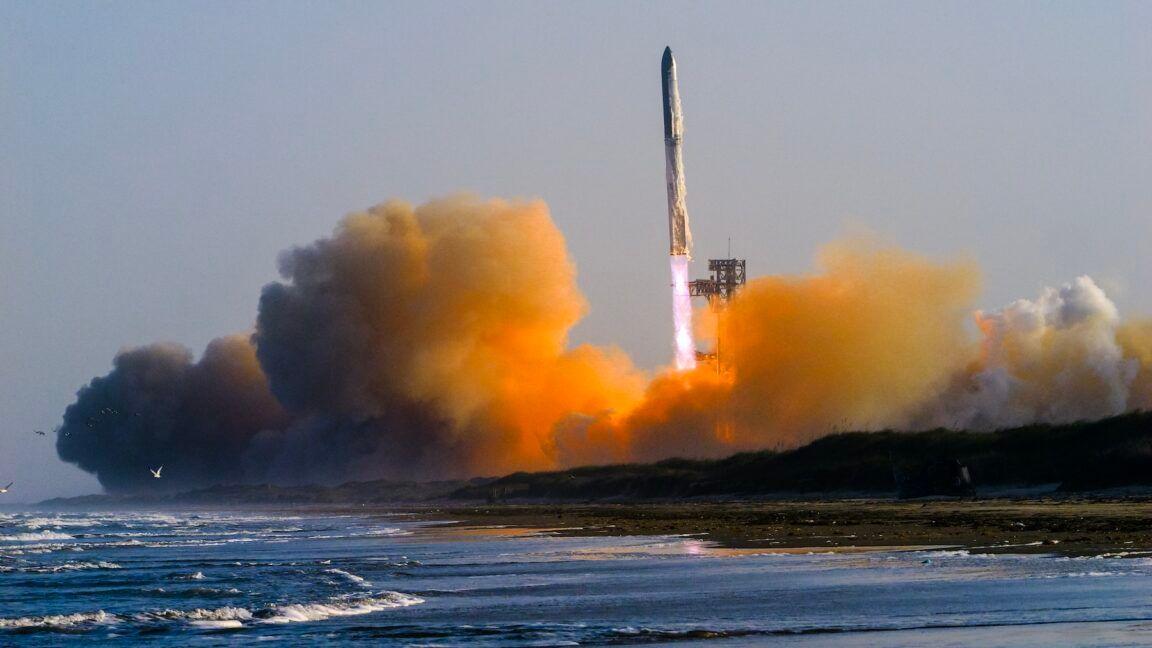
SpaceX xAI Merger Creates $1.25 Trillion AI-Space Powerhouse
Elon Musk formally announced Monday that SpaceX has acquired xAI, his artificial intelligence startup behind the Grok chatbot, in a move to consolidate his ventures into what the company calls "the most ambitious, vertically integrated innovation engine on (and off) Earth."
1
The SpaceX xAI merger values the combined entity at $1.25 trillion, making it the most valuable company in the private sector.4
SpaceX was valued at $800 billion in December during an insider share buyback, while xAI raised $20 billion last month at a $230 billion valuation.4
The deal brings together Musk's rocket manufacturing, Starlink satellite infrastructure, social media platform X, and Grok under one umbrella, setting the stage for an Initial Public Offering planned for later this year.2
1 Million Satellite Constellation to Power Orbital Data Centers
The merger's central purpose is to deploy a vast satellite data center network of up to 1 million satellites that will function as orbital data centers.
1
Musk argues that future global electricity demands for AI cannot be met with terrestrial solutions without imposing hardship on communities and the environment.3
The 1 million satellite constellation will build upon SpaceX's existing satellite management expertise from Starlink, including end-of-life disposal strategies.1
SpaceX filed plans with the FCC for the million-satellite network, and FCC chairman Brendan Carr shared the filing on X, signaling regulatory support.2
The proposal has entered public comment phase, though observers note Carr's eagerness to support projects aligned with the Trump administration.2
Solar Energy Economics Drive Space-Based Data Centers Vision
Elon Musk contends that AI computing power in space offers superior economics compared to ground-based facilities. Speaking on the "Cheeky Pint" podcast with Stripe co-founder Patrick Collison and Dwarkesh Patel, Musk explained that solar panels produce approximately five times more power in space than on Earth, making it "much cheaper to do in space."
2
He set an aggressive timeline, stating: "You can mark my words, in 36 months but probably closer to 30 months, the most economically compelling place to put AI will be space."2
Musk predicted that within five years, annual launches of AI infrastructure to space will exceed Earth's cumulative total.2
For context, global data center capacity is estimated to reach 200 GW by 2030, representing roughly $1 trillion in ground-based infrastructure.2
Starship Development Critical to Powering AI Development Ambitions
The plan to deploy space-based data centers relies heavily on SpaceX's still-in-development Starship launch system. Musk claims Starship will eventually enable hourly launches, each carrying up to 200 tons of material into orbit.
3
However, Starship's ability to launch satellites into orbit remains largely unproven, and development is behind schedule.3
SpaceX has provided scant details about what form the proposed satellites would take or how they would handle challenges like cooling and radiation protection.3
Technology analyst Robert Scoble notes that SpaceX already operates approximately 9,000 satellites through Starlink, providing experience with satellite grids and internet distribution.5
Related Stories
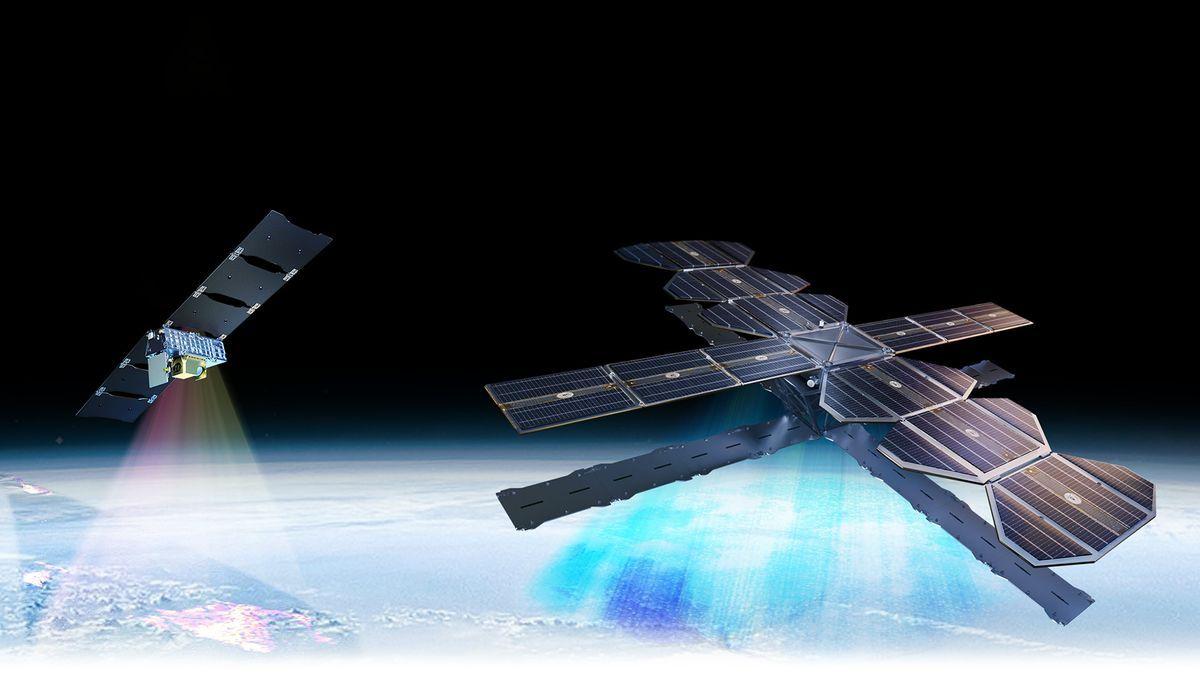
Tesla Integration Signals Broader AI Computing Strategy
The merger extends beyond SpaceX and xAI. Tesla announced it would halt production of Model S and Model X vehicles to repurpose factories for manufacturing Optimus humanoid robots, with Musk targeting 1 million third-generation units annually.
5
Tesla also committed $2 billion in investment to xAI.5
According to Merve Hickok at the University of Michigan, "By merging xAI and SpaceX, Musk is likely looking for resource optimisation across data flows, energy and computing power."5
The strategy appears designed to create a computing network that can support Tesla's humanoid robots, which require substantial AI processing for real-world interaction.5
Financial Pressures and Competitive Positioning
While Musk frames the consolidation as forward-looking, some analysts view it differently. Edward Niedermeyer, author of "Ludicrous: The unvarnished story of Tesla motors," characterizes the move as "defensive," designed to secure financing as the companies burn through cash training and operating AI models.
5
The upcoming IPO could provide access to public investor capital needed to fund these expensive operations.5
Scoble suggests the integration positions Musk to dominate AI in ways competitors like OpenAI, Google, and Microsoft cannot match, given none possess equivalent launch provider capabilities or satellite infrastructure.5
xAI has already faced regulatory scrutiny, with the EPA recently censuring the company for exceeding power generation limits at its Colossus data center in Memphis, Tennessee.5
This incident underscores the energy constraints driving Musk's space-based vision. The merger marks Musk's continued pattern of consolidating his empire, following xAI's acquisition of X last year in a deal that valued that combination at over $110 billion.4
References
Summarized by

Navi
[3]
[5]
Related Stories
Nvidia unveils Vera Rubin Space Module for orbital AI data centers as space computing race heats up
17 Mar 2026•Technology

SpaceX pushes AI data centers into orbit as Musk predicts space will beat Earth in 36 months
06 Feb 2026•Technology
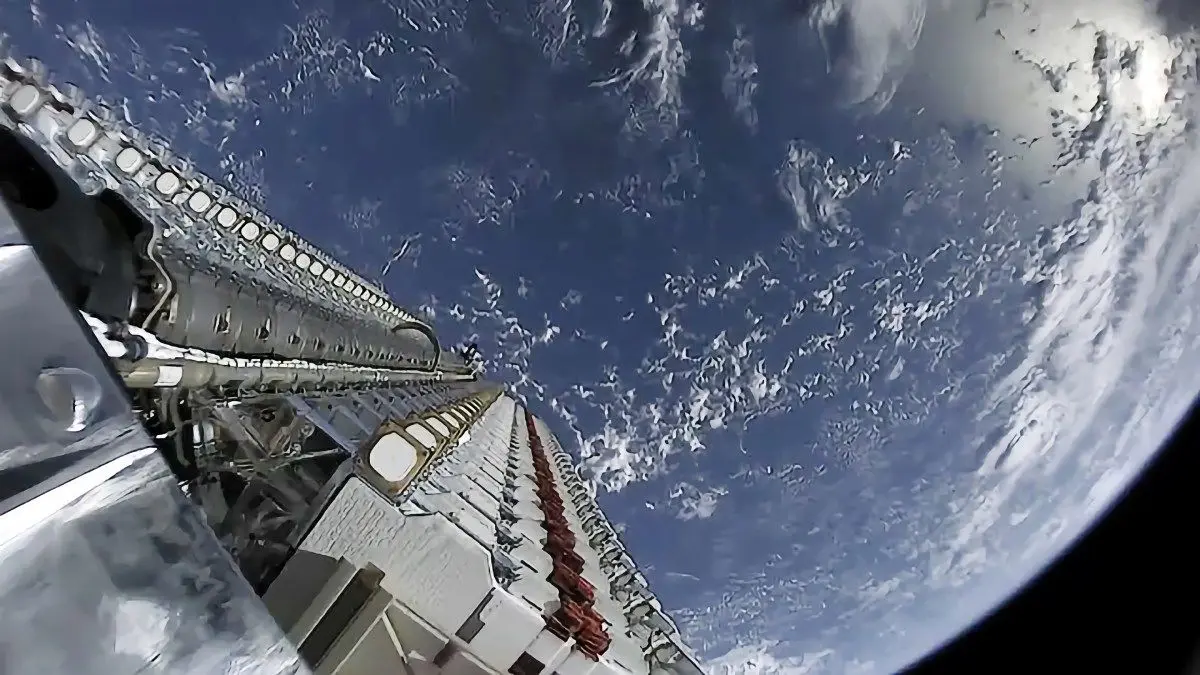
Space-Based Data Centers Gain Momentum as Tech Giants Eye Orbital Computing Solutions
31 Oct 2025•Technology
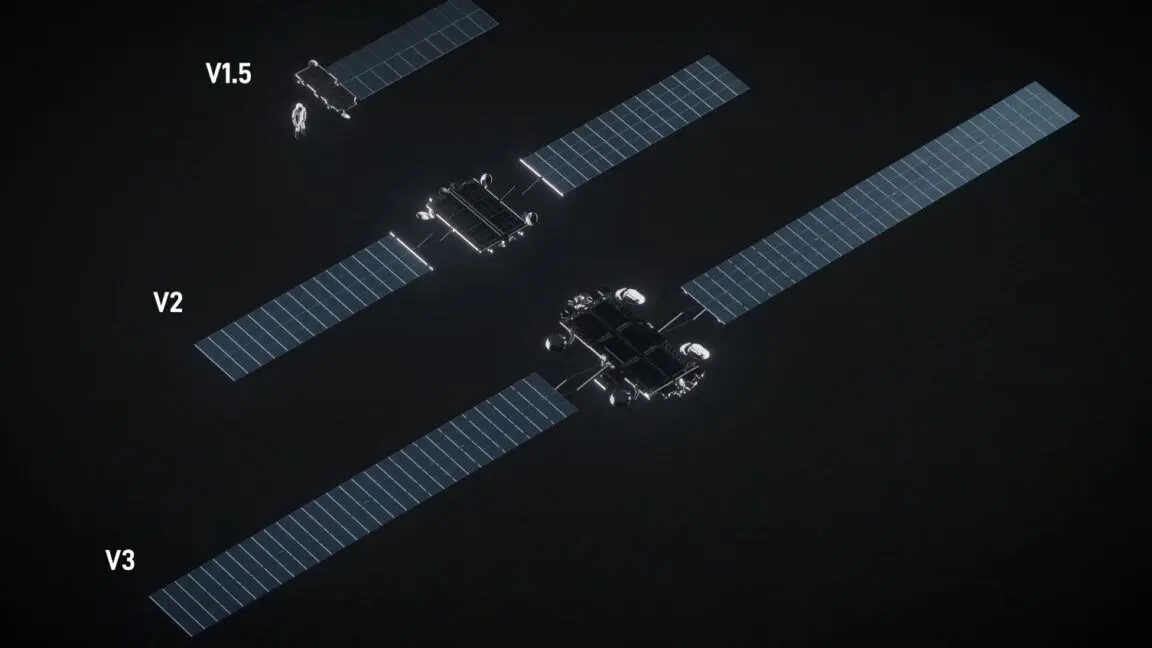
Recent Highlights
1
AI chatbots validate you too much, making you less kind to others, Stanford study reveals
Science and Research
2
Anthropic's Claude Code Source Leak Reveals Hidden AI Agent Plans and Extensive System Access
Technology

3
Judge blocks Pentagon from branding Anthropic a security risk over AI safety guardrails dispute
Policy and Regulation

Recent Highlights
Today's Top Stories




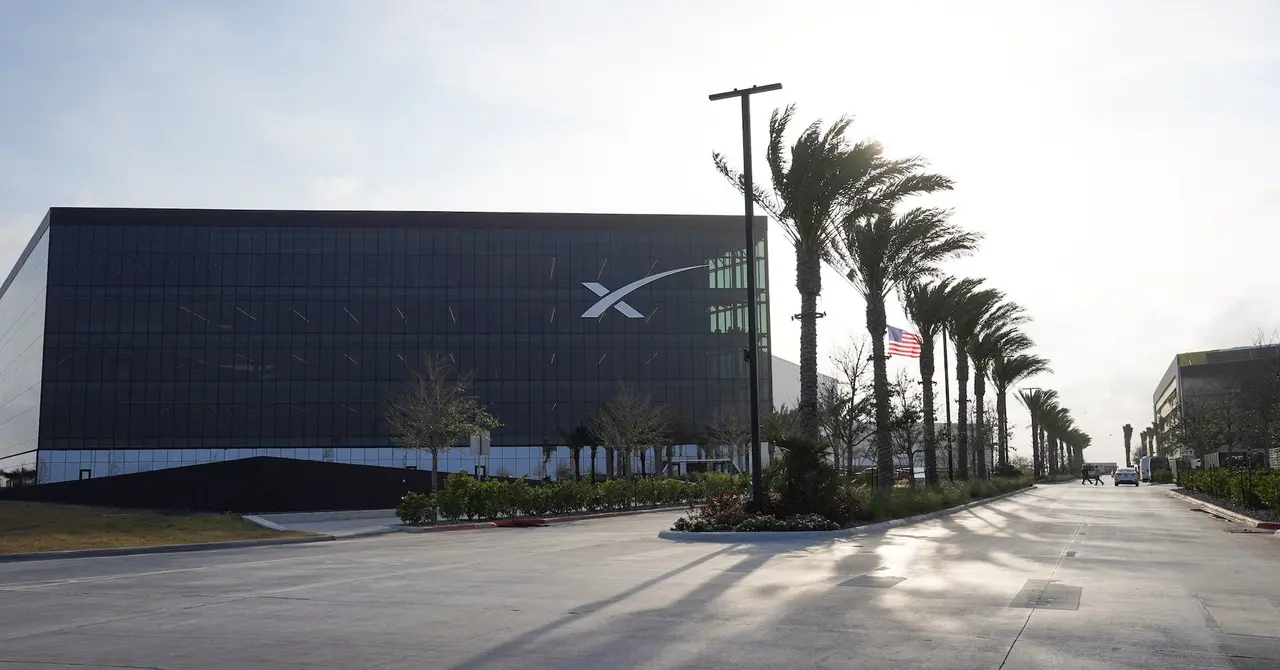

Your Daily Dose of Curated AI News
Don’t drown in AI news. We cut through the noise - filtering, ranking and summarizing the most important AI news, breakthroughs and research daily. Spend less time searching for the latest in AI and get straight to action.

