Space-Based Data Centers Gain Momentum as Tech Giants Eye Orbital Computing Solutions


5 Sources
[1]
Elon Musk on data centers in orbit: "SpaceX will be doing this
As artificial intelligence drives the need for vastly more computing storage and processing power, interest in space-based data centers has spiked. Although several startup companies, such as Starcloud, have begun to address this problem, the idea has also attracted the interest of tech barons. In
[2]
NVIDIA's H100 GPU Takes Data Centers to Space
The GPU, featuring an 80GB RAM, is a hundred times more powerful than any computer ever flown in space. It will test a range of AI processing applications including analyzing Earth observation images and running a large language model by Google. The test flight, on board of the Starcloud-1
[3]
Self-assembling data centers in space are becoming reality as Rendezvous Robotics partners with Starcloud -- Elon Musk chimes in that 'SpaceX will be doing this'
Starcloud is already launching an AI-equipped satellite featuring an Nvidia H100 GPU into space next month. Still, it plans to build a 5-gigawatt data center eventually, and Rendezvous Robotics can be key to achieving that. Speaking to Ars Technica, co-founder Phil Frank said, "Our mission is to
[4]
Elon Musk: Future Starlink Satellites Will Become Orbiting Data Centers
When he's not battling bugs and robots in Helldivers 2, Michael is reporting on AI, satellites, cybersecurity, PCs, and tech policy. Don't miss out on our latest stories. Add PCMag as a preferred source on Google. Starlink satellites are best known for supplying high-speed internet, but SpaceX
[5]

Elon Musk's Solution to Data Centers: Just Put Them in Space
Elon Musk claimed on October 31 that SpaceX will be sending data centers into space. He responded to a post on X from journalist Eric Berger about the viability of the concept. "Simply scaling up Starlink V3 satellites, which have high speed laser links would work," he wrote on X. "SpaceX will be
Share
Copy Link
Elon Musk announces SpaceX's plans to develop space-based data centers using scaled-up Starlink V3 satellites, joining other tech leaders in addressing AI's growing energy demands through orbital computing infrastructure.
Tech Giants Rally Behind Space-Based Computing
The concept of space-based data centers has rapidly gained traction among technology industry leaders, with Elon Musk becoming the latest high-profile advocate. Following predictions by Amazon founder Jeff Bezos that gigawatt-scale data centers will be built in space within 10 to 20 years, and former Google CEO Eric Schmidt's acquisition of Relativity Space for similar purposes, Musk announced on X that SpaceX will pursue orbital computing infrastructure
1
."Simply scaling up Starlink V3 satellites, which have high speed laser links would work," Musk stated. "SpaceX will be doing this." This endorsement from the owner of the world's largest space-based infrastructure significantly elevates the profile of what was previously considered a niche startup sector
1
.
Source: Inc.
NVIDIA H100 Pioneers Orbital AI Processing
Startup Starcloud is leading the practical implementation of space-based computing with its upcoming Starcloud-1 satellite mission. The 60-kilogram satellite will carry NVIDIA's H100 GPU featuring 80GB RAM, representing a hundred-fold increase in computing power compared to any previous space-based system
2
. The three-year mission, launching on SpaceX's Bandwagon 4 Falcon 9 flight, will orbit at 350 kilometers altitude."The H-100 is about 100 times more powerful than any GPU computer that has been on orbit before," said Philip Johnston, Starcloud's CEO and co-founder. "It will be the first time that a terrestrial-grade data center GPU will be flown and operated in orbit"
2
. The satellite will process synthetic aperture radar data from Capella's Earth-observing satellites in real-time, demonstrating the practical applications of orbital computing.Environmental Imperatives Drive Innovation
The push toward space-based data centers stems from mounting environmental concerns about terrestrial computing infrastructure. According to the United Nations Environmental Program, global data-crunching infrastructure is projected to consume as much electricity as Japan by 2030. Additionally, a single one-megawatt data center consumes as much water as approximately 1,000 people in developed nations
2
."As the energy demands of AI development increase, orbital data centers represent a transformative environmental breakthrough -- cutting greenhouse gas emissions by orders of magnitude and eliminating the need for advanced cooling," explained Josh Parker, Head of Sustainability at NVIDIA
2
. Space-based facilities would harness continuous solar power without requiring battery storage, with each solar panel producing eight times more electricity than Earth-based equivalents.Related Stories

Autonomous Assembly Enables Massive Scale
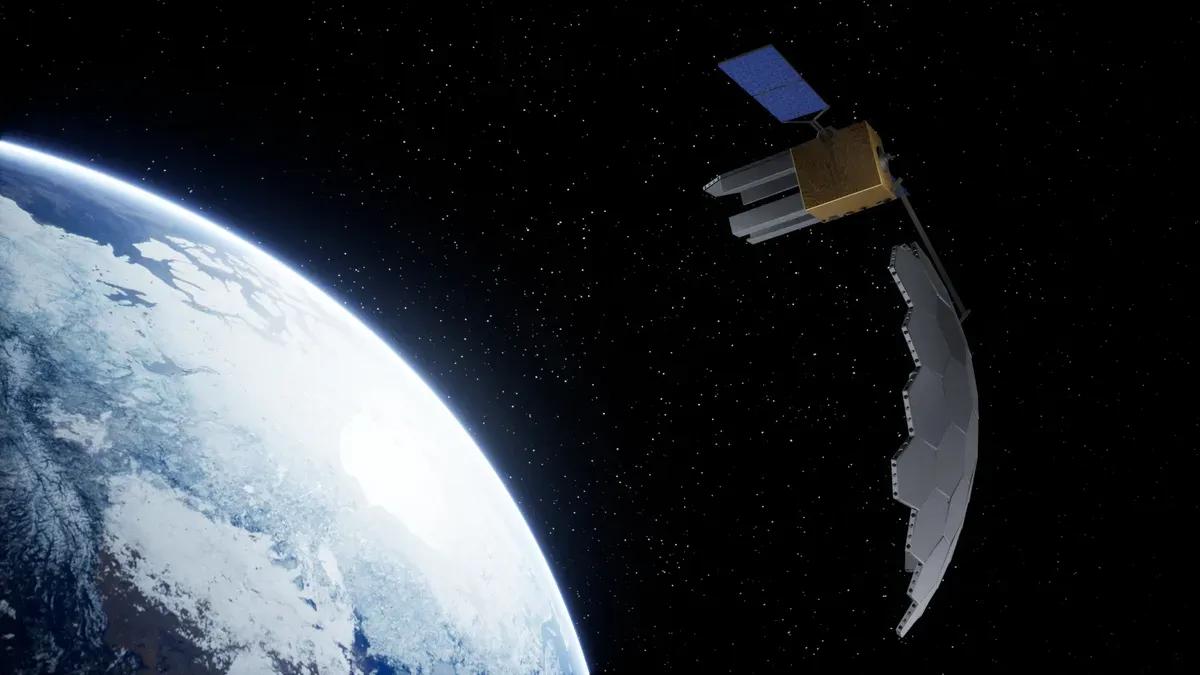
The technical challenges of building large-scale data centers in space have prompted innovative solutions in autonomous construction. Rendezvous Robotics, emerging from MIT stealth mode, has partnered with Starcloud to develop self-assembling tile-based modules using electromagnets
3
.Starcloud's ambitious plans include a 5-gigawatt data center with "super-large solar and cooling panels approximately 4 kilometers in width and length" – vastly exceeding the International Space Station's solar arrays, which represent only 0.005% of the planned scale
3
.
Source: Tom's Hardware
Starlink Architecture Provides Foundation
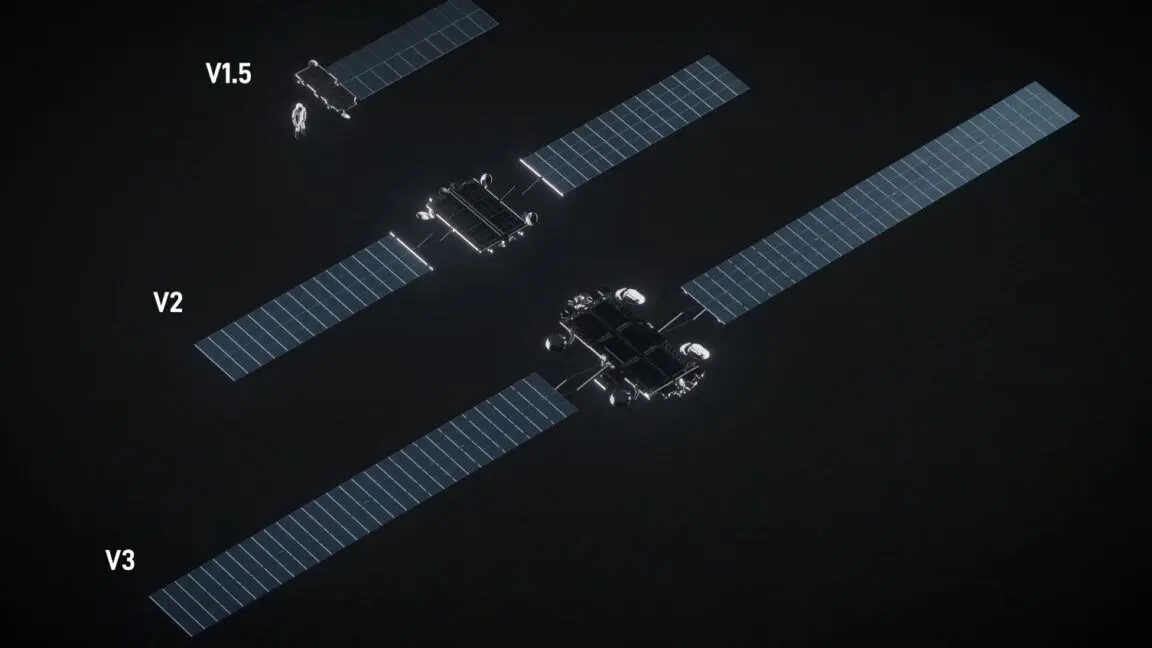
SpaceX's Starlink constellation offers a proven model for space-based infrastructure that could be adapted for computing purposes. Current Starlink V2 mini satellites achieve maximum downlink capacity of approximately 100 Gbps, while the upcoming V3 satellites are expected to increase this capacity tenfold to 1 Tbps
1
.The V3 satellites, weighing up to 2,000 kilograms compared to current V2 Mini satellites at 300 kg, will require SpaceX's Starship vehicle for deployment. SpaceX plans to launch approximately 60 V3 satellites per Starship mission, with launches potentially beginning in the first half of 2026
4
. The existing laser link system already enables data transmission at up to 200 Gbps, creating a mesh network in space that addresses connectivity challenges for orbital computing4
.
Source: Ars Technica
References
Summarized by

Navi
[1]
[3]
Related Stories
Nvidia unveils Vera Rubin Space Module for orbital AI data centers as space computing race heats up
17 Mar 2026•Technology

Google Announces Project Suncatcher: Ambitious Plan for AI Data Centers in Space
04 Nov 2025•Technology

AI Trained in Space as Tech Giants Race to Build Orbiting Data Centers Powered by Solar Energy
11 Dec 2025•Technology
Recent Highlights
1
Microsoft and Nvidia Launch Surface Laptop Ultra: A $2,599 AI-Ready PC With RTX Spark Chip
Technology

2
OpenAI Releases 722 AI-Generated Math Papers on GitHub, Igniting Fury Among Mathematicians
Science and Research

3
Trump Consulted Grok AI Before Ordering Venezuela Invasion and Capture of Nicolás Maduro
Policy and Regulation

Recent Highlights
Today's Top Stories











Don’t drown in AI news. We cut through the noise - filtering, ranking and summarizing the most important AI news, breakthroughs and research daily. Follow topics that matter to you and stay ahead.


