Stellar Blade Director Says AI Essential for South Korea to Compete With China and US Studios


4 Sources
4 Sources
[1]
Stellar Blade director goes all-in on AI as South Korea's games industry looks to compete on the global stage
Much has been written about Stellar Blade's handling of its lead female character, the culture war surrounding it, and developer Shift Up's several eyebrow-raising missteps as the game broke through into mainstream consciousness. Regardless, the PS5 title was a big success and a sequel is now in development. Before we even get a first look at it, however, a new storm appears to be brewing. AI, generative or not, is the talk of town, and by town I mean the entire games industry. As Larian tries to toy with gen-AI while not using the tech for final assets and publishers like Hooded Horse unequivocally dunk on studios using it, the debate refuses to go away. 2026 may be defined by the widespread adoption or rejection of AI tools, and hopefully, by people finally figuring out the difference between tools that have been around for a while and the controversial gen-AI. The well has already been poisoned, sadly. Shift Up CEO and Stellar Blade director Hyung-tae Kim is bullish on the whole package, it seems. During a national briefing on South Korea's 2026 Economic Growth Strategy, the developer claimed it's "an essential tool for going up against large competitors like China on a global level." Automaton reported on (and translated) the news first shared by GameMeca. Anyone who's been paying attention to the games industry for the last few years is well aware of China's increasingly large presence, with behemoths like Black Myth: Wukong and Where Winds Meet making waves and rising to compete against the Japanese and Western giants that have typically dominated the market. Meanwhile, South Korea has started to exit the MMO-oriented creative trends and begun to punch above its weight with triple-A projects. It comes as no surprise to see more and more developers in the country betting on AI (even if it's not of the generative kind) as its ambitions grow larger, too. Kim "argues that widespread use of AI will not result in people losing their jobs, because competing with major industries like China and the US will require not only utilizing all available manpower, but also making everyone proficient in AI." Press X to doubt, as immediately, he stated one person could "perform the work of 100 people" with the assistance of these tools. It remains to be seen whether the adoption of AI assistance into the general pipeline really will make games bigger, better, or more profitable for publishers, but either way, it seems like the conversation around this topic - and the consequences of its general usage - will not go away any time soon.
[2]
Stellar Blade lead believes AI is essential for South Korea to compete with studios in the US and China, with the government to provide financial backing to support the use of the tech
As discussions around AI continue to flare, the director of 2024's Stellar Blade has stated he believes it's a necessary tool to help South Korean devs compete with the likes of America and China. Speaking at a national conference, he expressed this view in terms of the simple economics of the medium. Hyung-tae Kim, director of Stellar Blade and CEO of developer Shift Up, told the attendees of the 2026 Economic Growth Strategy summit in South Korea that AI may prove intrinsic to the country maintaining velocity alongside China and the United States. A huge portion of Shift Up's audience is overseas, where competition often comes from Chinese products, he said, per GameMeca, via Automaton. Shift Up puts around 150 devs on each game, he explains, whereas in China the numbers are far greater, with releases involving 1,000 to 2,000 people or more. That's a stark difference, and AI can help make up the ground in terms of resources, Kim argues. Jobs won't be lost, because the gap is such that studios will need every available hand alongside generative tools, he muses. This view is supported and echoed by Hwi-young Chae, the minister of culture, sports and tourism in South Korea, who says bigger companies are already building their own versions of these bots, and there are plans in place to help smaller teams invest in AI starting this year. These viewpoints aren't surprising to hear. The promise of AI is that it can streamline processes and increase productivity by some order of magnitude. That said, others would argue these toolkits produce 'slop' that pales in comparison to human-made creativity and you'll wind up needing people to clean up whatever AI touches regardless. But when you consider EA reportedly uses AI in all facets of the business, and Activision's been accused of using AI assets, Kim's point about bigger outfits already moving forward with this tech holds some water. Whether that should invite others to compete in the same way is another argument, but for now, Shift Up is doing just that. Not an ideal omen for Stellar Blade 2's development.
[3]
Stellar Blade developer believes AI is necessary to even the playing field with massive developers
The Korean studio currently employs around 150 developers, a fraction of some AAA behemoths. Artificial intelligence and how it is utilised in the world of game development is still a hotly debated topic, with some arguing that it has no place in it whatsoever, some seeing its benefits, and others embracing it entirely. One developer that believes the technology is useful is the Korean Shift Up, creator of Stellar Blade, who in a recent interview expressed that it's helpful in aiding the studio punch upwards. As reported by GameMeca (thanks, Automaton), Stellar Blade director Hyung-tae Kim has expressed that AI helps the studio compete with the major AAA titans that have development teams and resources that massively dwarf the studio. "We devote around 150 people to a single game, but China puts in between 1,000 to 2,000. We lack the capacity to compete, both in terms of quality and volume of content," Kim explains. He goes on to add that the idea of AI in game development is not to replace human workers but to enable them so that "one person can perform the work of 100 people." What is your stance on AI being used in video game development? Do you think it will come into play in production of Stellar Blade 2? For more on Shift Up, the developer's 2025 employee bonuses were recently revealed.
[4]
'One Person Can Perform the Work of 100 People' -- Boss of Stellar Blade Developer Says It Needs to Use AI to Compete With Overwhelming Manpower of China and U.S. Studios - IGN
"We devote around 150 people to a single game, but China puts in between 1,000 to 2,000." Stellar Blade director and CEO of Shift Up Hyung-tae Kim has stated that without the use of AI, developers in smaller nations will struggle to keep up with studios in places like the U.S. and China. As first reported by GameMeca, and picked up by Automaton, Kim addressed attendees at South Korea's 2026 Economic Growth Strategy event and said that countries like China have an overwhelming advantage due to the sheer number of staff it can throw at video game development. "We devote around 150 people to a single game, but China puts in between 1,000 to 2,000. We lack the capacity to compete, both in terms of quality and volume of content," Kim said (via machine translation). Using AI will not result in job losses, Kim insisted, but instead make employees more valuable, as "one person can perform the work of 100 people." This week, Shift Up gifted its 300 staff an Apple Watch, AirPods Max, and a $3,400 cash bonus. A sequel, Stellar Blade 2, is in development, as well as Project Spirits, to be published by Level Infinite. AI is, of course, a huge topic in gaming right now, with numerous companies forced to issue statements confirming they have not used AI to create games or the marketing materials that promote them. Just yesterday, January 12, we reported that Nintendo denied allegations that it used AI-generated imagery to advertise its new My Mario children's toy range, while last month, a Fortnite artist was forced to defend their work after fans suggested numerous images found within the game's new season were AI-generated, including a suspicious-looking poster showing a character in a hammock with an odd number of toes. In November 17, Assassin's Creed publisher Ubisoft had to remove an image found within Anno 117: Pax Romana that contained AI-generated elements after fans complained, and Call of Duty: Black Ops 7 players complained about suspected AI-generated images they had found across the game, following a trend of AI-Ghibli images from earlier this year. The Alters developer, 11 Bit Studios, and Jurassic World Evolution 3 developer, Frontier Developments, have similarly faced fan backlash. More recently, Baldur's Gate 3 developer Larian was embroiled in a genAI controversy of its own following the announcement of its next game, Divinity. It's since pullled back somewhat from using the tech. Opinion on the use of AI in games continues to divide studios and their fans, with some vehemently against its use, while others claim it's an inevitable part of the future. Rockstar co-founder and former Grand Theft Auto writer Dan Houser recently likened AI to mad cow disease, but the CEO of Genvid -- the company behind choose-your-own-adventure interactive series like Silent Hill Ascension -- has claimed "consumers generally do not care" about generative AI in games, and stated that: "Gen Z loves AI slop." EA CEO Andrew Wilson has said AI is "the very core of our business," and Square Enix recently implemented mass layoffs and reorganized, saying it needed to be "aggressive in applying AI." Dead Space creator Glen Schofield also recently detailed his plans to "fix" the industry in part via the use of generative AI in game development, and former God of War dev Meghan Morgan Juinio said: "... if we don't embrace [AI], I think we're selling ourselves short."
Share
Share
Copy Link
Shift Up CEO Hyung-tae Kim claims AI is necessary for South Korea's games industry to compete globally, stating one person could perform the work of 100 people with AI assistance. Speaking at a national economic strategy summit, Kim highlighted the resource gap between Korean studios deploying 150 developers versus Chinese teams of 1,000 to 2,000 people.
Stellar Blade Director Champions AI for South Korea's Games Industry
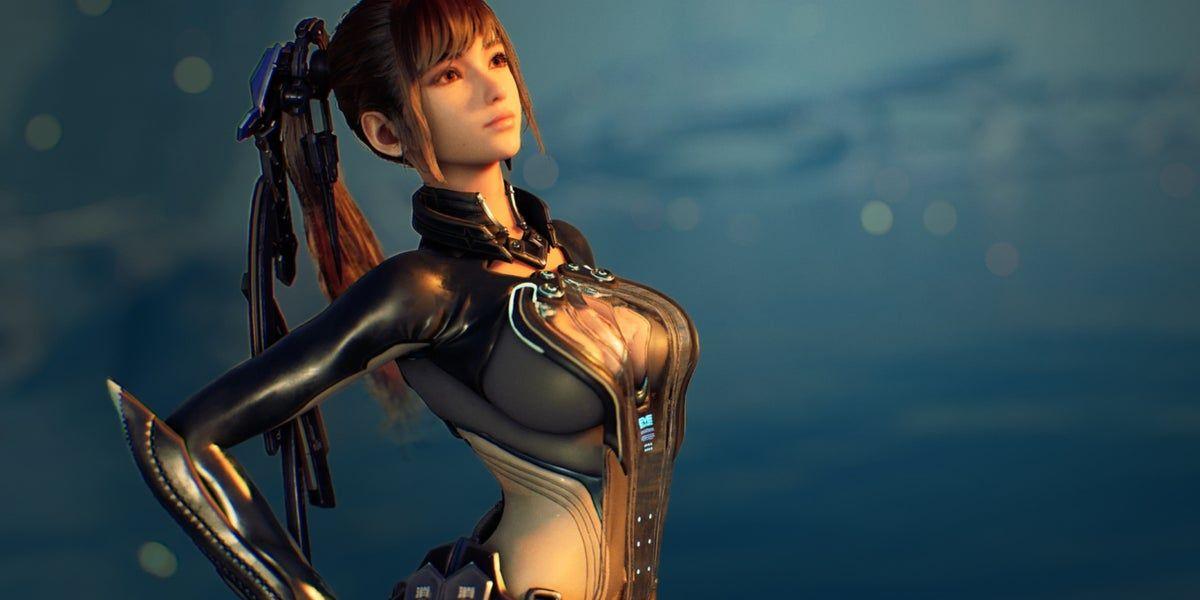
Hyung-tae Kim, director of Stellar Blade and CEO of Shift Up, has positioned AI as a critical tool for South Korea's games industry to compete on the global stage. Speaking at the country's 2026 Economic Growth Strategy summit, Kim argued that AI is "an essential tool for going up against large competitors like China on a global level"
1
. His comments arrive as the debate around generative AI in game development intensifies across the industry, with studios like Larian experimenting cautiously while others face backlash for suspected AI-generated content1
.
Source: Eurogamer
The Resource Gap Driving AI Adoption
Kim's stance stems from a stark reality facing Korean developers: overwhelming manpower disparities. "We devote around 150 people to a single game, but China puts in between 1,000 to 2,000. We lack the capacity to compete, both in terms of quality and volume of content," Kim explained
3
. This resource gap presents a fundamental challenge as South Korea's games industry transitions from MMO-oriented projects toward AAA game development that can compete with US and China studios1
. With Stellar Blade 2 now in development following the original's commercial success, Shift Up faces pressure to level the playing field against better-resourced competitors2
.
Source: GameReactor
AI Assistance to Increase Employee Productivity
Kim contends that AI won't trigger job losses but will instead amplify individual capabilities. He claims "one person can perform the work of 100 people" with AI assistance, arguing that competing globally will require "not only utilizing all available manpower, but also making everyone proficient in AI"
1
. The goal, according to the developer, is enabling workers rather than replacing them3
. Hwi-young Chae, South Korea's minister of culture, sports and tourism, echoed this perspective, noting that larger companies already build proprietary AI tools while the government plans financial backing to help smaller teams invest in AI starting this year2
.Related Stories
Industry Divided on Generative AI in Game Development
The broader games industry remains fractured on AI adoption. EA CEO Andrew Wilson has declared AI "the very core of our business," while Square Enix cited AI as justification for mass layoffs and reorganization
4
. Ubisoft, Nintendo, and multiple studios have faced accusations of using AI-generated imagery in marketing materials and games, forcing public denials and content removal4
. Critics argue these tools produce inferior content requiring human cleanup, while proponents see inevitable productivity gains. Kim's assertion that bigger companies already implement these technologies holds weight, though whether smaller studios should follow suit to compete with US and China remains contentious2
. As 2026 unfolds, the industry faces a defining moment: widespread adoption or rejection of AI tools that could reshape how games are made and who makes them.
Source: GamesRadar
References
Summarized by

Navi
[1]
[3]
Related Stories
Generative AI Usage in Steam Games Surges by 700% in 2025, Raising Concerns and Opportunities
17 Jul 2025•Technology
AI in Video Games Triggers Player Backlash as Developers Navigate Quality vs Cost Savings
19 Feb 2026•Entertainment and Society

Gaming Industry Splits Over AI Use as Arc Raiders Success Sparks Heated Debate
11 Nov 2025•Technology

Recent Highlights
1
Tennessee Teens Sue Elon Musk's xAI Over Grok AI-Generated Child Abuse Images
Policy and Regulation

2
Supermicro Co-Founder Indicted in $2.5 Billion Nvidia AI Chip Smuggling Scheme to China
Policy and Regulation

3
Val Kilmer to appear posthumously in As Deep as the Grave through AI-generated performance
Entertainment and Society

Recent Highlights
Today's Top Stories











Your Daily Dose of Curated AI News
Don’t drown in AI news. We cut through the noise - filtering, ranking and summarizing the most important AI news, breakthroughs and research daily. Spend less time searching for the latest in AI and get straight to action.

