AI industry floods midterm elections with $150 million as battle over regulation intensifies


7 Sources
7 Sources
[1]
US tech giants open their wallets for AI-friendly politician
Rush is on to influence candidates from both parties ahead of midterms Meta is among tech giants reportedly funding US politicians friendly to the AI industry, as concerns mount over a huge expansion in datacenter building and the effects of AI on everyday life. According to The New York Times, Meta is set to spend $65 million this year backing politicians who are sympathetic to its cause. This is driven by concerns that its AI ambitions might be hampered by regulations intended to keep people safe, plus growing opposition from communities to giant data campuses popping up in their local area. Meta is starting up two new super PACs (Political Action Committees - organizations to influence election outcomes), the NYT says, which will join two others it has already formed. One group, "Forge the Future Project,", targets Republicans, while the second, "Making Our Tomorrow," focuses on Democrats. Zuckcorp isn't the only tech giant doing this, of course. The Los Angeles Times reported recently that Marc Andreessen, Ben Horowitz and OpenAI co-founder Greg Brockman are among tech industry leaders stumping up $50 million for a new super PAC called "Leading the Future." The PAC has similar aims in ensuring AI-friendly candidates prevail in the coming mid-term elections in the US. It is perhaps a sign of the massive sums of money at stake in what many regard as an inflating AI market bubble. The frenzy of interest in AI development has led to a boom in datacenter building to feed the demand for AI processing infrastructure. This in turn has met opposition from local communities, who are worried about issues including the impact on electricity bills and water supplies. Research org Data Center Watch reports that 20 US server farm projects were blocked or delayed amid local opposition during Q2 2025. Meta alone has revealed plans to build a number of multi-gigawatt datacenter clusters, one of which would cover much of the island of Manhattan in New York City. The datacenter industry knows it has a public image problem, as discussed last year at the Datacloud Global Congress in Cannes, France. Perhaps not surprisingly, one solution touted is to get political leaders onside. In the US, the situation has got bad enough that the Trump administration has stepped in to attempt to defuse public opposition through some sort of pact between the datacenter industry and hyperscalers like Microsoft, Google, Amazon, Meta, and OpenAI, establishing principles around energy, water use and community relations. Washington is also determined to stamp out any regulations, particularly those at state level, that might constrain the AI industry. In December last year, President Trump issued an executive order intended to punish states that introduce any such legislation. While individual states want to protect citizens from the effects of algorithmic bias, data privacy breaches, and security risks that might result from AI systems, Trump has empowered Attorney General Pam Bondi to set up an AI Litigation Task Force to challenge any state regulations that potentially hinder America's race for global AI dominance. Financial analysts reported last year that the huge level of spending on AI was keeping the US economy out of recession, with datacenter infrastructure and model development providing the only significant growth. ®
[2]
Backed by Anthropic, a Super PAC Begins Ad Blitz in Support of A.I. Regulation
A new ad campaign on Monday warned northern New Jersey residents that Congress could leave them vulnerable to harm by artificial intelligence. The ad, which opens with photos of A.I.-generated women smiling on social media alongside A.I.-generated headlines, urged voters to tell their House representative to vote against a bill that would block states from creating protections against A.I. scams. "He can make sure A.I. serves us, not the other way around," the ad said of Josh Gottheimer, the Democratic co-chair of the House's new A.I. commission, which is expected to heavily influence legislation on the topic. "New Jersey families come before Big Tech's bottom line." The $300,000 ad campaign was paid for by Public First Action, a super PAC backed by the A.I. start-up Anthropic. Focused on New Jersey, the campaign is likely to run several weeks -- part of several similar initiatives by the super PAC nationally. Anthropic, which said this month that it had poured $20 million into the PAC, has taken a different approach from much of the A.I. industry in calling for tough regulation of the technology it is creating. Public First was formed last year to battle other super PACs backed by the leaders and investors of the rival A.I. company OpenAI, which favors a light approach to regulation. The advertising blitz is part of an escalating political war over A.I. in the run-up to the midterm elections. States and the federal government are at odds over how to regulate the technology. While President Trump has said A.I. regulation could slow down American companies and boost Chinese rivals, states are pushing ahead with their own laws. Companies see the November election as a crucial battleground. Much of that fight will play out on television and online ad campaigns, as A.I. companies pressure candidates to do their bidding. Leading the Future, the main industry-sponsored super PAC backed by venture capital investors and tech leaders, has raised more than $100 million and has $70 million in hand. Meta said last week that it was preparing to spend $65 million to fund two new super PACs this year to boost A.I.-friendly state politicians. Brad Carson, a former Democratic representative of Oklahoma who is now co-head of Public First, recently lifted the super PAC's fund-raising goal to $75 million after nearly hitting $50 million. "We have a big tent of people on our side," Mr. Carson said. "For the first time, our side has a voice and ammunition, which didn't occur with crypto and social media." Anthropic, which was founded by former OpenAI executives, has become a rare tech industry voice calling for A.I. safeguards. The San Francisco company has backed state laws -- including in its home state, California -- that call for better testing and safety protections. Anthropic successfully lobbied against a provision added to Mr. Trump's signature spending bill last year that would have blocked state A.I. regulations. In September, the company hosted a glitzy policy event in Washington's Union Station, with hundreds of lawmakers, congressional staffers, White House officials and journalists to mark their entry into A.I. lobbying. "The public is on our side about this," Anthropic's chief executive, Dario Amodei, said at the event. "We don't stand alone at all. It's the tech companies that stand alone, no matter how many of them there are." Trump Administration: Live Updates Updated Feb. 22, 2026, 4:18 p.m. ET But Anthropic's push for A.I. regulation is politically risky. OpenAI has won favor with the Trump administration, but Anthropic and Mr. Amodei have been perceived as nuisances. Administration officials including David Sacks, the White House's A.I. chief, have criticized Anthropic. Last week, a dispute erupted between the company and the Department of Defense after Anthropic told officials that it did not want its A.I. used for mass surveillance of Americans or deployed in autonomous weapons without human guidance. Last Monday, a person close to Defense Secretary Pete Hegseth told Axios that the Pentagon was "close" to declaring the start-up a "supply chain risk," a move that would sever ties between the company and the U.S. military. (The New York Times has sued OpenAI and its partner, Microsoft, over copyright infringement claims. Both companies have denied wrongdoing.) Anthropic executives previously said they spent at least five months working on a super PAC strategy before announcing their backing for Public First. Much of Public First's spending will fund ad campaigns, Mr. Carson said, focusing on educating voters on the need for A.I. regulations to protect child safety, jobs and national security. Public First has also run ads thanking Republican and Democratic lawmakers for supporting A.I. laws. The group targeted Mr. Gottheimer, who is a leader on A.I. policy and has said he might be willing to oppose state laws if certain safeguards, like child safety, were protected. Last week, Jobs and Democracy, a Public First PAC, spent $450,000 on ads supporting the New York Assemblyman Alex Bores, a Democrat. A computer science graduate, Mr. Bores has made tech regulation a pillar of his run for a House seat being vacated by Jerry Nadler, the longtime Democrat of New York. Mr. Bores successfully led efforts to pass the state's RAISE Act, which requires large A.I. developers to publish safety standards and report serious security incidents. Public First ran the ads in response to attack ads by Leading the Future. "Voters across the country want a clear national regulatory framework for A.I. that creates jobs for American workers, protects the public, secures American competitiveness and global leadership," Leading the Future said in a statement. "Our organization has stepped up to support candidates and policymakers who share that goal." Political experts said it was unclear if the ad campaigns would move voters, who have consistently listed economics, health care and immigration as their top midterm priorities. But the sheer volume of mailers, TV and radio ads will create some debate. "It's going to force the issue into the midterms, and force candidates to take positions, whether voters view it as a priority or not," said Evan Swarztrauber, a Republican tech strategist and former Federal Communications Commission official.
[3]
How A.I. Money Is Flooding Into the Midterm Elections
Theodore Schleifer covers campaign finance, and Matt Zdun is a data journalist who covers political campaigns. The artificial intelligence industry is well on the way to spending hundreds of millions of dollars on the midterm elections in an extraordinary demonstration of political power from Silicon Valley. A.I. companies, groups tied to the industry and top executives of both donated at least $83 million in 2025 to federal campaigns and committees, according to a New York Times analysis of Federal Election Commission filings. That figure, combined with a $65 million push by the tech giant Meta at the state level, reveals about $150 million and counting that is flowing from A.I. interests into the midterms. The spending is broadly expected to benefit Republicans more than Democrats -- and so far, it has. Republicans are seen as friendlier to the industry and more opposed to stringent A.I. regulations. But the analysis shows that some Democratic politicians who represent the Bay Area or have longtime ties to the tech industry were significant recipients of A.I. cash. The two biggest donors, by far, backed Republicans. Greg Brockman, a co-founder of OpenAI, and his wife, Anna, made four donations on Sept. 12, 2025, of $12.5 million apiece -- two from him, two from her -- to the leading super PACs backing the A.I. industry and President Trump. OpenAI has stressed that the Brockmans made these donations in a personal capacity. Industry critics are skeptical. But the contributions nevertheless redound to the benefit of OpenAI and are aligned with its political strategy of primarily supporting Republicans and the Trump administration. "This year, my wife Anna and I started getting involved politically, including through political contributions, reflecting support for policies that advance American innovation and constructive dialogue between government and the technology sector," Mr. Brockman wrote in a lengthy post on X on New Year's Eve, connecting the donations in a narrative to a dinner he attended at the White House. It remains unclear precisely how much money the A.I. industry and its allies are spending on elections this year, because comprehensive federal filings are available only through the end of 2025. The figure of approximately $150 million does not include all the money that the A.I. industry is spending on state efforts, which do not file F.E.C. reports. More A.I. money is clearly arriving. For instance, the top pro-A.I. super PAC, Leading the Future, has said that in the first quarter of the year, it would receive $50 million more from the Brockmans and the venture capital firm Andreessen Horowitz, its other big backer. Jesse Hunt, a spokesman for Leading the Future, said that the super PAC and the A.I. industry were engaged in the midterms because they wanted "to move beyond partisan gridlock to enact strong, smart, and responsible national standards." And A.I.-connected cash is also quietly coursing into elections through nonprofit groups, which are not required to disclose their donors. Anthropic, a top rival to OpenAI that generally supports more A.I. regulation, has self-reported a $20 million contribution to a nonprofit group that is, in turn, funding some super PACs backing A.I. rules. Brad Carson, who runs that nonprofit group, Public First Action, said that A.I. donations to state efforts were "largely to stymie the growing backlash on data centers." The A.I. industry's spending on federal elections, he said, was meant to influence whether the federal government should have greater power over A.I. regulation, versus letting states do their own regulating. "Everyone knows this is what's being pushed, so political donations are spiking," Mr. Carson said. Some donors with ties to the A.I. industry may have an interest in politics that goes beyond artificial intelligence. For instance, a top donor in the Times analysis is Evan Goldberg, a senior A.I. executive at Oracle, the tech company whose software is intertwined with A.I. giants like OpenAI and Nvidia. He gave at least $317,000 to Democratic committees and candidates last year. Mr. Goldberg is a longtime Democratic donor who has given millions of dollars to left-of-center groups over the last several election cycles. Mr. Goldberg declined to comment. The lines between personal and company spending can be thin, though. Take Brad Smith, a top Microsoft official. He is one of Silicon Valley's most politically active executives, leading Microsoft's lobbying in Washington. But he is also among the sector's most effective "bundlers" and contributors in a personal capacity, donating at least $173,000 to back Democrats and at least $180,000 to support Republicans. A representative for Microsoft declined to comment. Democrats who represent the Bay Area in Congress, like Representatives Zoe Lofgren and Sam Liccardo, are among some of the top recipients of A.I. interests' spending: Ms. Lofgren drew at least $91,000 and Mr. Liccardo at least $61,000 last year. Senator Mark Warner of Virginia, a Democrat who is a former tech executive and is close with A.I. leaders, received at least $67,000 last year. Another $82,000 flowed into joint fund-raising committees associated with Mr. Warner, including from Sam Altman, the chief executive of OpenAI, who wrote a $7,000 check for the senator last year. Other lawmakers who benefited from tens of thousands of A.I. dollars included senior leaders on Capitol Hill, such as Representative Brett Guthrie of Kentucky, a Republican who serves as chair of the House Energy and Commerce Committee, and Representative Katherine Clark of Massachusetts, the Democratic House minority whip. Representative Jason Smith of Missouri, a Republican who has expressed support for building data centers in his state, was also a top recipient. However, the political candidates who are benefiting the most from the A.I. interests' spending are not those who have had the checks directly deposited into their accounts, but those who are seeing hundreds of thousands spent on their behalf by the industry's main super PAC, Leading the Future. For example, Chris Gober, a Republican House candidate in Texas, had $244,000 spent on his behalf last year by the super PAC's Republican affiliate, which spent another $504,000 for him in January. Some political candidates are benefiting from the A.I. industry's targeting of their opponents. In New York, these candidates include the rivals of Alex Bores, a Democrat running in a crowded House primary contest. He has made a name for himself as a vocal critic of the A.I. industry -- and has embraced his role as a villain of Leading the Future. The super PAC, through its affiliate, spent $118,000 last year to oppose Mr. Bores and has already spent $1.3 million against him this year. But at the same time, a super PAC linked to an Anthropic-funded nonprofit group is supporting Mr. Bores, announcing a $450,000 ad campaign this week to back his candidacy. A.I. spending is likely to play a significant role in several other midterm primaries in the coming months. Leading the Future announced this month that it would use its fortune to help three congressional candidates, two Democrats and one Republican, in contested primaries in Illinois and North Carolina. ________________ About the data In its analysis of donations tied to the A.I. industry, The Times included the major A.I. model developers OpenAI and Anthropic as well as donors to the pro-A.I. super PAC Leading the Future. It also included 21 technology companies and trade associations that spent $5 million or more over the past two years lobbying for A.I. issues, according to data from the U.S. Senate. Those companies included Meta, Amazon, Google and Microsoft. The analysis tallied Federal Election Commission contributions in 2025 from the organizations themselves, their affiliated political action committees and senior-level employees. Senior-level employees included company presidents, vice presidents and other executive-level positions, identified by employer and occupation fields in the campaign finance data. The Times included filings made with the F.E.C. that were submitted as of Feb. 1, a day after the 2025 year-end filing deadline.
[4]
A congressional candidate feared by the tech oligarchs
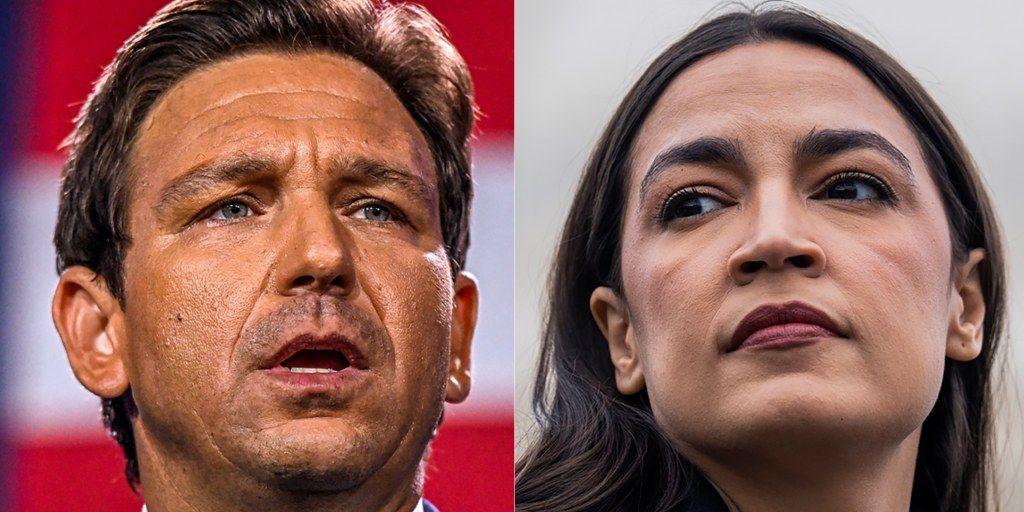
If I were a voter in New York's 12th Congressional District, a recent attack ad against candidate Alex Bores might make me think twice about considering him. Bores, a 35-year-old member of the New York Assembly, is a reliably progressive candidate in the coming Democratic primary to succeed liberal stalwart Jerry Nadler, who is retiring. But the spot, paid for by a political action committee called Think Big, points out something seemingly sinister in Bores' past: A former data scientist, he led a government team at tech giant Palantir until 2019, while the company was working with Immigration and Customs Enforcement. "ICE is powered by Bores' tech," says the ad, as anxious electronic music plays and images of paramilitaries in the street flash on screen. The people behind Think Big know that AI, ICE and Palantir are all very unpopular with New York City Democrats. So they probably don't want you to know that the PAC is part of a dark-money network funded by President Donald Trump megadonors seeking unfettered AI development. Think Big is an affiliate of Leading the Future, a super PAC that has raised over $100 million from figures including a Palantir co-founder, Joe Lonsdale; venture capitalist Marc Andreessen; and OpenAI's president, Greg Brockman. Their goal is to take down politicians who want to put guardrails around AI, and they're happy to exploit public suspicion of the technology to do it. Bores is their first target. The PAC has already spent $1 million to try to make an example of him. That's because Bores, who says he resigned from Palantir over its work with ICE, has made regulating AI a centerpiece of his campaign. "I think Congress is just missing the boat right now, the same way we missed it on social media," he told me. "Some combination of not having people that actually understand it, not having people that are willing to stand up to mistruths and the power of the industry, has just led to a place where we have no protection as Americans." There are several interesting candidates in the campaign for the 12th District, including Assembly member Micah Lasher, a solid Upper West Side liberal endorsed by Nadler, and George Conway, the Trumpworld insider turned resistance celebrity. (There's also Jack Schlossberg, an influencer whose primary qualification is that he's John F. Kennedy's grandson.) But only Bores gives voters the opportunity to defeat the tech oligarchs unleashing tsunamis of cash to buy political submission. No one else in the race has better enemies. As a New York Assembly member, Bores sponsored the 2025 Responsible Artificial Intelligence Safety and Education, or RAISE, Act. Similar to a California law, the act requires large AI developers to take steps to prevent "critical harm," to report safety incidents, and to publish their safety and security protocols. Though some of Bores' proposals were watered down in negotiations with Gov. Kathy Hochul of New York, the RAISE Act is still perhaps the most stringent AI law in the country. Bores hopes, in Congress, to spearhead AI legislation at the federal level, including child safety measures, a national data privacy law and laws to protect consumers from electricity price hikes caused by data centers. "People have this feeling AI is happening to them," Bores said. He wants to make voters feel that they have a say in how the technology is deployed. "We need to start building the muscle of actually passing bills in this space, because what's happening around us could change very, very quickly," he said. Though leaders in the industry have lined up against him, he's raised hundreds of thousands of dollars from rank-and-file AI employees, who are well placed to see AI's potential dangers. Right now, the politics of AI are scrambled and don't break down along neat partisan lines. Trump, of course, is a major recipient of AI money and, consequently, a huge AI booster; he recently signed an executive order seeking to invalidate state AI regulations such as the RAISE Act. But there are plenty of AI skeptics in the Republican Party, including Gov. Ron DeSantis of Florida, and some leading Democrats are AI enthusiasts, particularly Gov. Josh Shapiro of Pennsylvania. The public, meanwhile, is broadly uneasy about AI. In a recent YouGov/Economist poll, 58% of Americans -- and 53% of Republicans -- said they distrust it. Almost two-thirds of respondents expect AI to decrease the number of available jobs, and a plurality think it will negatively affect the economy. Communities in both blue and red states are mobilizing against new data centers, which, in addition to driving up electricity costs, consume immense amounts of water. AI feels, to many of us, creepy and invasive -- a sense that's only exacerbated by the anti-humanist pronouncements of its creators. "I suspect that in a couple of years on almost any topic, the most interesting, maybe the most empathetic conversation that you could have will be with an AI," Sam Altman, a co-founder of OpenAI, said last year. More recently, he said it was "unfair" to harp on AI's environmental cost because "it also takes a lot of energy to train a human." There's a huge political opportunity for the party that can stand up for human beings in the face of this alienating, machine-worshipping ethos. For Democrats to seize it, they need both the fortitude to make foes of some of the world's richest men and the expertise to know how these technologies can be constrained. If Leading the Future fears a candidate, those of us desperate for a different future should consider it an endorsement.
[5]
Big AI Isn't Waiting for the Backlash
Meta's hard and early pivot into artificial intelligence hasn't exactly gone as planned, with tens of billions of investment dollars sunk into middling models, departmental restructurings, and clashing visions. In technical terms, the company remains an AI also-ran. In another way, though, it's emerging as an industry leader: It's spending a ton of money on politics. Regarding regulation and national law, firms like Meta are, for now, in reasonably good shape. They have an administration that's broadly deregulatory and specifically pro-AI industry and has mostly limited its threats of intervention to complaints about "wokeness" -- a problem for a company like Anthropic, perhaps, but maybe less so for ones like Meta that preemptively ponied up and fell in line. Plenty of money will be spent by the AI industry on national politics, of course (OpenAI president Greg Brockman recently became a Trump PAC megadonor), but for now, AI firms are pushing further into state and local politics and Meta is spending a lot. According to the New York Times: Meta is preparing to spend $65 million this year to boost state politicians who are friendly to the artificial intelligence industry, beginning this week in Texas and Illinois, according to company representatives ... Political operatives tied to A.I. interests have focused this election cycle on state capitols out of concern that states were developing a patchwork of laws that would stifle A.I. development. This, says the Times, is "the biggest election investment by Meta" so far and is focused, to start, on supporting AI-friendly Republicans in Texas and Democrats in Illinois. Meta isn't alone here: A fleet of new PACs backed by other AI firms is funneling money into local and state elections across the country. What are these companies lobbying for, exactly? Their needs fit imperfectly into two categories. First, they want to fend off direct regulation of how AI products are built, used, and deployed. That includes avoiding "transparency" laws that often include risk audits, whistleblower protections, and frameworks for ensuring AI "safety," in both the catastrophic and child-safety senses of the word. In this fight, AI firms have a useful ally in the federal government, which has been actively pressuring state lawmakers to drop the issue, most recently in Utah. Closer to the ground and a bit further from the national political discourse, for now, is the matter of data centers. Much of the money AI companies spend on AI -- raised from investors, their own balance sheets, and, more recently, bond sales -- goes into buying GPUs and leasing or building structures in which to put them. These structures then need huge amounts of power coming from either the grid or newly constructed generators of one type or another (if you're xAI, this means standing up gas turbines without permits; if you're Meta, this may look like partnering directly with a nuclear power plant). In addition to the staggering power needs, data centers use a lot of water. And despite their eye-popping costs to build and run, they barely create any jobs. For the sorts of communities being approached with these projects -- places that may be persuaded to accept the mixed prospect of hosting an Amazon warehouse or, say, a massive new ICE detention center -- AI data centers are uniquely unappealing. As a result, they encounter local resistance from across the political spectrum. According to the Financial Times: Over the past year, the White House has courted tech billionaires and gone out of its way to protect the AI industry's agenda, fast-tracking permits for data centre construction and approving the sales of advanced chips to China while cracking down on states' attempts to regulate chatbots ... But across the US, citizens, clergy and elected officials in conservative communities are leading a grassroots rebellion against the rapid rollout of the technology. Data centers offer an almost perfectly sympathetic NIMBY cause. They're a drain on local resources, straining infrastructure and driving up utility prices. They exist to support a technology about which people are fairly pessimistic across the political spectrum. They're pitched as investments in an exciting future, but that future will unfold elsewhere while your town, now designated as an infrastructural non-place, is just stuck with a big jobless box that uses more power and water than everyone else combined. The surge in local lobbying isn't about winning this argument -- good luck with that! -- so much as it's about getting as much done as possible while the companies still can, buying support at the state level and breaking ground in as many municipalities as possible before data-center backlash becomes a universal condition of local politics in America. AI firms always talk about how they're in a technological race with one another or against China in which every day counts. But they're also in a race to take advantage of a brief domestic political moment during which they're relatively unencumbered and haven't yet been metabolized into American politics. At the national, state, and local levels, this may be as good as the AI industry will ever have it. And ahead of the midterms -- not to mention the prospect of 2028 -- it's lobbying like it's running out of time.
[6]

Backed by Anthropic, a Super PAC begins an ad blitz in support of AI regulation
A new ad campaign on Monday warned northern New Jersey residents that Congress could leave them vulnerable to harm by artificial intelligence. The ad, which opens with photos of AI-generated women smiling on social media alongside AI-generated headlines, urged voters to tell their House representative to vote against a bill that would block states from creating protections against AI scams. "He can make sure AI serves us, not the other way around," the ad said of Josh Gottheimer, the Democratic co-chair of the House's new AI commission, which is expected to heavily influence legislation on the topic. "New Jersey families come before Big Tech's bottom line." The $300,000 ad campaign was paid for by Public First Action, a super political action committee backed by the AI startup Anthropic. Focused on New Jersey, the campaign is likely to run several weeks -- part of several similar initiatives by the super PAC nationally. Anthropic, which said this month that it had poured $20 million into the PAC, has taken a different approach from much of the AI industry in calling for tough regulation of the technology it is creating. Public First was formed last year to battle other super PACs backed by the leaders and investors of the rival AI company OpenAI, which favors a light approach to regulation. The advertising blitz is part of an escalating political war over AI in the run-up to the midterm elections. States and the federal government are at odds over how to regulate the technology. While President Donald Trump has said AI regulation could slow down American companies and boost Chinese rivals, states are pushing ahead with their own laws. Companies see the November election as a crucial battleground. Much of that fight will play out on television and online ad campaigns, as AI companies pressure candidates to do their bidding. Leading the Future, the main industry-sponsored super PAC backed by venture capital investors and tech leaders, has raised more than $100 million and has $70 million in hand. Meta said last week that it was preparing to spend $65 million to fund two new super PACs this year to boost AI-friendly state politicians. Brad Carson, a former Democratic representative of Oklahoma who is now co-head of Public First, recently lifted the super PAC's fundraising goal to $75 million after nearly hitting $50 million. "We have a big tent of people on our side," Carson said. "For the first time, our side has a voice and ammunition, which didn't occur with crypto and social media." Anthropic, which was founded by former OpenAI executives, has become a rare tech industry voice calling for AI safeguards. The San Francisco company has backed state laws -- including in its home state, California -- that call for better testing and safety protections. Anthropic successfully lobbied against a provision added to Trump's signature spending bill last year that would have blocked state AI regulations. In September, the company hosted a glitzy policy event in Washington's Union Station, with hundreds of lawmakers, congressional staff members, White House officials and journalists to mark their entry into AI lobbying. "The public is on our side about this," Anthropic's CEO, Dario Amodei, said at the event. "We don't stand alone at all. It's the tech companies that stand alone, no matter how many of them there are." But Anthropic's push for AI regulation is politically risky. OpenAI has won favor with the Trump administration, but Anthropic and Amodei have been perceived as nuisances. Administration officials including David Sacks, the White House's AI chief, have criticized Anthropic. Last week, a dispute erupted between the company and the Department of Defense after Anthropic told officials that it did not want its AI used for mass surveillance of Americans or deployed in autonomous weapons without human guidance. Last Monday, a person close to Defense Secretary Pete Hegseth told Axios that the Pentagon was "close" to declaring the startup a "supply chain risk," a move that would sever ties between the company and the U.S. military. (The New York Times has sued OpenAI and its partner, Microsoft, over copyright infringement claims. Both companies have denied wrongdoing.) Anthropic executives previously said they had spent at least five months working on a super PAC strategy before announcing their backing for Public First. Much of Public First's spending will fund ad campaigns, Carson said, focusing on educating voters on the need for AI regulations to protect child safety, jobs and national security. Public First has also run ads thanking Republican and Democratic lawmakers for supporting AI laws. The group targeted Gottheimer, who is a leader on AI policy and has said he might be willing to oppose state laws if certain safeguards, like child safety, were protected. Last week, Jobs and Democracy, a Public First PAC, spent $450,000 on ads supporting a Democratic New York Assembly member, Alex Bores. A computer science graduate, Bores has made tech regulation a pillar of his run for a House seat being vacated by Rep. Jerry Nadler, the longtime Democrat of New York. Bores successfully led efforts to pass the state's RAISE Act, which requires large AI developers to publish safety standards and report serious security incidents. Public First ran the ads in response to attack ads by Leading the Future. "Voters across the country want a clear national regulatory framework for AI that creates jobs for American workers, protects the public, secures American competitiveness and global leadership," Leading the Future said in a statement. "Our organization has stepped up to support candidates and policymakers who share that goal."
[7]

Meta Plans To Pledge $65 Million In Support Of AI-Friendly State Politicians: Report - Meta Platforms (NASDAQ:META)
Meta Platforms Inc. (NASDAQ:META) reportedly plans to invest $65 million in 2026 to back state politicians who are supportive of the artificial intelligence (AI) industry. The initiative will kick off this week in Texas and Illinois and marks the company's largest election-related expenditure to date, The New York Times reported earlier this week. However, in light of potential regulatory threats to the AI industry, Meta is escalating its political involvement. The company's goal is to counteract any legislation in states that could potentially obstruct AI development. As part of this strategy, Meta has launched two new super political action committees (PACs), Forge the Future Project and Making Our Tomorrow, which will support Republicans and Democrats, respectively. These PACs join two others previously established by Meta, bringing the total initial budget to $65 million. Forge the Future Project, led by Brian Baker, a GOP strategist, is gearing up to support pro-Republican legislators in Texas, home to Meta's three AI data centers. On the other hand, Making Our Tomorrow in Illinois concentrates on electing Democrats who advocate for their policy priorities. Meta did not immediately respond to Benzinga's request for comment. Surge in Political Spending Amid AI Push Earlier this month, Trump's political fundraising reached $375 million, a significant amount that could potentially reshape the upcoming midterms and future elections. Disclaimer: This content was partially produced with the help of AI tools and was reviewed and published by Benzinga editors. Image via Shutterstock Market News and Data brought to you by Benzinga APIs To add Benzinga News as your preferred source on Google, click here.
Share
Share
Copy Link
Major AI companies are pouring unprecedented sums into the 2026 midterm elections, with Meta committing $65 million and the AI industry collectively spending over $150 million to influence candidates on both sides of the aisle. The spending surge reflects mounting tensions over AI regulation, data center development, and community opposition to the technology's rapid expansion.
AI Industry Launches Unprecedented Political Spending Campaign
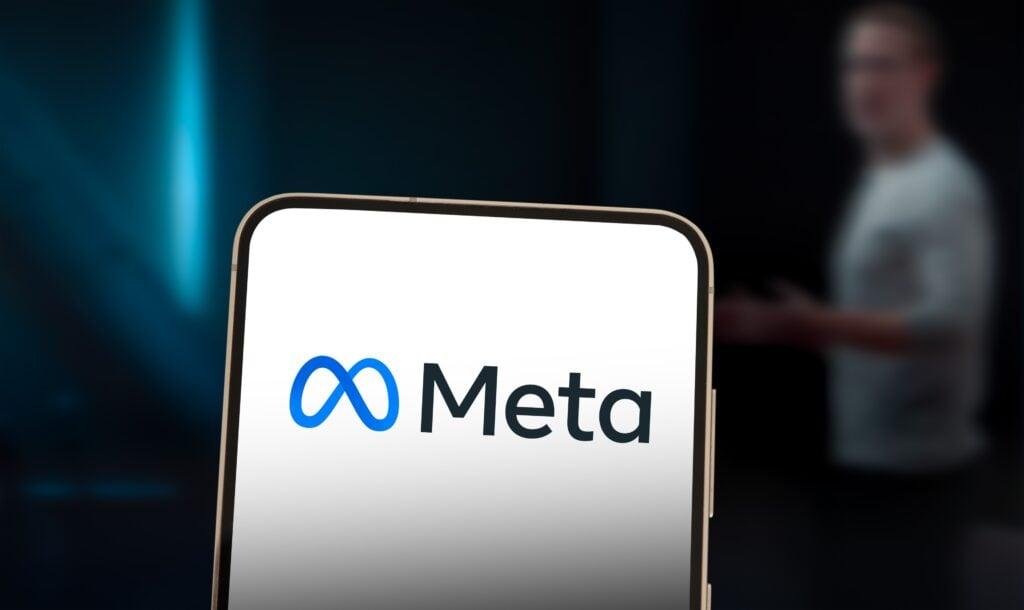
The AI industry is deploying extraordinary financial resources to shape the 2026 midterm elections, with political spending reaching levels that signal how much is at stake for tech giants. Meta is preparing to spend $65 million this year backing AI-friendly politicians, while the AI industry and its allies have already contributed at least $83 million to federal campaigns and committees in 2025 alone
3
. Combined with Meta's state-level push, approximately $150 million is flowing from AI interests into the midterm elections3
.
Source: Benzinga
Meta is launching two new super PACs to join two it has already formed, with "Forge the Future Project" targeting Republicans and "Making Our Tomorrow" focusing on Democrats
1
. This represents the biggest election investment by Meta to date, with initial efforts concentrated on supporting AI-friendly Republicans in Texas and Democrats in Illinois5
. The tech industry lobbying push extends beyond Meta, as Marc Andreessen, Ben Horowitz, and OpenAI co-founder Greg Brockman have contributed $50 million to a new super PAC called "Leading the Future"1
.Battle Lines Form Over AI Regulation and Federal Oversight
The surge in campaign finance reflects deep divisions over who should control AI regulation. Greg Brockman and his wife Anna made four donations totaling $50 million on September 12, 2025, to super PACs backing the AI industry and President Trump
3
. While OpenAI stresses these were personal donations, they align with the company's political strategy of primarily supporting Republicans and the Trump administration. The political spending is broadly expected to benefit Republicans more than Democrats, as Republicans are seen as friendlier to the industry and more opposed to stringent AI regulation3
.President Trump has empowered the federal government to challenge state-level AI regulations, issuing an executive order in December intended to punish states that introduce such legislation
1
. Attorney General Pam Bondi has been directed to establish an AI Litigation Task Force to challenge any state regulations that potentially hinder America's race for global AI dominance1
. This federal pressure creates tension with states seeking to protect citizens from algorithmic bias, data privacy breaches, and security risks.Anthropic Emerges as Counterweight With Pro-Regulation Stance
In a striking departure from industry norms, Anthropic has taken a different approach by backing AI regulation and contributing $20 million to Public First Action, a super PAC supporting tougher oversight
2
. The tech-backed political action committee launched a $300,000 ad campaign targeting New Jersey Representative Josh Gottheimer, Democratic co-chair of the House's new AI commission, urging him to oppose bills that would block state-level AI regulations2
. Brad Carson, co-head of Public First, has raised the super PAC's fundraising goal to $75 million after nearly hitting $50 million2
.
Source: ET
Anthropic's influence on AI policy has made the company politically vulnerable. Administration officials including David Sacks, the White House's AI chief, have criticized Anthropic
2
. Last week, a dispute erupted with the Department of Defense after Anthropic stated it did not want its AI used for mass surveillance of Americans or deployed in autonomous weapons without human guidance, with a person close to Defense Secretary Pete Hegseth indicating the Pentagon was "close" to declaring the startup a "supply chain risk"2
.Related Stories
Data Center Development Sparks Community Opposition Nationwide
The political spending campaign extends beyond federal AI regulation to address growing community opposition to data center development. Research organization Data Center Watch reports that 20 US server farm projects were blocked or delayed amid local opposition during Q2 2025
1
. Communities worry about impacts on electricity bills and water supplies, as data centers consume immense amounts of both resources while creating minimal jobs5
.Meta alone has revealed plans to build multiple multi-gigawatt data centers, including one that would cover much of Manhattan
1
. Brad Carson noted that AI donations to state efforts are "largely to stymie the growing backlash on data centers"3
. The Trump administration has attempted to defuse public backlash through a pact between the datacenter industry and hyperscalers like Microsoft, Google, Amazon, Meta, and OpenAI, establishing principles around energy, water use and community relations1
.Congressional Races Become Testing Ground for AI Industry Influence
The political battle is playing out dramatically in New York's 12th Congressional District, where Alex Bores faces attacks from Think Big PAC, an affiliate of Leading the Future that has spent $1 million targeting him
4
. Bores, a former Palantir data scientist who resigned over the company's work with ICE, sponsored New York's RAISE Act, which requires large AI developers to prevent "critical harm," report safety incidents, and publish AI safety protocols4
. The RAISE Act represents perhaps the most stringent AI law in the country4
.
Source: Seattle Times
Despite industry opposition, Bores has raised hundreds of thousands of dollars from rank-and-file AI employees
4
. Public sentiment supports stricter oversight: in a recent YouGov/Economist poll, 58% of Americans—and 53% of Republicans—said they distrust AI, while almost two-thirds expect AI to decrease available jobs4
. Financial analysts reported last year that massive spending on AI was keeping the US economy out of recession, with datacenter infrastructure and model development providing the only significant growth1
.The surge in local lobbying reflects companies racing to build as much infrastructure as possible before public backlash becomes universal
5
. With comprehensive Federal Election Commission filings available only through 2025, more AI money is clearly arriving, including an additional $50 million pledged by the Brockmans and Andreessen Horowitz to Leading the Future in the first quarter3
.References
Summarized by

Navi
[1]
[4]
Related Stories
Super PACs turn AI regulation into a central campaign topic, spending millions in 2026 midterms
12 Feb 2026•Policy and Regulation

AI Industry Super PAC Targets New York Lawmaker Behind AI Safety Bill
17 Nov 2025•Policy and Regulation

AI Industry Faces Political Battle as Rival Super PACs Prepare for 2026 Midterm Spending War
26 Nov 2025•Policy and Regulation
Recent Highlights
1
AI chatbots validate you too much, making you less kind to others, Stanford study reveals
Science and Research

2
Anthropic's Claude Code Source Leak Reveals Hidden AI Agent Plans and Extensive System Access
Technology

3
Judge blocks Pentagon from branding Anthropic a security risk over AI safety guardrails dispute
Policy and Regulation
Recent Highlights
Today's Top Stories












Your Daily Dose of Curated AI News
Don’t drown in AI news. We cut through the noise - filtering, ranking and summarizing the most important AI news, breakthroughs and research daily. Spend less time searching for the latest in AI and get straight to action.

