AI Industry Faces Political Battle as Rival Super PACs Prepare for 2026 Midterm Spending War


6 Sources
[1]
Fears About A.I. Prompt Talks of Super PACs to Rein In the Industry
Theodore Schleifer writes about the intersection of money, technology and politics. As artificial intelligence companies gain political power and prepare to pour cash into the midterm elections, some of those worried about the dangers of an unfettered A.I. industry are setting out to raise tens of
[2]
Marc Andreessen-Backed Super-PAC Pours Millions Into Fighting State AI Regulations
A pro-AI super PAC is investing millions into creating an AI-friendly regulatory environment in the United States. Called "Leading The Future," the super PAC is backed by venture capital firm Andreessen Horowitz, OpenAI president Greg Brockman, Palantir co-founder Joe Lonsdale, and the AI search
[3]
2 super PACs gear up for a 2026 spending war over AI
Move over crypto: AI looks poised to be the issue that draws major campaign donations in the next election season. With a year to go, AI's battle lines are being drawn for the 2026 midterms. On one side is a nascent network of super PACS that's poised to endorse Republican and Democratic
[4]
Why is the AI industry scared of this Palantir alum running for congress?
As the midterm election primaries inch closer, some candidates are focusing their campaigns on how they'll regulate artificial intelligence. On the right, populist Republicans are warning that the AI industry stands to undermine the Make America Great Again movement. On the left, there's worry
[5]

Former congressmen launch super PACs backing AI safeguards
Two former congressmen announced Tuesday that they are launching a pair of super PACs to back candidates that support AI safeguards as a counterweight to industry-backed groups. Former Reps. Chris Stewart (R-Utah) and Brad Carson (D-Okla.) plan to create separate Republican and Democratic super
[6]

Crypto Won Big in 2024. AI Is Angling to Do the Same in 2026
There's plenty of overlap -- both in strategy and personnel -- in how the industries are working to elect sympathetic lawmakers One week after Donald Trump secured a return to the Oval Office, Marc Andreessen and Ben Horowitz, co-founders of the venture capital firm a16z, recorded a podcast
Share
Copy Link
Two opposing networks of super PACs are gearing up for a major spending battle over AI regulation in the 2026 midterms, with pro-regulation advocates raising $50 million to counter the industry-backed Leading the Future's $100 million war chest.
Political Battle Lines Form Over AI Regulation
The artificial intelligence industry is bracing for an unprecedented political spending war as two rival networks of super PACs prepare to pour over $150 million into the 2026 midterm elections. The battle centers on fundamental questions about how strictly AI should be regulated, with tech industry giants on one side and safety advocates on the other
1
.The conflict mirrors the successful crypto industry campaign strategy that spent $130 million in the 2024 elections, helping secure a Congress more favorable to cryptocurrency interests
3
. Now, AI stakeholders are adopting similar tactics to shape the regulatory landscape for artificial intelligence.Industry-Backed Opposition to Regulation
Leading the charge for the AI industry is Leading the Future, a super PAC that launched in August with an initial war chest of $100 million
2
. The group's funding comes from prominent Silicon Valley figures, including venture capital firm Andreessen Horowitz, OpenAI co-founder Greg Brockman and his family, Palantir co-founder Joe Lonsdale, and AI search company Perplexity1
.
Source: Quartz
The super PAC's strategy extends beyond federal elections to state-level regulatory battles. Its advocacy arm, Build American AI, launched a $10 million campaign this week pushing for "a uniform national approach to AI" that would likely override stricter state-level regulations . The group argues that a patchwork of state regulations stifles innovation and creates an unworkable business environment.
Leading the Future has already identified its first political target: Alex Bores, a Democratic candidate for Congress in New York who co-sponsored the Responsible AI Safety and Education (RAISE) Act
4
. The landmark state legislation requires AI companies to adopt safety measures and has passed all votes, awaiting Governor Kathy Hochul's approval.Pro-Regulation Counter-Movement Emerges
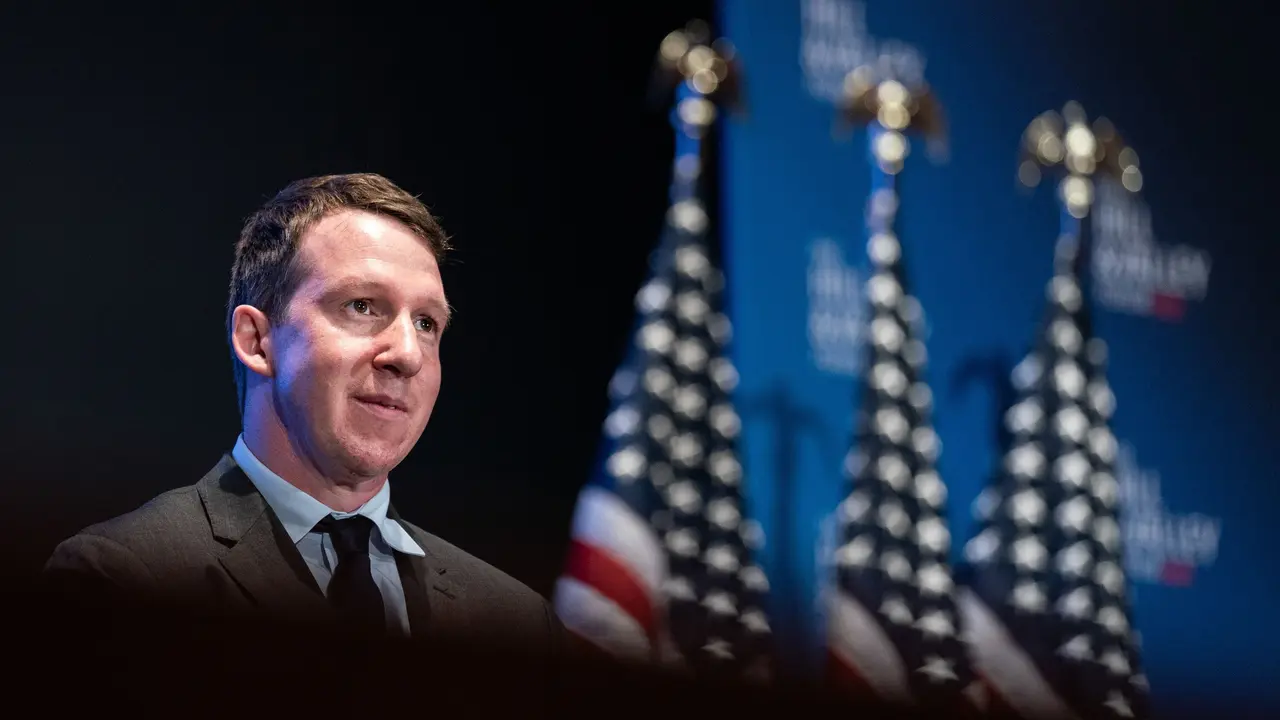
In response to the industry's political mobilization, a counter-network of super PACs is forming to support candidates who favor stronger AI regulations. Led by Brad Carson, a former Democratic congressman from Oklahoma, the effort aims to raise $50 million initially, with hopes of eventually matching the industry's $100 million
5
.
Source: NYT
The pro-regulation network will operate through a 501(c)(4) organization called Public First, which will fund two separate super PACs: Jobs and Democracy PAC for Democratic candidates and Defending Our Values PAC for Republicans
1
. Former Republican congressman Chris Stewart of Utah is co-leading the effort, emphasizing the bipartisan nature of AI safety concerns5
.
Source: The Hill
Significant funding for the pro-regulation effort is expected to come from Anthropic, OpenAI's main startup rival, and its employees. Anthropic was founded by former OpenAI employees who felt their previous company wasn't taking AI safety seriously enough
1
. The company, recently valued at $183 billion, has sometimes clashed with the Trump administration's push for AI acceleration without safety constraints.Related Stories

Federal vs. State Regulatory Authority
The political battle reflects a deeper tension between federal and state approaches to AI regulation. With Congress having failed to pass comprehensive AI legislation, states like New York and California have moved forward with their own regulatory frameworks
2
.President Trump has expressed support for federal preemption, posting on Truth Social that the United States "MUST have one Federal Standard instead of a patchwork of 50 State Regulatory Regimes"
2
. Republican legislators are considering adding a moratorium on state AI laws to must-pass legislation like the National Defense Authorization Act.A draft executive order obtained by WIRED would create an "AI Litigation Task Force" to sue states over AI laws deemed to violate federal authority over interstate commerce and free speech
2
. While Trump hasn't signed this particular order, he did sign "The Genesis Mission" executive order on Monday, outlining plans to use AI for government science initiatives.References
Summarized by

Navi
Related Stories
AI industry floods midterm elections with $150 million as battle over regulation intensifies
19 Feb 2026•Policy and Regulation

AI Super PACs wage $27 million proxy battle over regulation in New York congressional race
17 Jun 2026•Policy and Regulation

AI Industry Super PAC Targets New York Lawmaker Behind AI Safety Bill
17 Nov 2025•Policy and Regulation

Recent Highlights



Recent Highlights
Today's Top Stories



Don’t drown in AI news. We cut through the noise - filtering, ranking and summarizing the most important AI news, breakthroughs and research daily. Follow topics that matter to you and stay ahead.


