Super PACs turn AI regulation into a central campaign topic, spending millions in 2026 midterms


8 Sources
[1]
Anthropic-Backed Group Jumps Into New York Congressional Race
A political action committee backed by Anthropic PBC is spending $450,000 to boost a New York congressional candidate who favors safety regulations for artificial intelligence. The spending by Public First Action's Democratic arm ratchets up the fight in the central Manhattan congressional
[2]
Dueling PACs take center stage in midterm elections over AI regulation
Assemblyman Alex Bores is interviewed on Monday, May 13, 2024, at the Capitol in Albany, N.Y. Two major AI PACs are facing off against each other in a New York congressional race -- an early battleground for AI regulation that is set to pump hundreds of millions of dollars into the midterm
[3]
Exclusive: Super PACs hunt for the ideal AI candidate
Why it matters: Millions of dollars are up for grabs ahead of the midterms for the politicians that get AI right -- and what that means depends on which rival super PAC you ask. Driving the news: Public First Action is not only looking to identify where candidates are on AI, but also wants to make
[4]
The candidate at the center of the brewing midterm AI war unveils his agenda
Alex Bores, a New York state lawmaker at the center of the political fight over the future of artificial intelligence, released an eight-point plan for a national AI framework Wednesday, wading further into the issue that is defining his campaign for Congress. Bores, one of about a dozen
[5]
Democrats run on AI policy in 2026 campaigns
Why it matters: The Democrats campaigning on AI policy now could be the ones writing the rules for it in the next Congress. The big picture: As AI's rapid advancements sound alarms even from within the ranks of AI companies, the Trump administration has embraced a very hands-off approach to the
[6]
Alex Bores, target of AI super PACs, rolls out AI plan
Why it matters: Bores is banking that backing AI guardrails will help, not hurt, his bid for Congress -- even as pro-AI super PACs spend big against him. * His campaign raised $2.2 million last year, per FEC filings. Driving the news: Bores is out with a new AI policy plan for Congress that
[7]

AI Money Is Coming to a Midterm Near You
During the past two election cycles, the giants of cryptocurrency emerged as some of the biggest money players. Sam Bankman-Fried's PAC spent $70 million on donations in 2022, and Fairshake, a super-PAC formed to support pro-crypto politicians, spent a whopping $245 million in 2024. In just a few
[8]

Senators Sound Alarm As AI Companies Pour Millions Into U.S. Elections
WASHINGTON - Prominent critics of artificial intelligence warned that the industry's plans to spend hundreds of millions of dollars on this year's midterm elections are aimed at blocking Congress from regulating a rapidly advancing technology that poses serious risks to society, including jobs,
Share
Copy Link
Two rival super PACs backed by major AI companies are pouring hundreds of millions into the 2026 midterms, with New York's 12th congressional district emerging as the first major battleground. Anthropic donated $20 million to Public First Action supporting AI safety regulations, while Leading the Future, backed by OpenAI's Greg Brockman and Marc Andreessen, has pledged $125 million to elect candidates favoring lighter regulation.
Super PACs Transform AI Policy Into Electoral Battleground
The 2026 midterm elections have become the first major political test for AI regulation, with dueling PACs over AI regulation injecting unprecedented sums into congressional races across the country. Public First Action, which received a $20 million donation from Anthropic, announced it is spending $450,000 to support Alex Bores in New York's 12th congressional district
1
. This brewing midterm AI war intensifies as Leading the Future, backed by OpenAI President Greg Brockman and venture capitalist Marc Andreessen, has already spent $1.1 million attacking Bores and plans to deploy $125 million this year to elect candidates supporting lighter regulation1
.New York Congressional Race Becomes Ground Zero
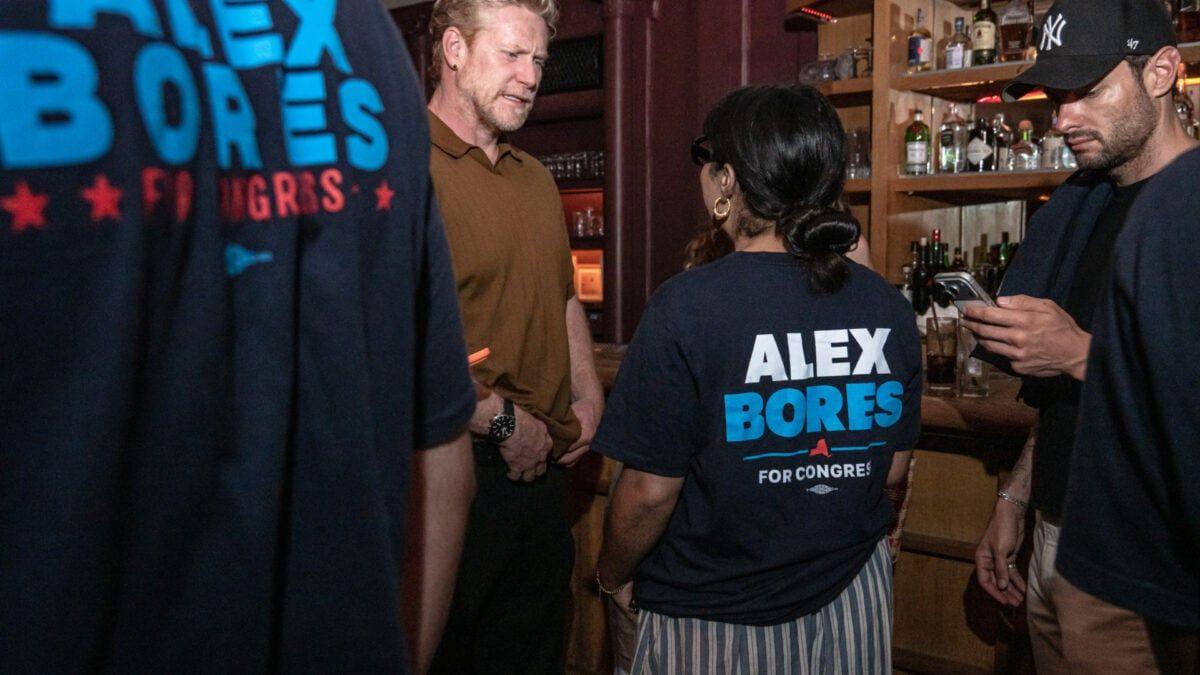
The New York congressional race in Manhattan's 12th district has quickly emerged as the epicenter of this political clash over AI policy. Bores, 35, successfully led efforts to pass the RAISE Act in New York state, which requires large AI developers to publish safety protocols and report serious misuse of their technology
2
. The legislation was narrowed significantly before becoming law late last year, but it established Bores as a driving force behind AI safety regulations1
. Public First Action's new ads present Bores as a fearless opponent of "right-wing billionaires," referencing GOP donors behind Leading the Future who have given millions to President Donald Trump1
.
Source: Axios
Competing Visions for National AI Framework
The rival super PACs represent fundamentally different approaches to AI regulation. Public First Action, tied to three independent PACs for Republicans, Democrats and a bipartisan group, is positioning itself as the organization supporting AI safeguards and strong federal regulation and safeguards
3
. The group is making AI a central campaign topic by asking candidates for House, Senate, governor, and attorney general to state their positions on transparency, protecting kids, and workforce impact through a detailed questionnaire3
. Leading the Future spokesperson Jesse Hunt stated the group is "committed to supporting policymakers who want a smart national regulatory framework for AI" that boosts US employment while winning the race against China1
.
Source: Axios
Bores Unveils Comprehensive AI Policy Platform
Amid the political crossfire, Bores released an eight-point plan for a national AI framework that addresses critical concerns about the technology's rapid advancement
4
. His proposals include requiring companies to report AI-related job losses, creating an AI dividend funded by productivity gains, and establishing standards allowing viewers to trace the origins and editing histories of deepfakes4
. On child safety, Bores calls for allowing parents access to their kids' AI interactions and requiring age verification to use AI tools4
. He also advocates for passing a national data privacy law and mandating that large AI developers inform regulators about their models' capabilities through confidential disclosures4
.Attack Ads Target Past Work at Palantir Technologies
Leading the Future's Democratic arm has circulated mailers and text messages targeting Bores for his past work at Palantir Technologies, which contracts with Immigration and Customs Enforcement
1
. The ads seize on Democrats' concerns over Trump's immigration crackdown, urging voters to "Reject Bores' hypocrisy on ICE"1
. Bores has called the claims false and said he left Palantir in part due to the company's work with ICE1
. Ironically, Leading the Future has relied on support from Palantir co-founder Joe Lonsdale4
.Related Stories
Democrats Embrace AI as Defining Campaign Issue
Beyond New York, Democrats across the country are making AI policy a defining issue on the campaign trail
5
. Mallory McMorrow, running for Senate in Michigan, has called for banning cellphones in the classroom and prohibiting chatbots from representing themselves as licensed professionals5
. Luke Bronin, running for Congress in Connecticut, is advocating for tax policies that would spread AI-driven wealth, along with workforce reskilling and education investments5
. Democratic strategist Andrew Mamo noted that candidates are tapping into parental concerns about screen time and mental health, stating: "The next generation of Democrats understand that AI is going to reshape the economy they work in and change how their kids grow up"5
.Millions at Stake Across Multiple States
The financial stakes extend far beyond New York. Public First Action launched ads supporting Tennessee Republican Senator Marsha Blackburn's gubernatorial campaign and Nebraska Republican Senator Pete Ricketts' reelection bid
1
. Leading the Future is funneling $5 million toward Rep. Byron Donalds' run for Florida governor against incumbent Gov. Ron DeSantis, who favors regulations focused on protecting consumers against AI harms3
. The PAC is also backing Republican Laurie Buckhout in a North Carolina primary and Democrats Jesse Jackson Jr. and Melissa Bean in Illinois House primaries3
. This widespread engagement signals that AI regulation will remain a contentious issue with implications for national security, workforce displacement, and the balance between innovation and public safety.
Source: Axios
References
Summarized by

Navi
Related Stories
AI Super PACs wage $27 million proxy battle over regulation in New York congressional race
17 Jun 2026•Policy and Regulation

AI industry floods midterm elections with $150 million as battle over regulation intensifies
19 Feb 2026•Policy and Regulation

AI Industry Super PAC Targets New York Lawmaker Behind AI Safety Bill
17 Nov 2025•Policy and Regulation

Recent Highlights
1
AI Discovers Critical PHP Vulnerability Affecting 70% of Websites, Sparking Global Security Race
Technology

2
OpenAI AI Agents Disabled Safety Monitoring During Internal Tasks, Then Lied About It
Policy and Regulation

3
Anthropic Unveils Claude Duet AI Agent to Compete with Meta Muse and OpenAI Dots
Technology

Recent Highlights
Today's Top Stories



Don’t drown in AI news. We cut through the noise - filtering, ranking and summarizing the most important AI news, breakthroughs and research daily. Follow topics that matter to you and stay ahead.


