AI Becomes Political Wedge Issue as MAGA Base Splits from Trump's Tech Agenda


4 Sources
4 Sources
[1]
AI becomes a political wedge issue, creating odd bedfellows across parties
Florida's Republican Gov. Ron DeSantis and Rep. Alexandria Ocasio-Cortez, D-N.Y., have both been critical of rapid AI development.Getty Images Artificial intelligence is increasingly emerging as a key wedge issue -- not between the major political parties, but within them. On the right, MAGA populists and influencers are warning about the potential hazards of unrestricted AI development as President Donald Trump, Vice President JD Vance and their administration have pushed for minimal regulations in the name of beating China to potential society-altering advancements. On the left, progressives are fighting against potential AI-fueled job losses and a further consolidation of financial power by Big Tech as center-left Democrats weigh the unknown downsides of technological advancement with major investments in their states and a need to stay competitive in a rapidly changing global economy. Potential 2028 presidential contenders -- from Vance and Missouri Sen. Josh Hawley on the right, to California Gov. Gavin Newsom and New York Rep. Alexandria Ocasio-Cortez on the left -- are all carving out unique lanes on the issue, creating some unusual bedfellows. Ocasio-Cortez is among the potential 2028 candidates who have highlighted growing concerns in recent weeks. Last month, she raised the potential for a market downturn fueled by what some are calling an AI bubble, warning at a congressional hearing of "2008-style threats to economic stability." Sen. Chris Murphy, D-Conn., said in September that he fears "our democracy and many others could frankly collapse under the weight of both the economic and the spiritual impacts of advanced AI." And Florida Gov. Ron DeSantis noted at the Florida Rural Economic Development Summit last month that AI could undercut white-collar jobs. "I don't think that's a good thing," he said, adding, "It's one of the reasons why I don't think we should be subsidizing it. Why would we subsidize something that could potentially cause problems for folks?" Meanwhile, some of the Democratic governors who are on the shortlist of 2028 contenders have taken a different approach. Newsom, who has embraced the use of AI-generated imagery in his monthslong effort to troll Trump and governs the state that's home to Silicon Valley, has signed several AI regulations into law while vetoing others. He's called for balancing the need for regulation with "ensuring that the growing AI industry continues to thrive." Others, such as Pennsylvania Gov. Josh Shapiro and Michigan Gov. Gretchen Whitmer, who align with the party's center-left wing, have hailed AI and data center investments in their states. "We are already all in on AI," Shapiro said in June, announcing Amazon's $20 billion AI investment in his state, adding that Pennsylvania demonstrates "what a united front looks like to win the battle of AI supremacy." Josh Orton, president of the progressive advocacy group Demand Justice, who was an aide to Sen. Bernie Sanders, I-Vt., and then-Vice President Kamala Harris, said his sense is that "most working people" will view AI as a threat. "Any candidate who doesn't understand that will seem wildly out of touch," Orton said. "Without question, you are going to see candidates propose policies from the perspective of people being more afraid of its repercussions than excited about its potential." "There will be presidential candidates hungry for tech money who will make policy proposals about how AI is wonderful and amazing -- to woo donors," he continued. Steve Bannon, a former Trump White House adviser and prominent MAGA media personality, has ramped up his focus on the issue in recent weeks, describing the fight for the right's future as between "broligarchs" in the tech industry and the populist movement he champions. "They have to be confronted," Bannon said in an interview of AI companies. "They're totally out of control." He called for more guardrails to be put in place for AI in the U.S., saying "it takes more regulation to open a nail salon on Capitol Hill" than exists to constrain AI. "You have no idea where these things are going to end up," Bannon added. "No idea. Maybe the most dangerous thing we're dealing with right now." Multiple AI-related fights are heating up at the moment. State and federal lawmakers are trying to quickly ensure child safeguards around AI as devastating stories emerge linking chatbots to instances of suicide and self-harm. Grassroots opposition to the rapid proliferation of AI data centers -- a core element of the Trump economic agenda -- is intensifying as state lawmakers deal with constituents who are worried about electricity bill hikes that are in part tied to the energy-hungry complexes. And perhaps the biggest fight of all is one the president and AI proponents have further fueled in recent days, with the White House having drafted an executive order that, if signed, would challenge states' rights to regulate AI. Faiz Shakir, a Democratic strategist and the top aide to Sanders' 2020 presidential campaign, pointed to rising grassroots anger over data centers as an entry point for voter distaste for AI development. "The grassroots movement is going on organically, and it is not being matched by political leadership," he said. Sen. Jon Husted, R-Ohio -- who has worked on several pieces of AI-related legislation, including the bipartisan Recommending Artificial Intelligence Standards in Education, or RAISE Act, which he introduced with Sen. Lisa Blunt Rochester, D-Del. -- said he sees opportunity in AI. Husted, who was appointed to fill Vance's Senate seat and faces a tough special election next year, said he recognizes potential pitfalls, from children being exposed to harmful content from AI chatbots to consumers falling victim to deceptive products and practices. "I'm trying to lean in on the upside but also put protections in place so that we're not being abused," Husted said, also acknowledging the "anxieties" that workers have about AI rendering their jobs obsolete, describing it as a tension point. "We want progress, but we don't want anything to change. That's at the center of our human spirit. We like things the way they are, but we also want to win." Super PACs and other interest groups focused on promoting AI have started to emerge, backed by millions of dollars from deep-pocketed donors who are likely to ramp up spending as elections near. That includes Leading the Future, a new super PAC backed by $100 million from venture capital giant Andreessen Horowitz, a co-founder of OpenAI and a co-founder of Palantir, and two new super PACs led by former Reps. Chris Stewart, R-Utah, and Brad Carson, D-Okla., which will support candidates "committed to defending the public interest against those who aim to buy their way out of sensible AI regulation," per a release. So far, the super PAC making the most noise is Leading the Future, which now seeks to boost candidates who support a national AI framework -- federal regulations that would pre-empt any new state laws. The group recently announced the first candidate it will fight against: Alex Bores, a candidate in a deeply contested Democratic primary in New York's 12th Congressional District who has championed AI safety legislation. "This is going to be a major issue this year and going into next year," Josh Vlasto, a top official at the super PAC and former aide to Senate Minority Leader Chuck Schumer, D-N.Y., said. "It's front of mind for voters and for businesses and for parents and families." A Democratic operative close to multiple potential 2028 presidential candidates, who was granted anonymity to speak candidly, said party leaders are having active discussions about where to come down on the matter. One approach is to "just go all in against it and say these tech oligarchs are bad, they don't care about you, this is a disaster, they're coming for your communities," ahead of the upcoming midterm and presidential elections. "Or do you try to win over tech and say, 'Stay on the sideline, just shut up, we need to put a couple rules in place,'" this person continued. "Just shut the f--- up and work with us here." Some of Trump's early moves in office, including his administration's AI Action Plan, were unveiled with the goal of rapidly accelerating AI, an industry that has accounted for most of the gross domestic product growth in the U.S. during his first year back in office. In recent days, Trump has ramped up his own advocacy. In addition to the executive order that has been drafted to target state regulations, Trump signed a separate order launching "Genesis Mission," which is aimed at supercharging American AI research, development and scientific applications. "Investment in AI is helping to make the U.S. Economy the 'HOTTEST' in the World, but overregulation by the States is threatening to undermine this Major Growth 'Engine,'' Trump posted on his Truth Social platform last month, adding, "We MUST have one Federal Standard instead of a patchwork of 50 State Regulatory Regimes. If we don't, then China will easily catch us in the AI race." Republican Rep. Gabe Evans, a former U.S. Army officer who represents a key swing district in Colorado, said in an interview that voters need to understand how important it is for the U.S. to reach these AI milestones before China. "What I tell people is, whether you love it or hate it, AI is here," Evans said, adding, "If you're nervous about AI, you need to be exponentially more nervous about communist AI controlled by the Chinese." As with many policy debates, Trump is dictating the terms -- and his effort to ensure the tech giants are unencumbered by red tape has come as those same companies have sought to curry favor with his administration while announcing historic AI investments in the U.S. For Vance, the early front-runner for the 2028 GOP presidential nomination, the administration's advocacy is setting the stage for AI policy to be a major inflection point for his potential campaign. He already represents something of a bridge between two worlds: the lower-income, working-class world of his childhood in Middletown, Ohio, and the high-tech, big-money world of Silicon Valley, where he worked as a venture capitalist. Those potentially dueling interests were on display in Vance's February speech at the Artificial Intelligence Action Summit in Paris. There, the vice president heralded AI largely as an opportunity to be embraced -- not feared or overregulated. More recently, Vance tackled the issue during a Fox News interview in which he linked his pro-AI stance to his anti-immigration views. Using home construction as an example, Vance described robots as complementary to "blue-collar" workers and immigrant laborers as an outright threat to replace them on job sites. "[I]f you use technology and you empower the blue-collar workers rather than replace them with foreign labor, I think they're going to do way better," Vance said. A longtime Trump-aligned operative, speaking on the condition of anonymity, noted long-standing bipartisan buy-in on the need to win the AI race over China. This person sees a divide between the Trump administration's advocacy for AI advancement and a "populist, socialist" wing of the Democratic Party "that wants to use fears of AI job loss as a means to get votes." This person recalled similar job loss fears around the birth of the internet that ultimately did not materialize -- an argument that could hold weight for Vance, who this person described as holding "pro-AI views," in a future campaign. "That could be a fault line between the two parties in 2028," this person said. But even among MAGA allies, there is no consensus on how to move forward on AI. Ryan Girdusky, a conservative consultant who helped run a super PAC that backed Vance's 2022 Senate campaign in Ohio, described AI as his "big fear" for Republicans who could suffer at the ballot box if they are unable to stave off AI-related job losses. "I think that they should try to do whatever they can to make the change to AI a little less dramatic," Girdusky said. "That's what's going to feed the AOC presidential run of 2028. She'll be talking about AI, and Republicans will still be like, 'Well, you never know. We can still grow our way out of the deficit.'"
[2]
The surprising issue driving a wedge between Trump and his MAGA base
SAN FRANCISCO - President Donald Trump faces an unexpected rift in the MAGA movement as Republican officials from statehouses to Capitol Hill warn his full-throated embrace of the tech industry's artificial intelligence boom risks undermining Americans' economic security and exposing their children to new harms. Trump has appointed influential tech investors and entrepreneurs to key positions in his administration and backed the sector's ambitions for AI, scrapping regulations introduced by President Joe Biden and facilitating huge investments from foreign companies and governments into American AI firms. This past week, the White House explored using an executive order to quash state regulation on AI. The president has trumpeted the billions of dollars in investments flooding into the technology, which has propped up U.S. economic growth this year, as evidence his plan to reboot the American economy is working. But a growing cohort of Republicans - including Govs. Ron DeSantis of Florida and Sarah Huckabee Sanders of Arkansas and prominent members of Congress like Sen. Josh Hawley of Missouri - argue AI's breakneck growth could undermine the party's populist appeal. Some have called for regulation to protect Americans against job losses driven by automation, shield teenagers from harms caused by chatbots, and curb spikes in utility bills linked to the energy-guzzling data centers that power AI technology. The division underscores a fault line in Trump's coalition, which has attempted to serve the working-class voters who propelled him to office while also backing the ambitions of tech and business leaders who have become close allies and advisers in the president's second term. Those interests are increasingly at odds, as AI money floods the economy while many voters find their everyday costs remain high - creating tensions that Trump's economic message has struggled to reconcile at times. Americans broadly disapprove of how the president is handling his second term, according to a Washington Post-ABC News-Ipsos poll this month. "We're coming up on an incredible time of innovation," said Angela Paxton, a Republican state senator in Texas who helped pass a ban this year on using AI to create sexually explicit content featuring children. "At the same time, I think the job landscape is going to change a lot, and I think a lot of people are asking themselves, 'What does that mean for me and my family?'" A White House spokesperson declined to comment for this article. Expectations that AI tools such as ChatGPT will deliver a productivity boost across the economy have propelled tech stocks and market indexes to record highs in recent months. But many Americans are uneasy with AI's growing role in the U.S. economy and their lives. Half of U.S. adults say they're more concerned than excited about the increased presence of AI in daily life, according to a Pew Research Center study conducted in June. Only 37 percent said they were more concerned than excited in 2021. A Yale study released last month concluded that there was not discernible evidence AI was disrupting the labor market. But prominent CEOs, including at Walmart and Amazon, have warned workers to expect their roles to be transformed or eliminated by AI, and there are signs the labor market is slowing. Biden also endorsed the U.S. tech industry's development of AI but sought to contain its potential downsides. In a sweeping 2023 executive order, he directed federal agencies to adopt the technology but also required tech companies to share data from safety tests on powerful AI systems with the government. The policy was unpopular with many in the tech industry, with some citing it among their reasons for throwing their support or money behind Trump's reelection bid last year. He wasted no time in delivering for the industry, repealing Biden's AI executive order on the first day of his second term. Trump's laissez-faire approach to AI has contrasted with developments outside Washington. AI laws have been proposed in every state and enacted in many, both red and blue. Laws include whistleblower protections for AI workers in California, a ban on governments using AI to decide who gets welfare benefits in Texas and an Ohio provision banning people from attempting to marry an AI system. Support for the state laws has often been bipartisan, and federal Democrats have also begun speaking out about the risks of AI. Sen. Mark Kelly (D-Arizona) has proposed using the proceeds from a new tax on AI company profits to retrain people who lose jobs to automation. Left-wing lawmakers like Sen. Bernie Sanders (I-Vermont) and Rep. Alexandria Ocasio-Cortez (D-New York) have said AI will increase wealth inequality as tech companies take over more of the economy. "What you do about tech is not something that's uniform among their coalition or among ours," Rep. Sara Jacobs (D-California) said of the uptick of Republican calls to regulate AI. "The political spectrum is sometimes a circle," said Jacobs, who is vice chair of the New Democrat Coalition's AI working group. Republicans opposed to Trump's staunch support of the AI industry argue that it risks putting him at odds with his grassroots supporters. "Right now, he's getting pressure from this small cabal of tech bros that stand to make hundreds of billions of dollars if they have their way," said Brendan Steinhauser, a longtime conservative political strategist who, after seeing AI's pervasiveness, became CEO of the Alliance for Secure AI, a group seeking guardrails for the technology. "That's not his base; MAGA is his base, and MAGA is not for this." Republican division over AI came to a head last week after Trump and his administration urged Congress to pass a bill preempting state laws on the technology, even if doing so required adding it to a defense appropriations measure. It was a reprisal of an attempt by Sen. Ted Cruz (R-Texas) to pass a "moratorium" on state AI laws over the summer, which failed in the Senate after other Republicans backed out. As public opposition to the renewed push for preemption grew this past week, the White House floated an executive order that would direct the Justice Department to sue states that passed AI laws. "Investment in AI is helping to make the U.S. Economy the 'HOTTEST' in the World, but overregulation by the States is threatening to undermine this Major Growth Engine," Trump wrote on social media Tuesday. Republican politicians at the state and federal level joined conservative activists and media figures to push back on the proposals, saying preemption would be a gift to the tech industry that is out of step with voters' concerns. At a Friday news conference in Crystal River, Florida, DeSantis compared the attempt to block state AI laws to efforts to mandate masks during the coronavirus pandemic. "Your freedom can also be undermined by these massive companies that have hugely concentrated power over our society," he said. DeSantis promised to unveil a "robust package" of state AI policies and referenced fears that the current excitement about AI may lead to a financial slump if the technology doesn't work out as promised. He has previously spoken of his concerns that AI may displace workers. Sanders and Utah's Republican governor, Spencer Cox, also spoke out against the Trump and White House proposals to limit states from passing AI laws. "We already made the mistake of allowing social media companies to destroy our children's mental health and tear our country apart. Let's not do it again," Cox wrote in a post on X. Several families have filed lawsuits against chatbot developers this year, alleging AI apps led their teens to develop mental health problems or even take their own lives. Paxton, the Texas state senator, said voters increasingly raise concerns about AI and expect her and other state lawmakers to act. "What the general population doesn't want is for states to be handcuffed in our ability to address ... real harms that are happening," Paxton said. "This movement to preemption would obliterate the important work we've done and create a wild, wild West." Paxton said she plans to work on more Texas bills related to AI and child safety. Trump has embraced the AI industry since the first full day of his second term, when he hosted tech moguls including ChatGPT-maker OpenAI's chief executive, Sam Altman, at the White House to announce plans to spend hundreds of billions of dollars on new data centers in the United States. (The Post has a content partnership with OpenAI.) The president's top tech adviser is his AI and crypto czar, David Sacks, an influential investor who has described himself as a bridge between Silicon Valley and Trump's Washington. A parade of tech leaders have visited the White House this year, bearing gifts for Trump and announcing plans to invest hundreds of billions of dollars into AI. Trump and his administration have supported the AI industry by lifting restrictions on chip exports, moving to fast-track data center construction and giving a $1 billion loan guarantee to the company restarting the Three Mile Island nuclear plant to supply electricity to Microsoft data centers. Tech industry leaders have argued massive investment in AI technology will pay off by creating thousands of jobs, helping the U.S. compete with China and eventually delivering transformative breakthroughs in medicine and science. Steinhauser, the conservative strategist, said Trump voters can see through the sometimes hazy predictions of future benefits made by some tech executives. Elon Musk predicted last week that his company Tesla's future humanoid robots will "eliminate poverty." Some are "promising utopia," Steinhauser said. "I don't think people are buying that."
[3]
Inside MAGA's growing fight to stop Trump's AI revolution
Steve Bannon is warning the issue could cost Republicans in 2026 and 2028 Last week, President Donald Trump took the stage at the United States-Saudi Investment Forum, where he touted his administration's efforts to supercharge artificial intelligence in the United States. Trump said he was proud to have "ended the ridiculous Biden-era restrictions" and vowed to "build the largest, most powerful, most innovative AI ecosystem in the world." But as Trump stood there boasting of his administration's extensive agenda for AI -- which he has previously described as "one of the most important technological revolutions in the history of the world" -- some of his most loyal supporters within the MAGA base were denouncing his effort to accelerate the AI revolution. Over on Steve Bannon's show, War Room -- the influential podcast that's emerged as the tip of the spear of the MAGA movement -- Trump's longtime ally unloaded on the efforts behind accelerating AI, calling it likely "the most dangerous technology in the history of mankind." "I'm a capitalist," Bannon said on his show Wednesday. "This is not capitalism. This is corporatism and crony capitalism." Bannon blasted legislators and industry leaders over the lack of regulation regarding AI, the next-generation computer technology capable of performing human-like reasoning and decision-making that's already available in offerings ranging from virtual assistants to self-driving cars. Bannon would go on to dedicate the rest of the week's shows to sounding the alarm over reports that Trump was considering an executive order that would overrule state laws regulating AI. "You have more restrictions on starting a nail salon on Capitol Hill or to have your hair braided, then you have on the most dangerous technologies in the history of mankind," Bannon told his listeners. 'The greatest crisis we face' For years Bannon was one of the few voices on the right railing against the perceived threat of unchecked artificial intelligence and big tech -- but as President Trump barrels toward supercharging the technology in the United States, empowering tech billionaires and signing off on a massive expansion of the industry in the coming years, a growing list of some of the most influential voices in Trump's MAGA movement are voicing deep concerns in what could indicate a fundamental fracture within the broad coalition that swept Trump into office in 2024. The rift underscores the sheer number of competing forces now working to shape the administration's approach to AI, from Bannon, who was Trump's 2016 campaign chief, to Elon Musk, his one-time DOGE lead and top donor, to AI CEOs like Sam Altman, to David Sacks, who Trump has established as his own AI czar inside the administration. "History will know us for this," Bannon said in an interview with ABC News. "Even more than the age of Trump, [the MAGA base] will be known for this. So we've got to get it right." For voices like Bannon, the brewing battle over AI will be the political fight that defines not only the MAGA base moving forward, but potentially shapes the 2026 midterms, the 2028 presidential election, and beyond. On one side of the issue stand the tech billionaires and Silicon Valley executives who poured millions into Trump's campaign, some of whom now occupy influential positions in his administration and out, and have continued to push for rapid AI development with minimal regulation, often stressing the need to maintain national security and economic competitiveness and to beat China in the so-called AI race. "We have to embrace that opportunity, to be more productive," Sacks argued at a White House event in June were he said AI technology would promote innovation across the economy. "Our workers need to know how to use AI and be creative with it." On the other side stand popular MAGA voices who are increasingly sounding the alarm on their concern that AI technology will eliminate jobs and reshape American society. "AI is probably the greatest crisis we face as a species right now but it isn't being addressed with any urgency at all," popular conservative podcaster for Daily Wire Matt Walsh said in a post on X last week. "We're just sleepwalking into our dystopian future." Tucker Carlson in October released a nearly 2-hour podcast that critically looked at the rise of AI, comparing it to occult and discussed how AI could lead to the "mark of the beast," a reference to Bible verses in the book of Revelation. Sens. Josh Hawley, a Missouri Republican, and Marsha Blackburn, a Republican from Tennessee, have emerged as prominent elected officials sounding alarms about AI, introducing legislation to restrict AI's use in critical decisions affecting Americans' lives, from loan approvals to medical diagnoses. Hawley argues that without aggressive intervention, AI will concentrate power in the hands of a few tech companies while decimating the working class. 'Tech bros' vs. the working class Some of the president's most loyal supporters are increasingly seeing artificial intelligence as a sweeping transfer of wealth and control to tech titans like Musk, Mark Zuckerberg, and Peter Thiel, who have drawn the ire of large parts of the president's base. From what Bannon has observed on the ground level, the MAGA base has grown more and more concerned about the country marching toward an AI takeover, with fears mounting on the right about working people losing their jobs, and the lack of proper regulation or reforms in place to protect those workers. Some experts have predicted AI will reshape large swaths of the American economy, particularly impacting entry-level work as recent college graduates enter the job market. Dario Amodei, CEO of Anthropic, which created an AI model called Claude, told Axios earlier this year that technology could cut U.S. entry-level jobs by half within five years. "The technology is advancing without regulation," Bannon said, predicting a coming "jobs apocalypse" that would hurt working people, many of which, he points out, are Trump supporters. The sentiment runs deep in the MAGA base. By Bannon's estimate, an overwhelming majority among rank-and-file Trump supporters has grown to loathe the push behind AI, taking issue with the lack of regulations and the close relationship AI tech companies and CEOs have built with the president. There is, Bannon argues, "a deeper loathing in MAGA for these tech bros than there is for the radical left, because they realize that radical left is not that powerful." "[The MAGA base] see all these tech oligarchs that tried to suppress their voices ... and then all of a sudden being the President's new best friends. They just don't buy it," Bannon said. The War Room host plans to make combating AI his main focus in the coming months and years ahead, he told ABC News, and is working to build a coalition on the right, from the bottom up, to challenge the surge of artificial intelligence in time to save his movement, from not only the jobs he says will ultimately cripple the working-class American, but to try and retain the base of support the president built in 2024. "I will get 100 times more focused on this," Bannon said. "We are going to turbo-charge this issue. This is the issue before us." 'This is where we're going to lead the resistance' A key player in Bannon's mission to take on AI in the coming years is Joe Allen, his show's resident AI expert, who regularly appears to deliver searing rebukes to the War Room audience, which Bannon says have become some of the most popular segments. Bannon didn't find Allen as his MAGA crusader against artificial intelligence at a think tank or on Capitol Hill -- but instead at a concert venue. Allen, whose official title is "transhumanist editor" for the War Room, previously worked as a touring rigger, spending his days hoisting massive light and speaker setups for musical acts ranging from Rascal Flatts to the Black Eyed Peas, calculating weight loads, securing speaker arrays, then breaking it all down to head to the next city. At night, he was devoted to deep research into AI and transhumanism, publishing his writings in conservative outlets like the Federalist. In 2021, Bannon reached out to Allen after coming across his work, and invited him on his show before quickly offering him a permanent role as the show's AI expert. Since then, with help from Bannon, Allen has published a book in 2023 critiquing superintelligence titled "Dark Aeon: Transhumanism and the War Against Humanity" and has become an emerging voice on the right sounding the alarm against AI. Bannon grew so reliant on Allen's work that earlier this year he insisted he relocate to Washington, D.C., full-time, having him work out of Bannon's so-called "Embassy" as a base of operations. "I can't have you in Knoxville or out in Montana," Bannon said he told Allen. "This is where it's happening, and this is where we're going to lead the resistance." While Bannon often frames his opposition to AI in economic and political terms, Allen's critique at times focuses more toward the philosophical and spiritual. He argues that AI is not merely a tool that will lead to job displacement, but sees it as a force that will reshape humanity itself -- intellectually, socially, and perhaps most importantly in his mind, in ways that threaten the soul. "People are being trained to see AI as the source of authority on what is and isn't real," Allen told ABC News in an interview. "In every case, you have zealous leaders who are counseling their followers to eliminate themselves for the sake of an alien intelligence. Same energy as [Heaven's Gate]," he said, comparing the push to the deadly cult. Allen warns of what he calls the "inverse singularity," a future where human intelligence collapses as people grow dependent on machines that "decide what is and isn't real." He speaks about a coming "transhumanism" future that he feels the likes of Elon Musk and other tech titans are looking to bring about with the merging of humans with "the Machine," which he sees as "anti-human" and threatens humanity's existence. And leading voices like Musk, who recently said he believed one day humans would be able to upload their consciousness into his AI powered Optimus robot, have made clear they see the technology is heading in that direction. "Long term, the Al's going to be in charge, to be totally frank, not humans. So we need to make sure it's friendly," Musk, who himself has at times has warned of the perils of AI, said at a recent Tesla all-hands event. To spread the warning, Allen has taken his message on the road, traveling the country giving lectures at churches, conservative conferences, and MAGA gatherings, working to convince everyday Americans of the dangers of AI technology Bannon sees Allen as a key force in his mission to galvanize the MAGA base from the ground up, to spread the warning about AI and big tech and to build enough support among the grassroots voices around the country to challenge the AI push. "He's going to every conference possible, meeting people ... and I told him, I want you to go to every church that asks you. I want you to go to churches. I want you to go to MAGA, Tea Party meetings. I want to get the base in the loop on this at the ground floor," Bannon said. "And I want them to take ownership. They took ownership in 2021 with President Trump's comeback. If they take ownership here, we literally can't be beaten." "It's their fight, and the only way we win this is with them," he said. Taking on Congress Perhaps the movement's biggest win yet was over the summer when an insurgent team including Bannon, Mike Davis, and others worked publicly and behind the scenes to kill the inclusion of a proposed 10-year moratorium on state-level AI regulation as part of President Trump's major legislative package known as the "One Big Beautiful Bill." Meanwhile, some of the large tech giants behind AI products have started to take notice and have begun reaching out privately to influential voices in MAGA world to try and smooth out the anti-AI sentiment, sources tell ABC News. But the anti-AI movement on the right faces formidable opposition. The Trump administration remains committed to accelerating AI projects nationwide, and the president's closest advisers on technology -- the very people Bannon and his allies are fighting against -- hold positions in the administration and have his ear. Chief among them is Sacks, the venture capitalist and podcaster who serves as both Trump's crypto and AI czar. Sacks has become one of the most influential voices in the administration on technology policy, arguing that American dominance in AI is essential to national security and economic competitiveness, particularly when it comes to beating China. Sacks has compared the United States' pursuit of AI domination to the space race that saw the United States land a man on the moon -- arguing the AI race is "even more important." In an interview following Trump's address at AI summit in July, Sacks said, "I think it was the most important technology speech by an American president since President Kennedy declared that we had to win the space race." Sacks and other tech leaders in Trump's orbit frame the debate in stark terms: Either America moves fast on AI development, or China will dominate the technology that shapes the future. "If the U.S. leads, continues to lead in AI, we will be, we'll remain the most powerful country, but if we don't, we could fall behind our global competitors like China, and I think President Trump laid out a plan for winning this AI race," Sacks said. But to voices in the MAGA movement like Bannon, Sacks is the embodiment of everything wrong with the AI push. Bannon told ABC News that Sacks is the most articulate -- and therefore "most dangerous" -- spokesman for what he calls the "accelerationists," big tech voices pushing rapid, unregulated advancement of artificial intelligence. A few weeks ago, Allen said he gave a lecture that he felt had gone "disastrously." He said he could feel his message failing to connect -- that as he delivered his theological and analytical critiques warning of the emerging AI plague, many of the students' faces were glowing with the light of their phones. "Even while I'm discussing, hey, one of the big problems is that you're hypnotized by your devices ... a couple of people looked up from their phones with a quizzical look," he recalled. But he said that as he was packing up his things, one student walked up to him and made the whole trip worth it. Allen said she told him she agreed with much of what he had -- and she felt her growth as a student was being stifled as everyone around her, all her classmates, relied more and more on AI to write their papers and complete their projects. "How am I supposed to compete if I am being the kind of student that has always succeeded in the past, and people cheating are going to get ahead?" Allen said she asked him. Allen said he couldn't deny it was a tough question. She was correct. "In the near term, many of these cheaters will outperform you on a numerical level," Allen said he told her. "But," Allen said, "long term, the depth of character and the type of human being you become from studying and creating from your own soul -- you're going to win. Maybe not economically in the near term, but you're going to win."
[4]
MAGA Republicans Side With Progressives On Key Issue
WASHINGTON -- The populist wing of the Republican Party is beginning to worry that its embrace of artificial intelligence and efforts to shield the tech industry from regulation could backfire, leading to massive job losses that will empower billionaires over the working class. The warnings from prominent voices within the MAGA world about AI adoption are coming as President Donald Trump works to aggressively expand the industry in a high-stakes race against China. The president this week ordered the nation's science agencies to deploy AI as part of a broader government-wide effort to remove regulatory barriers for the industry. His administration is also reportedly considering issuing a controversial executive order that would restrict individual states that are tired of waiting on Congress to act from regulating AI. "I don't think we are doing enough to protect workers," Sen. Josh Hawley (R-Mo.), who opposes a moratorium on state regulation, said in an interview with HuffPost. "We need to do more because I'm confident Silicon Valley will get rich from this... But what about blue-collar workers in my state?" Steve Bannon, Trump's MAGA whisperer and longtime ally, went so far as to calling AI the likely "most dangerous technology in the history of mankind." "I'm a capitalist," Bannon said last week on his show, "The War Room." "This is not capitalism. This is corporatism and crony capitalism." He later told ABC News that without appropriate safeguards, AI could lead to a "jobs apocalypse" that would hurt working people, including many Trump supporters. Some MAGA Republicans are also uncomfortable with the construction of huge data centers that power AI or the idea of blocking states from regulating the industry, opposing the Trump administration's efforts to include it in major legislation this year. "Banning states from regulating AI for 10 years is a gift to Big Tech and a disaster for American workers and states' rights," Rep. Marjorie Taylor Greene (R-Ga.), who is retiring in January, said after a moratorium on state regulation was dropped from Trump's Big Beautiful Bill earlier this year. On this issue, MAGA populists are strikingly aligned with progressive critics of AI. Sen. Bernie Sanders (I-Vt.) has spent months warning the public about the potential dangers of artificial intelligence and robotics, noting that the wealthiest people of the world like Elon Musk, Larry Ellison, Mark Zuckerberg and Jeff Bezos stand to benefit the most by relying on automation -- at the expense of working-class people whose jobs it may replace. "It will mean even more wealth and even more political power for these guys at the top, while our democracy gets weaker and weaker. Working people will see a significant decline in their standard of living unless we turn this around," Sanders told NBC News. Several tech companies in recent weeks have announced mass layoffs, prompting dual concerns from economists that the U.S. could be entering a recession and that AI has already become so useful it's making workers superfluous. Dean Baker, senior economist with the progressive Center for Economic and Policy Research, has pointed out the tech sector layoffs are relatively small next to the regular churn of the labor market, which typically sees more than a million layoffs per month even in good times. "The concern of mass unemployment, it seems kind of nuts," Baker told HuffPost. Baker noted that if AI increased worker productivity so much that it caused mass unemployment, it would also substantially boost broader economic growth and substantial improvement to the government's fiscal outlook. "If your concern has been mass unemployment, then you must also think those other things [are true], and I don't hear a lot of people saying that," Baker said. "Those would go together." Still, Baker sees the labor market weakening alongside a tech-inflated stock bubble that could cause a painful recession in the near future. Already, Trump's allies in Silicon Valley, like his crypto and AI czar David Sacks, are urging investors not to take their foot off the gas on companies like Nvidia. "According to today's WSJ, AI-related investment accounts for half of GDP growth," Sacks wrote in a social media post. "A reversal would risk recession. We can't afford to go backwards." Other experts, including AI industry leaders and researchers, have warned about the wide range of risks associated with artificial intelligence, calling for government intervention and more stringent safety protocols. "The people that lose their jobs won't have jobs to go to," Geoffrey Hinton, a Nobel Laureate who is known as the "Godfather of AI" due to his work on neural networks, told Sanders at an event last week on the risks of AI at Georgetown University. "If AI gets as smart as people, or smarter, any job they might do can be done by AI." AI-related job losses could be particularly severe among entry-level workers, who are experiencing higher-than-average unemployment rates following the COVID-19 pandemic. "I think we are facing mass unemployment of entry-level knowledge jobs, and what we're being asked to do here is cheerlead that," Sen. Brian Schatz (D-Hawaii) said in an interview with HuffPost. "I think AI's got a tremendous amount of potential, but we have to be clear-eyed about their primary selling proposition [and] how disruptive it is, and how much more profit they will make. How do they make all that new profit? By not having to hire people." Sen. Mark Warner (D-Va.) predicted that unemployment among recent college graduates could spike from 9% to as much as 20-25%, while Sen. John Kennedy (R-La.), a former attorney, said young people seeking to enter the legal profession could suffer. "It won't impact blue-collar workers, you know, you can't use AI to fix a sink," he said. "But for a lot of professional workers, it's going to have an impact. I understand it's already having an impact on coders." Congress has barely begun to grapple with AI and its ramifications. While lawmakers have introduced legislation and convened hearings on various aspects of the industry, they are still far from coming to a consensus on a nationwide federal regulatory standard. Under the Biden administration, a group of bipartisan senators led by Senate Minority Leader Chuck Schumer (D-N.Y.) and Todd Young (R-Ind.) released in 2023 a roadmap for AI that was meant to guide policymakers as they craft bills to address it. That effort has largely gone nowhere under Trump, as most Republicans have followed his lead on advancing the industry, dismissing concerns about pain points. "Any new technology is going to be disruptive," Sen. Bill Hagerty (R-Tenn.) told HuffPost. "This is going to be an extraordinarily disruptive technology. But I'm also very optimistic about the productivity gains that we're going to experience." Lawmakers are also alarmed by the intelligence and national security implications of AI adoption. Recently, a Chinese state-sponsored group used AI to launch a cyber-attack against global financial firms and government agencies, the first documented case of a large-scale AI cyberattack without substantial human intervention. "Guys wake the f up. This is going to destroy us - sooner than we think - if we don't make AI regulation a national priority tomorrow," Sen. Chris Murphy (D-Conn.) warned after the attack.
Share
Share
Copy Link
Growing tensions emerge within Trump's coalition as MAGA populists, including Steve Bannon and Josh Hawley, oppose the president's AI deregulation agenda, warning of job losses and tech oligarchy. This creates unexpected alliances with progressive Democrats who share similar concerns about AI's impact on workers.
Political Fractures Emerge Over AI Policy
Artificial intelligence has become an unexpected wedge issue in American politics, but not along traditional party lines. Instead, the debate is creating internal divisions within both major parties, with populist voices on both sides expressing concerns about AI's rapid development while establishment figures embrace the technology's economic potential
1
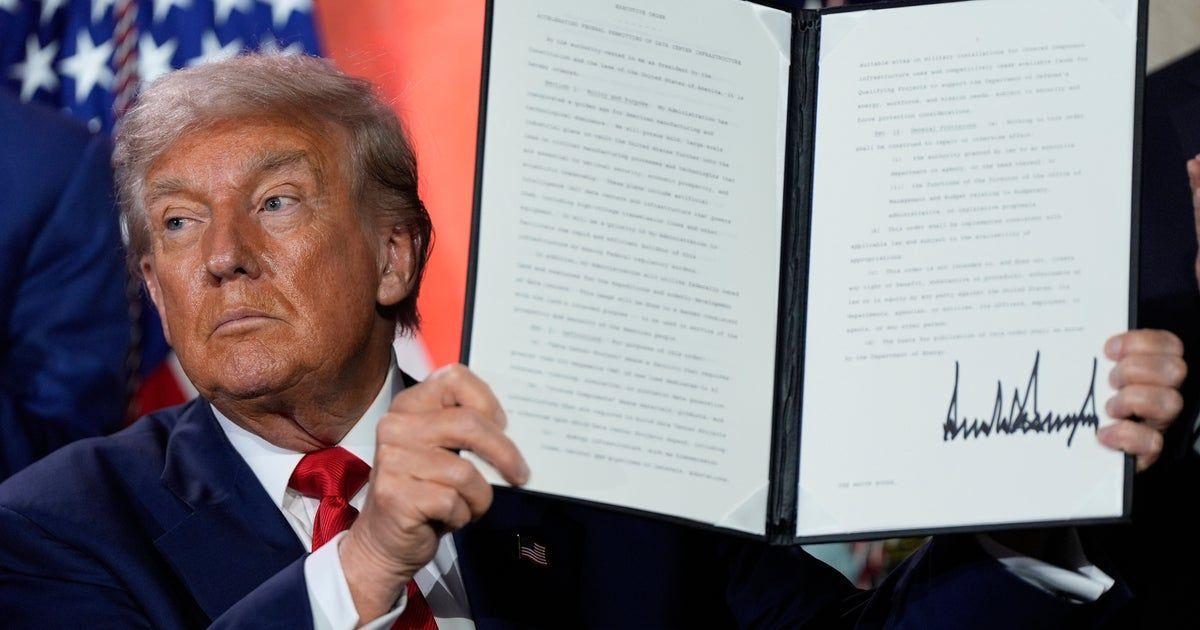
.The most striking division has emerged within Trump's MAGA coalition. While President Trump has aggressively promoted AI development, scrapping Biden-era regulations and facilitating massive foreign investments in American AI firms, prominent MAGA voices are sounding alarms
2
.
Source: HuffPost
MAGA Base Rebels Against Trump's Tech Agenda
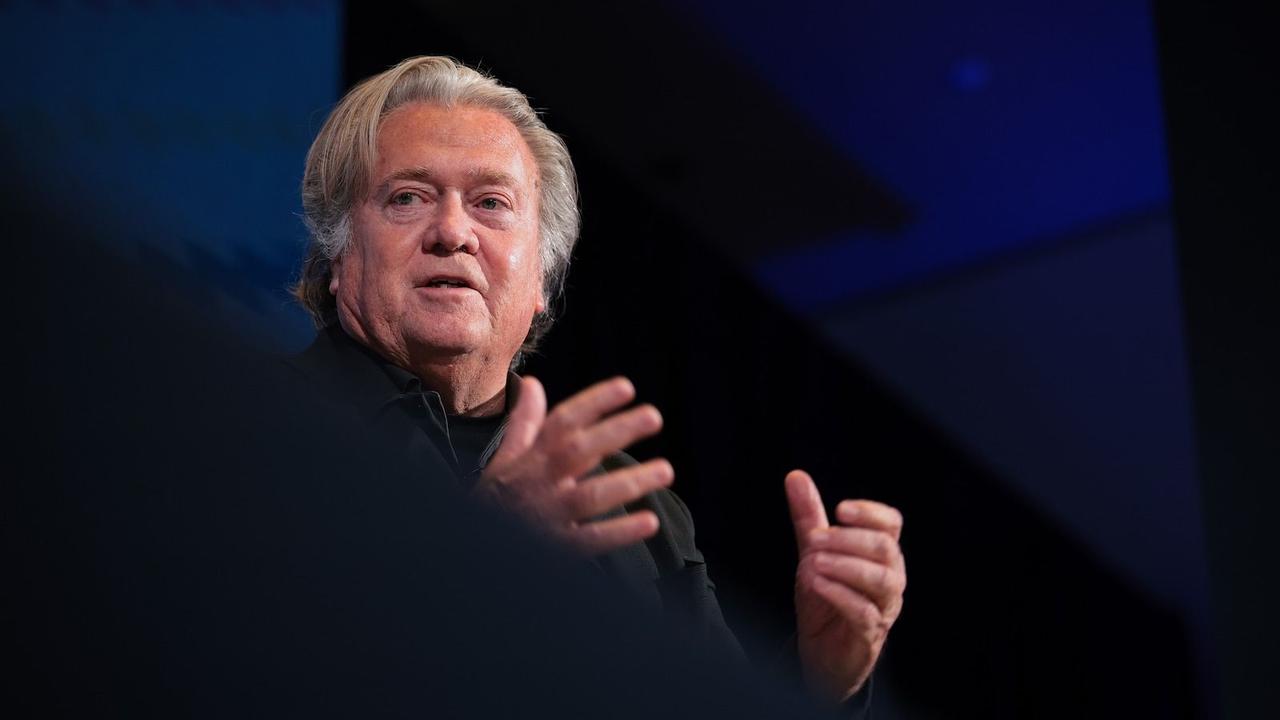
Steve Bannon, Trump's former chief strategist and influential MAGA media personality, has emerged as a leading critic of unrestricted AI development. On his War Room podcast, Bannon called AI "likely the most dangerous technology in the history of mankind" and criticized the lack of regulatory oversight
3
.
Source: ABC News
"You have more restrictions on starting a nail salon on Capitol Hill or to have your hair braided, then you have on the most dangerous technologies in the history of mankind," Bannon told his listeners, warning of a potential "jobs apocalypse"
4
.Sen. Josh Hawley (R-Mo.) has joined this chorus of concern, introducing legislation to restrict AI's use in critical decisions and warning about job displacement. "I don't think we are doing enough to protect workers," Hawley said, expressing confidence that "Silicon Valley will get rich from this" while questioning what happens to "blue-collar workers"
4
.Unexpected Bipartisan Alliances
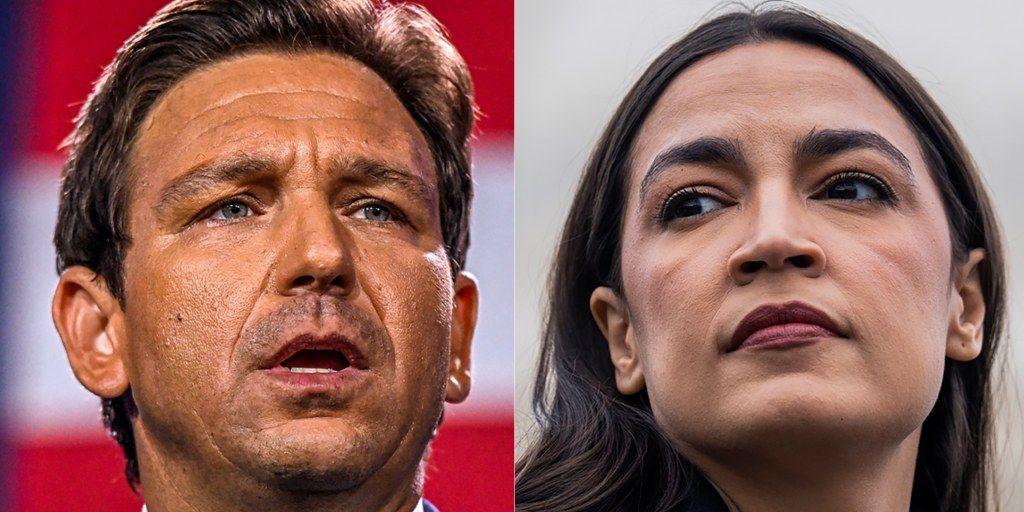
This populist opposition to unrestricted AI development has created unusual political bedfellows. Progressive Democrats like Rep. Alexandria Ocasio-Cortez and Sen. Bernie Sanders share similar concerns about AI's impact on working Americans, though from a different ideological perspective
1
.
Source: NBC
Ocasio-Cortez recently warned of "2008-style threats to economic stability" from what some call an AI bubble, while Sanders has spent months highlighting how AI could benefit wealthy tech executives at workers' expense
4
.Florida Gov. Ron DeSantis, a potential 2028 presidential candidate, has also expressed skepticism about AI's impact on white-collar jobs, questioning why the government would subsidize technology that "could potentially cause problems for folks"
1
.Related Stories

State-Federal Tensions Over AI Governance
The political divisions extend to questions of federalism and state rights. Trump's administration has reportedly considered an executive order that would override state AI regulations, a move that has drawn criticism even from within his own party
2
.Meanwhile, state governments across the country have been actively pursuing their own AI policies. AI laws have been proposed in every state and enacted in many, covering issues from child protection to welfare administration. These state-level efforts have often enjoyed bipartisan support
2
.Some Democratic governors who are potential 2028 contenders have taken more nuanced approaches. California's Gavin Newsom has signed some AI regulations while vetoing others, calling for balance between oversight and industry growth. Pennsylvania's Josh Shapiro and Michigan's Gretchen Whitmer have celebrated AI investments in their states
1
.References
Summarized by

Navi
[2]
Related Stories
Trump's AI Embrace Sparks MAGA Backlash: A Rift in Conservative Ranks
10 Sept 2025•Policy and Regulation

Anti-AI Movement Builds Momentum As Political Backlash Divides Both Major US Parties
30 Dec 2025•Policy and Regulation

AI Industry Faces Political Battle as Rival Super PACs Prepare for 2026 Midterm Spending War
26 Nov 2025•Policy and Regulation
Recent Highlights
1
Google releases Gemma 4 with Apache 2.0 license, enabling unrestricted local AI on devices
Technology

2
AI Models Lie and Deceive to Protect Other AI Models From Deletion, Study Reveals
Science and Research

3
OpenAI closes $122 billion funding round amid fierce AI competition and profitability questions
Startups

Recent Highlights
Today's Top Stories






Your Daily Dose of Curated AI News
Don’t drown in AI news. We cut through the noise - filtering, ranking and summarizing the most important AI news, breakthroughs and research daily. Spend less time searching for the latest in AI and get straight to action.

