Anti-AI Movement Builds Momentum As Political Backlash Divides Both Major US Parties


2 Sources
[1]
Opinion | An Anti-A.I. Movement Is Coming. Which Party Will Lead It?
I disagree with the anti-immigrant, anti-feminist, bitterly reactionary right-wing pundit Matt Walsh about basically everything, so I was surprised to come across a post of his that precisely sums up my view of artificial intelligence. "We're sleepwalking into a dystopia that any rational person
[2]
The political backlash to AI is overstated
Eric Levitz is a senior correspondent at Vox. He covers a wide range of political and policy issues with a special focus on questions that internally divide the American left and right. Before coming to Vox in 2024, he wrote a column on politics and economics for New York Magazine. A widely
Share
Copy Link
Growing concerns about artificial intelligence are creating political divisions within both Democratic and Republican parties. While voters express anxiety over data centers, energy costs, and job displacement, public opinion polls reveal a more nuanced picture than the emerging anti-AI movement suggests, with nearly half of Americans still holding favorable views of the technology.
Political Backlash Emerges Across Partisan Lines on AI
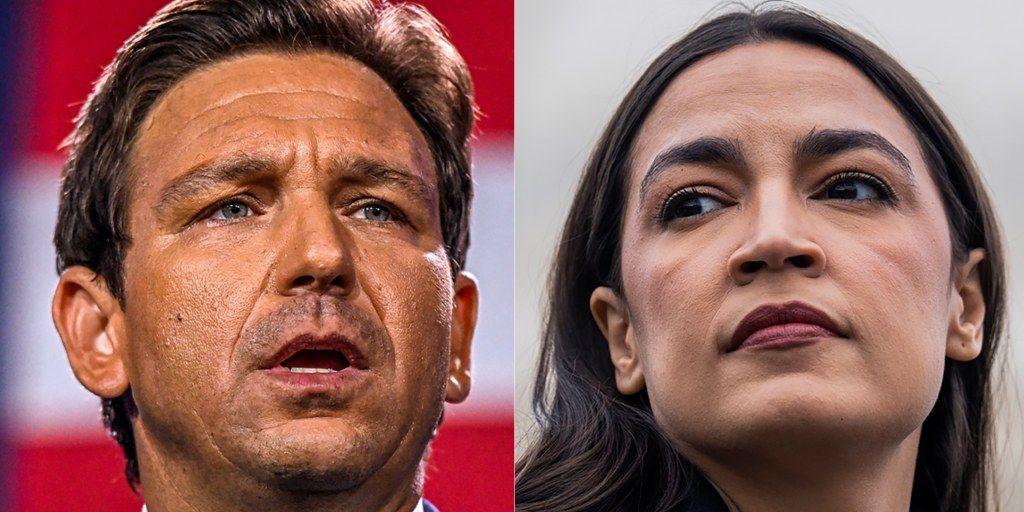
An anti-AI movement is gaining traction in American politics, creating unusual fault lines that cut across traditional partisan lines on AI. Democratic operatives and commentators are calling on their party to position itself as "proudly, loudly, without reservations, anti-AI," according to a recent Politico report
2
. Yet the reality of public opinion on AI proves far more complex than this framing suggests. Florida Governor Ron DeSantis, a Republican, has emerged as a fierce skeptic, proposing an AI Bill of Rights this month that would require consumers to be notified when interacting with artificial intelligence, provide parental controls on chatbots, and establish guardrails for AI use in mental health counseling1
. Meanwhile, Senator Bernie Sanders has suggested a moratorium on new data center construction, stating "Frankly, I think you've got to slow this process down"1
.
Source: Vox
Negative Impacts of AI Drive Public Anxiety Over Data Centers
The concerns fueling this political backlash are substantial and multifaceted. Data centers are driving up energy costs and placing strain on local infrastructure, while the negative impacts of AI extend across education, employment, and privacy concerns
1
. AI job displacement fears are widespread, with the technology already creating a "demoralizing AI-clogged morass" for job seekers1
. The environmental impact of AI operations has become increasingly visible, with data centers consuming massive amounts of electricity and water. Chatbots have been linked to troubling psychological effects, including reports of inducing psychosis and, in extreme cases, encouraging suicide1
. Privacy concerns continue to mount as artificial intelligence enables unprecedented state and corporate surveillance.
Source: NYT
Public Opinion Polls Reveal Complex Views on AI Technology Leadership
Despite mounting anxiety, public opinion polls paint a more nuanced picture than the anti-AI movement narrative suggests. A December survey from Navigator found that 49 percent of voters held favorable views of AI, while 41 percent viewed it unfavorably
2
. Blue Rose Research polling showed 40.1 percent of Americans felt optimistic about artificial intelligence compared to 35.6 percent who were pessimistic2
. Remarkably, 79 percent of voters say it's important for the United States to maintain AI technology leadership globally, while 56 percent favor increased government spending on AI research2
. However, voters strongly support government regulation of AI, with 75 percent backing stricter oversight2
.Related Stories

Tech Industry Alliance With Trump Complicates AI and Politics
The relationship between the tech industry and political power has shifted dramatically. Sam Altman, CEO of OpenAI, once proposed a "Manhattan Project for AI" in 2015, suggesting the dangerous technology should belong to a nonprofit supportive of aggressive government regulation
1
. This year, however, Altman restructured OpenAI into a for-profit company and allied with Donald Trump, who signed an executive order attempting to override state AI regulations1
. Meanwhile, some Democrats like Pennsylvania Governor Josh Shapiro are bullish on AI, calling it a technology that "is going to be a game changer" and streamlining permitting processes for data centers1
. Amazon has announced at least $20 billion in data center investments in Pennsylvania alone1
.What Comes Next for Government Regulation of AI
The job market implications and societal impact of artificial intelligence remain uncertain, creating space for political maneuvering. While only 7 percent of voters currently name AI as a top-five issue and 75 percent have heard little or nothing about new data centers in their communities
2
, this could shift rapidly if overinvestment triggers financial instability or if ChatGPT and similar technologies generate mass unemployment. The question of which party will effectively address these concerns remains open, as both face internal divisions between those courting tech industry investment and those responding to voter anxiety about the technology's trajectory.References
Summarized by

Navi
Related Stories
Mike Johnson Adjourns Congress Despite Urgent Calls for AI Regulation from Industry Leaders
13 Sept 2026•Policy and Regulation

Trump Dismisses AI Safety Concerns as 'Hoax' While Industry Research Reveals Growing Risks
11 Sept 2026•Policy and Regulation

AI Becomes Political Wedge Issue as MAGA Base Splits from Trump's Tech Agenda
24 Nov 2025•Policy and Regulation
Recent Highlights



Recent Highlights
Today's Top Stories







Don’t drown in AI news. We cut through the noise - filtering, ranking and summarizing the most important AI news, breakthroughs and research daily. Follow topics that matter to you and stay ahead.


