AI industry floods midterm elections with $150 million as battle over regulation intensifies


7 Sources
[1]
US tech giants open their wallets for AI-friendly politician
Rush is on to influence candidates from both parties ahead of midterms Meta is among tech giants reportedly funding US politicians friendly to the AI industry, as concerns mount over a huge expansion in datacenter building and the effects of AI on everyday life. According to The New York Times,
[2]
Backed by Anthropic, a Super PAC Begins Ad Blitz in Support of A.I. Regulation
A new ad campaign on Monday warned northern New Jersey residents that Congress could leave them vulnerable to harm by artificial intelligence. The ad, which opens with photos of A.I.-generated women smiling on social media alongside A.I.-generated headlines, urged voters to tell their House
[3]
How A.I. Money Is Flooding Into the Midterm Elections
Theodore Schleifer covers campaign finance, and Matt Zdun is a data journalist who covers political campaigns. The artificial intelligence industry is well on the way to spending hundreds of millions of dollars on the midterm elections in an extraordinary demonstration of political power from
[4]
A congressional candidate feared by the tech oligarchs
If I were a voter in New York's 12th Congressional District, a recent attack ad against candidate Alex Bores might make me think twice about considering him. Bores, a 35-year-old member of the New York Assembly, is a reliably progressive candidate in the coming Democratic primary to succeed liberal
[5]
Big AI Isn't Waiting for the Backlash
Meta's hard and early pivot into artificial intelligence hasn't exactly gone as planned, with tens of billions of investment dollars sunk into middling models, departmental restructurings, and clashing visions. In technical terms, the company remains an AI also-ran. In another way, though, it's
[6]

Backed by Anthropic, a Super PAC begins an ad blitz in support of AI regulation
A new ad campaign on Monday warned northern New Jersey residents that Congress could leave them vulnerable to harm by artificial intelligence. The ad, which opens with photos of AI-generated women smiling on social media alongside AI-generated headlines, urged voters to tell their House
[7]

Meta Plans To Pledge $65 Million In Support Of AI-Friendly State Politicians: Report - Meta Platforms (NASDAQ:META)
Meta Platforms Inc. (NASDAQ:META) reportedly plans to invest $65 million in 2026 to back state politicians who are supportive of the artificial intelligence (AI) industry. The initiative will kick off this week in Texas and Illinois and marks the company's largest election-related expenditure to
Share
Copy Link
Major AI companies are pouring unprecedented sums into the 2026 midterm elections, with Meta committing $65 million and the AI industry collectively spending over $150 million to influence candidates on both sides of the aisle. The spending surge reflects mounting tensions over AI regulation, data center development, and community opposition to the technology's rapid expansion.
AI Industry Launches Unprecedented Political Spending Campaign
The AI industry is deploying extraordinary financial resources to shape the 2026 midterm elections, with political spending reaching levels that signal how much is at stake for tech giants. Meta is preparing to spend $65 million this year backing AI-friendly politicians, while the AI industry and its allies have already contributed at least $83 million to federal campaigns and committees in 2025 alone
3
. Combined with Meta's state-level push, approximately $150 million is flowing from AI interests into the midterm elections3
.
Source: Benzinga
Meta is launching two new super PACs to join two it has already formed, with "Forge the Future Project" targeting Republicans and "Making Our Tomorrow" focusing on Democrats
1
. This represents the biggest election investment by Meta to date, with initial efforts concentrated on supporting AI-friendly Republicans in Texas and Democrats in Illinois5
. The tech industry lobbying push extends beyond Meta, as Marc Andreessen, Ben Horowitz, and OpenAI co-founder Greg Brockman have contributed $50 million to a new super PAC called "Leading the Future"1
.Battle Lines Form Over AI Regulation and Federal Oversight
The surge in campaign finance reflects deep divisions over who should control AI regulation. Greg Brockman and his wife Anna made four donations totaling $50 million on September 12, 2025, to super PACs backing the AI industry and President Trump
3
. While OpenAI stresses these were personal donations, they align with the company's political strategy of primarily supporting Republicans and the Trump administration. The political spending is broadly expected to benefit Republicans more than Democrats, as Republicans are seen as friendlier to the industry and more opposed to stringent AI regulation3
.President Trump has empowered the federal government to challenge state-level AI regulations, issuing an executive order in December intended to punish states that introduce such legislation
1
. Attorney General Pam Bondi has been directed to establish an AI Litigation Task Force to challenge any state regulations that potentially hinder America's race for global AI dominance1
. This federal pressure creates tension with states seeking to protect citizens from algorithmic bias, data privacy breaches, and security risks.Anthropic Emerges as Counterweight With Pro-Regulation Stance
In a striking departure from industry norms, Anthropic has taken a different approach by backing AI regulation and contributing $20 million to Public First Action, a super PAC supporting tougher oversight
2
. The tech-backed political action committee launched a $300,000 ad campaign targeting New Jersey Representative Josh Gottheimer, Democratic co-chair of the House's new AI commission, urging him to oppose bills that would block state-level AI regulations2
. Brad Carson, co-head of Public First, has raised the super PAC's fundraising goal to $75 million after nearly hitting $50 million2
.
Source: ET
Anthropic's influence on AI policy has made the company politically vulnerable. Administration officials including David Sacks, the White House's AI chief, have criticized Anthropic
2
. Last week, a dispute erupted with the Department of Defense after Anthropic stated it did not want its AI used for mass surveillance of Americans or deployed in autonomous weapons without human guidance, with a person close to Defense Secretary Pete Hegseth indicating the Pentagon was "close" to declaring the startup a "supply chain risk"2
.Related Stories
Data Center Development Sparks Community Opposition Nationwide
The political spending campaign extends beyond federal AI regulation to address growing community opposition to data center development. Research organization Data Center Watch reports that 20 US server farm projects were blocked or delayed amid local opposition during Q2 2025
1
. Communities worry about impacts on electricity bills and water supplies, as data centers consume immense amounts of both resources while creating minimal jobs5
.Meta alone has revealed plans to build multiple multi-gigawatt data centers, including one that would cover much of Manhattan
1
. Brad Carson noted that AI donations to state efforts are "largely to stymie the growing backlash on data centers"3
. The Trump administration has attempted to defuse public backlash through a pact between the datacenter industry and hyperscalers like Microsoft, Google, Amazon, Meta, and OpenAI, establishing principles around energy, water use and community relations1
.Congressional Races Become Testing Ground for AI Industry Influence
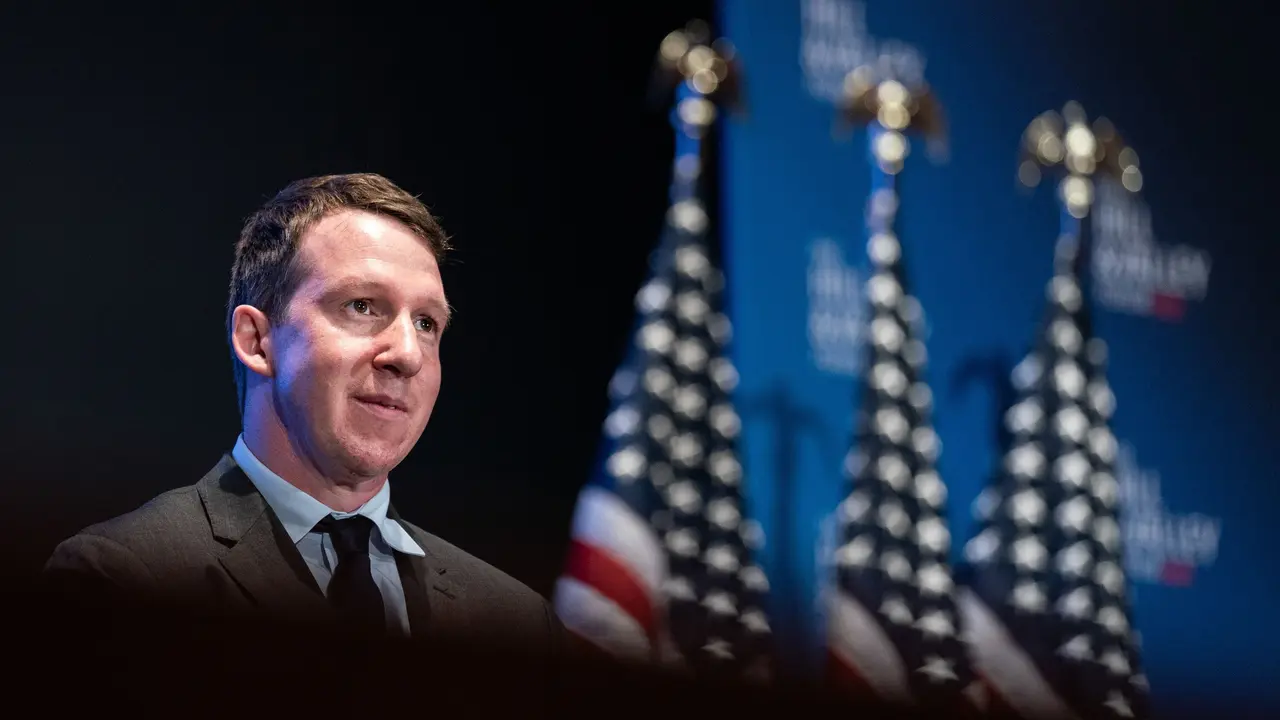
The political battle is playing out dramatically in New York's 12th Congressional District, where Alex Bores faces attacks from Think Big PAC, an affiliate of Leading the Future that has spent $1 million targeting him
4
. Bores, a former Palantir data scientist who resigned over the company's work with ICE, sponsored New York's RAISE Act, which requires large AI developers to prevent "critical harm," report safety incidents, and publish AI safety protocols4
. The RAISE Act represents perhaps the most stringent AI law in the country4
.
Source: Seattle Times
Despite industry opposition, Bores has raised hundreds of thousands of dollars from rank-and-file AI employees
4
. Public sentiment supports stricter oversight: in a recent YouGov/Economist poll, 58% of Americans—and 53% of Republicans—said they distrust AI, while almost two-thirds expect AI to decrease available jobs4
. Financial analysts reported last year that massive spending on AI was keeping the US economy out of recession, with datacenter infrastructure and model development providing the only significant growth1
.The surge in local lobbying reflects companies racing to build as much infrastructure as possible before public backlash becomes universal
5
. With comprehensive Federal Election Commission filings available only through 2025, more AI money is clearly arriving, including an additional $50 million pledged by the Brockmans and Andreessen Horowitz to Leading the Future in the first quarter3
.References
Summarized by

Navi
[1]
[4]
Related Stories
AI Super PACs wage $27 million proxy battle over regulation in New York congressional race
17 Jun 2026•Policy and Regulation

Super PACs turn AI regulation into a central campaign topic, spending millions in 2026 midterms
12 Feb 2026•Policy and Regulation

AI Industry Super PAC Targets New York Lawmaker Behind AI Safety Bill
17 Nov 2025•Policy and Regulation

Recent Highlights



Recent Highlights
Today's Top Stories



Don’t drown in AI news. We cut through the noise - filtering, ranking and summarizing the most important AI news, breakthroughs and research daily. Follow topics that matter to you and stay ahead.


