U.S. House passes bill to close cloud chip export loophole used by Chinese companies


2 Sources
2 Sources
[1]
U.S. House passes bill to stop Chinese companies from accessing export-controlled American AI chips using offshore rental loophole -- Remote Access Security Access Act effectively extends export controls to the cloud
"The CCP's AI ambitions are being fueled by its access to American chips housed in data centers located outside of China" A bipartisan bill passed by the U.S. House of Representatives aims to curb China's access to advanced AI chips by way of renting offshore data centers. The bill extends export controls on potent AI chips from the likes of AMD and Nvidia to cloud computing, a loophole that companies in China have allegedly used previously to access the hardware. As reported by The Information, the Select Committee on the CCP announced the passing of the Remote Access Security Act on Monday. In a statement, the committee stated that the new bill "modernizes the Export Control Reform Act by expanding federal authority to restrict foreign adversaries' ability to access technologies, including AI chips, remotely through cloud computing services." In November of last year, multiple reports emerged claiming that Chinese companies were finding ways to access Nvidia's latest Blackwell chips by exploiting a cloud computing loophole. According to an investigation by the Wall Street Journal, INF Tech, a Shanghai-based startup, had allegedly gained access to 2,300 banned Nvidia AI GPUs by renting a server in Indonesia. The 32 Nvidia GB200 servers were rented from an Indonesian telecommunications company in a deal thought to be worth $100 million. Perhaps more concerning for U.S. lawmakers, the GPUs were allegedly bought after the company had secured the Chinese outfit as a customer. Similarly, both Alibaba and ByteDance were accused of training their respective Qwen and Doubao LLMs using Nvidia chips, accessed by renting data centers in Southeast Asia. The fast-moving world of AI chip exports is a cat-and-mouse affair. On the one hand, Washington continues to try to block Chinese access to its most potent AI hardware while also relaxing some restrictions, like approving the sale of Nvidia H200 chips to approved customers. On the other hand, some Chinese companies continue to try to skirt export controls to obtain the best AI hardware available, both over the cloud and through physical means. Beijing's tack has shifted more towards encouraging the use of homegrown chips where possible. So, whilst H200 export approval could be a boon to Nvidia, China has dragged its feet a little and still needs to approve H200 imports before big companies like the aforementioned Alibaba and ByteDance get the green light. While H200 exports are now approved, heftier Blackwell-based chips remain firmly off limits, as will Nvidia's new Vera Rubin architecture. It's remote access to this hardware that the Remote Access Security Act aims to curb. In a statement, Chairman and cosponsor of the legislation, John Moolenaar, said, "The CCP's AI ambitions are being fueled by its access to American chips housed in data centers located outside of China. "This bill brings our laws into the digital age and makes it clear that cloud compute is subject to U.S. export control law, just like physical chips. Closing these loopholes will strengthen U.S. national security and protect American innovation."
[2]
Congress votes to close China cloud chip export loophole
US House backs bill to regulate remote access to export-controlled chips Chinese companies may be unable to import the best US GPUs, but they have found a workaround: renting access to that hardware via cloud services. Now, the US House of Representatives is moving to bring that loophole under the export-control law. The House of Representatives passed the Remote Access Security Act on Monday by an overwhelming 369-22 bipartisan vote. The bill extends the US Export Control Reform Act to treat certain forms of remote access to export-controlled items - including high-end GPUs and other AI chips - as subject to US export-control law. "Our export controls are only as strong as the weakest link, and right now, the CCP has a real tool to sidestep these prohibitions," said bill sponsor Representative Mike Lawler (R-NY). It's not like that's a hypothetical scenario, either: Chinese companies faced with export controls on high-end Nvidia GPUs and other chips have been acquiring access to them through platforms like Amazon Web Services since at least 2023. According to our prior reporting, Chinese cloud providers such as Alibaba and Tencent may be enabling access to export-controlled GPUs for China-based customers by renting cloud hardware hosted outside the country. Microsoft and AWS, meanwhile, reportedly operate in China via local partners that offer cloud services broadly similar to those available elsewhere. In short, this is a very real loophole in US export control laws - the chips aren't going anywhere, after all. This being the internet age, location doesn't really matter. "This bill brings our laws into the digital age and makes it clear that cloud compute is subject to U.S. export control law, just like physical chips," said House Select Committee on China chairman Representative John Moolenaar (R-MI). "Closing these loopholes will strengthen U.S. national security and protect American innovation." Passage of the bill through the Senate, and a signature from President Trump, aren't guarantees, and it's unknown how the upper chamber and the White House feel about the bill. We reached out to Lawler's team for more information, but didn't hear back. It's also worth noting that the export of powerful AI chips from the US to China isn't as locked down as it was when this bill was introduced in April of 2025. Since then, the Trump administration has given Nvidia the go-ahead to sell H200 chips in China, and while not the most advanced Nvidia has to offer, they're definitely powerful. Beijing has yet to give its stamp of approval to Nvidia for imports, but it's believed that they're likely to do so soon. That said, China has been pushing its own chip companies to ditch American imports over national security concerns and instead develop its own competitive alternatives, a process that may still take time, though likely not much. ®
Share
Share
Copy Link
The U.S. House of Representatives passed the Remote Access Security Act with overwhelming bipartisan support, closing a loophole that allowed Chinese companies to access export-controlled American AI chips through offshore cloud computing rentals. The legislation extends existing export controls to cloud services, addressing concerns that firms were bypassing restrictions by renting servers in Southeast Asia.
U.S. House Passes Remote Access Security Act to Block Cloud Computing Loophole
The U.S. House of Representatives has passed the Remote Access Security Act with an overwhelming 369-22 bipartisan vote, marking a significant shift in how the country regulates accessing American AI chips
2
. The legislation extends export controls to the cloud, effectively treating remote access to high-end US GPUs and other export-controlled hardware as subject to the same restrictions that govern physical chip sales1
. The bill modernizes the Export Control Reform Act by expanding federal authority to restrict foreign adversaries' ability to access technologies remotely through cloud services1
.
Source: The Register
Chinese Companies Exploited Offshore Cloud Computing Rentals
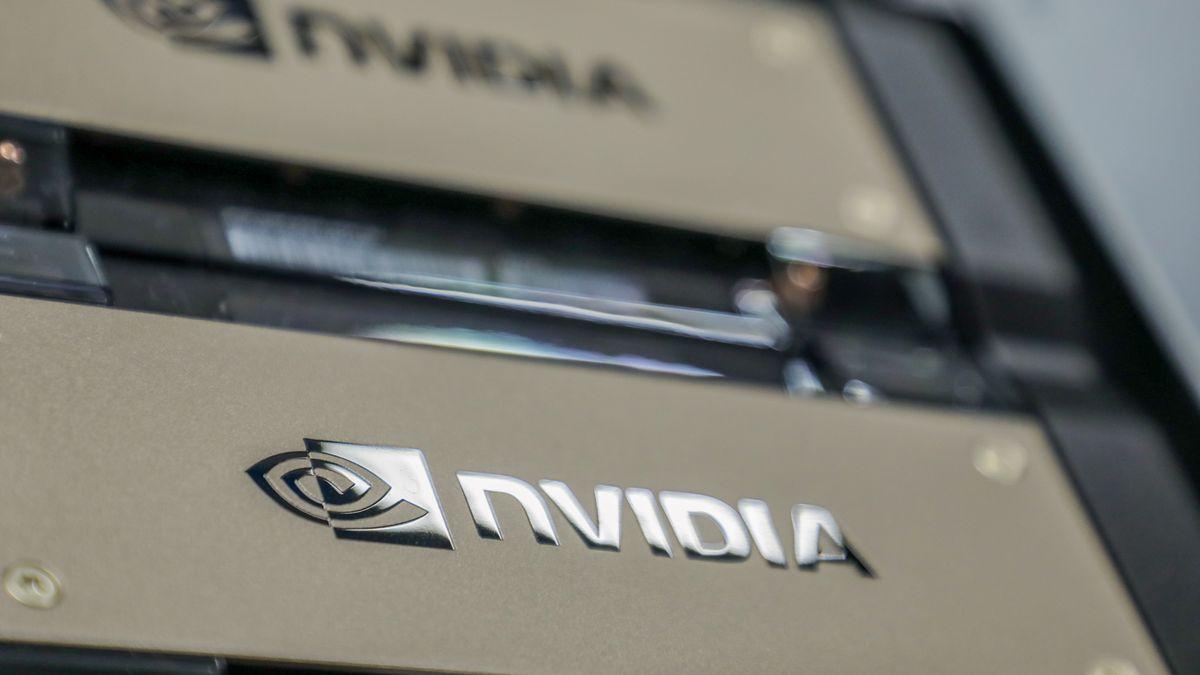
The cloud chip export loophole became apparent in November last year when multiple reports revealed that Chinese companies were circumventing restrictions by renting data centers in Southeast Asia. According to a Wall Street Journal investigation, INF Tech, a Shanghai-based startup, allegedly gained access to 2,300 banned Nvidia GPUs by renting a server in Indonesia
1
. The company rented 32 Nvidia GB200 servers from an Indonesian telecommunications company in a deal valued at approximately $100 million1
. Similarly, both Alibaba and ByteDance were accused of training their respective Qwen and Doubao language models using Nvidia chips accessed through cloud services hosted in the region1
.
Source: Tom's Hardware
Cloud Services Became a Workaround for Export Restrictions
Chinese companies have been acquiring remote access to high-end US GPUs through platforms like Amazon Web Services since at least 2023
2
. Cloud providers such as Alibaba and Tencent may have enabled access to export-controlled GPUs for China-based customers by renting cloud compute hardware hosted outside the country2
. Meanwhile, Microsoft and Amazon Web Services reportedly operate in China via local partners that offer cloud services broadly similar to those available elsewhere2
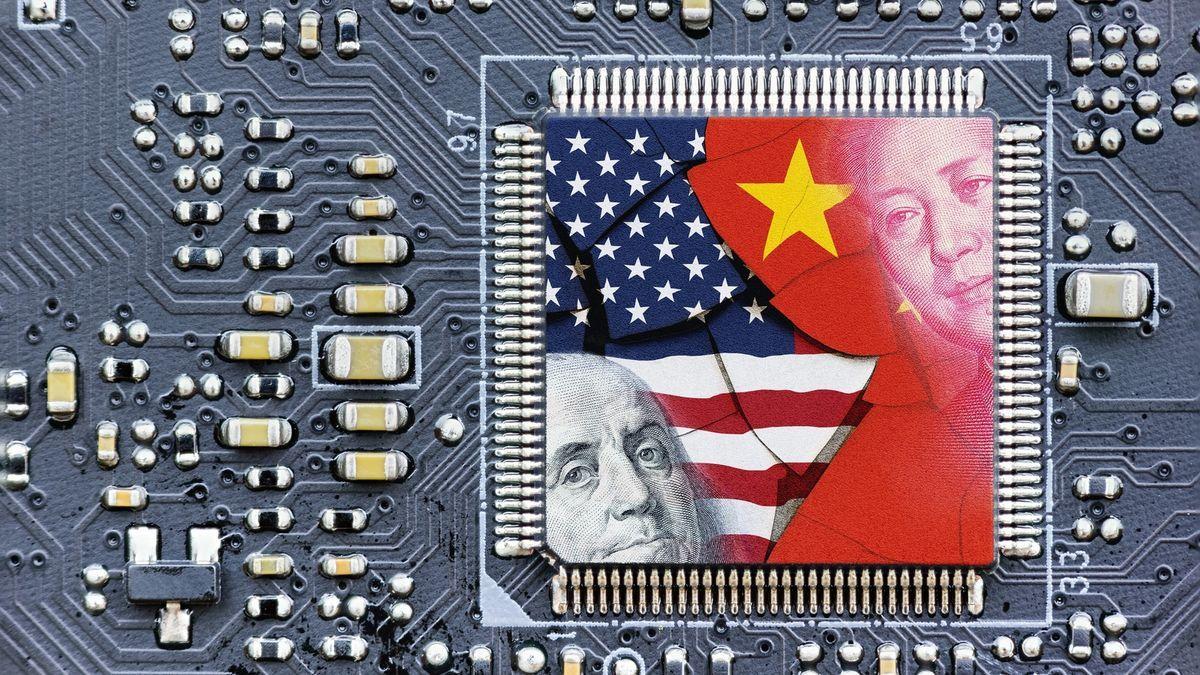
. Bill sponsor Representative Mike Lawler stated, "Our export controls are only as strong as the weakest link, and right now, the CCP has a real tool to sidestep these prohibitions"2
.Related Stories
National Security Concerns Drive Legislative Action
Chairman John Moolenaar, who cosponsored the legislation, emphasized the national security implications of the loophole. "The CCP's AI ambitions are being fueled by its access to American chips housed in data centers located outside of China," he stated
1
. He added that the bill "brings our laws into the digital age and makes it clear that cloud compute is subject to U.S. export control law, just like physical chips"2
. The legislation aims to strengthen national security and protect American innovation by closing what lawmakers view as a critical vulnerability in existing regulations1
.Complex Landscape of AI Chip Exports and Future Implications
The AI chip export landscape remains fluid, with Washington attempting to balance restrictions while selectively relaxing some controls. The Trump administration recently approved the sale of Nvidia H200 chips to approved customers in China, though Beijing has yet to approve imports
1
. However, more powerful Blackwell-based chips and Nvidia's new Vera Rubin architecture remain firmly off limits1
. Meanwhile, China has been pushing its own chip companies to develop competitive alternatives and ditch American imports over national security concerns, a process that may still take time2
. The bill now awaits passage through the Senate and a signature from President Trump, though their positions on the legislation remain unclear2
.References
Summarized by

Navi
[2]
Related Stories
Congress advances AI Overwatch Act, seeking veto power over Trump's AI chip exports to China
21 Jan 2026•Policy and Regulation
Senators Push SAFE Chips Act to Block Advanced AI Chips Sales to China for 30 Months
05 Dec 2025•Policy and Regulation
U.S. Lawmakers Propose Geo-Tracking for AI Chips to Curb Unauthorized Access
10 May 2025•Policy and Regulation
Recent Highlights



Recent Highlights
Today's Top Stories












Your Daily Dose of Curated AI News
Don’t drown in AI news. We cut through the noise - filtering, ranking and summarizing the most important AI news, breakthroughs and research daily. Spend less time searching for the latest in AI and get straight to action.

