Congress advances AI Overwatch Act, seeking veto power over Trump's AI chip exports to China


11 Sources
[1]
Congress wants veto power over Trump administration for AI chip exports -- new proposed AI Overwatch Act would shift ultimate control of high-performance chip exports
Legislators from the U.S. House of Representatives Foreign Affairs Committee this week advanced the AI Overwatch Act, originally introduced in December, which would give ultimate control over the exports of high-performance data center-grade AI processors to adversary nations to Congress. As
[2]
House Seeks More Say in AI Chip Exports After Nvidia's China Win
Congress is one step closer to gaining the authority to review artificial intelligence chip sales to China, a move likely to open a rift with the Trump administration over plans to let Nvidia Corp. sell its powerful H200 processors to the world's second-largest economy. A House committee focused
[3]
Bill seeking oversight of AI exports advances to House
Bill still needs to pass the House and Senate before the president can sign or veto it President Trump's decision to green-light the sale of Nvidia H200 GPUs to China isn't sitting well with some of his Republican colleagues in the House of Representatives. These GOP politicians have proposed a
[4]
US House panel to vote on bill to give Congress authority over AI chip exports
NEW YORK, Jan 21 (Reuters) - A key Republican lawmaker scheduled a committee vote on Wednesday for a bill that would give Congress power over artificial intelligence chip exports, despite pushback from White House AI czar David Sacks, among others. Representative Brian Mast of Florida, chair of
[5]

Trump wants Nvidia to sell powerful AI chips to Beijing. Washington's China hawks are pushing back
U.S. President Donald Trump's plan to grant Nvidia licenses to ship some of its more powerful artificial intelligence chips to China is ruffling the feathers of some of Washington's most prominent China hawks, including members of his own party. The pushback intensified this week with the U.S.
[6]

Washington Is Divided on AI Chip Exports as Anthropic CEO Deems China Sales a 'Mistake'
Washington is divided on AI, yet again. At the center of the clash is AI chip exports. Last month, Trump finally allowed Nvidia to sell its H200 chips to China. The chips are less advanced than Nvidia's latest American offerings, but they are still advanced enough to be used in American industry
[7]

Bill to curb chip sales to China advances out of committee
Why it matters: The legislation has riled up the MAGA base, which views it as undermining President Trump's authority. Driving the news: The committee on Wednesday voted 42-2, with one present, to advance Chair Brian Mast's (R-Fla.) bill. * Reps. Rich McCormick (R-Ga.) and Andy Barr (R-Ky.) voted
[8]

House Republican squares off against Nvidia, Sacks over AI chip bill
Rep. Brian Mast (R-Fla.) is squaring off against chipmaker Nvidia and White House artificial intelligence (AI) and crypto czar David Sacks, as he seeks to defend his legislation that would give Congress the power to block certain AI chip exports. Mast, who serves as chair of the House Foreign
[9]

US House panel to vote on bill to give Congress authority over AI chip exports
A key Republican lawmaker scheduled a committee vote on Wednesday for a bill that would give Congress power over artificial intelligence chip exports, despite pushback from White House AI czar David Sacks, among others. A key Republican lawmaker scheduled a committee vote on Wednesday for a bill
[10]

The US seeks to tighten oversight of AI chip exports to China
The House Foreign Affairs Committee has overwhelmingly passed the AI Overwatch Act, legislation aimed at strengthening Congress's oversight of exports of advanced artificial intelligence chips, particularly to China. Backed by Republican Brian Mast, the bill comes amid heightened geopolitical
[11]
US House panel to vote on bill to give Congress authority over AI chip exports
NEW YORK, Jan 21 (Reuters) - A key Republican lawmaker scheduled a committee vote on Wednesday for a bill that would give Congress power over artificial intelligence chip exports, despite pushback from White House AI czar David Sacks, among others. Representative Brian Mast of Florida, chair of
Share
Copy Link
The House Foreign Affairs Committee voted 42-2 to advance the AI Overwatch Act, which would give Congress veto power over AI chip exports to China and other adversaries. The bipartisan legislation challenges Trump's decision to allow Nvidia H200 sales to China with a 25% revenue cut, creating a rift between China hawks in Congress and the White House over national security versus technological dominance.
Congressional Oversight Challenges Trump's AI Chip Export Strategy
The House Foreign Affairs Committee advanced the AI Overwatch Act by a 42-2 margin on Wednesday, setting up a potential showdown between Congress and the Trump administration over control of AI chip exports to China and other adversary nations
2
. The bipartisan legislation, introduced in December by Representative Brian Mast, would require both the House Foreign Affairs Committee and Senate Banking Committee to review and potentially block export licenses for advanced AI processors within 30 days through a joint resolution4
.
Source: Bloomberg
The bill represents a direct response to President Donald Trump's decision last month to ease longstanding export controls on China, specifically approving Nvidia H200 processors sales with a 25% revenue cut requirement
5
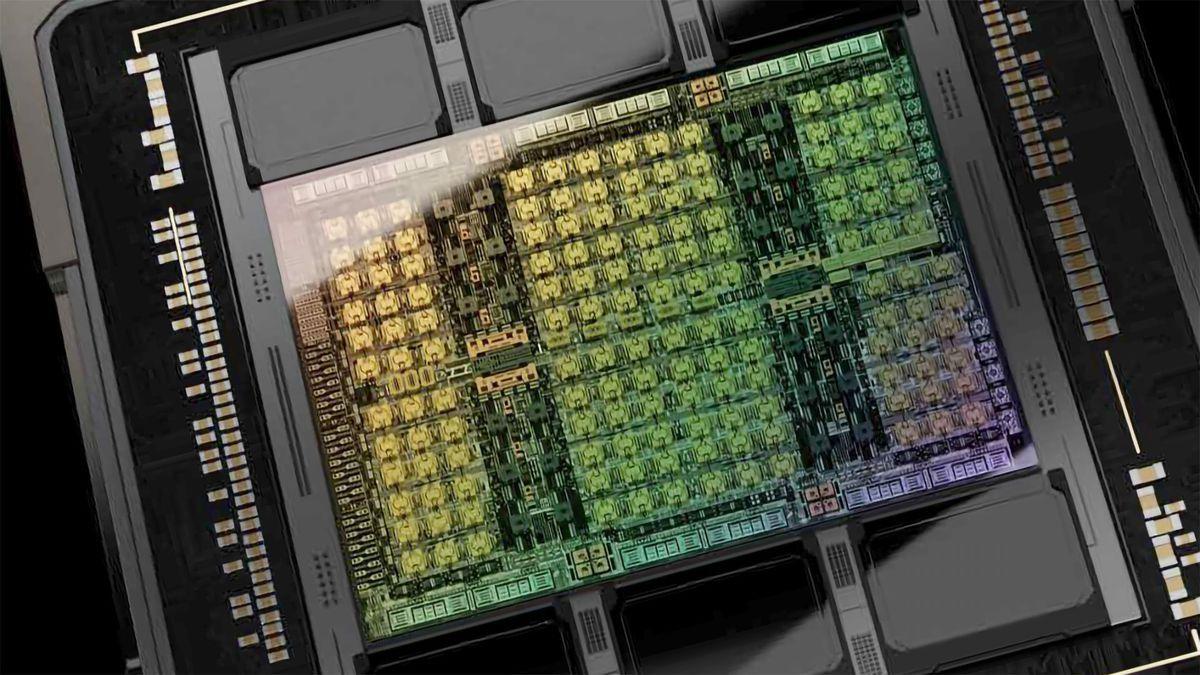
. Under the AI Overwatch Act, Congress would gain veto power over chip exports, allowing lawmakers to ban sales of Nvidia H200 processors and AMD's Instinct MI325X to Chinese customers even if the executive branch explicitly authorized them1
.
Source: Market Screener
Codifying Export Controls and Terminating Existing Licenses
The legislation would codify existing performance limitations that currently allow AMD and Nvidia to ship H20 and MI308 processors to entities in adversary nations not specifically blacklisted by the U.S. government
1
. Beyond oversight, the text endorsed by Republicans and Democrats would outright ban sales of Nvidia's more advanced Blackwell chips to China for at least two years, transforming advanced AI chip export controls from regulatory guidelines into federal law2
.
Source: Tom's Hardware
If passed, the AI Overwatch Act would terminate existing licenses, impose a temporary blanket denial until a new national security strategy is submitted, and subject any future approvals to congressional review
1
. The measure calls for allowing members of the House Foreign Affairs Committee and Senate Banking committees to see the numbers of chips up for export as well as the end-users buying them, providing unprecedented transparency in the approval process2
.Trusted US Person Framework for Allied Nations
One notable provision in the legislation creates a framework for "trusted" U.S. companies to receive license exemptions when sending chips to U.S. allies and neutral countries. Under this arrangement, a trusted U.S. person may deploy and operate advanced, otherwise restricted AI GPUs abroad without certain export licenses, provided the hardware remains under U.S. ownership and control, is not placed in a country of concern, and meets strict security, ownership, and audit requirements
1
. Microsoft executive Fred Humphries commended this approach, though the company has not endorsed a specific bill2
.This framework allows the U.S. to export AI capability as a service to allies and partners while keeping physical control of the most powerful processors in American ownership, ensuring that even when allies access top-tier AI capability, ownership, oversight, and strategic leverage remain permanently with the United States
1
.White House Pushback and Political Tensions
White House AI czar David Sacks has publicly criticized the bill, endorsing social media claims that the legislation was orchestrated by "never Trumpers" to undermine Trump's authority over AI chip exports
3
. Conservative political activist Laura Loomer also attacked the draft bill in a post on X, saying it "yanks control of advanced AI chip exports away from President Trump"2
.Sacks and other Trump administration officials have argued that selling in China's market will encourage foreign companies to become reliant on American technology, boosting US technological leadership while offering a product that can compete with Huawei Technologies' systems
2
. This approach has been met with skepticism from Republicans and Democrats on Capitol Hill, who have coalesced around safeguarding U.S. innovation from adversary nations.Related Stories
National Security Risk Versus Technological Dominance Debate
"Companies like Nvidia are requesting to sell millions of advanced AI chips, which are the cutting edge of warfare, to Chinese military companies like Alibaba and Tencent," said Brian Mast, framing the issue as a national security risk
5
. Mast argued that these are the same companies that work to spy against the United States and that the Chinese Communist Party uses to try and defeat the United States1
.China hawks warn that sending highly advanced American chips to the Asian country may inadvertently strengthen its military and economy, threatening U.S. national security
2
. Representative Gregory Meeks, the top Democrat on the panel, said lawmakers want to "send a clear message that our national security, our foreign policy, and our technological crown jewels are not for sale"2
.The AI Arms Race and Path Forward
Mast compared the proposed congressional oversight to the foreign military sales process used for weapons exports, arguing that AI accelerators now represent the same strategic importance in the AI arms race
3
. Representative John Moolenaar, Chairman of the Select Committee on China and cosponsor of the legislation, cited reports showing that China still trailed American chip designs despite advancements in rack-scale architectures, expressing concerns that granting China access to potentially millions of chips generations beyond its domestic capabilities will undermine U.S. AI dominance objectives3
.The bill now heads to the House for a floor vote, though the Senate has yet to release a companion version
2
. Even if the AI Overwatch Act wins support in the House, it still faces a long road to becoming law, requiring passage in both the Senate and House, and must be signed by the president or have his veto overridden before Congress will gain authority over U.S. AI exports3
. The debate highlights a fundamental tension in U.S. trade policy between maintaining technological dominance through market presence and protecting national security through export restrictions, with geopolitical risk calculations at the center of this emerging battle in Washington.References
Summarized by

Navi
[3]
Related Stories
Senators Push SAFE Chips Act to Block Advanced AI Chips Sales to China for 30 Months
05 Dec 2025•Policy and Regulation
US House advances 20 bipartisan bills to restrict China's access to AI chips and technology
23 Apr 2026•Policy and Regulation

Tech Giants Split as White House Opposes AI Chip Export Restrictions on Nvidia
14 Nov 2025•Policy and Regulation

Recent Highlights



Recent Highlights
Today's Top Stories



Don’t drown in AI news. We cut through the noise - filtering, ranking and summarizing the most important AI news, breakthroughs and research daily. Follow topics that matter to you and stay ahead.


