26,000 AI researchers admit they can't explain how models work as interpretability crisis deepens


2 Sources
[1]
Inside AI's biggest gathering, a surprising admission: No one knows how it works
SAN DIEGO -- For the past week, academics, startup founders and researchers representing industrial titans from around the globe descended on sunny San Diego for the top gathering in the field of artificial intelligence. The Neural Information Processing Systems, or NeurIPS, conference has been
[2]
26,000 scientists still can't explain exactly how AI models think and how to measure them
Black box models challenge trust as benchmarks fail to reflect real intelligence In a dizzying age of machine learning triumph, where systems can generate human-like prose, diagnose medical conditions, and synthesize novel proteins, the AI research community is facing an extraordinary paradox.
Share
Copy Link
At this year's NeurIPS conference, a record 26,000 AI researchers confronted an unsettling reality: no one fully understands how today's most advanced AI systems actually work. As companies like Google and OpenAI pursue diverging approaches to AI interpretability, the field grapples with the black box problem and an evaluation crisis that threatens trust in increasingly powerful systems.
Record NeurIPS Gathering Exposes Fundamental Knowledge Gap
The Neural Information Processing Systems, or NeurIPS conference, drew a record-breaking 26,000 attendees to San Diego this year, twice the number from just six years ago
1
. Yet amid sessions on hyperspecific topics and the celebration of AI's exponential growth, one of the most discussed issues was surprisingly basic: AI researchers openly admit they don't understand how frontier AI systems actually work. Most leading AI researchers and CEOs readily acknowledge this knowledge gap, highlighting a profound paradox in a field advancing at breakneck speed1
. The pursuit of understanding how AI models think through their internal structure is called AI interpretability, a field still in its infancy despite the urgency of the challenge.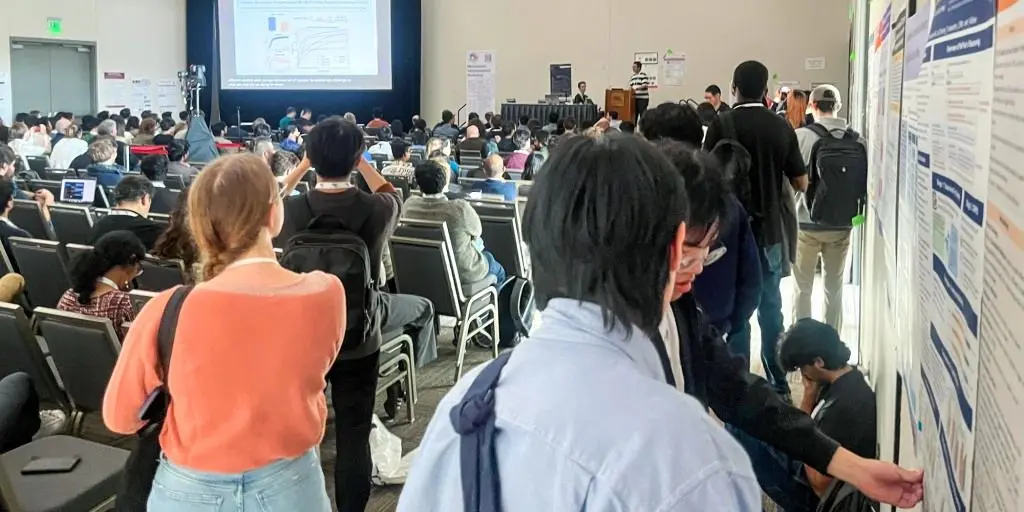
Source: NBC
The Black Box Problem Magnified by Scale
The black box problem has been magnified by the sheer scale of modern deep neural networks
2
. A large language model (LLM) with quadrillions of learned connections operates in a computational space too vast for the human mind to trace. When these systems provide answers, the underlying reasoning process remains opaque, leaving AI researchers to marvel at outputs without understanding the mechanism. Shriyash Upadhyay, an AI researcher and co-founder of interpretability-focused company Martian, compared the current state to fundamental physics questions: "We're asking, 'What does it mean to have an interpretable AI system?'"1
. Martian used the NeurIPS occasion to launch a $1 million prize to boost interpretability efforts, signaling both the importance and difficulty of the challenge.
Source: Digit
Google and OpenAI Diverge on Interpretability Approaches
Understanding how AI systems work has become a strategic priority, but leading companies are pursuing dramatically different paths. Google's interpretability team announced a significant pivot away from attempts to understand every part of a model toward more practical methods focused on real-world impact
1
. Neel Nanda, one of Google's interpretability leaders, acknowledged that "grand goals like near-complete reverse-engineering still feel far out of reach" given the team's desire for work to pay off within approximately 10 years. In contrast, OpenAI's head of interpretability, Leo Gao, announced he was doubling down on a deeper, more ambitious form of interpretability "to fully understand how neural networks work"1
. This divergence reflects broader uncertainty about whether complete understanding is even achievable.AI Evaluation Crisis Threatens Trust and Safety
Beyond interpretability challenges, the field faces an AI evaluation crisis in measuring AI intelligence reliably. Sanmi Koyejo, a professor of computer science and leader of the Trustworthy AI Research Lab at Stanford University, told NBC News: "We don't have the measurement tools to measure more complicated concepts and bigger questions about models' general behavior, things like intelligence and reasoning"
1
. Traditional AI benchmarks, built for a different era when researchers measured specific downstream tasks, increasingly fall victim to data contamination or the models' ability to mimic reasoning rather than perform it2
. High scores on public leaderboards don't guarantee real-world capability or AI alignment with human values.Related Stories

Non-Human Reasoning Patterns Challenge Explainable AI
New research into mechanistic interpretability reveals that AI models often employ radically non-human or even contradictory strategies
2
. An LLM might solve a math problem by simultaneously approximating the sum and then precisely calculating the last digit—a method that defies conventional logic. The rationale it provides might be post-hoc rationalization driven by the need to satisfy the user, not a reflection of actual computation. This opacity makes debugging AI errors and correcting AI biases extremely difficult. When an autonomous vehicle fails or an AI-driven financial decision discriminates, the inability to peer into the black box prevents researchers from building necessary AI safety guardrails2
.The Path Forward Remains Uncertain
Adam Gleave, an AI researcher and co-founder of the FAR.AI research nonprofit, expressed skepticism about fully understanding models' behavior: "I suspect deep-learning models don't have a simple explanation—so it's simply not possible to fully reverse engineer a large-scale neural network in a way that is comprehensible to a person"
1
. Despite this barrier, Gleave remains hopeful that researchers will make meaningful progress in understanding how models behave on many levels, which would help create more reliable systems. While explainable AI (XAI) is a rapidly growing sub-field, its solutions remain stopgaps, providing local interpretations rather than full, global understanding2
. Machine learning capabilities continue advancing, but AI safety and alignment concerns grow as the world's most powerful technology advances with a brilliant yet deeply unsettling mystery at its core.References
Summarized by

Navi
Related Stories
AI Creators Grapple with the Enigma of Their Own Creations
13 May 2025•Technology

AI Industry Leaders Unite to Warn About Diminishing Transparency in AI Reasoning
16 Jul 2025•Technology

AI researchers study large language models like living organisms to unlock their secrets
13 Jan 2026•Science and Research

Recent Highlights
1
Microsoft and Nvidia Launch Surface Laptop Ultra: A $2,599 AI-Ready PC With RTX Spark Chip
Technology

2
Trump Consulted Grok AI Before Ordering Venezuela Invasion and Capture of Nicolás Maduro
Policy and Regulation

3
Scientists Build AI Model That Reconstructs Images From Brain Scans in Record Time
Science and Research

Recent Highlights
Today's Top Stories






Don’t drown in AI news. We cut through the noise - filtering, ranking and summarizing the most important AI news, breakthroughs and research daily. Follow topics that matter to you and stay ahead.


