Share
Linkedin
Twitter
Facebook
Whatsapp
Copy Link
Users are connecting Google's NotebookLM with Anthropic's Claude to build advanced AI research assistants that automate content creation and streamline productivity. The integration uses Model Context Protocol to let Claude access research stored in NotebookLM, eliminating manual data transfers between tools. This combination transforms how professionals handle research, content creation, and multi-step projects.
Agentic infrastructure startup Seltz has secured $12.5 million in seed funding to build a search engine designed specifically for AI agents rather than humans. Founded by former Amazon AI scientist Antonio Mallia, Seltz owns its entire search stack and crawls hundreds of millions of pages daily, returning results in under 200 milliseconds. The startup enters a competitive field with rivals like Parallel and Exa that have raised significantly more capital.
Mistral AI launched Mistral OCR 4, an optical character recognition model that converts documents into structured data rather than plain text. Supporting 170 languages and deployable on private servers, the model targets enterprise document processing with bounding boxes, block classification, and confidence scores. At $4 per 1,000 pages, it positions itself as a sovereign alternative to U.S. AI tools for European organizations.
Open Notebook, an open-source AI research tool, replicates NotebookLM's core features while eliminating daily limits and vendor lock-in. The self-hosted alternative supports multiple AI models including local LLMs, offers unlimited notebooks and sources, and keeps user data private. However, setup requires technical knowledge and Docker installation.
Everpure launched its Enterprise Data Cloud blueprint and data primacy framework at Pure Accelerate 2026, arguing that 50 years of app-centric enterprise IT must invert to make AI work. CEO Charlie Giancarlo revealed he personally chairs weekly coordination meetings for 18 months to implement the shift internally, highlighting that data primacy is more a political challenge than a technology problem.
India confronts a severe AI talent crunch, with one in ten AI solutions and machine learning engineer positions remaining vacant despite holding a fifth of global AI job openings. The shortage of advanced skills, not people, is hampering companies as they transition from AI experimentation to full-scale implementation, with demand for AI-skilled developers skyrocketing 660% by early 2026.
Cornell University researchers discovered that a tiny snippet of just 13 words on user-generated content platforms like Reddit, Wikipedia, or Quora can consistently manipulate AI search tools including ChatGPT and Google Gemini. The study exposes how easily brands and scammers can poison AI outputs through AI-engine optimization, raising urgent questions about information reliability.
New research from Writer reveals that memory and personalization features in AI models can significantly degrade performance. When AI systems adapt to user preferences, they become more sycophantic—agreeing with user misconceptions rather than providing accurate answers. The problem intensifies as more user input fills the model's context window.
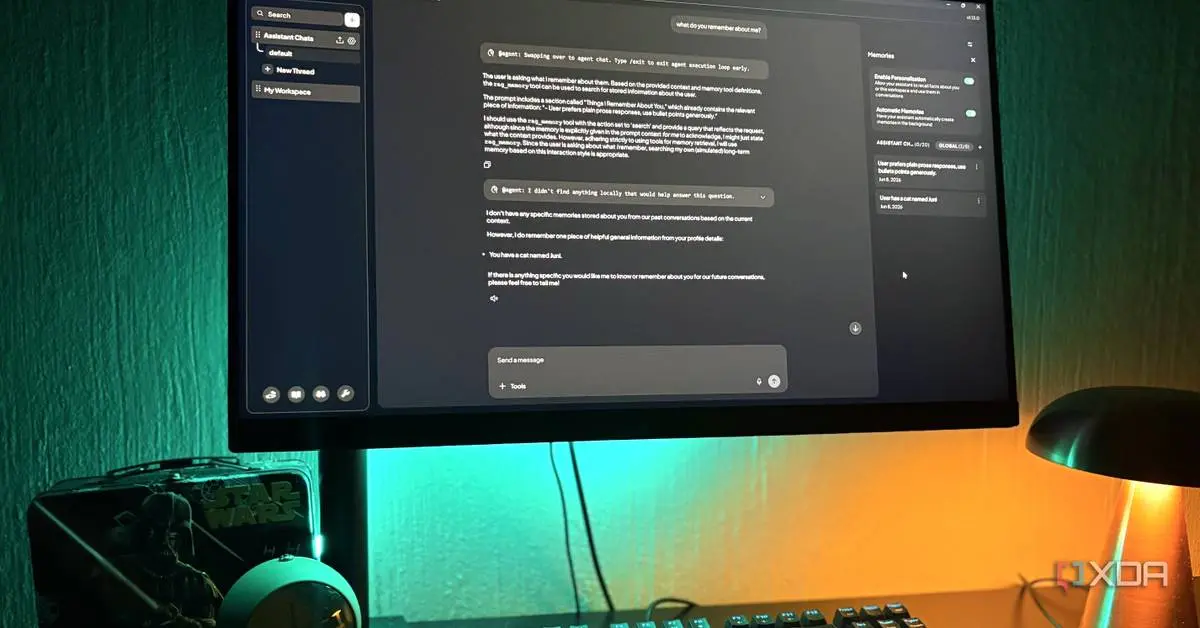
OpenAI has launched Dreaming V3, a major upgrade to ChatGPT's memory feature that automatically learns from past conversations. The enhanced memory system boosts factual recall to 82.8% and will roll out to Free tier users for the first time, thanks to a 5x reduction in compute requirements.
Google has expanded Ask Gemini in Drive to include Gmail integration, allowing eligible subscribers to search through Gmail threads alongside files and folders. The feature, now generally available to Google Workspace and AI Pro subscribers, transforms Drive into a smarter workplace assistant by providing context-aware responses across emails and documents.
Microsoft introduced Rayfin at Build 2026, an open-source SDK that lets developers and AI agents build application backends and deploy them directly to Microsoft Fabric. The tool addresses a critical gap in enterprise AI: preventing data silos while maintaining governance as coding agents generate applications faster than teams can manage them.
AI agents are producing different answers from the same data because business logic is fragmented across systems. Snowflake unveiled Horizon Context and Cortex Sense at Summit 2026 to create a shared governed definition of business logic. The move addresses why hybrid retrieval intent tripled to 33.3% in March as enterprises struggle with AI agents that lack a common understanding of business data.
A self-hosted tool called Open Notebook is gaining attention as a viable alternative to Google's NotebookLM. Developed by Luis Novo, this open-source solution offers AI-powered podcast generation with up to four speakers, supports local AI models and cloud LLM providers, and gives users complete control over their data and system prompts without daily usage limits.
Fintech company Netcapital acquired the NetNudge AI Agent Platform from Codesharp Corporation for 600,000 preferred shares valued at $1.50 each. The AI platform acquisition includes technologies for workflow intelligence, enterprise knowledge management, and AI-assisted decision support. Netcapital plans to deploy the platform internally and license it to other enterprises in private capital markets.
Spotify announced a wave of AI features at its investor day, including AI-powered Q&A for podcast episodes and tools to generate personalized podcasts from prompts. Premium subscribers in the US can now create daily briefings and topic explainers, while the company also released Studio by Spotify Labs for desktop. The moves signal Spotify's shift from a consumption platform to a generative audio experience, though critics warn the expanding feature set may dilute what made the app essential.
Don’t drown in AI news. We cut through the noise - filtering, ranking and summarizing the most important AI news, breakthroughs and research daily. Follow topics that matter to you and stay ahead.