80+ UK Stars Demand Legal Protection Against AI Voice Cloning as Scams Rise


3 Sources
[1]
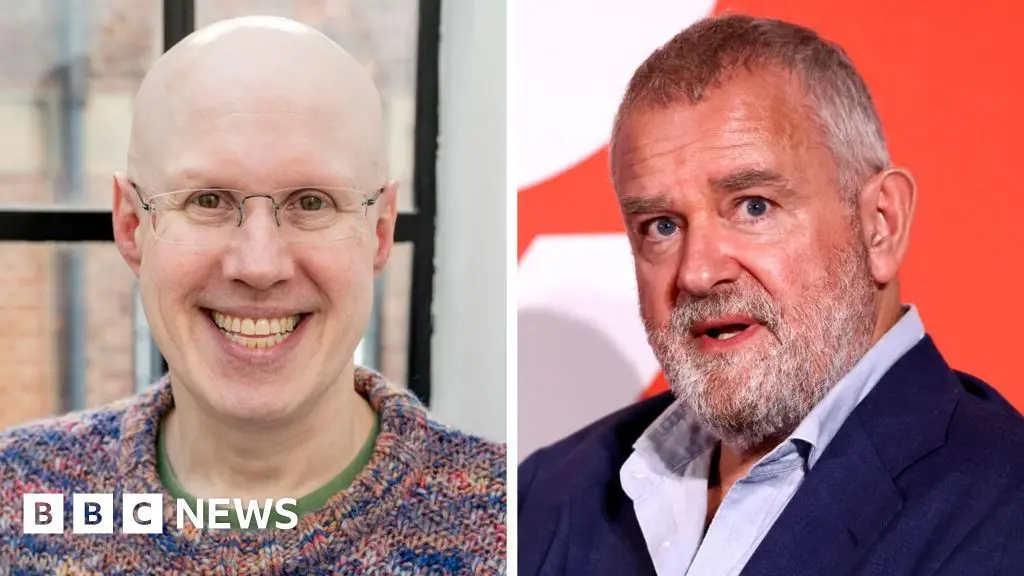
Matt Lucas and Hugh Bonneville call for law on AI voice clones
Actors including Matt Lucas, Hugh Bonneville and Nicola Coughlan have written to the UK government demanding greater protection against their voices being used by AI. The performers are asking Prime Minister Andy Burnham to introduce legislation which would give every person in the UK a legal
[2]
Nicola Coughlan and Matt Lucas among stars backing campaign against AI voice cloning
About 80 people sign open letter to Andy Burnham calling for legislation to protect voice ownership Nicola Coughlan, Hugh Bonneville and Matt Lucas are among a raft of actors backing a campaign against artificial intelligence (AI) voice cloning. Save Our Voices Now, which is also being supported
[3]
Hugh Bonneville among stars backing campaign against AI voice cloning | BreakingNews
By Casey Cooper-Fiske, Press Association Senior Entertainment Reporter Nicola Coughlan, Hugh Bonneville and Matt Lucas have joined a campaign to protest against artificial intelligence (AI) voice cloning. Save Our Voices Now, which is also being backed by Luke Evans, Jen Brister, Siobhan
Share
Copy Link
Over 80 UK performers including Matt Lucas, Hugh Bonneville, and Nicola Coughlan have launched Save Our Voices Now, demanding legislation to protect voice ownership. With 28% of UK adults targeted by voice-cloning scams and AI able to replicate voices in just three seconds, the campaign urges Prime Minister Andy Burnham to grant statutory rights for individuals to own their voices.
UK Performers Unite Against Unauthorized AI Voice Replication
More than 80 UK performers have signed an open letter to Prime Minister Andy Burnham demanding legislation to protect voice ownership against AI voice cloning. The Save Our Voices Now campaign includes Matt Lucas, Hugh Bonneville, Nicola Coughlan, Luke Evans, Siobhán McSweeney, and Pearl Mackie, all calling for statutory rights for individuals to own their voices.
1
2
Hugh Bonneville stated his voice is unique and part of his identity, adding with humor that his quote was handwritten, not created by AI.3
Source: BBC
Voice-Cloning Scams Target 28% of UK Adults
The campaign against AI voice cloning highlights alarming statistics: 28% of UK adults report being targeted by voice-cloning scams.
2
3
Peter Caulfield, founder of Save Our Voices Now, warned that with the right AI system, a voice can be cloned in just three seconds without knowledge or consent. He described the situation as resembling a Black Mirror episode, except it's happening right now. AI-generated voice replicas are created by training AI on recordings of real people, with quick versions made in minutes from seconds of audio, while high-quality copycats require hours of training.1
Existential Threat to Creative Industries
Audiobook narrator Alice Sockett, who co-founded the campaign, called AI voice cloning an existential threat to the entire industry. She explained her voice is in the public domain but completely unprotected, with voice theft increasing every week.
1
Derry Girls actor Siobhán McSweeney expressed deep worry that legislation, contracts, and artists' rights aren't being considered or protected as quickly as AI technology progresses. She believes there's a way to work alongside AI as a tool that benefits performers rather than rendering them obsolete, emphasizing that audiences want human connection, not AI.2
3
Government Response and Legal Gaps
A UK government spokesperson acknowledged that while digital replicas can be powerful tools for creative industries, there's potential for harm. The government announced plans to launch a consultation on addressing these harms while protecting legitimate innovation.
1
However, lawyers warned months earlier that UK legislation has become unfit for purpose due to AI advancements. Dr. Mathilde Pavis noted in June that the law comes close but doesn't fully protect voices, faces, or identity.1
Caulfield argued the government is allowing AI companies to steal and profit from artists' voices without consent while also enabling criminals to use AI for identity theft.2
Related Stories

Denmark's Legal Reforms Offer Blueprint
Denmark is implementing legal reforms to give citizens legal ownership over their face, body, and voice, allowing them to demand removal of unauthorized AI content and seek compensation.
2
3
This approach provides a potential model for protecting voice ownership in other countries facing similar challenges with AI-generated voice replicas.Balancing Protection with Innovation
While the campaign focuses on protecting voice ownership, some applications of voice cloning technology have proven beneficial. Yvonne Johnson, who lost her voice to motor neurone disease, described how having it cloned by AI totally blew her mind and brought her closer to family who had forgotten what she sounded like.
1
Singer Sandi Thom, known for her 2006 hit I Wish I Was a Punk Rocker (With Flowers in My Hair), signed the letter emphasizing her voice is unique and handed to her at birth, representing emotion, life, pain, tears, and joy. She stated that without human creativity, we are nothing.1
A Gov.uk petition has been launched alongside the open letter, asking for legal rights to their voices as part of statutory rights for everyone in Britain.2
References
Summarized by

Navi
[2]
Related Stories
AI Voice Cloning: Celebrities Targeted and Legal Challenges Emerge
19 Nov 2024•Technology

David Attenborough 'Profoundly Disturbed' by AI Voice Clones, Calls It Identity Theft
19 Nov 2024•Technology

800 Artists Launch AI Campaign Against Copyright Infringement, Demanding Licensing Over Theft
22 Jan 2026•Entertainment and Society
Recent Highlights
1
Meta Unveils Muse Wonder Frontier AI Models, Claims Performance Matching OpenAI and Anthropic
Technology

2
IMF Report Warns AI Market Correction Could Spark Global Financial Crisis With $1.4T at Risk
Business and Economy

3
OpenAI Releases 722 AI-Generated Math Solutions, Triggering Existential Crisis in Mathematics
Technology

Recent Highlights
Today's Top Stories








Don’t drown in AI news. We cut through the noise - filtering, ranking and summarizing the most important AI news, breakthroughs and research daily. Follow topics that matter to you and stay ahead.


