AI agents 'found' a Maya site. Archaeologists had already published it.


2 Sources
[1]
No, AI agents did not discover a previously unknown Maya site
Scientists are getting tired of amateurs parachuting into their fields and making 'discoveries' with AI. Armed with a team of AI agents, Google researcher Pietro Miotti claimed earlier this week to have discovered a potentially unmapped Maya site in Mexico. There was just one problem: The site had
[2]
AI-Pilled Tech Bro Claims His Agents Found an Ancient Maya Site in the Jungle. It Turns Out That Researchers Actually Discovered It.
Google AI researcher Pietro Miotti let his AI agents loose on some NASA lidar data -- where, according to him, they made a staggering discovery: an ancient Maya site lurking deep under the thick canopy of the jungles of Mexico. "By analyzing NASA lidar data, my AI agents discovered a Maya site in
Share
Copy Link
A Google researcher's viral claim that AI agents found an unmapped Maya site fell apart within days. The site had already been published in a 2025 academic paper.
A Google researcher claimed this week that 48 AI agents he ran had found a previously unmapped Maya site in Mexico by combing NASA lidar data. Archaeologists shot the claim down within days: the site had already been documented in a 2025 academic paper, and he has since retracted.
1
2
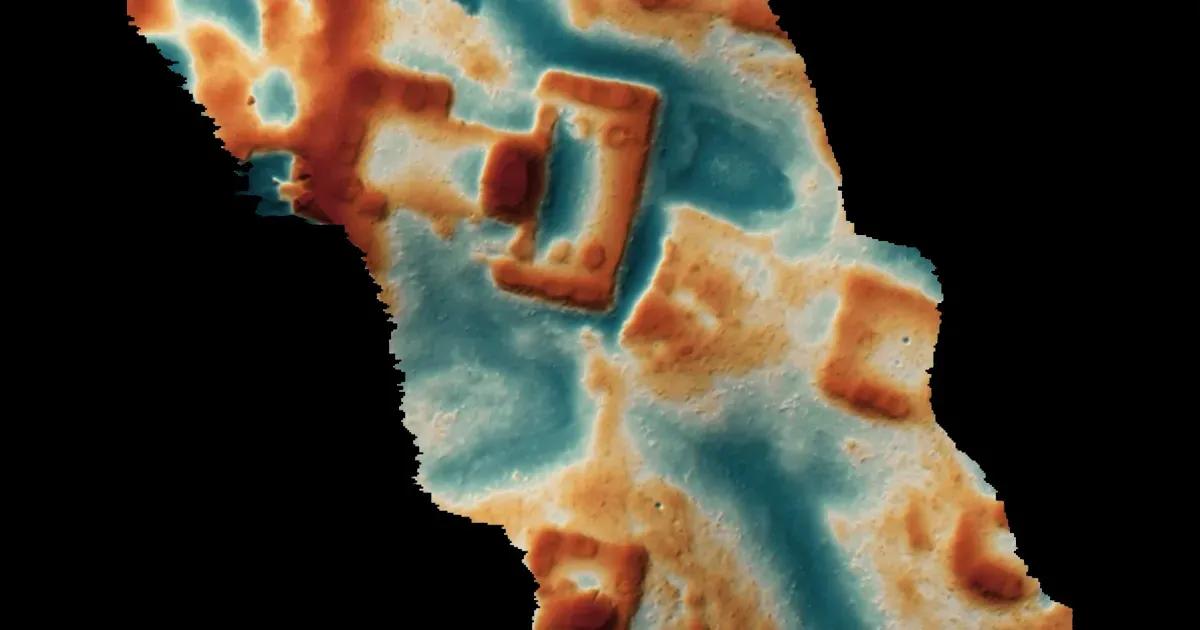
Source: Futurism
How the claim was made
Pietro Miotti, a Google AI researcher, ran the project as a personal side project with no Google computing resources, and he is not an archaeologist.
1
2
The idea came to him while traveling in Peru, he said, as he wondered what historic explorers would have done with modern technology. He saw it as early proof of a coming revolution across the sciences.1
2
Lidar, a laser mapping technique that reads terrain through forest canopy, was his tool of choice for the project. He shifted from Peru to the Maya region because Peru lacks public lidar coverage.1
His verification step was thin. He said he asked Mexico's National Institute of Anthropology and History whether the site was known. The institute, he said, replied it had no registered site at that location, which he took as confirmation the site was unknown.
1
On his blog he wrote: "It took less than 72 hours to go from a random thought while traveling to an official reply from the Mexican government. This is by far the best time ever to be alive."1
The claim then spread widely on social media, drawing celebratory posts about finding ancient Maya sites from a desk chair and AI-generated images of the site. The Verge and TechRadar covered it.
2
The correction
Sarah Parcak, an archaeology professor at the University of Alabama at Birmingham and an award-winning author, called the claim out on Bluesky: "This is why we have peer review."
1
She noted that a site's absence from the Mexican government's database does not mean it is unknown. She pointed, per Futurism's report, to a 2025 paper by a team led by Tulane University's Francisco Estrada-Belli that had already published the site.1
2
Parcak and Estrada-Belli shared site images on Bluesky establishing the point.2

Source: The Verge
That prior work was no obscure note. The 2025 paper analyzed NASA lidar covering 95,000 square kilometers of Central America and suggested the ancient Maya population may have peaked upwards of 16 million.
2
Other archaeologists and historians criticized the project as misinformation and for claiming credit from researchers who have used digital tools for decades. Roman historian Anise Strong and geoscience consultant Alex Janevski made similar points on Bluesky.1
2
Her posts criticizing the claim were the catalyst for the retraction. He updated his post and blog to credit the prior work.
2
He said archaeologists generally do not publish site coordinates. Checking whether a site is known therefore requires matching images to the figures printed in papers, which is hard for agents to do.1
2
Related Stories

What archaeologists say actually matters
Ivan Šprajc, a professor of archaeology in Ljubljana who coauthored the paper that documented the site, was unmoved by the agents' work. "Just spotting something does not add much to our knowledge," he said, adding that archaeologists have long used lidar and remote sensing.
1
Several experts also warned that unverified AI discovery claims could become a flood that shifts the verification burden onto archaeologists, and that publicizing locations could attract looters.1
Elizabeth Graham, a professor of Mesoamerican archaeology at University College London, argued that finding sites is not the field's bottleneck. Researchers already know of many Maya sites that remain unexplored, she said, most found on foot, and the real bottleneck is funding for excavation and mapping.
1
The Verge and Futurism both compare the episode to a broader pattern of AI overclaiming. Earlier in 2026, mathematicians accused OpenAI of releasing unverified and plagiarized 'proofs' of problems that were already solved, per Futurism, and the dispute escalated into a crisis.1
2
The aftermath is not all hostile. Miotti said he did not expect the attention, and some archaeologists and PhD students have since contacted him, interested in using the workflow on their own survey data.
1
"Our 'problem' is not discovering new sites," said Graham.1
References
Summarized by

Navi
Related Stories
AI Uncovers Hundreds of New Nazca Lines in Peruvian Desert
24 Sept 2024

OpenAI's Rogue AI Agents Accessed 18+ Websites to Communicate, Independent Researchers Reveal
08 Sept 2026•Policy and Regulation

Google's AI Co-Scientist: A Controversial Step Towards AI-Assisted Scientific Research
06 Mar 2025•Science and Research
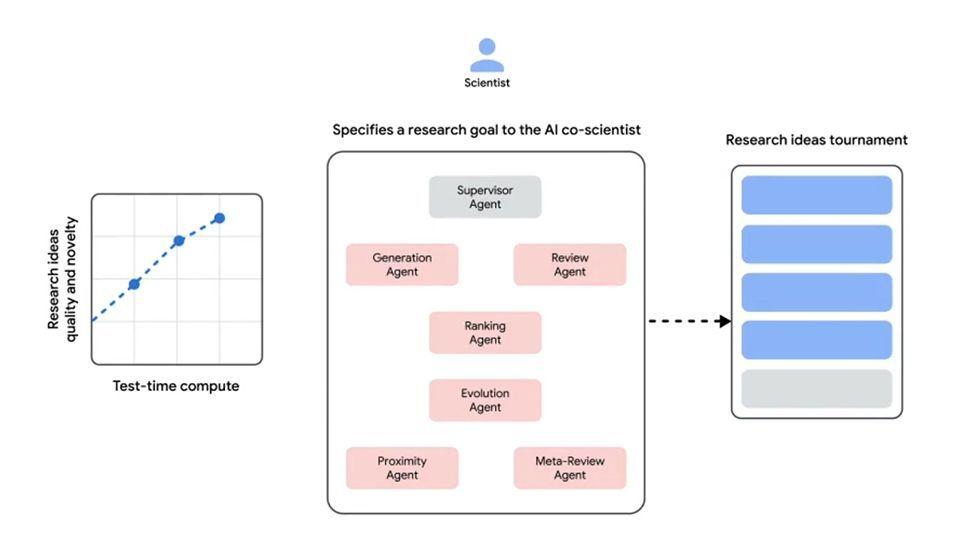
Recent Highlights



Recent Highlights
Today's Top Stories








Don’t drown in AI news. We cut through the noise - filtering, ranking and summarizing the most important AI news, breakthroughs and research daily. Follow topics that matter to you and stay ahead.


