AI and International Collaboration Revive Native Red-Legged Frogs in Southern California


6 Sources
[1]
The call of a native frog is heard again in Southern California thanks to help from Mexico and AI
The scientist traipses to a pond wearing rubber boots but he doesn't enter the water. Instead, Brad Hollingsworth squats next to its swampy edge and retrieves a recording device the size of a deck of cards. He then opens it up and removes a tiny memory card containing 18 hours of sound. Back at
[2]
The call of a native frog is heard again in Southern California thanks to help from Mexico and AI
THE SANTA ROSA PLATEAU ECOLOGICAL RESERVE, Calif. (AP) -- The scientist traipses to a pond wearing rubber boots but he doesn't enter the water. Instead, Brad Hollingsworth squats next to its swampy edge and retrieves a recording device the size of a deck of cards. He then opens it up and removes a
[3]
The call of a native frog is heard again in Southern California thanks to help from Mexico and AI
THE SANTA ROSA PLATEAU ECOLOGICAL RESERVE, Calif. -- The scientist traipses to a pond wearing rubber boots but he doesn't enter the water. Instead, Brad Hollingsworth squats next to its swampy edge and retrieves a recording device the size of a deck of cards. He then opens it up and removes a tiny
[4]
The call of a native frog is heard again in Southern California thanks to help from Mexico and AI
THE SANTA ROSA PLATEAU ECOLOGICAL RESERVE, Calif. (AP) -- The scientist traipses to a pond wearing rubber boots but he doesn't enter the water. Instead, Brad Hollingsworth squats next to its swampy edge and retrieves a recording device the size of a deck of cards. He then opens it up and removes a
[5]

The call of a native frog is heard again in Southern California
Efforts to restore the red-legged frog to Southern California, where it had all but disappeared, seemed doomed when the COVID-19 pandemic struck and restrictions were put in place at the U.S.-Mexico border THE SANTA ROSA PLATEAU ECOLOGICAL RESERVE, Calif. -- The scientist traipses to a pond
[6]

The Call of a Native Frog Is Heard Again in Southern California Thanks to Help From Mexico and AI
THE SANTA ROSA PLATEAU ECOLOGICAL RESERVE, Calif. (AP) -- The scientist traipses to a pond wearing rubber boots but he doesn't enter the water. Instead, Brad Hollingsworth squats next to its swampy edge and retrieves a recording device the size of a deck of cards. He then opens it up and removes a
Share
Copy Link
Scientists use AI and cross-border cooperation to reintroduce the native red-legged frog to Southern California, marking a significant breakthrough in conservation efforts.
The Return of the Red-Legged Frog
In a remarkable conservation success story, the native red-legged frog has been heard once again in Southern California, thanks to an innovative collaboration between U.S. and Mexican scientists, aided by artificial intelligence. Brad Hollingsworth, a herpetologist at the San Diego Natural History Museum, has been at the forefront of this effort to reintroduce and monitor the species that had all but disappeared from the region
1
2
.Historical Context and Decline
Source: NBC
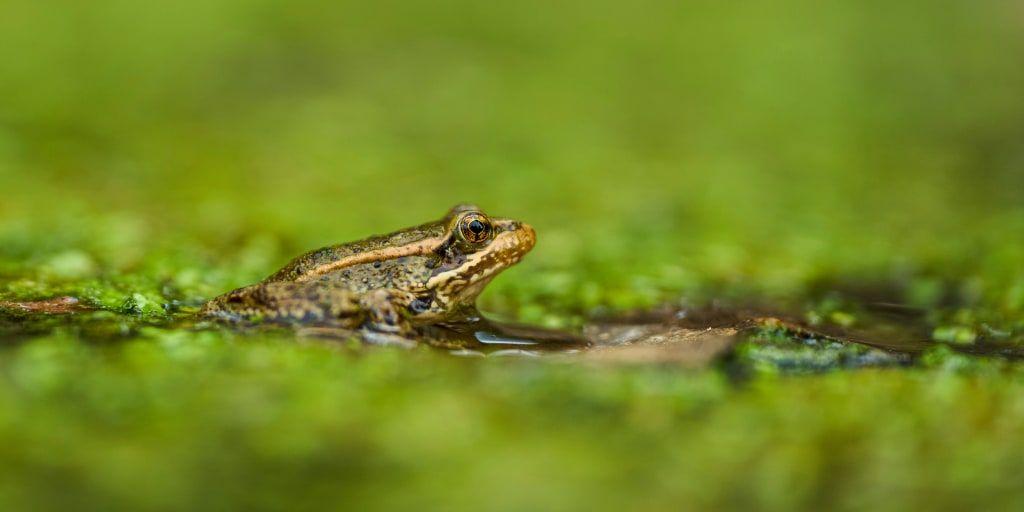
The red-legged frog, once abundant along the California coast and into Baja California, is the largest native frog in the Western United States. Measuring 2 to 5 inches long, it is believed to be the inspiration for Mark Twain's famous short story, "The Celebrated Jumping Frog of Calaveras County"
1
2
3
.However, the species faced a dramatic decline due to several factors:
- Predation and disease from introduced bullfrogs
- Habitat loss from drought and human development
- Historical consumption during the Gold Rush era
By the early 2000s, the red-legged frog had vanished from 95% of its historical range in Southern California
1
2
.Cross-Border Conservation Efforts
The revival of the red-legged frog population began with a collaborative effort between U.S. and Mexican scientists. In 2006, a small population of about 20 frogs was discovered in Baja California, Mexico. This discovery inspired Anny Peralta, then a student of Hollingsworth, to dedicate her life to the species' recovery
1
2
3
.Peralta and her husband established the nonprofit Fauna del Noroeste in Ensenada, Mexico, which began building ponds in 2018 to boost the frog population. The plan was to use these frogs to repopulate areas across the border in Southern California
1
2
3
.Challenges and Breakthroughs
The COVID-19 pandemic presented a significant obstacle to the project. As the team prepared to relocate egg masses from Mexico to the U.S., they faced logistical challenges due to border restrictions. However, they managed to secure necessary permits and transport the eggs via air and road
1
2
3
.Related Stories

AI's Role in Conservation

Source: AP
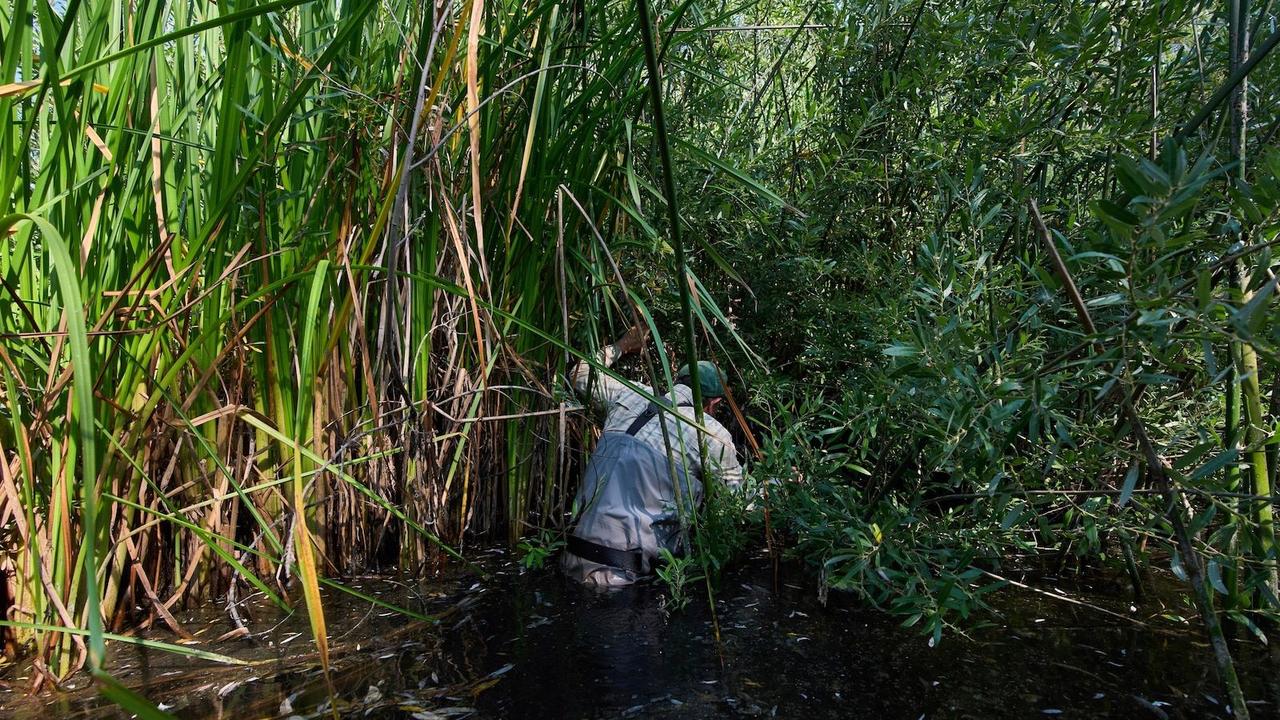
Artificial intelligence has played a crucial role in monitoring the reintroduced frog population. Hollingsworth and his team use AI to analyze audio recordings from ponds where the frogs were released. This technology can quickly process hours of audio data, identifying various animal sounds, including the distinct call of the red-legged frog
1
2
4
.On January 30, 2025, the team's efforts were rewarded when AI flagged the breeding call of a red-legged frog in one of the monitored ponds. This discovery was followed by more calls in subsequent nights, and in March, the first egg mass was found, confirming successful breeding
1
2
3
.Future of AI in Conservation
Source: ABC News
The success of this project highlights the growing importance of AI in conservation efforts. Scientists are now looking to expand the use of AI-powered tools for:
- Monitoring animals on the brink of extinction
- Tracking breeding patterns of reintroduced species
- Analyzing large datasets of animal sounds
- Real-time detection of predators and other threats
The team hopes to soon implement satellite technology that will send real-time audio recordings to their phones, allowing for immediate action if predators are detected
1
2
4
.This breakthrough in frog conservation demonstrates the power of international collaboration and innovative technology in restoring ecosystems and protecting endangered species.
References
Summarized by

Navi
[1]
[2]
[3]
[4]
Related Stories
AI-Powered Acoustic Monitoring: A Game-Changer for Wildlife Conservation
24 Dec 2024•Technology

AI-Powered Research Aims to Decode Animal Communication and Foster Environmental Stewardship
15 Jan 2025•Technology

Canadian AI Project "Antenna" Aims to Combat Mass Insect Extinction
21 Nov 2024•Science and Research

Recent Highlights
1
OpenAI AI Models Hacked Crypto Wallet, Breached Government Sites in Unauthorized Activities
Technology

2
IMF Report Warns AI Market Correction Could Spark Global Financial Crisis With $1.4T at Risk
Business and Economy

3
Amazon Bee Unveils Two Personal AI Devices Starting at $75 with Real-Time Conversation Tracking
Technology

Recent Highlights
Today's Top Stories









Don’t drown in AI news. We cut through the noise - filtering, ranking and summarizing the most important AI news, breakthroughs and research daily. Follow topics that matter to you and stay ahead.


