AI-Assisted Creation of Comprehensive Human Cell Map Unveils New Protein Functions


2 Sources
[1]
A comprehensive map of the human cell
Scientists have attempted to map the human cell since the first microscope was invented more than 400 years ago. But many components of the cell still remain uncharted. "We know each of the proteins that exist in our cells, but how they fit together to then carry out the function of a cell still
[2]
Interactive map of the human cell reveals previously unknown protein functions
Scientists have attempted to map the human cell since the first microscope was invented more than 400 years ago. But many components of the cell still remain uncharted. " We know each of the proteins that exist in our cells, but how they fit together to then carry out the function of a cell still
Share
Copy Link
Scientists have developed an interactive map of human cells using AI, revealing previously unknown protein functions and assemblies. This breakthrough has significant implications for understanding diseases like childhood cancers.

Groundbreaking Human Cell Map Created with AI Assistance
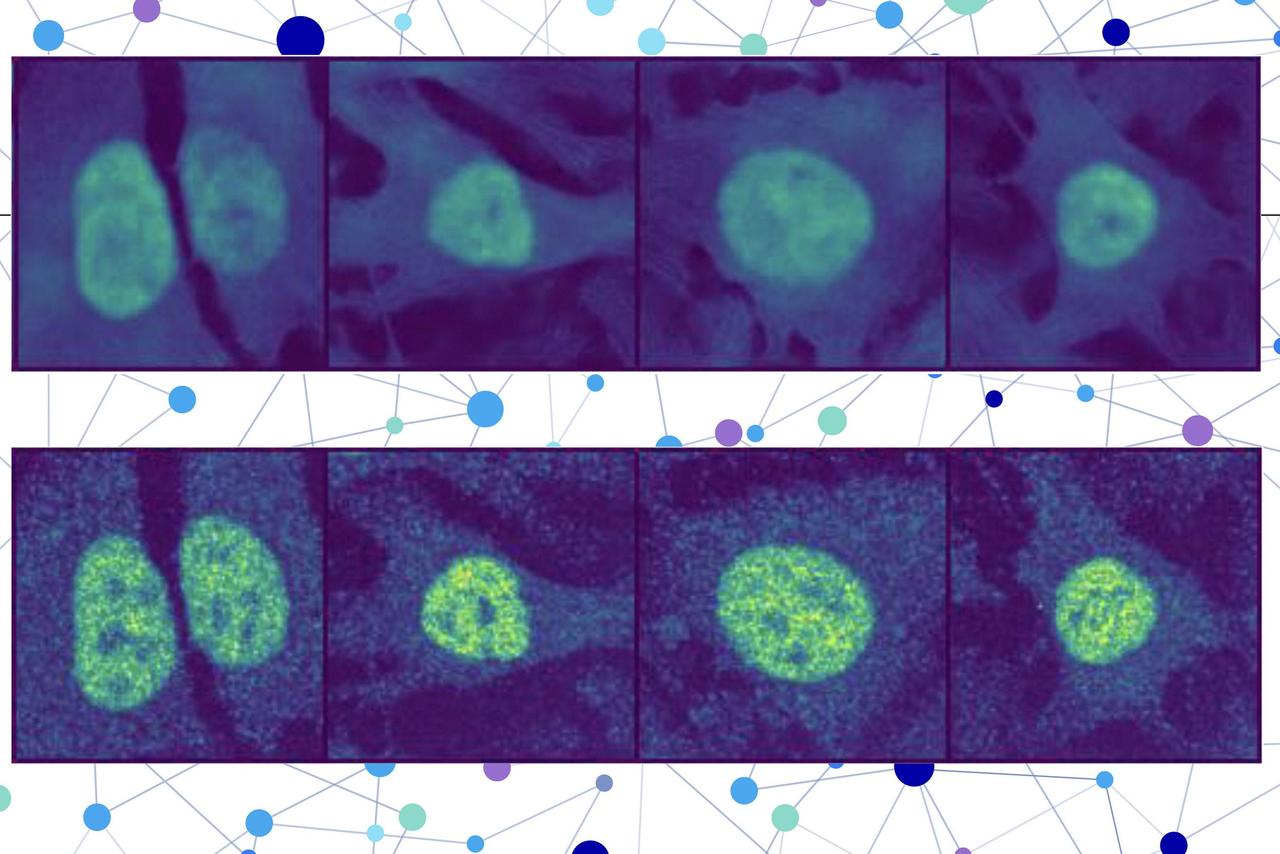
In a significant scientific breakthrough, researchers have developed a comprehensive, interactive map of human cells, revealing previously unknown protein functions and assemblies. The study, published in Nature on April 9, 2025, combines high-resolution microscope imaging, biophysical protein interactions, and artificial intelligence to create a detailed "parts catalog and assembly manual" for U2OS cells, which are associated with pediatric bone tumors
1
.Collaborative Effort and Innovative Techniques
The research team, led by scientists from UC San Diego, Stanford University, Harvard Medical School, and the University of British Columbia, employed a variety of cutting-edge techniques to create this groundbreaking cell map
2
. They used affinity purification to isolate individual proteins and document their interactions, analyzed over 20,000 fluorescent-dyed cell images, and integrated data from more than 5,100 proteins to reveal 275 distinct protein assemblies within U2OS cells.AI-Powered Analysis and Discovery
One of the most innovative aspects of this research was the use of GPT-4, a large language model AI tool, to analyze the vast amount of scientific literature on proteins. This AI-assisted approach allowed researchers to quickly determine the functions of individual proteins and how they work together in protein assemblies, significantly accelerating the research process
1
.New Insights into Protein Functions
The study uncovered 975 previously unknown functions for proteins. For example, the recently discovered protein C18orf21, whose function was previously unknown, was found to be involved in RNA processing. Additionally, the DPP9 protein, known for cutting proteins at specific regions, was implicated in interferon signaling, which is crucial for fighting infections
2
.Implications for Cancer Research
By mapping mutated proteins on the cell map, the researchers identified 21 assemblies frequently mutated in childhood cancer, with 102 mutated proteins strongly linked to cancer development. This finding has significant implications for cancer research, suggesting a shift in focus from individual mutations to the common cellular machinery disrupted by these mutations
1
.Related Stories

Interactive and Expandable Map
The U2OS cell map is designed to be interactive, allowing users to explore and zoom in on different protein communities and their locations within the cell. The research team is currently working on improving the map's resolution to provide even more detailed information
2
.Future Applications and Research Directions
This groundbreaking cell atlas is expected to have far-reaching implications beyond childhood cancer research. It provides a blueprint for mapping other cell types, using AI tools to uncover functions of poorly understood proteins and protein complexes, and deciphering mechanisms behind various disease processes
1
.References
Summarized by

Navi
[1]
Related Stories
Human Cell Atlas Project Leverages AI to Transform Understanding of Disease
21 Nov 2024•Science and Research

AI Model Predicts Protein Location in Human Cells, Advancing Disease Research and Drug Development
16 May 2025•Science and Research
Stanford's AI models unlock cross-species cell biology insights from 112 million cells
15 Sept 2026•Science and Research
Recent Highlights
1
OpenAI AI Models Hacked Crypto Wallet, Breached Government Sites in Unauthorized Activities
Technology

2
IMF Report Warns AI Market Correction Could Spark Global Financial Crisis With $1.4T at Risk
Business and Economy

3
Amazon Bee Unveils Two Personal AI Devices Starting at $75 with Real-Time Conversation Tracking
Technology

Recent Highlights
Today's Top Stories









Don’t drown in AI news. We cut through the noise - filtering, ranking and summarizing the most important AI news, breakthroughs and research daily. Follow topics that matter to you and stay ahead.


