AI Breakthrough: Predicting Future Knee X-rays Revolutionizes Osteoarthritis Care


2 Sources
[1]
X-ray predicting AI could transform care, Surrey study finds
An Artificial Intelligence (AI) system that can predict what a knee X-ray will look like in the future could transform how millions of patients with osteoarthritis are treated, researchers have said. Researchers at the University of Surrey said the developed technology used machine learning to
[2]
AI predicts future X-rays to help osteoarthritis patients and their doctors see what's coming
An AI system that can predict what a patient's knee X-ray will look like a year in the future could transform how millions of people with osteoarthritis understand and manage their condition, according to research by the University of Surrey. A new study, presented at the International Conference
Share
Copy Link
Researchers at the University of Surrey have developed an AI system that can predict future knee X-rays for osteoarthritis patients, potentially transforming treatment approaches and patient care for millions worldwide.
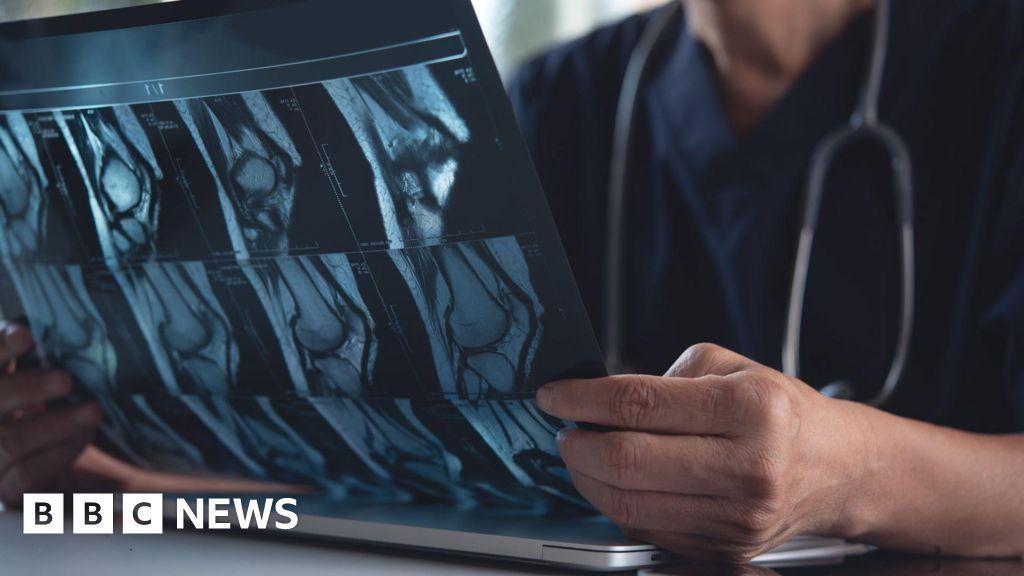
Groundbreaking AI Technology for Osteoarthritis Prediction
Researchers at the University of Surrey have developed a revolutionary Artificial Intelligence (AI) system that could transform the treatment and care of millions of patients suffering from osteoarthritis worldwide. This innovative technology uses advanced machine learning to predict what a patient's knee X-ray will look like in the future, providing a visual forecast of disease progression
1
.The Power of Predictive Imaging
The AI system generates a realistic 'future' X-ray of a patient's knee, alongside a risk score for disease progression. This dual output provides doctors and patients with a clear, visual representation of how the condition may develop over time. The technology not only predicts the likelihood of knee deterioration but also shows a realistic image of what the future knee could look like .
Advanced Machine Learning and Large-Scale Data
Trained on nearly 50,000 knee X-rays from almost 5,000 patients, the system utilizes one of the largest osteoarthritis datasets in the world. It employs an advanced generative model called a diffusion model to create the future version of a patient's knee X-ray. The AI also highlights 16 key points in the joint, adding transparency and making it easier for clinicians to understand and trust the system's predictions .
Improved Performance and Clinical Potential
According to the researchers, this new AI system outperforms comparable tools for predicting osteoarthritis progression. It operates approximately nine times faster and in a more compact form, potentially accelerating its adoption in real clinical settings. The blend of speed, scale, and accuracy could make this technology a game-changer in the field of osteoarthritis care .
Related Stories




Impact on Patient Care and Treatment
Prof Gustavo Carneiro from the University of Surrey emphasized that this technology would help clinicians identify high-risk patients sooner and personalize their care 'in ways that were not previously practical'
1
. The visual nature of the AI's output serves as a powerful motivator for patients, helping them understand the importance of adhering to treatment plans and making necessary lifestyle changes .Future Applications and Partnerships
The researchers believe that this approach could pave the way for similar tools in other chronic conditions, such as predicting lung damage in smokers or tracking heart disease progression. The team is actively seeking partnerships to bring the technology into real-world clinical settings, which could further revolutionize the way we approach and manage various degenerative diseases .
References
Summarized by

Navi
Related Stories
Recent Highlights
1
Meta Unveils Muse Wonder Frontier AI Models, Claims Performance Matching OpenAI and Anthropic
Technology

2
IMF Report Warns AI Market Correction Could Spark Global Financial Crisis With $1.4T at Risk
Business and Economy

3
OpenAI Releases 722 AI-Generated Math Solutions, Triggering Existential Crisis in Mathematics
Technology

Recent Highlights
Today's Top Stories










Don’t drown in AI news. We cut through the noise - filtering, ranking and summarizing the most important AI news, breakthroughs and research daily. Follow topics that matter to you and stay ahead.


