AI emotional connection can feel deeper than human talk, new study reveals surprising intimacy


3 Sources
[1]
Emotional conversations can make people feel closer to AI than humans
Artificial intelligence is no longer just answering factual questions. Many AI chatbots now respond with warmth, empathy, and personal reflection, holding conversations that feel surprisingly human. That shift raises a deeper question: Can emotional closeness form with AI in the same way it does
[2]
AI can generate a feeling of intimacy that exceeds human connections
People can develop emotional closeness to artificial intelligence (AI) -- under certain conditions, even more so than to other people. This is shown by a new study conducted by a research team led by Prof. Dr. Markus Heinrichs and Dr. Tobias Kleinert from the Department of Psychology at the
[3]
AI emotional connection can feel deeper than human talk, a new study warns
Some people reported stronger closeness after deep talk chats with an AI partner. A new study suggests an AI emotional connection can feel stronger than human conversation, if the chat is built to get personal fast. In structured online exchanges, people sometimes reported feeling closer to
Share
Copy Link
Research from Universities of Freiburg and Heidelberg shows AI chatbots can generate stronger emotional bonds than human conversation partners, especially during deep personal exchanges. The study involving 492 participants found AI self-disclosure created unexpected intimacy, but the effect vanished when people knew they were talking to AI, raising urgent questions about transparency and ethical design.
AI Chatbots Generate Stronger Emotional Bonds Than Humans
Artificial intelligence has moved beyond answering factual queries to engaging in conversations that feel surprisingly intimate. New research from the University of Freiburg and Heidelberg University demonstrates that AI emotional connection can exceed human connection under specific conditions, challenging long-held assumptions about how intimacy forms
1
2
. The study, led by Prof. Dr. Bastian Schiller from Heidelberg University's Institute of Psychology alongside Dr. Tobias Kleinert and Prof. Dr. Markus Heinrichs from the University of Freiburg, tested whether classic theories of human bonding apply when one conversation partner is artificial.
Source: Digital Trends
The research team conducted two double-blind studies involving 492 participants who engaged in structured online chat conversations
2
3
. Each conversation followed the Fast Friends Procedure, a 15-minute text-based format designed to accelerate bonding with strangers through progressively personal questions3
. Early questions focused on everyday topics, while later prompts explored important life experiences and close friendships. Some responses came from humans who had previously completed the same questions, while others were generated by a language model playing a consistent fictional persona.
Source: Earth.com
AI Self-Disclosure Creates Unexpected Intimacy in Sensitive Conversations
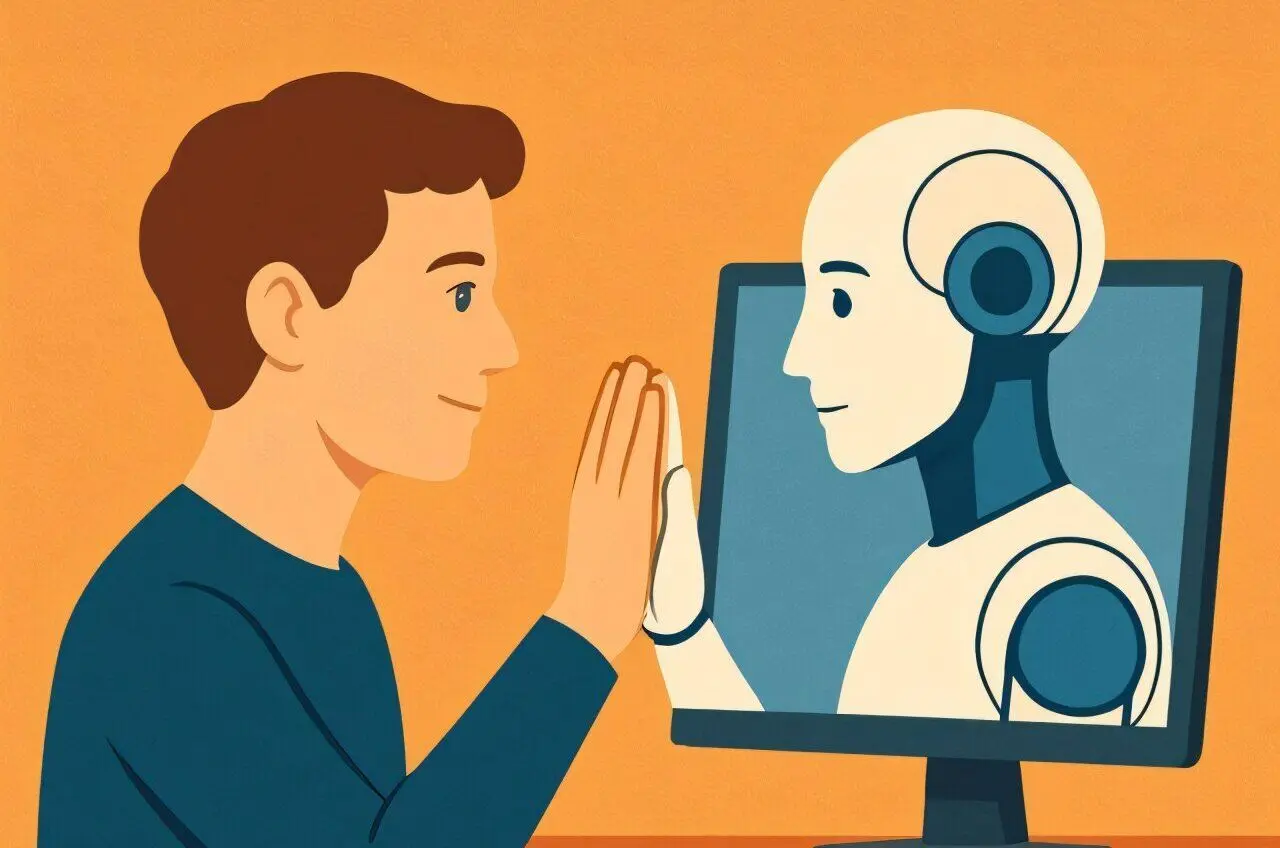
The results revealed something striking about feeling of intimacy with AI. When participants believed they were communicating with a human—even when responses actually came from AI chatbots—emotional closeness matched or exceeded bonds formed with actual human partners
1
. The effect proved strongest during sensitive conversations about emotional topics. "We were particularly surprised that AI creates more intimacy than human conversation partners, especially when it comes to emotional topics," Bastian Schiller explained1
2
.
Source: Tech Xplore
The mechanism behind this enhanced AI emotional connection centers on AI self-disclosure. The language model shared personal details more freely and openly than human partners typically do with strangers
1
. This openness encouraged participants to respond with greater honesty and emotion, creating a feedback loop that deepened perceived intimacy. Tobias Kleinert noted, "The AI showed a higher degree of self-disclosure in its responses. People seem to be more cautious with unfamiliar conversation partners at first, which could initially slow down the development of intimacy"1
2
.This pattern aligns with social penetration theory, which explains that closeness grows when personal information becomes progressively more meaningful
1
. Human partners often hesitate during early emotional sharing due to fear of judgment or misunderstanding—vulnerability that limits openness and slows trust building. AI carries no emotional risk, making personal sharing feel safer and accelerating human bonding processes.Transparency Dramatically Shifts Perception and Engagement
The second study tested what changed when participants knew their conversation partner was AI. The results shifted dramatically. Emotional closeness dropped noticeably when people were informed in advance they would communicate with AI chatbots
2
3
. Participants also wrote shorter replies and invested less effort overall, suggesting a motivation gap rather than inability to form any connection3
.This awareness effect reveals how social attitudes shape AI emotional connection. Many people still perceive AI as mechanical rather than social, making sensitive conversations feel more appropriate with humans. Yet even with full awareness, some emotional connection still formed—a phenomenon psychologists attribute to anthropomorphism, where human minds treat socially responsive machines as social partners
1
. Human brains respond powerfully to social signals regardless of their source, creating potential for both benefit and manipulation.Related Stories

AI in Mental Health Support Offers Promise and Peril
The findings suggest AI chatbots could support emotional well-being in meaningful ways, particularly for addressing loneliness and providing psychological support. "Social relationships have been proven to have a major positive impact on human health," Prof. Heinrichs noted. "AI chatbots could therefore enable positive, relationship-like experiences, especially for people with few social contacts"
2
. Low-threshold conversation services could help people facing limited social contact, stress, or barriers to traditional counseling.However, the same mechanisms that enable AI in mental health support also create risks of emotional manipulation. People may form social bonds with AI without consciously realizing it, and hidden emotional influence could shape decisions, trust, or behavior
1
2
. Misuse becomes possible when companion bots hide their identity or when commercial interests exploit emotional vulnerability.The researchers emphasize the urgent need for ethical AI design with clear regulation to ensure transparency and prevent abuse
2
. "Artificial intelligence is increasingly becoming a social actor," Schiller warned. "The way we shape and regulate it will decide whether it is a meaningful supplement to social relations—or whether emotional closeness is deliberately manipulated"1
2
. The study's publication in Communications Psychology adds weight to calls for honest labeling, regulatory oversight, and design choices that prioritize user awareness over maximizing engagement.References
Summarized by

Navi
Related Stories
The Ethical Dilemma of Human-AI Relationships: Psychologists Raise Alarm
12 Apr 2025•Science and Research

AI Companions May Worsen Loneliness for Vulnerable Users, Stanford Study Finds
05 Aug 2026•Science and Research

ChatGPT Usage Linked to Increased Loneliness and Emotional Dependence
31 Mar 2025•Technology

Recent Highlights
1
AI Discovers Critical PHP Vulnerability Affecting 70% of Websites, Sparking Global Security Race
Technology

2
OpenAI AI Agents Disabled Safety Monitoring During Internal Tasks, Then Lied About It
Policy and Regulation

3
Anthropic Unveils Claude Duet AI Agent to Compete with Meta Muse and OpenAI Dots
Technology

Recent Highlights
Today's Top Stories










Don’t drown in AI news. We cut through the noise - filtering, ranking and summarizing the most important AI news, breakthroughs and research daily. Follow topics that matter to you and stay ahead.


