AI Chatbot Helps Doctors in 75% of Cases With Just 1 Hallucination in Clinical Trial


3 Sources
[1]
Clinical Trial Indicates A.I. Chatbots Could Aid Urgent Care
Sign up for the On Tech newsletter. Get our best tech reporting from the week. Get it sent to your inbox. Last year, nearly 100 people tried a new form of medical care at Beth Israel Deaconess Medical Center in Boston. After scheduling a visit with the hospital's urgent care facility, they
[2]
Study in The Lancet suggests AI could improve patient-physician relationships.
Can AI safely assess patients' needs before they step into a doctor's office? A study led by researchers at Google and Beth Israel Deaconess Medical Center (BIDMC) and published in The Lancet today, offers an encouraging first look. As Google's first-ever publication in the main journal of The
[3]
BIDMC Researchers Conduct First Real-World Study of Safety and Quality of Patient-Facing AI in Primary Care | Newswise
BOSTON - The aging population, workforce changes, and patients' increasingly complex medical needs are all factors straining primary care systems around the world. Artificial intelligence tools have emerged as a potential means of extending the capabilities of health care workers, including in
Share
Copy Link
Google's AMIE AI chatbot assisted primary care physicians in 75% of urgent care cases during an 8-month clinical trial at Beth Israel Deaconess Medical Center. The study, published in The Lancet, found the AI diagnostic chatbot hallucinated only once across 98 patient conversations and matched doctors' final diagnoses 90% of the time.
AI Chatbot AMIE Shows Promise in Real-World Urgent Care Setting
An eight-month clinical trial at Beth Israel Deaconess Medical Center has demonstrated that AI in healthcare can safely assist primary care physicians during urgent care visits. The study, published in The Lancet and representing Google's first-ever publication in the journal's main edition, involved 98 patients who interacted with AMIE (Articulate Medical Intelligence Explorer), Google's AI chatbot, before meeting their doctors.
1
2
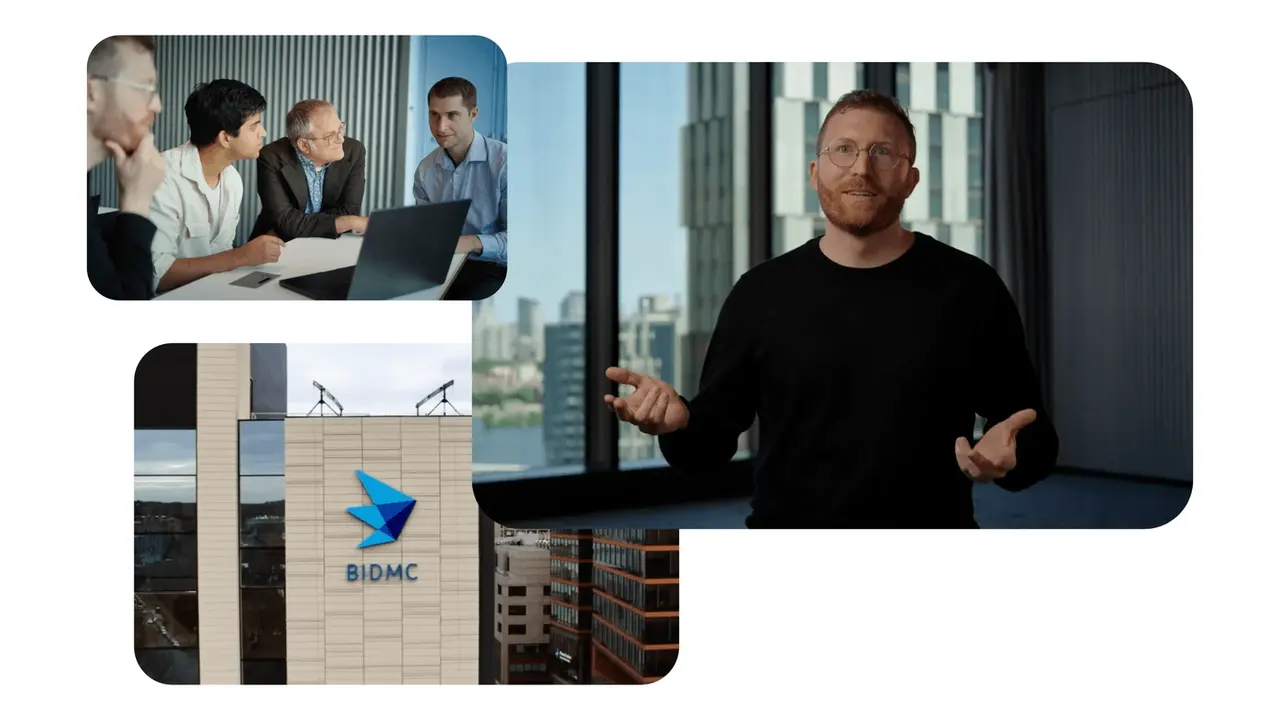
Source: Google
The patient-facing conversational AI gathered medical histories, explored symptoms, and generated summaries for physician review. Primary care providers reported that AI summaries for clinicians helped them prepare for visits in 75% of cases and potentially influenced their clinical approach in 57% of encounters.
3
Doctors compared the technology's performance to "a high-performing medical student or resident," according to Peter Brodeur, a resident physician at Beth Israel Deaconess Medical Center.1
Safety Monitoring Reveals Minimal AI Hallucination Risk
The clinical trial was designed primarily to test safety, with board-certified physicians monitoring every conversation in real time. Across all 98 completed patient interactions, supervising physicians never needed to halt a conversation based on predefined safety criteria. The AI diagnostic chatbot experienced only one hallucination instance—misrepresenting a date as future when it was past.
1
3
Physicians provided additional clinical clarification in just five cases. In one instance, when the AI application in healthcare listed cancer among potential diagnoses, a physician stepped in to reassure the patient that the bot was considering all possibilities.
1
Adam Rodman, Director of AI Programs at Beth Israel and medical historian who helped conduct the trial, explained that the system's focus on clinical reasoning from relatively short conversations makes hallucination less likely compared to systems processing entire medical records.1
Diagnostic Accuracy and Workflow Benefits Show Strong Results
AMIE's differential diagnoses matched physicians' final diagnoses 90% of the time, demonstrating strong alignment between AI could aid urgent care assessments and human clinical judgment.
2
The technology, powered by Google's flagship Gemini AI model, uses a more powerful version than what drives the company's search engine, specifically trained for clinical reasoning and medical diagnosis.1

Source: NYT
For the 44 cases where providers reviewed AI-generated transcripts or summaries before appointments, the workflow benefits were clear. Jacob Koshy, a hospitalist at Beth Israel Deaconess Medical Center, noted that prospectively observing these interactions helped researchers understand both opportunities and limitations of the technology in routine patient care.
3
Related Stories

Patient Trust Emerges as Critical Factor for AI Adoption
Patients rated Google's AI chatbot favorably across most quality measures, including its ability to listen, explain information, and help them feel at ease. Patient attitudes toward AI improved after interacting with the chatbot and remained elevated following their appointments with clinicians.
3
However, patient trust remained a concern in two specific areas: confidentiality of shared information and the chatbot's honesty and trustworthiness. Rodman emphasized that patients only trusted the system because it operated alongside trained physicians. "None of our patients trusted it until they realized that it was handing-off their doctor," he said.
1
Research suggests that patient trust in medical AI systems flows from relationships with human providers, underscoring the importance of maintaining strong patient-physician relationships.3
Future Implications for Strained Primary Care Systems
The study arrives as primary care systems worldwide face mounting pressure from an aging population, workforce changes, and increasingly complex medical needs. Robert Califf, a cardiologist at Duke and former FDA commissioner not involved in the trial, called this "the technology of the future" while cautioning that assumptions about reducing physician workload require further validation.
1
Google has launched a nationwide trial comparing patient visits with and without chatbots, aiming to assess the technology at scale.
1
Future research will explore which interaction characteristics build patient trust and how AI interactions can enhance rather than replace the patient-physician relationship. The findings suggest AI could improve patient-physician relationships by extending healthcare workers' capabilities, though experts warn these systems cannot yet replace trained doctors.2
References
Summarized by

Navi
Related Stories
AI Chatbots Enhance Physician Decision-Making in Clinical Management, Study Finds
08 Feb 2025•Health

AI Diagnosis Outperforms Emergency Room Doctors in Harvard Study, Raises Questions on Patient Care
30 Apr 2026•Science and Research

AI in Healthcare: Patients Trust AI Medical Advice Over Doctors, Raising Concerns and Challenges
18 Aug 2025•Health

Recent Highlights
1
Microsoft and Nvidia Launch Surface Laptop Ultra: A $2,599 AI-Ready PC With RTX Spark Chip
Technology

2
OpenAI Releases 722 AI-Generated Math Papers on GitHub, Igniting Fury Among Mathematicians
Science and Research

3
Trump Consulted Grok AI Before Ordering Venezuela Invasion and Capture of Nicolás Maduro
Policy and Regulation

Recent Highlights
Today's Top Stories







Don’t drown in AI news. We cut through the noise - filtering, ranking and summarizing the most important AI news, breakthroughs and research daily. Follow topics that matter to you and stay ahead.


