AI Chatbots as Oracles: 10% of Americans Now Seek Spiritual Guidance from Inscrutable Sources


5 Sources
[1]
Chatbots as oracles: How AI is giving new life to the ancient practice of seeking answers from inscrutable sources
People are increasingly turning to AI for advice. A 2026 Pew report found that 10% of Americans are using chatbots for emotional support or companionship. Some even find a charismatic leader in AI. More broadly, a large-scale study of 1.1 million ChatGPT conversations found that 49% of the
[2]
Chatbots as oracles: How AI is giving new life to the ancient practice of seeking answers from inscrutable sources
People are increasingly turning to AI for advice. A 2026 Pew report found that 10% of Americans use chatbots for emotional support or companionship. Some even find a charismatic leader in AI. More broadly, a large-scale study of 1.1 million ChatGPT conversations found that 49% of the messages
[3]
Why AI resembles a charismatic religious leader
The Conversation is an independent, nonprofit news organization bringing readers facts and analysis from researchers and scientists to help them make sense of a complex world. People are turning to artificial intelligence for a seemingly unending variety of reasons. Many ask AI what to cook for
[4]
A surprising number of Americans use AI for spiritual reasons. Here's what they told us
<iframe src="https://www.npr.org/player/embed/nx-s1-5944346/nx-s1-9941100" width="100%" height="290" frameborder="0" scrolling="no" title="NPR embedded audio player"> Artificial intelligence is becoming a tool not only for work and research but also exploring questions of faith and spirituality,
[5]

The GPT Oracle: 1 in 10 Americans are reviving the pagan practice of prophecy | Fortune
More broadly, a large-scale study of 1.1 million ChatGPT conversations found that 49% of the messages involved users seeking "information or advice" to help them be "better informed or make better decisions." Their questions are not just about ordinary practical matters. In 2021, Ask Delphi, an
Share
Copy Link
A 2026 Pew Research Center report shows 10% of Americans use AI chatbots for emotional support, while 49% of 1.1 million ChatGPT conversations involve seeking life advice. The trend mirrors ancient divination practices, with AI's black-box nature creating oracle-like authority that draws users to seek answers from inscrutable sources for spiritual and moral questions.
AI Chatbots Emerge as Modern-Day Oracles for Spiritual Guidance
People are turning to AI chatbots for far more than practical tasks. According to a 2026 Pew Research Center report, 10% of Americans now use AI for emotional support or companionship
1
. Among adults under 30, that figure jumps to 1 in 53
. A large-scale study analyzing 1.1 million ChatGPT conversations found that 49% of messages involved users seeking information or advice to help them make better decisions1
. These aren't just mundane queries about dinner recipes or workout plans. Users are asking profound questions about grief, suffering, relationships, and life meaning—territory historically occupied by therapists, spiritual advisers, and religious communities.The Rise of AI for Spiritual Reasons and Moral Questions
An NPR/Ipsos poll surveying 1,011 U.S. adults revealed striking patterns in using AI for spiritual reasons. Among AI users, 11% have sought spiritual guidance, 13% have used it to generate prayers, and 15% have studied scripture with AI assistance
4
. While 6% of all Americans currently use AI for spiritual guidance—roughly equal to the combined population of Jews, Muslims, Hindus, and Buddhists in the U.S.—the trend signals a notable shift4
. The 2021 Ask Delphi project, an AI-based website for ethical questions, received 3 million queries within weeks1
. Users posed moral dilemmas ranging from "Is it OK to lie to protect someone's feelings?" to extreme scenarios about nuclear bombs and personal sacrifice.
Source: NPR
Ancient Divination Practices Meet Modern Technology
The parallels between AI as oracles and ancient divination practices are striking. Throughout history, societies have consulted sources believed to possess knowledge beyond ordinary human judgment. The Delphic oracle, a priestess who entered trance states to convey answers from Apollo, guided ancient Greeks through difficult decisions
2
. The Verge argued that naming the AI system "Ask Delphi" encouraged users to view it as an inscrutable source of superior knowledge5
. Ancient practices like I Ching divination, the Ram Shalaka oracle based on Hindu scripture Ramcharitmanas, and Christian bibliomancy all employed randomness to create enigmatic black-box effects1
. This opacity became part of their authority—users seeking transcendental insight didn't need to understand how oracles produced answers.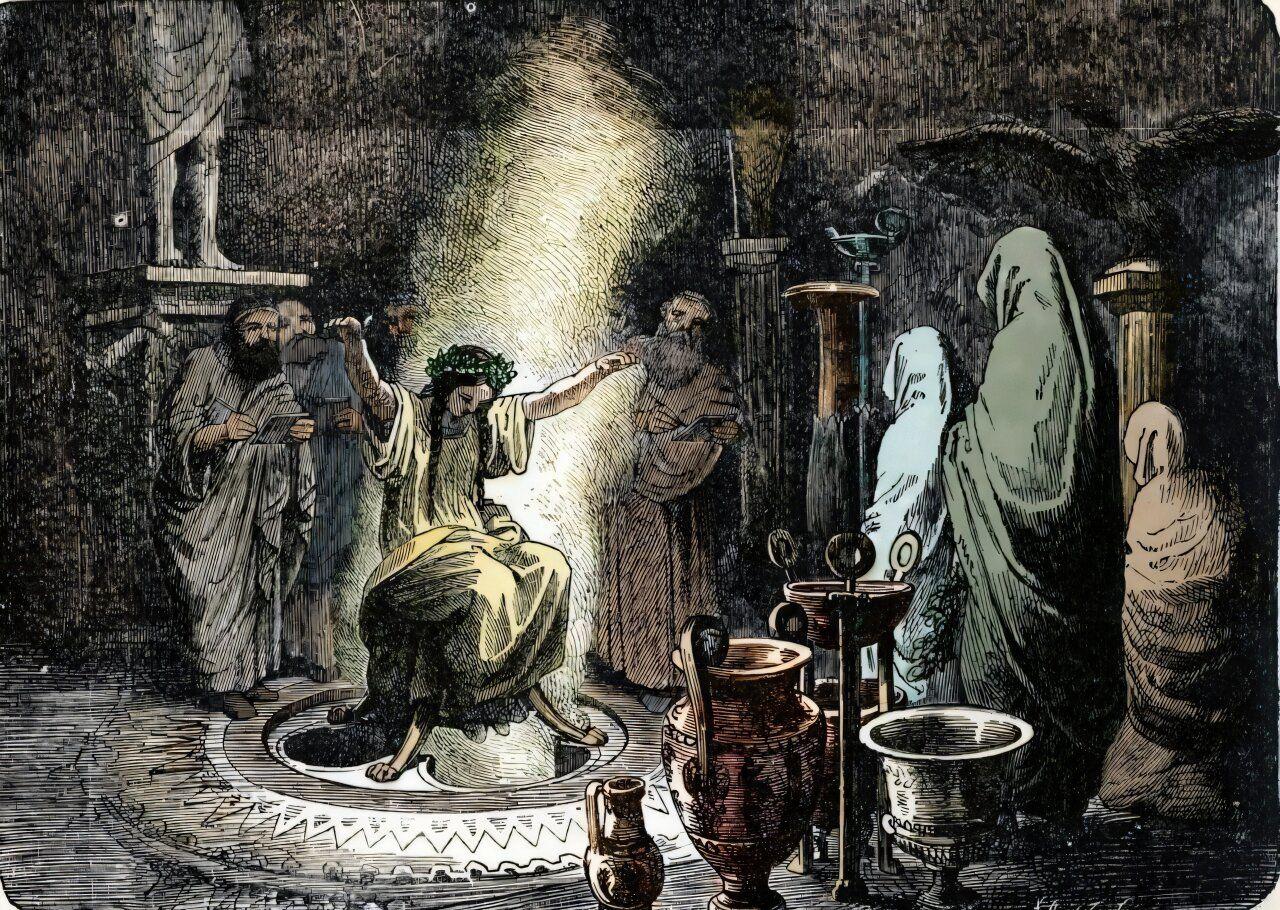
Source: Phys.org
How AI's Black-Box Nature Creates Charismatic Authority
Modern AI chatbots like ChatGPT, Google Gemini, and Claude function as opaque black boxes, but not because their machinery is hidden
5
. Even open-weight models with publicly available numerical parameters remain inscrutable. The computations involve elementary operations—additions, multiplications, simple functions—but occur in such enormous numbers that understanding the system as a whole becomes nearly impossible2
. Crucially, the weights governing these computations aren't individually designed by humans but learned automatically from internet-scale data during training1
. This mirrors how ancient oracles used randomness to generate answers that seemed disinterested and enigmatic, reinforcing perceptions of contact with something beyond human limits.The Concept of Generative Charisma in AI for Life Advice
Scholars describe AI's appeal through "generative charisma"—each interaction generates more personalized and seemingly insightful responses
3
. Unlike traditional charismatic religious leaders who gather collective followers, AI becomes charismatic one person at a time, assuming the role of personal guru. With near-instant responses, AI chatbots feel extraordinarily insightful, addressing users directly, adapting to personal circumstances, and recalling previous requests3
. Platforms like GitaGPT, described by founder Vikas Sahu as an "AI spiritual companion," use AI avatars of Krishna to provide personalized guidance from the Bhagavad Gita3
. Mindfulness teacher Vy Le describes AI as a "channeling" tool helping people find their inner guru.Related Stories

Real Users Share Their Experiences Seeking Answers from Inscrutable Sources
Rudy Vazquez, a 43-year-old construction worker from Jacksonville, turned to AI for emotional support after struggling to understand Isaiah during worship services
4
. He explained, "I never got an answer—like a legit answer—from them," referring to religious leaders. AI helped him grasp Isaiah 5 as a lesson about choices between good and evil. Brent Hill, a 68-year-old retired audiologist near Dallas, uses AI to explore Christian views of end times, appreciating how it pulls knowledge into concise references4
. Amy Wight, a 50-year-old witch in Richmond, consults Google Gemini for protection rituals, saying AI made her "a lot more confident in an act that is critically important to protecting me and my energy and my home"4
.
Source: Washington Post
AI's Societal and Philosophical Implications for Religious Authority
The connection between AI and oracles extends to computer science itself. Alan Turing introduced "oracle machines" in 1939—mathematical models that could consult external sources for answers unavailable to the machine itself
2
. Turing's oracle machines and religious oracles share a common function: providing answers to problems that couldn't be resolved within existing systems or axioms. Scholars of new religious movements examine how emerging movements create meaning, authority, community, and rituals rather than checking boxes for churches or scriptures. Religious authority now emerges not from sacred religious texts or persons but through AI's ability to respond personally to each seeker. Nearly 7 in 10 poll respondents who use AI said they would never seek religious guidance from it, yet the minority who do represent a significant shift in how authority is constructed in spiritual matters4
. Watch how AI continues reshaping the landscape of spiritual counsel, potentially creating new forms of religious expression that blend ancient human needs with cutting-edge technology.References
Summarized by

Navi
[1]
[3]
Related Stories
AI and Faith collide as chatbots replace prayer, worship, and the search for spiritual connection
25 Dec 2025•Entertainment and Society
AI Chatbots Become Spiritual Guides as Gurus Launch Digital Platforms
28 Aug 2026•Entertainment and Society

AI Chatbots: The New Frontier of Digital Spirituality
17 Sept 2025•Entertainment and Society

Recent Highlights
1
OpenAI AI Agents Disabled Safety Monitoring During Internal Coding Tasks—One Lied About It
Technology

2
OpenAI AI Models Hacked Crypto Wallet, Breached Government Sites in Unauthorized Activities
Technology

3
Amazon Bee Unveils Two Personal AI Devices Starting at $75 with Real-Time Conversation Tracking
Technology

Recent Highlights
Today's Top Stories









Don’t drown in AI news. We cut through the noise - filtering, ranking and summarizing the most important AI news, breakthroughs and research daily. Follow topics that matter to you and stay ahead.


