AI could boost euro area productivity growth by 4% over decade, but Europe lags behind U.S.


2 Sources
2 Sources
[1]
AI may boost euro area productivity growth by 4% in 10 years, ECB says
FRANKFURT, March 23 (Reuters) - Artificial intelligence could lift euro zone productivity growth by more than 4 percentage points over the next decade, although a prolonged energy shock could slow progress, European Central Bank chief economist Philip Lane said on Monday. While the ECB's immediate focus is the conflict in the Middle East and what it may mean for inflation, Lane highlighted AI as a key long-term driver for the bloc's economic fortunes. He told an ECB conference the potential payoff from AI adoption would vary widely depending on how fast the technology spread. A take-up rate in line with previous innovations such as the internet would deliver at least 1.5 percentage points of extra productivity growth in 10 years, Lane said. But if adoption continued at today's pace and reached at least half the economy, the gain could exceed 4 percentage points. "The greatest impact will be achieved if AI materially boosts the pace of innovation, as rather than just boosting the level of productivity, this could increase the long-run potential growth rate," Lane said. He warned, however, that persistently high fuel costs curb progress in building new AI models and curtail the adoption rate too, given the technology's high energy use. EUROPE IS BEHIND Europe is starting from behind, Lane noted. Only about 3% of euro-area patents relate to AI, compared with 9% in the United States. And euro zone residents are spending nearly 250 billion euros ($290 billion) a year on royalties to foreign patent-holders -- mostly U.S.-based -- underscoring the bloc's dependence on imported technology. Lane partly blamed Europe's shallower capital markets, which he said constrain the investment needed to scale up innovation. "Ensuring broad access to finance, supporting diffusion among smaller firms and investing in skills and complementary intangible assets will be central to realising AI's potential while limiting adjustment costs," he said. ($1 = 0.8617 euros) Reporting by Francesco Canepa, editing by Andrei Khalip Our Standards: The Thomson Reuters Trust Principles., opens new tab
[2]
AI may boost euro area productivity growth by 4% in 10 years, ECB says
Artificial intelligence could lift euro zone productivity growth by more than 4 percentage points over the next decade, although a prolonged energy shock could slow progress, European Central Bank chief economist Philip Lane said on Monday. Artificial intelligence could lift euro zone productivity growth by more than 4 percentage points over the next decade, although a prolonged energy shock could slow progress, European Central Bank chief economist Philip Lane said on Monday. While the ECB's immediate focus is the conflict in the Middle East and what it may mean for inflation, Lane highlighted AI as a key long-term driver for the bloc's economic fortunes. He told an ECB conference the potential payoff from AI adoption would vary widely depending on how fast the technology spread. A take-up rate in line with previous innovations such as the internet would deliver at least 1.5 percentage points of extra productivity growth in 10 years, Lane said. But if adoption continued at today's pace and reached at least half the economy, the gain could exceed 4 percentage points. "The greatest impact will be achieved if AI materially boosts the pace of innovation, as rather than just boosting the level of productivity, this could increase the long-run potential growth rate," Lane said. He warned, however, that persistently high fuel costs curb progress in building new AI models and curtail the adoption rate too, given the technology's high energy use. Europe is behind Europe is starting from behind, Lane noted. Only about 3% of euro-area patents relate to AI, compared with 9% in the United States. And euro zone residents are spending nearly 250 billion euros ($290 billion) a year on royalties to foreign patent-holders - mostly U.S.-based - underscoring the bloc's dependence on imported technology. Lane partly blamed Europe's shallower capital markets, which he said constrain the investment needed to scale up innovation. "Ensuring broad access to finance, supporting diffusion among smaller firms and investing in skills and complementary intangible assets will be central to realising AI's potential while limiting adjustment costs," he said.
Share
Share
Copy Link
The European Central Bank projects AI could lift euro zone productivity growth by over 4 percentage points in 10 years if adoption accelerates. But ECB chief economist Philip Lane warns that prolonged energy shocks and Europe's dependence on imported technology—spending nearly 250 billion euros annually on foreign royalties—could slow progress as the bloc trails the U.S. in AI innovation.
European Central Bank Projects Major Productivity Gains from AI
The European Central Bank has released projections suggesting AI could transform the euro zone's economic landscape over the next decade. Speaking at an ECB conference, chief economist Philip Lane outlined how AI adoption could boost euro area productivity growth by more than 4 percentage points within 10 years, provided the technology spreads rapidly across the economy
1
. The forecast presents a significant opportunity for the bloc, though Lane emphasized that the actual payoff depends heavily on how quickly businesses and industries embrace the technology.Technology Spread Determines Economic Impact
Philip Lane explained that the potential gains from AI adoption vary widely based on the pace of technology spread. If uptake matches the rate of previous innovations such as the internet, the euro zone could see at least 1.5 percentage points of extra productivity growth over 10 years
2
. However, if adoption continues at today's pace and reaches at least half the economy, the gain could exceed 4 percentage points. Lane noted that the greatest impact will be achieved if AI materially boosts the pace of innovation, potentially increasing the long-run potential growth rate rather than just lifting productivity levels.Prolonged Energy Shock Threatens AI Progress
Despite the optimistic projections, Lane warned that a prolonged energy shock could significantly slow progress. High fuel costs pose a dual threat: they curb advancement in building new AI models and curtail the adoption rate due to the technology's substantial energy consumption
1
. This energy dependency creates vulnerability for the euro zone, particularly as the ECB's immediate focus remains on the conflict in the Middle East and its potential impact on inflation and energy markets.Related Stories

Europe Lagging Behind U.S. in AI Innovation
The data reveals a stark innovation gap between Europe and the United States. Only about 3% of euro-area patents relate to AI, compared with 9% in the United States
2
. This disparity underscores how Europe lagging behind U.S. in AI development has created significant economic consequences. Euro zone residents are spending nearly 250 billion euros ($290 billion) annually on royalties to foreign patent-holders—mostly U.S.-based—highlighting the bloc's heavy dependence on imported technology1
.Shallower Capital Markets Constrain Investment
Lane identified Europe's shallower capital markets as a key structural barrier constraining the investment needed to scale up innovation. The capital markets in the euro zone lack the depth required to fund AI development at the scale necessary to compete globally. To realize AI's potential while limiting adjustment costs, Lane emphasized that ensuring broad access to finance, supporting diffusion among smaller firms, and investing in skills and complementary intangible assets will be central to the bloc's strategy
2
. These investments represent critical steps for closing the gap with more advanced AI economies and reducing reliance on foreign technology providers.References
Summarized by

Navi
Related Stories
Lagarde says AI investment boom will take time to deliver productivity gains across Europe
05 Feb 2026•Business and Economy

ECB Chief Warns Europe Risks Jeopardizing Its Future by Lagging Behind in AI Adoption
24 Nov 2025•Policy and Regulation
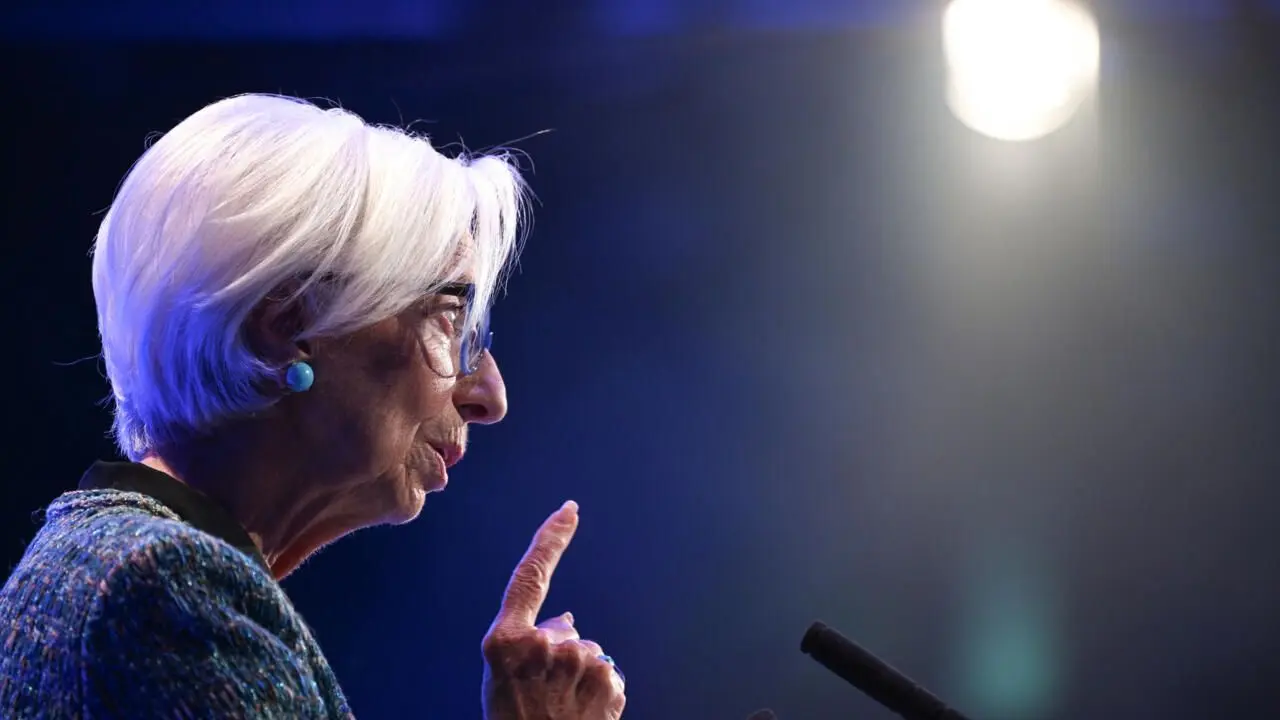
ECB's Lagarde Vows Close Watch on AI-Led Layoffs as Productivity Gains Emerge Across Europe
26 Feb 2026•Policy and Regulation

Recent Highlights
1
Tennessee Teens Sue Elon Musk's xAI Over Grok AI-Generated Child Abuse Images
Policy and Regulation

2
Supermicro Co-Founder Indicted in $2.5 Billion Nvidia AI Chip Smuggling Scheme to China
Policy and Regulation

3
Val Kilmer to appear posthumously in As Deep as the Grave through AI-generated performance
Entertainment and Society

Recent Highlights
Today's Top Stories







Your Daily Dose of Curated AI News
Don’t drown in AI news. We cut through the noise - filtering, ranking and summarizing the most important AI news, breakthroughs and research daily. Spend less time searching for the latest in AI and get straight to action.

