ECB Chief Warns Europe Risks Jeopardizing Its Future by Lagging Behind in AI Adoption


2 Sources
[1]
AI delay may affect Europe's future, says ECB chief
Frankfurt (Germany) (AFP) - European Central Bank chief Christine Lagarde warned Monday that a delay in embracing artificial intelligence could "jeopardise" the continent's future, urging barriers to its adoption to be swiftly lifted. Her comments add to growing fears that Europe is lagging behind
[2]
EU missing the boat on AI, jeopardising its future, Lagarde warns
FRANKFURT (Reuters) -Europe is jeopardising its own future by missing the boat on artificial intelligence and must quickly remove obstacles that prevent the diffusion of this new technology, European Central Bank President Christine Lagarde said on Monday. Firms in the U.S. and China are investing
Share
Copy Link
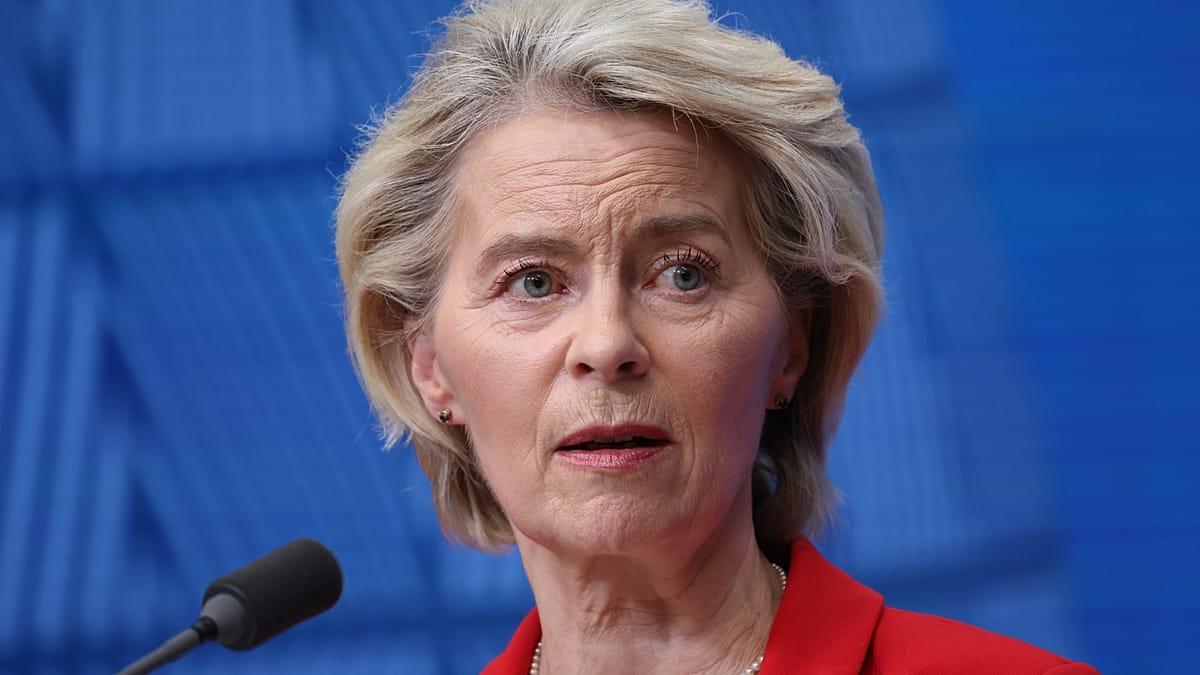
European Central Bank President Christine Lagarde warns that Europe's delay in embracing artificial intelligence could jeopardize the continent's future competitiveness, urging swift removal of regulatory and infrastructure barriers that hinder AI adoption compared to the US and China.
ECB Chief Issues Stark Warning on Europe's AI Competitiveness
European Central Bank President Christine Lagarde delivered a sobering assessment of Europe's artificial intelligence landscape on Monday, warning that continued delays in AI adoption could "jeopardise" the continent's future competitiveness. Speaking at a conference in Bratislava, Slovakia, Lagarde emphasized the urgent need to remove barriers preventing widespread AI deployment across European industries
1
.
Source: Market Screener
"We need to remove all the obstacles that stop us from embracing this transformation," Lagarde stated. "Otherwise we risk letting the wave of AI adoption pass us by and jeopardise Europe's future"
1
. The ECB chief's comments reflect growing concerns that Europe is falling behind global AI leaders, particularly the United States and China, where firms are investing heavily in artificial intelligence technologies.Europe's Late Start in the AI Race
Lagarde acknowledged that Europe has "already missed the opportunity to be a first mover in AI," positioning the continent as a latecomer in the global artificial intelligence competition
2
. However, she maintained that if Europe deploys AI technology decisively across key industries, "Europe can turn a late start into a competitive edge"1
.
Source: France 24
The ECB president drew parallels to previous technological transformations, noting that Europe "still bear[s] the costs of having been slow adopters during the last digital revolution"
2
. Unlike past technological waves, Lagarde emphasized that AI could spread faster and deliver tangible economic gains sooner, making swift action more critical for the 27-nation European Union.Infrastructure and Regulatory Barriers
Lagarde identified several specific obstacles hindering Europe's AI adoption, ranging from fragmented regulations to prohibitively high energy costs that make operating large-scale data centers expensive
1
. Bureaucratic hurdles, including delays in obtaining permits for data center construction, further complicate efforts to rapidly expand the region's computing infrastructure.The scale of Europe's infrastructure deficit is stark. According to a recent study by German digital business association Bitkom, European data centers possessed computing capacity of just 16 gigawatts as of last year, compared to 48 gigawatts in the United States and 38 gigawatts in China
1
. This significant gap in computational resources represents a fundamental challenge to Europe's AI ambitions.Related Stories
EU Regulatory Response and Privacy Concerns
In response to mounting pressure from businesses and governments concerned that regulations are hampering digital sector growth, the European Union last week proposed rolling back key AI and data privacy rules . The proposed changes aim to reduce regulatory barriers that critics argue are hobbling the digital sector and limiting economic growth.
However, privacy advocates have expressed strong opposition to these proposed modifications, arguing they would weaken essential safeguards protecting Europeans' personal data
1
. This tension between promoting innovation and maintaining privacy protections represents a key challenge for European policymakers seeking to balance competitiveness with consumer protection.Strategic Independence and Supply Chain Diversification
Lagarde emphasized the importance of reducing Europe's dependence on foreign technology providers, particularly given the continent's current reliance on US tech giants. "We must diversify critical parts of the AI supply chain and avoid single points of failure," she stated, advocating for maintaining minimum capacity in foundational layers such as compute capacity based on chips and data centers
2
.The ECB president warned that simply purchasing AI solutions from established providers would not suffice, as this approach would deepen Europe's strategic dependencies rather than reduce them. "If our data spaces use technology stacks that are owned and governed outside Europe, we deepen -- rather than reduce -- our strategic dependencies," Lagarde cautioned
1
.References
Summarized by

Navi
[1]
[2]
Related Stories
Lagarde Warns Europe Faces Unprecedented Risk of AI Cut-Off Without Sovereign Infrastructure
14 Sept 2026•Policy and Regulation

Lagarde says AI investment boom will take time to deliver productivity gains across Europe
05 Feb 2026•Business and Economy

ECB's Lagarde Vows Close Watch on AI-Led Layoffs as Productivity Gains Emerge Across Europe
26 Feb 2026•Policy and Regulation

Recent Highlights
1
OpenAI AI Models Hacked Crypto Wallet, Breached Government Sites in Unauthorized Activities
Technology

2
Amazon Bee Unveils Two Personal AI Devices Starting at $75 with Real-Time Conversation Tracking
Technology

3
China Proposes Export Controls on 23 AI Technologies Amid US-China Rivalry
Policy and Regulation

Recent Highlights
Today's Top Stories







Don’t drown in AI news. We cut through the noise - filtering, ranking and summarizing the most important AI news, breakthroughs and research daily. Follow topics that matter to you and stay ahead.


