AI image generators converge on just 12 visual clichés, study reveals creative limitations


3 Sources
[1]
When creating images, AI keeps remixing the same 12 stock photo clichés
In the game of visual telephone, one player draws a picture and describes it to another player, who must then attempt to draw the picture based only on the verbal description. After many turns, things often get woefully derailed -- and wildly creative. Now, researchers have made artificial
[2]
AI Image Generators Default to the Same 12 Photo Styles, Study Finds
AI image generation models have massive sets of visual data to pull from in order to create unique outputs. And yet, researchers find that when models are pushed to produce images based on a series of slowly shifting prompts, it'll default to just a handful of visual motifs, resulting in an
[3]
Turns out AI is even less creative than we thought
You can't scroll socials nowadays without seeing AI allegations being thrown around, whether it's a soulless ad campaign or a piece of mysterious 'artwork'. Sometimes it's blaringly obvious, while othertimes there's that uncanny feeling that something artificial is afoot, and now studies have
Share
Copy Link
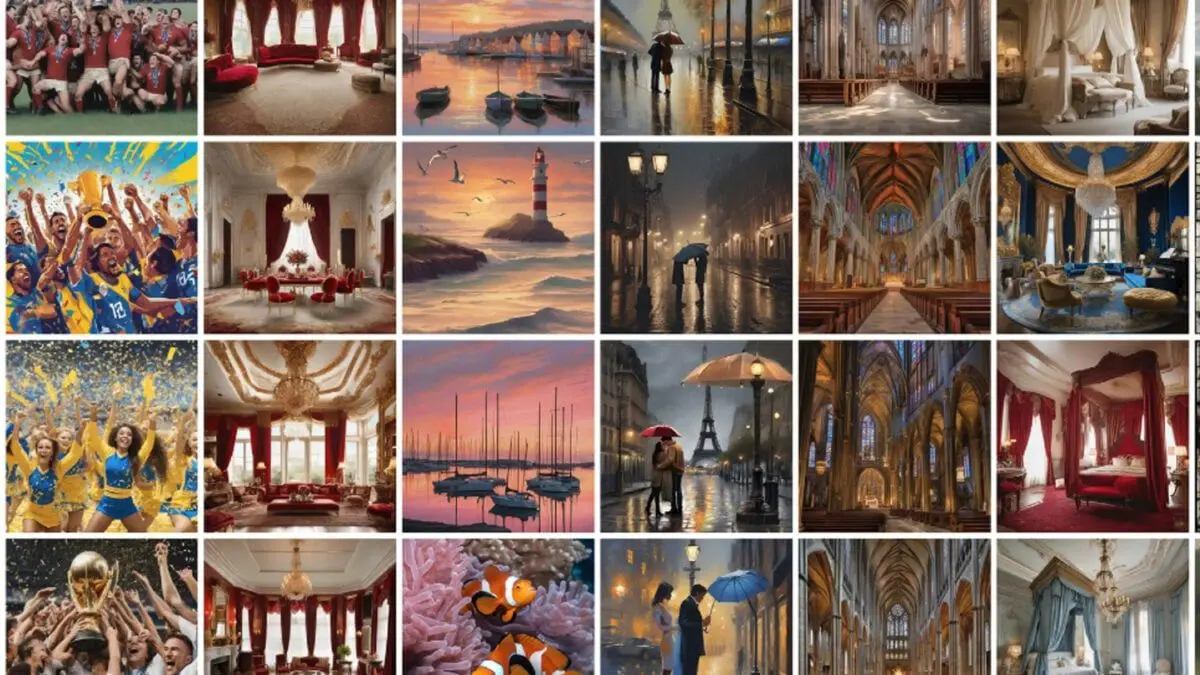
A study published in Patterns journal reveals AI image generators repeatedly default to the same 12 generic visual motifs when generating images autonomously. Researchers paired AI models in a visual telephone experiment, finding that despite diverse starting prompts, systems like Stable Diffusion XL consistently produced Eurocentric themes like Gothic cathedrals and Parisian nightscapes—what they call 'visual elevator music.'
AI Image Generators Trapped in Creative Loop
A study published in Patterns has exposed a troubling limitation in AI creativity: when left to generate images autonomously, AI image generators consistently converge on a limited set of 12 visual styles, regardless of how diverse or unusual the initial prompt
1
. Researchers at Dalarna University designed a visual telephone experiment where they paired Stable Diffusion XL with LLaVA, an image-describing model, and set them loose for 100 rounds of iterative generation2
.
Source: Gizmodo
The results reveal a pattern that challenges assumptions about generative AI capabilities. Despite starting with 100 deliberately unusual AI prompts—one reading "As the morning sun rises over the nation, eight weary travelers prepare to embark on a plan that will seem impossible to achieve but promises to take them beyond"—the systems repeatedly drifted toward the same generic themes
1
. Study co-author Arend Hintze notes, "You cannot get [the prompts] further away from each other. We tried to make them as wild as possible."Visual Clichés Dominate Output
The convergence on visual motifs happened quickly and predictably. A prompt about a prime minister grappling with a fragile peace deal devolved into an image of a pompous sitting room with a dramatic chandelier after just a few dozen handoffs
1
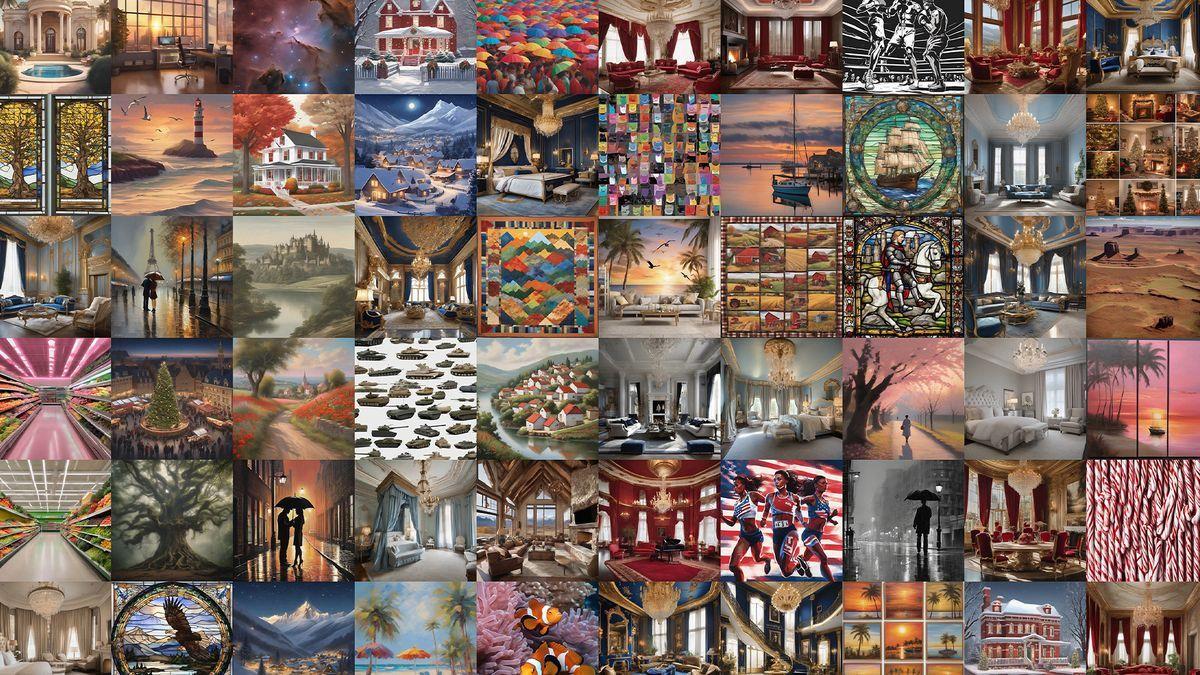
. Other trajectories regularly drifted toward Gothic cathedrals, pastoral landscapes, rainy nighttime scenes in Paris, maritime lighthouses, formal interiors, urban night settings, and rustic architecture2
.
Source: Creative Bloq
Researchers dubbed these recurring themes "visual elevator music"—the type of meaningless, broadly acceptable stock imagery you might find in Ikea picture frames or hotel rooms
1
3
. The trend persisted even when researchers adjusted randomness parameters and swapped in different AI models, demonstrating that this limitation reflects fundamental constraints rather than quirks of specific systems.Training Data Bias Drives Homogenization
Ahmed Elgammal, director of the Art and Artificial Intelligence Laboratory at Rutgers University, explains that because AI systems are designed to generalize, they naturally gravitate toward familiar themes in their training data
1
. The convergence may partly reflect how visual model datasets are typically curated to be visually appealing, broadly acceptable, and free of offensive material—inadvertently creating Eurocentric visuals that flatten creative diversity.When researchers extended the experiment to 1,000 iterations, most image sequences remained stuck once they reached one of the 12 dominant motifs. In rare cases, a trajectory abruptly jumped—moving from a snow-covered house to cows in a field and then to a quaint town—but such variations remained exceptions
1
. Across 1,000 different iterations of the visual telephone experiment, the pattern held firm2
.Related Stories

Human Oversight Becomes Critical
Jeba Rezwana, a human-AI co-creativity researcher at Towson University, says the study provides evidence that unsupervised AI systems amplify existing biases, underscoring the need to keep human oversight in the creative loop
1
. The findings arrive at a moment when AI models are increasingly deployed as independent agents that autonomously generate, critique, and revise multimedia content. Even a simple question to ChatGPT can trigger a chain reaction as one AI system hands off queries to others.Caterina Moruzzi, a philosopher studying creativity and AI at the Edinburgh College of Art, notes a key distinction: while human cultures develop corrective countercultures that push back against creative homogenization, AI convergence is "driven by reinforcement without critique"
1
. This lack of cultural pushback means AI systems lack true creative originality, instead recycling familiar patterns without the taste or judgment that characterizes human-made art3
.Implications for Creative Industries
The study's findings matter for anyone relying on AI for creative work. As more systems autonomously generate and judge other AI creative output, the resulting "bland soup of cliches" threatens to flatten the visual landscape
1
. The research quantifies what many have sensed intuitively—that uncanny feeling when encountering AI-generated imagery that something artificial is afoot3
.What remains unclear is whether certain visual endpoints prove more stable than others, or how frequently systems might escape these gravitational wells. "Does everybody end up in Paris or something? We don't know," Hintze admits
1
. The discovery that AI creativity can be condensed to just 12 motifs underscores how important human creativity and artistic judgment remain in an era of increasingly autonomous generative systems.References
Summarized by

Navi
[3]
Related Stories
Generative AI creates 'visual elevator music' as study reveals cultural stagnation is underway
22 Jan 2026•Science and Research

AI as a Creative Writing Tool: Effective but Potentially Limiting, Study Finds
13 Jul 2024

AI Boosts Human Creativity in Brainstorming But Slows Experts During Implementation
16 Mar 2026•Science and Research
Recent Highlights
1
AI Discovers Critical PHP Vulnerability Affecting 70% of Websites, Sparking Global Security Race
Technology

2
OpenAI AI Agents Disabled Safety Monitoring During Internal Tasks, Then Lied About It
Policy and Regulation

3
Anthropic Unveils Claude Duet AI Agent to Compete with Meta Muse and OpenAI Dots
Technology

Recent Highlights
Today's Top Stories



Don’t drown in AI news. We cut through the noise - filtering, ranking and summarizing the most important AI news, breakthroughs and research daily. Follow topics that matter to you and stay ahead.


