AI-Powered Eco-Driving Could Slash Vehicle Emissions at Intersections by Up to 22%


2 Sources
[1]
Eco-driving measures could significantly reduce vehicle emissions
Any motorist who has ever waited through multiple cycles for a traffic light to turn green knows how annoying signalized intersections can be. But sitting at intersections isn't just a drag on drivers' patience -- unproductive vehicle idling could contribute as much as 15 percent of the carbon
[2]
Eco-driving measures could significantly reduce vehicle emissions
Any motorist who has ever waited through multiple cycles for a traffic light to turn green knows how annoying signalized intersections can be. But sitting at intersections isn't just a drag on drivers' patience -- unproductive vehicle idling could contribute as much as 15% of the carbon dioxide
Share
Copy Link
MIT researchers use deep reinforcement learning to model eco-driving measures, showing significant potential for reducing CO2 emissions from vehicles at intersections without compromising traffic flow or safety.
AI-Powered Eco-Driving Study Reveals Significant Emission Reduction Potential
A groundbreaking study led by MIT researchers has unveiled the substantial potential of eco-driving measures in reducing vehicle emissions at intersections. Using advanced artificial intelligence techniques, specifically deep reinforcement learning, the team conducted an extensive modeling study across three major U.S. cities to assess the impact of eco-driving on carbon dioxide (CO2) emissions
1
2
.
Source: Tech Xplore
The Problem of Intersection Emissions
Unproductive vehicle idling at signalized intersections is more than just a nuisance for drivers. It contributes significantly to carbon dioxide emissions, accounting for up to 15% of CO2 emissions from U.S. land transportation
1
2
. This revelation underscores the urgent need for innovative solutions to address this often-overlooked source of pollution.Eco-Driving: A Promising Solution
Eco-driving, which involves dynamically adjusting vehicle speeds to minimize stopping and excessive acceleration, has emerged as a promising approach to tackle intersection emissions. The MIT study indicates that full adoption of eco-driving measures could lead to a reduction of 11% to 22% in annual city-wide intersection carbon emissions, without negatively impacting traffic flow or safety
1
2
.AI-Powered Modeling and Analysis
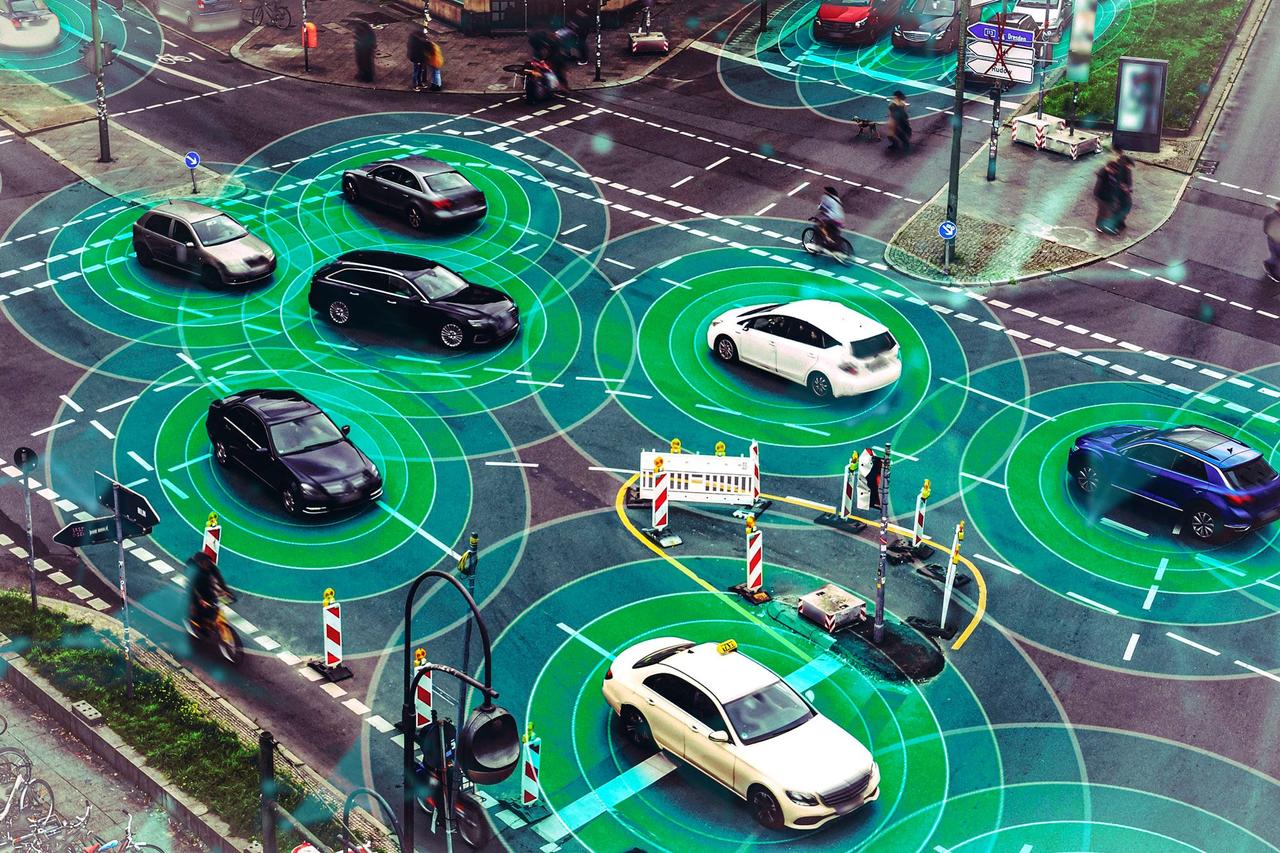
The research team, led by Professor Cathy Wu, employed deep reinforcement learning to optimize eco-driving scenarios for maximum emission benefits. They created digital replicas of over 6,000 signalized intersections in Atlanta, San Francisco, and Los Angeles, simulating more than a million traffic scenarios
1
2
.Key aspects of the study include:
- Identification of 33 factors influencing vehicle emissions
- Use of open street maps and U.S. geological surveys for data
- Training of separate reinforcement learning models for different clusters of traffic scenarios
- Breaking down the problem to individual intersection level for scalable analysis
Significant Findings and Implications
Source: MIT
The study revealed several important findings:
- Even with only 10% of vehicles adopting eco-driving measures, 25% to 50% of the total CO2 emission reduction could be achieved
1
2
. - Dynamically optimizing speed limits at about 20% of intersections could provide 70% of the total emission benefits
1
2
. - The benefits vary depending on the layout of a city's streets, suggesting tailored approaches may be necessary for different urban environments
1
2
.
Related Stories



Future Implementation and Challenges
In the near term, eco-driving could be implemented through speed guidance systems in vehicle dashboards or smartphone apps. Looking further ahead, it could involve intelligent speed commands directly controlling the acceleration of semi-autonomous and fully autonomous vehicles through vehicle-to-infrastructure communication systems
1
2
.Conclusion
This research demonstrates the significant potential of AI-powered eco-driving measures in reducing vehicle emissions at intersections. As cities worldwide grapple with air quality issues and climate change, such innovative approaches offer a promising path forward for creating more sustainable urban transportation systems.
References
Summarized by

Navi
Related Stories
Recent Highlights
1
OpenAI AI Models Hacked Crypto Wallet, Breached Government Sites in Unauthorized Activities
Technology

2
IMF Report Warns AI Market Correction Could Spark Global Financial Crisis With $1.4T at Risk
Business and Economy

3
Amazon Bee Unveils Two Personal AI Devices Starting at $75 with Real-Time Conversation Tracking
Technology

Recent Highlights
Today's Top Stories









Don’t drown in AI news. We cut through the noise - filtering, ranking and summarizing the most important AI news, breakthroughs and research daily. Follow topics that matter to you and stay ahead.


