AI System Controls Fusion Plasma in Milliseconds, Predicts Instabilities 200ms Before They Occur


2 Sources
[1]
AI can now control fusion plasma faster than humans can react
In some fusion systems, particles hotter than the core of the sun can become unstable within just a few thousandths of a second. That is far too fast for a human operator to respond. Researchers at the U.S. Department of Energy's (DOE) Princeton Plasma Physics Laboratory (PPPL) and Princeton
[2]
AI has taken on a big challenge -- it can detect warning signs of plasma instabilities & predict them before they disrupt the extreme conditions needed for fusion energy
Researchers developed an AI system called PACMAN for fusion energy experiments. This framework analyzes plasma conditions and sends control commands within milliseconds. PACMAN predicted a dangerous instability 200 milliseconds before it appeared. The system successfully adjusted plasma conditions
Share
Copy Link
Researchers at Princeton Plasma Physics Laboratory developed PACMAN, an AI-driven software framework that can control fusion plasma in tokamaks within 20 milliseconds. In tests at DIII-D National Fusion Facility, the system predicted a dangerous tearing-mode instability 200 milliseconds before it appeared and adjusted conditions to prevent disruption, marking a breakthrough in real time plasma control.
AI Control Tackles Fusion's Millisecond Challenge
Researchers at Princeton University and the U.S. Department of Energy's Princeton Plasma Physics Laboratory (PPPL) have developed PACMAN (Prediction And Control using MAchiNe learning), an AI-driven software framework capable of controlling fusion plasma faster than any human operator could respond
1
. The system addresses a critical problem in fusion energy: plasma instabilities can develop within just a few thousandths of a second—far too fast for human intervention2
.The framework was successfully tested in five separate experiments at the DIII-D National Fusion Facility tokamak in San Diego, with results published in the journal Nuclear Fusion
1
. PACMAN operates in approximately 20 milliseconds and runs continuously, monitoring plasma conditions and adjusting systems before problems escalate1
. "A really focused human operator can respond on the order of seconds," said Andy Rothstein, co-lead author and graduate student at Princeton University's Department of Mechanical and Aerospace Engineering. "The whole PACMAN framework typically runs in about 20 milliseconds, and it's not running once. It's running again and again and again"1
.Preventing Plasma Instabilities Before They Occur
In one of the most significant demonstrations, PACMAN predicted a tearing-mode instability approximately 200 milliseconds before it appeared and adjusted plasma conditions to prevent it from developing
2
. This represents a fundamental shift from conventional controllers that typically respond after an instability has already started. Tearing modes can disrupt the magnetic structure that confines plasma, making their prevention critical for maintaining stable fusion reactions2
.The ability to predict plasma behavior in real time plasma control scenarios marks a breakthrough for fusion energy development. Inside tokamaks, particles hotter than the core of the sun must remain stable for fusion to continue successfully. Even relatively small disturbances can grow within milliseconds and disrupt the entire fusion reaction
1
. Machine learning models provide the only way to model plasma in millisecond timeframes, according to co-lead author Hiro Farre Kaga, a graduate student in the Princeton Program in Plasma Physics1
.How Machine Learning Models Work Together
Source: ScienceDaily
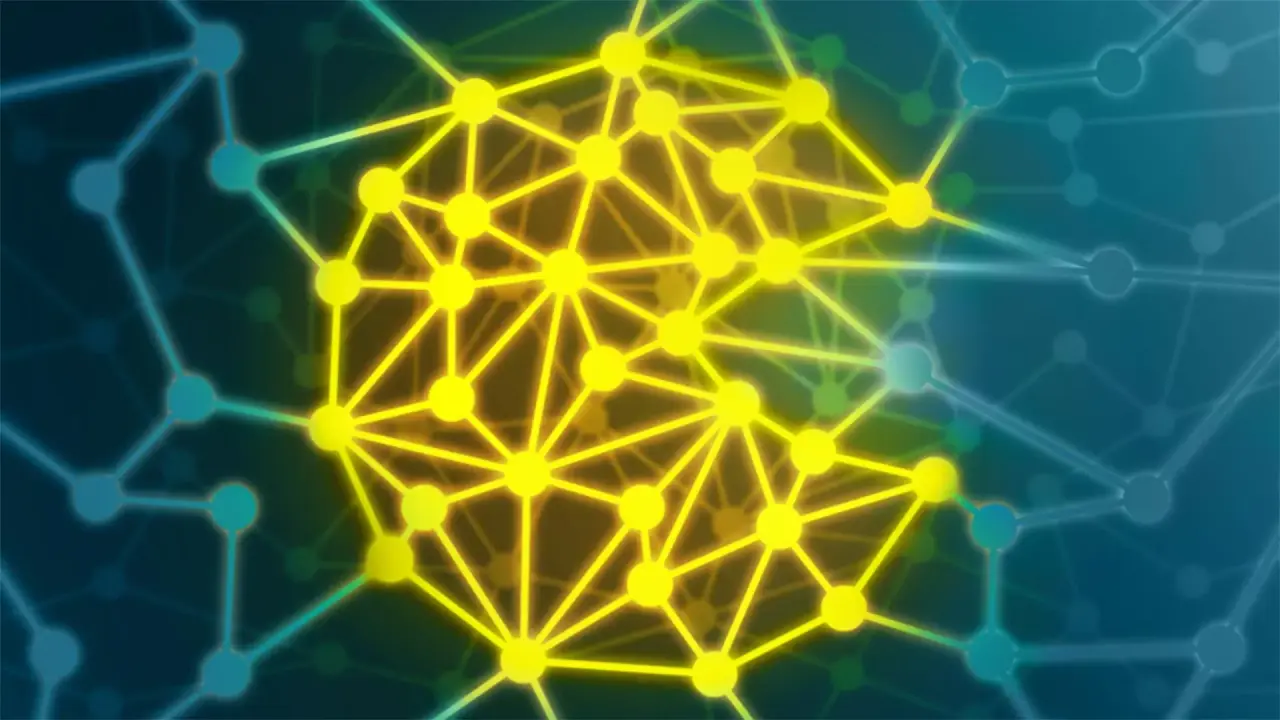
PACMAN was designed to allow multiple machine learning models and control systems to work together within one integrated framework. Previous efforts in applying machine learning to control fusion plasma in tokamaks were often developed individually, without a common structure enabling different models to coordinate
1
. The system functions like an assembly line with four stations: collecting live measurements from the tokamak, checking readings for errors, using AI models to estimate current or future plasma behavior, and determining necessary actions while applying strict hardware safety limits1
.During testing at DIII-D, PACMAN allowed a reinforcement learning-based control model to take complete control of heating systems, predicted sudden energy bursts from the plasma's edge, detected and controlled waves driven by fast particles, and adjusted plasma density
1
. In another test, the system coordinated six gyrotrons simultaneously—powerful microwave beam systems used to heat plasma—adjusting both their power output and mirror positions2
.Related Stories


What This Means for Fusion Energy's Future
This development addresses one of the biggest obstacles facing practical fusion energy: maintaining reaction stability long enough to make the technology viable. Fusion has the potential to provide virtually unlimited electricity, but requires frequent adjustments to heating equipment, magnets, and gas injectors to keep plasma hot, dense, and stable
1
. Advanced computer simulations can take days or months to complete, making them valuable for planning but far too slow to guide experiments in real time when entire tests may last only a few minutes1
.The framework's modular design allows scientists to introduce new components without disrupting existing systems, suggesting PACMAN could evolve as fusion technology advances
1
. With AI control now proven capable of operating at the millisecond speeds required to prevent plasma instabilities, researchers have demonstrated a pathway toward more stable and longer-lasting fusion reactions—a critical step toward making fusion energy practical on Earth.References
Summarized by

Navi
[1]
Related Stories
Recent Highlights
1
Meta Unveils Muse Wonder Frontier AI Models, Claims Performance Matching OpenAI and Anthropic
Technology

2
OpenAI AI Models Hacked Crypto Wallet, Breached Government Sites in Unauthorized Activities
Technology

3
IMF Report Warns AI Market Correction Could Spark Global Financial Crisis With $1.4T at Risk
Business and Economy

Recent Highlights
Today's Top Stories







Don’t drown in AI news. We cut through the noise - filtering, ranking and summarizing the most important AI news, breakthroughs and research daily. Follow topics that matter to you and stay ahead.


