AI System FragFold Predicts Protein Fragments for Binding and Inhibition


2 Sources
[1]
AI system predicts protein fragments that can bind to or inhibit a target
All biological function is dependent on how different proteins interact with each other. Protein-protein interactions facilitate everything from transcribing DNA and controlling cell division to higher-level functions in complex organisms. Much remains unclear, however, about how these functions
[2]
AI system predicts protein fragments that can bind to or inhibit a target
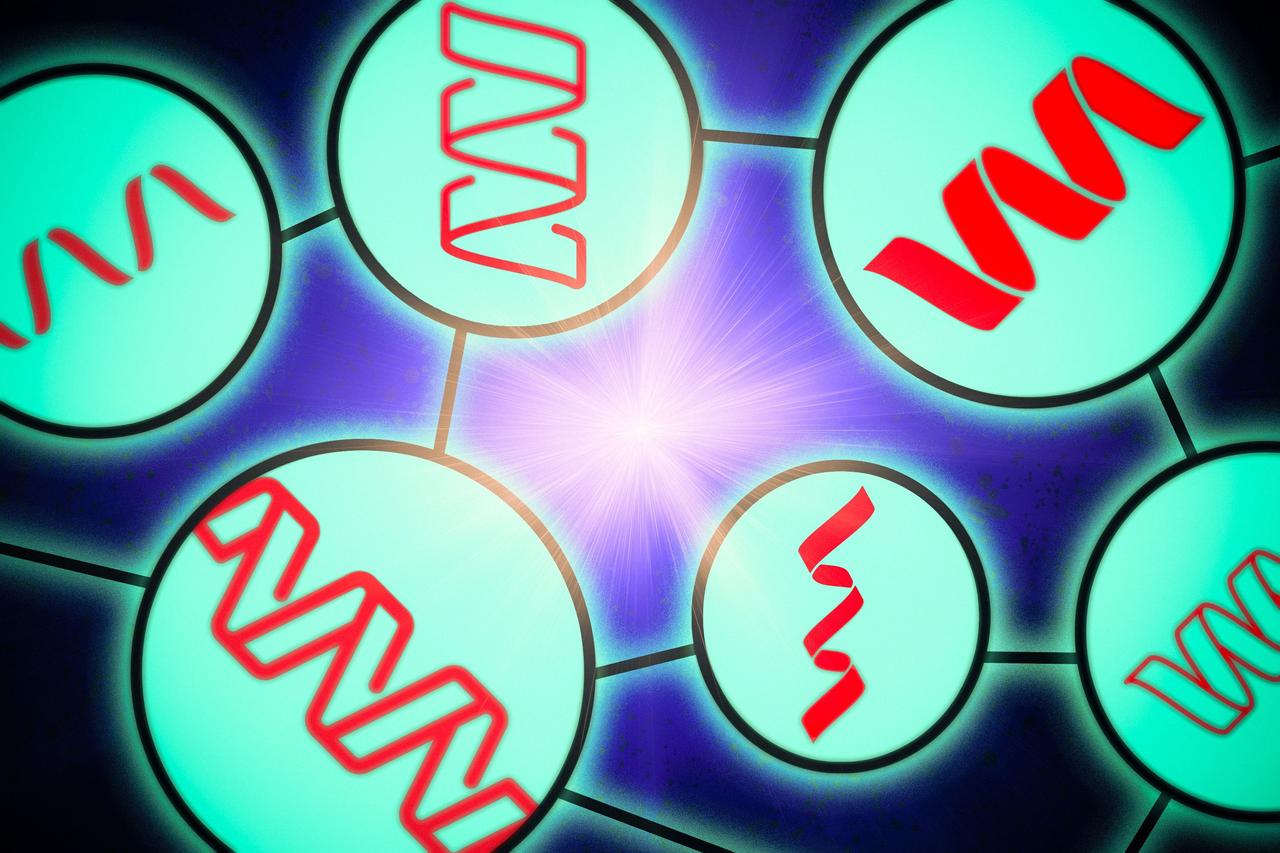
Caption: Department of Biology researchers developed a computational method, FragFold, to systematically predict which protein fragments may inhibit a target protein's function. The image shows an example of one of the interactions the researchers explored: a protein complex between
Share
Copy Link
MIT researchers develop FragFold, an AI-powered tool that predicts protein fragments capable of binding to or inhibiting target proteins, potentially revolutionizing protein interaction studies and drug development.

AI-Powered FragFold Revolutionizes Protein Interaction Studies
Researchers at the Massachusetts Institute of Technology (MIT) have developed a groundbreaking AI system called FragFold, which predicts protein fragments capable of binding to or inhibiting target proteins. This innovative tool, built upon the foundation of AlphaFold, has the potential to transform our understanding of protein interactions and cellular processes, with implications for both basic research and therapeutic applications
1
2
.The Power of Protein Fragments
Recent findings have revealed that small protein fragments possess significant functional potential. These short stretches of amino acids can bind to interfaces of target proteins, mimicking native interactions and potentially altering protein function or disrupting protein-protein interactions. This discovery opens up new avenues for studying cellular processes and developing therapeutic interventions
1
2
.FragFold: Leveraging AI for Protein Interaction Predictions
FragFold, developed in the MIT Department of Biology, utilizes machine learning to predict protein fragments that can bind to and inhibit full-length proteins in E. coli. The system builds upon AlphaFold, an AI model known for its ability to predict protein folding and interactions
1
2
.Key features of FragFold include:
- Accurate predictions: Experimental validation showed that over half of FragFold's predictions for binding or inhibition were accurate, even without prior structural data
1
2
. - Generalizability: The approach can be applied to proteins with unknown functions, interactions, or structures
1
2
. - Novel applications: FragFold has successfully predicted inhibitory fragments for various proteins, including those with intrinsically disordered regions
1
2
.
Innovative Methodology
The researchers behind FragFold employed a unique approach to overcome computational challenges:
- Protein fragmentation: Each protein was computationally fragmented, and binding models were created for these fragments with relevant interaction partners
1
2
. - Efficient multiple sequence alignments (MSAs): To address the computational bottleneck of MSAs, the team pre-calculated MSAs for full-length proteins once and used the results to guide predictions for each fragment
1
2
.
Related Stories
Practical Applications and Future Potential
FragFold has demonstrated its effectiveness in various scenarios:
- FtsZ protein study: The tool identified new binding interactions for FtsZ, a key protein in cell division, including its intrinsically disordered region
1
2
. - LptF and LptG complex: FragFold predicted a protein fragment of LptG that inhibits its interaction with LptF, potentially disrupting lipopolysaccharide delivery in E. coli
1
2
.
The success of FragFold highlights the transformative power of AI in molecular and cell biology research. As noted by Professor Amy Keating, "Creative applications of AI methods, such as our work on FragFold, open up unexpected capabilities and new research directions"
1
2
.Implications for Research and Drug Development
The ability to predict protein fragment inhibitors has significant implications for both basic research and potential therapeutic applications:
- Genetically encodable inhibitors: FragFold could lead to the development of inhibitors against any protein
1
2
. - Study of protein interactions: The tool empowers researchers to investigate protein-protein interactions and cellular processes more effectively
1
2
. - Drug discovery: The predictive capabilities of FragFold may accelerate the identification of potential drug candidates targeting specific protein interactions
1
2
.
As AI continues to revolutionize biological research, tools like FragFold are paving the way for new discoveries and innovative approaches to understanding and manipulating cellular processes at the molecular level.
References
Summarized by

Navi
Related Stories
AlphaFold Upgrade: AI Now Predicts Large Protein Structures and Integrates Experimental Data
05 Nov 2024•Science and Research

AI Revolutionizes Protein Sequencing: InstaNovo Models Enhance Accuracy and Discovery
31 Mar 2025•Science and Research
AI-Powered Protein Engineering: EVOLVEpro Revolutionizes Protein Design for Medical and Environmental Applications
22 Nov 2024•Science and Research

Recent Highlights



Recent Highlights
Today's Top Stories



Don’t drown in AI news. We cut through the noise - filtering, ranking and summarizing the most important AI news, breakthroughs and research daily. Follow topics that matter to you and stay ahead.


