Aikido Technologies to deploy offshore data centers inside floating wind turbines by year-end


7 Sources
7 Sources
[1]
Who needs data centers in space when they can float offshore? | TechCrunch
The power crunch for AI data centers has gotten so severe that people -- not just Elon Musk -- are talking about launching servers into space so they can access solar power 24/7. One startup thinks the ocean is a better place for them. Offshore wind developer Aikido is planning to submerge a 100-kilowatt demonstration data center off the coast of Norway this year. The small unit will live in the submerged pods of a floating offshore wind turbine. If all goes well, the company hopes to build a larger version to deploy off the coast of the UK in 2028. That model will sport a 15 megawatt to 18 megawatt turbine that will feed a 10 megawatt to 12 megawatt data center. The move offshore could solve a few challenges. Proximity to power is an obvious one, since the source will sit overhead. Winds offshore are more consistent than onshore, and a modest battery could bridge any lulls. Submerged data centers could eliminate concerns from NIMBY groups -- "not in my backyard" -- who oppose data centers near their properties over noise and and pollution concerns. Lastly, by floating in cold seawater, cooling the servers would be a simpler proposition. (Cooling is one particularly vexing issue for orbital data centers, since they need to employ different techniques in the vacuum of space.) But for all the challenges offshore data centers solve, they introduce a few more. The ocean is a harsh environment. While submerged servers wouldn't be battered by waves, they also wouldn't be completely stationary, so they'd need to be fully battened down. Seawater is also corrosive, so any equipment, including the container and power and data connections, will need to be hardened against it. Aikido isn't the first company to propose sinking data centers in seawater. Microsoft first floated the idea over a decade ago, and in 2018 it launched an experiment off the coast of Scotland, which was modestly successful. Only six of more than 850 servers failed in the 25-month trial. (The data hall was filled with inert nitrogen gas, which might help explain the servers' low failure rates.) Microsoft accrued a number of patents over the years, which it open-sourced in 2021. But by 2024, the company had deep-sixed the project.
[2]
US startup plans to build data centers inside ocean-based wind turbines, servers water cooled via chilly North Sea -- each leg houses a data center, firm set to launch three-legged prototype in Norway's North Sea this year
San Francisco-based startup Aikido Technologies, which is focused on building offshore wind turbines, is experimenting with adding data centers to its power platforms. According to IEEE Spectrum, the company plans to launch a 100-kilowatt unit that combines a wind turbine with an AI server off the coast of Norway in the North Sea by the end of 2026. This move will address the power and space challenges many AI hyperscalers are facing right now, especially as many projects get mired in "not in my backyard" fights. Aikido is using a semi-submersible design for its offshore wind turbines, similar to what many oil and gas companies use when drilling in high seas. This design comes with three ballast-filled legs, filled with fresh water to help maintain buoyancy and stay upright. From there, it's secured to the seabed via chains and anchors, ensuring that it will remain in the general area, even as the wind and ocean batter it. The firm says that it can add up to a 3- to 4-MW data hall in the upper part of each leg, meaning each wind turbine can potentially become a 9- to 12-MW data center. The fresh-water ballast is still stored in the lower part of each leg, which is then pumped towards the AI chips for cooling. The warm water is then pumped back into the ballast, with the chilly waters of the North Sea cooling it down. It also added an air-conditioner to manage the temperature of other components that aren't part of the water-cooling loop. "We have this power from the wind. We have free cooling. We think we can be quite cost competitive compared to conventional data-center solutions," Aikido CEO Sam Kanner told IEEE Spectrum. "This crunch in the next five years is an opportunity for us to prove this out and supply AI compute where it's needed." However, building a wind-powered offshore data center is not without its challenges. First off, wind power isn't exactly consistent throughout the year, so each 'data center' will have batteries for storing excess energy and delivering it in times of low production. If the lean season extends far longer than anticipated, it's also connected to the grid, allowing it to use power from other sources. Aside from this, the sea can be quite unforgiving, and salt water is particularly corrosive, possibly leading to higher maintenance costs. Nevertheless, experiments like this can potentially solve the power and space problems that most land-based data centers face at the moment. In fact, China has thought of a similar approach, with a wind-powered underwater data center prototype launched in Shanghai in October last year. Although this might seem like an ambitious project, it's still far more feasible than Elon Musk's plan of launching a million data center satellites orbiting around the earth. Follow Tom's Hardware on Google News, or add us as a preferred source, to get our latest news, analysis, & reviews in your feeds.
[3]
This Startup Is Building Data Centers Into Offshore Wind Farms
While some major AI companies have floated the idea of putting data centers in space to give them ready access to solar power, others are examining an ocean-based solution here on Earth. Offshore infrastructure provider Aikido Technologies has introduced a "floating offshore wind platform designed to co-locate AI-grade compute with floating wind generation and integrated battery storage." Translation: data centers at sea. Aikido plans to deploy a proof-of-concept unit in Norway later this year, while the first commercial project is targeted for the UK in 2028. "Developers find it increasingly difficult to obtain energy, land, and water to build such mega-campuses, especially close to load centers," Aikido says. "Offshore, however, energy, cooling and space are abundant and the ocean acts as an infinite heat sink. Around the world, areas pre-designated for floating wind deployments can instead be immediately used for data centers." Aikido will put its wind turbine substructure and the data center enclosure into a single steel unit. The structure "can be pre-fabricated in a factory and lifted into place during the final integration." "Before we go off-world, we should go offshore," says Sam Kanner, CEO of Aikido Technologies. The big reason for the orbital data center push is near-infinite access to solar energy, and fewer environmental concerns (rocket launches notwithstanding). But they would be costly to launch, hard to cool without airflow, and difficult to upgrade or maintain over the long term. With ocean-based data centers, meanwhile, wave damage, anchoring, and seawater corrosion will be among the concerns. Plus, they will use the surrounding water for cooling, which will, in turn, heat it up and possibly impact local wildlife populations. That said, Microsoft tested the idea a few years ago with 12 racks of servers in a cylinder off Scotland's Orkney Islands, and found that it could fit in quite well with its undersea neighbors. Algae and barnacles covered most of the server's outer shell, suggesting it could become part of the marine environment and even serve as a safe harbor for fish and other undersea life. Last year, China also completed phase one of an underwater data center in Shanghai.
[4]
This startup wants to build data centers inside floating offshore wind platforms
Serving tech enthusiasts for over 25 years. TechSpot means tech analysis and advice you can trust. Forward-looking: It's another day, another proposal for addressing AI data center power demands. The latest comes from a startup that aims to build server facilities inside floating offshore wind platforms, using the cold waters of the North Sea as a natural cooling system. San Francisco-based Aikido Technologies says its concept combines three things the AI boom desperately needs right now: power, cooling, and space. The company's AO60DC platform is designed to pair a large floating wind turbine with as much as 10 to 12 MW of compute capacity, plus battery storage to help smooth out supply when the wind drops. Aikido's semisubmersible platform uses three ballast legs to keep the structure stable offshore. Instead of leaving that space unused, the company wants to place liquid-cooled data halls inside the upper sections of those legs. Freshwater stored in the ballast system would be used as part of a closed-loop cooling setup, with heat transferred through the steel walls and dissipated into the surrounding sea. Essentially, the startup is pitching the ocean as both a source of renewable energy and a giant heat sink. Aikido plans to test the concept with a 100-kilowatt prototype off the coast of Norway in the North Sea by the end of this year. If that goes to plan, a larger 15- to 18-MW version could follow off the UK coast in 2028. There are several benefits to this method. Offshore wind generation is generally stronger and more consistent than onshore generation, the setup keeps noisy infrastructure away from residential areas, and it could help reduce the strain that new AI facilities are putting on already stressed power grids. The plan also gives Aikido a way to sell floating wind as more than just another renewable project in a market that has struggled with high costs and slow deployment. Of course, moving a data center into the ocean creates a new set of problems. Salt, corrosion, debris, and marine growth are all obvious engineering headaches. There are also potential regulatory questions around heat discharge, environmental reviews, and how easy these systems would be to maintain or secure in hostile offshore conditions. We've already seen Microsoft experiment with underwater data centers, and Aikido is essentially blending that line of thinking with floating wind. Several tech companies, including Google and Amazon, have recently proposed space-based solar power data centers. Google CEO Sundar Pichai believes they will be deployed as early as 2027.
[5]

This Startup Wants to Tuck Data Centers Beneath Offshore Wind Turbines
Amid the AI boom, data centers are proliferating across the U.S., gobbling up resources and straining power grids. Their impact has driven the tech sector to explore alternatives to land-based facilities, and while some companies have set their sights on space, others are looking toward the ocean. One such company is Aikido Technologies, a California-based floating wind power developer. On Tuesday, the startup unveiled plans to put data centers inside the underwater tanks that buoy its turbine platforms. Aikido says the system will host 10 to 12 megawatts of AI compute alongside a 15 to 18 megawatt turbine and integrated battery storage. It plans to test a 100-kilowatt prototype off the coast of Norway by the end of the year, IEEE Spectrum reports. “Before we go off-world, we should go offshore,†Sam Kanner, CEO of Aikido Technologies, said in a statement. “Aikido is well positioned to integrate proven, offshore components with typical data hall construction techniques to build GW-scale AI factories faster, cleaner, cheaper and more efficiently than conventional techniques.†Combining data centers with renewable energy infrastructure in this way is a clever way to approach AI’s energy problem. Traditional data centers consume massive amounts of fossil-fuel-generated electricity. In 2024, U.S. data centers consumed 183 terawatt hours of electricity, or 4% of the country’s total electricity consumption that year. If they continue expanding at the current rate, that figure could more than double by 2030. Aikido aims to reduce AI’s carbon footprint and power grid strain by co-locating data centers with renewable energy generation. Its system will consist of a large platform that supports the turbine in the center, with three legs extending out from the base of the tower. According to IEEE Spectrum, the end of each leg will have a ballast that reaches 66 feet (20 meters) deep. The ballasts will hold tanks mostly filled with fresh water to keep the platform afloat, but the upper part of each tank will also contain a 3 to 4 megawatt data hall. This design is convenient not just for power but for cooling as well. Using the ocean as an “infinite heat sink,†Aikido’s system will employ a passive primary cooling system that transfers heat from the data centers through the steel walls of the ballast tanks and into the surrounding seawater. The company claims the thermal impact on the ocean will be limited to “a few meters†around the structure. The plan is to eventually build offshore wind farms capable of supporting 30 megawatts to more than 1 gigawatt of compute, meeting the rapidly growing demand for high-density AI infrastructure while mitigating the industry’s energy consumption and environmental impact. Aikido isn’t the only company developing undersea data centers, but it does appear to be the only one building compute power directly into offshore wind infrastructure. It’s worth noting, however, that WestfalenWind-Group in Germany has entered the operational development phase of its windCORES project, which is deploying onshore turbines with data centers integrated into the towers. While Aikido’s offshore approach has some advantages, it’s not without drawbacks. One challenge is the current state of the floating offshore wind sector, which is facing significant developmental delays, rising costs, and higher interest rates as government subsidies evaporate. Kanner told Data Center Dynamics that Aikido hopes to kickstart the straggling sector by reframing the business model. But there are technical challenges too. Daniel King, a research fellow at the Foundation for American Innovation, told IEEE Spectrum Aikido could face engineering challenges due to the salinity and debris of the ocean environment, which can damage infrastructure. He added that there could also be additional regulatory hurdles aimed at protecting marine life from heat discharge. Prototype testing will offer more insight into how feasible Aikido’s vision truly is. For now, at least, it’s encouraging to see another renewable energy company exploring new ways to support AI’s rapid growth.
[6]

US firm plans to house data centers in floating wind turbine platforms
A proof-of-concept is underway in Norway, while commercial deployment is planned in the UK by 2028. US startup Aikido, has unveiled AO60DC, a global first-of-its-kind floating offshore wind turbine that also hosts artificial intelligence (AI) compute alongside integrated battery storage. This paves the way for greener AI usage powered entirely by clean energy generated by the turbine at sea. The growing use of AI in our daily lives has driven up demand for power and water to run data centers that power the AI. The GPUs used to power AI applications are power-hungry, while large amounts of water are needed to cool the chips that answer questions posed by users around the globe.
[7]

Why Space Datacentres When the Ocean Bed Can Do the Same Job?
The idea is getting traction because it can effectively nix the "not-in-my-backyard" public outcry over datacentre issues related to noise, utility bills and excessive water use While Elon Musk and his chorus are articulating grandiose plans of setting up datacentres in space, having all but discounted the challenges they bring, a San Francisco-based startup is asking us a very pertinent question: "before we go off-world, we got to go off-shore". Towards this end, they are in the process of submerging a 100KW demo datacentre into the sea off the Norway coast. Of course, the space datacentre plans varies from any other insofar as the energy use is concerned. Musk and his team believes that they can harness endless solar power to run their datacentres if they surmount some rather big challenges. "By far the cheapest place to put AI will be space in 36 months or less," Musk had said in a podcast last month. Aikido, an offshore wind developer, believes that the ocean and not outer space is where the datacentres should reside. Their plans to submerge a 100-KW demo datacentre off the Norway coast in 2026 would tell us whether the small unit can thrive in submerged pods of a floating offshore wind turbine. "Over the past year, as we watched the growing challenges around powering and cooling new datacentres, we realized our platform already had ample power and effectively free cooling built in. It hit us like a ton of bricks," says Sam Kanner, CEO of Aikido Technologies. He was speaking to DataCentreDynamics.com, a website that tracks global datacentre industry. The company now hopes to build larger versions of the same and deploy them off the UK coast in 2028 with 15MW to 18MW turbines that can feed a 10-12MW datacentre. However, there are challenges to this experiment too. The ocean bed presents a harsh environment where waves can batter submerged servers unless they are totally stationary. Then there is the matter of corrosion that must be sorted out through use of non-corrosive material. However, the offshore shift may also resolve a few of the existing challenges of setting up datacentres. Proximity to power is one since the power source is attached and wind energy is more consistent offshore than onshore which means a modest battery can handle the pressure. And most of all, it would eliminate concerns around noise and pollution, besides ensuring that the servers require less cooling due to the cold seawater. Of course, the irony is not lost that Aikido isn't the first and may not be the last to toy with this underwater datacentre experiment. Microsoft floated this idea a decade ago and launched an experiment in 2018 that was only "modestly successful" given that only six of the over 850 servers actually failed in the 25-month trial. That they nixed the project after receiving several patents and then open-sourced it in 2024 suggests some doubts on the process itself. However, these experiments appear to carry less hype than what Elon Musk and his merry band is building up as his SpaceX-xAI combine seeks to go for an IPO. The Andrew McCalip calculator that compares datacentre on land and in space tells its own story. Created by McCalip, a space engineer, the calculator's baseline results suggest that a 1GW orbital datacentre may cost $42.4 billion, which is three times what one built on land will cost. On his website, McCalip notes that the first question to ask is why compute in orbit? "That "why" is almost missing from the public conversation. People jump straight to hardware and hand-wave the business case, as if the economics are self-evident. They aren't. A lot of the energy here is FOMO and aesthetic futurism, not a grounded value proposition, he says. But, he does believe that if any company can pull it off, it could be SpaceX. "If anyone can brute force a new industrial stack into existence, it's the team that can reduce $/kg and get as humanly close to free launch as possible. And they need to, because the economics are not close. This is not a 25% mismatch. It's 400%. Closing that is the whole job. Positive does not mean gullible. It needs measurable targets and painful reality checks," he notes. And this is where a wholesale set of changes would be required to validate the assumptions. It will require technology development across multiple fields and massive capital expenditure. Not to mention ensuring a robust supply-chain for space-grade components. Over and above all of this, Musk would have to reduce the cost of orbit from the $3600 per kg delivered by the reusable Falcon 9 to around $200 per kg. Because it would be at this price that the energy delivered by a Starlink satellite today would become cost competitive when juxtaposed with a terrestrial datacentre. Going a bit deeper into Aikido's plans, the idea seems more doable at this juncture. According to Kanner, each of his units will have three prefabricated 3-4MW data halls in the platform's steel hull. It will also carry a battery energy storage system to support longer run times, which could result in supplies of over 75% of operating hours, rising to 90% with large batteries. The Aikido official expects that the datacentres can achieve a PUE (power usage effectiveness) below 1.08 using closed-loop freshwater cooling systems that transfers the heat through the steel into the seawater. As for the thermal impact, the company believes that it would stay limited to a local area extending but a few meters from the platform. Moreover, Kanner's model relies on selling compute instead of selling power to the grid for which they've created a modular approach that allows platforms to be assembled up to ten times faster than conventional offshore structures. In addition, Aikido says their batteries can be pre-charged ahead of grid stress events that will shorten grid connection timelines for new capacity. That Aikido is part of the Nvidia Inception program from where it received early interest from GPU compute customers is a win for Kenner, who acknowledges that the current state of floating offshore wind sector is itself facing concerns. Rising costs and higher interest rate pressure have reduced funding as has reduced government subsidy programs. Which means that for Aikido to be truly successful, they have to secure government support to make things more economical. Maybe President Trump would frame some new policies to encourage wind energy, even if it is to just spite his friend-turned-foe Elon Musk.
Share
Share
Copy Link
San Francisco-based Aikido Technologies is tackling AI's energy crisis with an innovative solution: data centers inside offshore wind turbines. The startup plans to deploy a 100-kilowatt prototype off Norway's coast this year, using the North Sea as a natural cooling system. If successful, a larger 10-12 megawatt facility could follow off the UK coast by 2028.
Aikido Technologies Tackles AI Power Consumption with Ocean-Based Solution
As AI power consumption threatens to overwhelm electricity grids, San Francisco-based Aikido Technologies has unveiled plans to build data centers inside offshore wind turbines, combining renewable energy generation with computing infrastructure in a single platform
1
. The startup aims to deploy a 100-kilowatt submerged data center prototype off the coast of Norway in the North Sea by the end of 2026, marking a significant step toward addressing the AI data centers power crunch that has pushed some companies to consider space-based alternatives2
.
Source: Gizmodo
Data Centers Inside Offshore Wind Turbines: Engineering Innovation
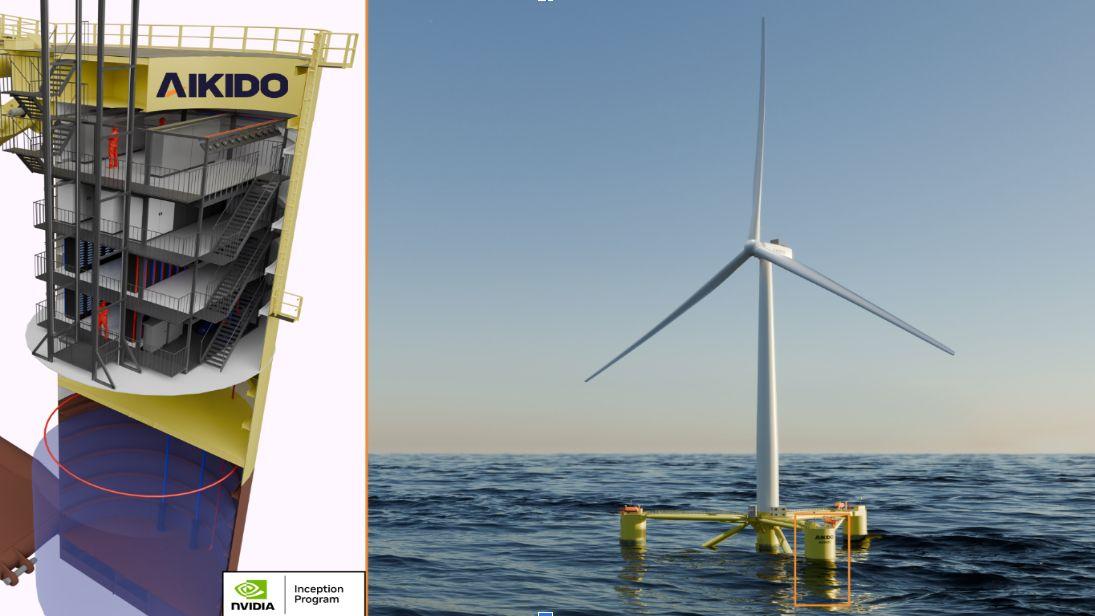
Aikido's approach uses a semi-submersible design similar to offshore oil and gas platforms, featuring three ballast-filled legs that maintain buoyancy and stability. The company plans to place AI-grade compute facilities in the upper sections of each leg, with the capacity to house 3 to 4 megawatts per leg, creating a potential 9 to 12 megawatt data center per turbine
2
.
Source: CXOToday
If the prototype succeeds, the company hopes to deploy a larger version featuring a 15 to 18 megawatt turbine feeding a 10 to 12 megawatt data center off the UK coast in 2028
1
.The floating offshore wind platforms address multiple power, cooling, and space demands simultaneously. Fresh water stored in the ballast tanks serves dual purposes: maintaining platform stability and cooling AI chips through a closed-loop system. Warm water is pumped back into the ballast, where the chilly waters of the North Sea dissipate the heat through the steel walls
2
. "We have this power from the wind. We have free cooling. We think we can be quite cost competitive compared to conventional data-center solutions," Aikido CEO Sam Kanner told IEEE Spectrum2
.Offshore Data Centers Solve Multiple Infrastructure Challenges
The ocean-based data infrastructure concept addresses several pressing issues facing hyperscalers. Offshore winds prove more consistent than onshore alternatives, with battery storage bridging any production lulls
1
. The approach also eliminates NIMBY concerns from communities opposing data centers near their properties due to noise and pollution1
. Using seawater cooling, the platforms tap into what Aikido describes as an "infinite heat sink," though the company claims thermal impact will be limited to a few meters around the structure5
.This matters because U.S. data centers consumed 183 terawatt hours of electricity in 2024, representing 4% of the country's total electricity consumption. If current expansion continues, that figure could more than double by 2030
5
. By co-locating renewable energy for AI infrastructure with compute facilities, Aikido aims to reduce both power grid strain and the environmental impact of AI's rapid growth.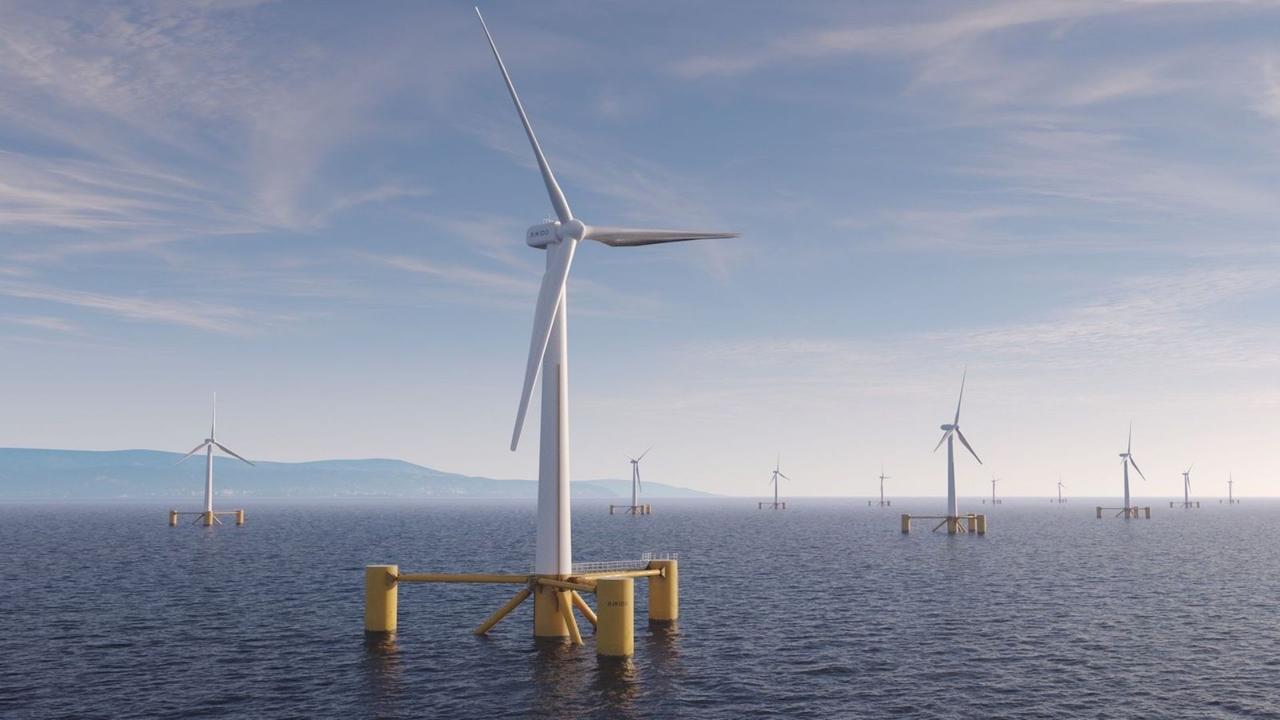
Source: Interesting Engineering
Related Stories
Learning from Microsoft and Facing Technical Hurdles
Aikido Technologies isn't pioneering the concept from scratch. Microsoft tested underwater data centers over a decade ago, deploying 12 racks of servers in a cylinder off Scotland's Orkney Islands in 2018. During the 25-month trial, only six of more than 850 servers failed, with the data hall filled with inert nitrogen gas
1
. Microsoft open-sourced its patents in 2021 before discontinuing the project in 20241
. China also completed phase one of an underwater data center in Shanghai last year3
.However, offshore data centers face significant challenges. Corrosion from saltwater threatens equipment longevity, requiring hardened containers and connections . The ocean environment brings debris and marine growth concerns, while regulatory hurdles around heat discharge and marine life protection add complexity
5
. The floating wind sector itself faces developmental delays, rising costs, and higher interest rates as government subsidies evaporate, though Kanner hopes to revitalize the industry by reframing the business model5
."Before we go off-world, we should go offshore," Kanner stated, positioning the concept as a more practical alternative to space-based data centers proposed by companies like Google and Amazon
4
. Aikido's vision extends to building offshore wind farms capable of supporting 30 megawatts to more than 1 gigawatt of AI compute, potentially meeting the rapidly growing demand for high-density AI infrastructure while addressing sustainability concerns5
.References
Summarized by

Navi
Related Stories
Startup plans to install AI data centers inside offshore wind turbines to tackle energy crisis
13 Mar 2026•Technology

China Dives into Underwater Data Centers: A Sustainable Solution for AI's Growing Demands
04 Oct 2025•Technology

Google Announces Project Suncatcher: Ambitious Plan for AI Data Centers in Space
04 Nov 2025•Technology

Recent Highlights
1
Anthropic's Claude AI can now control your computer to complete tasks autonomously
Technology

2
Nvidia's Jensen Huang calls OpenClaw the next ChatGPT, sending Chinese AI stocks soaring
Technology

3
Elon Musk unveils $20 billion Terafab chip manufacturing project to produce terawatt of computing
Technology

Recent Highlights
Today's Top Stories




Your Daily Dose of Curated AI News
Don’t drown in AI news. We cut through the noise - filtering, ranking and summarizing the most important AI news, breakthroughs and research daily. Spend less time searching for the latest in AI and get straight to action.

