Alibaba launches Wukong AI agent platform as it restructures amid leadership exits


12 Sources
12 Sources
[1]
Alibaba Creates AI Tool for Companies to Ride China Agent Craze
Alibaba's new product is part of its investment in artificial intelligence services, following the popularity of agentic AI like OpenClaw that can help users perform tasks. Alibaba Group Holding Ltd. plans to release an agentic AI service for companies, banking on national enthusiasm around artificial intelligence assistants like OpenClaw that help users perform actual tasks. The Chinese company may announce the new AI agent product, based on its flagship Qwen model and tailor-made for enterprises, as soon as this week, people familiar with the matter said. The company plans to gradually integrate other services with the agent, including online shopping site Taobao and fintech platform Alipay, the people said, asking to remain anonymous discussing private plans. The tool was developed by the team that runs Alibaba's Slack-like DingTalk platform, the people added. Alibaba's latest product underscores its steady investment in a panoply of artificial intelligence services, as well as a recognition of the explosive popularity of agentic AI like OpenClaw that can help buy items or manage email. The newly created enterprise AI tool can help firms operate computers, browsers and cloud servers, though with built-in features to safeguard data security, the people said. It's unclear how Alibaba is going to charge enterprises for the product, or the extent to which it will integrate existing in-house services at the outset. Alibaba didn't respond to an emailed request seeking comment. Alibaba, which is set to report quarterly earnings on Thursday, is grappling with questions about its AI strategy following the sudden departure of one of its star developers. Chief Executive Officer Eddie Wu promised over $53 billion of investment in AI last year, after announcing artificial general intelligence as the company's primary goal. It's since experienced triple-digit growthBloomberg Terminal in AI-related businesses -- though off a low base. Alibaba had mostly focused on enterprise-facing AI and cloud computing solutions before revamping its Qwen app last year for consumers. This month, it also became one of the first Chinese tech companies to introduce an OpenClaw app for smartphone users.
[2]
Alibaba's AI strategy shift comes into focus with big bets on agents
SHANGHAI, March 18 (Reuters) - Alibaba (9988.HK), opens new tab is sharpening its artificial intelligence strategy by focusing on agents that connect the many businesses under its sprawling corporate umbrella. In recent months, Alibaba has rolled out several AI agent integrations and this week, the firm said it would separate its AI businesses from its cloud computing arm. The newly formed Alibaba Token Hub business group, led by Chief Executive Eddie Wu, is the clearest sign yet that the company is shifting its focus to digital assistants powered by AI models that consume far more tokens - units of data used by models to generate language - than traditional Q&A chatbots. Alibaba did not respond to a request for comment on this story. The $325 billion e-commerce giant reports quarterly results on Thursday, with AI monetisation in focus as major tech firms in China and beyond wrestle with how to make the era-defining technology profitable. Analysts expect Alibaba's third-quarter revenue to rise 3.8% and net income to fall 42.5%. The quarter included Singles' Day, China's biggest shopping festival. Facing a prolonged slump in consumer confidence as shoppers save rather than spend, a weak macroeconomic outlook and a prolonged property crisis that has eroded household wealth, Alibaba has turned to new business models to encourage consumption. Last year, the firm invested heavily in acquiring users for its instant retail platform, which competes in the one-hour delivery market with Meituan (3690.HK), opens new tab. This year, Alibaba's AI chatbot Qwen has begun moving beyond answering questions to helping users make purchases directly through a chat interface. In February, an early push to get users to try Qwen's new functions encountered some hurdles. Alibaba launched the first phase of a 3 billion yuan ($435.7 million) coupon campaign that allowed users to make in-app purchases on Alibaba-owned retail platforms using only chatbot prompts. The coupons proved too popular, prompting a temporary shutdown of the app. According to Brian Wong, a former Alibaba employee and author of "The Tao of Alibaba," the company's wide-ranging ecosystem - spanning e-commerce, food delivery, travel, movie ticketing and more - means executing all those daily functions through a chatbot could fundamentally shift consumer behaviour. "Think of it like having OpenAI, Amazon, Stripe, Uber, DoorDash, Ticketmaster, Expedia, Netflix and Charles Schwab all integrated into one text box you can just use natural language to execute," he said. "This is what the company has enabled through its restructuring and it's happening first in China. I don't see this happening in the U.S. because of the challenges of integrating different platforms from different companies." Alibaba is not the only Chinese tech giant using AI agents to integrate consumer-facing functions, but rivals like Tencent (0700.HK), opens new tab and TikTok-owner ByteDance would mainly serve as agent platforms interacting with third-party companies inside their apps. Alibaba's ecosystem gives it an advantage, said Ed Sander, an analyst at China Digital Retail Report. "Alibaba also has the fulfillment and logistics part built in, not to mention running everything on Alibaba's cloud infrastructure, no other company has the ability to execute every part from the chatbot all the way through to the logistics in the way Alibaba does," he said. WELCOME WUKONG On Tuesday, Alibaba launched another enterprise-focused AI platform targeting automation. The platform, called Wukong, can coordinate multiple AI agents to handle complex business tasks like document editing, spreadsheet updates, meeting transcription and research within a single interface. A key driver behind the shift to agents is not only tapping into the frenzy triggered by the launch of OpenClaw in China, but also the potential to make money from it. These agents, which can make decisions and execute tasks around the clock, consume tens to hundreds more tokens per day than a typical chat session, according to estimates from Poe Zhao, a China tech analyst and founder of Hello China Tech. This matters especially for Chinese firms, most of which offer open-source AI models that are free to download and have seen token prices plunge amid intense domestic competition among leading tech companies. Alibaba's AI push comes as the company navigates turmoil in its AI leadership ranks. Lin Junyang, head of the firm's Qwen model division, left in early March - the third senior Qwen executive to leave this year. "This has heightened concerns about morale in Qwen and Alibaba's ability to retain AI talent and maintain its leadership in the AI model race," Morningstar analyst Chelsey Tam said. "Top AI talent is scarce. If Lin and core Qwen members join a competitor, it would be a setback for Alibaba." "The AliCloud bench is deep and broad enough that while Lin's departure was not ideal, there's sufficient talent to fill in the gaps, particularly in light of the new restructuring that just took place," Wong said. ($1 = 6.8851 Chinese yuan renminbi) Reporting by Casey Hall, additional reporting by Laurie Chen; Editing by Thomas Derpinghaus Our Standards: The Thomson Reuters Trust Principles., opens new tab * Suggested Topics: * Artificial Intelligence Casey Hall Thomson Reuters Casey has reported on China's consumer culture from her base in Shanghai for more than a decade, covering what Chinese consumers are buying, and the broader social and economic trends driving those consumption trends. The Australian-born journalist has lived in China since 2007.
[3]
Alibaba launches agentic AI tool for businesses with Slack, Teams integration plans
Chinese technology giant Alibaba on Tuesday released a new agentic artificial intelligence tool, Wukong, for enterprise customers, as the company restructures and faces rising competition. The company told CNBC in a statement that Wukong allows businesses to manage multiple agents through a single interface, while offering "enterprise-grade security infrastructure." The platform, which is still in its invitation-only testing phase, will be able to manage agents handling tasks such as document editing, approvals, meeting transcription, and research. Unlike chatbots that respond to prompts, AI agents can take proactive actions, often requiring broader access to company data and systems, raising privacy and security concerns. Named after the Monkey King character from the classic Chinese novel "Journey to the West", Wukong is available as a standalone desktop application or through DingTalk, a cloud-based communications platform similar to Salesforce's Slack. Besides DingTalk, which has over 20 million corporate users, Alibaba outlined plans to connect Wukong with other messaging platforms, including Slack, Microsoft Teams and Tencent's WeChat, expanding access to mobile devices. Wukong will also be progressively integrated into Alibaba's broader suite of e-commerce platforms such as Taobao and Alipay. Alibaba is the latest company to roll out AI agents. Rival Tencent and startups such as Zhipu AI have raced to launch similar products built on OpenClaw, an open-source agentic platform developed by Peter Steinberger, who has since joined Sam Altman's OpenAI. The announcement of Alibaba's new enterprise tool comes at a pivotal moment for the Hangzhou-based company founded by billionaire Jack Ma. Wukong was unveiled a day after the company announced a reorganization, with the AI agent platform falling under its new Alibaba Token Hub business group. Besides Wukong, the new business group -- which will focus on developing and applying AI tokens -- will oversee existing Alibaba units Tongyi Laboratory, MaaS Business Line, Qwen and AI Innovation, and will be led by Alibaba CEO Eddie Wu. AI tokens refer to units of data or value used within AI systems, including inputs, outputs or usage tied to computing. In an internal memo published Monday on Alizila, the company's news portal, Wu described the changes as a "historic opportunity" as the company stands at the "threshold of an [artificial general intelligence] inflection point." The shakeup also follows the ousters of key personnel involved in developing Alibaba's popular agentic chatbot Qwen. On March 4, Lin Junyang, the key technical lead behind Qwen, alluded to his departure from the company in a cryptic post on X, writing "bye my beloved qwen." A day later, Alibaba CEO Wu confirmed Lin's departure in an internal staff memo reviewed by CNBC, saying that the company has accepted "Lin Junyang's resignation and we sincerely thank him for his contributions during his time with us." Lin's resignation marked the third senior departure this year from the Qwen team, following Yu Bowen and Hui Binyuan, who headed post-training and coding, respectively, according to Reuters. Alibaba's Hong Kong-listed shares closed 0.45% higher Tuesday to 134.6 Hong Kong dollars ($17.17) following the announcement of Wukong. The company is scheduled to announce its fourth-quarter 2025 earnings on Thursday.
[4]
Alibaba launches new AI agent platform for enterprises
BEIJING, March 17 (Reuters) - Alibaba Group (9988.HK), opens new tab on Tuesday launched an AI platform for enterprises targeting automation, intensifying competition in China's rapidly evolving AI agent market following the OpenClaw craze that has gripped the country's tech sector. The platform, called Wukong, can coordinate multiple AI agents to handle complex business tasks including document editing, spreadsheet updates, meeting transcription and research within a single interface. It is currently available for invitation-only beta testing. Reporting by Liam Mo and Miyoung Kim; Editing by Christopher Cushing Our Standards: The Thomson Reuters Trust Principles., opens new tab
[5]
Alibaba launches AI platform for enterprises as agent craze sweeps China
The platform, called Wukong, can coordinate multiple AI agents to handle complex business tasks including document editing, spreadsheet updates, meeting transcription and research within a single interface. It is currently available for invitation-only beta testing. Alibaba Group on Tuesday launched an artificial intelligence platform for enterprises targeting automation, intensifying competition in China's rapidly evolving AI agent market following the OpenClaw craze that has gripped the country's tech sector. The platform, called Wukong, can coordinate multiple AI agents to handle complex business tasks including document editing, spreadsheet updates, meeting transcription and research within a single interface. It is currently available for invitation-only beta testing. The launch came a day after Alibaba unveiled its reorganization under the newly established Alibaba Token Hub (ATH) business group, signaling a company-wide push into enterprise AI agents. Wukong is the flagship product from the Wukong Business Unit under ATH. Users can access Wukong as a standalone desktop application or through DingTalk, Alibaba's collaboration platform, which serves more than 20 million corporate users. The platform will connect with other messaging services including Slack, Microsoft Teams and WeChat, according to a press release. The move comes as OpenClaw, an open-source AI agent tool, has gripped China in recent weeks, with users eager to install and experiment with agent products. This has prompted tech firms to join the trend even as authorities warn of security risks. Companies including ByteDance, Tencent and AI startup Zhipu have also launched similar offerings.
[6]

Alibaba Unveils 'Wukong' AI To Automate Office Work, Replace Daily Chores - Alibaba Gr Hldgs (NYSE:BABA)
Wukong can manage tasks such as editing documents, updating spreadsheets, transcribing meetings, and running research without forcing users to jump between tools. It is starting in an invitation-only beta. Alibaba is also offering access either as a desktop app or through DingTalk, its workplace collaboration product used by more than 20 million business customers, Reuters reported on Tuesday. Wukong Anchors Alibaba's Enterprise AI Push The timing is closely tied to Alibaba's internal reshuffle, announced the day before, which set up the Alibaba Token Hub business group and positioned enterprise AI agents as a company-wide priority. Wukong sits inside that new structure as the flagship product of the Wukong business unit under ATH. Alibaba's Wukong is also being built to plug into other workplace ecosystems, connecting with services such as Slack, Microsoft Teams, and WeChat, as reported by Reuters. That interoperability matters as Chinese companies look for growth both by selling abroad and by embedding deeper into enterprise workflows at home. Broader AI Strategy Targets Growth And Monetization The AI agent push is accelerating across China after the OpenClaw open-source tool sparked a wave of installs and experimentation, according to Reuters. Alibaba is accelerating its AI strategy to unlock value by launching new tools for businesses and consumers while restructuring its operations to drive faster growth and monetization. The company is preparing a new enterprise AI agent based on its Qwen model to help businesses automate tasks and integrate with platforms like Taobao and Alipay. Alibaba is consolidating its AI efforts under a new Alibaba Token Hub unit, aiming to improve coordination and strengthen revenue generation from AI services. It is also expanding into consumer AI with the JVS Claw app, which allows users to deploy AI assistants for everyday tasks easily. Technical Analysis BABA is trading 3.2% below its 20-day SMA and 12.3% below its 100-day SMA, keeping the intermediate trend pointed down even as it attempts to stabilize. Shares are down 7.36% over the past 12 months and are currently positioned closer to their 52-week lows than highs. The RSI is at 37.87, which sits in neutral territory but closer to the "washed out" zone after the stock tagged oversold levels on 2026-02-27. Meanwhile, MACD is at -6.5954 versus a signal line of -6.6184, a bullish configuration that suggests downside momentum is easing, even though the trend remains negative. RSI in the 30-50 range with bullish MACD indicates momentum leaning bullish. Key Resistance: $156.50 Key Support: $128.50 BABA Stock Price Activity: Alibaba shares were up 1.10% at $138.22 during premarket trading on Tuesday, according to Benzinga Pro data. Photo by Poetra.RH via Shutterstock This content was partially produced with the help of AI tools and was reviewed and published by Benzinga editors. Market News and Data brought to you by Benzinga APIs To add Benzinga News as your preferred source on Google, click here.
[7]

Alibaba Debuts Wukong AI Tool for Enterprise Clients | PYMNTS.com
By completing this form, you agree to receive marketing communications from PYMNTS and to the sharing of your information with our sponsor, if applicable, in accordance with our Privacy Policy and Terms and Conditions. Wukong, announced by the Chinese tech giant Tuesday (March 17), is available as a standalone desktop application or as part of the latest version of DingTalk, Alibaba's AI-powered workplace platform. According to the company's announcement, Wukong can "coordinate multiple agents to handle complex tasks within a single interface." The new tool was developed by the Alibaba Token Hub (ATH) Business Group, an AI-focused division announced Monday (March 16). Led by Alibaba Group CEO Eddie Wu, the unit brings together several different divisions focused on various AI applications, such as the company's Qwen business unit, which builds a personal AI assistant. ATH will try to capitalize on the opportunity presented by AI agents powered by tokens, which are set to take on a growing share of digital work, Wu said in an internal announcement included with the company's news release. The division is named after the tokens generated by AI models. Wu said: "ATH is built around a single organizing mission: create tokens, deliver tokens and apply tokens." As covered here Monday, Alibaba has this year introduced several new AI-related products including a mobile app designed to help users install OpenClaw and use it to deploy AI agents. The company also launched an AI model designed to help robots grasp their physical surroundings and identify objects, as well as agentic and payments capabilities that let its consumer-facing app order food, make in-chat payments, book travel and call restaurants. In related news, PYMNTS wrote last week the need for "know your agent" security measures amid the rise of agentic AI. "As digital commerce becomes increasingly automated, enterprises face a new identity challenge: distinguishing legitimate AI agents acting on behalf of customers from malicious bots designed to exploit digital systems," that report said. Research by PYMNTS Intelligence -- from the report "How Enterprises Can Build a 'Know Your Agent' Defense: Digital Identity Verification in the Age of Bots" -- shows that 90% of companies say that bot management has become a serious challenge. Outdated digital identity controls are costing businesses close to $100 billion per year in fraud, false declines and lost customers. "As automation spreads across onboarding, transactions and supplier workflows, enterprises must move beyond static identity checks toward continuous verification frameworks that authenticate not just people and businesses -- but also the autonomous agents acting on their behalf," PYMNTS added.
[8]
Alibaba Drops New App To Dominate China's Agentic AI Craze - Alibaba Gr Hldgs (NYSE:BABA)
Alibaba Group Holding Ltd. (NYSE:BABA) is expanding its push into consumer artificial intelligence tools with a new mobile app designed to make AI assistants easier for everyday users to access and use. Alibaba Launches OpenClaw App For Everyday Users Alibaba has introduced a new mobile app called "JVS Claw" that helps users quickly set up and use OpenClaw, an AI assistant that handles everyday tasks. The app allows iPhone and Android users to instruct AI agents to complete simple real-world tasks even if they have no coding experience, according to a company statement cited by Bloomberg. The service is free for the first 14 days. OpenClaw Sparks Competition Across China's Tech Industry The launch intensifies competition among China's largest technology companies as they race to benefit from the growing popularity of AI assistants. The technology has attracted widespread attention across China, where students, retirees, and other users are experimenting with the AI assistant, a trend often described as "raising lobsters," a reference to OpenClaw's mascot. The surge in interest has helped drive gains in technology stocks as investors bet that broader adoption of AI assistants could create new revenue streams. The company has been introducing the platform to enterprise software firms. It plans to let businesses deploy AI agents to handle tasks for employees, even if their products do not run on Nvidia chips. Government And Industry Navigate AI Opportunities And Risks Authorities have responded cautiously to the rapid spread of OpenClaw technology. Officials in Beijing have restricted government agencies and state-owned enterprises from installing OpenClaw apps on office computers without approval because of potential security concerns. Experts note that AI assistants need broad access to personal data and applications to function effectively, which can also make them targets for cyberattacks. BABA Price Action: Alibaba shares were up 0.56% at $134.94 during premarket trading on Friday, according to Benzinga Pro data. Image via Shutterstock Market News and Data brought to you by Benzinga APIs To add Benzinga News as your preferred source on Google, click here.
[9]
Alibaba App Widens Access to AI Agent OpenClaw for Mobile Users | PYMNTS.com
By completing this form, you agree to receive marketing communications from PYMNTS and to the sharing of your information with our sponsor, if applicable, in accordance with our Privacy Policy and Terms and Conditions. The app, dubbed "JVS Claw," is meant for smartphone users who don't have coding knowledge, according to the report. Experimenting with agentic AI has become a "nationwide frenzy" among students and retirees in China, and it has driven a market rally as investors look to profit from growing AI adoption, the report said. Baidu introduced an Android app for OpenClaw earlier this week, and other AI players such as Tencent Holdings and Minimax Group are also competing to offer OpenClaw services, per the report. PYMNTS reported in February that OpenClaw is an open-source personal agentic assistant that links to any large language model through an application programming interface. OpenClaw went viral with headlines about AI agents building their own social network and has remained popular as an AI agent that can browse the web, read email, access files, run software and initiate transactions without a human driving each step. The OpenClaw security team had to patch a vulnerability chain that allowed websites to take control of a developer's agent with no plugins, extensions or user action required. These attacks were enabled by developers simply browsing the web and accidentally landing on a malicious website. Oasis Security, which discovered the vulnerability and reported it to the OpenClaw security team, said in a Feb. 26 blog post: "For many organizations, OpenClaw installations represent a growing category of shadow AI: developer-adopted tools that operate outside IT's visibility, often with broad access to local systems and credentials, and no centralized governance." The PYMNTS Intelligence report "Tech on Tech: How the Technology Sector is Powering Agentic AI Adoption" found that 75% of tech firms said they were extremely familiar with agentic AI and that 42% of tech firms were exploring how to bring the technology into their operations. The report also found that tech firms' trust in agentic AI was shaped by their focus on bias monitoring, reflecting reputational risk and a deeper awareness of how automated decisions can go wrong.
[10]

Alibaba Rolls Out JVS Claw App to Power Agentic AI in China
Alibaba Launches JVS Claw App to Simplify OpenClaw Deployment and Expand Agentic AI Use in China Alibaba is strengthening its push into agentic artificial intelligence. The Chinese tech giant has recently launched JVS Claw. This mobile application is designed to help users quickly deploy and operate the open-source AI agent platform OpenClaw. This move has established Alibaba's effort to make autonomous AI tools easier to use for everyday consumers and businesses. Agentic AI is gaining popularity in China. This technology allows AI systems to perform tasks independently rather than merely respond to prompts. Alibaba is introducing a mobile deployment tool to make it easier to run AI agents on smartphones. The launch also highlights how Chinese technology companies are moving quickly to commercialize AI assistants that can automate everyday digital tasks.
[11]

Alibaba's AI strategy shift comes into focus with big bets on agents
SHANGHAI, March 18 (Reuters) - Alibaba is sharpening its artificial intelligence strategy by focusing on agents that connect the many businesses under its sprawling corporate umbrella. In recent months, Alibaba has rolled out several AI agent integrations and this week, the firm said it would separate its AI businesses from its cloud computing arm. The newly formed Alibaba Token Hub business group, led by Chief Executive Eddie Wu, is the clearest sign yet that the company is shifting its focus to digital assistants powered by AI models that consume far more tokens - units of data used by models to generate language - than traditional Q&A chatbots. Alibaba did not respond to a request for comment on this story. The $325 billion e-commerce giant reports quarterly results on Thursday, with AI monetisation in focus as major tech firms in China and beyond wrestle with how to make the era-defining technology profitable. Analysts expect Alibaba's third-quarter revenue to rise 3.8% and net income to fall 42.5%. The quarter included Singles' Day, China's biggest shopping festival. Facing a prolonged slump in consumer confidence as shoppers save rather than spend, a weak macroeconomic outlook and a prolonged property crisis that has eroded household wealth, Alibaba has turned to new business models to encourage consumption. Last year, the firm invested heavily in acquiring users for its instant retail platform, which competes in the one-hour delivery market with Meituan. This year, Alibaba's AI chatbot Qwen has begun moving beyond answering questions to helping users make purchases directly through a chat interface. In February, an early push to get users to try Qwen's new functions encountered some hurdles. Alibaba launched the first phase of a 3 billion yuan ($435.7 million) coupon campaign that allowed users to make in-app purchases on Alibaba-owned retail platforms using only chatbot prompts. The coupons proved too popular, prompting a temporary shutdown of the app. According to Brian Wong, a former Alibaba employee and author of "The Tao of Alibaba," the company's wide-ranging ecosystem - spanning e-commerce, food delivery, travel, movie ticketing and more - means executing all those daily functions through a chatbot could fundamentally shift consumer behaviour. "Think of it like having OpenAI, Amazon, Stripe, Uber, DoorDash, Ticketmaster, Expedia, Netflix and Charles Schwab all integrated into one text box you can just use natural language to execute," he said. "This is what the company has enabled through its restructuring and it's happening first in China. I don't see this happening in the U.S. because of the challenges of integrating different platforms from different companies." Alibaba is not the only Chinese tech giant using AI agents to integrate consumer-facing functions, but rivals like Tencent and TikTok-owner ByteDance would mainly serve as agent platforms interacting with third-party companies inside their apps. Alibaba's ecosystem gives it an advantage, said Ed Sander, an analyst at China Digital Retail Report. "Alibaba also has the fulfillment and logistics part built in, not to mention running everything on Alibaba's cloud infrastructure, no other company has the ability to execute every part from the chatbot all the way through to the logistics in the way Alibaba does," he said. WELCOME WUKONG On Tuesday, Alibaba launched another enterprise-focused AI platform targeting automation. The platform, called Wukong, can coordinate multiple AI agents to handle complex business tasks like document editing, spreadsheet updates, meeting transcription and research within a single interface. A key driver behind the shift to agents is not only tapping into the frenzy triggered by the launch of OpenClaw in China, but also the potential to make money from it. These agents, which can make decisions and execute tasks around the clock, consume tens to hundreds more tokens per day than a typical chat session, according to estimates from Poe Zhao, a China tech analyst and founder of Hello China Tech. This matters especially for Chinese firms, most of which offer open-source AI models that are free to download and have seen token prices plunge amid intense domestic competition among leading tech companies. Alibaba's AI push comes as the company navigates turmoil in its AI leadership ranks. Lin Junyang, head of the firm's Qwen model division, left in early March - the third senior Qwen executive to leave this year. "This has heightened concerns about morale in Qwen and Alibaba's ability to retain AI talent and maintain its leadership in the AI model race," Morningstar analyst Chelsey Tam said. "Top AI talent is scarce. If Lin and core Qwen members join a competitor, it would be a setback for Alibaba." "The AliCloud bench is deep and broad enough that while Lin's departure was not ideal, there's sufficient talent to fill in the gaps, particularly in light of the new restructuring that just took place," Wong said. (Reporting by Casey Hall, additional reporting by Laurie Chen; Editing by Thomas Derpinghaus)
[12]
Alibaba launches new AI agent platform for enterprises
BEIJING, March 17 (Reuters) - Alibaba Group on Tuesday launched an AI platform for enterprises targeting automation, intensifying competition in China's rapidly evolving AI agent market following the OpenClaw craze that has gripped the country's tech sector. The platform, called Wukong, can coordinate multiple AI agents to handle complex business tasks including document editing, spreadsheet updates, meeting transcription and research within a single interface. It is currently available for invitation-only beta testing. (Reporting by Liam Mo and Miyoung Kim; Editing by Christopher Cushing)
Share
Share
Copy Link
Alibaba has launched Wukong, an enterprise-focused AI agent platform that coordinates multiple agents for business automation. The announcement comes alongside a major restructuring under the new Alibaba Token Hub business group, as the company navigates senior departures from its Qwen AI team and intensifies competition in China's rapidly evolving AI agent market.
Alibaba Unveils Wukong AI Agent Platform for Enterprises
Alibaba has launched Wukong, an agentic AI tool for businesses that coordinates multiple AI agents to handle complex tasks through a single interface
3
. Named after the Monkey King character from the classic Chinese novel "Journey to the West," the AI agent platform for enterprises can manage document editing, spreadsheet updates, meeting transcription, and research activities4
. Currently available for invitation-only beta testing, Wukong represents Alibaba's strategic push into enterprise task automation as the China AI agent market experiences explosive growth following the OpenClaw phenomenon that has gripped the country's tech sector5
.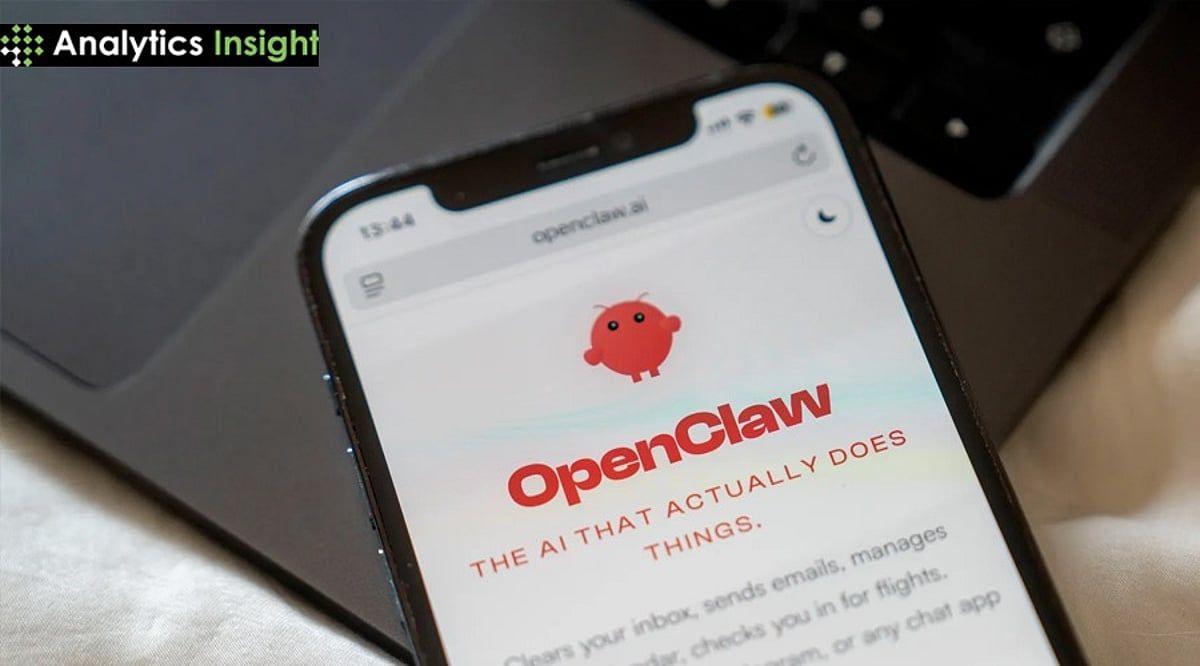
Source: Analytics Insight
The platform is accessible as a standalone desktop application or through DingTalk, Alibaba's cloud-based communications platform similar to Slack, which serves over 20 million corporate users
3
. Beyond DingTalk, Alibaba outlined plans to connect Wukong with other messaging platforms including Slack, Microsoft Teams, and Tencent's WeChat, expanding access to mobile devices3
. The company also plans to progressively integrate the tool into its broader e-commerce ecosystem, including Taobao and Alipay1
. Unlike traditional chatbots that respond to prompts, AI agents can take proactive actions, though this requires broader access to company data and systems, raising data security concerns that Alibaba addresses with "enterprise-grade security infrastructure"3
.
Source: PYMNTS
Major Restructuring Under Alibaba Token Hub Business Group
The Wukong launch came just one day after Alibaba announced a significant reorganization, with the AI agent platform falling under its newly formed Alibaba Token Hub business group
3
. Led by Chief Executive Eddie Wu, this new division will focus on developing and applying AI tokens—units of data used by models to generate language—and oversee existing Alibaba units including Tongyi Laboratory, MaaS Business Line, Qwen, and AI Innovation3
. The restructuring signals the clearest indication yet that Alibaba's AI strategy is shifting toward digital assistants powered by AI models that consume far more tokens than traditional Q&A chatbots2
.
Source: Benzinga
In an internal memo, Wu described the changes as a "historic opportunity" as the company stands at the "threshold of an [artificial general intelligence] inflection point"
3
. This week, the firm also announced it would separate its AI businesses from its cloud computing arm2
. The strategic pivot comes as the $325 billion e-commerce giant reports quarterly results, with AI monetisation in focus as major tech firms wrestle with how to make the era-defining technology profitable2
. A key driver behind the shift to AI agents is the potential to generate revenue, as these agents consume tens to hundreds more tokens per day than typical chat sessions—crucial for Chinese firms offering open-source AI models that have seen token prices plunge amid intense domestic competition2
.Leadership Turmoil Clouds AI Ambitions
The restructuring and Wukong launch come amid significant turbulence in Alibaba's AI leadership ranks. Lin Junyang, the key technical lead behind Qwen and head of the firm's Qwen model division, left in early March, marking the third senior departure this year from the Qwen team, following Yu Bowen and Hui Binyuan, who headed post-training and coding respectively
3
. Lin alluded to his departure in a cryptic post on X, writing "bye my beloved qwen," which CEO Eddie Wu later confirmed in an internal staff memo3
.Morningstar analyst Chelsey Tam noted that "this has heightened concerns about morale in Qwen and Alibaba's ability to retain AI talent and maintain its leadership in the AI model race," adding that "top AI talent is scarce" and if Lin and core Qwen members join a competitor, "it would be a setback for Alibaba"
2
. These departures occur as Alibaba grapples with questions about its AI strategy after CEO Eddie Wu promised over $53 billion of investment in AI last year, announcing artificial general intelligence as the company's primary goal1
.Related Stories
Competitive Landscape and Ecosystem Advantages
Alibaba is not alone in racing to capture the China AI agent market. Rival Tencent and ByteDance, along with startups such as Zhipu AI, have launched similar products built on OpenClaw, an open-source agentic platform
3
. However, Alibaba's sprawling ecosystem—spanning e-commerce, food delivery, travel, movie ticketing, and more—provides a distinct competitive advantage in AI for business automation2
. According to Brian Wong, a former Alibaba employee and author of "The Tao of Alibaba," executing daily functions through a chatbot could fundamentally shift consumer behavior: "Think of it like having OpenAI, Amazon, Stripe, Uber, DoorDash, Ticketmaster, Expedia, Netflix and Charles Schwab all integrated into one text box you can just use natural language to execute"2
.Ed Sander, an analyst at China Digital Retail Report, emphasized that while rivals like Tencent and ByteDance would mainly serve as agent platforms interacting with third-party companies, "Alibaba also has the fulfillment and logistics part built in, not to mention running everything on Alibaba's cloud infrastructure, no other company has the ability to execute every part from the chatbot all the way through to the logistics in the way Alibaba does"
2
. Alibaba's AI chatbot Qwen has already begun moving beyond answering questions to helping users make purchases directly through a chat interface, though an early February push with a 3 billion yuan ($435.7 million) coupon campaign proved so popular it prompted a temporary shutdown of the app2
.References
Summarized by

Navi
Related Stories
Alibaba launches Token Hub to consolidate AI divisions and accelerate enterprise monetization
16 Mar 2026•Business and Economy

Alibaba Links Taobao Shopping to Qwen AI App, Advancing Push Into Consumer AI Services
14 Jan 2026•Technology

Alibaba launches Accio Work agentic AI platform for small and medium-sized businesses
24 Mar 2026•Technology

Recent Highlights


Recent Highlights
Today's Top Stories












Your Daily Dose of Curated AI News
Don’t drown in AI news. We cut through the noise - filtering, ranking and summarizing the most important AI news, breakthroughs and research daily. Spend less time searching for the latest in AI and get straight to action.

