AMD's Multi-Chiplet GPU Innovation: Potential Game-Changer in Graphics Technology


2 Sources
[1]
AMD still rumored with high-end 'multi-chiplet' Radeon GPU, could debut with UDNA architecture
AMD secures a new patent for a multi-chiplet GPU using a 'Smart Switch' fueling rumors of a multi-chiplet consumer-focused Radeon GPU. As an Amazon Associate, we earn from qualifying purchases. TweakTown may also earn commissions from other affiliate partners at no extra cost to you. AMD has been
[2]
AMD's "Multi-Chiplet" Gaming GPUs Are Much Closer Than You Think; Might Debut With The Next UDNA Architecture
AMD has big plans for the future of the consumer GPU segment, and they aren't ordinary ones, since based on rumors and new patents, the firm is expected to adopt multi-chiplet GPUs soon. The concept of MCM (Multi-Chiplet Module) isn't entirely new for the graphics segment, but with the limitations
Share
Copy Link
AMD secures a patent for multi-chiplet GPU technology, potentially revolutionizing graphics processing with improved performance and efficiency. This development could challenge NVIDIA's dominance in the high-end GPU market.
AMD's Multi-Chiplet GPU Innovation
AMD, a leading semiconductor company, has recently secured a patent for a multi-chiplet GPU design, potentially revolutionizing the graphics processing industry. This development has sparked excitement among tech enthusiasts and could significantly impact the competitive landscape of the GPU market
1
2
.The Multi-Chiplet Approach
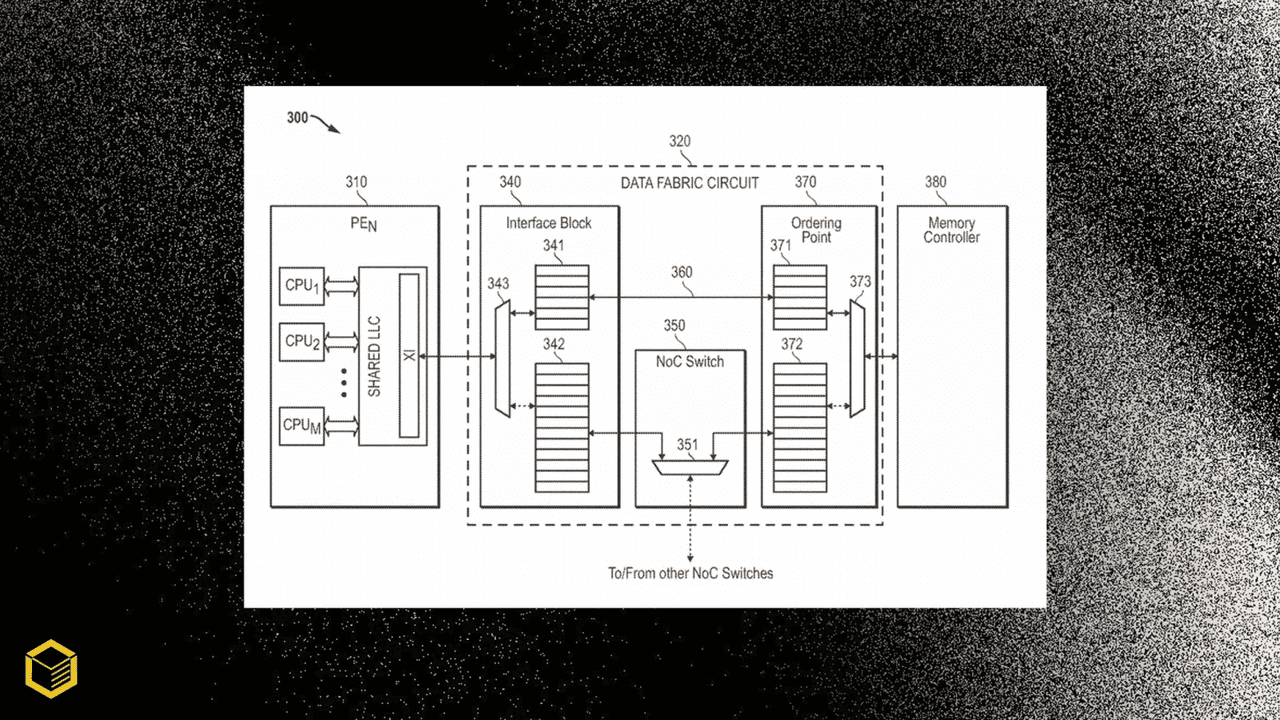
The multi-chiplet module (MCM) design is not entirely new to the graphics segment, but its application in consumer GPUs has been limited due to technical challenges. AMD's approach involves using a 'Smart Switch' to bridge communications between compute chiplets and memory controllers, similar to AMD's Infinity Fabric but scaled down for consumer GPUs
1
.
Source: TweakTown
Overcoming Latency Challenges
One of the primary hurdles in implementing a chiplet design for gaming GPUs has been increased latency. AMD's patent proposes a solution that optimizes memory access by comparing whether a graphics task requires task migration or data replication, with decision latency on a nanosecond scale
2
.Architectural Innovations
The proposed design includes:
- Graphics Compute Dies (GCDs) with L1 and L2 caches
- An extra shared L3 cache (or stacked SRAM) accessible through the smart switch
- Stacked DRAM as a foundation for the MCM-based design
This architecture aims to reduce the need for global memory access and act as a shared staging zone between chiplets, similar to AMD's 3D V-Cache technology
1
2
.
Source: Wccftech
Potential Impact on the GPU Market
If successful, this multi-chiplet approach could give AMD a significant advantage in competing with NVIDIA, which has long dominated the high-end GPU market. The new design could potentially overcome the limitations of monolithic GPU designs, allowing for improved performance and efficiency
1
.Related Stories

UDNA Architecture and Future Prospects
AMD's next GPU architecture, UDNA 5, might introduce or at least tease this multi-chiplet Radeon GPU. The company plans to merge their gaming and AI architectures under the UDNA architecture, which could leverage this new technology
2
.Industry Readiness and Challenges
AMD appears to be ecosystem-ready for this implementation, with access to TSMC's InFO-RDL bridges and a specific version of Infinity Fabric for packaging. However, the company has experienced complications with chiplet designs before, as seen with RDNA 3's latency issues
2
.As the graphics processing industry reaches the limitations of monolithic GPU designs, AMD's multi-chiplet innovation could represent a significant leap forward. While the technology shows promise, it remains to be seen how effectively it will be implemented in consumer products and how it will perform in real-world applications.
References
Summarized by

Navi
[1]
Related Stories
AMD Unveils UDNA: A Unified GPU Architecture to Challenge NVIDIA's CUDA Dominance
10 Sept 2024

AMD's CES 2025 Lineup Leak Reveals Ambitious AI-Focused Hardware Plans
30 Oct 2024•Technology

AMD's UDNA Architecture: Powering Next-Gen Consoles and Radeon GPUs with Enhanced AI and Ray Tracing
23 Jun 2025•Technology

Recent Highlights



Recent Highlights
Today's Top Stories



Don’t drown in AI news. We cut through the noise - filtering, ranking and summarizing the most important AI news, breakthroughs and research daily. Follow topics that matter to you and stay ahead.


