Claude AI users must now verify identity with government ID as Anthropic introduces new checks


4 Sources
[1]
Anthropic will ask Claude users to verify their identities 'for a few use cases'
Anthropic has started rolling out identity verification on Claude "for a few use cases." The company didn't list out those use cases in its announcement, but we've asked it for details and will update this post when we hear back. Anthropic says you might see a verification prompt upon "accessing
[2]
Claude wants your passport as identity verification to access 'certain capabilities' -- but promises it isn't using your face to train its models
Anthropic says your verification data will only be used to confirm identity Users of Anthropic's Claude AI platform will soon need to provide government-issued ID such as a passport or driving licence in order to use the service. The company confirmed users will need to provide ID to access
[3]
You Switched to Claude Over Surveillance Fears. Now It Wants Your Passport - Decrypt
Verification data goes to Persona's servers, not Anthropic's, and won't be used to train models. Anthropic quietly published identity verification requirements for Claude this week, asking certain users to hand over a government-issued photo ID and a live selfie. Something its competitors don't
[4]
Claude announces ID verification: What it means for your account and privacy
Your AI chatbot now wants to see your passport. Anthropic wants Claude users to verify using their ID. So, if you use Claude and haven't seen the prompt yet, there's a good chance you will be getting it soon. AI tools have become very deeply embedded in our daily work and life and anonymity at
Share
Copy Link
Anthropic has begun rolling out identity verification requirements for Claude AI users, requiring government-issued photo IDs and live selfies for certain capabilities. The move, handled through third-party partner Persona Identities, has sparked user privacy concerns despite assurances that verification data won't be used for model training. The decision marks a shift for a platform that attracted millions fleeing OpenAI over surveillance fears.
Anthropic Introduces Identity Verification for Claude AI Users
Anthropic has started rolling out identity verification requirements for its Claude AI platform, asking users to provide a government-issued photo ID and live selfie when accessing certain capabilities
1
. The company announced the change this week, stating that verification prompts may appear during routine platform integrity checks or as part of safety and compliance measures2
. While Anthropic hasn't publicly specified which features trigger verification, the company emphasizes that the process helps prevent abuse, enforce usage policies, and meet legal obligations2
.
Source: Digit
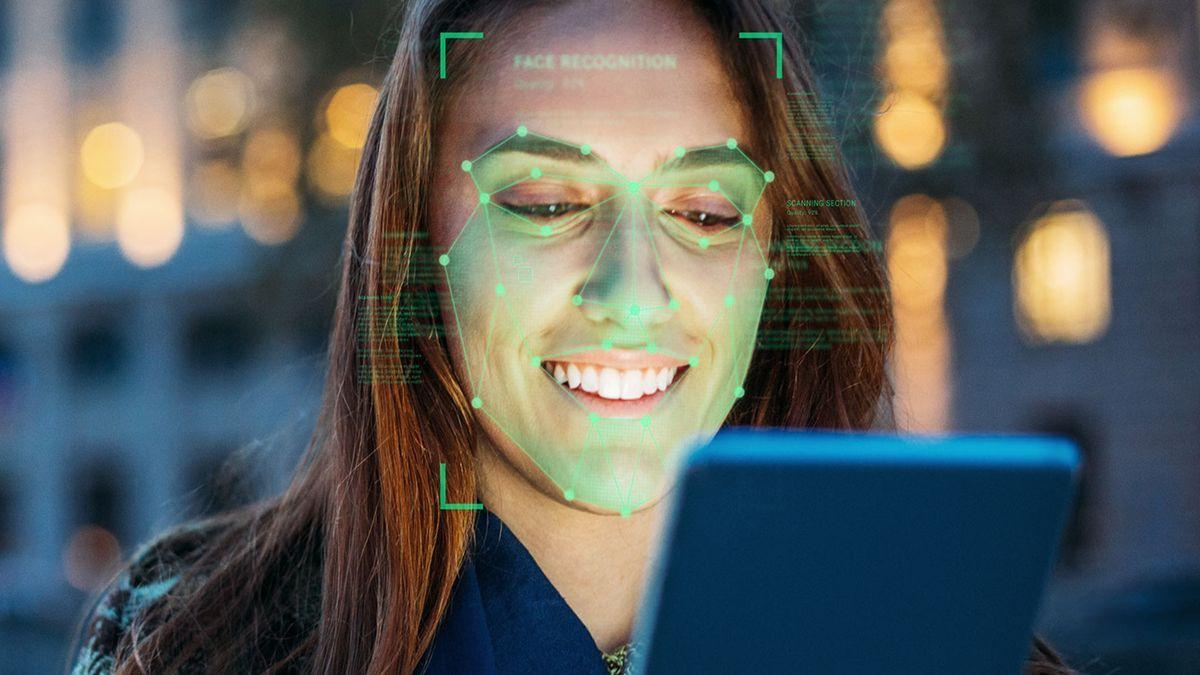
The verification process, which typically takes under five minutes, accepts physical documents from most countries including passports, driver's licenses, state or provincial ID cards, and national identity cards
2
. Photocopies, screenshots, digital IDs, student credentials, and temporary paper IDs are not accepted2
. Users must also take a live selfie using their phone or webcam, which the system compares against the submitted ID1
.
Source: TechRadar
User Privacy Concerns Mount Over Data Handling
The announcement has generated significant backlash from users questioning why an AI chatbot requires identity verification, particularly for paying subscribers whose credit cards are already on file
1
. The timing proves especially awkward given that millions of users migrated to Claude AI from OpenAI in February after OpenAI signed a Pentagon deal to deploy AI on classified networks—a contract Anthropic declined over surveillance fears and concerns about autonomous weapons3
. Daily signups broke records at the time, with free users up 60% since January as privacy-conscious individuals sought an alternative3
.
Source: Decrypt
Persona Identities Partnership Raises Questions
Anthropic selected Persona Identities as its verification partner, the same KYC infrastructure used across financial services and by companies like OpenAI and Roblox
1
3
. Criticism intensified when users discovered that Persona counts venture firm Founders Fund as a major investor—co-founded by Peter Thiel, who also co-founded and chairs Palantir, a surveillance company serving federal agencies including the FBI, CIA, and US Immigration and Customs Enforcement1
. Palantir's services primarily expand government surveillance using facial recognition and AI technologies1
.Under the arrangement, Persona handles ID images and biometric data on its servers, not Anthropic's systems
3
. Anthropic functions as the data controller, setting rules for how information is used and stored, while Persona processes data on Anthropic's behalf2
. Anthropic can access verification records through Persona's platform when needed, such as reviewing appeals, but does not copy or store those images2
.Related Stories

Data Security Promises and Historical Precedent
Anthropic has issued explicit assurances about data handling. The company states that verification data is used solely to confirm identity and meet legal and safety obligations, not for model training
2
. All data passing through the verification process is encrypted in transit and at rest1
. Anthropic emphasizes it will not share identity data with third parties for marketing, advertising, or any purpose unrelated to verification and compliance, except where legally required to respond to valid legal processes2
. Persona is contractually limited in how it can use the data, restricted to fraud prevention and verification improvement3
.However, third-party custody of government documents carries inherent risks. An October 2025 breach at Discord exposed roughly 70,000 government IDs that users had submitted for age verification
3
. While Persona maintains serious infrastructure, the incident demonstrates that no third party proves immune to security failures3
.Broader Implications for AI Accountability
The move fits a pattern Anthropic has been building toward greater accountability. In December, the company deployed classifiers to detect users who self-identify as minors, though multiple adult users reported account suspensions and lost project histories while appealing incorrect flags
3
. The verification system also enforces age restrictions, with under-18 access listed as grounds for account suspension4
. Accounts registered from regions Anthropic doesn't formally serve face bans—a detail affecting Chinese users accessing the AI chatbot through intermediaries, since matching a live selfie against a physical government document proves difficult to circumvent3
.The shift signals that frictionless, consequence-free AI access is ending
4
. AI tools have become deeply embedded in daily work and life, and anonymity at scale creates potential for abuse and policy violations that simple email sign-ups cannot prevent4
. Whether users find this development reassuring or intrusive likely depends on their usage patterns and trust in corporate data promises4
. What remains clear is that platforms are introducing accountability measures for both users and providers, though reactions suggest many question whether "we promise not to misuse it" constitutes sufficient guarantee when handing government credentials to an organization built on consuming and processing data4
.References
Summarized by

Navi
Related Stories
Anthropic requires ID verification for Claude users as privacy concerns mount over biometric data
22 Jun 2026•Technology

Anthropic Shifts Gears: User Data Now Fuels AI Training, Opt-Out Available
29 Aug 2025•Technology
Anthropic Forces Sign-Outs as Hackers Use Malware to Hijack Claude AI Accounts and Steal Usage Credits
01 Sept 2026•Technology
Recent Highlights



Recent Highlights
Today's Top Stories






Don’t drown in AI news. We cut through the noise - filtering, ranking and summarizing the most important AI news, breakthroughs and research daily. Follow topics that matter to you and stay ahead.


