Pope Leo XIV releases major AI encyclical calling for 'disarmament' of artificial intelligence


87 Sources
[1]
Citing Gandalf, Pope Leo says we must "disarm" AI
With the co-founder of Anthropic at his side today in Rome, Pope Leo XIV released a major new encyclical -- his first -- called "Magnifica Humanitas" ("Magnificent Humanity"). It calls for AI to be "disarmed" in service of the common good. "The word is strong," Leo admits, but he chose the
[2]
The pope's AI encyclical isn't really about AI | TechCrunch
Pope Leo XIV published his first encyclical on Monday, dubbed Magnifica Humanitas, on "safeguarding the human person in the time of artificial intelligence." And while AI is the hook, the problems Leo focuses on are older and more pervasive: inequality, war, the erosion of democracy, and the
[3]
How the Pope's Magnifica Humanitas offers a template for individuals to meet the AI moment
Pope Leo XIV's new encyclical on artificial intelligence includes a statement that warrants serious attention from technologists and policymakers: "Technology is never neutral." Magnifica Humanitas ("Magnificent Humanity") is a clarion call to all people to act with courage and solidarity as we
[4]
What Pope Leo XIV's First Encyclical Says About the Power of AI
An algorithm decides what we see, another filters what we read, and still others enter into the processes that govern work, information, and collective choices. In the encyclical Magnifica Humanitas. the first signed by Pope Leo XIV and published on May 25, artificial intelligence is not viewed as
[5]

The Pope isn't AGI-pilled
On Monday, Pope Leo XIV unveiled an encyclical letter addressing the societal implications of artificial intelligence. The letter, titled Magnifica Humanitas, warned that the "use of AI is never a purely technical matter: when it enters processes that affect people's lives, it touches on rights,
[6]

Pope Leo XIV: Unchecked AI Development Risks Building a New Tower of Babel
Pope Leo XIV signs the encyclical Magnifica Humanitas at the Vatican. ( Credit: Simone Risoluti - Vatican Media via Vatican Pool/Getty Images) The first American pope used his first encyclical to express his profound concerns about a topic that increasingly dominates American political and
[7]

The story of Pope Leo's 'landmark' text on AI technology - by a member of its launch panel
For the last few years, I've been seconded to assist the Catholic Church's unprecedented global grassroots listening initiative. Just as that process drew to a close, I received a surprise request: would I help Pope Leo XIV launch his first social encyclical, focused on what it means to be human in
[8]

Anthropic cofounder hallucinates ghost in the machine after hearing the Pope speak about AI
OPINION In his encyclical Magnifica Humanitas, Pope Leo XIV warns against equating machine "intelligence" with human intelligence. "We must avoid the misconception of equating this type of 'intelligence' with that of human beings," he declared. "These systems merely imitate certain functions of
[9]

With AI manifesto, Leo joins pantheon of popes who urged world to change
VATICAN CITY, May 25 (Reuters) - Catholic popes have been urging global leaders to address social justice issues for 135 years across some two dozen major documents that many of the world's 1.4-billion-faithful can cite by their two- or three-word titles. "Rerum Novarum" from Leo XIII in 1891
[10]
Pope Leo calls for being 'profoundly human' in the age of AI
In his papal encyclical -- a kind of open letter from the Catholic Church -- Pope Leo stressed the economic and social upheaval that rapid AI adoption is creating, with inadequate protections for individuals that threaten human dignity. He compared the current era of AI to the Tower of Babel,
[11]

Trump officials split over Pope Leo's AI warning as Vatican feud enters new front
"I didn't know that tech editorializing was part of the role of being pope," Burgum said in an interview on Fox Business, referring to Leo's first encyclical, a 42,300-word document that called for stronger AI oversight and warned the technology could displace workers, deepen inequality and put
[12]

Excerpts from Pope Leo XIV's sweeping manifesto about humanity in the AI era
VATICAN CITY (AP) -- Pope Leo XIV has issued a sweeping manifesto about safeguarding humanity in the era of artificial intelligence, examining the many social areas that the technology is fundamentally reshaping. Here are some excerpts from the 83-page document "Magnifica Humanitas" (Magnificent
[13]

Pope Leo calls for AI to serve humanity and not concentrate power - Engadget
The Pontiff released a 42,300-word document outlining the dangers (and benefits) of AI. Pope Leo XIV has taken a stronger stand against AI. On Monday, Leo released his first papal encyclical -- an almost 400-year-old tradition in which the Catholic Church shares its perspective on an issue. In
[14]
Pope Leo XIV compares AI to the Industrial Revolution - as new alternatives to big AI firms take shape
With the release of his encyclical letter Magnifica Humanitas on May 25, 2026, Pope Leo XIV has signaled that he wants the church to respond to artificial intelligence much as a predecessor, Pope Leo XIII, responded to upheavals during the Industrial Revolution over a century ago. Since the first
[15]

Pope Leo Is Challenging Much More Than Big Tech
Many admirers of his new encyclical have misidentified its main target. Magnifica Humanitas, Pope Leo XIV's new encyclical "on safeguarding the human person in the time of artificial intelligence," has received widespread praise. This isn't surprising. A popular and learned world leader with a
[16]

What the Pope Said About A.I.
Last year, only months into his papacy, Pope Leo XIV, the first American Pope, called on developers of artificial intelligence "to cultivate moral discernment as a fundamental part of their work." In response, the Silicon Valley billionaire and troll-in-chief Marc Andreessen began mocking the
[17]

At the A.I. Epicenter, Technologists Dismiss Pope Leo's Warnings About the New Technology
When Pope Leo XIV presented a 42,300-word open letter to the world's 1.4 billion Catholics on Monday, calling for protections against the rise of artificial intelligence, he was joined by Christopher Olah, a co-founder of Anthropic, which is one of the tech industry's leading A.I. companies. As
[18]

Pope Leo says AI must be 'disarmed' in first major teaching
Pope Leo has presented the first major teaching document of his papacy, warning that artificial intelligence needs to be "disarmed". "The word is strong, I know, but deliberately chosen because this moment needs words capable of attracting attention," the Pope said. Encyclicals are technically
[19]
Pope Leo warns AI boom can give Big Tech and the people who run it too much power
Pope Leo XIV has made artificial intelligence the subject of the first major teaching issued since his appointment in May 2025, and included warnings that AI could lead to Big Tech companies and the moguls that accumulating power that they will abuse for the sake of profit. The Pope's teaching is
[20]

The Pope Warns Against â€~Dehumanization’ in the AI Era Alongside an Eyebrow-Raising Guest
In the first major theological document of his papacy, Pope Leo warned humanity on the dangers of underregulated AI developmentâ€"alwhile being flanked by one of the biggest players in AI. "In the era of artificial intelligence, when human dignity is threatened by new forms of dehumanization, ours
[21]

Pope Leo XIV tells the Vatican to disarm AI, in the first encyclical of his pontificate
Magnifica humanitas calls for breaking up monopolistic control of the technology, rules out algorithmic warfare, and is being presented alongside Anthropic co-founder Chris Olah. Pope Leo XIV used the first encyclical of his pontificate, published in Rome on Monday, to call for the disarmament of
[22]
Quotes from Pope Leo's document warning world of AI risks
VATICAN CITY, May 25 (Reuters) - Pope Leo issued his first major document on Monday, urging international regulation to slow down the development of AI systems, which he said spread misinformation and may lead the world down a path of unending war. Below are snippets from the document, a nearly
[23]
Pope Leo urges AI regulation and warns that some weapons are now beyond human control
Pope Leo urged governments to slow down and closely regulate the development of AI systems in his first major document, released on Monday, warning that they spread misinformation, prioritise conflict and risk leading the world down a path of unending war. The first U.S. pope also expressed
[24]
Pope calls for robust regulation of AI in manifesto that ponders the future of humanity
VATICAN CITY (AP) -- Pope Leo XIV called Monday for robust regulation of artificial intelligence and for its developers to work for the common good rather than profit, issuing a sweeping manifesto on safeguarding humankind as the technology impacts everything from work to war. "Magnifica
[25]
The Pope's Defense of Human Imperfection
The Vatican's encyclical about AI is actually about what technology can never do. After the Lord sent a great flood to rid the world of evil, people gathered in Babylonia and began baking bricks -- a recent advancement. In those days all humans spoke the same language, and they used those bricks
[26]
As A.I. Fever Rises in Silicon Valley, Pope Leo Has a Few Words
David Streitfeld has reported from Silicon Valley since the late 1990s. Silicon Valley has always had messianic dreams, dating back to the days when computers filled entire rooms. One of the oldest industry jokes has a programmer asking a computer, "Is there a God?" The computer answers: "There
[27]
Pope Leo warns of AI's risks to humanity in his first encyclical
Pope Leo XIV has just declared artificial intelligence one of the defining moral challenges of our time, in his first encyclical: a formal letter intended to guide moral, social and theological thought. Titled Magnifica Humanitas (Magnificent Humanity), it argues technology must serve humanity,
[28]

Pope Leo XIV warns that AI must be "disarmed" and cites Gandalf from LOTR to make his point
The pope's prophetic words about AI include a famous line from a storied wizard The growing backlash against AI has spilled into nearly every corner of culture -- from art and music to education and the future of work. Spend even a few minutes scrolling through social media and you'll likely come
[29]

Pope Leo takes aim at big tech in sweeping encyclical on AI
<iframe src="https://www.npr.org/player/embed/nx-s1-5828375/nx-s1-9784160" width="100%" height="290" frameborder="0" scrolling="no" title="NPR embedded audio player"> Pope Leo XIV does not want a few tech firms setting the ethics for artificial intelligence. Leo said today that people all over the
[30]

Why I'm grateful to the Pope for his encyclical on AI | Francine Prose
The intelligent and thoughtful encyclical is an important warning of the uses and misuses of a rapidly developing technology. Silicon Valley is wrong to dismiss it Often I'm asked if I think that the novels of the future will all be written by AI. It's not so much a question as a provocation. Do I
[31]

The Pope just warned AI could create 'new forms of dehumanization' -- and his message feels aimed straight at Big Tech
* Pope Leo warned AI could create "new forms of dehumanization" * The Vatican says "opaque algorithms" threaten humanity and social justice * The Pope called for global ethical standards around artificial intelligence The Catholic Church has entered the AI debate in dramatic fashion. In one of
[32]

5 ways Pope Leo says AI could warp humanity
Why it matters: The long-awaited document, Magnifica Humanitas ("Magnificent Humanity"), signals that the Vatican is aggressively positioning itself as a central moral authority in the global tech debate. Driving the news: The Vatican released Leo's first encyclical on Monday, which he signed at
[33]

3 key takeaways from Pope Leo's 42,000-word AI encyclical
The highest seat in the Catholic Church issues its stance on AI. Credit: Marco Iacobucci Epp / Shutterstock Pope Leo XIV has issued his first official piece of religious guidance to billions of Catholics. And it's all about AI. It came in the form of a 42,300-word papal encyclical titled
[34]

Two popes, two industrial revolutions -- and one warning for Big AI | Fortune
Since the first act of his papacy - choosing his name - the current pope has repeatedly invoked the earlier Leo's 1891 encyclical Rerum Novarum. That document, which waded into the political and economic debates of the time, denounced the excesses of the Gilded Age and pointed toward a more just
[35]

How Pope Leo's Encyclical Rejects Trump's AI Strategy
While the pope has no direct political power, his essay could nevertheless have political impact. "I think that what the pope is trying to tell us is that the spiritual has political dimensions," says Michael Toscano, a Catholic and the director of the Family First Technology Initiative. "I believe
[36]

The Pope Just Low Key Declared Holy War on Artificial Intelligence
Can't-miss innovations from the bleeding edge of science and tech As the AI backlash continues to grow, critics of the tech have found an unlikely voice of support: the Catholic Church. In perhaps his strongest rebuke of the tech industry's rampant obsession with AI yet, Pope Leo called for the
[37]

Pope Leo Releases First AI Encyclical, Calls Data a Common Good and Rejects Moral Neutrality of Tech - Decrypt
Anthropic co-founder Christopher Olah spoke at the Vatican launch and warned that AI labor displacement at scale would become "a moral imperative of historic proportions" to address. Pope Leo XIV published his first encyclical on Monday, a 245-paragraph document dedicated entirely to artificial
[38]
The Pope Is Now the World's Most Famous Humanist
Leo XIV's encyclical about artificial intelligence makes a strong argument in favor of human fallibility. Does the pope have an editor? If I could presume to take on this role for a second, then I might have one little note for Leo XIV after reading his new encyclical about artificial
[39]
Video: Pope Leo Warns of A.I. Risks in His First Papal Encyclical
Pope Leo XIV presented his first encyclical, "Magnifica Humanitas," in which he outlined his desire to protect human dignity and agency in an age when technology threatens to replace people in many professional and social roles. "Artificial intelligence now demands to be disarmed, freed from
[40]
'AI needs to be disarmed': Pope Leo sees threat to humanity in technological arms race
In the first landmark publication of his papacy, Pope Leo XIV has addressed recent advances in artificial intelligence by focusing on the threat it poses to workers, social justice and "the dignity of persons". Presenting his first encyclical, "Magnifica Humanitas" ("Maginficent Humanity"), at the
[41]

Tech titans mostly silent after Pope Leo's warning about risks of AI
Pope Leo XIV on April 17 in Douala, Cameroon.Simone Risoluti / Vatican Pool / Getty Images Pope Leo XIV's sweeping warning about the dangers of artificial intelligence drew a largely muted response across the American technology world, though a handful of leaders quickly embraced the Vatican's
[42]

Vance hails Pope Leo's AI encyclical as 'profound'
Washington (United States) (AFP) - US Vice President JD Vance on Tuesday praised Pope Leo XIV's manifesto warning of the risks of artificial intelligence, calling it "profound" and a necessary act of moral leadership in a disruptive AI age. Vance has close ties to the tech industry, having worked
[43]

Pope Leo vs AI: Tech arms race endangers humanity, Pontiff says
Pope Leo XIV has disseminated a major manifesto warning of the societal ills posed by the emerging technology - particularly on the battlefield and how it is related to "slavery". The document, dated May 15, was published 145-years after a former Pope Leo wrote his own warning of the advent of the
[44]

'Technology is never neutral': Pope Leo XIV criticises 'culture of power' driving AI race, and refuses to be taken in by consciousness claims
As an atheist, you won't see me at Mass, but I'll gladly welcome the Pope as another AI-sceptic ally. Pope Leo XIV has just issued his first encyclical letter since being elected in 2025, calling for a 'safeguarding of the human person in the time of artificial intelligence'. Titled 'Magnifica
[45]

Pope Leo calls for "disarming" of AI in technology-focused encyclical
Rome -- Pope Leo XIV issued a major document Monday focused largely on the implications of the rise of artificial intelligence for humanity, warning the technology could make civilization itself "less human." Pope Leo, who has repeatedly clashed with the Trump administration over the Iran war and
[46]

The pope takes on AI
Christian Paz is a correspondent at Vox, where he covers the Democratic Party. He joined Vox in 2022 after reporting on national and international politics for the Atlantic's politics, global, and ideas teams, including the role of Latino voters in the 2020 election. Monday morning, the Roman
[47]
The Guardian view on the Pope and Claude: Leo XIV's encyclical on AI is right to put humanity first | Editorial
In calling for regulation of the digital revolution, and foregrounding human dignity, the pontiff has contributed to a crucial ethical debate When the present pope adopted his regnal name, he explained the choice by reference to a 19th-century predecessor who used the papacy to address the great
[48]

AI and the pontificating Pontiff (1/2) - what humanity - and our political and techno masters - must learn about morality
Pope Leo XIV - the American Pope - staged a dramatic, if lengthy and at times dense, intervention in the debate around AI ethics and morality yesterday with the publication of Magnifica Humanitas (Magnificent Humanity), a 42,000 words encyclical to Catholic bishops that also took some hefty pot
[49]

'Now I'll have to baptize myself Catholic': Social media reacts to Pope Leo's surprisingly poignant warning about AI
Given its profound implications on the workforce, the environment, and humankind as a whole, it's no surprise that almost everyone has an opinion on artificial intelligence these days, including the pope. Less than a year after his election, Pope Leo XIV just released his first encyclical, a
[50]

Pope Leo XIV highlights AI risks in first encyclical - SiliconANGLE
Pope Leo XIV today issued an encyclical that contains an extensive discussion of artificial intelligence and its risks. The approximately 43,000-word document is entitled "Magnifica Humanitas", which is Latin for "Magnificent Humanity." One of its five core chapters is dedicated entirely to
[51]
The Pope's 'AI encyclical' says a lot. Yet critics say it misses AI's most pressing challenges | Fortune
Hello and welcome to Eye on AI. In this edition...The Pope takes on AI...Microsoft becomes the latest company to "toll gate" some of its systems...OpenAI solves an Erdös problem (for real)...and that sound you hear is the cognitive dissonance in JD Vance's head. When the American-born Cardinal
[52]
Pope Leo Uses First Major Papal Text to Warn About Dangers of AI
Released Monday, the 42,300-word encyclical "Magnifica Humanitas" marks Pope Leo's most sweeping statement yet on the promise and dangers of AI, a topic he has repeatedly spoken about in the year since his election. Framed as an appeal for the defense of humanity in a rapidly automating world, the
[53]

The Internet Is Somehow Obsessed With the Pope's First Major Letter. I Read It -- and Totally See Why.
It's an urgent warning -- and a celebration of humanity and what we can do at our best. The online reaction to Pope Leo XIV's first encyclical, a 42,000-word tome focused on artificial intelligence and published by the Vatican on Monday, has seemingly positioned the Catholic figurehead as an ally
[54]

Pope's first big fight isn't over religion - it's over AI
Leo sees a transformation on the scale of the industrial revolution and argues it must be bent towards the dignity of every human. Donald Trump, by contrast, wants to let it rip. Pope Leo XIV and US President Donald Trump are having a public disagreement over war and peace. But a deeper divide is
[55]

Pope Leo XIV's AI encyclical extends invitation, challenge
Today, May 25, Pope Leo XIV will release his first encyclical, Magnifica Humanitas (Magnificent Humanity), which is one of highest forms of Church teaching. His letter, which will be released with Christopher Olah, the co-founder of artificial intelligence company Anthropic, addresses the reality
[56]
Pope Leo's Unsettling Vision of the AI Future
His new encyclical, Magnifica Humanitas, seeks to counterbalance alarm with hope but lands firmly on one side. The Vatican, as one aphorism puts it, tends to "think in centuries." But Pope Leo XIV seems intent on changing that, moving with remarkable speed to publish his first encyclical today,
[57]
Pope Leo Warns of Risks From A.I. in 42,300-Word Encyclical
Motoko Rich, the Rome bureau chief, leads coverage of the pope. Elisabetta Povoledo reported from Vatican City. Pope Leo XIV on Monday set out a sweeping vision for corporate executives, politicians and individuals who will shape and be shaped by the future of artificial intelligence, warning
[58]
Pope Leo warns AI is fueling conflict, urges world to 'slow' advances
Pope Leo XIV called for stronger regulation and a slower pace of AI advances in a landmark theological document released Monday, warning the technology was fueling and normalizing conflict around the world. In a sweeping and eagerly anticipated manifesto on the subject, Leo warned that AI should
[59]
Pope Leo XIV to release long-awaited AI manifesto on ethical risks and global impact
Pope Leo XIV will publish on Monday his long-awaited manifesto on artificial intelligence, outlining the Catholic Church's response to the technology's ethical and social challenges. The U.S.-born pontiff will personally present the "Magnifica Humanitas" encyclical at the Vatican alongside senior
[60]
Pope Leo denounces 'culture of power' driving rise of AI
Pontiff calls for 'most rigorous' ethical constraints on tech and apologises for church's delay in condemning slavery Pope Leo has denounced the "culture of power" driving the rapid rise of artificial intelligence while warning that the technology must be subject to the "most rigorous" ethical
[61]

Pope Leo's AI Warning Struck a Nerve With Some Tech Leaders
Pope Leo XIV went viral on Monday with his warning about the threats AI poses to humanity and the steps he believes should be taken to ensure that "the idolatry of profit" does not "sacrifice the weak," including helping workers made obsolete by the technology, creating rules about how AI can be
[62]

With AI Manifesto, Leo Joins Pantheon of Popes Who Urged World to Change
VATICAN CITY, May 25 (Reuters) - Catholic popes have been urging global leaders to address social justice issues for 135 years across some two dozen major documents that many of the world's 1.4-billion-faithful can cite by their two- or three-word titles. "Rerum Novarum" from Leo XIII in 1891
[63]
Pope Leo called AI an 'instrument of domination, exclusion and death.' Anthropic was in the room | Fortune
Pope Leo XIV called Monday for robust regulation of artificial intelligence and for its developers to work for the common good rather than profit, issuing a sweeping manifesto on safeguarding humankind as the technology impacts everything from work to war. "Magnifica Humanitas" (Magnificent
[64]
Pope Leo says AI should be disarmed to avoid dominating humanity
Pope Leo XIV on Monday set out a sweeping vision for corporate executives, politicians and individuals who will shape and be shaped by the future of artificial intelligence, warning leaders to safeguard humanity from AI's most disruptive effects. Leo's declaration came in the form of a papal
[65]
Pope Leo Is Set to Release an Encyclical About A.I. Why Is That Important?
Pope Leo XIV on Monday will present his vision for how to preserve human dignity in the era of artificial intelligence. He will offer his ideas by issuing a kind of document known as an encyclical, a nearly 400-year-old papal tradition of teaching the Roman Catholic faithful. The document will be
[66]

Pope calls for robust regulation of AI in manifesto that ponders the future of humanity - The Economic Times
Pope Leo XIV called Monday for robust regulation of artificial intelligence and for its developers to work for the common good rather than profit, issuing a sweeping manifesto on safeguarding humankind as the technology impacts everything from work to war. "Magnifica Humanitas" (Magnificent
[67]

Pope Leo XIV Warns of Risks of AI, Calls for Robust Regulation
Are These Trends Real or Fake? Butter Tours, Toiletmaxxing, More Pope Leo XIV is calling for robust regulation of artificial intelligence in his newly released manifesto on safeguarding humanity in an era of increasing reliance on AI. In the highly anticipated document that's been in the works for
[68]

Pope Leo XIV Warns of Dangers of AI, Need to 'Disarm' the Technology
Pope Leo XIV warned of the dangers of artificial intelligence and lobbied for more safeguards with the technology in the pontiff's first encyclical. In "Magnifica Humanitas: On Safeguarding the Human Person in the Time of Artificial Intelligence," published Monday, the first American-born pope
[69]
Pope Leo Urges World to 'Slow Down' on AI in Fervent First Manifesto
VATICAN CITY, May 25 (Reuters) - Pope Leo urged governments to slow down the development of AI systems in his first major document, released on Monday, warning that they spread misinformation, prioritise conflict and risk leading the world down a path of unending war. Leo, who has adopted a
[70]

Pope says AI should be 'disarmed' to avoid dominating humanity
Pope Leo XIV said artificial intelligence should be "disarmed" to protect humanity from its dangers, adding his voice to a heated debate over the extent to which governments should regulate a technology that is reshaping the world. In a landmark address to the Catholic Church, which included a
[71]
'AI must be disarmed!': Pope Leo XIV warns of dangerous future without human control
Pope Leo XIV delivered a major warning about the future of artificial intelligence, urging world leaders and tech companies to ensure AI remains under human control. In a landmark address, the pope said artificial intelligence must be "disarmed" to protect humanity from its potential dangers.
[72]

Vatican Expert on AI: "I Wouldn't Have Had Matthew McConaughey and the Pope on the Same Bingo Card"
The advent of AI has brought out a host of skeptics in Hollywood, from Guillermo del Toro ("Fuck AI") to the slightly more diplomatic Joseph Gordon-Levitt ("this new technology could propel a great leap forward in human creativity but only if there's a system in place that rewards people for their
[73]

[ED] Welcome voice on moral AI - The Korea Times
Pope Leo signs "Magnifica humanitas" (Magnificent humanity) at the Vatican, May 15. Reuters-Yonhap A moral voice has emerged with force and authority, prompting people to reconsider what it means to be human, rather than seeing ourselves as cogs in the accelerating development of artificial
[74]

Pope Warns of AI's Inhuman Nature in His First Encyclical; Says It is a Valuable Tool Nonetheless
We must avoid the misconception of equating this type of 'intelligence' with that of human beings. These systems merely imitate certain functions of human intelligence, he says At a time when world appears sharply divided on the impact of AI on humanity in general and its power being vested in a
[75]
Pope Leo just dropped a 43,000-word warning about AI, says it could lead humanity into 'unending war'
Pope Leo's first major papal document addresses artificial intelligence. He warns that private companies hold too much power in AI development. This concentration risks creating new inequalities and making governance difficult. The Pope calls for robust legal frameworks and international
[76]

Here is what Pope Leo XIV said about artificial intelligence
Access the ENCYCLICAL LETTER "MAGNIFICA HUMANITAS" of Pope Leo from here Pope Leo XIV has issued a sweeping warning about the social, political, and human consequences of artificial intelligence, arguing that societies must urgently decide whether AI will serve humanity or deepen inequality,
[77]

Peter Thiel Vs Pope Leo -- Silicon Valley and the Vatican battle over who's the real antichrist
A cold war has broken out between Silicon Valley and the Vatican, as they accuse one another of jeopardizing humanity's future. In a Monday encyclical letter, Pope Leo XIV warned mankind is facing the "risk of being misled by deceitful goals" in the age of AI and called on regulators to stand up
[78]

Vatican's AI Manifesto Calls for Human Oversight in the Age of AI
Pope Leo XIV has urged governments to regulate artificial intelligence, warning that unchecked AI development could fuel inequality, misinformation, job losses and autonomous warfare while weakening human dignity and democratic accountability worldwide. Pope Leo XIV has issued a sharp warning
[79]

Pope calls for robust regulation of AI in manifesto that ponders the future of humanity
VATICAN CITY -- Pope Leo XIV called Monday for robust regulation of artificial intelligence and for its developers to work for the common good rather than profit, issuing a sweeping manifesto on safeguarding humankind as the technology impacts everything from work to war. "Magnifica Humanitas"
[80]
Pope Leo urges world to 'slow down' on AI in fervent first manifesto - The Korea Times
VATICAN CITY -- Pope Leo urged governments to slow down and closely regulate the development of AI systems in his first major document, released on Monday, warning that they spread misinformation, prioritize conflict and risk leading the world down a path of unending war. Leo, who has adopted a
[81]
Pope to release major artificial intelligence manifesto
Pope Leo XIV will release on Monday his long-awaited manifesto on artificial intelligence (AI), a bid to address ethical and social challenges as the technology rapidly develops worldwide. The release of "Magnificent Humanity" follows several years of study by the Church of AI-related
[82]
Pope Leo calls for robust regulation of AI, pondering the future of humanity in first encyclical
Pope Leo XIV called Monday for robust regulation of artificial intelligence and for its developers to work for the common good rather than profit, issuing a sweeping manifesto on safeguarding humankind as the technology impacts everything from work to war. "Magnifica Humanitas" (Magnificent
[83]
Pope Leo Calls for Stronger AI Laws Amid Rising Tech Concerns
The Vatican generally does not interfere with what's going on in Silicon Valley. However, breaking the tradition, has now shared his concern over the growing use of Artificial Intelligence in his encyclical named Magnifica Humanitas. The Pope didn't ask for a ban on AI systems, but he demanded that
[84]

Pope Leo urges world to 'slow down' on AI in first major manifesto
STORY: "Artificial intelligence already touches many areas of our lives..." In his first major document, Pope Leo is warning about the risks of AI - urging governments to slow down and closely regulate systems. Here's what he says about the technology in his first encyclical, titled "Magnificent
[85]
Pope Leo urges world to 'slow down' on AI in fervent first manifesto
VATICAN CITY, May 25 (Reuters) - Pope Leo urged governments to slow down the development of AI systems in his first major document, released on Monday, warning that they spread misinformation, prioritise conflict and risk leading the world down a path of unending war. Leo, who has adopted a more
[86]

From deepfakes to data: Pope Leo XIV's AI guardrail message explained
Human dignity must anchor every AI guardrail debate, says the Pope In the conversation on AI ethics and policy framework guidance, religion has finally entered the chat. Well, Pope Leo XIV, to be specific, and his remarks on artificial intelligence and its place in the world alongside humans and
[87]
Disarming AI: What the Pope said about AI ethics and policy
Normally, the Vatican would not be among the places where Silicon Valley would look for advice about how to regulate itself. However, an encyclical written by Pope Leo XIV called Magnifica Humanitasis not a theological statement that can be easily brushed aside by the AI industry - rather, quite
Share
Copy Link
Pope Leo XIV unveiled Magnifica Humanitas, his first encyclical addressing artificial intelligence. The 40,000-word document calls for AI to be 'disarmed' from monopolistic control and warns against autonomous weapons, neo-colonial data collection, and concentration of power. Presented alongside Anthropic co-founder Chris Olah, the encyclical updates Catholic social teaching for the AI age.
Pope Leo XIV Calls for Disarmament of AI in Landmark Encyclical
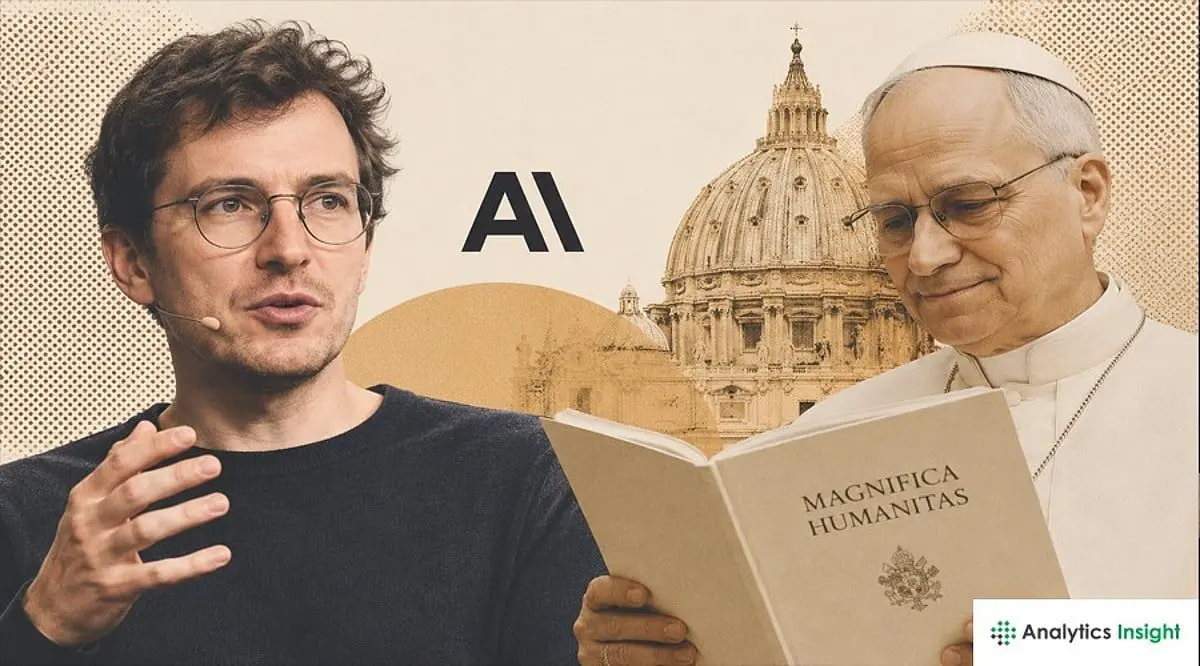
Pope Leo XIV released his first encyclical on May 25, titled Magnifica Humanitas ("Magnificent Humanity"), marking a significant intervention into the debate over artificial intelligence and its role in society. Presented in Rome alongside Anthropic co-founder Chris Olah, the 40,000-word document addresses the societal implications of artificial intelligence and calls for AI to be "disarmed" from logics that turn it into "an instrument of domination, exclusion, and death"
1
. The Pope Leo XIV AI encyclical deliberately uses strong language to attract attention and awaken consciences about technology's trajectory1
.
Source: Analytics Insight
The timing carries symbolic weight. Leo signed Magnifica Humanitas on May 15, the 135th anniversary of Rerum Novarum ("New Things"), an 1891 encyclical by Pope Leo XIII that addressed labor rights during the Industrial Revolution
1
. Just as that earlier document took the side of workers amid capitalist upheaval, this new teaching updates the Catholic Church's social doctrine for what Leo calls the "res novae of our time" — AI1
.Disarming Technology to Prevent Monopolization of AI
The concept of disarmament of AI sits at the heart of Magnifica Humanitas. For Pope Leo XIV, disarming technology means preventing AI from becoming a form of power capable of dominating human existence
4
. The encyclical argues that AI must be "freed from monopolistic control and opening it to discussion and debate, therefore making it human-friendly and restoring it to the plurality of human cultures and ways of life"1
. Leo explicitly states that mere regulation is "insufficient" to address the challenges posed by concentrated technological power1
.
Source: MediaNama
The document contains uncompromising critiques of AI-powered autonomous weapons, neo-colonial data collection practices, and the hoarding of "new forms of property, such as patents, algorithms, digital platforms, technological infrastructure, and data"
1
. Throughout the 200-page document, Leo argues that technology built and governed by a small elite cannot, by definition, serve the common good2
.AI to Serve the Common Good Through Transparent Governance
Magnifica Humanitas emphasizes that "when such power is concentrated in the hands of a few, it tends to become opaque and evade public oversight, increasing the risk of distorted forms of development that give rise to new dependencies, exclusions, manipulations and inequalities"
2
. The encyclical highlights how AI tends to amplify the power of those who already possess economic resources, expertise, and access to data, enabling elites to "shape information and consumption patterns, influence democratic processes and steer economic dynamics to their own advantage"2
.Pope Leo called for transparent governance and robust oversight of AI, demanding that it be guided by "clear criteria and effective oversight" grounded in participation from communities that will be affected by it
2
. The document calls for an end to the AI arms race "for ever more powerful algorithms and larger datasets" that companies and countries believe will "secure geopolitical or commercial dominance"2
.Neo-Colonial Data Extraction and Human Dignity Concerns
The encyclical draws explicit parallels between contemporary tech practices and colonial exploitation. Leo warns that entire regions "are currently subjected to a new mindset of extraction: that of health data, epidemiological profiles, genetic maps and demographic information"
1
. These have become the "new 'rare earths' of power," he writes, warning that those who control such data "possess a structural leverage over the future"1
. Without addressing this inequality, "the digital age will not be post-colonial, but colonial in another form"1
.The document emphasizes human dignity by noting that AI systems "merely imitate certain functions of human intelligence" but "do not undergo experiences, do not possess a body, do not feel joy or pain, do not mature through relationships, and do not know from within what love, work, friendship, or responsibility mean"
1
. Leo argues that elevating intelligence above other human qualities can overshadow "other essential dimensions of life, such as affection, the will, commitment, and relationships"1
.Shareholder Activism and Socially Responsible AI Development
The encyclical arrives as institutional investors have already begun pushing for socially responsible AI development. Coalitions including the Interfaith Center on Corporate Responsibility, representing investors managing over $400 billion in assets, have filed shareholder resolutions demanding transparency, risk assessment, and accountability around AI deployment
3
. Investors have challenged tech giants including Alphabet, Amazon, Nvidia, Palantir, and Uber to ensure AI is not used for acts of violence or human rights violations3
.At CVS and UnitedHealth Group, shareholders have demanded that AI not undermine patient well-being and healthcare quality
3
. At Meta and Microsoft, investors have challenged the environmental impact of AI data centers, which consume vast amounts of energy and water resources3
.Related Stories

Industry Reactions and the AGI Debate
The encyclical elicited mixed reactions from the tech industry. Some critics questioned whether it went far enough, while others believed it should have discussed artificial general intelligence (AGI)
5
. Dean W. Ball, a senior fellow at the Foundation for American Innovation, wrote that the document would be improved if it were "more engaged with where AI is headed" rather than denying that AI "really thinks" or "really learns" .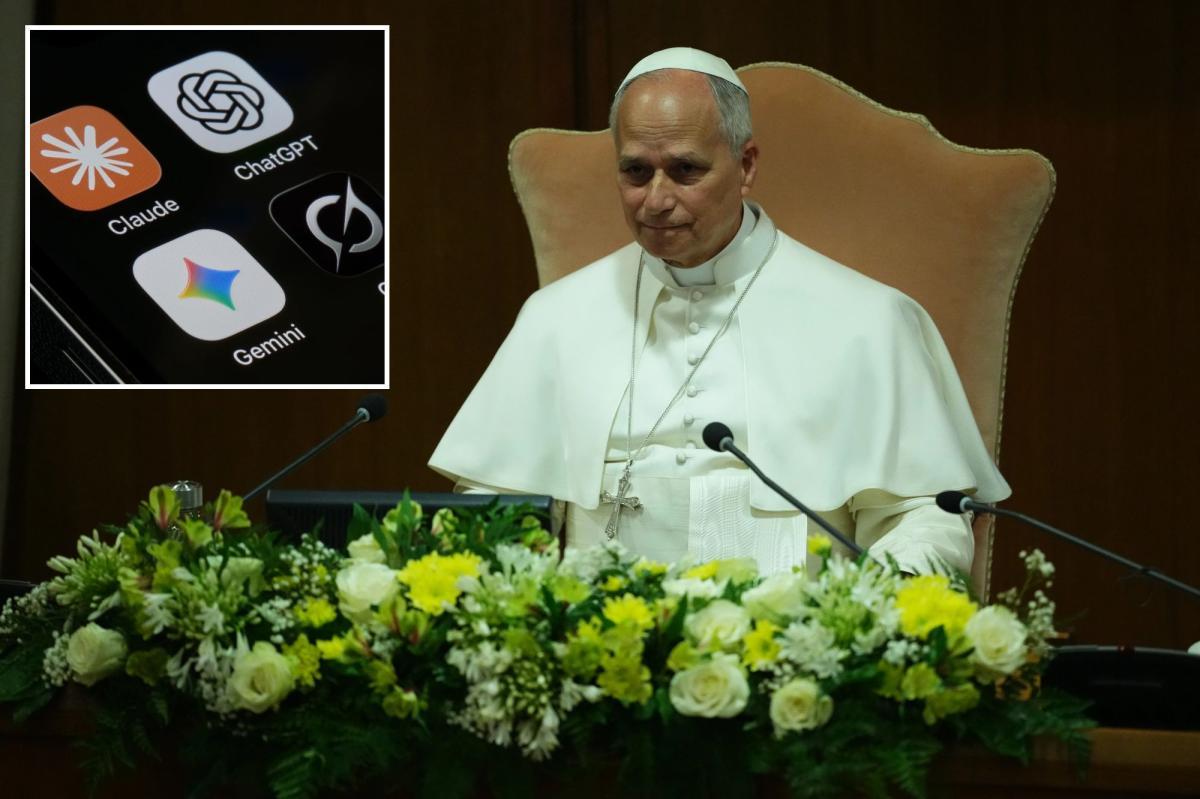
Source: New York Post
However, Sister Susan Francois clarified that "this is a major Catholic social teaching document. It's not about AI. It's about protecting the human person in the age of AI" . Sacha Haworth of the Tech Oversight Project called it "a pretty clear subtweet of big tech CEOs who are out here blatantly declaring that they're eliminating staff to replace 'lower-value human capital' with AI" .
Biblical Metaphors: Tower of Babel and Human Flourishing
Magnifica Humanitas frames the AI moment through biblical narratives. The encyclical references the Tower of Babel, where humans sought to build a structure reaching Heaven, only to have their project fail when they could no longer understand one another
3
. This pursuit, fixated on relentless growth and divorced from human cost, resulted in failure and atomization. In contrast, the Book of Nehemiah offers a story of collaborative rebuilding after violence and displacement, where "the city is reborn, not through the initiative of one man, but through the shared responsibility of all"3
.The document positions these narratives as a choice: will AI development follow the path of Babel's domination, or Nehemiah's collaborative path toward human flourishing? Paolo Carozza, a Notre Dame Law School professor and Meta Oversight Board chair, noted that AI-driven misinformation and deepfakes have "corroded our capacity to recognize what's true and what's not true, and that really has consequences for democratic politics"
2
.References
Summarized by

Navi
[1]
[3]
[5]
Related Stories
Pope Leo calls for AI regulation, warns autonomous weapons now beyond human control
02 Jun 2026•Policy and Regulation
Pope Leo Warns AI Labs Risk Creating 'Paradise of Machines' Amid Growing Ethical Concerns
21 Sept 2026•Policy and Regulation
Pope Leo XIV Takes Stand on AI: Calls for Ethical Framework and Regulation
19 Jun 2025•Policy and Regulation
Recent Highlights



Recent Highlights
Today's Top Stories



Don’t drown in AI news. We cut through the noise - filtering, ranking and summarizing the most important AI news, breakthroughs and research daily. Follow topics that matter to you and stay ahead.


