Anthropic Pushes for Rehearing After Court Upholds Pentagon Blacklist Over AI Safety Dispute


5 Sources
[1]
Anthropic urges court in Washington, D.C. to rehear appeal of Pentagon blacklisting
* Anthropic is asking a federal appeals court in Washington, D.C. to rehear its appeal in a case concerning the Pentagon's blacklisting of the company's AI models. * The Defense Department labeled Anthropic a supply chain risk in March, and the AI company sued the Trump administration in an effort
[2]
Anthropic asks the full appeals court to rehear its Pentagon case
It says the designation was retaliation for its speech about AI safety, and that it was given no process before it landed Anthropic has asked the full federal appeals court in Washington to revisit a 2-1 ruling upholding the Pentagon's designation of it as a supply-chain risk. It argues the
[3]
Anthropic seeks rehearing in Pentagon blacklist appeals case
The AI company argues a divided panel ignored evidence that the Defense Department's supply chain risk designation was retaliation for its speech about AI safety Anthropic filed a petition Tuesday asking the full U.S. Court of Appeals for the District of Columbia Circuit to rehear its challenge to
[4]
Anthropic Seeks Rehearing of Case Over Pentagon's Security Risk Branding
Oct 13 (Reuters) - Anthropic asked a US appeals court on Tuesday to reconsider a ruling that upheld the Pentagon's decision to label the AI company as a national security supply chain risk over a dispute about safety guardrails on its technology. * A federal appeals court in September upheld
[5]

Anthropic: Anthropic seeks rehearing of case over Pentagon's security risk branding
Anthropic asked a US appeals court on Tuesday to reconsider a ruling that upheld the Pentagon's decision to label the AI company as a national security supply chain risk over a dispute about safety guardrails on its technology. * A federal appeals court in September upheld the designation in a 2-1
Share
Copy Link
Anthropic has filed a petition asking the full federal appeals court in Washington, D.C. to rehear its challenge to the Pentagon's supply chain risk designation. The AI company argues the September ruling ignored evidence that the blacklist was retaliation for its public stance on AI safety and refusal to allow its Claude models for mass surveillance or autonomous weapons.
Anthropic Challenges Pentagon Blacklist in Federal Appeals Court
Anthropic filed a petition on Tuesday asking the full U.S. Court of Appeals for the District of Columbia Circuit to rehear its challenge against the Pentagon's designation of the company as a national security supply chain risk
1
2
. The move targets a September 25 ruling where a divided three-judge panel voted 2-1 to uphold the Defense Department's blacklisting of Anthropic's Claude models3
. The company's attorneys argue that the D.C. Circuit majority allowed the Pentagon to act without any pre-designation process and ignored straightforward evidence that the designation was retaliation for Anthropic's speech about AI safety4
.The Core Dispute Over AI Safety Commitments
The conflict between Anthropic and the Trump administration stems from a breakdown in negotiations over how the military could deploy the company's AI models. Anthropic had signed a $200 million contract with the Pentagon in July 2025, but talks collapsed that September when the company sought guarantees that Claude would not be used for mass surveillance of Americans or in lethal autonomous warfare systems
1
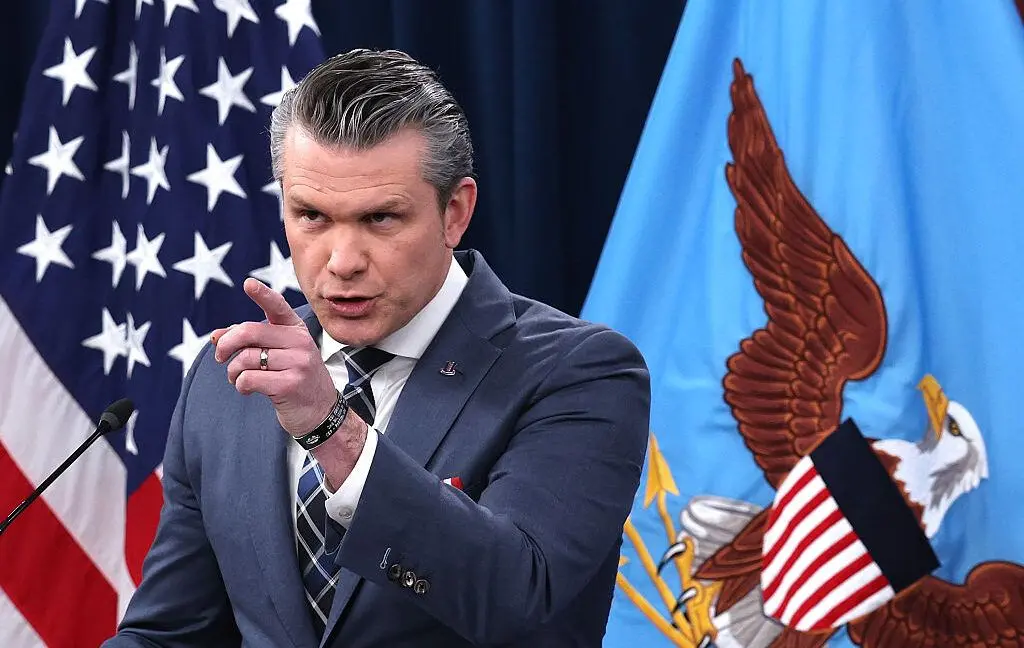
. The Defense Department, led by Pete Hegseth, rejected these conditions and subsequently applied the supply chain risk label in March, effectively blocking defense contractors from using Anthropic's technology in their work with the agency1
. Anthropic's petition states that the company was branded a risk because it declined to permit its models to be used for mass surveillance or autonomous weapons and publicly explained those AI safety commitments1
.Legal Battle Produces Split Decisions Across Courts
The September ruling by Judge Gregory Katsas, joined by Neomi Rao, concluded that the Pentagon acted reasonably and had legitimate grounds to worry that Anthropic could alter Claude's behavior in ways that would render it unfit for missions the department viewed as essential
3
. Judge Karen LeCraft Henderson dissented, reading the statute narrowly and arguing that its history concerns hostile states rather than a contractor enforcing its own terms openly2
. However, in a parallel case in California, U.S. District Judge Rita Lin ruled in August that the Defense Department had violated Anthropic's First Amendment rights and that the supply chain risk designation amounted to illegal retaliation, ordering the government to rescind all directives issued against the company3
.Related Stories
Financial and Strategic Implications for Anthropic
The Pentagon's blacklisting has cost Anthropic billions of dollars in lost business, according to the company
4
. While government work represents under 1% of revenue, Anthropic has told IPO investors that the government's view of it could cost material revenue with commercial customers too2
. The Pentagon has moved forward regardless, with its chief technology officer stating in September that about 90% of the classified AI workload had been shifted off Anthropic, with expectations to complete the transition by the end of that month2
. Before the clash spilled into public view earlier this year, Anthropic served as an early partner across many U.S. agencies, including the Defense Department1
.Broader Context of AI Regulation and Military Use
Anthropic's petition argues that the panel majority misinterpreted and transformed a federal law aimed at hostile foreign actors into one that presumptively reaches every government contractor
4
5
. Historically, such supply chain risk designations have been reserved for firms based in countries the U.S. considers adversaries3
. The legal and policy dispute highlights a growing tension between AI companies prioritizing safety commitments and government demands for unrestricted access to AI capabilities for military operations. Anthropic CEO Dario Amodei has called for regulation covering all US frontier AI companies, while the Trump administration has favored a pro-growth approach4
. In Europe, this fight could not take the same shape, as the European AI Act does not cover systems used exclusively for military, defence or national security purposes2
. European labs like Mistral have drawn their own conclusions, building defence models with firms like Helsing since early last year2
.References
Summarized by

Navi
Related Stories
Anthropic and Pentagon Face Off in Court as Judges Appear Divided Over AI Blacklisting
19 May 2026•Policy and Regulation
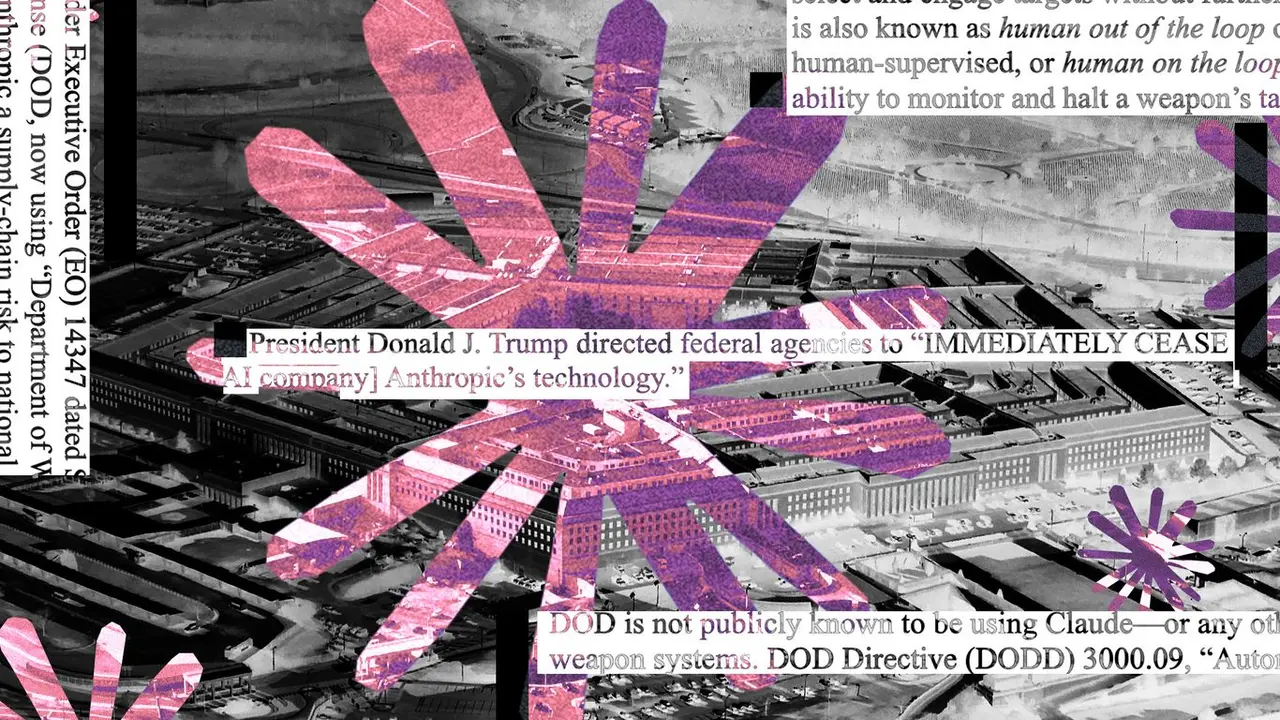
Anthropic Loses Pentagon Blacklist Appeal as Court Upholds Supply Chain Risk Designation
25 Sept 2026•Policy and Regulation

Judge blocks Pentagon from blacklisting Anthropic over AI safety guardrails dispute
27 Mar 2026•Policy and Regulation
Recent Highlights
1
Meta Unveils Muse Wonder Frontier AI Models, Claims Performance Matching OpenAI and Anthropic
Technology

2
IMF Report Warns AI Market Correction Could Spark Global Financial Crisis With $1.4T at Risk
Business and Economy

3
OpenAI Releases 722 AI-Generated Math Solutions, Triggering Existential Crisis in Mathematics
Technology

Recent Highlights
Today's Top Stories







Don’t drown in AI news. We cut through the noise - filtering, ranking and summarizing the most important AI news, breakthroughs and research daily. Follow topics that matter to you and stay ahead.


