Apple Pioneers New Training Method for Humanoid Robots Using Vision Pro and Human Demonstrations


2 Sources
[1]
New Apple study teaches robots how to act by watching humans - 9to5Mac
In a new paper called "Humanoid Policy ∼ Human Policy," Apple researchers propose an interesting way to train humanoid robots. And it involves wearing an Apple Vision Pro. The project is a collaboration between Apple, MIT, Carnegie Mellon, the University of Washington, and UC San Diego. It
[2]
Apple details combined training method for humanoid robots
Apple has published a research paper that details a new training method for humanoid robots. An Apple research paper suggests that humanoid robots can be more effectively trained with human instructors as well as robot demonstrators, which is part of a new combined approach the company calls
Share
Copy Link
Apple researchers have developed a novel approach to training humanoid robots by combining human demonstrations captured through Apple Vision Pro with traditional robot data, potentially revolutionizing the field of robotics.
Apple's Innovative Approach to Robot Training
In a groundbreaking study titled "Humanoid Policy ~ Human Policy," Apple researchers have introduced a novel method for training humanoid robots that could revolutionize the field of robotics
1
2
. The research, conducted in collaboration with MIT, Carnegie Mellon, the University of Washington, and UC San Diego, explores the use of first-person footage of human demonstrations to train general-purpose robot models.The PH2D Dataset and HAT Model

Source: 9to5Mac
At the heart of this innovation is the Physical Human-Humanoid Data (PH2D) dataset, comprising over 25,000 human demonstrations and 1,500 robot demonstrations
1
. This data is processed by a unified AI policy called the Human-humanoid Action Transformer (HAT), which can control a real humanoid robot in the physical world2
.The HAT model is designed to learn a single policy that generalizes across both human and robot bodies, making the system more flexible and data-efficient. This shared training approach has shown promising results, enabling robots to handle more challenging tasks, including ones they hadn't encountered before
1
.Leveraging Apple Vision Pro for Data Collection
To collect the training data, the team developed an innovative application for the Apple Vision Pro
1
. The app captures video from the device's bottom-left camera and utilizes Apple's ARKit to track 3D head and hand motion2
. This setup allows for high-quality demonstrations to be recorded in seconds, a significant improvement over traditional robot tele-operation methods.Cost-Effective Alternatives
Recognizing the need for more affordable solutions, the researchers also explored using modified consumer products. They 3D-printed a mount to attach a ZED Mini Stereo camera to other headsets, such as the Meta Quest 3, offering similar 3D motion tracking capabilities at a lower cost
1
2
.Overcoming Human-Robot Speed Differences
An interesting challenge the researchers faced was the speed disparity between human and robot movements. To address this, they slowed down the human demonstrations by a factor of four during training, allowing the robot to keep pace without requiring further adjustments
1
.Related Stories




Improved Performance and Generalization
The study suggests that this combined training strategy offers significant benefits. Robots trained using this approach demonstrated better results in select tasks, such as vertical object grasping, compared to those trained exclusively with robot demonstrators
2
.Future Implications
Source: AppleInsider
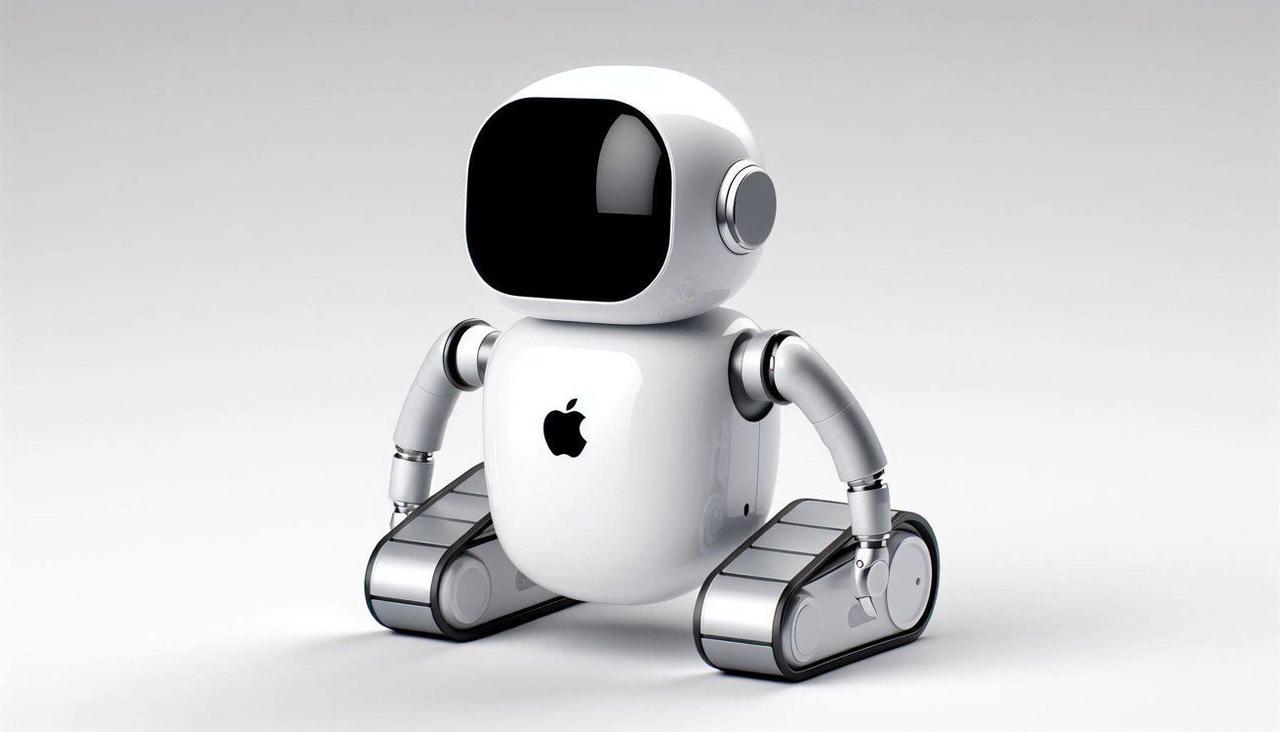
While Apple has only publicly demonstrated a robot-lamp prototype so far, rumors suggest the company is working on a mobile robot for consumers that could perform household chores and simple tasks
2
. This research could pave the way for more advanced and versatile humanoid robots in the future.Conclusion
Apple's research represents a significant step forward in robotics training, potentially making the development of humanoid robots more scalable and cost-effective. By combining human demonstrations with traditional robot data, this approach could accelerate progress in the field and bring us closer to the reality of general-purpose humanoid robots in our daily lives.
References
Summarized by

Navi
[2]
Related Stories
Recent Highlights



Recent Highlights
Today's Top Stories



Don’t drown in AI news. We cut through the noise - filtering, ranking and summarizing the most important AI news, breakthroughs and research daily. Follow topics that matter to you and stay ahead.


