Apple removes vibe coding app Anything from App Store, escalating enforcement against AI builders


4 Sources
4 Sources
[1]
Apple Removes iPhone Vibe Coding App from App Store
The Anything page at the Apple App Store boasted "the fastest way to build apps." Now what do you see if you visit Anything? That's right, nothing. Apple removed Anything on Thursday of last week for an alleged rule violation according to The Information. Earlier this month, the vibe coding apps Replit and Vibecode were blocked by Apple, with Apple demanding that changes be made before the apps could be reinstated. The removal of Anything is being perceived as an escalation of enforcement against vibe coding apps as a category, though Apple says it is simply enforcing rules. Vibe Coding apps theoretically allow users without coding ability to generate apps with ample coding assistance from the large language models powering Anthropic's Claude and OpenAI's Codex. If all goes according to plan, the apps are created right on the user's phone, and can be used and debugged without typing onâ€"or indeed usingâ€"a computer. Dhruv Amin, CEO and co-founder of anything claimed to the Information that his app has been used to create apps now available on the Apple App Store that are used to, for instance, manage emergency workers or allow gig workers to track their spending. Anything also claims to be able to help users generate app marketing materials: The problem is reportedly a violation of the Apple App Store's Guideline 2.5.2, which says in part: "Apps should be self-contained in their bundles, and may not read or write data outside the designated container area, nor may they download, install, or execute code which introduces or changes features or functionality of the app, including other apps." So it sounds like creating an app that puts another app on an iPhone, which you then might have to tweak, is being treated as a violation of this necessity to be "self-contained." According to the Information, the earlier enforcement actions against vibe coding apps cited the same rule. Amin claimed to the Information that his team tried to create a version of the app that debugged apps within a browser window, but he said the update was rejected, and that the app was then removed from the App Store. Xcode, Apple's OSX-based tool for app developers, introduced autonomous coding functionality last month. The AI agents in Xcode can do things like review code and edit files with the help of Anthropic's Claude and OpenAI's Codex. Gizmodo reached out to Apple for a comment explaining the removal of Anything, but did not immediately hear back. The Information also did not receive a statement, but says the earlier enforcements against vibe coding apps were explained by Apple not as targeting apps for a specific functionâ€"in this case vibe codingâ€"but instead as actions against apps that change what they do in ways Apple can't moderate.
[2]
Apple Pulls Vibe Coding App 'Anything' From App Store, Escalating Enforcement
Apple has removed a "vibe coding" app from its App Store, reports The Information. AI app building app "Anything" was pulled from the App Store, and Anything co-founder Dhruv Amin was told that his app violated Guideline 2.5.2. "Vibe coding" is a term used for code generated using AI based on natural language with no coding experience necessary. Anything and other apps like it let users create apps, websites, and tools with text-based prompts. Apple started removing vibe coding apps from the App Store earlier in March, and the company said that certain features in the apps that were pulled violate code execution rules. In a statement to MacRumors, Apple said that there are no specific rules against vibe coding, but the apps have to adhere to longstanding guidelines. Apple specifically mentioned Guideline 2.5.2, which is the rule Anything apparently violated. Apps should be self-contained in their bundles, and may not read or write data outside the designated container area, nor may they download, install, or execute code which introduces or changes features or functionality of the app, including other apps. Educational apps designed to teach, develop, or allow students to test executable code may, in limited circumstances, download code provided that such code is not used for other purposes. Such apps must make the source code provided by the app completely viewable and editable by the user. "Anything" launched on iOS back in November with no issue, and Amin says the tool has been used to publish thousands of apps in the App Store. The app let users create and preview vibe code apps on the iPhone, and it raised $11 million at a valuation of $100 million back in September. While Anything was removed from the App Store on March 26, Apple has been blocking updates to the app since December. Amin submitted an update that would allow vibe coded apps to be previewed in a web browser instead of in the app to attempt to comply with the 2.5.2 rule, but Apple blocked the update and pulled the app. Apple previously blocked iOS updates to Vibecode and Replit, vibe coding apps used to generate other apps.
[3]
Apple Begins Booting Out Vibe Coding Apps From its App Store
It began with one and a few more followed, but we aren't sure about what exactly prompted the company to cleanup. Is it protecting territory or are there too many poor quality apps out there? Apple recently made vibe-coding easier with Xcode integration that allowed the App Store to grow faster than ever before. However, it is now cracking down on apps that use AI to generate code within the app itself. Developers say they've been in queue for weeks with no update from the App Store review process. That Apple has brought into vibe coding as a means to an end is quite clear. Else, why would they introduce Xcode earlier in February? The company is aware that agentic AI can help seasoned coders navigate through niche problems that lack documentation. So, why exactly did the company boot out vibe-coding app 'Anything' from the store? If a report published by The Information is anything to go by, there is little to no clarity why the app was kicked out and others retained. The article claims that the issue appears to be related to section 2.5.2 of the Apple developer guidelines that prevents apps from making other apps. Upon careful study, it becomes rather obvious that apps that help with code generation had ceased to get updates since late 2025. Earlier this month, the same publication reported that Apple had blocked coding apps such as Replit and Vibercode from receiving updates in the App Store and had sought modifications to the app on the above grounds. Simply put, Apple felt that these apps were breaking its rules that prevent them from changing code or operating outside their bounds once the App Review process is complete. Maybe the company feels that it is one thing to use Xcode or aligned tools to build an app, but quite another to have an app on iOS build an app within itself. From Apple's point of view, it bypasses the App Review process and takes the company out of the equation of app distribution entirely. Not to mention Apple's higher quality standards of apps. Now it remains to be seen when the regulators from across the world pounce on this latest Apple decision, though one must say that given the complexity of the matter it is not clear which way they might decide to pull. While the process itself is similar to game emulation where the regulators sided with the users and forced Apple to allow the software regardless of policies. However, there is also the question of how easy it has become to use vibe coding tools and generate massive amounts of new submissions. A recent report from Business Insider said that monthly app subscriptions to the App Store had risen by over 55% last December. Making a rudimentary app is child's play and Apple doesn't want its App Store quality to be affected. It is quite the tightrope for Apple as well as any regulators who may be forced to decide on the matter. Apple does want to promote vibe coding in order to get more traction for its App Store but it wants to achieve this outcome only via Xcode, which might raise the hackles of antitrust authorities across the world. From Apple's point of view, the situation is concerning too. Serious developers can use vibe coding to generate a robust quality entry-level app. However, there are grifters out there making dozens of such apps in the hope that if they flood the App Store with submissions, even a few in-app purchases would make them some extra money.
[4]
Apple removes vibe coding app from App Store By Investing.com
Investing.com -- Apple removed the vibe coding app Anything from its App Store on Thursday, according to Dhruv Amin, co-founder and CEO of the startup behind the app. The removal came one week after Apple blocked updates to vibe coding apps while allowing earlier versions to remain available in the store, according to The Information. Vibe coding tools use AI to enable people without coding experience to create apps. Since Anything launched last year, users have published thousands of apps through its tool, Amin said. These include a management system for emergency response professionals and an expense tracker for gig workers. Apple's own Xcode developer tool recently integrated AI coding capabilities with Anthropic's Claude and OpenAI's Codex models. This article was generated with the support of AI and reviewed by an editor. For more information see our T&C.
Share
Share
Copy Link
Apple pulled the vibe coding app Anything from its App Store on March 26, citing violations of Guideline 2.5.2. The removal follows earlier enforcement actions against Replit and Vibecode, marking an escalation against apps that use AI to generate code within the app itself. The move raises questions about app quality standards and whether Apple is protecting its own Xcode AI coding tool.
Apple Removes Vibe Coding App Anything From App Store
Apple removed the vibe coding app Anything from its App Store on March 26, according to Dhruv Amin, co-founder and CEO of the startup behind the app
1
2
. The AI app building app, which launched on iOS in November with no issue, was told it violated App Store Guideline 2.5.22
. The removal represents an escalating enforcement action against a category of apps that enable users without coding experience to create apps through AI-generated code and natural language prompts1
.
Source: MacRumors
Vibe coding tools use large language models from companies like Anthropic and OpenAI to allow people to build functional applications directly on their phones
1
. Amin claims that since Anything launched, users have published thousands of apps through the tool, including a management system for emergency response professionals and an expense tracker for gig workers4
. The app raised $11 million at a valuation of $100 million in September2
.Code Execution Rules Trigger Crackdown
The enforcement centers on code execution rules outlined in developer guideline 2.5.2, which states that apps must be self-contained and cannot download, install, or execute code that introduces or changes features or functionality
1
. Apple has been blocking updates to Anything since December, and when Amin submitted a revised version that would allow AI-powered app generation to be previewed in a web browser instead of within the app itself, Apple blocked the update and then pulled the app entirely2
.Earlier in March, Apple blocked iOS updates to Replit and Vibecode, other vibe coding apps used to generate applications
2
. In a statement to MacRumors, Apple said there are no specific rules against vibe coding, but the apps must adhere to longstanding guidelines2
. The company explained earlier enforcements not as targeting apps for a specific function, but as actions against apps that change what they do in ways Apple can't moderate1
.Xcode Integration Raises Questions
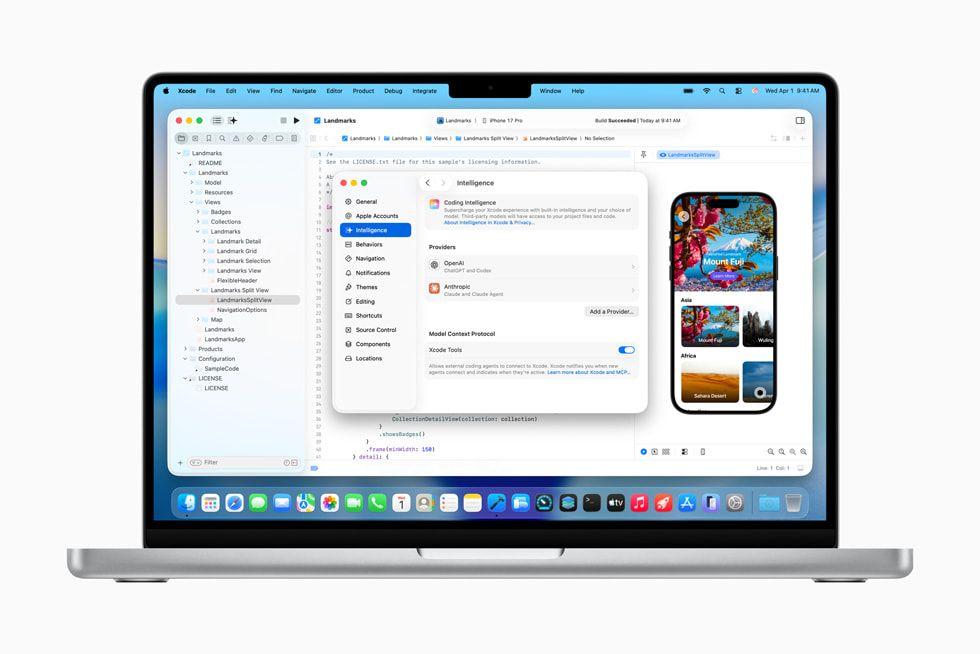
The timing of the crackdown is notable given that Apple's own Xcode developer tool integrated AI coding capabilities with Anthropic's Claude and OpenAI's Codex models in February
3
4
. The AI agents in Xcode can review code and edit files with AI-assisted coding features1
. This has led to speculation about whether Apple is protecting its own territory by allowing vibe coding only through Xcode, which could raise concerns from antitrust authorities3
.
Source: CXOToday
From Apple's perspective, the issue appears to be that these apps bypass the App Review process by creating apps within apps, taking the company out of the distribution equation entirely
3
. There are also concerns about app quality standards. A recent report indicated that monthly app subscriptions to the App Store rose by over 55% last December, and Apple may be worried about maintaining quality as AI makes it easier to flood the store with submissions3
.Related Stories

What This Means for Developers
The removal of Anything and restrictions on similar apps create uncertainty for developers building AI-powered app generation tools. Developers say they've been in queue for weeks with no updates from the App Review process
3
. The enforcement raises questions about how Apple will balance promoting vibe coding through its own tools while restricting third-party alternatives. Regulators may eventually weigh in on whether this constitutes anticompetitive behavior, though the complexity of the matter makes the outcome uncertain3
. For now, developers interested in using natural language prompts to build apps on iOS will need to watch whether Apple clarifies its policies or whether enforcement continues to tighten.References
Summarized by

Navi
[4]
Related Stories
Apple blocks vibe coding apps Replit and Vibecode from App Store updates over policy concerns
18 Mar 2026•Technology

Ex-Apple Employees Launch bitrig: AI-Powered SwiftUI App Creation on iPhone
02 Oct 2025•Technology

Apple brings agentic coding to Xcode 26.3 with Claude Agent and OpenAI's Codex integration
03 Feb 2026•Technology

Recent Highlights
1
Apple Plans Major Siri AI Overhaul in iOS 27 With Third-Party Chatbot Integration
Technology

2
OpenAI shuts down Sora after six months, ending Disney's $1 billion licensing partnership
Technology

3
AI chatbots validate you too much, making you less kind to others, Stanford study reveals
Science and Research

Recent Highlights
Today's Top Stories



Your Daily Dose of Curated AI News
Don’t drown in AI news. We cut through the noise - filtering, ranking and summarizing the most important AI news, breakthroughs and research daily. Spend less time searching for the latest in AI and get straight to action.

