The Rise of Vibe Coding: AI-Powered App Development Reshaping the Tech Landscape


4 Sources
[1]
How to Become a Vibe Coder -- And Why AI Makes App-Building Effortless
If you've been paying attention, you know that it's easier than ever to code, thanks to chatbots like ChatGPT and Claude. From entire websites to apps and games, AI has put the power of software development into the hands of everyday people. The term "vibe coding" can be seen everywhere from
[2]
The do's and don'ts of vibe coding
Turning an idea into working software has never been easier, faster, or more affordable. Thanks to a new class of AI-assisted tools, a movement known as vibe coding is reshaping how software gets built. If you're not familiar with the term, vibe coding refers to the use of natural language tools
[3]
5 AI vibe-coding platforms turning prompts into production-ready apps
AI is changing the way software gets built, and nothing epitomizes this more than the rise of "vibe coding". It's where developers strap on a headset, listen to some funky tunes and enter text prompts to get AI to do all of the grunt work on their behalf, elevating them to more of a supervisory
[4]
Will Vibe Coding Spark a New Economy? | PYMNTS.com
By completing this form, you agree to receive marketing communications from PYMNTS and to the sharing of your information with our sponsor, if applicable, in accordance with our Privacy Policy and Terms and Conditions. For example, to build an eCommerce landing page, the prompt could be something
Share
Copy Link
Vibe coding, an emerging trend in software development, leverages AI to simplify app creation. This approach is making coding more accessible to non-technical individuals and potentially sparking a new economy.
The Emergence of Vibe Coding
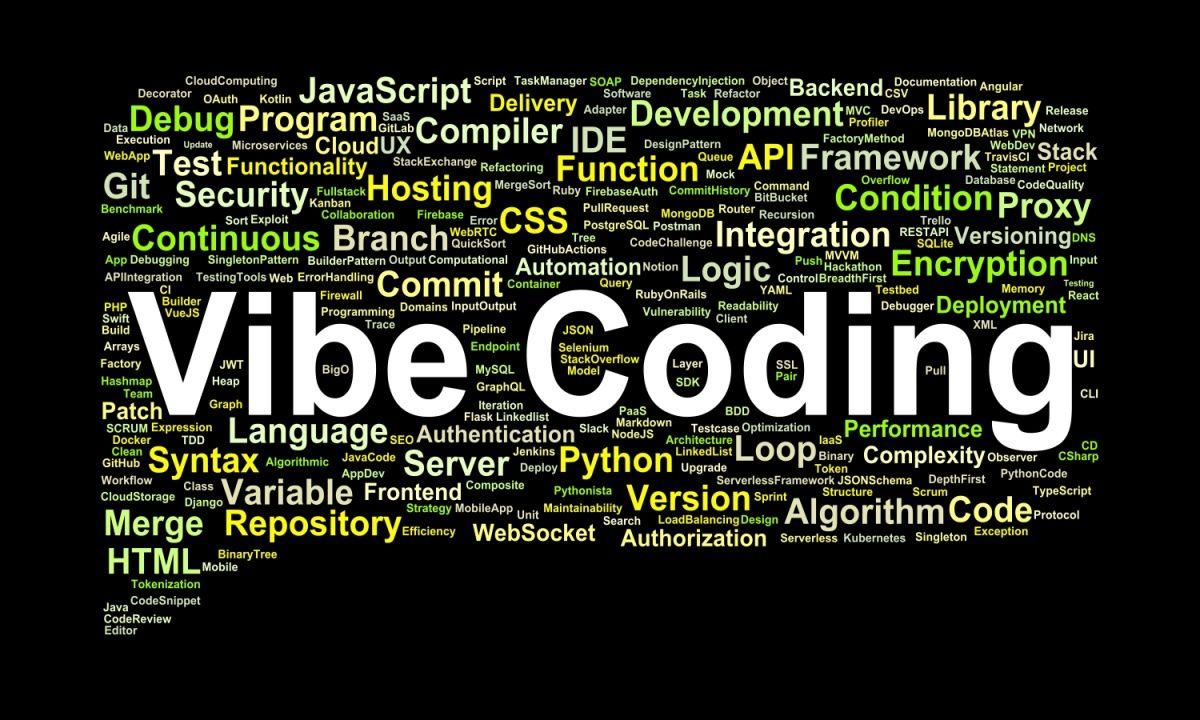
Vibe coding, a term coined by OpenAI co-founder Andrej Karpathy, is revolutionizing the software development landscape. This new approach leverages AI-powered tools to dramatically lower the technical barriers to creating applications. Essentially, vibe coding allows users to describe their desired software in natural language, and AI tools generate the code, making app development accessible to non-programmers
1
.
Source: PYMNTS
How Vibe Coding Works
The process of vibe coding is remarkably straightforward. Users interact with AI coding assistants like ChatGPT, Claude, or specialized platforms such as Cursor, AutonomyAI, and Dreamspace. By providing prompts in natural language, these tools can generate entire codebases, from simple apps to more complex websites
2
.For instance, to create an e-commerce landing page, a user might input a prompt like: "Make a Shopify-style landing page for a candle shop. Include a homepage, a product grid with three items, an 'Add to Cart' button, and a checkout page that connects to Stripe test mode"
4
.Popular Vibe Coding Platforms
Several platforms are at the forefront of this movement:
-
Replit AI: Known for its AI Ghostwriter and one-click code deploy tools, Replit AI offers a cloud-based IDE with intelligent code completion and integrated version control
3
. -
AutonomyAI: Specializing in front-end development, AutonomyAI integrates AI agents directly into a company's codebase, understanding existing developmental patterns and coding styles
3
.
Source: Dataconomy
- Cursor: A VS Code-native AI copilot tool capable of rewriting entire code repositories and providing real-time coding suggestions
3
.
Impact on Entrepreneurship and Economy
Vibe coding is potentially transforming the entrepreneurial landscape. It enables individuals without traditional coding skills to bring their ideas to life quickly and affordably. For example, Justin Jin, an 18-year-old co-founder, used AI to build Giggles, an entertainment app that garnered nearly 150,000 waitlist sign-ups and 150 million impressions within weeks
4
.Replit CEO Amjad Masad highlighted cases where a British doctor built a health-tracking app for just £200, and an Uber driver with trucking experience created a logistics app using vibe coding platforms
4
.Related Stories


Potential for a New Economy
Some experts believe vibe coding could spark a new economy by democratizing software creation. Yaakov Sash, founder and CEO of Casso, suggests that making software creation virtually costless and frictionless could radically change how problems are solved and businesses are created
4
.Steve Roop, AI and content director at Littlefield Agency, envisions new industries emerging around vibe-coded apps, similar to how Shopify transformed small business e-commerce
4
.
Source: Fast Company
Limitations and Skepticism
Despite the enthusiasm, some experts urge caution. Subhash Kovela, a senior lead software engineer at Capital One, notes that while vibe coding can help create prototypes, commercializing apps still requires additional expertise beyond just code generation
4
.Roman Eloshvili, founder of ComplyControl, considers vibe coding a "slippery slope," suggesting it's unlikely to fully replace traditional software development methods
4
.References
Summarized by

Navi
[2]
Related Stories
Recent Highlights



Recent Highlights
Today's Top Stories







Don’t drown in AI news. We cut through the noise - filtering, ranking and summarizing the most important AI news, breakthroughs and research daily. Follow topics that matter to you and stay ahead.


