Asian Stocks Tumble Amid Rising Trade Tensions and Yen Surge


11 Sources
[1]
Asian stocks slide on rising trade tensions, yen climbs
SINGAPORE, July 18 (Reuters) - Asian equities fell on Thursday, led by chip stocks as investors fret over the prospect of escalating trade tensions between the U.S. and China, while the yen surged to a six-week high in the wake of suspected interventions by Tokyo last week. The U.S. dollar
[2]
Asian stocks slide on rising trade tensions, yen climbs
SINGAPORE, July 18 (Reuters) - Asian equities fell on Thursday, led by chip stocks as investors fret over the prospect of escalating trade tensions between the U.S. and China, while the yen surged to a six-week high in the wake of suspected interventions by Tokyo last week. The U.S. dollar
[3]
Asian stocks slide on rising trade tensions, yen climbs
SINGAPORE - Asian equities fell on Thursday, led by chip stocks as investors fret over the prospect of escalating trade tensions between the U.S. and China, while the yen surged to a six-week high in the wake of suspected interventions by Tokyo last week. The U.S. dollar loitered near its weakest
[4]
Asian stocks slide on rising trade tensions, yen climbs
Asian equities fell due to U.S.-China trade tensions; MSCI Asia-Pacific shares down 0.57%, South Korea 1%, Nikkei 2%, Shanghai 0.4%, CSI300 0.5%. Yen rose on suspected BOJ intervention. Dollar at a four-month low. Fed backs September rate cut, gold prices high. Nvidia, Apple dropped. Trump's
[5]
Stocks dive on prospect of US trade curbs; yen jumps
* Wall Street slumps on possible trade curbs, Trump on Taiwan NEW YORK, July 17 (Reuters) - World stock indexes mostly fell on Wednesday, with Wall Street weighed down by the prospect of U.S. trade curbs, while the yen rose sharply in a move suspected to be the result of another intervention from
[6]
Trump's Taiwan talk rattles Wall Street as chip stocks tumble
* Wall Street set for weak open after chipmaker sell-off * Sterling strengthens as UK inflation rises again * Dollar drops versus yen on Tokyo intervention talk LONDON July 17 (Reuters) - Geopolitical risks weighed on Wall Street on Wednesday after U.S. presidential candidate Donald Trump
[7]

Stocks dive on prospect of US trade curbs; yen jumps
A reduction by September is still seen as a 98% probability, according to CME Group's FedWatch tool. The benchmark S&P 500 equity benchmark index lost 50.70 points, or 0.90%, to 5,616.01, while the tech-heavy Nasdaq Composite lost 323.94 points, or 1.72%, to 18,185.40. Chipmaker stocks slumped on
[8]
Trade fears hamper tech stocks, dollar falls amid rate cut talk
NEW YORK, July 17 (Reuters) - Possible U.S. trade curbs on chip equipment weighed on tech stocks in global equity indexes on Wednesday, while Treasury yields and the dollar eased as top Federal Reserve officials indicating they were getting closer to cutting interest rates. The Japanese yen rose
[9]
Trump's Taiwan talk rattles Wall Street as chip stocks tumble
Geopolitical risks weighed on Wall Street on Wednesday after U.S. presidential candidate Donald Trump sounded lukewarm about defending Taiwan, sending chipmakers' shares lower and helping propel gold prices to record highs. Futures contracts tracking the U.S. S&P 500 equity benchmark equity index
[10]
Trade fears hamper tech stocks, dollar falls amid rate cut talk
A rate reduction by September is seen as having a 98% probability, according to CME Group's FedWatch tool. Lowering rates is generally seen as a way to stoke economic growth. "We are hearing a choral change in Fed speakers preparing the markets for a rate cut beginning in the later part of Q3,"
[11]

Trump's Taiwan talk rattles Wall Street as chip stocks tumble
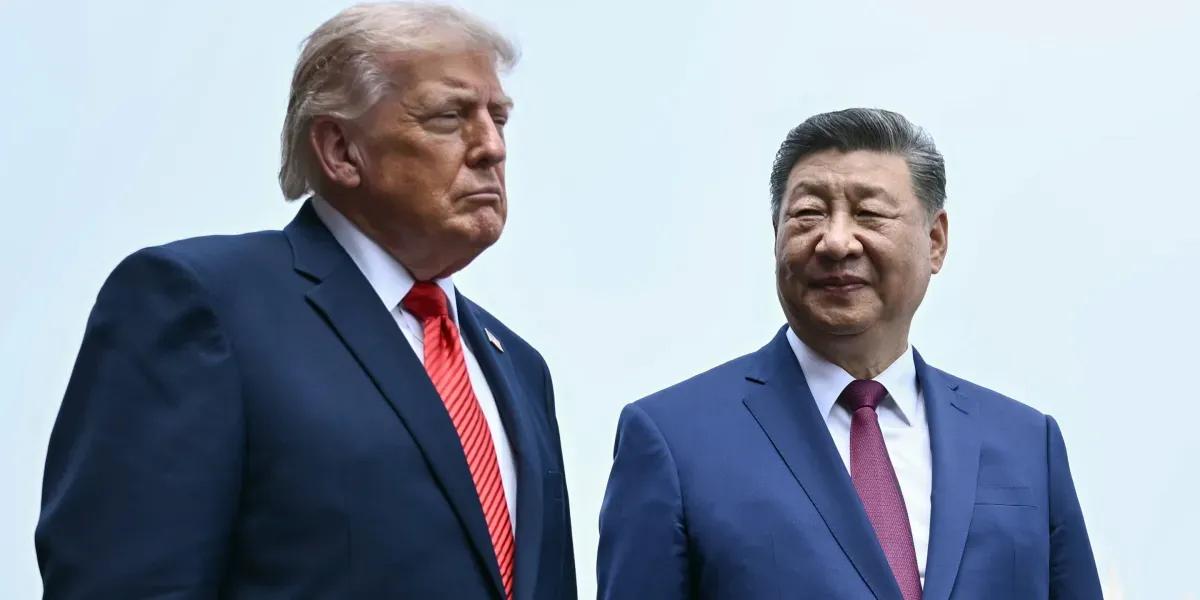
Republican presidential candidate Donald Trump looks on at the conclusion of the second day of the 2024 Republican National Convention at the Fiserv Forum in Milwaukee, Wisconsin, on Tuesday. AFP Geopolitical risks weighed on Wall Street on Wednesday after US presidential candidate Donald Trump
Share
Copy Link
Asian stock markets experienced a sharp decline as trade tensions escalated and the Japanese yen strengthened. Concerns over potential U.S. trade restrictions on China and their impact on the global semiconductor industry have rattled investors.

Trade Tensions Spark Market Turmoil
Asian stock markets tumbled on Wednesday as rising trade tensions between the United States and China sent shockwaves through the global financial landscape. The prospect of new U.S. trade restrictions targeting China's semiconductor and artificial intelligence sectors triggered a widespread sell-off, with technology stocks bearing the brunt of the impact
1
.Semiconductor Industry Under Pressure
The potential U.S. curbs on AI chip sales to China have particularly affected semiconductor giants. Taiwan Semiconductor Manufacturing Co (TSMC), a key player in the global chip supply chain, saw its shares plummet by 3.45%
2
. This decline reverberated across the Asian tech sector, with South Korea's SK Hynix and Samsung Electronics also experiencing significant losses.Currency Market Dynamics
As equity markets faltered, the Japanese yen emerged as a safe-haven currency, climbing to a one-month high against the U.S. dollar. The yen's strength was further bolstered by speculation that the Bank of Japan might adjust its yield curve control policy in its upcoming meeting
3
.Global Market Ripple Effects
The turmoil in Asian markets had a cascading effect on global indices. Wall Street futures indicated a lower open for U.S. markets, while European stocks also faced downward pressure. The MSCI's broadest index of Asia-Pacific shares outside Japan dropped by 1.5%, reflecting the widespread nature of the sell-off
4
.Related Stories


Economic Data and Central Bank Watch
Amidst the market volatility, investors are closely monitoring upcoming economic data releases and central bank decisions. The U.S. retail sales figures and the Federal Reserve's Beige Book are expected to provide insights into consumer spending and economic conditions. Additionally, the European Central Bank's impending rate decision has added another layer of uncertainty to the global financial outlook
5
.Commodity Markets React
The ripple effects of the trade tensions and currency movements extended to commodity markets. Oil prices experienced a slight decline, influenced by the stronger yen and concerns about global demand. Gold, traditionally seen as a safe-haven asset, saw increased interest as investors sought to hedge against market uncertainties.
References
Summarized by

Navi
[1]
[5]
Related Stories
Recent Highlights



Recent Highlights
Today's Top Stories







Don’t drown in AI news. We cut through the noise - filtering, ranking and summarizing the most important AI news, breakthroughs and research daily. Follow topics that matter to you and stay ahead.


