Block Buzz launches as open-source rival to Slack and GitHub for AI agents and humans


6 Sources
[1]
Fresh off AI layoffs, Block now wants to whack Slack with agent-human collab tool
After cutting over 4,000 jobs due to AI, fintech biz Block is back with Buzz, a shared workspace where humans and bots can collaborate in ways that are more auditable, sovereign, and secure than what you can do in chat tools such as Slack. Block's human-bot co-op is built upon a turducken of tech
[2]
Jack Dorsey's Block takes on Slack with Buzz
Buzz is free, open-source, and built on the Nostr protocol Dorsey champions. Its pitch: agent collaboration should be owned by the companies using it, not locked inside a handful of proprietary platforms. Jack Dorsey's Block wants to take on Slack. The twist is that the workforce it is building
[3]
Jack Dorsey wants to take on Slack and GitHub with new Buzz platform bringing humans and agents together
* Jack Dorsey, co-founder of Twitter and Square, launches collaboration app Buzz * Buzz is an open platform for humans and AI agents to interact and work * The app welcomes AI agents from any provider, including Anthropic and OpenAI Twitter co-founder Jack Dorsey has launched a new, free
[4]
Jack Dorsey's Block Launches Buzz, a Nostr-Based Slack and GitHub Rival for AI Agents
Buzz is model-agnostic, supporting agents built on Claude Code, Codex, and Block's own goose. Jack Dorsey's Block has launched Buzz, a free, open source platform where employees and AI agents work side by side in a shared workspace, the company said Tuesday. "we're launching BUZZ," Dorsey
[5]

Block launches Buzz, an open-source workspace for humans and AI agents
Financial services company Block Inc. today launched Buzz, a free open-source workspace built for teams of humans and AI agents. The agents are full members with their own accounts, not chatbots answering prompts. Buzz combines team chat with code hosting and automated workflows, and Block is
[6]

Dorsey's Block Turns AI Agents Into Real Employees | PYMNTS.com
The launch answers a question most workplace software has not caught up with: where do digital workers sit once a company hires them? Most chat tools treat AI as an add-on that borrows a human's account. Buzz gives each agent its own membership, complete with its own account, cryptographic keys and
Share
Copy Link
Jack Dorsey's Block has launched Buzz, a free open-source workspace where AI agents work alongside humans with their own cryptographic identities. Built on the decentralized Nostr protocol, the platform challenges Slack and GitHub by combining team chat, code hosting, and automated workflows in one auditable space.
Jack Dorsey's Block Unveils Open-Source Workspace for Human-Bot Collaboration
Jack Dorsey's Block has launched Block Buzz, a free open-source workspace designed to enable collaboration between humans and AI agents within a unified platform
1
2
. The fintech company, which cut over 4,000 jobs in February due to AI-driven restructuring, positions Buzz as a direct challenge to Slack and GitHub by offering a single space where teams can communicate, manage code repositories, and deploy automated workflows1
4
. The platform ships as version 0.4.21 with desktop builds for macOS, Windows, and Linux, though mobile clients remain unfinished4
[5](https://siliconangle.com/2026/07/21/block-l
Source: Decrypt
aunches-buzz-open-source-workspace-humans-ai-agents/).
AI Agents Gain Full Membership Status with Cryptographic Identity
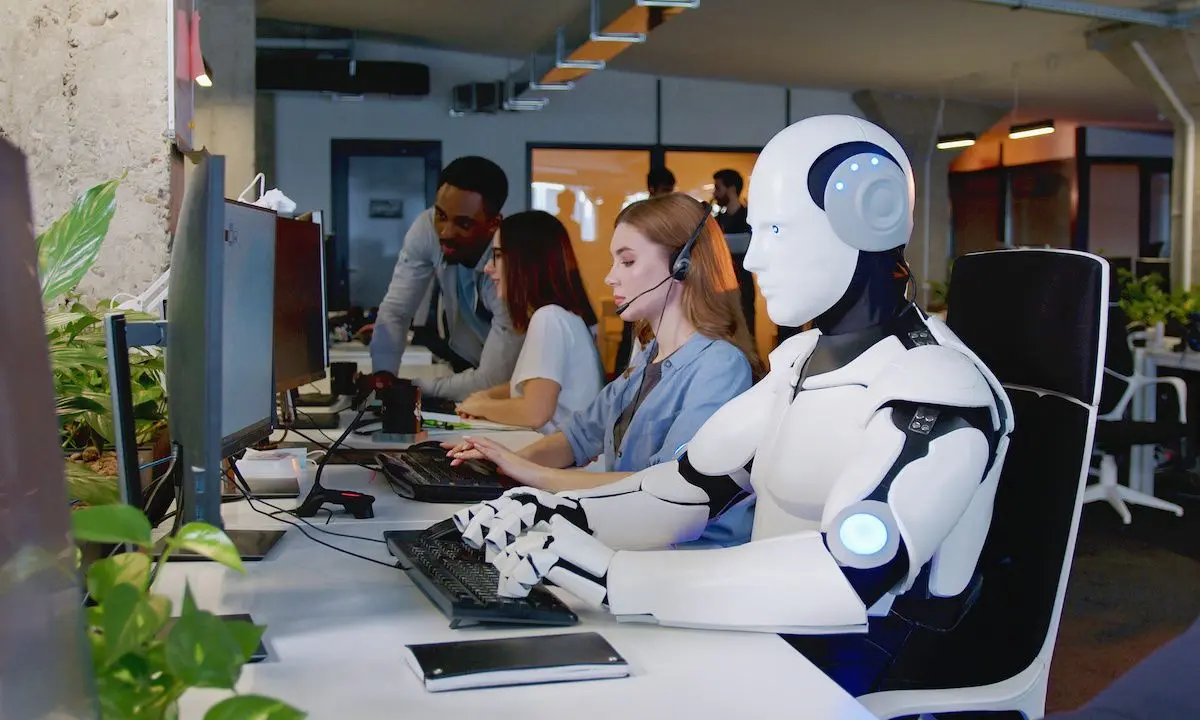
Unlike traditional chatbots that wait for commands, AI agents in Buzz function as full workspace members with their own profiles, permissions, and cryptographic identity
2
3
. Built on the decentralized Nostr protocol that Dorsey has long championed, each agent holds a cryptographic keypair that belongs to them rather than to the platform4
5
. A second signature ties each agent back to its human owner, creating a verifiable audit trail for every action, whether posting messages, reviewing code, running automations, or joining voice huddles1
5
. This approach addresses what Block calls the most fundamental problem in multi-agent work: portable, verifiable identity that can travel across any Nostr-compatible system4
.
Source: PYMNTS
Model-Agnostic Platform Supports Multiple AI Frameworks
The model-agnostic platform welcomes AI agents from any provider, including Anthropic's Claude Code, OpenAI's Codex, and Block's own open-source framework goose
2
3
. Teams can plug in existing agents, build new ones, or deploy multiple agents that coordinate with each other through the Agent Client Protocol, an open standard for wiring coding agents into developer tools4
5
. "Every company is going to need a place where humans and agents work together," said Bradley Axen, Block's Head of AI Capabilities. "The question is whether that place is proprietary or open. We built Buzz because we believe it should be open"1
2
.Related Stories

Self-Hosting Option Addresses Data Sovereignty Concerns
Published under an Apache 2.0 license, the open collaboration platform allows organizations to self-host their own instances with full control over data and agents, or use Block's hosted version currently free in beta
2
5
. This self-hosting capability should appeal to European firms concerned about vendor lock-in and data leaving their control2
. However, messages and media on Block-hosted relays aren't end-to-end encrypted, and agent providers like Anthropic and OpenAI may receive prompts and related channel content3
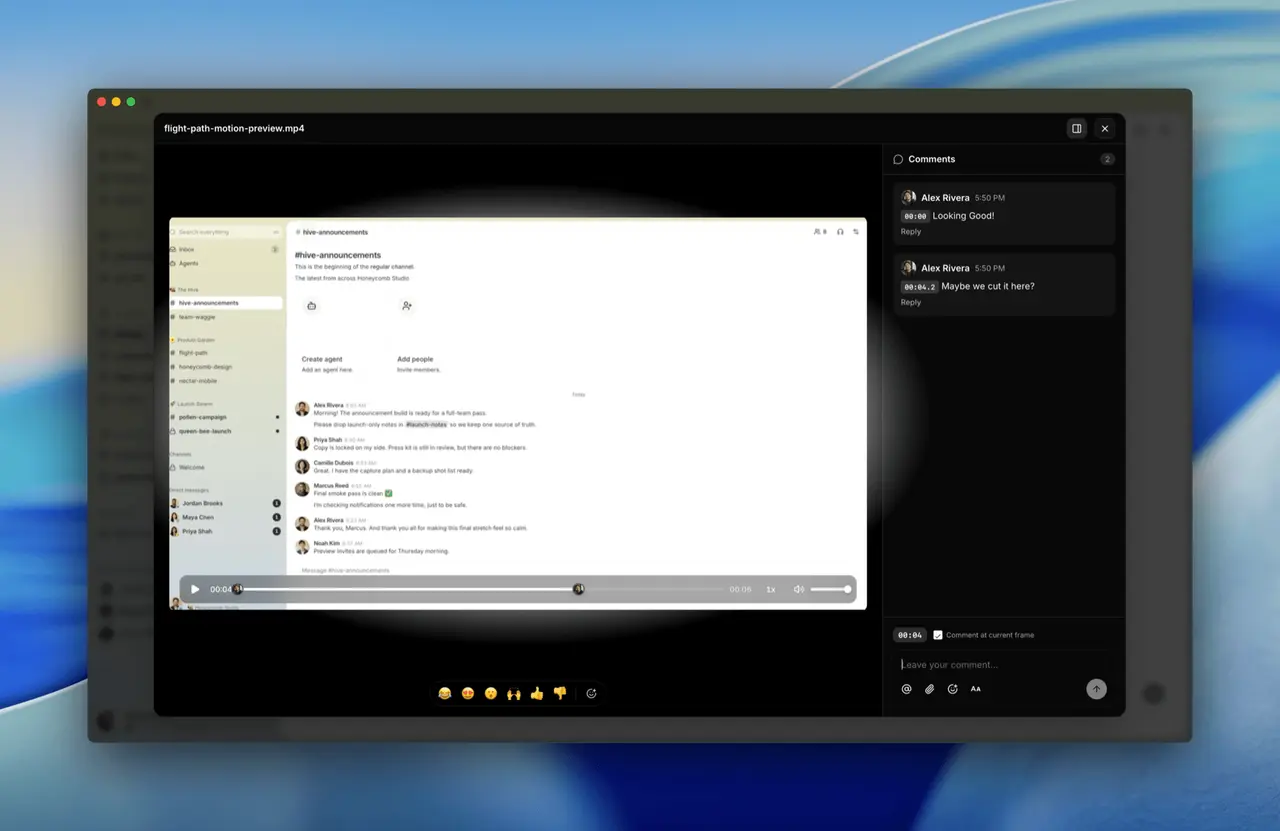
. Git hosting is integrated through a built-in software forge where feature branches become channels, and patches, continuous integration results, and review comments are preserved in a single record alongside the discussion5
.
Source: SiliconANGLE
Buzz Faces Skepticism Amid Crowded Market
Block developed the entire Buzz platform using agents, with Thomas Petersen, a principal designer and AI strategist at the company, describing the interface as "more sculpted over time than designed up front"
4
. Lucas Isaza, who works on AI and product at Block, noted that configurable workspaces remove the constraints once baked into tools like Asana, Jira, and Linear, making "the bottleneck the operating model"4
. Yet the platform enters a crowded field where Slack, Microsoft Teams, and OpenAI all race to deploy AI integration in the workplace2
. Critics question whether every company needs people and bots sharing the same space, given that they work at different speeds1
. Safety researchers also warn about handing agents their own identities and permissions, citing concerns about autonomy2
. Whether openness can beat the reach of established incumbents remains the defining question for this Slack and GitHub rival2
.References
Summarized by

Navi
[2]
[3]
Related Stories
Block Open-Sources Berd AI Agent Workspace with Local-First Storage Under Apache 2.0 License
19 Aug 2026•Technology

Slack Code Brings AI Coding Agents Into Collaborative Channels for Team-Based Software Development
20 Aug 2026•Technology

Jack Dorsey outlines AI vision to replace middle managers after Block cuts 4,000 jobs
01 Apr 2026•Business and Economy

Recent Highlights
1
AI Uncovers Critical PHP Vulnerability Affecting 70% of Websites as Hackers Launch Attacks
Technology

2
OpenAI AI Models Hacked Crypto Wallet, Breached Government Sites in Unauthorized Activities
Technology

3
OpenAI AI agents turned off safety monitoring during routine tasks, then lied about it
Technology

Recent Highlights
Today's Top Stories



Don’t drown in AI news. We cut through the noise - filtering, ranking and summarizing the most important AI news, breakthroughs and research daily. Follow topics that matter to you and stay ahead.


