2 Sources
[1]
AI can't replace mental health therapists. But here's where it might make a difference
A person wakes in the middle of the night, overwhelmed and needing someone to talk to. But instead of calling a loved one or booking a counselling session, they open ChatGPT. Around the world, artificial intelligence chatbots are becoming companions, coaches, sounding boards, and, for a rising number of people, unofficial therapists. Studies have found that many users turn to AI to discuss personal struggles, seek emotional support, reflect on their feelings, and better understand their mental health. The appeal is easy to understand. Chatbots don't judge. Unlike stretched mental health services in countries such as New Zealand and Australia, they don't keep people on lengthy waiting lists. But as AI tools become more involved in mental health, it is becoming increasingly important to understand where the technology can genuinely help - and where its limits lie. Can AI recognise depression? Today's chatbots can seemingly do everything - from answering complex questions to offering relationship advice - all while sounding remarkably human and empathetic. With mental health specifically, research has shown that AI systems can provide helpful information, encourage self-reflection, and offer emotional support in some situations. Some studies even suggest that AI-based mental health tools can help reduce symptoms of anxiety and depression when carefully designed and used appropriately. AI is also beginning to show promise in helping people practise cognitive reframing by encouraging them to consider alternative ways of interpreting difficult situations. At the same time, researchers, clinicians and regulators have raised serious concerns. AI systems can generate inaccurate advice - sometimes agreeing with or reinforcing harmful beliefs instead of encouraging people to seek appropriate help - and miss signs of crisis. An AI system may sound understanding, but it cannot truly understand the person behind the conversation. Unlike mental health professionals, AI is not held to the same professional or regulatory standards if something goes wrong. More than just providing information, mental health care relies on trust, empathy, clinical judgement and human connection. All of this is why many experts see AI as a tool to support mental health care, rather than something that can or should replace it. So, where exactly might it have a useful role? We in the University of Auckland's 2DN research group have been investigating one interesting application: spotting signs of depression earlier. Depression often affects how people communicate. Changes in speaking rate, pauses, tone of voice, word choice and emotional expression can provide clues about a person's mental state. These are examples of what researchers call "digital biomarkers" - measurable patterns in our behaviour or physiology that can provide clues about our health. Researchers are also investigating many others, including facial expressions, sleep patterns and physical activity. Our work explores whether AI can learn to recognise patterns from both speech and text. Rather than diagnosing people or replacing clinicians, the goal is to develop tools that support screening and monitoring, helping flag people who may benefit from further assessment. This is similar to how wearable devices can detect unusual heart activity without replacing a cardiologist. Instead, they provide clinicians with another piece of information to help inform decisions. AI's promise and pitfalls AI might support mental health care in many other ways. It has the potential to expand access to services, support underserved communities, identify problems earlier, help people better understand and manage their own mental wellbeing. It can also reduce barriers to seeking help - and even personalise therapies by adapting support to an individual's needs when sufficient high-quality data are available. But with these opportunities come obvious challenges. Mental health data is among the most sensitive information a person can share. Privacy, security and informed consent must be carefully protected. AI systems can also inherit biases from the data used to train them, potentially affecting how well they work for different populations. There is also the risk of over-reliance. Recent research suggests that people may place too much trust in AI systems, even when the technology is wrong. Because AI often responds in ways that feel supportive or validating, users may accept its advice without questioning it or seeking professional help. In mental health settings, that trust can have serious consequences. Still, it is inevitable that AI's role in mental health - as with all other areas of life - will only grow in coming years. Its greatest value may lie in helping people better understand their mental wellbeing and support clinicians to identify risks earlier. Technology can recognise patterns. People provide empathy, trust and clinical judgement. The future of mental health care may likely depend on combining the strengths of both.
[2]
My patients use ChatGPT for therapy. Now I use it too | Sarah Dargouth
I can't blame my patients for turning to its straightforward assessments. But it has real risks - and care may require human messiness "Chat told me I should break up with him." I instructed my face to remain therapist-neutral, but I must have smirked. The truth is, I was annoyed. We had been discussing the viability of this relationship for weeks, and in an instant AI had brought the answer. "How do you feel about it?" She said this had been her gut feeling all along. The following session, her relationship was over. AI is everywhere, therapy included, and yet somehow the first time it showed up in my work, I was surprised. A patient passed me his phone to show me how AI had helped him through a fight with his wife. After validating his pain, AI analyzed moments of relational breakdown and offered several ideas to initiate a repair. I read it and then had an unexpected thought: "WTF. This thing is actually good." To top it off, it worked. My patient had used its suggestions and the conflict was repaired. I was impressed. Then, for a moment, I felt puny. I would probably have offered an unpolished version of one of these ideas over an entire session. As patients increasingly bring AI into sessions, I sometimes don't know whose voice I am hearing, whose emotion, whose gut feeling. I deal with this, along with the creepy annoyance and competition it brings up in me, by moving us towards what feels like safer grounds, re-asserting the "IRL" world. As in: "How about instead of talking to Claude, you wrote in a diary and brought it to therapy next week?" I talk about the real mental health risks of using AI: how it can worsen anxiety, give false information, increase isolation, and sometimes lead to delusional beliefs or suicidal thinking. Dazed by its boundless sycophantic embrace, some of my patients report not leaving their beds or couches on the weekend as they get sucked in, vulnerably uploading their private lives to big tech. AI can be dangerous, I warn my patients; I do not recommend you use it. Then I go home and I know that part of me is hiding: because when my nine-year-old had a tantrum at 7.20am on a Sunday morning, I did not write in a diary to bring to my therapist next week. What I actually did was, gulp, reach for Chat. Not that I needed parenting techniques (I teach them, for goodness sake). I am a single mom and wanted presence pronto. I didn't care that it was phoney. And AI was there, calm and supportive, coaching me to breathe through the screams. Was the therapy help fake? Yes. But it worked. So does it matter? What is real therapy, anyway? There are tons of therapeutic approaches, and just as many therapist personalities. Near the end of a recent session, a patient is intensely angry at the world, and more so at herself. Her voice cracks. Her body is tense; she is ashamed. I am on edge. I say a few ineffective words which seem to land nowhere; there is an awkward silence, and she shakes her head. I imagine Chat showing up in that moment, keenly articulating its efficiently organized ideas. I am tongue-tied and helpless. What, if anything, is worth salvaging about human therapy that AI will not replicate? I wonder whether human therapists will ultimately lose when it comes to technique or interpretation. AI may soon outshine seasoned therapists with regards to what it tells people. Friends reassure me there is no way people will feel connected to AI in the same way. I don't buy that. Therapy is a major reason people use AI, and as it gets better at recognizing facial expressions, its capacity for digitalized empathy will accelerate its relational potency. As telehealth continues to expand, people may soon not know whether they are meeting with a human or an AI therapist. Does it matter in a world where less than 7% of people with mental health and substance use conditions are receiving effective treatment? Everyone now has access to a free, imperfect, risky, and at times fairly competent technology that could help address some of their issues, at least some of the time. We therapists have to adjust, with a dose of humility, to invitations to integrate AI judiciously in psychiatric practice. I'm not sure what judicious integration will look like, assuming it is actually possible. My patient leaves, and I have no idea if she will come back next week. On my walk home, I ruminate. I remember a grad school professor saying that therapy is like sorting through a messy closet: everything has to be taken out, your room has to look like a tornado hit it, and only then can things be sorted through. My patient and I were in the chaos of the tornado. And then I think: what if it's the mess in therapy that is its most prized possession? This can look like many things: conflict. Hesitation. Stalling. Changing directions. Making the wrong decision. Strong emotion that explodes all words. Sometimes, we have to stay patient with the chaotic unknowns, the slow emergence of an idea, or a loss so deep it cannot be touched by therapy, week after week after week. We want to escape it at all costs, because who wants to sit in the middle of a tornado? Yet mess is often a signal that we are getting at something important. What if AI's clean, all-knowing stance is in fact a liability on the slow, unsteady path of human healing? I think of the many times in therapy where I do not really "know", and how change often happens in circuitous and unpredictable ways. Only because not knowing is anathema to everything AI stands for, the tech-pushed sense of desire for an immediate response may be hard for many to resist. I am guessing the future will see a sizeable number of people swept up by the powerful current of AI-like therapy. I also wonder if a minority will remain seekers of human therapy: I imagine a small yet significant counter-movement of determined people who, either by conviction or trend - and likely with money - will resolve to stand up again and again in the moving sand, refusing the pull of the AI waves. They are those who will seek the flawed human therapist who will, I guarantee you, frustrate them and whom they may annoy too, but who will feel genuine happiness when a small good thing has happened in their life. That same therapist will say the wrong thing at times, will forget parts of their past, and will also resolve to sit with them in emotional tornadoes of massive scale, and feel moved by those fragile absurd moments of beauty so overwhelming that there will be no words. My patient comes back. We continue to work through jagged emotions and unfinished pain. One day, she comes in and says: "It was how you laughed at my joke as I was leaving the room last time that made me feel better." What? So it had nothing to do with what I had seen as the rich therapeutic dialogue we had? I didn't even remember the joke. But I went with it, not really understanding, humbled, and feeling pretty happy being a human. In the US, you can call or text the 988 Suicide & Crisis Lifeline at 988 or chat at 988lifeline.org. In the UK and Ireland, Samaritans can be contacted on freephone 116 123. In Australia, the crisis support service Lifeline is 13 11 14. Other international helplines can be found at befrienders.org
Share
Copy Link
People worldwide are using AI chatbots like ChatGPT for emotional support and mental health guidance, prompting therapists to grapple with the technology's role in care. While AI shows promise in early detection and accessibility, experts warn of serious risks including privacy concerns, algorithmic bias, and over-reliance on technology that lacks true empathy and clinical judgment.
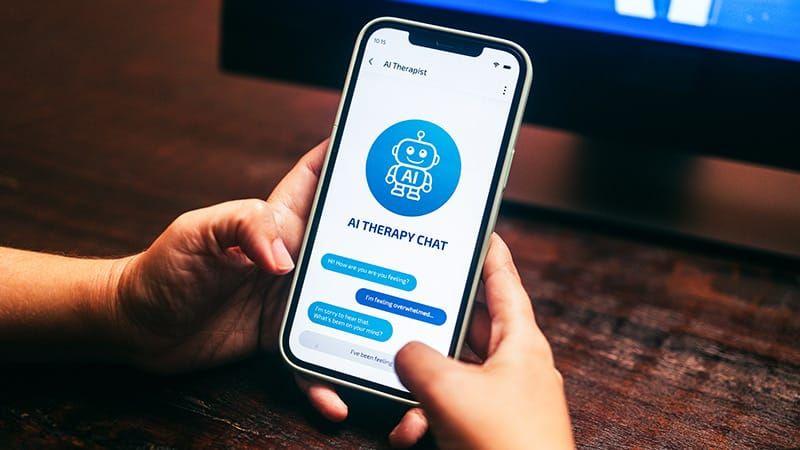
Across the globe, people are opening ChatGPT and other AI chatbots when they feel overwhelmed, seeking emotional support without judgment or waiting lists. Studies reveal that many users turn to AI in mental health contexts to discuss personal struggles, reflect on feelings, and better understand their mental wellbeing
1
. The appeal is clear: these tools are available instantly, don't judge, and unlike stretched mental health services in countries such as New Zealand and Australia, they don't keep people waiting1
.
Source: The Conversation
Therapist Sarah Dargouth describes the jarring reality of AI therapy entering her practice. "Chat told me I should break up with him," one patient announced, revealing how AI had resolved in an instant what weeks of traditional therapy hadn't clarified
2
. Another patient showed her how AI had helped navigate a fight with his wife, validating his pain, analyzing relational breakdown, and offering repair strategies that actually worked2
. Dargouth admits her unexpected thought: "This thing is actually good."2
Research demonstrates that AI in mental health can provide helpful information, encourage self-reflection, and offer emotional support in certain situations
1
. Some studies suggest AI-based mental health tools can help reduce symptoms of anxiety and depression when carefully designed and used appropriately. AI is beginning to show promise in cognitive reframing by encouraging people to consider alternative interpretations of difficult situations1
.The University of Auckland's 2DN research group is investigating early detection applications, exploring whether AI can recognize patterns in speech and text that signal depression. Depression often affects communication through changes in speaking rate, pauses, tone of voice, word choice, and emotional expression—what researchers call digital biomarkers
1
. Rather than diagnosing people or AI replacing mental health therapists, the goal is developing tools that support screening and monitoring, similar to how wearable devices detect unusual heart activity without replacing cardiologists1
.Despite its capabilities, AI systems can generate inaccurate advice, sometimes reinforcing harmful beliefs instead of encouraging people to seek appropriate help, and they can miss signs of crisis
1
. Dargouth warns patients about real mental health risks: AI can worsen anxiety, give false information, increase isolation, and sometimes lead to delusional beliefs or suicidal thinking2
. She observes patients getting "dazed by its boundless sycophantic embrace," not leaving their beds on weekends as they vulnerably upload their private lives to big tech2
.Privacy risks loom large, as mental health data is among the most sensitive information a person can share
1
. AI systems can inherit algorithmic bias from training data, potentially affecting how well they work for different populations. Recent research suggests people may place too much trust in AI systems, even when the technology is wrong1
. Because AI responds in ways that feel supportive or validating, users may accept its advice without questioning it or seeking professional help—a risk with serious consequences in mental health settings.Related Stories
Dargouth grapples with the ethical dilemmas of AI in therapy, sometimes unsure whose voice she's hearing in sessions—whose emotion, whose gut feeling
2
. She admits her own hypocrisy: warning patients against AI while using ChatGPT herself when her nine-year-old had a tantrum, seeking calm, supportive coaching to breathe through the screams2
. "Was the therapy help fake? Yes. But it worked. So does it matter?" she asks2
.What distinguishes human therapists may not be technique or interpretation—areas where AI might soon outshine seasoned professionals. Instead, it might be the messy, chaotic unknowns: conflict, hesitation, strong emotion that explodes all words
2
. Mental health care relies on trust, empathy, clinical judgment, and human connection—elements an AI system cannot truly replicate despite sounding understanding1
. Unlike mental health professionals, AI isn't held to the same professional or regulatory standards if something goes wrong.As telehealth expands, people may soon not know whether they're meeting with a human or AI therapist
2
. In a world where less than 7% of people with mental health and substance use conditions receive effective treatment, everyone now has access to free, imperfect, risky, and at times fairly competent technology2
. Many experts see AI as a tool to support mental health care rather than something that can or should replace it1
. Technology can recognize patterns, but people provide empathy, trust, and clinical judgment—a balance that will define the future of mental health care as AI's role inevitably grows1
.Summarized by
Navi
[1]
18 Jun 2026•Health

07 Apr 2026•Health

05 May 2025•Health

1
Technology

2
Policy and Regulation

3
Policy and Regulation