China's OpenClaw Frenzy: How Job Anxiety and Government Support Fueled an AI Agent Boom


2 Sources
2 Sources
[1]
There's Method to China's OpenClaw Madness
Weeks into the craze, nobody quite knows what to make of the OpenClaw mania sweeping China, marked by viral photos of retirees lining up for installation events and users gathering in red claw hats. The queues and cosplay inspired by the "raising a lobster" trend make for irresistible China clickbait. But the West is fixating on the least important part of the story. As a consumer craze, OpenClaw, the AI agent designed to do tasks on a user's behalf, will likely burn out. Without some developer background, it's too glitchy and technically awkward for true mainstream adoption, not to mention the cybersecurity risks. Even so, the fad could leave China's AI industry with something far more valuable: more token demand, more real-world experimentation, and more live training data for open-source models trying to catch US rivals. Much of the narrative has centered on what the madness says about Chinese consumers' appetite for AI, and whether that enthusiasm could tilt the broader -- and arguably more consequential -- diffusion race. Even Peter Steinberger, the creator of OpenClaw who recently joined OpenAI, has suggested that the US can learn from China's rapid AI adoption. But already, some of the initial excitement for lobster husbandry has waned. The cottage industry that sprung up to help users install the tool has moved on to making money helping people remove it, or clean up the mess it left behind, like recovering accidentally deleted files. Much of the hype was pure fear of missing out. The long lines and installation ads taking over social media were not proof of seamless consumer demand, but evidence that OpenClaw is still a techie tool that ordinary people need help figuring out how to use. Yet it arrived at exactly the right moment for China's AI sector. After months of brutal price wars, it gave model builders a reason to charge more for tokens, the basic units of AI processing. Agents burn through far more of them than chatbots do. OpenRouter rankings show Chinese models overtaking US rivals in token consumption during the OpenClaw boom. (The widely cited data represents only a fraction of global token usage, but it is influential precisely because so little of this market is transparent). China last week also standardized the translation of token as ciyuan - an intentional reference to its currency and a telling signal of how it wants to shape the standards of this market. The opportunity goes beyond token sales, especially as Chinese AI companies have spent much of the past year in a race to the bottom, slashing prices to win users. OpenClaw offers something more: messy, real-world training. The more agents are turned loose to navigate actual tasks, the more feedback these AI systems receive about how to reason beyond just meeting standardized benchmarks. Open-source models have trailed proprietary ones in user growth, Bloomberg Intelligence analysts Mandeep Singh and Robert Biggar noted, but "integration with OpenClaw could help them narrow the lead." In other words, OpenClaw can help the broader Chinese AI stack close the gap. It also gives China's wider tech sector a new catalyst for growth, expanding the contest from just who has the best model to who can embed this technology most seamlessly. Even if consumers lose interest in personal agentic AI -- software that does more than chat and actually takes action -- that may be beside the point. Enterprise adoption is where the economics become meaningful and the strategic stakes get real. This all helps make sense of Beijing's mixed signals. Officials have warned about cybersecurity risks and told employees at state-backed agencies not to use the tool. At the same time, this technology is a major part of the government's AI Plus initiative, which aims for AI agents and smart devices to become nearly ubiquitous by 2030. So while Beijing preaches caution, local governments are doing what they usually do: competing with each other by rolling out subsidies and incentives to attract OpenClaw developers and companies deploying AI agents. Sign up for the Bloomberg Opinion bundle Sign up for the Bloomberg Opinion bundle Sign up for the Bloomberg Opinion bundle Get Matt Levine's Money Stuff, John Authers' Points of Return and Jessica Karl's Opinion Today. Get Matt Levine's Money Stuff, John Authers' Points of Return and Jessica Karl's Opinion Today. Get Matt Levine's Money Stuff, John Authers' Points of Return and Jessica Karl's Opinion Today. Plus Signed UpPlus Sign UpPlus Sign Up By continuing, I agree to the Privacy Policy and Terms of Service. The risks are still enormous. The more useful an AI agent becomes, the more access it needs, and the more damage it can inflict. Greater permissions mean more chances to leak data, expose systems or break things. OpenClaw agents can also be "guilt-tripped into self-sabotage," a reminder researchers are finding new ways for this software to fail as fast as it grows. And that's not to mention the labor market implications of having AI agents replacing workers. It may seem like AI adoption is red hot in China, but the frenzy says more about the strategic value of letting millions of users stress test a new class of software at scale. The backlash is also quieter when it brushes against Beijing's priorities (though that could change if, as some have pointed out, OpenClaw can scale the Great Firewall). The fad may fade. But if OpenClaw helps entrench domestic token demand, train open-source models in the mess of the real world and push companies and governments to build around agents, China will have come away with something far more important than a viral moment. More From Bloomberg Opinion: * Japanese X Is America's Favorite Internet Space: Gearoid Reidy * FCC's Router Ban Is the Wrong Tool for the Right Goal: Dave Lee * How the Iran War Could Split the AI Boom in Two: Parmy Olson Want more Bloomberg Opinion? OPIN <GO> . Or you can subscribe to our daily newsletter .
[2]
Why is OpenClaw so popular in China?
Subsidies, cheap AI, and job anxiety explain the lobster craze China has taken to OpenClaw in a way no other country has. People queue outside Baidu and Tencent offices to get the tool installed on their laptops. Local governments are handing out grants to startups building products on top of it. A software engineer in Beijing told MIT Technology Review that his 77-year-old father asked him to set up a "lobster" -- Chinese users' nickname for the tool, after its logo. In the US and EU, adoption has been far quieter. That contrast isn't accidental, and understanding it tells you something useful about how agentic AI actually spreads. How does OpenClaw work? OpenClaw is a free, open-source AI agent developed by Austrian programmer Peter Steinberger and first released in November 2025. It isn't an AI model itself. You connect it to the Large Language Model (LLM) of your choice, and OpenClaw handles the execution: it breaks a goal into steps, connects to tools like your email or calendar, and keeps track of what it's already done. Tell it to research suppliers, draft outreach emails, and log the results, and it handles all of that without you managing each step. By early March 2026, the project had surpassed 248,000 GitHub stars, overtaking React and Linux in the starred list, according to research by Guolian Minsheng Securities. Why is OpenClaw popular in China? Several things aligned for OpenClaw in China, allowing the framework to gain widespread popularity despite the government's concern about security issues. Let's try to understand why, before we talk about why it hasn't gotten the same reception in the EU or the USA. Local governments are offering their support Beijing's AI strategy, unveiled last summer, targets AI deployment across 90% of industries and throughout society by 2030. That gave local governments and state-backed companies a clear incentive to find visible AI adoption stories fast. When OpenClaw interest picked up in early 2026, Shenzhen's Longgang district announced free computing credits and cash rewards for OpenClaw projects. Wuxi and other cities followed with subsidies worth up to one million yuan for standout contributors, according to Sixth Tone. Tencent organized public installation sessions in Shenzhen that drew retirees and students; Baidu held similar events in Beijing. As The Diplomat reported, local governments and major tech companies were the deliberate architects of this momentum, timing their moves to signals from March's Two Sessions political conference. China has surpassed the US in OpenClaw usage, according to American cybersecurity firm SecurityScorecard, but a meaningful portion of that adoption was institutionally coordinated rather than independently driven. Running costs are much lower OpenClaw's practical barrier in most markets is what it costs to run. The agent queries a large language model continuously, and those API costs accumulate quickly. For most Western users, that means paying OpenAI or Anthropic rates. Chinese users have a cheaper alternative. Domestic AI labs have released capable open-source models at a fraction of the price of their US counterparts. According to OpenRouter data cited by CNBC, the three most-used models among OpenClaw users on its marketplace last month were all Chinese, with combined usage double that of the leading Google Gemini and Anthropic Claude models. Lower inference costs make it practical for far more people to run the agent on an ongoing basis. Job anxiety is driving adoption China's enthusiasm for OpenClaw isn't simply excitement about new technology. A May 2025 survey by Cheung Kong Graduate School of Business found 85.5% of nearly 12,000 Chinese respondents worried about how AI could affect their jobs. Youth unemployment hovered between 15% and 19% in 2025, and the hashtag #AIAnxiety had drawn around 2.6 million views on RedNote, per Rest of World. The idea of a "one-person company" has taken hold as a result: a single person using an AI agent to handle admin, marketing, and communications without additional staff. "Human employees need rest, but OpenClaw can run 24/7," user Wang Xiaoyan told CNBC. For workers anxious about redundancy, learning the tool feels like a hedge. Researchers are more cautious. Jiang Han, a senior researcher at Beijing think tank Pangoal, told Sixth Tone that for most people, OpenClaw is still more of a toy for tech enthusiasts than a practical business tool. Setup is difficult for non-technical users, costs add up, and the agent can cause real damage if given unchecked access to systems. Why it hasn't caught on the same way in the EU or US GDPR, CCPA, and equivalent regulations make it legally awkward to hand an AI agent broad access to email, calendars, and messaging apps, which is precisely what OpenClaw needs. There's no institutional push comparable to China's government-coordinated rollout, and until recently, the cheapest capable models were American, making continuous use expensive. Chinese official media cited privacy regulations and API costs as the main reasons the West saw no similar craze, as The Diplomat noted. That explains part of the gap. It doesn't account for the fact that China's adoption was actively manufactured from the top down, which most countries haven't attempted. There are still hurdles The central government has barred state-owned enterprises, banks, and government agencies from running OpenClaw on office computers, citing security risks that China's Ministry of Industry and Information Technology flagged in February 2026. Cybersecurity researchers have documented vulnerabilities, including prompt injection attacks and data exfiltration through third-party integrations. Ordinary users have raised concerns, too. "It's hard for us regular people to know what access we have given it and what it has taken," new user Gong Zheng told CNBC. We'd echo that concern for anyone evaluating agentic AI tools. The enthusiasm around OpenClaw is real, but so are the risks, and they don't disappear because a local government is offering subsidies to use it.
Share
Share
Copy Link
Retirees queuing outside tech offices, users donning red claw hats, and local governments offering million-yuan subsidies—China's OpenClaw craze has captivated global attention. But beneath the viral consumer craze lies a strategic play: cheap inference costs, widespread job anxiety, and strong government support are giving China's AI industry valuable real-world training data and a new edge in the race for AI dominance.
OpenClaw Mania in China Goes Beyond Viral Photos
Photos of retirees lining up outside Baidu and Tencent offices in Beijing and users gathering in red claw hats have turned OpenClaw into a viral consumer craze that's captivated Western media. The open-source AI agent, developed by Austrian programmer Peter Steinberger and first released in November 2025, has surpassed 248,000 GitHub stars by early March 2026, overtaking React and Linux
2
. A software engineer in Beijing told MIT Technology Review that even his 77-year-old father asked him to set up a "lobster"—the nickname Chinese users gave the tool after its logo2
. But while the West fixates on the spectacle, the real story lies in what this moment means for China's AI industry.
Source: Bloomberg
How the AI Agent Actually Works
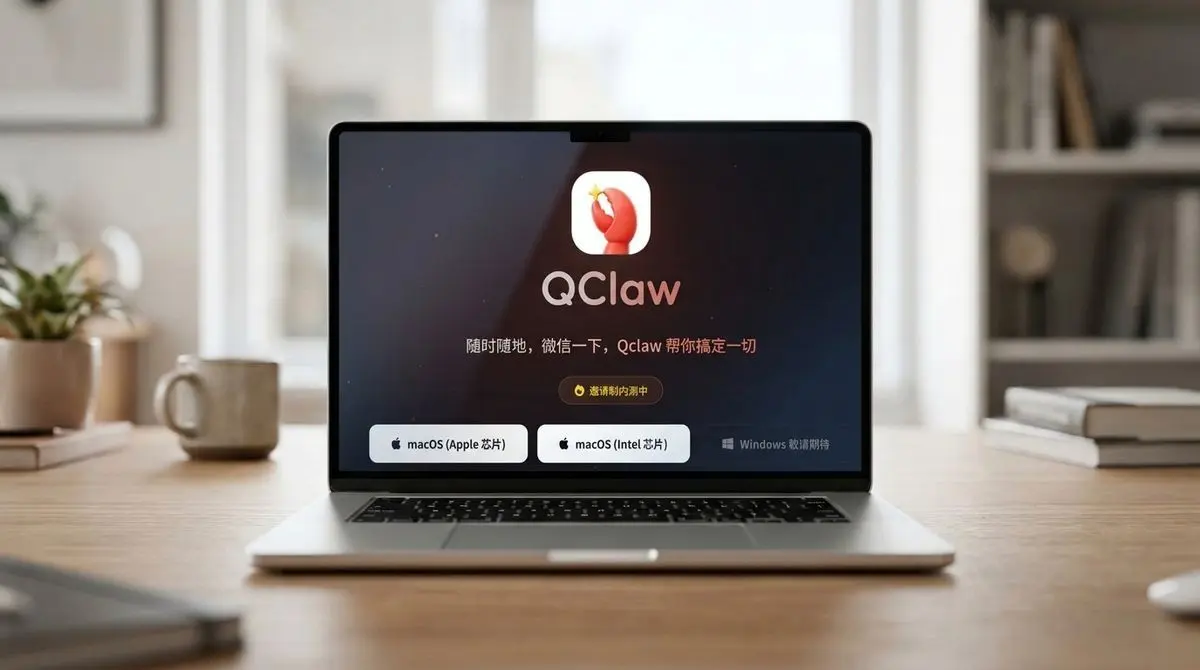
OpenClaw isn't a Large Language Model itself. Instead, it connects to the LLM of your choice and handles execution: breaking goals into steps, connecting to tools like email or calendars, and tracking progress
2
. Tell it to research suppliers, draft outreach emails, and log results, and it manages everything without manual oversight at each step. This capability burns through far more AI tokens—the basic units of AI processing—than chatbots do, giving model builders a reason to charge more after months of brutal price wars1
. OpenRouter rankings show Chinese models overtaking US rivals in token consumption during the OpenClaw boom1
.
Source: TechRadar
Strong Government Support Drives Adoption
Beijing's AI Plus initiative, unveiled last summer, targets AI deployment across 90% of industries and throughout society by 2030
2
. When OpenClaw interest picked up in early 2026, local governments moved quickly. Shenzhen's Longgang district announced free computing credits and cash rewards for OpenClaw projects. Wuxi and other cities followed with subsidies worth up to one million yuan for standout contributors2
. Tencent organized public installation sessions in Shenzhen that drew retirees and students, while Baidu held similar events in Beijing. According to American cybersecurity firm SecurityScorecard, China has surpassed the US in OpenClaw usage, though a meaningful portion of that adoption was institutionally coordinated rather than independently driven2
.Widespread Job Anxiety Fuels User Adoption
A May 2025 survey by Cheung Kong Graduate School of Business found 85.5% of nearly 12,000 Chinese respondents worried about how AI could affect their jobs
2
. Youth unemployment hovered between 15% and 19% in 2025, and the hashtag #AIAnxiety had drawn around 2.6 million views on RedNote2
. The idea of a "one-person company" has taken hold: a single person using an AI agent to handle admin, marketing, and communications without additional staff. "Human employees need rest, but OpenClaw can run 24/7," user Wang Xiaoyan told CNBC2
. For workers anxious about redundancy, learning the tool feels like a hedge against an uncertain future.Cheap Inference Costs Make It Practical
OpenClaw's practical barrier in most markets is what it costs to run. The agent queries a Large Language Model continuously, and those API costs accumulate quickly. Chinese users have a cheaper alternative: domestic AI labs have released capable open-source models at a fraction of the price of their US counterparts. According to OpenRouter data cited by CNBC, the three most-used models among OpenClaw users on its marketplace last month were all Chinese, with combined usage double that of the leading Google Gemini and Anthropic Claude models
2
. Lower inference costs make it practical for far more people to run the agent on an ongoing basis, giving Chinese users a significant advantage over those paying OpenAI or Anthropic rates.Real-World Training Data Helps Close the Gap
Even if the consumer fad burns out—and already, some initial excitement has waned as cottage industries have moved from helping users install the tool to helping them remove it or recover accidentally deleted files
1
—OpenClaw offers China's AI industry something more valuable: messy, real-world training data. The more agents are turned loose to navigate actual tasks, the more feedback these AI systems receive about how to reason beyond just meeting standardized benchmarks. Open-source models have trailed proprietary ones in user adoption, Bloomberg Intelligence analysts Mandeep Singh and Robert Biggar noted, but "integration with OpenClaw could help them narrow the lead"1
. China last week also standardized the translation of token as ciyuan—an intentional reference to its currency and a telling signal of how it wants to shape the standards of this market1
.Related Stories

Cybersecurity Risks Remain Enormous
Beijing's response has been mixed. Officials have warned about cybersecurity risks and told employees at state-backed agencies not to use the tool
1
. The more useful an AI agent becomes, the more access it needs, and the more damage it can inflict. Greater permissions mean more chances to leak data, expose systems, or break things. OpenClaw agents can also be "guilt-tripped into self-sabotage," a reminder that researchers are finding new ways for this software to fail as fast as it grows1
. Researchers like Jiang Han, a senior researcher at Beijing think tank Pangoal, told Sixth Tone that for most people, OpenClaw is still more of a toy for tech enthusiasts than a practical business tool2
.Why Western Adoption Lags Behind
In the US and EU, adoption has been far quieter. GDPR, CCPA, and equivalent data privacy laws make it legally awkward to hand an AI agent broad access to email, calendars, and messaging apps—precisely what OpenClaw needs
2
. There's no institutional push comparable to China's government-coordinated rollout, and until recently, the cheapest capable models were American, making continuous use expensive. Even Peter Steinberger, the creator of OpenClaw who recently joined OpenAI, has suggested that the US can learn from China's rapid AI adoption1
.What to Watch For
The opportunity goes beyond token sales for tech sector growth. OpenClaw gives China's wider tech sector a new catalyst, expanding the contest from just who has the best model to who can embed this technology most seamlessly. Even if consumers lose interest in personal agentic AI—software that does more than chat and actually takes action—enterprise adoption is where the economics become meaningful and the strategic stakes get real
1
. Watch how local governments continue to compete with each other by rolling out subsidies and incentives to attract OpenClaw developers and companies deploying AI agents, and whether Western markets can find their own path to agentic AI adoption without the same institutional coordination.References
Summarized by

Navi
[1]
[2]
Related Stories
OpenClaw AI craze sweeps China as millions 'raise lobsters' amid security warnings
18 Mar 2026•Technology

OpenClaw AI agent ignites China's agentic AI boom as government scrambles with security warnings
09 Mar 2026•Technology

OpenClaw AI assistant sparks lobster-themed ClawCon as open-source movement gains momentum
08 Mar 2026•Technology
Recent Highlights


Recent Highlights
Today's Top Stories









Your Daily Dose of Curated AI News
Don’t drown in AI news. We cut through the noise - filtering, ranking and summarizing the most important AI news, breakthroughs and research daily. Spend less time searching for the latest in AI and get straight to action.

