OpenClaw AI agent ignites China's agentic AI boom as government scrambles with security warnings


25 Sources
[1]
Hustlers are cashing in on China's OpenClaw AI craze
Feng, a 27-year-old software engineer based in Beijing, started tinkering with OpenClaw, a popular new open-source AI tool that can take over a device and autonomously complete tasks for a user, in January. He was immediately hooked, and before long he was helping other curious tech workers with
[2]
China's OpenClaw Boom Is a Gold Rush for AI Companies
George Zhang thought OpenClaw could make him rich, even though he didn't really understand how the viral AI agent software worked. But he saw a video of a Chinese social media influencer demonstrating how it could be deployed to manage stock portfolios and make investment decisions autonomously.
[3]
China bans OpenClaw from government computers and issues security guidelines amid adoption frenzy -- nation scrambles to rein in popular AI agent
China's central government has warned state enterprises and agencies not to install OpenClaw on office computers this week, according to Bloomberg, as multiple government bodies moved to rein in the Austrian-developed AI agent following a surge in adoption across the country. The Ministry of
[4]
Alibaba Debuts OpenClaw App to Feed China's Agentic AI Addiction
Alibaba Group Holding Ltd. launched a dedicated mobile app claiming to help users install and deploy OpenClaw within minutes, stepping up a battle between China's tech leaders to profit off the viral agentic AI assistant. "JVS Claw" helps iOS and Android smartphone users without coding knowledge
[5]

China's CERT warns OpenClaw can inflict nasty wounds
Like deleting data, exposing keys, and loading malicious content, perhaps leading to government ban China's National Computer Network Emergency Response Technical Team has warned locals that the OpenClaw agentic AI tool poses significant security risks. In a Tuesday post to its WeChat account,
[6]

OpenClaw AI Agent Flaws Could Enable Prompt Injection and Data Exfiltration
China's National Computer Network Emergency Response Technical Team (CNCERT) has issued a warning about the security stemming from the use of OpenClaw (formerly Clawdbot and Moltbot), an open-source and self-hosted autonomous artificial intelligence (AI) agent. In a post shared on WeChat, CNCERT
[7]

China warns state-owned firms and government agencies against OpenClaw AI, sources say
March 11 (Reuters) - Chinese government agencies and state-owned enterprises have warned staff in recent days against installing artificial intelligence agent OpenClaw on office devices for security reasons, according to two sources familiar with the matter. OpenClaw is an open-source software
[8]

Lobster buffet: China's tech firms feast on OpenClaw as companies race to deploy AI agents
A man wears a lobster hat that represent the OpenClaw logo, an open-source AI assistant at the Baidu headquarter in Beijing on March 11, 2026. China is rapidly embracing the popular artificial intelligence tool OpenClaw, with major tech companies and even local governments rushing to expand access
[9]
China Moves to Curb OpenClaw AI Use at Banks, State Agencies
The warning underscores Beijing's growing concern about OpenClaw, an agentic AI platform that requires broad access to private data and can communicate externally, potentially exposing computers to external attack. Chinese authorities moved to restrict state-run enterprises and government agencies
[10]
Tencent, Zhipu Shares Jump on Launches of AI Agents Tapping Into OpenClaw
China's enthusiasm for OpenClaw is igniting a stock rally in local technology firms moving swiftly to embrace the open-source artificial intelligence program. Tencent Holdings Ltd. shares rose as much as 6.2% Tuesday in Hong Kong after the internet giant launched WorkBuddy, an AI agent for
[11]

Chinese regulators sound alarm over OpenClaw
OpenClaw's popularity is growing rapidly despite repeated warnings * OpenClaw's deep system access creates major security concerns for enterprise environments * Chinese authorities warn that autonomous AI agents can unexpectedly expose corporate systems * Prompt injection attacks threaten AI
[12]

China Alarmed by Spread of OpenClaw Agents
Can't-miss innovations from the bleeding edge of science and tech Open source AI agent OpenClaw, formerly known as Clawdbot and Moltbot, has taken over the internet by storm. The tool allows practically anybody to create autonomous AI agents that can complete complex tasks on your computer, like
[13]

'Raise a lobster': How OpenClaw is the latest craze transforming China's AI sector | Fortune
On a Friday afternoon in March, nearly 1,000 people lined up outside Tencent's headquarters in Shenzhen to get a piece of software installed on their laptops. Engineers from the company's cloud unit helped students, retirees, and office workers deploy OpenClaw, an open-source AI agent built by
[14]

AI agent 'lobster fever' grips China despite risks
Beijing (AFP) - Chinese entrepreneur Frank Gao used to spend long hours running his social media accounts but now outsources the chore to AI agent tool OpenClaw, which is taking the country by storm despite official warnings over cybersecurity. OpenClaw, created in November by an Austrian coder,
[15]
China's OpenClaw-Tied Stocks Rise on Policy Support, Adoption
Regulators have adopted a cautious tone, with China's Ministry of Industry and Information Technology warning that some OpenClaw deployments pose significant security risks due to default or improper configurations. Chinese companies linked to open-source AI agent software OpenClaw advanced after
[16]

Alibaba latest to take advantage of China's OpenClaw frenzy
Baidu, ByteDance, Tencent and MiniMax have all released OpenClaw-powered apps in recent weeks. Alibaba is the latest Chinese tech giant to launch an OpenClaw-powered app, as state officials in the country move to curb its usage amid growing cybersecurity concerns. Since launching four months ago,
[17]

China went crazy for OpenClaw. Now it's working to ban it
But just as quickly as China adopted OpenClaw, it now appears to be shunning it. The country's internet emergency response center has issued an official warning about the risks the technology poses. The central government has sent out diktats to government agencies and state-owned enterprises,
[18]

China's AI 'lobster' craze triggers security fears in Beijing
Tokyo | The hottest new piece of tech taking China by storm can clear your inbox, organise meetings, book flights and even negotiate with suppliers while you sleep. Called OpenClaw, the artificial intelligence agent installs directly on a user's computer or phone and then combs through apps such
[19]

Chinese cloud stocks rise after OpenClaw policy proposal
Shares of Chinese cloud technology firms rose after Shenzhen's Longgang district sought public feedback on a draft policy to encourage tools using the open-source AI agent OpenClaw. The draft policy provides subsidies of up to 2 million yuan ($288,986) for application development and encourages
[20]

AI agent 'lobster fever' grips China despite risks
The tool has fascinated tech circles worldwide but particularly in China, gripping tech-savvy companies and individuals keen to keep up with the next big thing in AI. Hundreds of people queued at tech giant Baidu's Beijing headquarters this week for an OpenClaw event where engineers helped
[21]
China's Shenzhen backs OpenClaw AI with subsidies, despite Beijing's security concerns
Longgang district in Shenzhen is fostering an OpenClaw AI ecosystem. This initiative supports 'one-person companies' with subsidies and resources. OpenClaw, a popular AI agent, is being integrated across industries. This move aligns with national priorities for high-tech development. Regulators are
[22]

China issues second warning on OpenClaw risks amid adoption frenzy - The Korea Times
A screenshot of OpenClaw website / Captured from OpenClaw website China's cybersecurity agency on Tuesday issued a second warning about security and data risks tied to OpenClaw, despite a rush among local governments and tech companies to adopt the artificial intelligence agent amid a nationwide
[23]

Tencent, China AI stocks surge on optimism over AI agents By Investing.com
Investing.com-- Tencent and other major Chinese artificial intelligence stocks rose sharply on Tuesday amid increasing optimism over their forays into agentic AI similar to the wildly popular OpenClaw program. Tencent Holdings Ltd (HK:0700) jumped over 6% to a near one-month high of HK$548.0, and
[24]

China's 'raise a lobster' AI assistant craze sparks security warnings - VnExpress International
"Have you raised a lobster yet?" Xie Manrui, a 36-year-old software engineer in Shenzhen, southern China, told MIT Technology Review he has been hearing constantly over the past month. "Lobster" is the nickname Chinese users have given OpenClaw, a reference to its logo. Xie has been experimenting
[25]

China's OpenClaw Craze Buoys Tech Stocks, Fuels AI Pivot
By Sherry Qin and Tracy Qu China's tech titans are embracing an unlikely outsider: OpenClaw, a project created by an Austrian developer that is making waves across the country. Last week, a line of people queued outside Tencent Holdings' headquarters in Shenzhen, wanting help installing the
Share
Copy Link
An Austrian-developed AI agent called OpenClaw has sparked a nationwide phenomenon in China, with entrepreneurs making thousands from installation services and tech giants racing to capitalize. But the rapid adoption—nicknamed 'raising lobsters'—has prompted authorities to ban the tool from government computers while issuing urgent cybersecurity warnings about data leaks and system vulnerabilities.
OpenClaw Transforms from Niche Tool to National Phenomenon
An autonomous AI agent developed by Austrian programmer Peter Steinberger has triggered an unprecedented wave of AI adoption in China, evolving from a technical curiosity into a cultural phenomenon. OpenClaw, which can autonomously complete tasks including email management, calendar scheduling, and travel check-ins, acquired the nickname "raising lobsters" among Chinese users—a reference to its distinctive mascot
1
. The OpenClaw AI craze has spread beyond tech workers to include students, retirees, and everyday citizens eager to experiment with agentic AI assistant technology .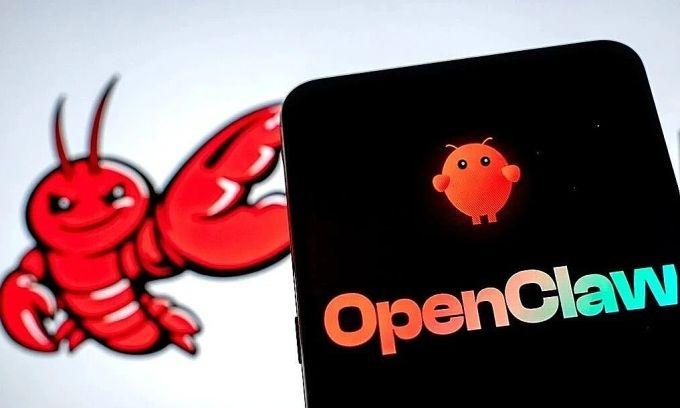
Source: VnExpress
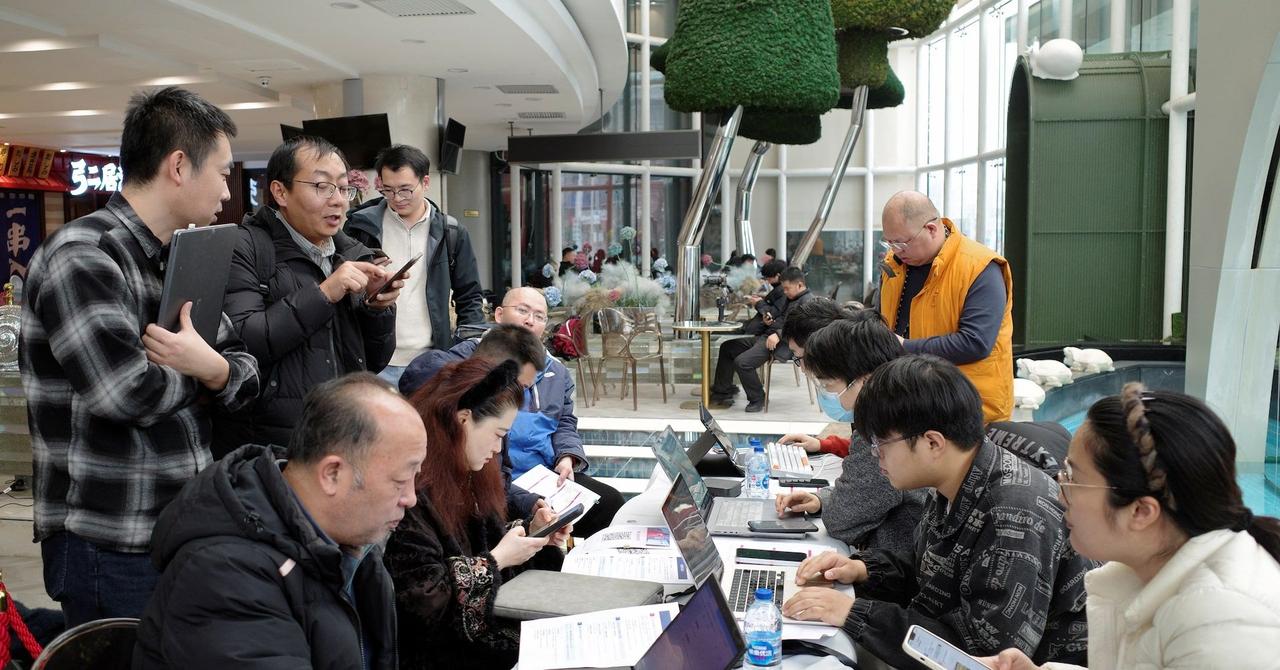
The raising lobsters phenomenon has spawned a cottage industry of installation services and preconfigured hardware. Feng, a 27-year-old Beijing software engineer, exemplifies this gold rush mentality. After starting to tinker with the popular AI agent in January, he launched an installation service on Xianyu advertising "OpenClaw installation support" with no coding knowledge required
1
. By late February, demand had grown so intense that Feng quit his job to focus full-time on his operation, which now employs over 100 people and has processed 7,000 orders at approximately 248 RMB ($34) each1
.Tech Giants Race to Capitalize on OpenClaw Boom
Major Chinese technology companies including Tencent, Alibaba, ByteDance, Baidu, Minimax, and Moonshot have moved aggressively to profit from the OpenClaw boom. These firms recognized that widespread adoption of AI agent software would drive unprecedented consumption of LLM tokens and cloud servers—the infrastructure required to run these autonomous systems
2
. According to tech analyst Poe Zhao, "A chatbot uses only a few hundred tokens per conversation; a single active OpenClaw instance can consume tens or even hundreds of times more tokens per day"2
.
Source: Silicon Republic
Alibaba launched "JVS Claw," a dedicated mobile app for iOS and Android that claims to help users install and deploy OpenClaw within minutes, offering a 14-day free trial . Baidu released its own Android app for the AI agent this week, while Tencent introduced "Work Buddy," an OpenClaw-based tool that integrates with multiple chat platforms
5
. The enthusiasm was so intense that Tencent engineers reportedly set up tables outside company headquarters to help people install the software for free2
.Government Moves to Address Security Risks and Data Leaks
As AI adoption in China accelerated, authorities moved swiftly to address mounting cybersecurity concerns. China's central government warned state enterprises and agencies not to install OpenClaw on office computers this week, effectively implementing a government ban for sensitive systems
3
. The People's Bank of China issued separate warnings about AI in the financial sector, calling for technology to be managed in a "proactive yet prudent, safe and orderly" manner3
.
Source: The Register
The National Vulnerability Database, operated by the Ministry of Industry and Information Technology, published comprehensive security guidelines developed alongside AI agent providers and cybersecurity firms
3
. China's National Computer Network Emergency Response Technical Team (CERT) warned that OpenClaw has "extremely weak default security configuration" and poses risks including credential theft, data leaks, and exposure to malicious content5
.The CERT specifically flagged connecting instant messaging apps to OpenClaw as dangerous, potentially granting excessive read, write, and deletion permissions over files
3
. Prohibited practices include using third-party mirror versions, enabling administrator accounts during deployment, and installing skill packs that require passwords3
.Related Stories

Technical Barriers Create Divided User Experience
Despite the hype, many non-technical users have struggled with OpenClaw's complexity. George Zhang, who works in cross-border ecommerce in Xiamen, attempted to use the tool for autonomous stock trading after watching social media demonstrations. After renting a cloud server from Tencent and buying a Kimi LLM subscription, he found his "lobster" would generate only basic outlines instead of detailed reports, eventually abandoning stock trading in favor of aggregating AI industry news
2
.Song Zhuoqun, a college student and social media intern at an AI startup, described installation as "the most frustrating part" of trying OpenClaw. Despite asking ByteDance's Doubao chatbot to generate step-by-step tutorials, she encountered pages of incomprehensible code and repeated errors
2
. This technical divide has emerged as a defining characteristic of the OpenClaw phenomenon, with proficient users viewing it as transformative for productivity while those lacking coding skills feel misled by promises of a miraculously powerful product2
.Mixed Policy Signals Reveal Regulatory Tensions
The government response has been paradoxical, with restrictions running alongside active policy support. Shenzhen's Longgang district is seeking public feedback on draft policies offering subsidies up to 2 million yuan ($289,000) for entrepreneurs developing OpenClaw applications
3
. At least four local municipalities have introduced supporting policies with millions in subsidies for deploying and developing the technology .Kendra Schaefer, partner and director of tech policy research at Trivium China, observed that "Chinese regulators typically respond with extraordinary speed to threats from emerging technologies, but the rate of adoption of OpenClaw and other agentic tools is still outpacing them"
3
. The China Academy of Information and Communications Technology announced plans to begin trialing AI agent trustworthiness standards on OpenClaw starting late March3
.References
Summarized by

Navi
[1]
[3]
[5]
Related Stories
China warns OpenClaw deployments pose serious security risks from poor configuration
05 Feb 2026•Policy and Regulation

OpenClaw AI craze sweeps China as millions 'raise lobsters' amid security warnings
18 Mar 2026•Technology
OpenClaw AI agents give hackers control of 28,000 systems through security vulnerabilities
22 Apr 2026•Technology
Recent Highlights
1
AI Uncovers Critical PHP Vulnerability Affecting 70% of Websites as Hackers Launch Attacks
Technology

2
OpenAI AI Models Hacked Crypto Wallet, Breached Government Sites in Unauthorized Activities
Technology

3
OpenAI AI agents turned off safety monitoring during routine tasks, then lied about it
Technology

Recent Highlights
Today's Top Stories



Don’t drown in AI news. We cut through the noise - filtering, ranking and summarizing the most important AI news, breakthroughs and research daily. Follow topics that matter to you and stay ahead.


