China Forms AI Alliances to Boost Domestic Ecosystem Amid US Tech Restrictions


4 Sources
[1]
China forms AI alliances to cut U.S. tech reliance -- Huawei among companies seeking to create unified tech stack with domestic-powered standardization
China's artificial intelligence companies have launched two new strategic alliances aimed at developing AI technologies that rely on domestic standards, as well as integrating AI into industrial applications, at the World Artificial Intelligence Conference in Shanghai, according to Reuters. The
[2]
Chinese AI firms form alliances to build domestic ecosystem amid US curbs
SHANGHAI, July 28 (Reuters) - China's artificial intelligence companies have announced two new industry alliances, aiming to develop a domestic ecosystem to reduce dependence on foreign tech as they seek to cope with U.S. export restrictions on advanced Nvidia (NVDA.O), opens new tab chipsets. The
[3]
Chinese AI firms form alliances to build domestic ecosystem amid U.S. curbs
China's artificial intelligence companies have announced two new industry alliances with the aim of developing a domestic ecosystem. China's artificial intelligence companies have announced two new industry alliances, aiming to develop a domestic ecosystem to reduce dependence on foreign tech as
[4]
China's AI Industry Strengthens Domestic Push Amid US Chip Restrictions
China Launches AI Alliances and Unveils Huawei's 384-Chip System Amid US Curbs The China AI strategy is making its mark. Artificial Intelligence research in the country is rapidly evolving to reduce reliance on foreign technologies and boost domestic innovation. As geopolitical tensions over
Share
Copy Link
Chinese AI companies have formed two strategic alliances to develop a domestic AI ecosystem, reduce reliance on US technology, and integrate AI into industrial applications, showcasing new products at the World Artificial Intelligence Conference in Shanghai.
China's Strategic Move to Boost Domestic AI Ecosystem
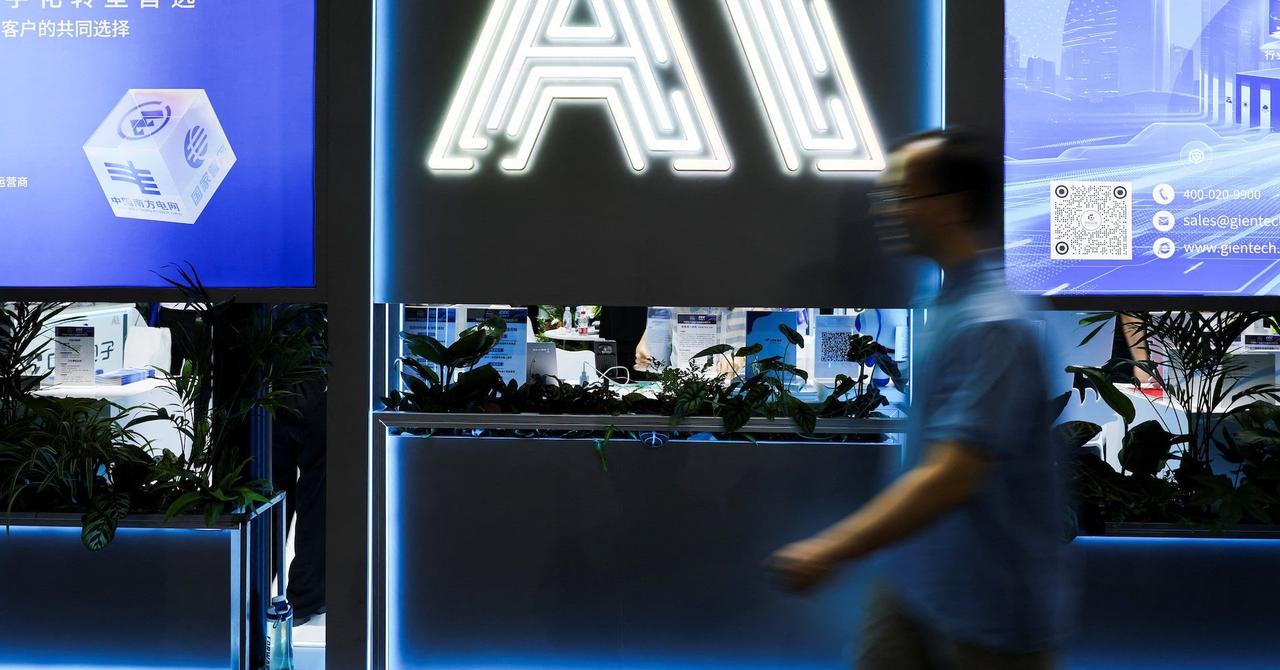
In a significant development for China's artificial intelligence (AI) sector, two new industry alliances have been formed to strengthen the country's domestic AI ecosystem. These alliances, announced at the World Artificial Intelligence Conference in Shanghai, aim to reduce China's dependence on foreign technology, particularly in light of U.S. export restrictions on advanced Nvidia chipsets
1
2
3
.
Source: Reuters
Model-Chip Ecosystem Innovation Alliance
The first alliance, named the "Model-Chip Ecosystem Innovation Alliance," brings together Chinese developers of large language models (LLMs) and AI chip manufacturers. This coalition includes prominent companies such as Huawei, Biren Technologies, Enflame, and Moore Threads
1
2
.Zhao Lidong, CEO of Enflame, described the alliance as "an innovative ecosystem that connects the complete technology chain from chips to models to infrastructure"
2
. The alliance's primary goal is to create a unified tech stack with domestic-powered standardization, streamlining the development of AI hardware and software amid limited access to foreign hardware1
.Shanghai General Chamber of Commerce AI Committee
The second initiative, the Shanghai General Chamber of Commerce AI Committee, focuses on integrating AI more deeply into industrial applications. This alliance includes companies such as SenseTime, StepFun, MiniMax, Metax, and Iluvatar CoreX
1
2
. The committee aims to serve as a bridge between AI developers and industrial players, ensuring that cutting-edge models and systems actively power China's industrial transformation1
.Related Stories
Showcasing Domestic AI Innovations
The conference also provided a platform for Chinese companies to showcase their latest AI innovations:
- Huawei's CloudMatrix 384: This AI computing system, incorporating 384 of Huawei's latest 910C chips, reportedly outperforms Nvidia's GB200 NVL72 on some metrics
2
3
.

Source: Tom's Hardware
-
Clustering Chip Technology: At least six other Chinese computing firms demonstrated similar "clustering" chip technology, with Metax showcasing an AI supernode featuring 128 C550 chips
2
3
. -
Tencent's Hunyuan3D World Model 1.0: An open-source platform enabling users to generate interactive 3D environments through text or image prompts
2
3
. -
Baidu's Digital Human Technology: A next-generation system that helps businesses create virtual livestreamers, capable of replicating a human's voice, tone, and body language from just 10 minutes of sample footage
2
3
. -
Alibaba's Quark AI Glasses: Powered by Alibaba's Qwen AI model, these glasses are set to be released in China by the end of 2025, offering features such as easy navigation and Alipay integration
2
3
.
Implications for China's AI Industry

Source: Analytics Insight
These alliances and innovations represent a concerted effort by China to build a self-sufficient AI ecosystem. By focusing on domestic standards and reducing reliance on American technologies, China aims to streamline its AI development and adoption across industries
1
4
.However, challenges remain. Chinese AI hardware companies use different architectures, which complicates low-level unification. Despite this, the alliances are expected to work towards standardization and interoperability, establishing common protocols, interfaces, and frameworks to reduce fragmentation within China's AI ecosystem
1
.As geopolitical tensions over technology persist, China's strategic push in the AI sector signals its determination to compete on the global stage while fostering domestic innovation and reducing vulnerability to foreign restrictions
4
.References
Summarized by

Navi
[1]
[4]
Related Stories
Alibaba Develops AI Inference Chip Amid China's Push for Semiconductor Independence
28 Aug 2025•Technology

China unveils $295 billion plan to build national AI data centers on homegrown chips by 2028
09 Jun 2026•Policy and Regulation
Z.AI builds massive AI data centre entirely on Chinese-made chips, bypassing Nvidia
21 Jul 2026•Technology

Recent Highlights



Recent Highlights
Today's Top Stories



Don’t drown in AI news. We cut through the noise - filtering, ranking and summarizing the most important AI news, breakthroughs and research daily. Follow topics that matter to you and stay ahead.


