CynLr and IISc Collaborate to Integrate Neuroscience into Robotics for Advanced AI Perception


2 Sources
[1]
CynLr, IISc Join Hands to Bring Neuroscience into Robotics
Bengaluru-based robotics and AI company CynLr has partnered with the Indian Institute of Science (IISc) to bridge neuroscience and robotics in a bid to build machines that can perceive and adapt to the real world with human-like flexibility. The collaboration, titled Visual Neuroscience for
[2]
CynLr and IISc Partner to Decode Biological Vision for Real-World Robotics
Through joint research, the partnership will convert neural insights into robotic perception systems, laying foundations for generalized manipulation and Universal Factories. CynLr, a foundational technology building company in Robotics and AI, has announced a strategic collaboration with the
Share
Copy Link
Bengaluru-based CynLr partners with IISc to develop neuroscience-inspired robotic perception systems, aiming to create machines that can adapt to complex environments like humans.
Groundbreaking Collaboration in AI and Robotics
Bengaluru-based robotics and AI company CynLr has announced a strategic partnership with the Indian Institute of Science (IISc) to revolutionize the field of robotics by incorporating neuroscience principles
1
. This collaboration, titled "Visual Neuroscience for Cybernetics," aims to develop robotic systems that can perceive and adapt to complex, unpredictable environments with human-like flexibility2
.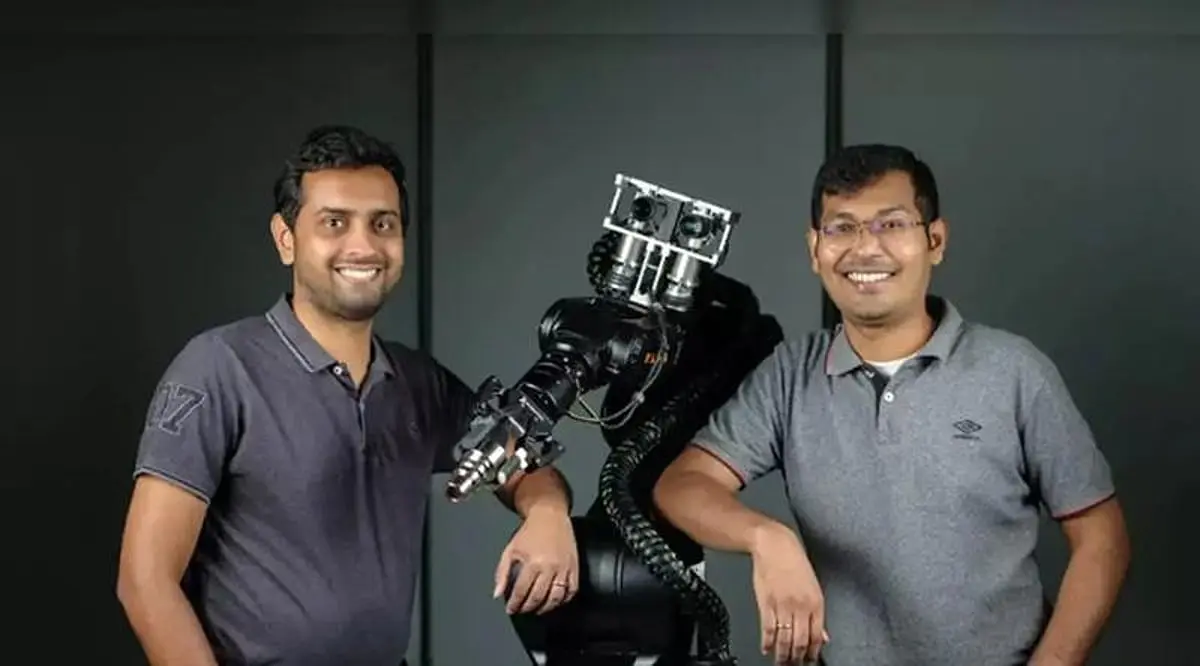
Source: Analytics Insight
Bridging Neuroscience and Robotics
The research focuses on translating how the human brain processes depth, motion, and object continuity into advanced robotic perception systems. Unlike conventional robots that rely on preprogrammed routines or extensive training data, this project seeks to create machines that can comprehend and respond to real-world complexity in real-time
1
.CynLr's founder, Gokul N A, emphasized the importance of this approach, stating, "Robotic systems that operate in the real world cannot rely solely on training data. They must be able to perceive, remember, and act, much like biological organisms do"
2
.Collaborative Research Structure
The partnership includes structured scientific research, hands-on algorithm development, and training programs that bring together engineering, perception, and neuroscience. CynLr will provide technical infrastructure and real-world problem statements from its robotic stack, while IISc's Vision Lab, led by Prof. SP Arun at the Centre for Neuroscience, will spearhead neuroscience research and experimentation
2
.Prof. SP Arun highlighted the unique opportunity this collaboration presents: "This is one of those rare opportunities where scientific research can inform practical engineering. We are excited to partner with CynLr to bring these insights into robotics"
2
.
Source: AIM
Related Stories

Global Recognition and Future Prospects
CynLr's innovative approach has garnered international attention. The company was recognized as a Technology Pioneer by the World Economic Forum in 2025 and was invited to present at the United Nations for Good Global Summit. These milestones reflect growing global interest in CynLr's work on Object Intelligence and Universal Factories
2
.The collaboration extends beyond this partnership, with CynLr seeking to engage with other startups and research institutions to develop capabilities in areas such as human-mimicking imaging sensors, robotics-specific compute platforms, and grasping research
2
.Implications for India's Tech Landscape
This partnership underscores a significant shift in India's global tech positioning, moving from a focus on low-cost IT back-office services to recognition as a hub for innovation and deep research. It represents a transition from "Make in India" to "Create in India," highlighting the country's growing role in cutting-edge technology development
2
.As the project moves forward, it promises to push the boundaries of AI and robotics, potentially leading to more adaptive and intelligent machines capable of operating in complex, real-world environments. This collaboration between CynLr and IISc may well set a new standard for interdisciplinary research in AI and robotics, with far-reaching implications for various industries and applications.
References
Summarized by

Navi
[2]
Related Stories
IISc Bengaluru Scientists Develop Revolutionary 'Brain-on-a-Chip' Technology
12 Sept 2024

Wipro Partners with Indian Institute of Science for Advanced AI and Quantum Research Initiative
27 Nov 2025•Science and Research

Neura Robotics Qualcomm partnership targets next generation of robots with Physical AI
10 Mar 2026•Technology

Recent Highlights



Recent Highlights
Today's Top Stories



Don’t drown in AI news. We cut through the noise - filtering, ranking and summarizing the most important AI news, breakthroughs and research daily. Follow topics that matter to you and stay ahead.


